After opening 180 stores, franchisees of Yunnan and Guizhou cuisine began to smash the equipment.
Fan Hui, a catering franchisee, recently did something that sent shivers down the spines of everyone in the catering industry.
He picked up a hammer in the Mei Guo · Yunnan - Guizhou - Sichuan Bistro in Wuyue Plaza, Nanxun, Huzhou, where he had a franchise, and smashed the bar counter, tables, chairs, and freezers. While smashing, he shouted, "I'd rather smash these things than leave them to the mall."
He invested 4 million yuan, but after less than five months in business, he lost 5 million yuan.
The monthly turnover was 738,000 yuan in the first month, 549,000 yuan in the second month, 386,000 yuan in the third month, and 220,000 yuan in the fourth month. The turnover dropped by 70% compared to the first - month figure in just four months. The monthly rent of the mall was over 40,000 yuan, not to mention the decoration amortization and labor costs.
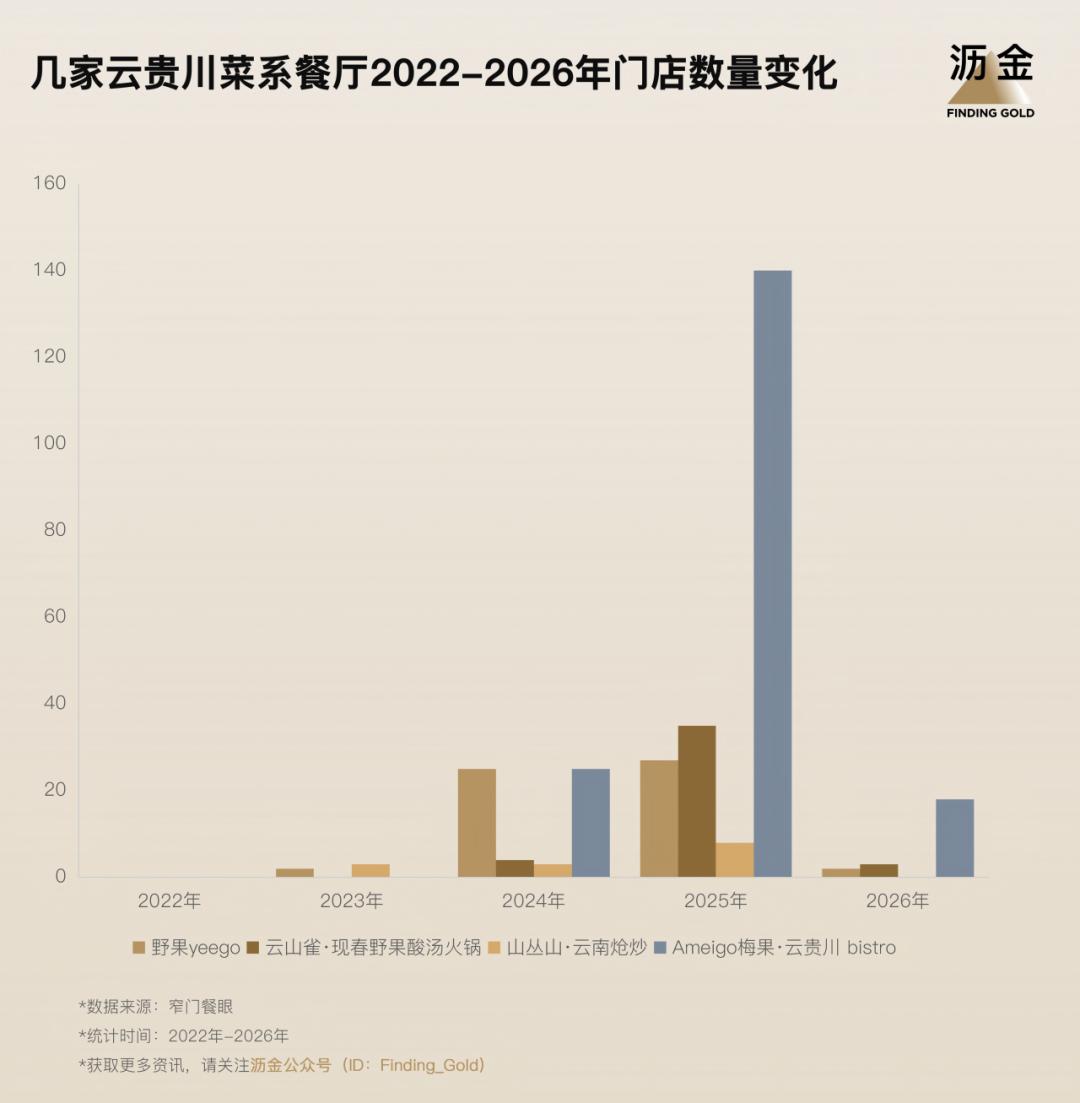
Fan Hui's failure is just a small stumbling block on Mei Guo's rapid expansion path. There was 1 store in 2023, 25 in 2024, and 142 in 2025. They opened 142 stores in a single year. Now there are 185 stores in total, 75% of which have been open for less than a year, and 95% are located in malls. They even entered Tibet in February this year.
Mei Guo is just a well - known example of the life cycle of Yunnan - Guizhou cuisine.
In 2024, Yunnan - Guizhou cuisine began to gain popularity. With the bistro concept combined with the essence of wild ingredients, the sour, fresh, and spicy flavors attracted young people to queue up for a taste. In 2025, the entire market accelerated. Brands were frantically offering franchises and targeting malls. The turning point came in 2026. Although the number of stores was increasing, the turnover of franchisees was dropping sharply. Many brands, including Yeego, Yunshanque, and Shancongshan, hit the brakes on store expansion this year.
It took less than three years for Yunnan - Guizhou cuisine to go from being extremely popular to reaching its peak and then declining. Why can't this niche cuisine become a popular taste? Does this category still have a chance? If Yunnan - Guizhou cuisine fades away, what will be the next big hit?
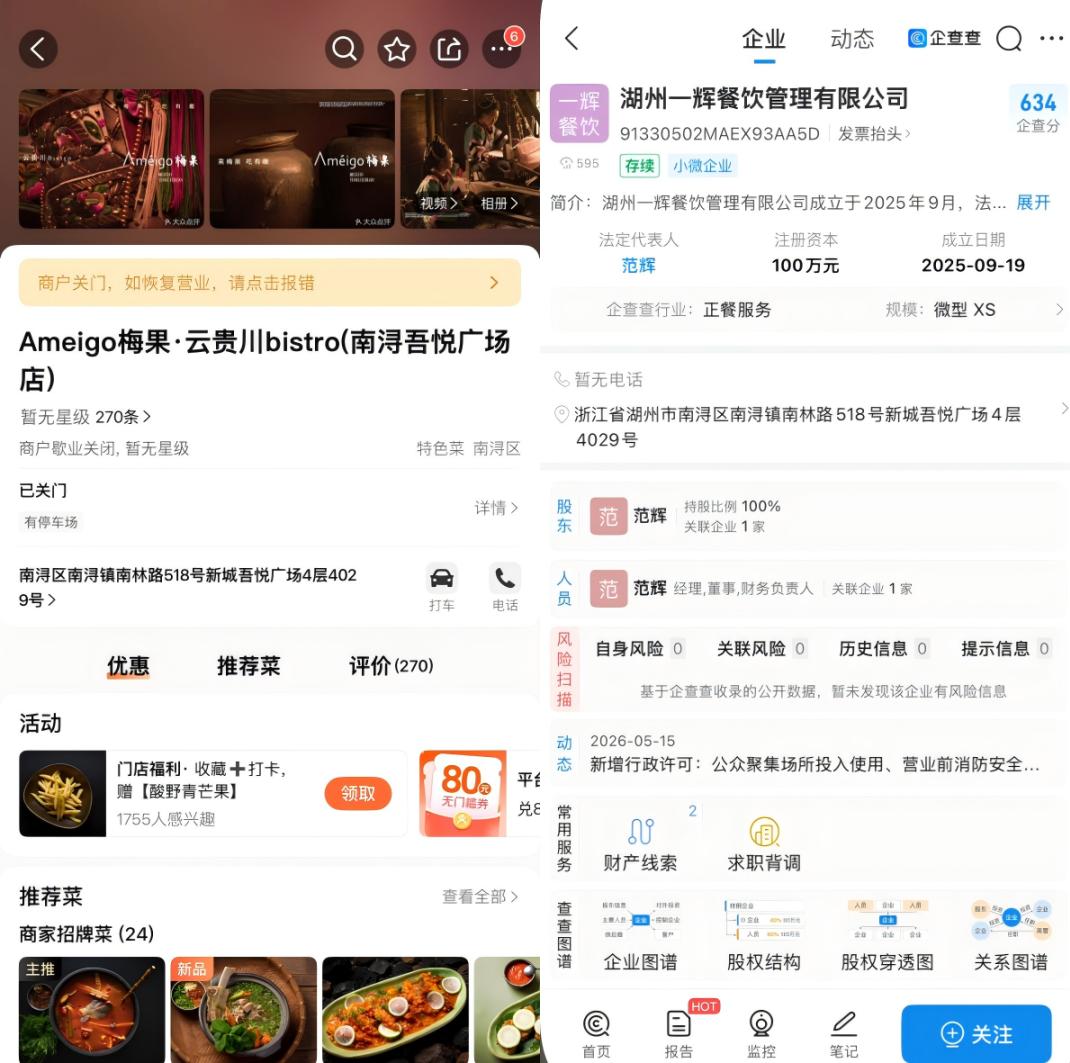
The relevant stores involved have been shown to be closed. Source: Qichacha and Dianping
Popularity: Three shots of dopamine, and everyone will line up
The popularity of Yunnan - Guizhou cuisine is not accidental. How it became popular can explain why it declined.
Firstly, it is a compensation for heavy - flavored food and a stimulant of the era.
Since 2023, the consumer environment has changed, but people's desires remain. Mild flavors can't awaken the taste buds of diners. The strong sour and spicy flavors, the unique aroma of litsea cubeba, and the pungency of heartleaf houttuynia in Yunnan - Guizhou cuisine can directly explode on the taste buds with just one bite.
In an era when people are reducing their desires, sensory stimulation is a scarce commodity. It is a low - cost dose of dopamine, which is cheap, filling, and exciting. The most important thing is that it is addictive.
Secondly, the bistro filter with a touch of sophistication gives Yunnan - Guizhou cuisine a sense of exotic value.
Traditional Yunnan - Guizhou cuisine is often found in small, unassuming restaurants. Dishes like cold - mixed heartleaf houttuynia and sour - soup fish are delicious but not well - known outside the region.
The new brands are smart. They dress up local dishes in a bistro style, with dim lighting, wooden tables and chairs, and industrial - style chandeliers.
The menu no longer simply lists the dish and its cooking method. Instead, there are names like "Stir - fried Ottelia acuminata" and "Fresh Fruit Red Sour - Soup Fish". These names are unheard of by urbanites, but they arouse curiosity. The more niche, the more precious they seem. A bowl of sour - soup noodles is packaged as a weekend ritual for office workers to escape the concrete jungle.
Diners are not just paying for the food; they are paying for the experience of a trip to Dali. With the filter, the average customer price can be raised. When two people sit down, the per - capita consumption is over 100 yuan, and they will post about it on their social media after the meal. The restaurant is almost full in the first three weeks because every customer is attracted by the recommendations on Xiaohongshu and Douyin.
Of course, the most important reason is that Yunnan - Guizhou cuisine is niche, unique, and decent enough to be a shield for the self - esteem of many middle - class consumers who are experiencing a consumption downgrade.
The bistro model raises the price of a bowl of rice noodles to 68 yuan, with an average per - capita consumption of 130 yuan. This price would have been criticized as overpriced in 2022. But after 2024, it fits into a strange but precise price range.
On the one hand, it meets the consumption upgrade needs of young people who want to have a stylish meal. On the other hand, it caters to the group of consumers who can't afford a 300 - yuan - per - capita Western meal but still want to post on social media.
For these reasons, Yunnan - Guizhou cuisine had long queues for two years. However, each of these reasons also planted a time - bomb.
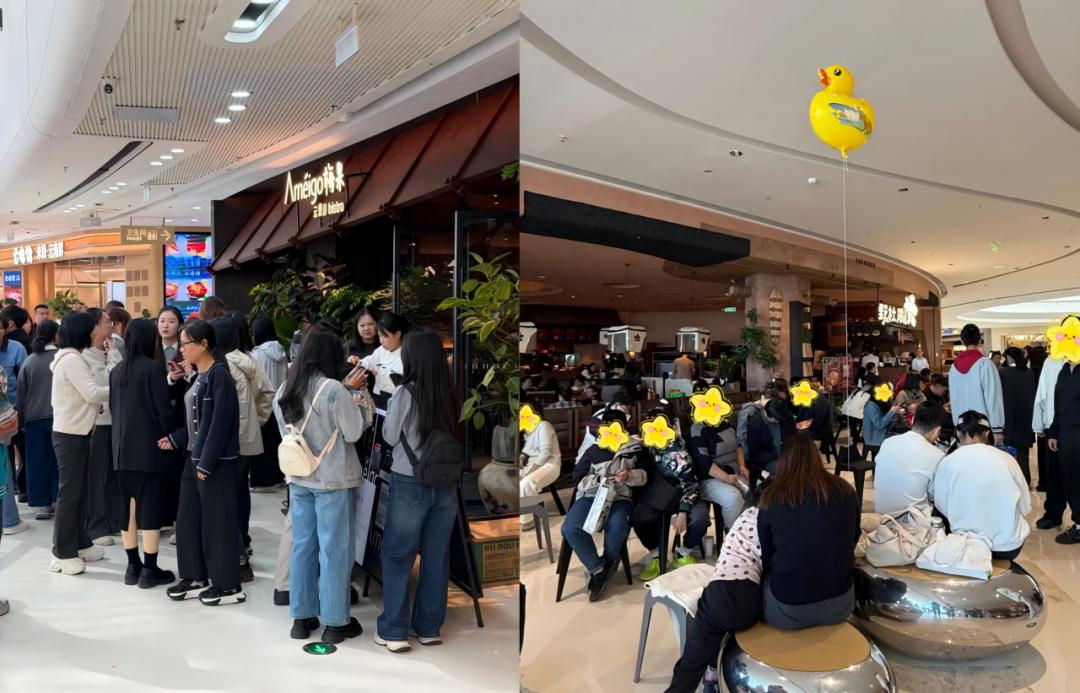
Consumers queuing in front of a Yunnan - Guizhou cuisine restaurant. Source: Internet
Collapse: After the traffic fades, the repurchase model is a big problem
Yunnan - Guizhou cuisine can create a queuing myth, but it can't survive the test of repurchase.
The turnover curve of Mei Guo's franchisees clearly shows this, dropping from 738,000 yuan to 549,000 yuan, then to 386,000 yuan, and finally to 220,000 yuan. This is not an isolated case but an inevitable result of the category's logic.
First, let's understand who Fan Hui, the store - smashing franchisee, is. A franchisee who can invest 4 million yuan in a single store and secure a location in Wuyue Plaza, Nanxun, Huzhou, usually has several profitable catering brands, mall resources, a team, and the right to priority in getting empty stores. He is the least likely to fail in this industry.
He had the best hand: a popular brand, a prime - location mall, a golden spot, and sufficient funds. The timing of his entry was not bad either. At the end of 2024, Yunnan - Guizhou Bistro was very popular, and Xiaohongshu was full of recommendations. However, his business failed in less than five months.
This shows that the problem lies not with the person playing the game but with the game itself.
Breaking it down, the profit model of Yunnan - Guizhou Bistro is based on three fatal assumptions, none of which can withstand scrutiny.
The first pitfall is the repurchase rate.
The flavors of Yunnan - Guizhou cuisine are too distinct, which also means they are too exclusive. Ingredients like heartleaf houttuynia are loved by people in Yunnan, Guizhou, and Sichuan, but most people outside the Southwest region are only willing to try it once in their lives. Niche ingredients often come with a high premium. For example, a small bowl of beef liver mushroom rice costs 188 yuan. Consumers go for the novelty the first time, need courage the second time, and it's almost impossible for them to go a third time.
What's the logic of a mall store? High conversion, high table - turnover rate, and customers coming back twice a week. But Yunnan - Guizhou cuisine can't achieve this. It is naturally a social - type consumption that people do once every six months and usually with friends. It's not a daily meal that people can grab on the way home from work.
Once the honeymoon period of a new store is over, the customers attracted by social media won't come back, but the rent, commissions, and labor costs remain the same. By the fourth month, franchisees are calculating whether they have enough money to last until the Chinese New Year.
The second pitfall is cost and scale.
The essence of wild vegetables lies in their wildness and freshness. This requires high - cost ingredients and supply - chain support, as well as large - scale stores and exquisite decoration to justify the high price in consumers' minds.
When there are a dozen stores, you can airlift fresh Ottelia acuminata. But when there are 180 stores, if you still insist on using cold - chain logistics, the logistics cost of a single order will be higher than the cost of the food itself. If you switch to frozen products to reduce costs, the taste of the ingredients will be ruined. The concept of "fresh and wild" will be completely destroyed.
This leads to a vicious circle in the catering industry. To make a profit, you need to reduce costs. To reduce costs, you switch to frozen products. Once you do that, consumers will complain that the food tastes bad, and the store will be deserted.
The third pitfall is the frequent public - relations risks of the brand itself.
Fan Hui's store couldn't issue invoices since January 2025, and its business license showed abnormal filings. The brand's general agent in Huzhou required him to pay an additional 3% tax to solve the problem, but Fan Hui refused. By April, there were continuous customer complaints, and the store was repeatedly reported for fire - safety issues.
Meanwhile, the Chongqing brand Anna Guo repeatedly accused Mei Guo of having a highly similar logo, space style, and brand concept. In May 2025, Anna Guo announced that it had won the trademark infringement lawsuit and would file appeals in more cities.
For a brand that is eager to expand by selling franchises, issues like being unable to issue invoices, being sued for trademark infringement, and having disputes between franchisees and the brand - owner will scare away potential investors.
The franchisee who smashed the store may have chosen the wrong brand from the start. However, his anger is directed at more than just Mei Guo.
The fourth pitfall is that the rapid recruitment of franchisees has accelerated the life cycle of the entire industry.
Comparing with Huma, the pioneer of Yunnan - Guizhou cuisine in Shanghai, the problem becomes clearer.
Huma opened in Jing'an, Shanghai in 2020 and was popular for six years. It only opened a small branch, CUCURUCU, next door by the end of 2024. The boss said that the target audience is limited, so large - scale expansion is not suitable. He is good at building from scratch, focusing on IP premium and slow growth.
Mei Guo has a completely different story. There was 1 store in 2023 and 185 by 2025, opening 142 stores in a single year. Huma couldn't achieve this expansion speed even in six years.
The problem is not just the speed. The real problem is that while expanding rapidly, franchisees don't even know how high the repurchase rate needs to be to survive. Can the table - turnover rate reach 8? Can the repurchase cycle be shorter than three months? Can the average customer price cover the mall's commission? The brand - owner hasn't calculated these figures, and franchisees can't figure them out either.
It's not that Yunnan - Guizhou cuisine has passed its prime. It's just that catering categories have their own life cycles. New tea drinks were popular for five years, marinated foods for three years, and pickled fish for two and a half years. Yunnan - Guizhou cuisine went from emerging to collapsing in less than two years. It's not that the category is bad; it's the rapid - franchise model that has accelerated the growth and decline of the category.
Huma proves that Yunnan - Guizhou cuisine can have long - term popularity if you are restrained. Mei Guo proves another truth: no matter how good a category is, if it is forced into a rapid - franchise framework, it will die faster.
Way out: Regional cuisine can have long - term popularity, but it must not rely on rapid - franchise
Yunnan - Guizhou cuisine is not dead. It's the high - premium, heavy - asset, and image - selling approach that has failed.
For a category that is naturally low - frequency, relies on fresh ingredients, and has exclusive flavors, forcing it into an expansion framework of high - frequency repurchase, standardized supply chain, and mall traffic is not an operational problem but a strategic one.
There are four things to consider if regional cuisine wants to develop.
First, return to the community from the mall and integrate into daily life.
Bistro is suitable for the initial stage but not for long - term development. Truly viable regional cuisine should end up in the community where people can have a meal just by going downstairs. Small - scale street - side stores with low fixed costs and affordable prices can ensure stable repurchase. For example, those small Yunnan rice - noodle shops that have been open in the community for five years are more sustainable than most bistros.
Second, localize raw materials and standardize seasoning packets.
Source bulk ingredients locally, such as beef, vegetables, and mushrooms from local markets to ensure freshness and control prices. The key seasonings should be directly shipped from the origin. Black truffle sauce, litsea cubeba oil, sour - soup base, and special dipping sauces should be produced by the headquarters in a standardized way and then distributed uniformly. The larger the scale, the more important this supply chain is. If the flavor changes, the brand is doomed.
Third, make popular modifications to niche flavors.
Absolute authenticity means a narrow market. When regional cuisine leaves its origin, it must make some concessions in terms of spiciness. It's not about making heartleaf houttuynia sweet but about turning it from a novelty dish that people need courage to try into a comforting side dish. Only when Yunnan - Guizhou cuisine no longer requires the "courage" factor can it truly go national.
Fourth, IP can be sold, but franchises should not be sold blindly.
Yunnan - Guizhou cuisine can build a brand IP but is not suitable for rapid - franchise. This category is highly dependent on ingredients and flavors, and the cost of standardization is extremely high. Relying on franchise fees to drive expansion will almost certainly lead to problems. The successful ones must be direct - operated or under strong control, using IP premium for slow growth instead of using the money of franchisees and investors to increase the number of stores.
Products should always be one step ahead of the brand for the brand to last. Once the situation is reversed, the brand's downfall is just a matter of time.
Comment by Lijin
Fan Hui's few hammer blows hit the most vulnerable part of the entire regional catering industry.
The problem is not that the food is not delicious. The problem is that this business model has welded two contradictory things together from the start: an expansion model that requires high -