When a 30-year-old physics Ph.D. starts a business in AI4S: His attempts, waiting, and ambitions | A conversation with NAN Kai, CTO of New Research Intelligent Materials
Under the preview we posted last week, there was a comment: "Your 30s and mine seem to be different."
Nan Kai is 30 years old this year. In today's startup narrative, he is not typical. He can't compete with the genius teenagers born in the 2000s, nor is his story the kind that VCs like to tell about "dropping out of school to start a business". In terms of resources, he seems to be a bit inferior to those who have worked in the industry for two or three decades.
But before he turned 30, he had already done many things.
He completed his Ph.D. in physics. During his Ph.D., he published two papers in PRL as the first author, one of which overturned a 40-year-old classic theory. He worked in a big company for a while, which made him clearer about what he didn't like. Later, after a 40-minute phone call with the CEO of SynMat, he resigned, moved, and returned to China within 10 days to become the co-founder and CTO of the company.
Just last week, SynMat announced the completion of tens of millions of yuan in financing. Another line was added to his experiences before the age of 30.
In my opinion, he has a relatively rare label among AI4S entrepreneurs at present:
Compared with younger people, he has a bit more judgment gained from time;
Compared with more senior people, he has a bit more curiosity about new things and the courage to take risks.
Part 1
Try, and Keep Trying
SynMat is a company focusing on AI for Materials. It mainly focuses on high-barrier materials such as advanced semiconductor packaging, aiming to make AI evolve from auxiliary R & D to truly participating in material invention, and gradually transform the traditional R & D method that relies on experience and trial-and-error into a predictable and iterative systematic project.
This direction was finally determined by Nan Kai after researching and practicing in multiple directions.
Before anchoring this direction, he had been trying.
He was in the experimental class of the School of Precision Instrument and Optoelectronics Engineering at Tianjin University for his undergraduate studies. The experimental class required students to study all the courses of the school's majors in the first three years and exchange at overseas universities in their senior year.
Laser, optics, automatic control, single-chip microcomputers, biomedical engineering, signal processing... Students had to get in touch with all the professional directions in the school.
The price was an extremely tight schedule. From Monday to Friday, classes started at 8 a.m. and ended at 9 p.m. at the latest. While others always had one or two days with a bit more free time, they were almost always operating at full capacity.
In Nan Kai's view, this high density actually gave him extensive and continuous opportunities to try .
He and his classmates built a tracking car, which was an early model of autonomous driving; they did single-chip microcomputer development; they were exposed to medical engineering and developed medical imaging equipment using optical systems.
He also joined a Formula racing team with his classmates. For each racing car, students had to complete the design and assembly of the frame, aerodynamic kit, chassis, suspension, and engine by themselves. From modeling and mold opening to debugging and endurance races, all problems had to be solved in reality.
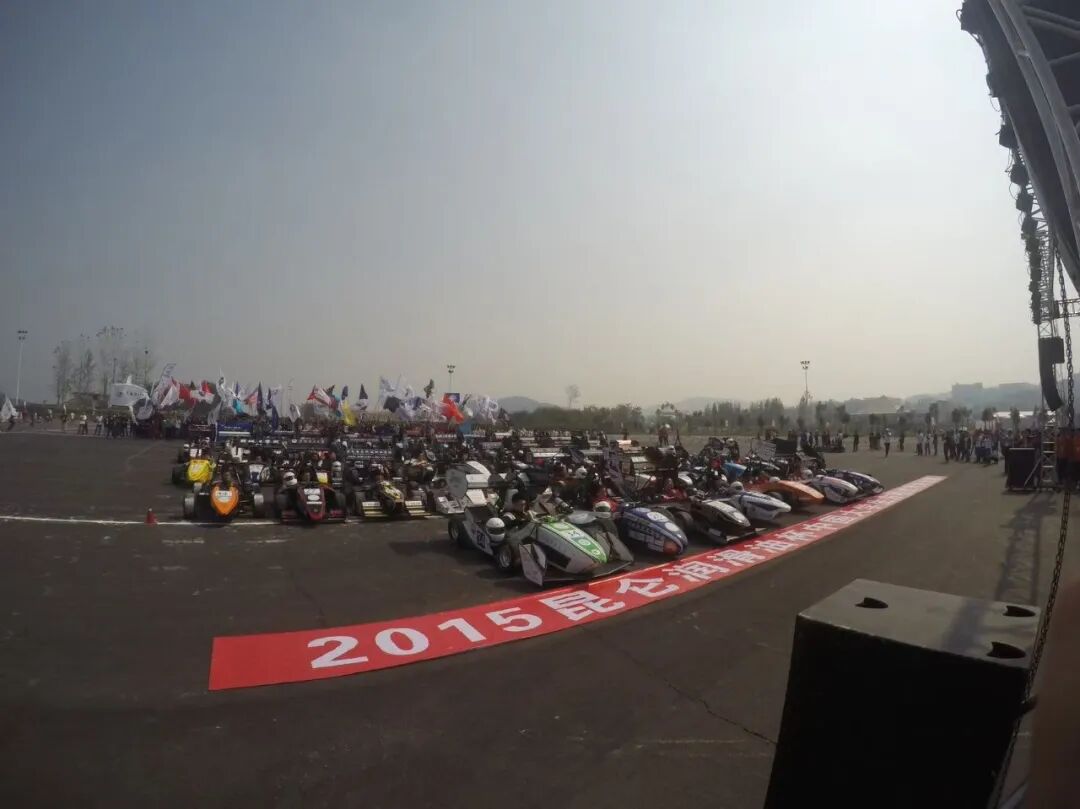
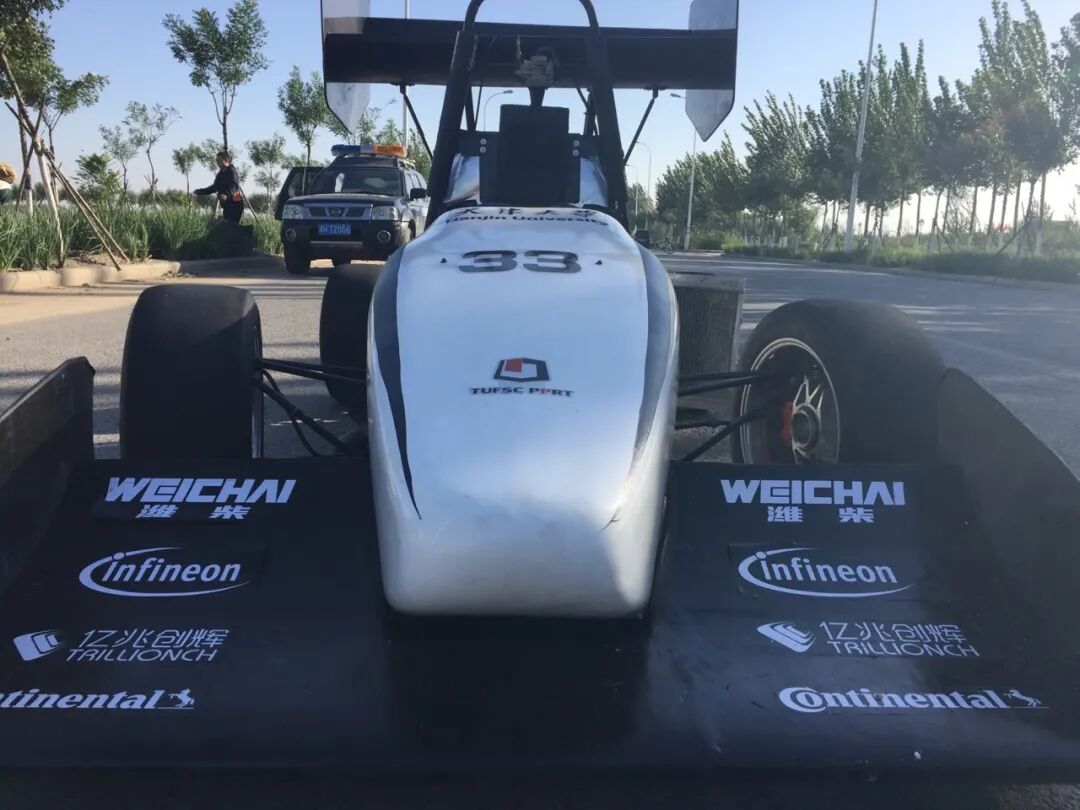
Nan Kai found a photo from 2015 when he and his classmates represented Tianjin University in a Formula racing event from his photo album.
In his senior year, he went to the University of Maryland in the United States to participate in research in the field of medical instruments, developing systems related to OCT (Optical Coherence Tomography) and FLOT, and conducting non-destructive depth scanning of human tissues through optical methods.
It was also there that he had a concrete and real feeling about "scientific research": Human science and technology are like a circle, and scientific research work is to push this circle a little bit outward in a certain direction. From a distance, that little bit is almost invisible, but it really exists and will remain in history.
However, after a brief study in the field of medical instruments, he finally chose theoretical physics, focusing on a relatively niche and more difficult field in condensed matter physics, Soft Matter.
This is a field that studies how complex materials move, deform, and break. Why does glass break? Why can chewing gum be stretched? Many seemingly ordinary questions hide complex physical mechanisms behind them.
Looking back later, Nan Kai also had moments of regret. Especially when the experiments made no progress for a long time, he would wonder why he didn't choose a direction where it was easier to achieve results.
The later story is that challenging the classic physics theory that had been accepted by the academic community for 40 years, the classic crazing theory established by American physicist E. J. Kramer and others, became Nan Kai's biggest label.
I asked him why he chose to overturn a theory that had existed for so long.
His answer was quite honest. He said that at first, it was because he entered the wrong parameters, and the result conflicted with the expectation. During the process of checking, he seemed to really find a new direction, and he just kept going.
"It's an inevitability in chance," he summarized.
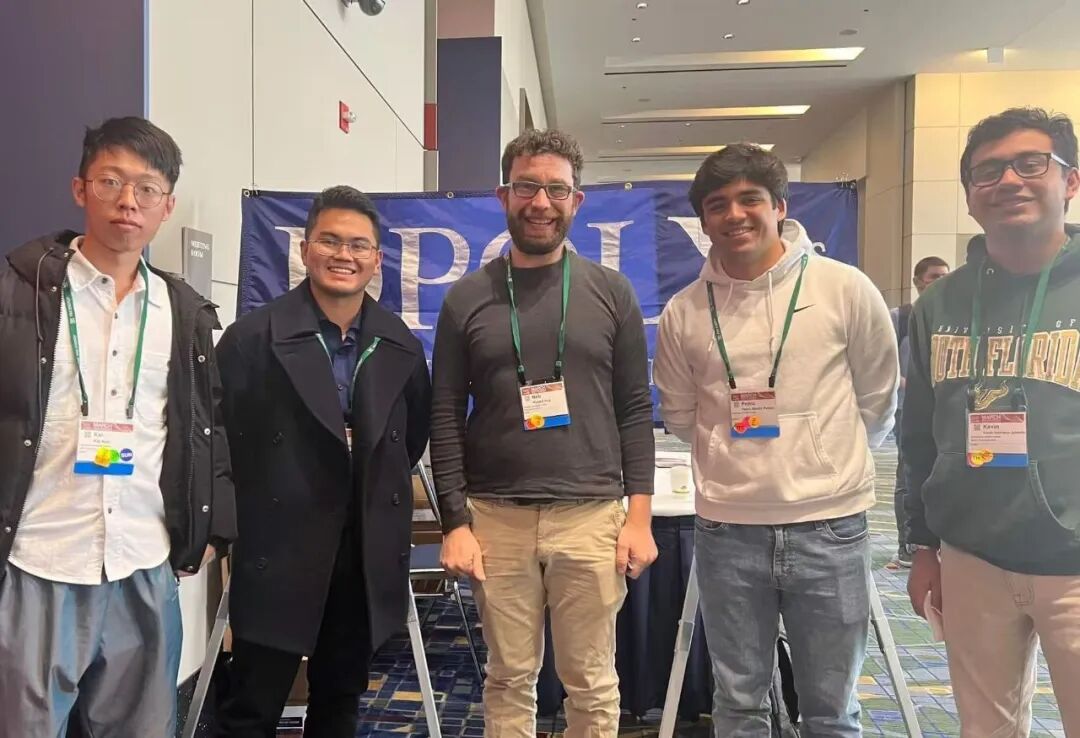
The research group where Nan Kai was doing his Ph.D. at the University of South Florida
There is no need to go into details about the various difficulties in the research process. I believe that the path to publishing a top-conference paper is full of thorns.
In short, he finally published two papers in PRL (Physical Review Letters) as the first author during his Ph.D. stage. This is one of the most important journals in the field of physics, and many Nobel Prize-winning achievements were first published here.
One of them was the paper that challenged the classic crazing theory. Nan Kai proposed a new mechanism and formula, proving that materials originally considered to be inevitably brittle can actually have ductility, providing new possibilities for high-toughness flexible electronic materials in the future.
Part 2
Anchor the Problems in the Industrial World
When Nan Kai learned that the second PRL paper, the one that brought him a lot of negative feedback, was finally published, he was at the airport on his way back to China from the United States.
He described that moment as extremely relaxing. "It's usually hard for me to fall asleep on the plane. Economy class is small and cold, but that time I had a good sleep on the plane," he said.
He had achieved scientific research results that many people never have in their entire lives, but why didn't he continue on the scientific research path?
"I don't have the goal of getting a faculty position in my life," he said.
On the one hand, theoretical physics is too far from the industry. It may take 5 - 10 years for a theoretical discovery to be applied in the industry. On the other hand, doing scientific research would confine him to a small town, spending every day between the school and the laboratory, while he wanted to have the opportunity to participate in the wave.
In the later stage of his Ph.D., Nan Kai joined the AI4S team at ByteDance. The model is a bit similar to Google X or the American biotech company Flagship - both doing frontier research and trying to incubate internal projects.
The direction of his group was mRNA drug R & D. Specifically, it was to use AI to find targeted and stable mRNA sequences, further predict their secondary and tertiary structures, and then hand them over to the experimental team for verification.
This had little to do with the material physics he had done before. He even said, "I've already returned all my biological knowledge to my junior high school teacher."
He had to start from scratch. He relearned biological knowledge, reread literature, and re - understood the structures of RNA, proteins, and nucleic acids.
He described the first month as "agonizing", but he also enjoyed this state.
Because in that team, there were members with backgrounds in AI, biology, medicine, computational simulation, etc. They constantly discussed the same problem from different perspectives.
He became more clearly aware that to solve the complex problems in the industrial world, interdisciplinary approaches were often the only way. Later, when starting a business, he consciously continued this interdisciplinary collaboration - letting people with different backgrounds constantly collide around the same problem.
As we all know, in the field with the name "AI4S", the combination of AI and biology has been quite mature. From protein structure prediction to drug discovery and then to generative biological design, a complete ecosystem is gradually taking shape.
But in the material field that Nan Kai is most familiar with, almost no one discusses AI. At an international conference, he even specifically asked Andrew Liu, a member of the US National Academy of Sciences: Why are there so few people using AI in the material field?
Because the material industry has a low degree of acceptance of AI.
On one hand, AI + biology is developing rapidly, while on the other hand, AI + materials is almost blank. This made him start to seriously study how AI should enter the material industry.
SynMat is his answer.
At the end of 2024, after a 40 - minute phone call with the CEO of SynMat, he realized that this was the direction he had been looking for. The next day after hanging up the phone, he submitted his resignation to his current company. Within 10 days, he packed his luggage, sold his furniture in the United States, returned to Shenzhen, and started the earliest R & D in a small room.
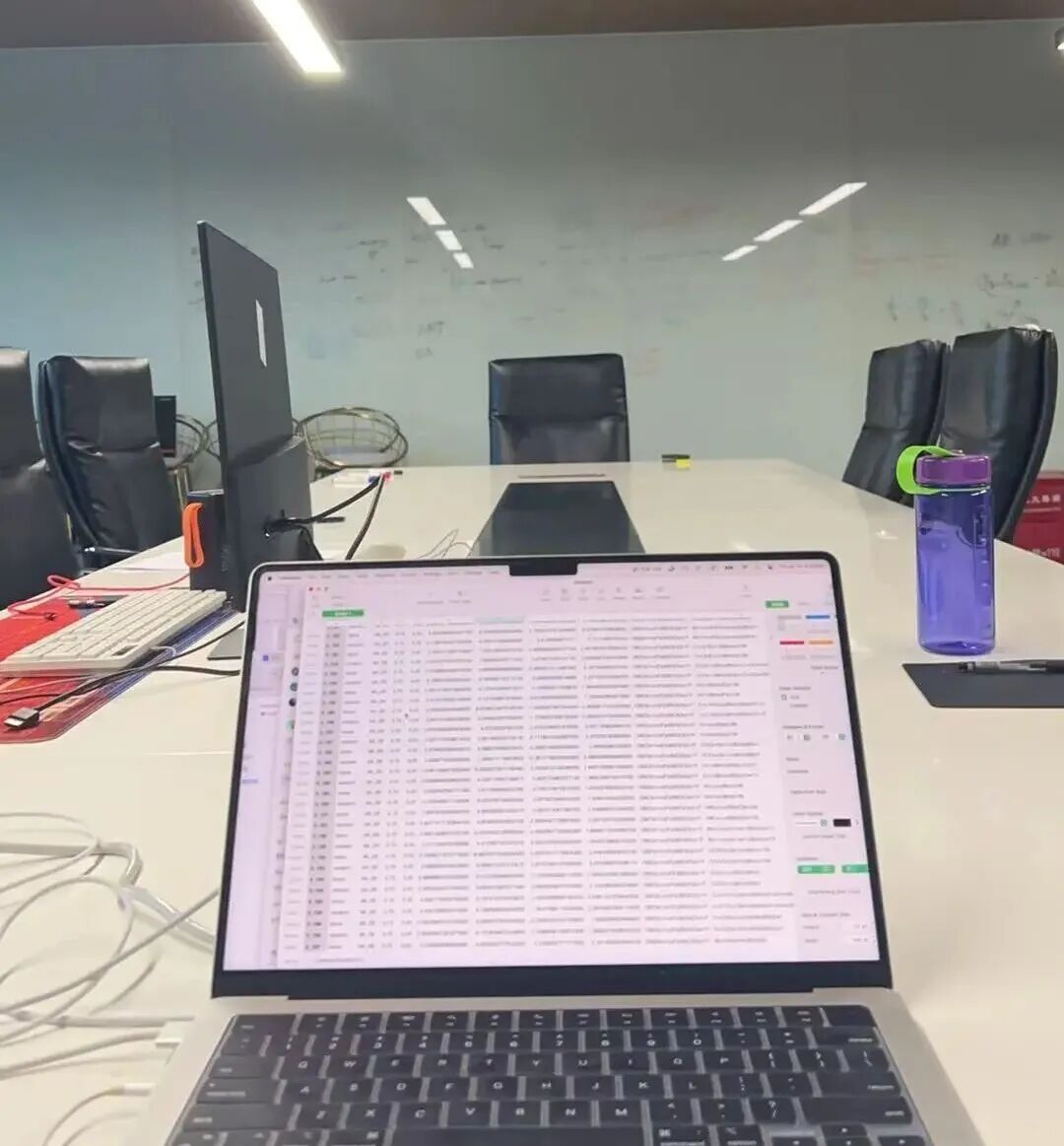
Nan Kai started the business of SynMat in a small room in Shenzhen.
Part 3
Starting from NVIDIA and SK Hynix...
In the office of Shanghai Ivy Capital, I met Nan Kai and Zhang Jian, the investor of this round. Zhang Jian told me that they had observed that there would be great opportunities in AI for materials, so they had been looking for a team that could change the dilemma of new material R & D.
The industry trend he saw was that on one hand, when more and more industries were being rewritten by AI, new material R & D still remained in a stage highly dependent on experience and repeated trial - and - error. It might take several years to explore a new material direction. The key experience was in the minds of a few engineers, and the truly valuable formulas and processes were naturally highly closed.
On the other hand, in the past, material R & D rarely entered public discussions, but with the escalation of the AI computing power competition, they began to be pushed to the forefront.
SK Hynix, which can provide HBM (High - Bandwidth Memory) necessary for AI training and inference, has almost become one of the biggest beneficiaries of the AI wave, which is the most typical example.
GPU is the foundation of AI large models; but the upper limit of GPU increasingly depends on HBM, advanced packaging, and thermal management systems; breaking down these capabilities further, it all comes back to materials.
Zhang Jian found that the direction that SynMat is targeting is fundamental enough - focusing on advanced semiconductor packaging materials with high technical barriers and long - term risk of being "choked", such as key optical bonding materials for CPO (Co - Packaged Optics), thermal interface materials required for high - performance computing such as GPU/HBM, and high - barrier electronic chemicals such as the most advanced photoresists and precursors.
Nan Kai told me that they have two capabilities, one is an Agent for material R & D, and the other is to develop materials themselves.
Nan Kai borrowed the grading logic of autonomous driving and divided AI - assisted material R & D into three levels:
L1 (Completely dependent on humans): The traditional workshop - style R & D model.
L2 (AI - assisted): Algorithms enter the system to help engineers with some auxiliary work such as image scanning and structural analysis.
L3 (AI - dominated): AI leads and guides the construction of the entire R & D pipeline, and human engineers become the assistants of AI.
SynMat has currently achieved the L3 - level dominant mode.
Under the operation system of SynMat Agent, even a newly recruited young engineer can directly get a complete experimental report generated by the intelligent agent. The engineer only needs to follow the instructions to conduct experiments, and after the experiment, feed the real data (including errors in the physical world) back to the intelligent agent, which will make the next judgment and correct the plan.
Material R & D is an extremely complex experimental science. Temperature, humidity, raw material batches, and equipment status are all variables. Through this L3 - level intelligent agent interaction, SynMat has successfully compressed the R & D cycle of a certain high - end thermal conductive material from at least two years as expected in the industry to just three months.
The concept of Agent seems to be well - known in many industries and is even a bit over - hyped, but in the material field, it still faces many difficulties.
The formula is the most valuable thing in the material industry. "The formulas and processes of material companies are their lifelines, and they are reluctant to disclose any clues," Nan Kai introduced.
So material companies are naturally reluctant to share data. Once they open up their experimental data, parameters, and process flows, they are opening up their "formulas".
To further solve the problem of insufficient data in the material field, SynMat is currently developing an AI goggle. In traditional material experiments, paper records can only retain the final results, and many details and human errors in the process are often lost. After wearing the AI goggles, every move of the experimenter, the video images during the process, and the subtle changes in the physical world will be collected in real - time and completely into the data warehouse of the Agent.
Regarding the closed - minded attitude in the industry, SynMat has also found a solution: Using semiconductor materials as an entry point, completely opening up the R & D pipeline in an extremely vertical and niche field to form a closed - loop.
"Why choose semiconductors? First, the industrial revolution triggered by AI has put forward unprecedented high - performance requirements for semiconductor materials such as chips; second, our team has a strong semiconductor gene; third, the bottom - layer materials are nothing more than organic, inorganic, and composite materials, and semiconductors happen to cover all three."
N