Behind the slogan of "The whole province supports Wuhan", there lies the toughest and warmest secret of Hubei.
"It's okay not to win the championship, but we must defeat Wuhan."
As soon as the Hubei Super League kicked off in 2026, this slogan went viral online.
Seventeen city and prefecture teams faced off against each other. With a ticket price of 9.9 yuan, it directly drove 4.4 billion yuan in consumption.
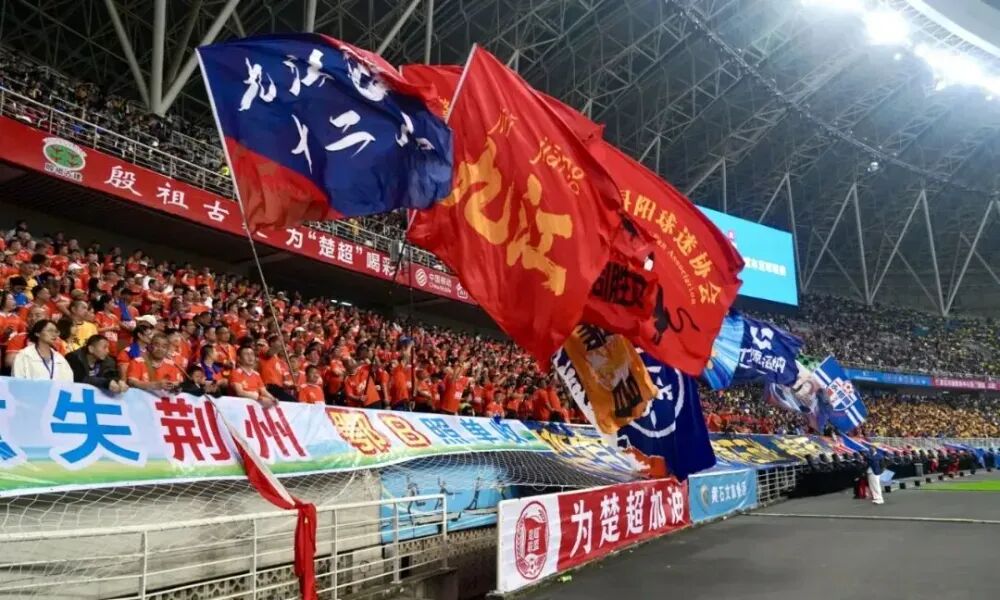
On the pitch, the war drums thundered and the shouts shook the sky.
Off the pitch, the economic pulse of Hubei is also spreading across the land of Jingchu in this spirit of "refusing to yield."
In recent days, Zhengjieju was invited to participate in the special event "China's High - quality Development Tour in 2026: Forging Ahead in Hubei." Over several days, we visited the three cities of Wuhan, Xiangyang, and Yichang.
As the "Golden Triangle" of Hubei's development, these three cities are home to nearly 60% of the province's population and over 70% of its economic output.
When we stepped into the front - line of industries, in the midst of high - tech and the hustle and bustle of daily life, we truly felt the most hardcore and human - touch side here.
Light and Computing Power
Our first stop on the Hubei trip was Huagong Technology.
Here, there are "the fastest knife, the most accurate ruler, and the brightest light."
In recent years, AI has become increasingly popular. The smarter artificial intelligence becomes, the higher the demand for computing power. And as computing power gets stronger, data is more likely to "get stuck in traffic."
Recently, Huagong Technology, located in Wuhan Optics Valley, launched the world's highest - speed 12.8T XPO optical module.
Simply put, it is equivalent to highly integrating 8 1.6T optical modules into a super module. It's like turning a country dirt road into an eight - lane expressway. In theory, it can transmit hundreds of high - definition movies per second.
At this year's Wuhan Optoelectronic Exposition, Huagong Technology also launched the automotive Ethernet high - speed communication optical module for the first time in the industry.
It can support the access of high - definition sensors with tens of millions of pixels. In the future, after optical fibers replace copper wires in vehicles, the delay of in - vehicle signal transmission will be reduced from milliseconds to microseconds, with a reaction speed hundreds of times faster. It is expected to become the third trillion - level track in optical communication.
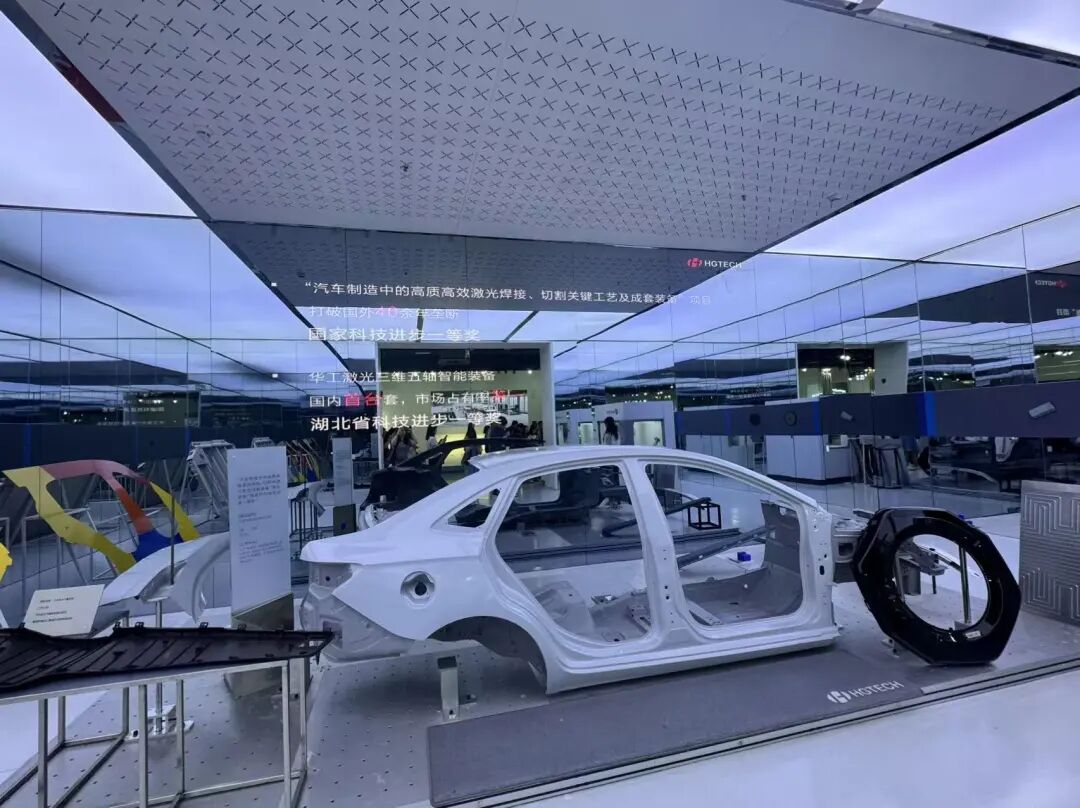
In addition, the company's self - developed single - wave 200G silicon optical chip has a high yield rate and excellent performance, ranking among the top in the industry.
Upstream in AI chip manufacturing, Huagong Laser's 12 - inch high - end wafer laser processing equipment, with 100% domestic core components, has entered the production lines of global top - tier memory manufacturers.
It's not just Huagong Technology. In Wuhan Optics Valley, there are already 16,000 optoelectronic information enterprises. In 2025, the scale of Hubei's optoelectronic information industry exceeded 1.1 trillion yuan.
If Wuhan is responsible for "building roads," Yichang is responsible for "supplying power."
This "power" is called computing power.
Whether you're swiping short - videos, making QR - code payments, using AI to retouch photos, or converting voice to text, it's all computing power at work behind the scenes.
Yichang is now known as the "Capital of Computing Power in Central China" because it has two aces up its sleeve:
Firstly, green electricity. Yichang has world - class hydropower projects such as the Three Gorges and Gezhouba. The proportion of clean energy installed capacity exceeds 94%. The stable and abundant green hydropower is the underlying foundation for the round - the - clock operation of data centers.
Secondly, geographical advantage. Yichang is exactly at the geometric center of the eight national computing power hub nodes. Data sent from here can have a delay controlled within 10 to 15 milliseconds.
Relying on these advantages, Yichang has built the largest - scale computing power cluster in Hubei. In 2025, the output value of the big data and computing power economy here exceeded 100 billion yuan.
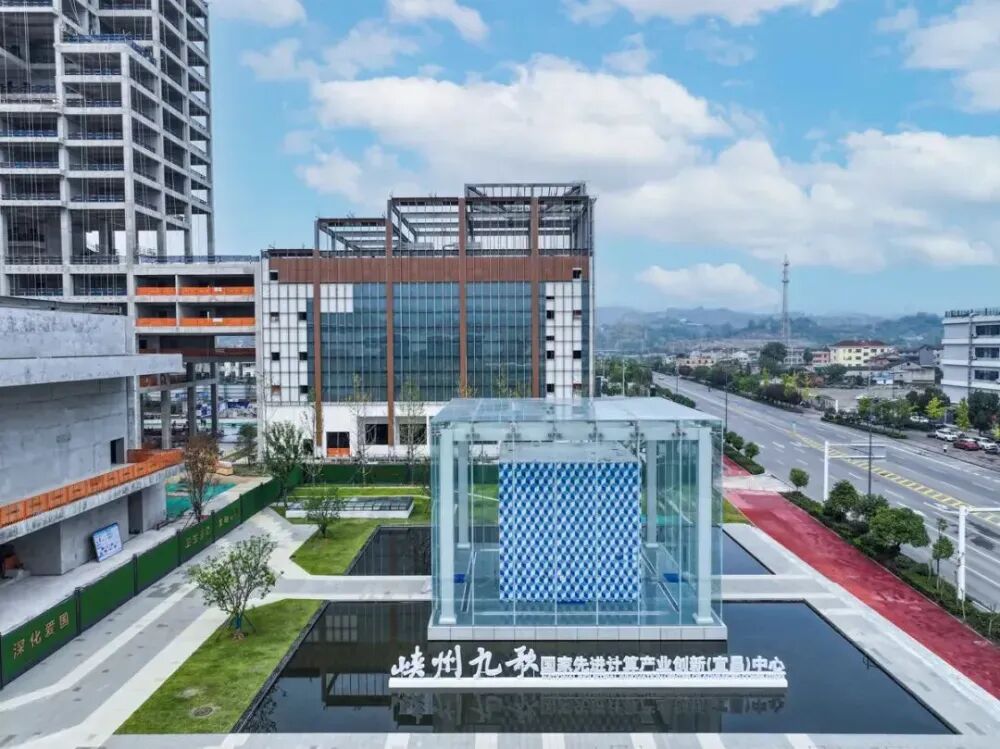
Combining Wuhan and Yichang, one is responsible for making data travel fast, and the other is responsible for making computing power operate stably. One is soft, and the other is hard. They are a perfect match.
This is not just the success of two enterprises and two cities. It is also a crucial leap for Hubei from a transit station on the crossroads of nine provinces to a national science and technology hub.
Digital and Intelligent Factories
After leaving Huagong Technology and entering the intelligent factories in Wuhan, you might think you've traveled into a science - fiction movie.
In the Xiaomi Smart Home Appliance Factory in Wuhan, there are no swarms of workers, only the rumbling of machines.
Above, there are overhead conveyor belts. On the ground, there are AMR self - navigating robots. The robotic arms precisely grab and install. The intelligent logistics coverage in the whole factory is as high as 94%.
An air - conditioner rolls off the production line every 6.5 seconds here.
There is also a lights - out workshop here. Usually, there's no need to turn on the lights. The entire process of stamping, assembling, and inspecting the air - conditioner shells is completed without any manual intervention.
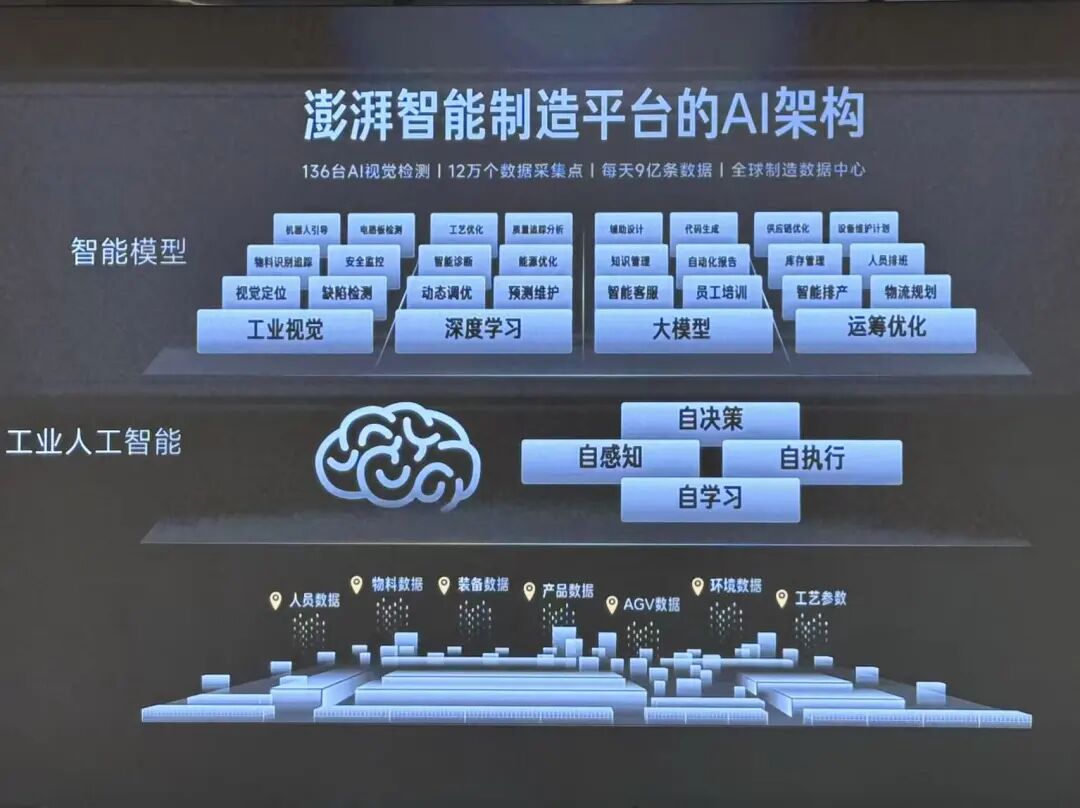
Because these machines have their own "brains." Through the Xiaomi Pengpai Intelligent Manufacturing Platform, the whole - process data collection, analysis, and processing are all automatically completed. The machines can think and correct errors on their own.
In addition, while traditional factories are still conducting manual spot - checks, the Xiaomi Smart Home Appliance Factory has introduced AI visual inspection. A high - definition camera takes a picture of a part, and the edge - side AI model instantly determines whether it is qualified or not. It's not only fast but also more accurate.
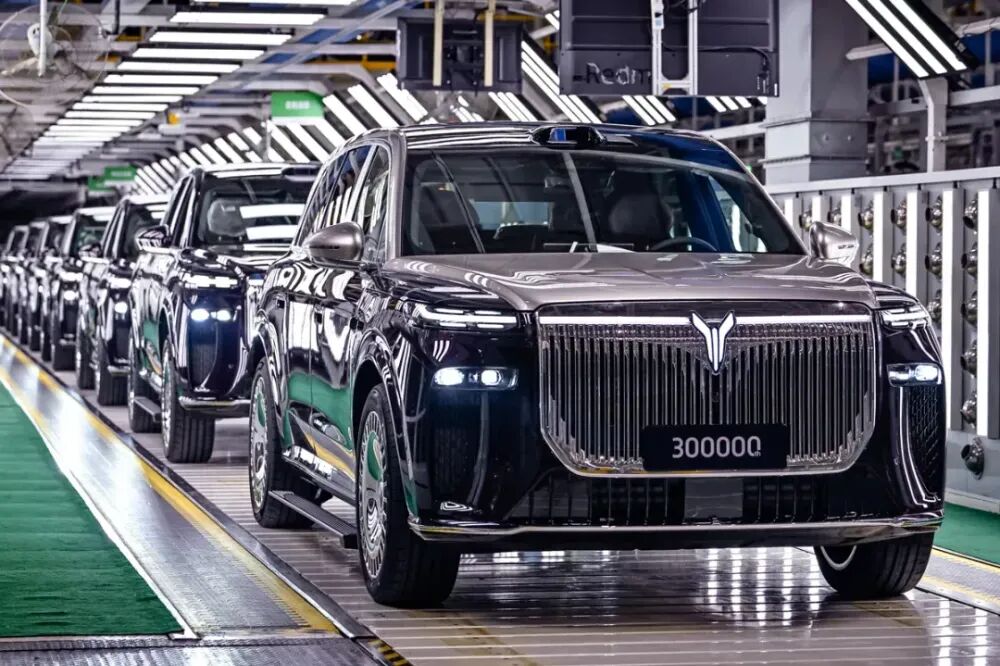
When you enter the final assembly workshop of the VOYAH Automobile Factory, you'll be shocked by the pace here: on average, a new - energy vehicle rolls off the production line every 63 seconds.
But what's even more impressive than the speed is that there is the first 100% domestic - made welding production line in China. From the control system to the robots and then to the sensors, they are all made in China.
In the final assembly workshop, the robotic arms operate precisely. The artificial intelligence visual inspection system monitors every assembly process in real - time. Digital programs are quickly written into the vehicle's intelligent module like doing homework. From the moment each vehicle is born, it comes with a "digital ID" and can be traced throughout the process.
From the labor - intensive approach to the lights - out factory, what we're seeing is a silent revolution in Chinese manufacturing.
In the past, factories competed based on the number of workers and the amount of overtime. Now, they compete based on how smart the machines are and how intelligent the systems are.
The way Chinese people make things has completely changed.
This is not just the progress of Wuhan. It is also a microcosm of the transformation from "Made in China" to "Intelligently Made in China."
A Peach and a Road
After seeing the high - end technology, let's turn our attention to the fields.
In Hubei, besides the hardcore technological backbone, there is also the warm flesh and blood of people's livelihood.
In Jiulong Village, Xiongji Town, Zaoyang City, Chen Ming, a 95 - post - 95s veteran, returned to his hometown to become a village cadre. After seeing village cadres from various places live - streaming to sell products, he also tried shooting videos and gained more than 5,000 followers in half a month.
But he didn't take the path of becoming an internet celebrity. Instead, he established the "Taodaming" team. Among the 11 members, 9 are real peach farmers, and the oldest is in his 60s.
He buys high - quality peaches at a high price and teaches the elderly farmers step - by - step how to shoot videos and set up links. The company takes care of opening stores, shipping, and logistics. In this way, farmers can not only make money by selling peaches but also earn an extra commission.
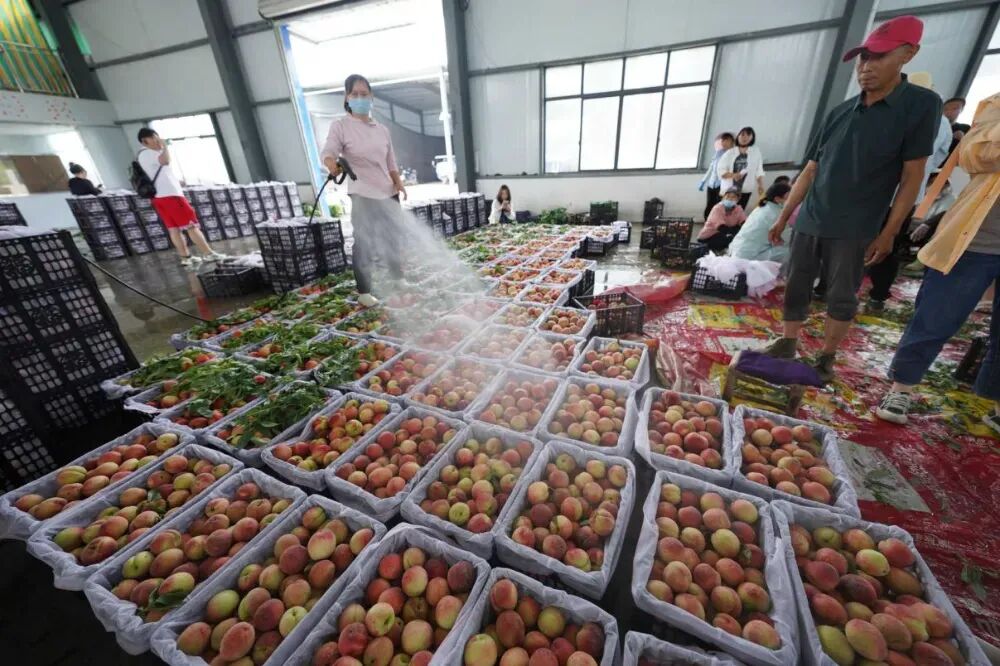
Besides fresh peaches, peach canned food, peach wine, peach gum... A complete industrial chain is taking shape rapidly in the "Hometown of Peaches in China." By the end of 2025, the brand value of "Zaoyang Royal Peaches" reached 14.731 billion yuan, ranking first in the southern peach industry.
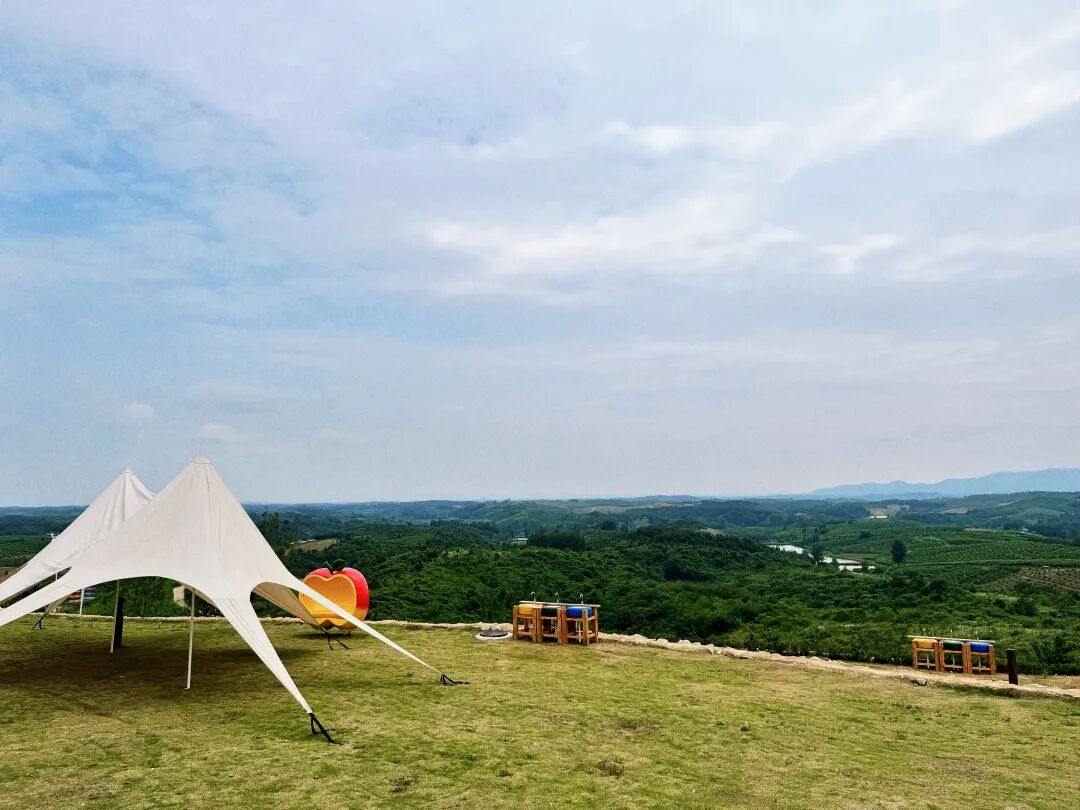
In addition, Zaoyang also invested 54 million yuan to build a royal peach industry demonstration park, creating a four - season cultural and tourism IP of "enjoying flowers in spring, picking fruits in summer, exercising in autumn, and tasting cured meat in winter." It has driven the development of more than 70 rural homestays and over 30 guesthouses in the surrounding area. During the peak flowering season, the daily turnover of rural homestays exceeds 10,000 yuan.
A small peach has become the "fruit of prosperity" for farmers and the "golden fruit" for rural revitalization.
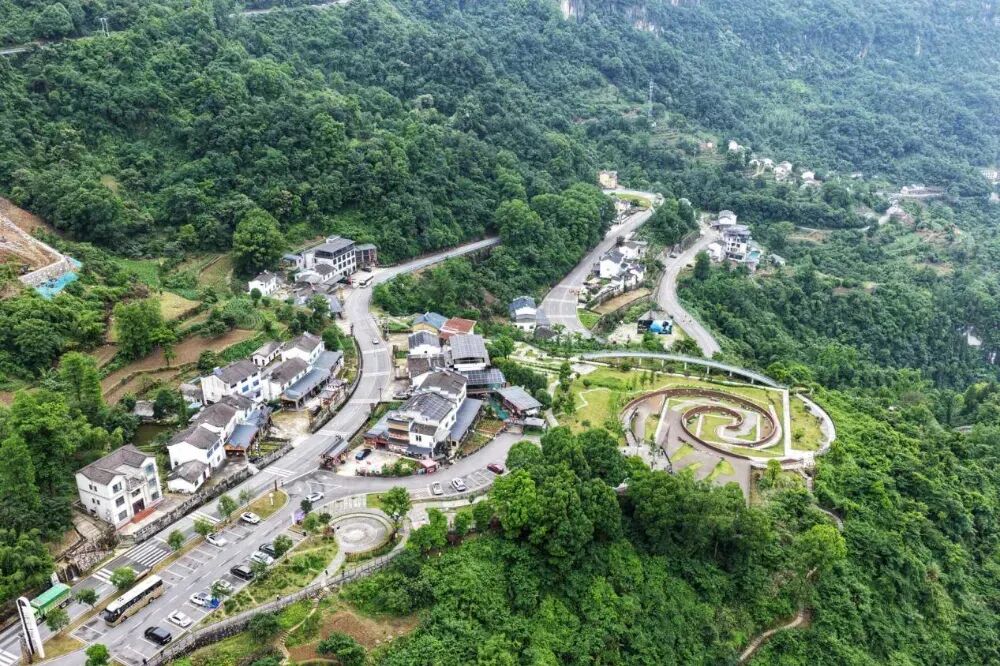
In Yichang, there is the G348 Three Gorges Highway, which is only 39.6 kilometers long. Its predecessor was a lifeline hand - dug by the military and civilians in the 1970s. Now, it has been transformed into a "geological science - popularization corridor."
Once the road improved, people started to come.
Wang Lei, a 90 - post - 90s boss, is from Liantuo Village. In 2015, Wang Lei decided to return to his hometown from Wuhan and converted his old family house into a riverside guesthouse to receive tourists. During the peak season, the guesthouse and the restaurant are always full of customers, and it has also driven the employment of many villagers in the surrounding area.
Mao Muwen, a 00 - post - 00s young man from Hunan, accidentally passed by on his bike. Because the scenery was so beautiful, he didn't want to leave. He went from setting up a roadside stall to renting a small courtyard to open a coffee shop and has settled down here.
Now, there are more than 1,000 guesthouses, restaurants, and coffee shops along this highway.
Data from the Yiling District Human Resources and Social Security Bureau shows that in the past three years, 2,257 people have returned to their hometowns to start businesses in the district, driving 13,000 people to find employment. Just along the G348, about 80% of the farmers have benefited.
Those young people who used to have to go out to work have come back.
Small changes in small places often represent big changes in a country.
True high - quality development is not just about making a few people soar higher. It's about enabling more and more people to live a good life without leaving their hometowns.
Great Protection of the Yangtze River
In Hubei, when talking about development, the Yangtze River cannot be avoided.
Yichang was once the second - largest phosphorus ore hinterland in Asia. Relying on its natural resources, the chemical industry was once the first 100 - billion - level pillar industry. But at that time, it was a wild - growth situation. Factories occupied the Yangtze River shoreline, and transformation was urgently needed.
After a painful reflection, Yichang carried out a "radical cure."
In the Xingfa Group in Xiaoting, the contrast in the exhibition hall is the most striking: ten years ago, there were industrial facilities along the river and numerous cranes; now, it is lush with greenery and the river breeze blows gently.
Since 2017, Xingfa Group has decided to close sewage outlets, demolish 32 sets of riverside facilities, and vacate and re - green about 900 meters of the shoreline. The asset value of these facilities alone reached 1.358 billion yuan. Coupled with subsequent environmental protection investments, the total exceeded 20 billion yuan.
