Tesla and SpaceX are reported to be merging. Elon Musk is secretly planning an epic integration, with a valuation aiming for $3.6 trillion.
"Musk's Trifecta": Is an Epic Integration on the Horizon?
Recently, foreign media reported that Elon Musk might merge two of his tech giants - SpaceX and Tesla.
Everyone is familiar with Tesla. SpaceX (Space Exploration Technologies Corp.) has also been a hot topic recently. This largest IPO in history is expected to happen in about two weeks.
One is an electric - vehicle giant that disrupted the automotive industry, and the other is a tech company specializing in rockets and satellites. Musk seems to be building a "super empire" spanning space, the ground, artificial intelligence, and energy.
If the merger becomes a reality, a tech giant with a valuation of $3.35 - 3.6 trillion (about 22.7 - 24.4 trillion yuan) might be born in the tech circle.
Will it also help Musk achieve his salary incentive package earlier?
Is SpaceX Merging with Tesla?
According to multiple media reports, Musk himself has discussed the possibility of merging Tesla and SpaceX with his core team.
This topic is no longer a secret within Tesla. A current Tesla employee revealed that the merger has been openly discussed within the company for a long time, and many colleagues expect such a deal to "eventually happen."
Both companies under discussion are tech giants under Musk's leadership.
There's no need to introduce Tesla. SpaceX is an aerospace and AI company founded by Musk in 2002. The projects like Starlink, Starship, and rocket launches mentioned by Musk are all realized through SpaceX.
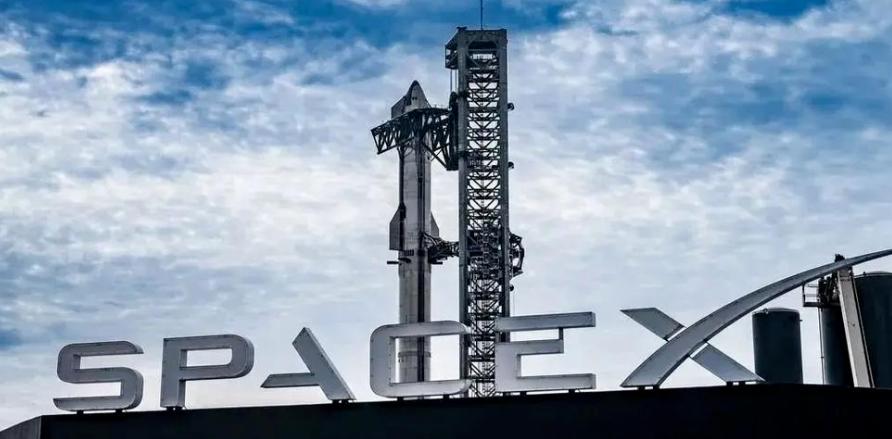
SpaceX has recently attracted much attention because the company is aiming to list on the NASDAQ as early as mid - June with a valuation of $1.75 - 2 trillion (about 11.8 - 13.5 trillion yuan), becoming the largest IPO in global history.
On the surface, SpaceX mainly focuses on rocket launches and satellite internet, while Tesla focuses on electric vehicles and energy storage. Their businesses seem distinct.
However, in fact, the two companies have been deeply intertwined in capital, personnel, technology, and supply chain.
For example, at the top decision - making level, Elon Musk serves as a director of both companies.
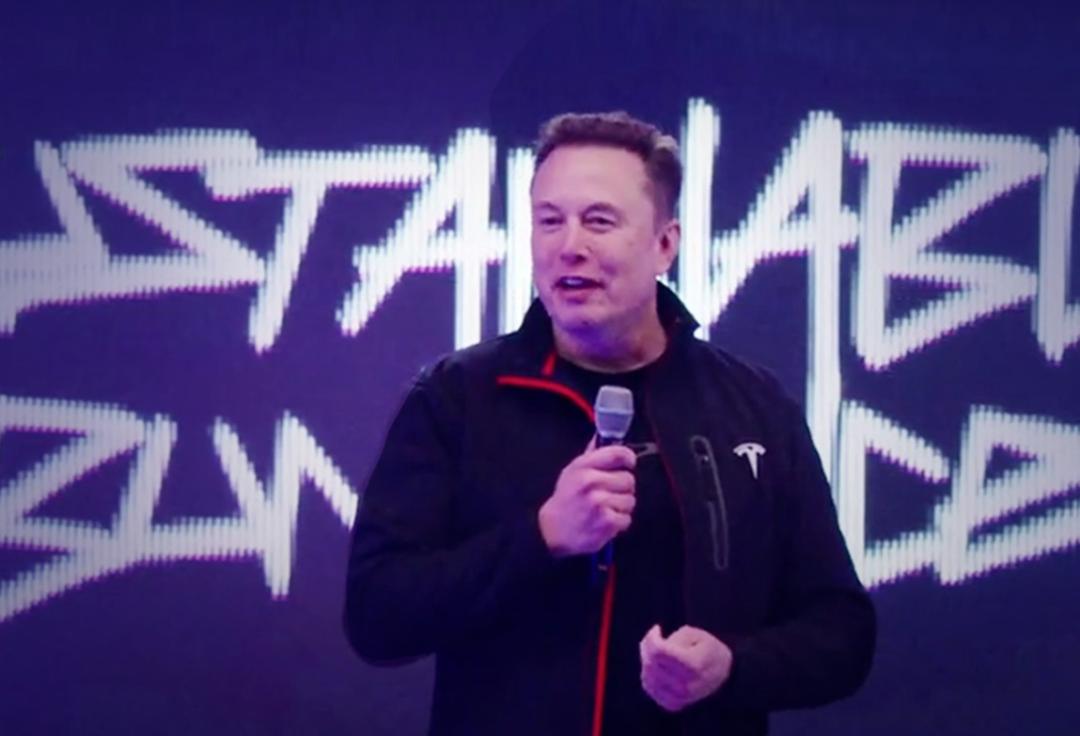
The venture capitalist Ira Ehrenpreis is also a director of both companies. Kimbal James Musk, Tesla's director and Musk's brother, has also served on the SpaceX board.
Technologically, Charles Kuehmann serves as the vice - president of materials engineering for both companies, solving core material problems from cars to rockets.
The business ties are more direct. In January this year, Tesla invested $2 billion in Musk's AI company xAI.
With xAI's merger into SpaceX in February this year, this investment has automatically converted into Tesla's shares in SpaceX.
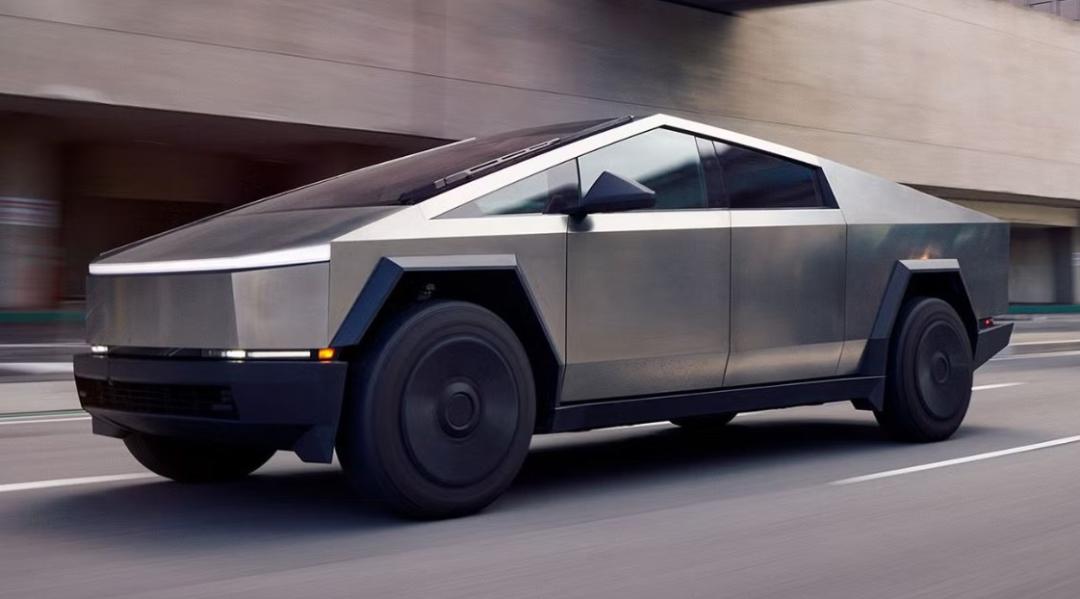
SpaceX also disclosed in its prospectus that the company spent $697 million on Tesla's Megapack energy storage battery system in 2024 and 2025 to power its AI data centers, and also spent $131 million on Tesla's Cybertruck.
There's also the most iconic cooperation - the "Terafab" project jointly launched in March this year. This giant chip factory in Texas, USA, aims to produce 1 terawatt (trillion watts) of computing power annually and is jointly operated by the two companies.
All these signs indicate that the rumor may not be groundless.
A Super - Giant Worth Over $3 Trillion in the Making
Merging his companies is a plan that Musk has mentioned several times.
He hinted at the merger intention in a post in November last year:
My companies are moving towards integration, which may be unexpected in some ways.
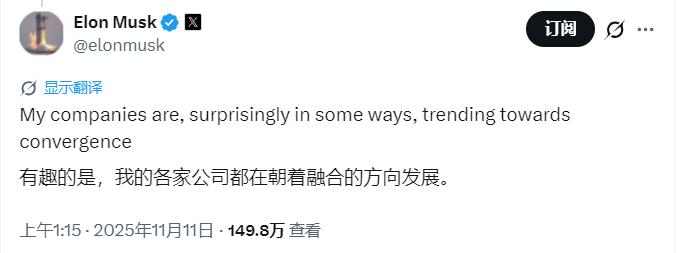
The merger of xAI into SpaceX at the beginning of the year was the first step in the "merger plan." Musk's vision is to integrate all his companies into a "umbrella company."
The so - called umbrella company can be compared to Alphabet, Google's parent company. It is a group of inter - related enterprises with independent legal status established through investment and investment - receiving relationships.
Simply put, the core parent company is the "umbrella handle," coordinating strategies and resources; each subsidiary is an "umbrella rib," independently conducting business.
This can achieve economies of scale and resource sharing through group - based operations, and effectively isolate risks through the independent legal status of subsidiaries.
If the three - way merger is completed, "Musk's Trifecta" will integrate Tesla's physical AI (including Robotaxi, Optimus, and full - self - driving technology), SpaceX's orbital infrastructure built through Starlink and potential space computing, and xAI's advanced models (including Grok).
Its business will cover electric vehicles, energy storage, rockets, satellites, artificial intelligence, and robots, further accelerating the application of AI in the real world.
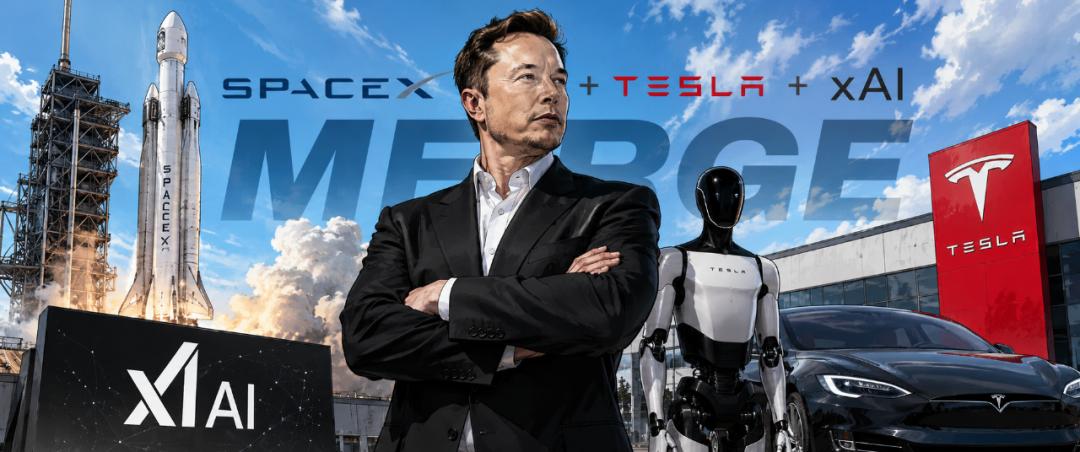
Based on SpaceX's IPO target range and Tesla's current market value, the overall valuation is estimated to reach $3.35 - 3.6 trillion.
This scale is equivalent to the current market value of Microsoft or twice that of Meta (Facebook's parent company). Both are among the top ten companies by market value in the US stock market, and Microsoft is in the top five.
Moreover, some analysts predict that the synergy of the merger may create an additional $1 - 2 trillion in value for the combined entity.
From an external perspective, one of the motives for the merger may be related to Musk's control.
After the acquisition of xAI, Musk's stake in Tesla is about 13%, and it will continue to rise as he receives his latest salary package in installments.
Meanwhile, he owns about 42% of the shares and about 85.1% of the absolute voting rights in the private company SpaceX.
After the merger of the three companies, Musk's stake in the combined entity may reach about 26%, giving him the long - awaited super - voting rights and allowing him to build an unprecedented tech ecosystem empire under his full control.
However, behind the huge opportunities are complex challenges. Designing a complex share - exchange ratio and dealing with potential regulatory reviews are all real obstacles on the merger path.
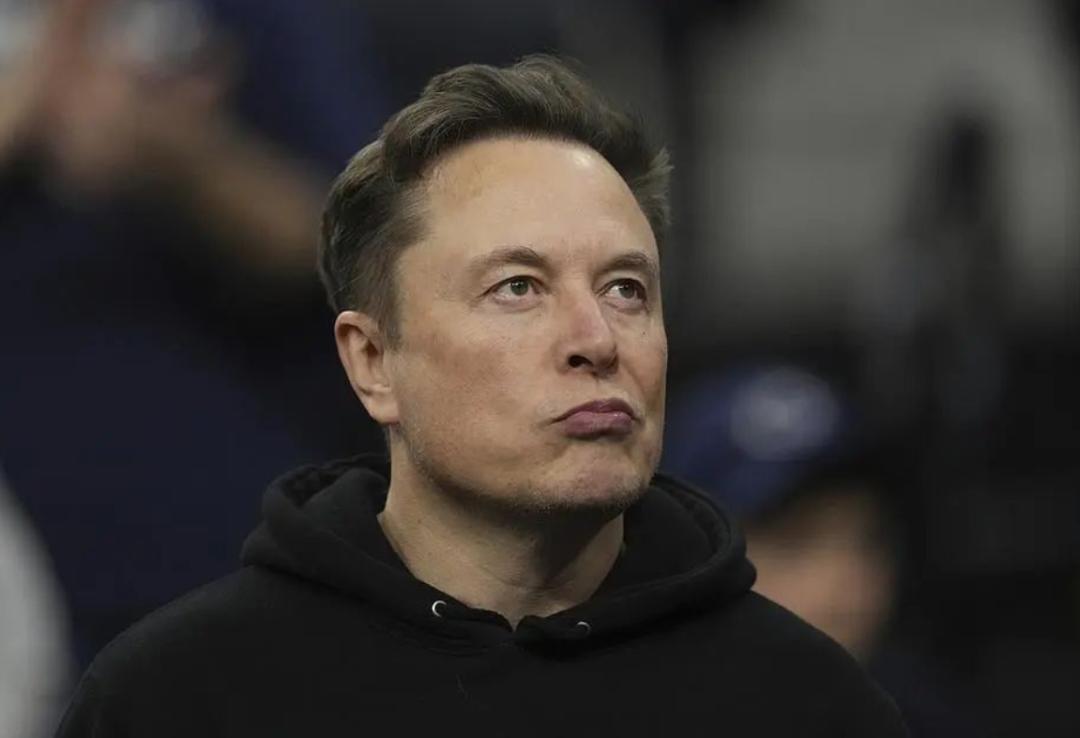
Opinions on the possibility of this "largest merger in history" vary.
Analysts from the veteran Wall Street investment bank Wedbush believe that the possibility of the merger is between 80% - 90%, and it is expected to be completed in the first half of 2027. Since SpaceX submitted its S - 1 filing, the operation mechanism of the deal has become feasible.
Peter Diamandis, an early investor in SpaceX, recently said bluntly that in his view, "the merger is just a matter of time."
However, traders on the US trading platform Kalshi believe that the probability of the merger happening before May 2027 is only 33%.
Currently, neither company has commented on the merger rumor, and everything may still be in the internal discussion stage.
Anyway, most of the structural foundation work for the merger is ready. The announcement of Terafab, the merger of xAI, the shared supply chain, cross - company balance - sheet transactions, and SpaceX's IPO all point in the same direction.
Elon Musk, who posts dozens of messages a day, has also not responded to the merger rumor. He may be busy fulfilling Tesla's promise -
The Cybercab, which is planned to be mass - produced and commercially operated this year, is finally coming.
Cybercab's Commercialization is Imminent
Tesla's dedicated Robotaxi - Cybercab - has finally reached the last step of commercialization.
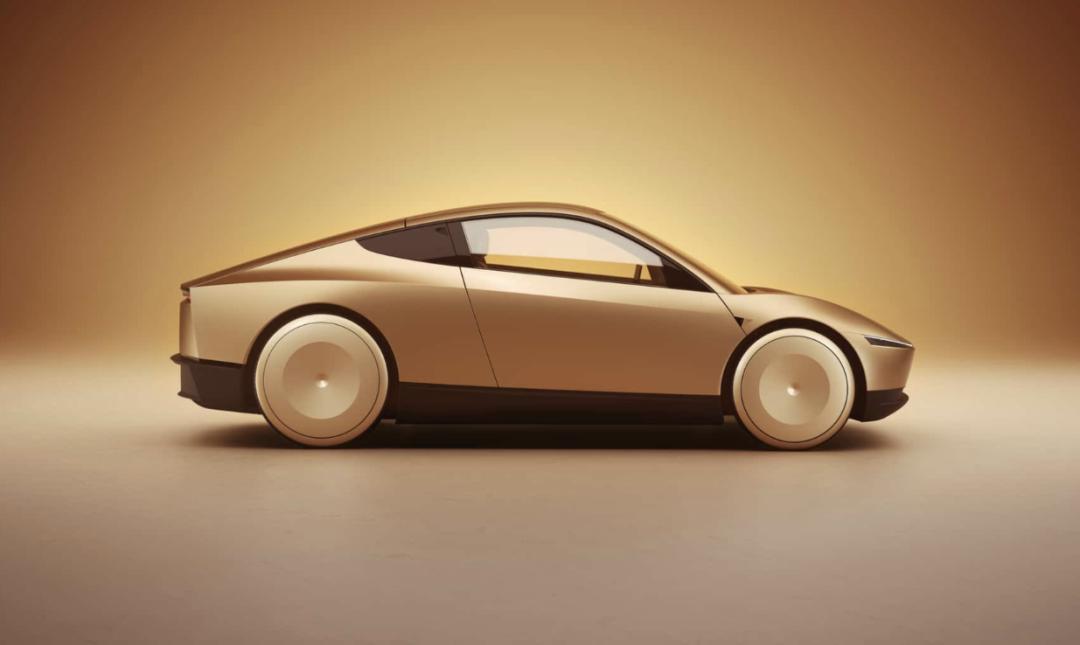
Almost simultaneously, Cybercab has shown two major developments:
First, Tesla has officially obtained the autonomous vehicle operator license from the Texas government. This license has removed one of the most important regulatory obstacles for Tesla.
According to the license requirements, Cybercab has confirmed that its vehicles equipped with a full - self - driving system meet the SAE Level 4 autonomous driving standard.
Tesla can provide commercial Robotaxi services in limited areas of cities like Austin, Dallas, and Houston in full - self - driving mode without a human safety driver, as long as it complies with traffic regulations, records trip data, and meets safety standards.
Second, Cybercab has started to drive out of the factory on its own, as evidenced by a video shared by Musk on social media.
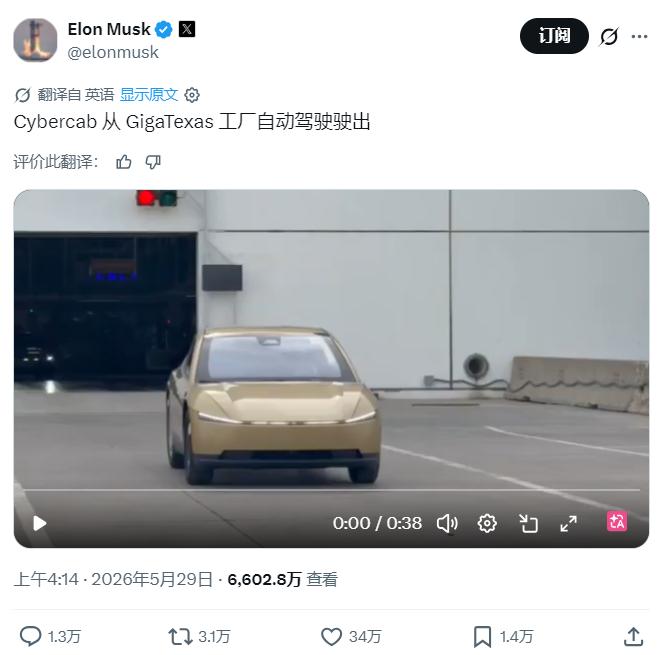
In the video, several gold - painted Cybercabs are driving out of the Tesla Gigafactory in Texas one by one. They drive smoothly along the factory road, make turns, and naturally merge into the traffic.
The cars are empty - no driver, no safety officer, and even no steering wheel or pedals, only a simple display screen.
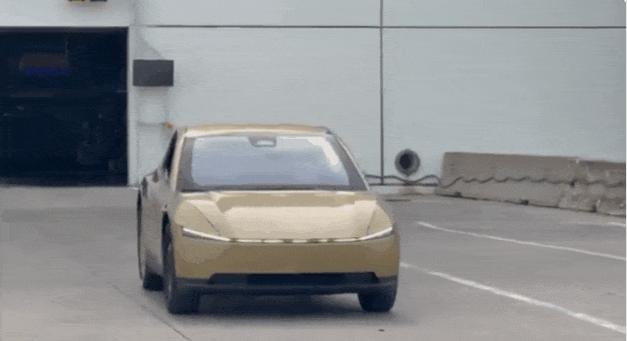
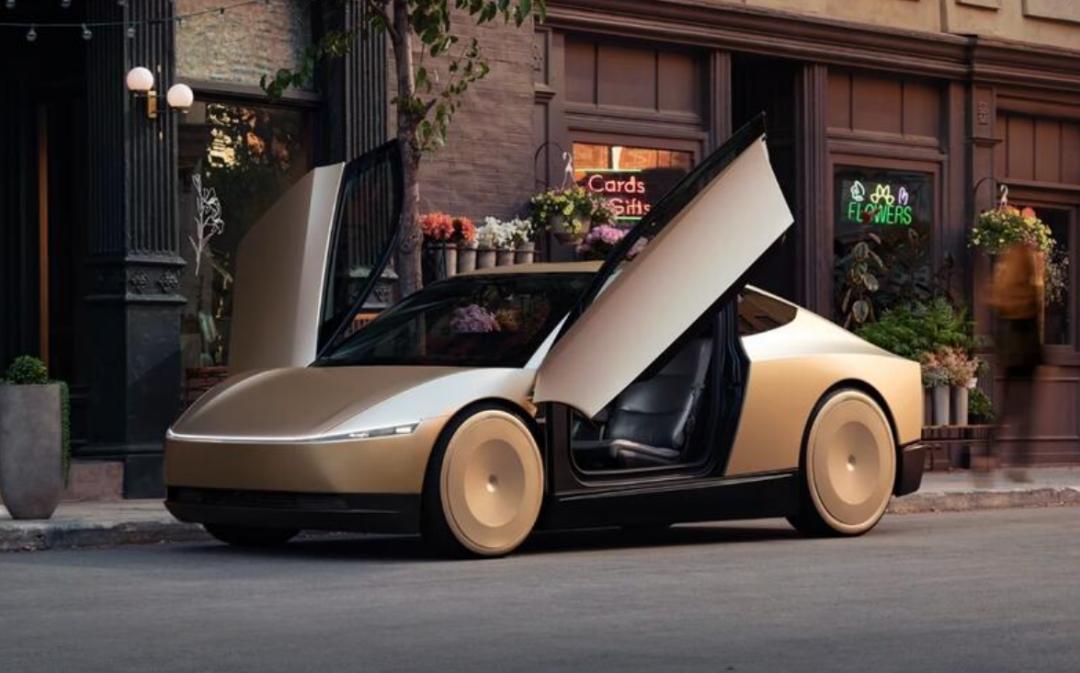
In fact, as an entity for unmanned transportation services, this car has a very pure design since its inception:
It has two doors and two seats, gull - wing doors, and has removed all traditional driving control components. It operates entirely on Tesla's pure - vision autonomous driving system.
Its goal is to complete short - distance urban passenger transportation in the most efficient way.
The mass - production of Cybercab started in the Texas Gigafactory in April 2026. The factory's automated system allows the vehicles to drive to the parking area on their own after coming off the production line, which is also a preview of its autonomous driving ability.
Musk once said that Cybercab is expected to become Tesla's highest - volume model.
After Musk posted the video, Ashok Elluswamy, the head of Tesla's AI, quickly reposted it and commented: "Cybercab will soon drive into the city and be ready!"
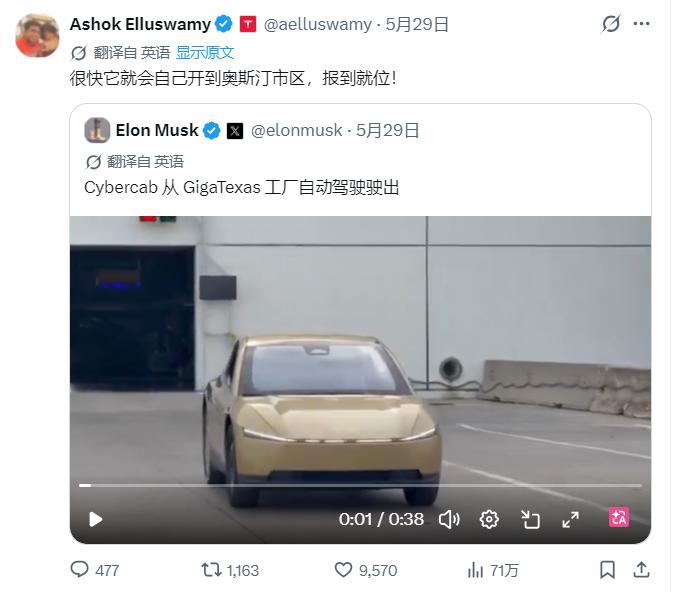
He further revealed that the first city where this car will be put into service is likely to be Tesla's hometown - Austin.
Multiple media reports that the car - washing facilities for Cybercab are under construction.
It is reported that the first car - washing facility is located in Clark County, Nevada, USA, with an area of about 3,345 square meters. In the future, a large number