After all, manufacturers have set their sights on the charging adapters.
Everyone knows whether it's advisable to buy knock - off charging heads priced at only one - third or even one - eighth of the genuine products.
You might think buying a charging head for 100 yuan should be problem - free. However, manufacturers still manage to cut corners in places we don't usually notice...
Here's what happened:
Some time ago, a colleague in the editorial department wanted to buy a charging head. Tony simply sent over the previous purchase link.
It was found that the one bought a few years ago was a full - fledged version supporting a wide voltage range of 100 - 240V. But for the same price, the one bought later turned out to be a scaled - down version with a narrow voltage range of 200–240V...
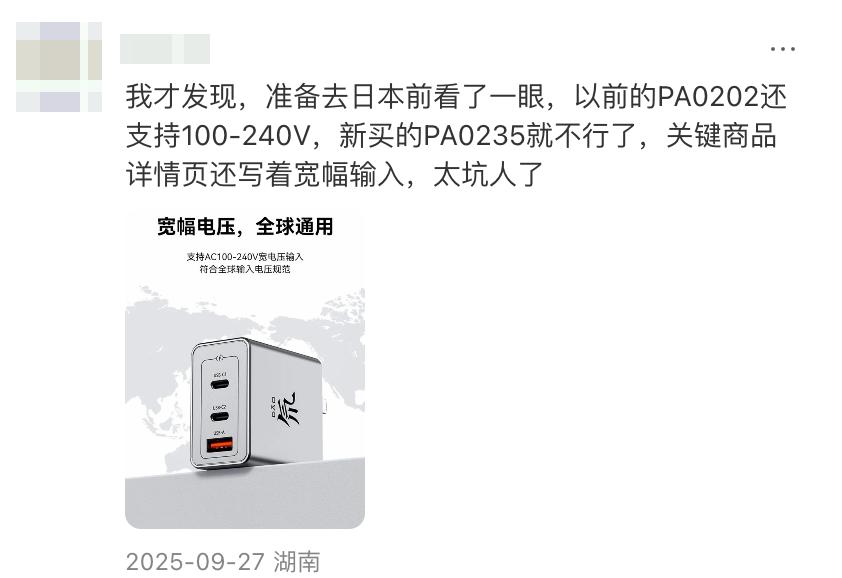
Some might say, "The household voltage is 220V, so it should be enough, right?"
It sounds reasonable, but according to the national standard for power supply voltage, the actual voltage we get fluctuates. The upper limit is +7% of the rated voltage, and the lower limit is - 10%.
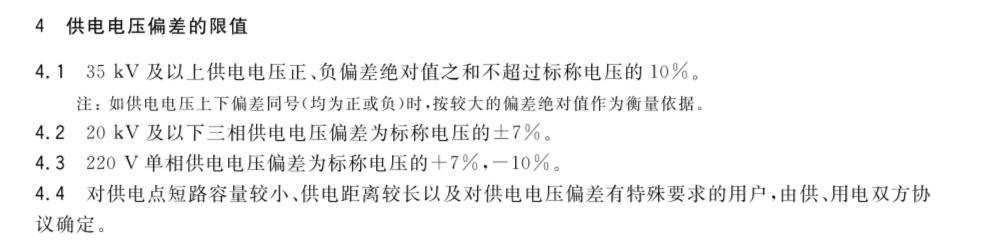
That is to say, as long as the voltage is in the range of 198 - 235.4V, it is compliant.
Note that this is just an ideal situation.
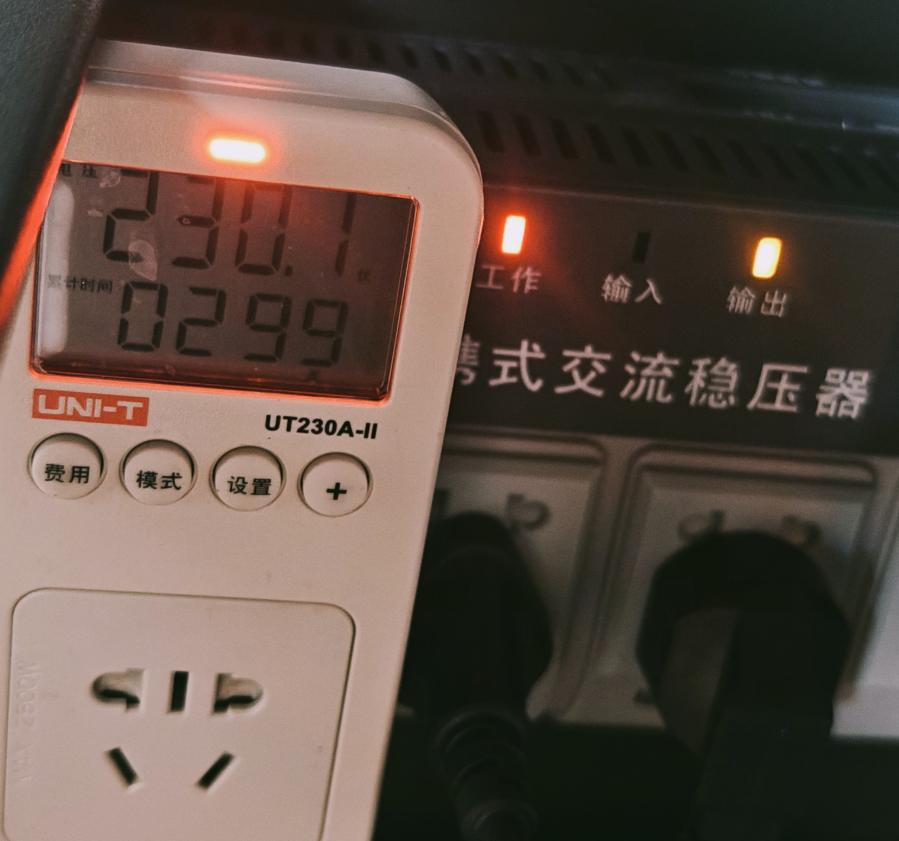
For example, the actual voltage at Tony's home is 230V, which meets the standard. But in our office, there was once an extremely high voltage of 243V, which burned out several ZeroKey mini - PCs.
Considering some old residential areas or rural areas where the power lines are long and the transformer capacity is limited, in summer when every household turns on the air - conditioner, the actual voltage may drop.
If the voltage is lower than the actual working lower limit of the "narrow - voltage" charging head mentioned before, it may trigger under - voltage protection. The charging may switch between fast - charging and slow - charging, causing the phone to overheat.
You may think the phone is broken, but actually it's the charging head's fault.
If you only use the charging head in China, that's probably the situation.
But if you take it abroad, the problem becomes serious.
In countries with a "low - voltage, high - current" system like Japan or the United States, using a "narrow - voltage" charging head won't allow the device to charge, leaving you in a bind.
For example, Miro once went on a business trip to the United States. Without carefully checking the charging specifications, he took a narrow - voltage 100W USB - C charger. When he got there, the charging power dropped to only 50W.
We used a voltage regulator to change the input voltage of the charging head to reproduce this situation. It was found that some private fast - charging protocols of mobile phone manufacturers for currents above 5A can't be triggered at a low voltage of 100V/110V. They can only use public protocols like PD, so the charging power naturally decreases...
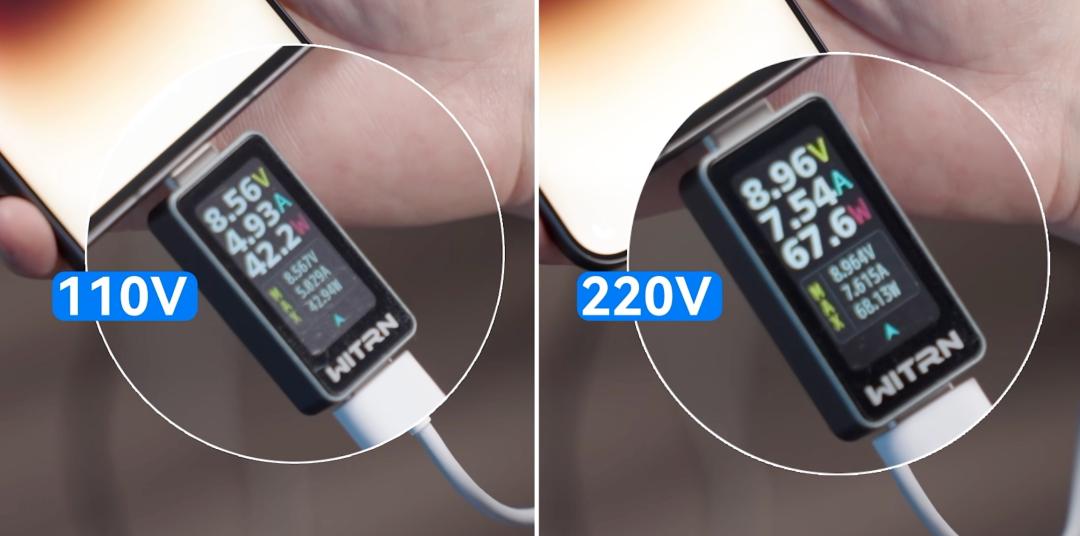
Miro was lucky that the charging head could at least work. For larger devices like the narrow - voltage charger of a laptop, it won't work at all when connected to a 110V power grid.

By now, careful readers should have realized a problem. With such a large deviation from the usable voltage range, shouldn't all charging heads stop working? Why can some work while others can't?
This brings us to the "sneaky moves" of some charging head manufacturers:
Theoretically, manufacturers are unlikely to customize a batch of "narrow - voltage" chips just to annoy you, because without the scale advantage, the cost will be higher.
Most manufacturers probably purchase control IC chips that originally support a wide voltage range of 85 - 265V. That is to say, some charging heads that seem to have a narrow voltage range may actually support a wide voltage range. Whether the charging function can be activated and used normally depends on the design of the capacitors and transformers in the charging head.
For example, this was the case when Miro encountered the situation of halved power, where the charger "could work but not fully". Some overseas friends may have had similar experiences...
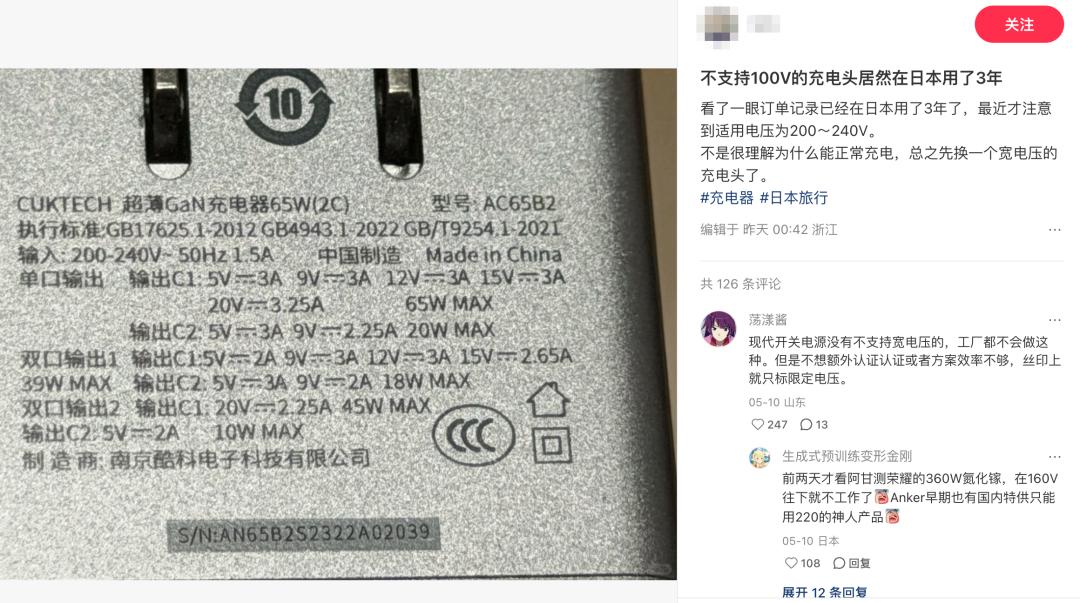
The problem is that a manufacturer's ability to produce wide - voltage charging heads is completely different from its willingness to fully "design, produce, and certify" them according to the wide - voltage standard.
On the one hand, China's 3C certification requires that the voltage range marked on the power adapter must be consistent with the specifications submitted for review.
So, even if some components inside the charging head support a wide voltage range, to print the words "100V–240V, 50/60Hz" on the charging head, it must pass temperature, insulation, and electromagnetic compatibility tests in extreme environments.
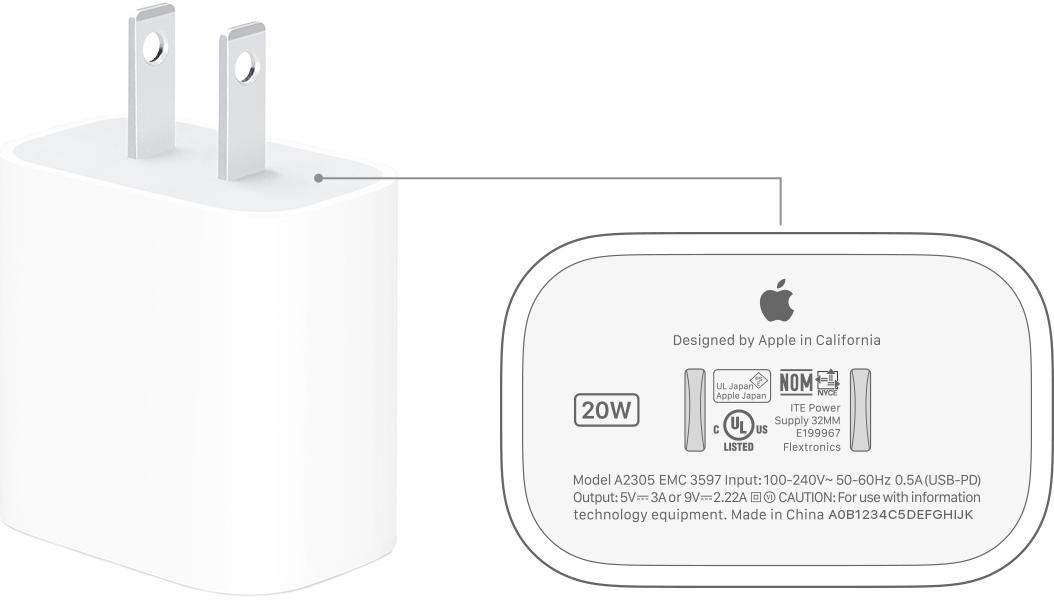
This is equivalent to passing the certification according to the strictest and most comprehensive standards.
Let's do a simple calculation:
Overseas voltages are lower. If you want your charging head to "fast - charge" and run at full power abroad, the corresponding current needs to be increased.
Then the circuits and components in the charging head need to be upgraded. For example, thicker copper wires should be used to wind the transformer, MOS tubes should be replaced with models with lower internal resistance and less heat generation. To enhance heat dissipation, larger heat sinks need to be installed in the charging head.
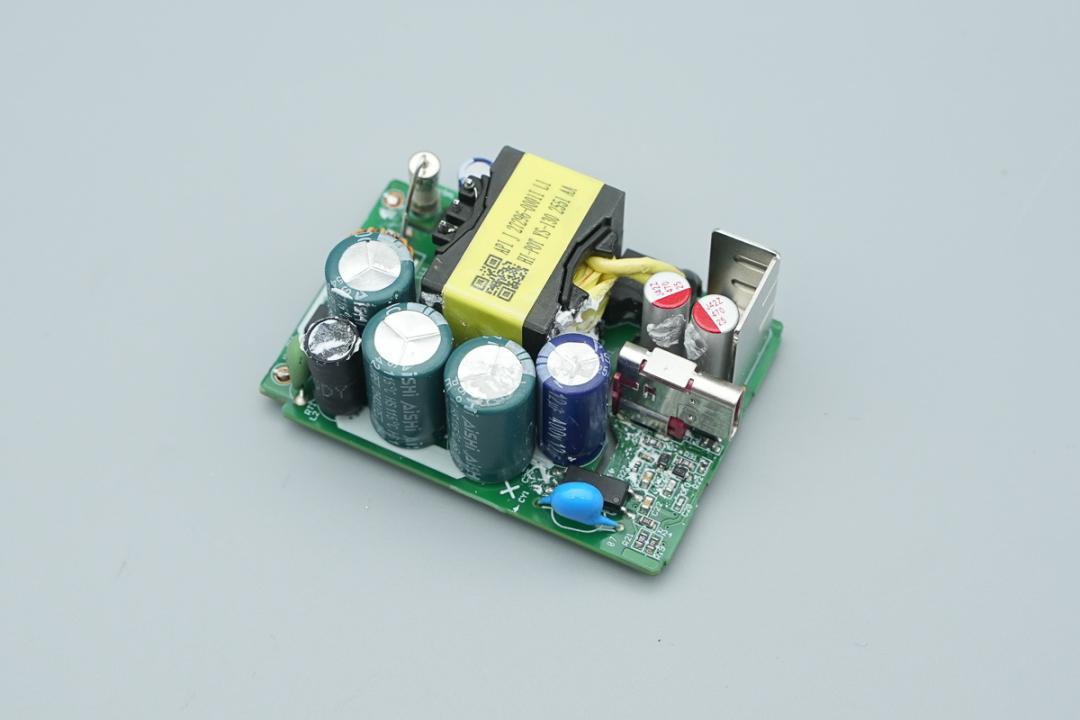
Image source: Charging Head Network
With such high - end components, the cost naturally increases.
On the contrary, if manufacturers only produce charging heads with an input voltage of 200–240V, they can consider less about the working conditions under high current. The device specifications, heat dissipation margin, and filter circuits can be more "economical".
On the other hand, the testing costs for charging head projects are also a significant expense.
In China, the public quotation is about 10,000 - 25,000 yuan. If it involves wide - voltage certification, re - evaluation and supplementary testing are required, which incurs additional costs. Some brands going global need to pass safety certifications like NRTL/IECEE, and the cost can easily reach 5,000 - 15,000 US dollars.
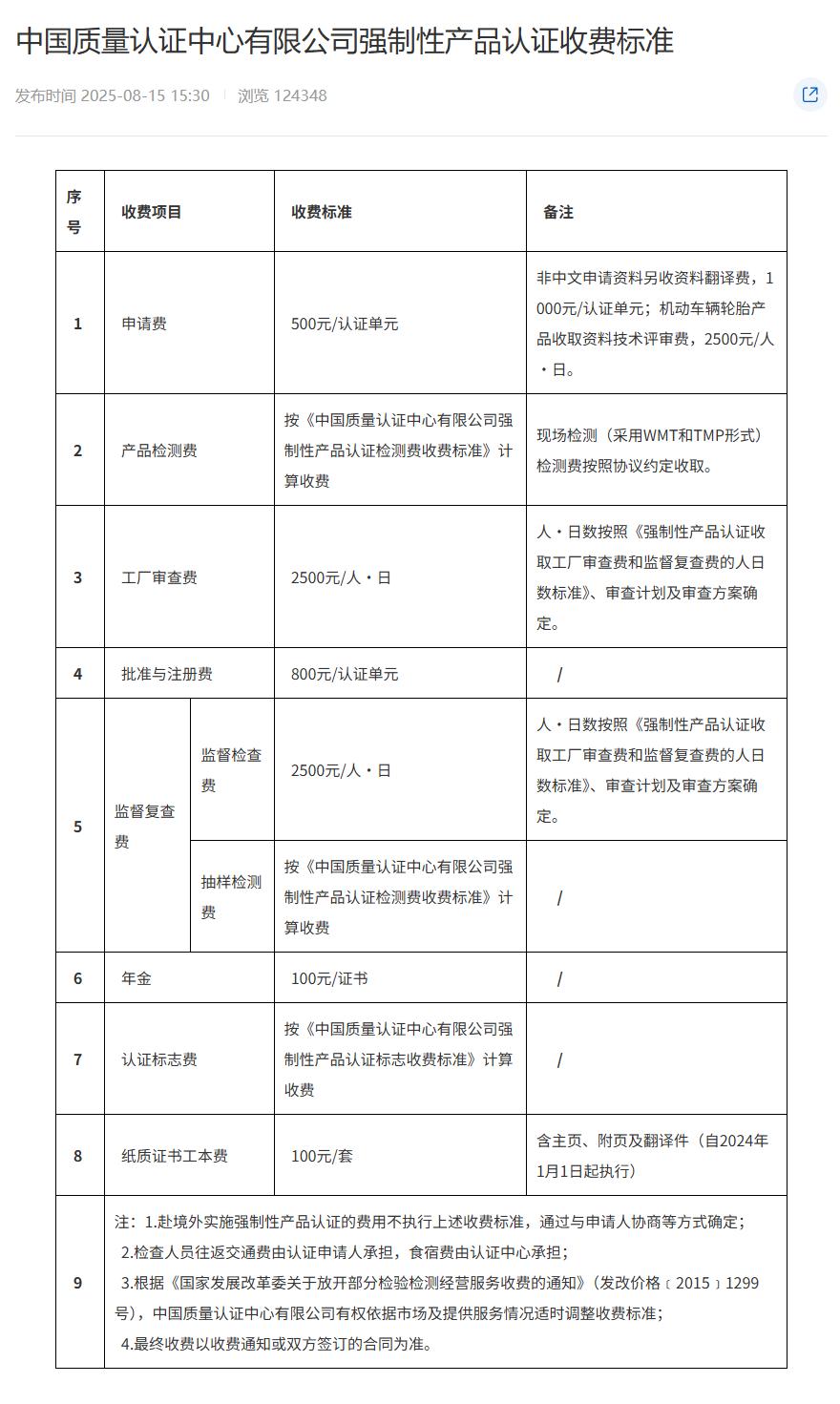
Sometimes, when there are many SKUs of charging heads, some brands may be more conservative in marking the specifications to quickly launch products or save certification costs in multiple countries. Instead of marking more specifications and conducting more tests...
I even saw a more absurd situation. A domestic charging brand was successful in the overseas high - end market, and its selling price was close to that of traditional high - end accessory brands like Belkin. At the same time, the price in China was relatively low.
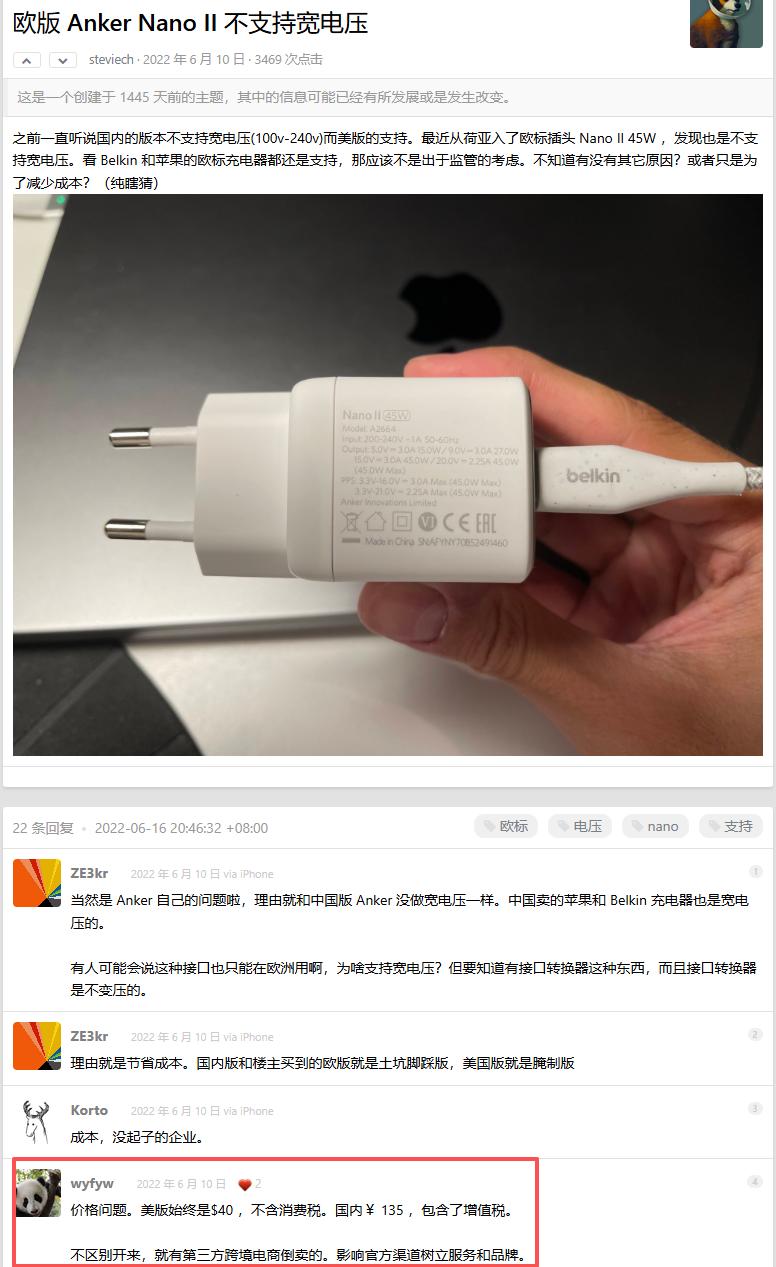
To prevent low - priced domestic products from flowing overseas, manufacturers may make some domestic - version charging heads with a narrow voltage range of only 200–240V, restricting cross - regional "parallel imports" at the hardware level.
Anyway, Tony used to be able to "blindly choose" charging heads, but now it has unknowingly become like "opening a blind box":
For products from big brands, I'd rather believe they "reverse - overstate" the specifications to save certification costs.
But for some niche, low - margin OEM products, if they don't mark "wide - voltage", it may be that the power supply efficiency can't pass the certification under low voltage...
These details are often not clearly stated on the product details page. However, once there is voltage fluctuation, the power strip ages, or the device is under full load for a long time, the problems will be magnified.
For consumers, buying such charging heads actually implies certain risks:
If you only use it in China, it's okay. At most, you pay for a wide - voltage charging head but get a narrow - voltage one. But for those who use it both at home and abroad, if there is a problem, you can't hold the manufacturer accountable, because they clearly marked 200 - 240V.
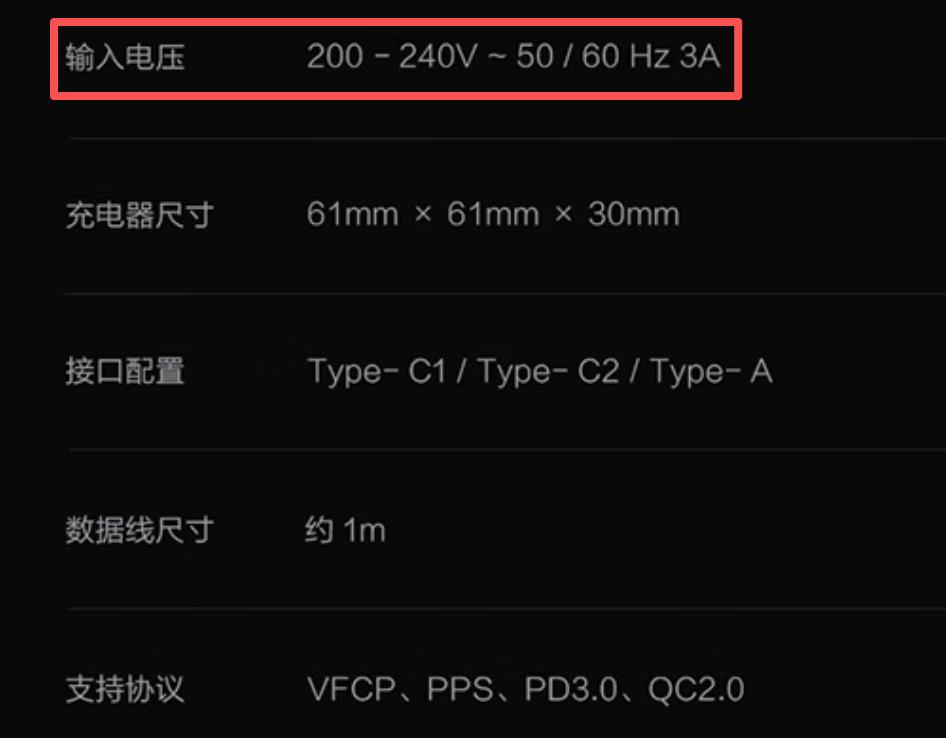
It's a sad fact that currently in China, there is no regulation that mandates consumer - grade charging heads to be compatible with global voltages.
So, currently, many domestic mobile phone manufacturers include charging heads that either support segmented voltages, such as 100V - 130V / 200V - 240V, or more conscientiously, fully support the 100 - 240V specification to allow you to use them abroad.
Finally, I hope readers will be more cautious when choosing charging heads in the future.
If you need to travel abroad and want peace of mind, it's better to choose a 100 - 240V charging head. For those narrow - voltage charging heads that only support 200–240V, if they have good quality and are cheaper, we have no complaints. But if the specifications are downgraded and the price is the same as the "full - fledged version", don't blame consumers for being critical.
Image and data sources:
CNCA - C09 - 01:2023 Mandatory Product Certification Implementation Rules
GB/T 12325 - 2008 Power Supply Voltage Deviation
This article is from the WeChat official account "Chaping X.PIN", author: Tony. Republished by 36Kr with permission.