We have the largest number of sports shoes in the world, but we don't have a single team that is worth loving for 20 years.
Editor's note: When the total output of China's sports goods industry exceeded 2 trillion yuan, accounting for 54.3% of the total output of the sports industry, it is undoubtedly a proud report card. In the past few decades, China has established the world's most complete and efficient sports goods supply chain and nurtured a number of internationally competitive brands.
But beyond the scale growth, another issue also deserves attention: When most of the value of the sports industry still comes from the manufacturing and sales of goods, how far are we from a mature sports culture ecosystem? Are events, IPs, communities, clubs, sports media, and the resulting emotional identity and community culture becoming the key propositions for the next stage of China's sports development?
This article is not about the sports goods industry itself. Instead, it attempts to re - examine the structure and future of China's sports industry through the figure of "54.3%".
Written by Zou Guojun (Former Sanda champion, known as "Asia's fastest leg". Founder of the "Hero Legend" event and the founder of China's free fighting industry, known as the "Godfather of China's free fighting".)
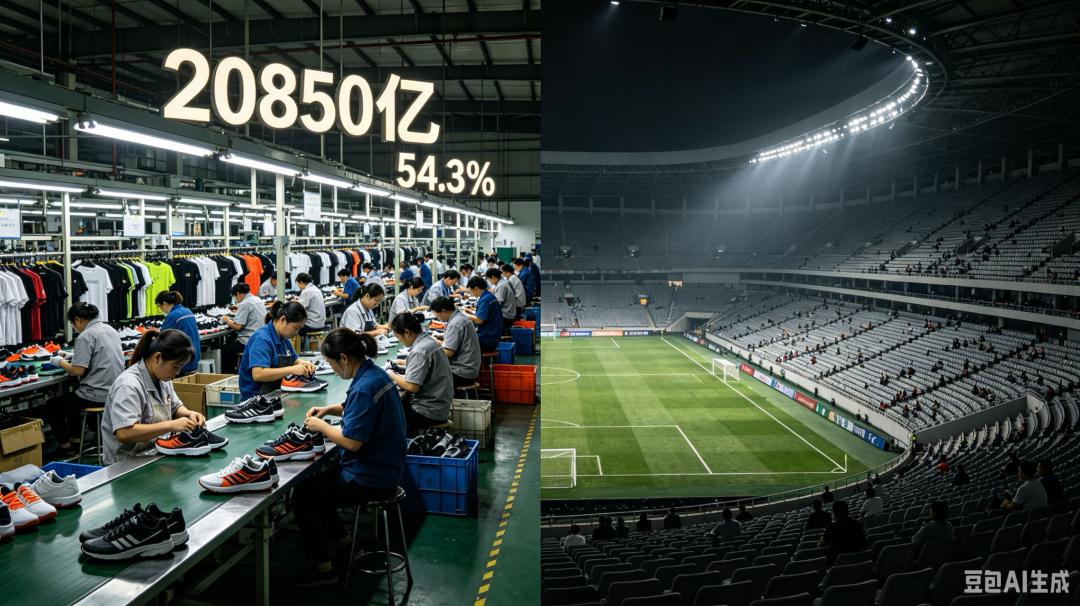
The 2025 report on China's sports goods industry was released: The total output reached 2085 billion yuan, a year - on - year increase of 3.6%, accounting for 54.3% of the total output of the entire sports industry. "This is of course a proud figure. It means that China has become the world's largest manufacturing base for sports shoes and clothing, the world's largest bicycle supply chain, one of the world's largest producers of fitness equipment, and one of the world's most important sports consumer markets.
But if we only stay in the excitement of "scale breakthrough", we may miss what this figure really warns us. Because what 54.3% reflects is not only the strength of China's sports goods industry, but also the imbalance of China's sports industry structure. It shows that China's sports industry is still essentially a commodity processing industry, rather than a mature sports culture industry.
1. What does 54.3% really mean?
Many people mistakenly think that the "sports goods industry" is just manufacturing. In fact, according to China's sports industry statistical classification, this 54.3% includes not only the manufacturing of sports shoes and clothing, sports equipment, and outdoor equipment, but also the sales of sports goods, e - commerce channels, wholesale and retail, leasing, and trade agency. That is to say, this 54.3% is essentially the entire sports commodity economic chain - from factories to channels, and then to retail consumption, which constitutes the main body of China's sports industry.
And the remaining 45.7% is non - goods - related sports services such as fitness and leisure, sports training, sports venues, sports tourism, sports events, sports media, and sports brokerage. Here lies the problem.
2. The core of China's sports is still "selling things"
Take the United States as an example. As the world's largest sports consumer market, the scale of the US sports goods industry is still huge, but its proportion in the entire sports industry is usually only 15% - 20%.
And sports services - including leagues, broadcasts, gambling, sports media, sports entertainment, community sports, and copyright IP - account for more than 80%. In other words, what really makes money in a mature sports industry is not shoes, but competitions; not equipment, but content; not manufacturing, but emotions.
China is exactly the opposite. Today, people can easily spend $100 on a pair of sports shoes, but are reluctant to spend 100 yuan on a game ticket - in fact, many times they have "no games to watch". China can manufacture the most sports equipment in the world, but it doesn't have a sports IP with real global influence or cultural assets that can be passed down through generations. We have the largest supply chain, but not the most valuable content system.
It should be noted that a considerable part of the huge 2 trillion yuan in China's sports goods industry belongs to the OEM, ODM, and supply - chain contract - manufacturing logic. In the manufacturing of sports equipment, the export dependence is very high - according to IBISWorld's estimate, in 2024, the exports of China's sports equipment manufacturing industry accounted for about 51.8% of the industry's revenue. Although this doesn't mean all are OEM/ODM, it shows that a large part still serves overseas brands, channels, and retailers.
And the real problem is not "whether there are brands", but where the brand value comes from. The absence of professional sports IP and ecosystem in China has brought four bottlenecks to sports goods enterprises: First, there is a lack of local top - level events as brand - narrative scenarios. A lot of the value of Nike and Adidas comes from long - term content scenarios such as the NBA, the World Cup, the Olympics, the NFL, and Grand Slam tennis tournaments.
Even if Chinese brands make good products, they lack a local sports stage that can continuously create heroes, stories, loyalty, and emotions. Second, they can only rely more on functions, prices, channels, and celebrity endorsements, resulting in brand competition remaining at the level of "product strength + marketing investment" and difficult to enter the level of "cultural assets + user belief". Shoes and clothing can sell well, but it's hard to become a cross - generational symbol like Air Jordan.
Third, there is a lack of a high - intensity professional feedback loop for product innovation. A mature professional league will drive the iteration of equipment in reverse: basketball shoes, running shoes, protective gear, data - wearing devices, and training equipment can all get real - world verification from high - level competitions. With weak professional events in China, it's more difficult for enterprises to establish a technology spill - over chain from "top - level sports performance to mass consumption".
Fourth, globalization lacks the endorsement of sports IP. Anta and Li Ning are already very strong, but when going global, they still need to be understood by global consumers. Without the support of world - class leagues, star systems, and club cultures, Chinese brands are more likely to be regarded as "high - cost - performance products" or "supply - chain brands" rather than cultural brands. So many bosses of sports equipment enterprises never dream of being like Nike or Adidas. Instead, they say with longing that they hope to become the Foxconn in the dumbbell, sandbag, or yoga mat industry.
In general, OEM/ODM limits the profit margin; the absence of professional sports IP limits the brand ceiling. Chinese sports goods enterprises can already make and sell good products, but to move from "strong in manufacturing" to "valuable in brand", they must have their own events, stars, communities, stories, and long - term emotional assets.
3. The problem with China's sports is not just "no IP"
The deeper problem is that sports have never really served people's lives. Our understanding of sports is still essentially in a historical inertia. It is instrumental - serving national honor, the education system, extra points for school entrance, physical management, and consumption identity, but rarely really serving love, daily life, communities, emotions, and lifestyles. So we are good at "using" sports rather than "enjoying" sports.
This is also why China's sports consumption has long remained at the level of functional consumption and commodity consumption, rather than content consumption and cultural consumption. Many people buy bicycles but don't really enter the cycling culture; many people buy windbreakers but don't really love the outdoors; many people work out but may not really love sports themselves. Sports, in many cases, are just a self - optimization tool.
4. Why is China's sports always "erratic"?
In recent years, China's sports industry has experienced too many "high - tides": football fever, e - sports fever, marathon fever, cycling fever, outdoor fever... But most of them are like tides, coming and going quickly. The reason is simple: We haven't formed a truly stable sports community. The most powerful thing about American sports is not commercialization, but that sports have become a way of social organization.
A family supports the same team for generations; a university has its own sports traditions; a city forms an identity around a team. What's really amazing about the NFL is never just the games, but that it connects the entire American society.
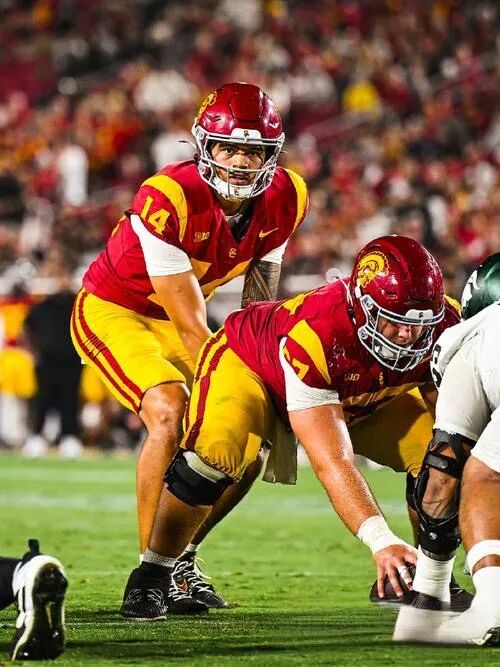
And China's sports are still highly individualized. People can run, work out, and buy equipment, but rarely form long - term club cultures, stable game - watching habits, community event traditions, or continuous sports identities. China's sports consumption is more self - consumption rather than community consumption.
5. China's sports lack the "useless spirit"
If we make a cultural attribution at a deeper level, the problem with China's sports is that we lack patience for "useless" things. We just want to win. Sports are exactly an extremely "useless" existence. You can't get a promotion or make money immediately by running, boxing, or watching games; you may be disappointed for decades by supporting a team. But it is precisely these "useless" things that constitute emotions, belonging, love, communities, and public life.
A mature sports society is essentially willing to waste time on what it loves. And we have long been accustomed to results, efficiency, and functionality. Many times, it's not a shame to win by bypassing the rules - because winning represents everything. But the truly precious thing about sports has never been winning, but learning how to face wins and losses within the rules.
6. What will the future of China's sports look like?
China may not copy the United States. Because China is not a typical community - based society. In the future, what may really make China strong may not be a super - league like the NFL, but community sports, running culture, hiking outdoors, healthy lifestyles, and small - but - beautiful and region - specific content like the "Village Super League".
One day, when we no longer just want to win the world but seriously manage our own happiness, our sports will have vitality and appeal. It may not be the most profitable, but it may be closer to the real meaning of sports - returning to people's lives.
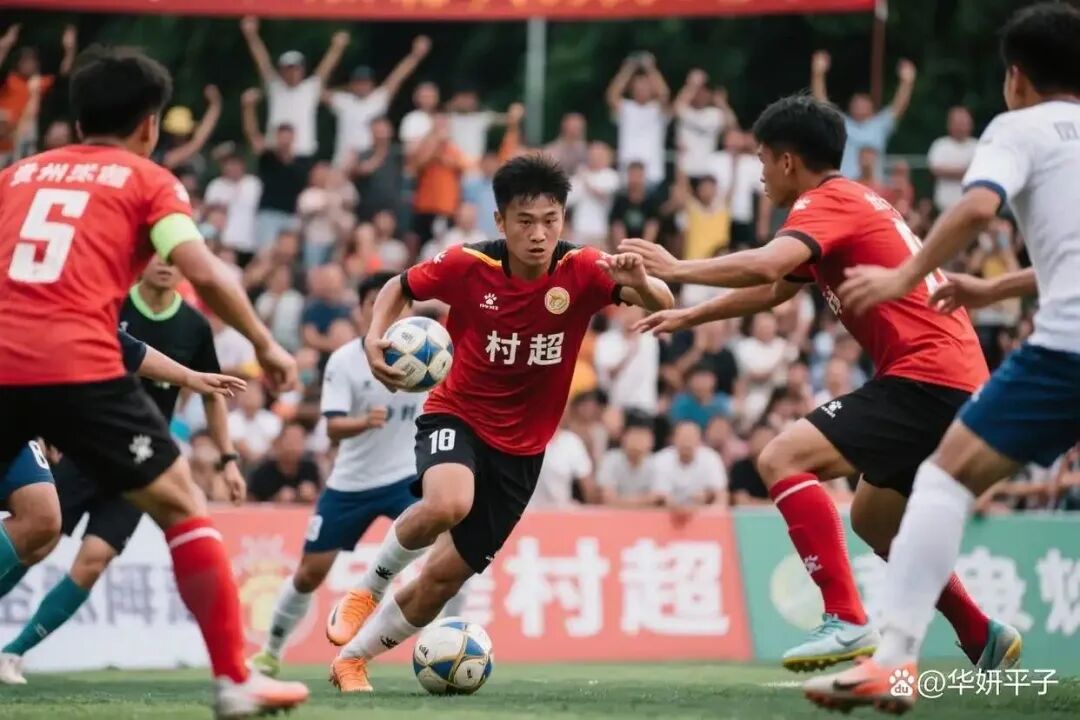
True reconstruction requires not a few hotspots, a single trend, or a quick - success commercial high - tide, but the reshaping of values. Only when sports are no longer just tools, no longer just achievements, and no longer just consumption symbols, will they truly become a way of life.
By then, 54.3% may still be important, but what people really care about will no longer be just how many pairs of shoes are sold - but how many people are willing to waste time on their love itself.