AI investment has not yet delivered dividends: Replicating a century of electrification, the industrial transformation is approaching an inflection point
When looking through the corporate financial reports of the past two years, a thought - provoking phenomenon is spreading globally.
Since the wave of generative large - models swept across in 2023, almost no enterprise, from multinational groups to small and medium - sized startups, has been absent from this AI arms race. Enterprises are making real - money investments in purchasing model services, forming exclusive technical teams, and promoting AI pilots across all departments, with the investment wave getting higher and higher. Employees also have a very clear direct experience: in tasks such as writing copy, developing code, organizing data, and daily communication, various tools have effectively reduced the burden of repetitive labor, and personal work efficiency has been significantly improved.
However, when it comes to the most core business data, everything seems to have hit the pause button. The revenue curve has not risen synchronously, and there has been no substantial optimization in the cost structure. The AI projects with heavy investment have not been able to translate into positive increments on the profit statement for a long time. Many managers are starting to be confused: with a serious imbalance between input and output, is AI today a new productive force leading industrial transformation or just a conceptual carnival after the hype?
Looking back at the industrial history, we can find that the current dilemma is not unique to AI. More than a hundred years ago, when electricity entered the industrial system, it also went through a cycle of "technology popularization, efficiency perception, and revenue lag" over several decades. The growth dilemma that AI is facing now is essentially the inevitable pain during the implementation process of general - purpose technologies. The popularization of technical tools is just the first step. To truly unleash value, enterprises need to overcome multiple barriers such as organization, process, and business models.
Efficiency Stays at the Individual Level, and Organizational Value Gets Stuck in a Growth Deadlock
In most current corporate office scenarios, the application forms of AI are actually highly similar. Administrative staff use large - models to draft official documents and organize meeting minutes. The marketing team relies on AI to produce promotional materials in batches. Technical staff use intelligent coding tools to speed up the development process. Improving efficiency at individual positions has become the norm. According to the joint statistics of multiple research institutions, more than 80% of office workers recognize the enabling effect of AI on personal work, and the processing time of daily affairs has generally been shortened by more than 30%.
However, this individual - level efficiency improvement is difficult to be transmitted upwards to become the competitiveness of the entire organization. This is also the most core contradiction in the current AI commercialization: although tools have changed the way of individual work, they have not shaken the business framework and management logic that have been in operation for many years.
After many technology companies implemented AI coding tools internally, the code output of engineers increased significantly. However, there were only slight changes in the overall rhythm of product launch and business iteration. The reason is that traditional processes such as requirement submission, multi - level review, cross - departmental docking, and manual re - testing are still cumbersome. The time saved by AI is ultimately consumed in the fixed transfer links. Some executives of overseas travel companies have also publicly stated that although AI can optimize the development efficiency of local functions, it is still unable to establish a clear quantitative relationship between "technical investment" and "business revenue increase".
On one hand, the customer scale and unit price of model manufacturers have been rising year after year, and the industry's popularity has continued to heat up. On the other hand, end - enterprises have been increasing their investment continuously, but they still haven't seen equivalent commercial returns. This situation of "hot at both ends and blocked in the middle" has put AI in an embarrassing situation of "seeing efficiency but not touching profit".
Fundamentally, the current AI applications are still at the shallow stage of tool supplementation. It only adds to the original work mode instead of reconstructing the industrial operation logic. Just like when factories installed electric lights in the early days, workers bid farewell to the dim gas lamps, and the working environment and individual efficiency were improved. However, the factory layout, mechanical transmission methods, and production lines all remained the same, so the core value of electricity could not be realized.
Reviewing the Centennial Electrification: The Three - Stage Evolution of General - Purpose Technology Implementation
In the history of technological development, general - purpose technologies such as electricity, computers, and the Internet, which can penetrate all industries, have very similar implementation paths. The Nobel laureate in economics, Robert Solow, proposed the famous "productivity paradox" in the 1980s: computers are everywhere, but they are hardly found in productivity data. This statement is also very appropriate for the current AI industry.
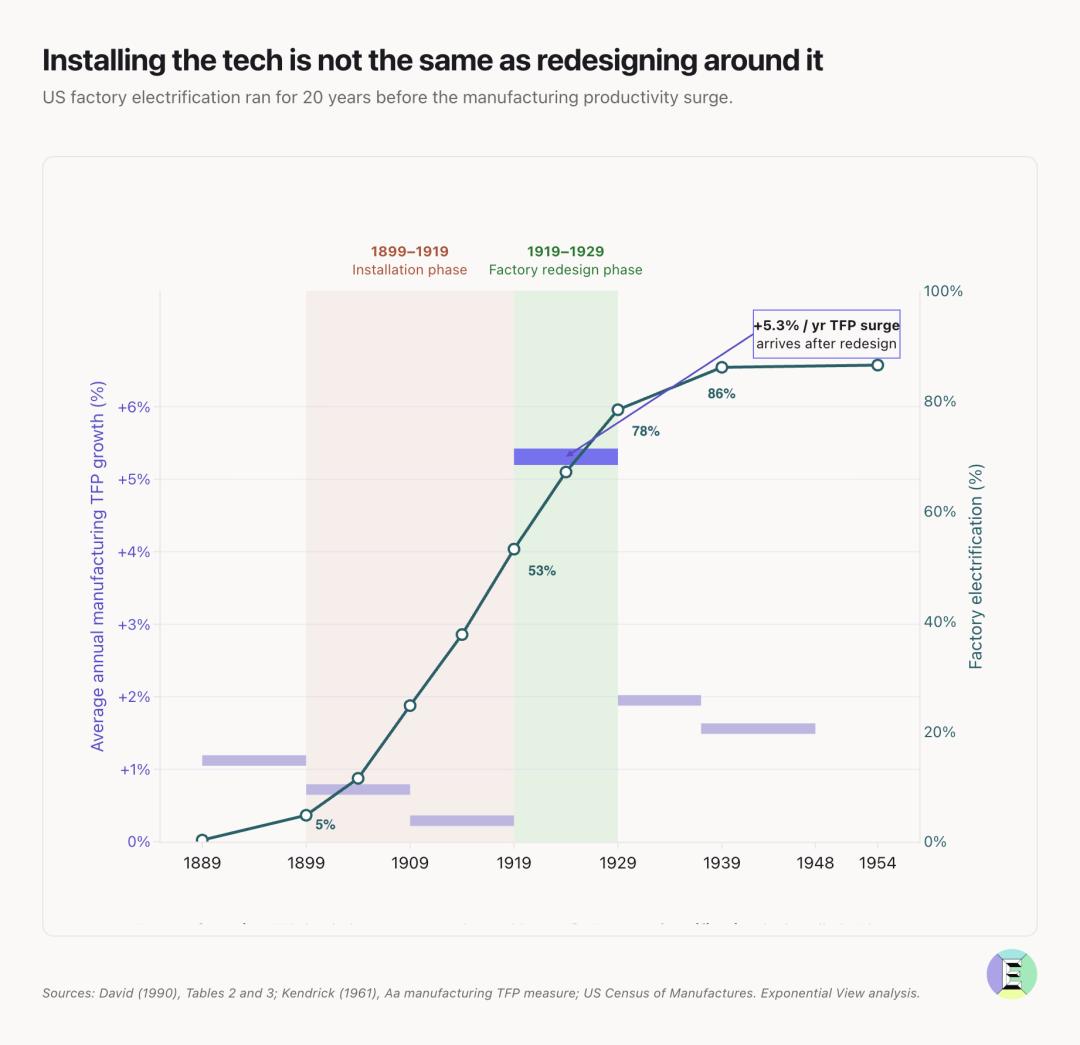
Later scholars sorted out the centennial process of electric power industrialization and disassembled the complete cycle of general - purpose technology implementation. This development context is now being completely replicated in the AI industry. The whole process can be roughly divided into three stages, and each stage corresponds to a completely different form of value release.
(1) Single - Point Empowerment Stage: Tool Replacement and Local Improvement
In the first two decades when electricity entered the industrial field, the application logic was very simple. Factories installed electric lights and small electric devices to simply replace traditional lighting and manual labor. Production equipment still relied on the central steam drive shaft, and workshops were planned and laid out according to the standards of the steam era. There were no innovations in personnel scheduling, management systems, or production processes.
During this stage, workers' work experience improved, and individual output increased slightly, but there was no fundamental change in the factory's production capacity ceiling and operating costs. The technology only optimized the "single - point experience" without touching the underlying rules of the industry.
Corresponding to the generative AI wave around 2023, the industry is in the same stage. Large - models, with core capabilities such as dialogue, generation, and auxiliary processing, have taken over repetitive mental work in the workplace comprehensively. Enterprises' procurement of models and deployment of tools are essentially the same as factories installing electric lights back then. Everyone is enjoying the convenience of single - point efficiency improvement, but few people think about how to redesign business processes and organizational structures based on new technologies. This is also the core reason for the high investment and low return of AI.
(2) Process Adaptation Stage: Local Transformation and Bottleneck Emergence
As electric power technology matured, electric motors gradually replaced steam drive shafts. Industrial production got rid of the constraints of coal - fired boilers, and the energy use cost decreased significantly. However, most factories still retained the old equipment layout. All machinery was arranged around the traditional transmission logic, and only the "power source" was replaced.
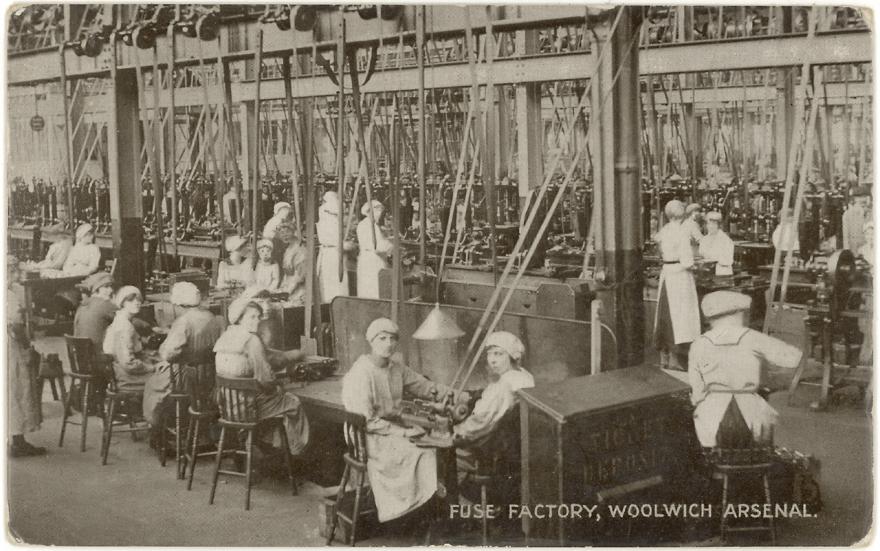
Although energy efficiency has improved, the inherent production processes and collaboration models have formed new bottlenecks, and the growth rate of production capacity has gradually slowed down. The dividends brought by technological upgrading have been continuously diluted by the old system.
From 2024 to 2025, the AI industry entered this stage. Simple conversational large - models are no longer the mainstream, and AI agents with task - linking capabilities have begun to become popular. AI can no longer only handle fragmented work but can undertake an entire basic business chain: intelligent customer service can complete reception, answering questions, and work - order transfer; AI recruitment systems can complete resume screening and preliminary screening ratings; automated office robots can connect links such as form generation and data summarization.
Although it seems that the application depth is increasing, all AI agents are adapting to the old processes. After AI completes the pre - work, it still has to enter the traditional links of manual review, cross - departmental approval, and hierarchical reporting. No matter how fast the intelligent tools are, they will be stuck by the lengthy processes. The efficiency dividends are continuously consumed, enterprises' investment continues to increase, but profit growth has stagnated, and the characteristic of "increasing revenue but not increasing profit" in the industry has become more obvious.
(3) System Reconstruction Stage: Rule Remodeling and Value Explosion
The real explosion of industrial productivity by electricity started with the complete subversion of the production system. Ford Motor was the first to abandon the central transmission mode that had been used for decades. It equipped each production machine with an independent motor and then re - planned the workshop layout, personnel division of labor, and collaboration rules according to the product manufacturing process. Thus, the modern assembly line was born.
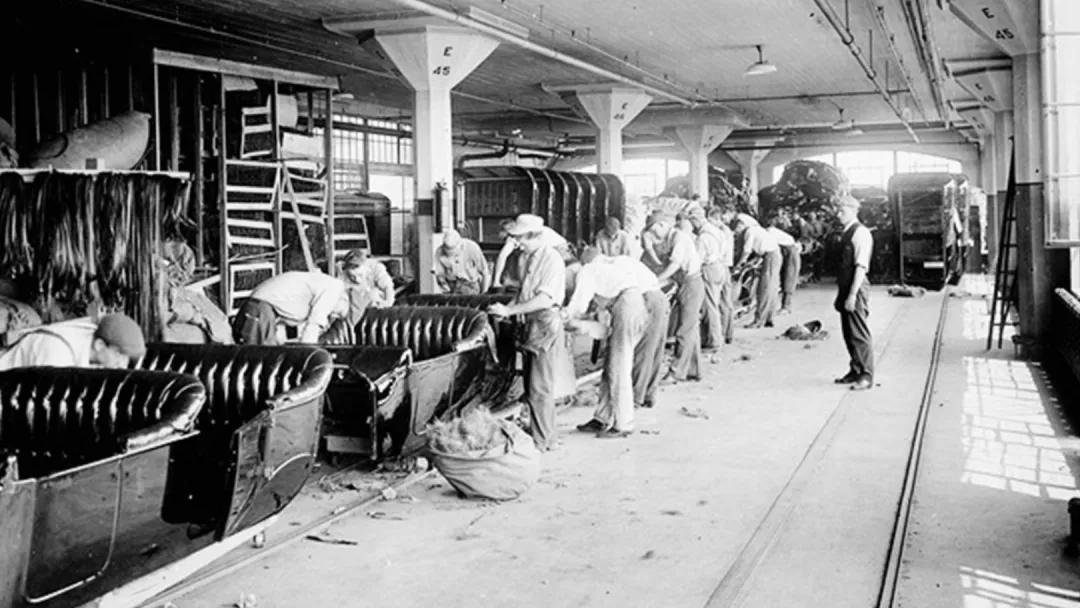
When technology no longer accommodates the old system but becomes the core of defining the system, productivity has experienced exponential growth. In the following more than a decade, the productivity of the US manufacturing industry has achieved a leap - forward improvement, and the real value of electricity as a general - purpose technology has finally been fully realized.
This is also the direction that the current AI industry is looking forward to. When the improvement of tools and processes reaches its limit, only by reconstructing the organizational and business logic can AI transform from a "cost item" to a "profit item". The world models that have risen rapidly in the past two years are the key to opening this stage.
From Large - Models to World Models: Three - Year Iteration, AI Reaches the Critical Point of Change
From 2023 to now, in just three years, AI has completed a complete iteration from concept explosion to in - depth scenario exploration. The technical route has also gradually evolved from a single large - language model to world models. This technical evolution line also makes the industry see the possibility of breaking through the current dilemma.
2023 was the year of the explosion of large - language models. Products such as ChatGPT became popular, making the global market aware of the capabilities of generative AI. Relying on powerful text understanding and content generation capabilities, large - models quickly penetrated into the basic office scenarios of various industries. The focus of competition at this stage was concentrated on parameter scale, dialogue ability, and multi - modal expansion. Enterprises' application ideas also remained at the level of "using AI to replace manual work".

At that time, the market sentiment was optimistic. Many people thought that AI would quickly subvert various industries. However, after more than a year of implementation and verification, the industry has gradually calmed down: the ceiling of single - point efficiency improvement is obvious, and it is difficult to create new business value by simply relying on large - models for task replacement.
In 2024, the industry's focus shifted to AI agents. The technical direction changed from "single - round interaction" to "autonomous task execution". Models began to have the ability to plan, execute, and link multi - step work. Application scenarios also extended from personal tools to department - level and business - line - level automation systems. Major domestic technology manufacturers and overseas leading model enterprises have successively launched agent products for enterprise services.
It was also at this stage that the investment pressure on the enterprise side began to appear. The deployment, operation, and customized transformation of agents all require continuous investment, and the process bottlenecks have led to lower - than - expected returns. The industry has begun to collectively reflect on the real path of AI commercialization. People have gradually realized that no matter how advanced the technology is, it is difficult to be implemented without adapting to the industrial system.
In 2026, world models have become the new core track in the industry, marking that AI technology has officially launched an impact on the third stage. Different from large - language models that focus on text and semantic understanding, the core capabilities of world models are to perceive the physical world, understand real - world logic, and deduce the development laws of things. It is no longer limited to content generation in the digital space but can connect with real - world industrial scenarios and complete judgment, decision - making, and action in complex environments.
Currently, many top - level laboratories and research teams around the world are deeply involved in this direction. The biggest breakthrough of these models is that they have got rid of the traditional model of "humans giving instructions and AI executing tasks" and have the potential for autonomous judgment and decision - making. In the corporate scenario, this means that AI has the ability to break out of the original process framework, participate in or even lead business operations, which exactly corresponds to the core requirement of "system reconstruction" in the third stage of general - purpose technology implementation.

Prediction of the Evolution Path and Trends of AI Commercialization in the Next Three to Five Years
Combining the development cycle of general - purpose technologies, the current rhythm of technological iteration, and the current situation of enterprise implementation, in the next three to five years, the AI industry will gradually emerge from the dormant period of high investment and low return. The commercialization process will show clear stage - by - stage characteristics, and the industry structure, profit model, and application form will all undergo in - depth changes. In addition to the mature implementation of the core world models, the AI industry will also undergo qualitative changes in four major dimensions: vertical models, edge - cloud - end collaboration, embodied intelligence, and engineering cost innovation, which will reconstruct the commercialization logic of the entire industry.
(1) 2026 - 2027: Process Streamlining First, Vertical Fields Profit First
In the next two years, the industry as a whole will not experience a full - scale explosion. The core trend is to optimize the existing situation and achieve local breakthroughs.
More and more enterprises will abandon the idea of "indiscriminately piling up AI tools" and instead sort out their business processes internally. They will cut redundant approval links, merge repeated work nodes, and simplify cross - departmental collaboration links. First, they will complete the lightweight transformation of the organizational process, and then embed world models and industry agents into it. This is the most practical way to activate the value of AI at the current stage.
In terms of implementation, there will not be a situation where the entire industry makes a profit uniformly. Sub - vertical tracks will be the first to achieve a closed - loop business model. Industries such as industrial quality inspection, financial risk control, professional code development, offline scenario operation and maintenance, and urban traffic autopilot, which have extremely high requirements for process efficiency and decision - making speed, will be the first beneficiaries. These scenarios have clear business logic, a high degree of standardization, and relatively low difficulty in process transformation. The cost - reduction and efficiency - improvement effects brought by AI can be accurately quantified, and the input - output ratio will increase steadily. For example, Mogu Chelian relies on the hardware - software integrated closed - loop model of MogoMind physical large - model + MOGOBUS autonomous driving bus. It has been operating in more than 20 cities across the country, serving more than 200,000 people and driving safely for more than 5 million kilometers. For example, benchmark routes at home and abroad such as those in Singapore, the cross - border medical line between Macau and Zhuhai, and Rizhao Wanpingkou have achieved the full implementation of technology, scenarios, and services, and have verified the commercial logic that AI scenarios in the physical world can be implemented, profitable, and scalable.
At the same time, the inference and deployment costs of basic models will continue to decline. After the technical threshold is lowered, small, medium, and micro - enterprises can also afford customized AI services, and the industry application coverage will be further expanded. The competition among leading model manufacturers will shift from competing in parameters and dialogue ability to in - depth exploration of industry solutions and adaptation to process reconstruction needs.