The price is higher than that of the host. The renaissance of PC handheld consoles is over.
Why has the PC handheld console experienced a remarkable revival in the past few years? Undoubtedly, it's because the Steam Deck presents a wonderful prospect. For just 3,000 yuan, you can own a device that allows you to play AAA games anytime, anywhere. It's more convenient than PCs and consoles and has better performance than mobile phones. This is the truth behind the "rebirth of an old tree" for PC handheld consoles in this round.
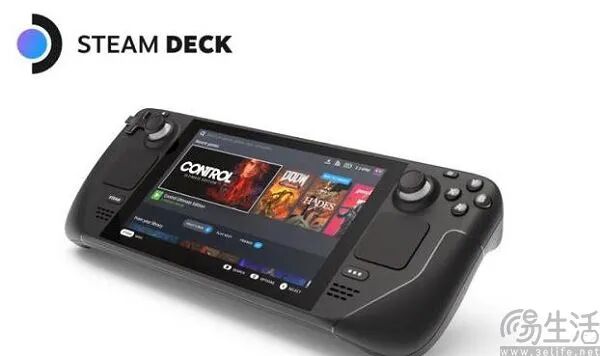
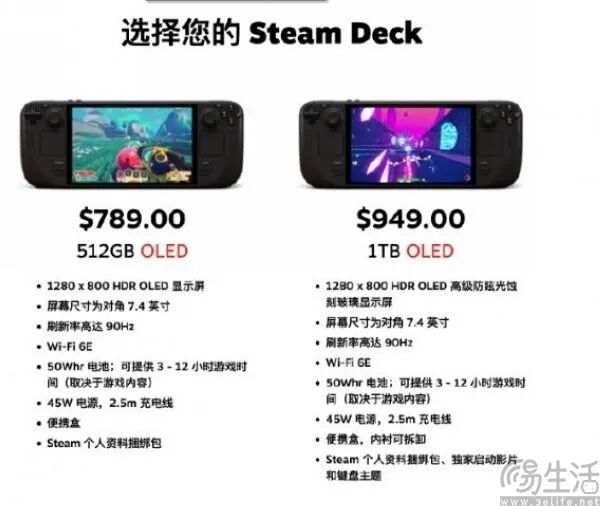
However, with Valve's recent significant price increase for the Steam Deck, the renaissance of PC handheld consoles may be coming to an end. Recently, Valve confirmed that the long - out - of - stock OLED version of the Steam Deck has been restocked, but its price has skyrocketed. The 512GB base version has increased from $549 to $789, a rise of approximately 43.72%. The 1TB top - end version has directly gone from $649 to $949, a rise of about 46.23%.
As soon as this news came out, it immediately caused an uproar among the player community. Some overseas game bloggers bluntly said, "This might be Valve's most painful failure in recent years."
Although the price increase of the Steam Deck is not surprising, as it's well - known that the AI industry is squeezing the production capacity of consumer - grade storage chips, and price increases have become an unavoidable industry trend. However, players didn't expect the price increase of the Steam Deck to be so astonishing.
Why is "the people's Gabe Newell" hitting PC handheld console enthusiasts hard this time? In fact, during Steam game sales, it's mainly the developers who take the hit, and Valve just earns a little less. But when it comes to the rising cost of the Steam Deck, Valve has to bear it alone. Moreover, even though nearly 5 million Steam Decks have been sold, it can't change Valve's weakness in having insufficient bargaining power in the supply chain.
In other words, when it comes to the price increase of storage chips, mobile phone manufacturers can spread the cost with a large volume of shipments, but Valve can't. When the leader of the PC handheld console industry, Valve, has to raise prices significantly, it's easy to imagine the situation of other manufacturers.
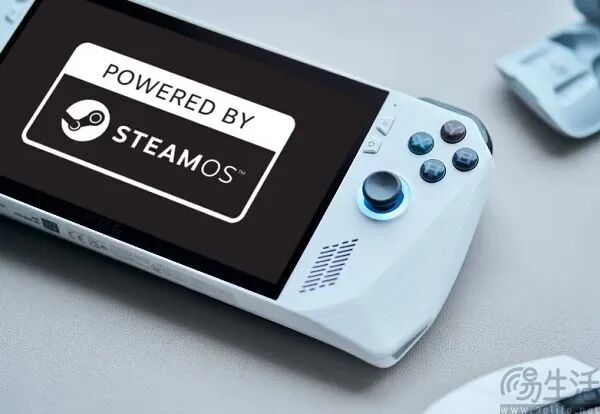
Currently, the pre - sale of the AYANEO Next 2 has been suspended, the Lenovo Legion Go 2 has been out of stock, and the ROG Xbox Ally has increased by $200. In response, the well - known technology media The Verge lamented, "The golden age of handheld gaming is over."
Why does the golden age of PC handheld consoles end as soon as their prices increase? This is because PC handheld consoles represented by the Steam Deck and Legion Go 2 are more of a supplement to game consoles and PCs, rather than a replacement. And the buyers of PC handheld consoles have similar characteristics. That is, a PC handheld console is neither their only nor their first gaming device. Usually, they also have a PC or a console.
In fact, the boom of PC handheld consoles has a strong background of the times, which is the result of the global spread of mobile games. With the improvement of smartphone performance and players' gaming aesthetics, mobile games have become more complex and similar to PC games since 2015. ARPG, MOBA, FPS/TPS games have emerged in large numbers and gradually dominated the subsequent mobile game market. As a result, the touch - screen operation method can no longer meet the needs of games.
Some players who hope to have a better experience have turned to keyboards and mice with higher operation ceilings, which has led to the prosperity of mobile game emulators. As technology continues to advance, the emergence of cross - platform games such as "Genshin Impact", "The Wuxia Online Mobile", and "Delta Force: Operators" has made players start to seek to experience games on more diverse hardware. Simply put, the prosperity of mobile games has cultivated players' habit of experiencing games anytime, anywhere, and laid a realistic foundation for the popularity of PC handheld consoles.
Compared with traditional PC and console games, mobile games usually lag slightly in terms of gameplay and content depth. Therefore, players who want more diverse experiences naturally look for ways to experience PC games in mobile scenarios. Meanwhile, with AMD's launch of the AMD Ryzen Z1 designed for portable PCs, PC handheld consoles have made up for the performance shortfall and can run AAA blockbusters smoothly.
The success of the Steam Deck is based on the fact that for just $399, you can own a portable device that can run almost all the games you want to play. When the price of the Steam Deck starts at $789, players have to choose between PC handheld consoles and other products, and the disadvantages of PC handheld consoles are immediately highlighted.
