Having invested one billion, why do cars look increasingly similar?
In recent years, the issue of the homogenization of car design has been brought up for discussion every once in a while. Sure enough, the automotive circle has been in an uproar these days because of a new car.
The highly anticipated first all - electric model of Ferrari, Luce (meaning "light"), has finally been officially unveiled.
You know, this super luxury car worth up to 4 million yuan not only has top - notch technical configurations but is also designed throughout by Jony Ive, the former chief designer of Apple, and his LoveFrom team.
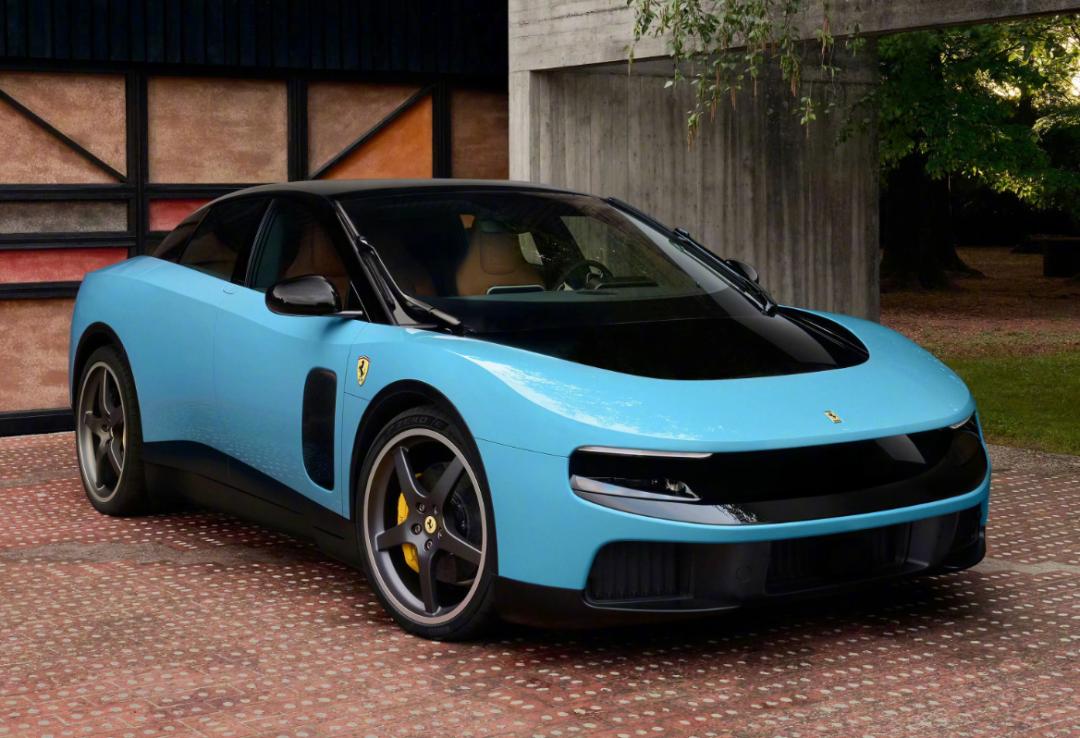
However, when the official lifted its mysterious veil, before anyone had a close look at the configuration and price, its appearance had already got netizens around the world riled up.
"Isn't this just the rendering of the Apple car that was circulating at that time?"
"The front looks like an Audi, the rear looks like a firefly, and from the side, it looks a bit like a XPeng and also a bit like an Li Auto i6..."
"To be honest, the exterior and interior design style is really not as good as that of current domestic new energy vehicles."

For a moment, there were a lot of complaints. A top - of - the - line luxury car worth 4 million yuan actually gives the impression of a domestic mass - market electric car worth 150,000 - 200,000 yuan.
Even Luca di Montezemolo, the former chairman who led Ferrari for 23 years, publicly lashed out at the new car and also took a dig at Chinese cars, saying that it was "a design that even Chinese cars wouldn't copy".
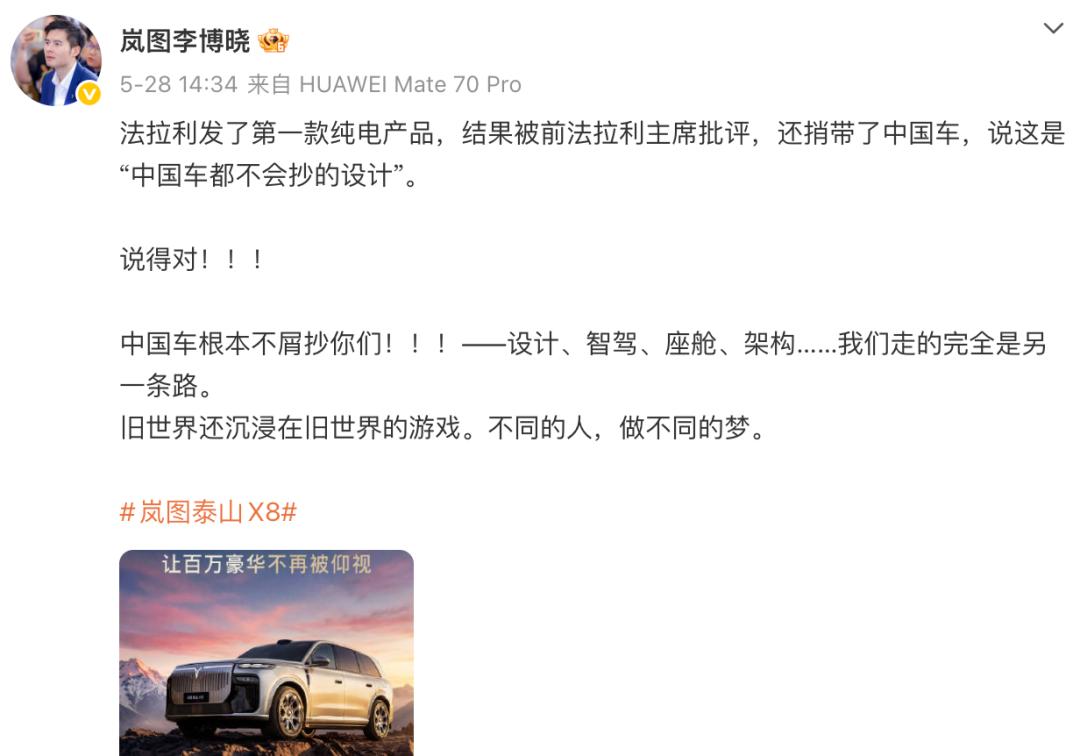
In response, Li Boxiao, the deputy general manager of Voyah Automobile Sales and Service Co., Ltd., also publicly retorted on Weibo: "You're right! Chinese cars simply disdain to copy yours!"
This doesn't mean that Jony Ive's design skills are poor. Maybe during the years when Ferrari was preparing for a big move, the domestic new energy vehicle market has become so competitive that it has completely raised the public's aesthetic standards and expectations.
But this also confirms an embarrassing reality from the side: In the new energy era, even a powerful brand like Ferrari seems to have inevitably fallen into the strange circle of the global automotive "homogenization" in its design language.
This phenomenon of "you in me, me in you" not only makes consumers aesthetically fatigued but also makes traditional luxury brands feel a bit anxious.
Some time ago, the response of Tang Fengliang, the vice - president of Porsche China's media and public relations, also directly hit the hot search.

She said that in the past few years, Porsche's design has indeed inspired a highly unified automotive design aesthetic in the Chinese automotive industry. For Porsche, this process is not only an honor but also a bit of a helpless situation.
At the same time, she emphasized that it's easy for the design language to be paid tribute to and imitated, but the soul behind the design is not easily replaceable.
These words sound decent, but the arrogance of the traditional aristocracy is almost palpable.

Interestingly, Luo Yonghao actually stepped in to retort, directly exposing Porsche's dirty laundry.
Luo Yonghao revealed that Porsche once copied the design of Tatra from Czechoslovakia. At a critical moment, Porsche asked Hitler to intervene forcefully. It wasn't until the end of World War II that Volkswagen paid 1 million West German marks in compensation to settle the whole incident.
This cross - fire has completely ignited the enthusiasm for the discussion about "tribute and imitation in car design". After carefully analyzing the confrontation between Tang Fengliang and Luo Yonghao, the author actually poses three core questions to the industry:
1. Porsche still has its own pride. What's the big deal about paying tribute to or imitating the appearance? If you have the ability, come and compete in terms of core performance and technology.
2. Even Porsche, a well - recognized ultra - luxury brand today, has a history of plagiarism. So, does tribute and imitation in the automotive circle really count as a bad thing?
3. How should car design be innovated (copied)?
Let's analyze these points one by one and try to have a thorough discussion about the technology, plagiarism, and innovation of domestic cars.
First of all, in terms of technology and performance, domestic cars have really "stood up" in the new energy field.
Take the Yangwang U9X, the most expensive car sold at the Beijing Auto Show this year for 20 million yuan. This car is definitely a culmination of BYD's technology. Its price, achievements, and strength are clearly there for all to see.
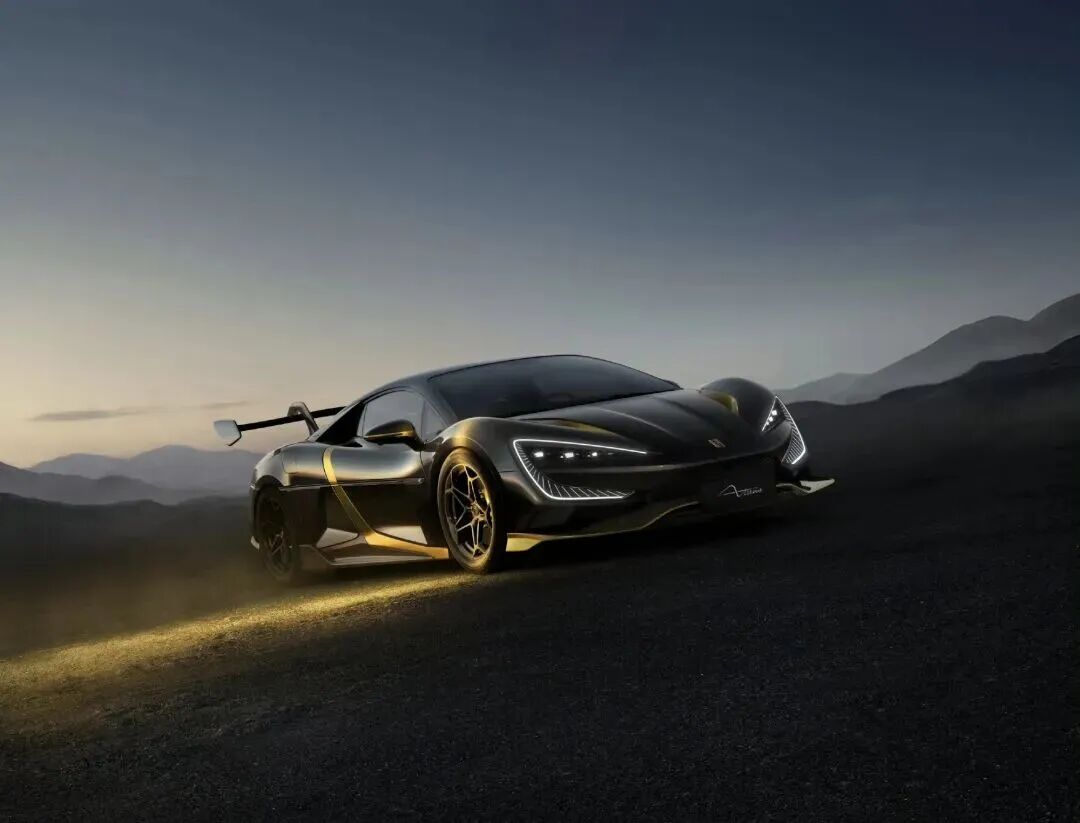
For example, at the German ATP test track, the Yangwang U9X reached a top speed of 496.22 km/h, directly breaking the world record for the top speed of all - electric vehicles. It also became the production car with the fastest lap time officially certified on the Nürburgring track, with a time of 6:59.157.
It also broke the production car lap - time records at four major professional racing tracks in China, namely Zhuzhou, Zhuhai, Chengdu Tianfu, and Shanghai International.
Moreover, NIO, which adheres to the battery - swapping route and sells well in the pure - electric SUV market priced over 400,000 yuan.
Hongmeng Zhixing, which has a good reputation for its assisted driving technology, can all compete head - on with overseas luxury brands in the deep - seated technology and performance fields.
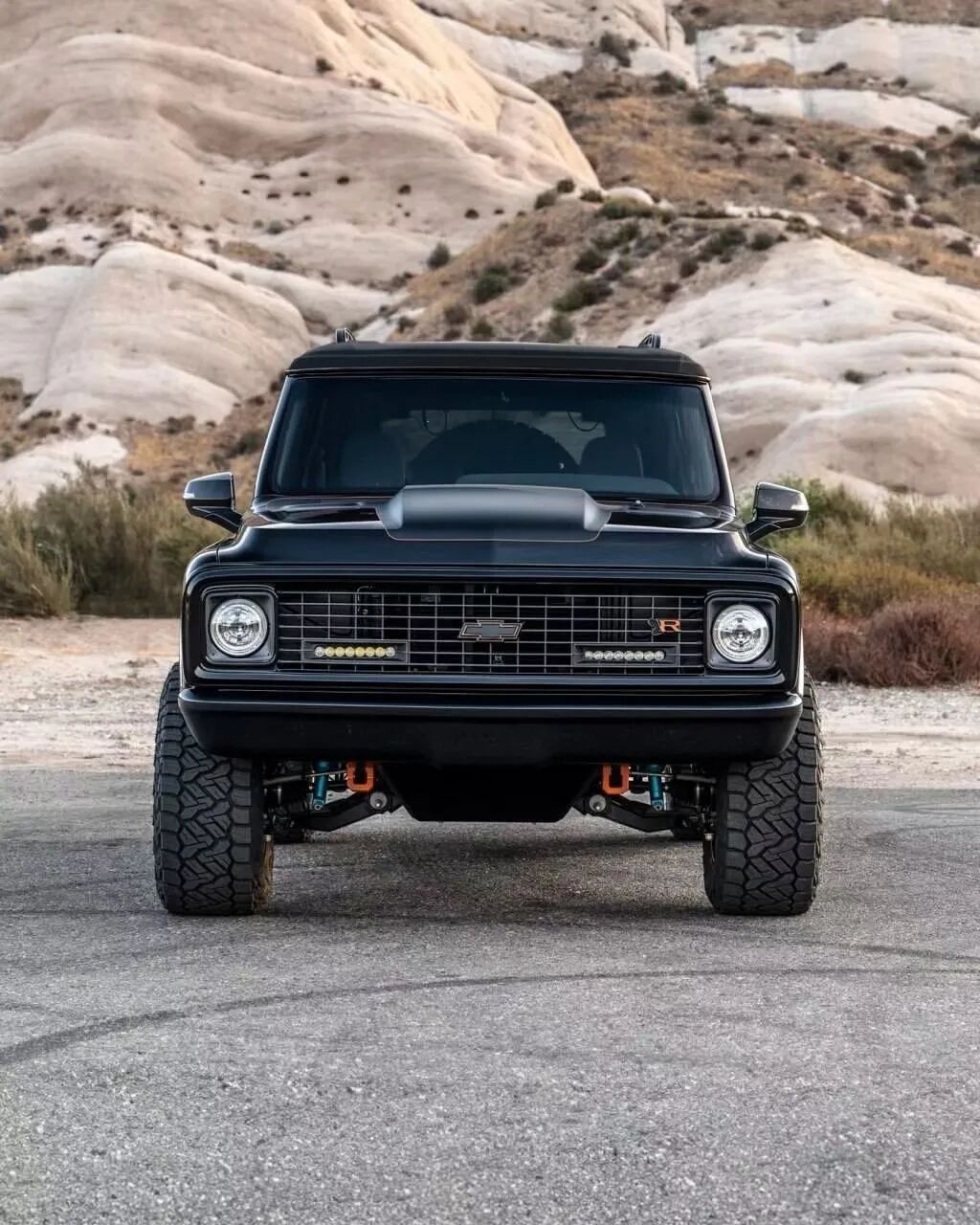
Since the technology is not inferior, why do cars nowadays look more and more alike, and the designs are "converging"?
First of all, we should recognize that design and aesthetics are a kind of ability. Like power, chassis, and other aspects, it is itself a part of a car's competitiveness. Moreover, aesthetic standards, which are relatively subjective, even require a longer time to be refined and learned.
The author quite agrees with the view that "all articles in the world are copied to some extent. The main thing is who is more skillful at it."
Looking back at history briefly, in the 1980s, Asian automobile manufacturing began to rise. At that time, Japanese car manufacturers mainly imitated the works of American car manufacturers, and South Korean car manufacturers started to imitate the Japanese.
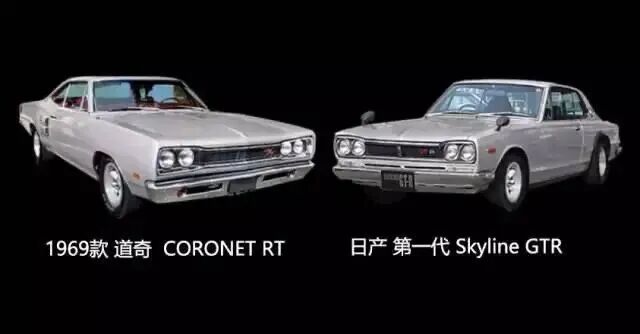
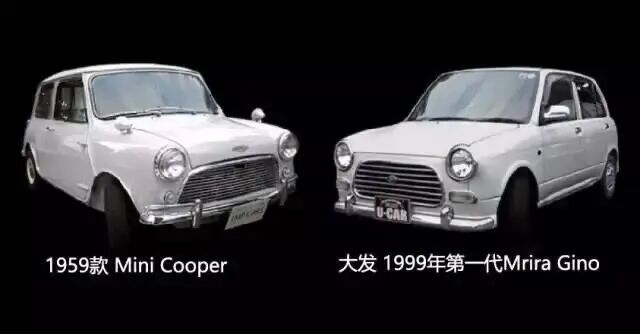
Whether it's reverse - engineering or paying tribute through imitation, except for a few brands like Rolls - Royce, Bentley, and Mercedes - Benz, this process is actually an inevitable part for most car manufacturers from scratch.
In 2000, domestic car manufacturers began to emerge. In comparison, we were more inclusive. The objects of our tributes covered multiple categories from Japan, South Korea, and the United States. Classic examples include the Chery QQ and the Daewoo Matiz, the BYD F3 and the Toyota Corolla, etc.
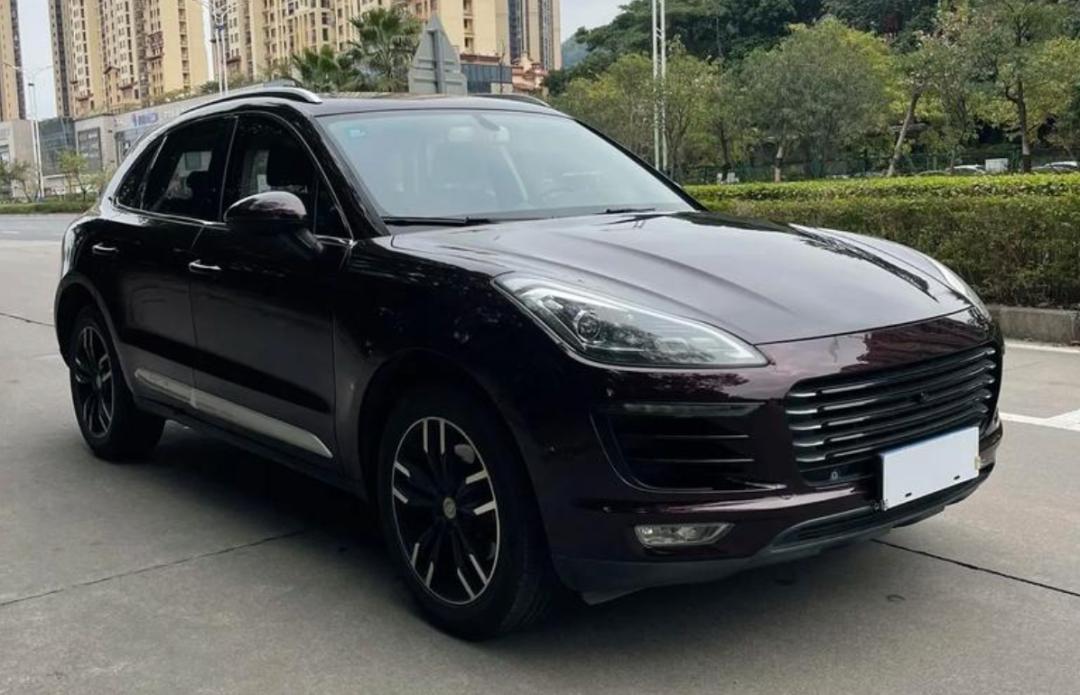
Of course, the most well - known in this regard was the once - rising star, Zotye.
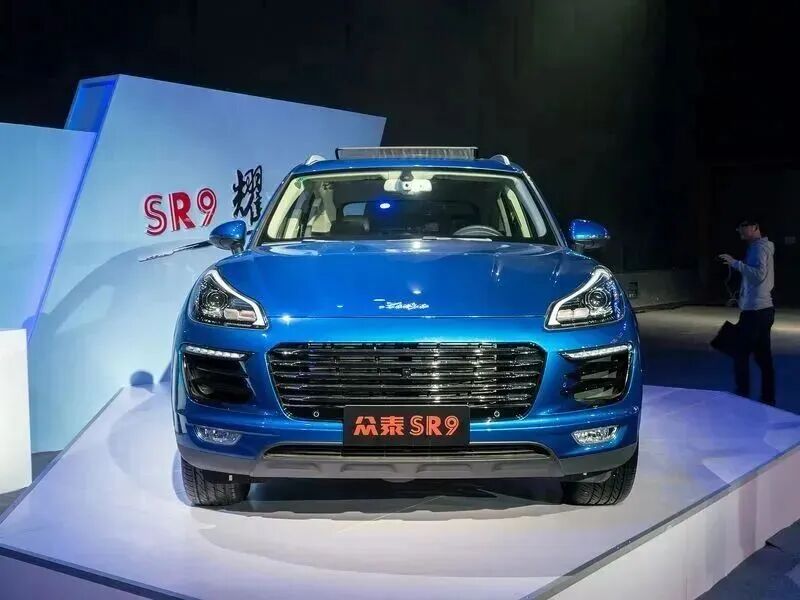
Nowadays, whether it's Toyota, Honda, Hyundai, or domestic large - scale manufacturers, there is no so - called 1:1 plagiarism at all.
Mainstream brands with good development and large sales volumes have all established their own family - style design languages, and the development process and results are positive.
On the other hand, under the supervision of regulations, it is really not easy to safeguard the rights of appearance patents. For example, in 2003, Honda accused Shuanghuan Automobile of plagiarizing its appearance design patent and demanded compensation of more than 300 million yuan. However, Shuanghuan counter - sued, and finally, the court ruled that Honda should compensate Shuanghuan 16 million yuan.
A rare victory was when Jaguar Land Rover sued the Landwind X7 and finally received 1.5 million yuan in compensation.
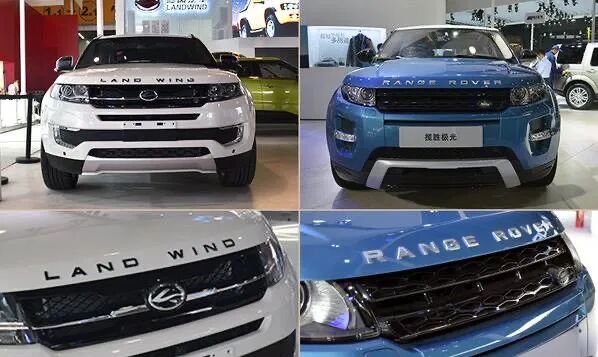
What we feel as "similarity" and "tribute" nowadays is actually a completely different dimension of business logic.
The fundamental reason for homogenization is to reduce the cost of trial and error.
In 2026, the profit margin of the automotive industry has dropped to 2.9%. The high - intensity competitive pressure and the meager profit margin require car manufacturers to efficiently launch hit products.
Car manufacturers least want to hear sighs like "This car is good in every aspect, but its appearance is too individual and not universal enough, which affects the sales volume."
On average, it takes about 3 years to design a car from concept to mass - production, and the investment is at least 1 billion yuan. The cost of trial and error in appearance design is extremely high.
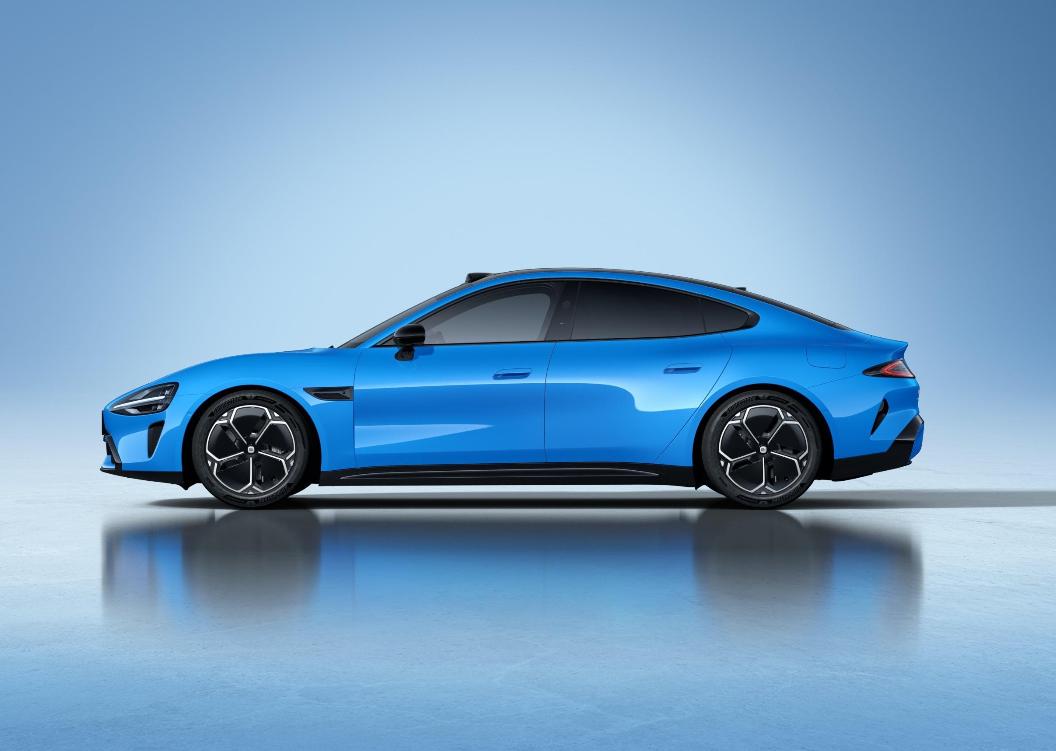
It's always difficult to define individuality and high - end appearance. Blindly over - emphasizing originality can easily turn into a challenge to aesthetics and end up in failure.
Referring to the styling elements of successful models can indeed make up for the deficiencies in design. By combining them with one's own style, the homogenization situation is formed.
Interestingly, some netizens even started to feel sorry for Zotye. But these are two different concepts. Homogenization and plagiarism are two different things. Moreover, for models with good sales nowadays, in addition to design, they must have a solid foundation in hard - core aspects such as technology, power, performance, and chassis.
Zotye's exit was exactly the opposite. It mainly relied too much on appearance and ignored the cultivation of internal strength, which ultimately led to a poor reputation and affected its market sales performance.
On a deeper level, in terms of innovation, whether it's in design, technology, or products, there is no absolute novelty. The core for experts is