Pakistan, a country that has never qualified for the FIFA World Cup, "monopolized" the footballs for five World Cup tournaments with the efforts of 60,000 people.
The FIFA World Cup jointly hosted by the United States, Canada, and Mexico is set to kick off in June, and topics related to football are becoming increasingly popular.
For example, the official match ball for the World Cup. According to Xinhua News Agency, the official football for this World Cup is called "Trionda," which means three waves. Its name and design symbolize the historic moment when Canada, Mexico, and the United States are hosting the World Cup together for the first time.
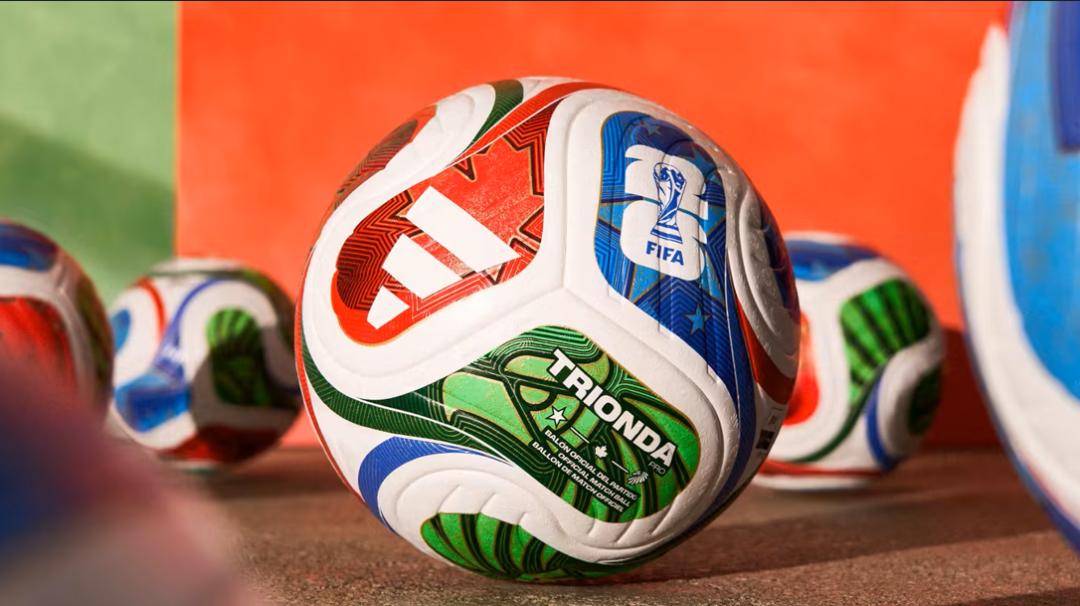
The "TRIONDA" ball. Source: FIFA
Most football fans know that the official World Cup balls are designed by Adidas, but few know that almost all of these match balls come from a small city in northeastern Pakistan - Sialkot.
For many years, Sialkot has been manufacturing official match balls for the World Cup, including but not limited to the "Fevernova" for the 2002 FIFA World Cup Korea/Japan, the "Brazuca" for the 2014 FIFA World Cup Brazil, the "Telstar 18" for the 2018 FIFA World Cup Russia, and the "Al Rihla" for the 2022 FIFA World Cup Qatar, etc.
Moreover, 70% of the world's hand - sewn footballs come from this small city.
Although Pakistanis don't love playing football very much and Pakistan has never qualified for the World Cup finals, it doesn't prevent Sialkot from becoming the "hidden champion" of the World Cup.
Why Sialkot?
It takes about 5 hours to drive east from Islamabad, the capital of Pakistan, to reach Sialkot.
Sialkot is a small city in northeastern Punjab province, with a population of just over one million in the main urban area. In the city center, a giant copper football statue silently reminds people that football holds an important position here.
This small city has more than 1,000 football - related manufacturing factories, and over 60,000 workers are engaged in related work. Together, they produce about 70% of the world's hand - sewn footballs.
In addition to football, Sialkot is also one of the industrial centers in Pakistan, famous for producing and exporting surgical instruments, musical instruments, sports goods, leather products, textiles, etc.
The history of hand - sewn footballs in Sialkot can be traced back to the British India period in the early 20th century. At that time, cobblers in the city repaired damaged footballs for British soldiers and learned how to hand - sew footballs in the process.
After that, the hand - sewn football industry gradually emerged here, and the footballs sewn in Sialkot were specifically sold to the UK.
After the partition of India and Pakistan in 1947, the football manufacturing industry in Sialkot continued to develop. At the 1982 FIFA World Cup Spain, FIFA first used the "Tango" football made in Pakistan.
This ball uses a revolutionary waterproof sealing seam technology, which greatly reduces the ball's water absorption and makes the ball lighter.
Since then, Sialkot's hand - sewn footballs have become well - known and have provided match - specific footballs for international competitions such as the World Cup, the UEFA Champions League, and the top five European leagues.
In addition to Adidas, major sports brands such as Nike, Puma, Select, and Reebok also produce footballs in Sialkot.
Today, Sialkot produces more than 40 million footballs annually. From grassroots matches to top - level events, many match balls are made by local workers.
Market share being grabbed
Behind the long - standing manufacturing industry in Sialkot, there are controversies.
More than 80% of the footballs manufactured in Sialkot use hand - stitching technology. A traditional football is composed of 20 hexagons and 12 pentagons and requires about 690 stitches. The stitching is not just a simple surface stitch. Workers must turn the stitched ball skin over after sewing more than half of it so that all the stitches are hidden inside, presenting a smooth and integrated spherical surface.
Based on the proficiency of local workers, each of them can sew 7 - 8 footballs per day. Although the process is labor - intensive, the balls produced in this way are more durable and of higher quality.
Professionals generally believe that these hand - sewn footballs have better ball - handling feel, high durability, and extremely low water absorption. Even in some extreme tests, their quality is often praised.
Some media have found that most of the workers in Sialkot's football factories are local and nearby residents. These workers work hard, with a weekly income of only $35 (about 236 yuan), but the "Trionda" match - specific balls they hand - sew have a retail price of up to $170 (about 1,150 yuan) in the regular market.
That is to say, the monthly salary of the workers is not enough to buy a match - specific ball.
In response, Anna Bryer, the head of a British labor organization, said: "The sports manufacturers and FIFA are making all the money, while the producers can't even afford the products they make." She called on Adidas and FIFA to be responsible for the supply chain and ensure that all workers manufacturing footballs receive the proper pay.
In response, an Adidas spokesperson said that the factory producing the "Trionda" football is fair and safe. "All our products are produced under fair and safe working conditions, and the wages are fair in the local area. We conduct regular on - site inspections and have completed more than 1,000 inspections in the past 12 months."
In recent years, affected by new technologies, some regions have started to grab Sialkot's market share.
According to media reports, the main producer of the "Teamgeist" ball for the 2006 FIFA World Cup Germany was a Thai - Japanese joint - venture factory.
The football used at that time was the first to be manufactured using hot - glue bonding technology. The spherical surface was smoother than before, and the time for hand - stitching was reduced.
However, these footballs have received a lot of controversy. For example, some players complained that the ball was too erratic and difficult to predict its path, and some players even criticized that playing with these balls was like playing volleyball. Due to their unstable quality, these footballs have become a nightmare for many goalkeepers.
Affected by mechanized production, Sialkot and even the whole of Pakistan's export share to certain regions (such as the United States) has declined, but it still dominates the fields of international high - end match balls and hand - made football manufacturing.
Pakistan also uses Sialkot as a manufacturing center to produce a full range of sports goods such as basketballs, volleyballs, hockey balls, and sports gloves. Data shows that as of 2024, Pakistan's annual export value of sports goods is about $444 million, ranking 15th in the world.
This article is from the WeChat official account "Time Weekly" (ID: timeweekly). Author: Ma Huan, Editor: Liang Li. Republished by 36Kr with permission.