18,000 webcomic dramas about hoarding instant noodles in the apocalypse. Are viewers entering an "industrial aesthetic fatigue"?
Recently, the Weibo hot search topic "#AI Comic Dramas' Staples: Instant Noodles, Ham, and Purified Water#" has attracted wide attention. Under this topic, many netizens joked that when these three items appear together, it basically means that the protagonist is about to travel through the apocalypse with supplies from a convenience - store level, entering a cycle of stockpiling, gaining superpowers, and resource dominance in a popular fantasy story.
Why are there so many apocalyptic scripts? The answer lies in AI. Guduo tried asking different AIs the question, "If you want to create an AI apocalyptic comic drama with the potential to be a hit but hasn't appeared on a large scale in the market, what would you do?" The answers are much more novel than "stockpiling instant noodles":
ChatGPT proposed the "Memory Apocalypse," where humans randomly forget parts of their lives every day, and the protagonist stockpiles memory backups;
Gemini came up with the "AIGC Malfunction Apocalypse," where the world is like a broken generator, and humans mutate due to sampling errors;
Doubao suggested the "Emotional Virus Apocalypse," where AI deletes humans' useless emotions, and stand - up comedians fight back against the system with jokes;
DeepSeek presented the "Post - Human Archaeological Apocalypse," where after the extinction of humans, AI robots try to restore human civilization.
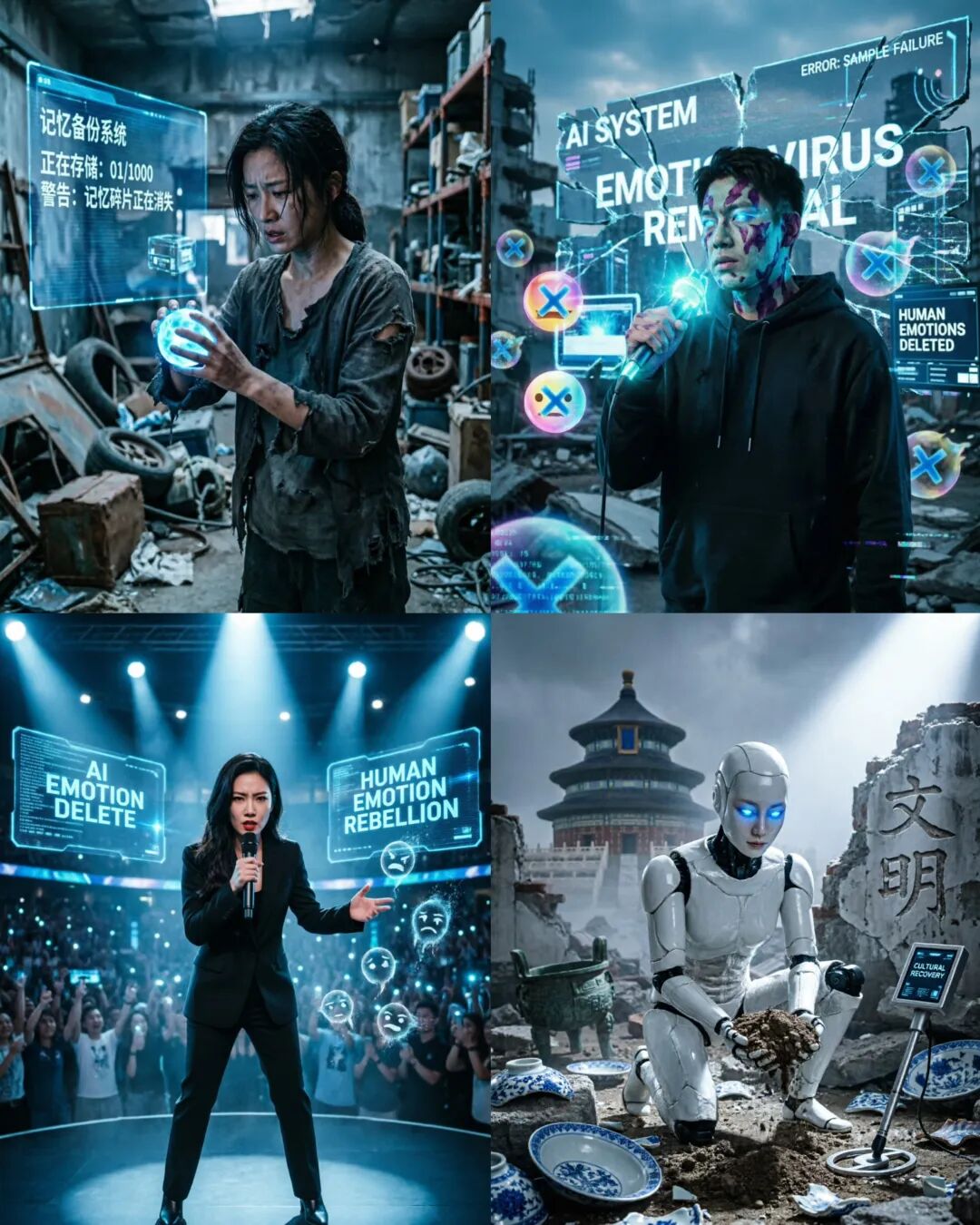
There are new stories in the apocalyptic genre, but content production doesn't always maximize imagination. In the face of production capacity and efficiency, the old formulas are always the first to be adopted because they are controllable and easy to replicate. As a result, instant noodles, ham, and purified water still dominate the apocalyptic comic dramas. This is also the most typical situation of AI apocalyptic comic dramas at present: AI can generate countless new apocalyptic worlds, but the industry prefers to copy the safe supermarket - style model.
18,000 Episodes? AI Apocalyptic Comic Dramas Have Become a Production - Capacity - Driven Business
As of now, how many AI apocalyptic comic dramas have been launched in the market?
When Guduo asked Doubao this question, it gave a shocking answer: 18,000 episodes. Although this number may not be entirely accurate, the industry's perception is correct. The supply scale of AI comic dramas has indeed been rapidly raised to a new level.
In 2024, native comic dramas on platforms like Douyin and Kuaishou began to rise, with content mainly including emoji - based, silly - style comic dramas, and novel - adapted comics. By the end of 2024, the supply side started tentative layout, but the number of works was still limited, with less than a thousand episodes. The real turning point came in 2025, when the number of launched comic dramas exceeded 60,000.
In 2026, AI further boosted this supply capacity. According to DataEye - ADX industry - version data, in January 2026, the number of domestic AI comic dramas launched reached 14,634, with an average of more than 470 new dramas launched every day. By February, the total number of on - air AI dramas/comic dramas had reached 127,800. As of March 31, there were nearly 180,000 on - air native AI dramas/comic dramas on the Douyin platform, with about 50,000 new episodes added in March alone. That is to say, the new episodes added in March alone were close to the total number of AI comic dramas launched in 2025.
From less than a thousand episodes in 2024 to 60,000 episodes in 2025, and then to a monthly increase of 50,000 recently, the supply speed of comic dramas has advanced by leaps and bounds, becoming a new production capacity that must be digested in the platform's content pool. For platforms, the content pool needs continuous filling; for producers, they need to find reusable templates through low - cost trial - and - error as soon as possible; for algorithm - based distribution, works must clarify the worldview, character advantages, and the path to the exciting points in a short time. Therefore, the first to be magnified are often not the most complex genres, but those that are easiest to produce, test, and replicate.
The apocalypse is one of the most typical examples. Looking at the types of AI comic dramas that have emerged, the high - frequency directions mostly focus on the male - oriented exciting - feeling track: apocalyptic stockpiling, devouring and evolving, fantasy cultivation, system upgrading, transmigrating into a villain, son - in - law's counter - attack, fruit anthropomorphism, etc. Although these genres seem different, they have obvious commonalities: the worldview starts quickly, the protagonist's advantages are clear, the exciting points can be broken down into continuous nodes, and the visual elements are highly symbolic.
The advantages of the apocalypse are particularly direct. A simple statement "The apocalypse has arrived" can establish the scarcity of resources, the collapse of order, and the re - arrangement of the strong and the weak. A supermarket, a warehouse, or a mobile fortress can quickly let the audience understand what the protagonist has in hand. If a live - action short drama wants to shoot an apocalypse, the scenes, extras, special effects, and props all cost money. But in AI comic dramas, the post - apocalyptic city, supermarket shelves, system panels, and warehouse spaces can all become reusable content components. It's simply amazing.
Top - tier cases have verified this logic. For example, "I'm Not Afraid of the Apocalyptic Cold Wave with My Mobile Fortress" has the core selling points of an extremely cold apocalypse, a mobile fortress, and stockpiling for upgrading. "I Run a Supermarket in the Apocalypse and S - Class Monsters Rush to Work for Me" directly writes the exciting points of "apocalypse + supermarket + monster working" in the title. One is a mobile fortress, and the other is an apocalyptic supermarket. At the bottom, they are all about spatial advantages and continuous upgrading in a resource - scarce environment.

More importantly, this kind of setting is naturally convenient for sequels: the fortress can be upgraded, the supermarket can be expanded, the warehouse can be filled, the system can continue to issue tasks, and the exciting points can be broken down episode by episode. They have not only produced one or two hits but also a replicable production model.
Therefore, the "18,000 episodes" of apocalyptic comic dramas are essentially a side view of the explosion of AI comic drama production capacity.
The Prematurely Created "Industrial Aesthetic Fatigue"
After so much content is rapidly produced, how long can users stay interested?
The answer is obviously not optimistic. The hot search topic "#AI Comic Dramas' Staples: Instant Noodles, Ham, and Purified Water#" means that netizens have seen through the production logic of apocalyptic comic dramas. The high - density appearance of the same set of symbols like instant noodles, ham, and purified water in a short time will quickly make users shift from watching the plot to predicting and recognizing the formula.
In the past, short dramas were often criticized by users for being formulaic. Templates such as the return of the war god, the counter - attack of the son - in - law, the divorce and revenge, and the true and false daughters were frequently replicated. But live - action short dramas at least have variables such as actors' performances, scene arrangements, CP chemistry, and line differences. With a different combination of actors and new camera language for the same formula, users can still sometimes get new emotional experiences. For example, several popular short dramas by Liu Xiaoxu, such as "Summer Fendra" and "Fortunately Met at the Time of Divorce," are essentially the most common urban - emotional types in the short - drama world, but the actors' performance quality and the tension in the character relationships can still add a sense of freshness.
However, AI comic dramas cannot be given a "human touch" by actors. AI comic dramas have fewer variables. Their efficiency comes from standardization, and the problems also come from standardization. Especially in the apocalyptic genre, the system panels, warehouse spaces, character expressions, transition rhythms, and narration tones are more likely to be similar. The faster the production side pursues speed, the more likely the users are to see repetitions, leading to aesthetic fatigue.
This fatigue is not just the ordinary boredom with a certain genre. It means that users have understood its production mode as an industrial product. Ordinary aesthetic fatigue may just be the thought of "Why is it another apocalypse?" Industrial aesthetic fatigue goes further, where users already know "Why it is produced this way." When they see instant noodles, they know the protagonist will stockpile; when they see a supermarket, they know the resources will be cashed in; when they see a system, they know the next step is bound to be an upgrade. Before the plot progresses, users can already see the modules behind it.
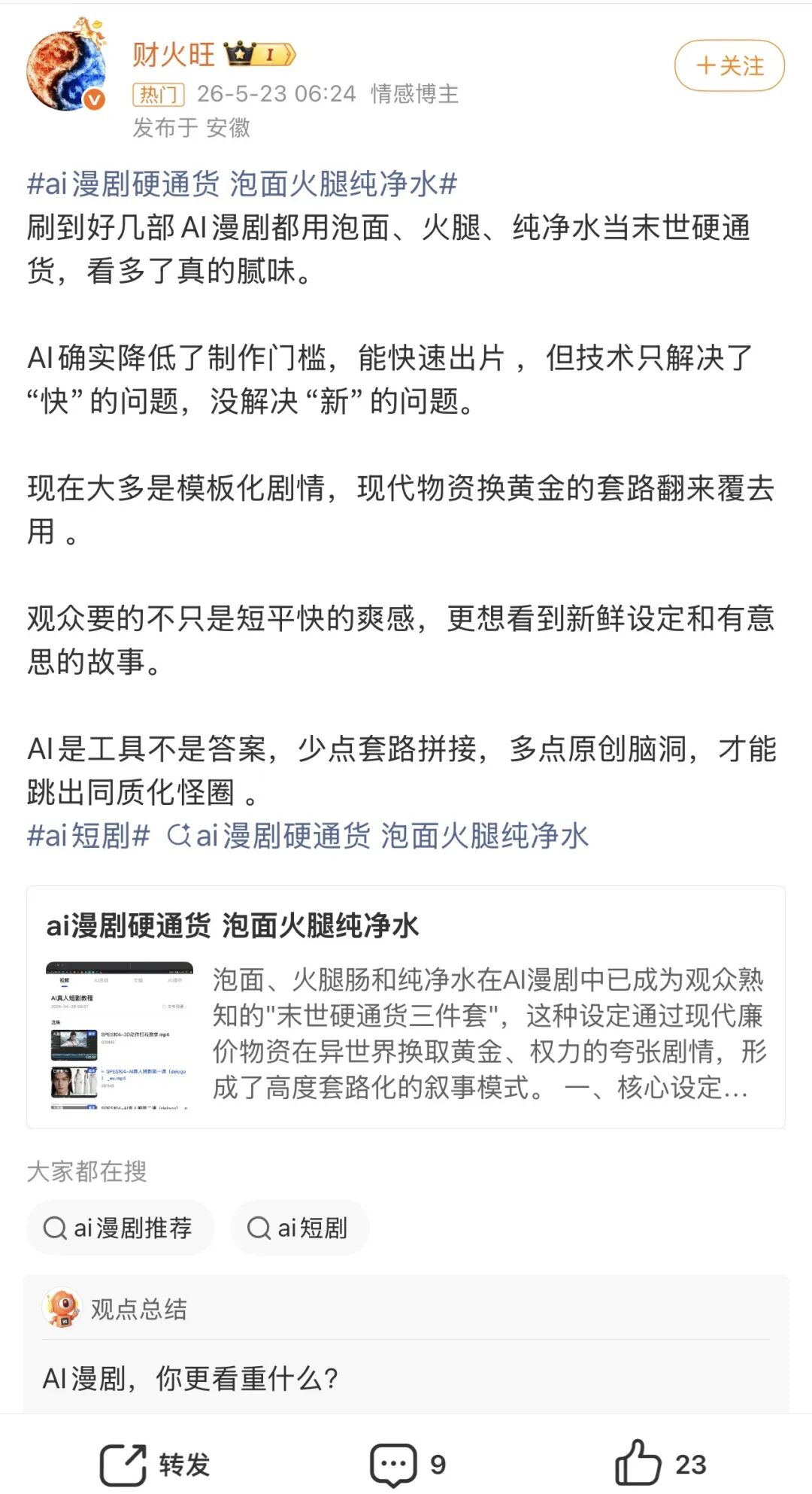
This is a more realistic risk for AI comic dramas. Because the commercial advantage of AI comic dramas lies in high production capacity and fast feedback. But the faster the same set of elements are replicated, the faster users lose their freshness. The fact that instant noodles, ham, and purified water have become a hot search topic is essentially a reverse analysis from the user side: AI apocalyptic comic dramas are not only watched but also recognized as a content production line.
In other words, AI apocalyptic comic dramas are not without exciting points, but the exciting points are mass - produced too quickly. Efficiency makes it develop faster but also leads to "industrial aesthetic fatigue" among users more quickly.
The Lifecycle of AI Comic Dramas: Will They Kill Themselves in Three Months?
The most familiar path in the content industry is: a genre becomes popular, the supply catches up, then it falls into homogenization, and the audience gets aesthetically fatigued.
Both long - form dramas and live - action short dramas have gone through this path. In the long - form drama market, this cycle usually lasts for several years. For example, the big - female - lead dramas, from "The Journey of Flower" and "Empresses in the Palace" to later palace intrigue, family intrigue, and female - legend dramas, supported the drama supply for a long time. But when the combination of female growth and big - female - lead counter - attack was repeatedly used, the genre's bonus was gradually consumed. The same is true for ancient - style idol dramas. There were many hits and frequent new releases in the past few years, but now many dramas are cold, and the genre is congested.
Live - action short dramas have shortened this cycle. Compared with long - form dramas, short dramas have lower development and production costs, and the platform feedback is more direct. Whether a genre can succeed can quickly be seen in the data of traffic investment, completion rate, conversion rate, and recharge. Genres such as the return of the war god, the counter - attack of the son - in - law, the divorce and revenge, the true and false daughters, and the rebirth and revenge could become hits at first, not only because the stories were new but also because they provided clear emotional buttons such as identity reversal, class counter - attack, betrayal revenge, family - relationship dislocation, and powerful revenge.
Once these emotional buttons are verified to be effective, the industry will quickly replicate them. Once a hook like "The ex - husband regrets after divorce" becomes successful, a batch of similar stories about divorce, chasing the ex - wife, and revenge will quickly appear in the market. If a "true and false daughters + identity reversal" can achieve conversion, it will also be broken down into more variants such as rich - family mis - adoption and family - relationship revenge.
For AI comic dramas, this cycle is still being compressed. After the explosion of AI production capacity in 2026, the apocalyptic comic dramas, which have been popular since their appearance, have become the focus of users' complaints in just a few months. Long - form dramas use the production cycle and platform scheduling to lengthen the buffer, and live - action short dramas use actors, traffic investment, and live - action performances to create variables. But once AI comic dramas enter high - density supply, the time left for a single genre to self - renew will be shorter. We also used AI to calculate, and this cycle that can hold the audience's attention is only: three months!
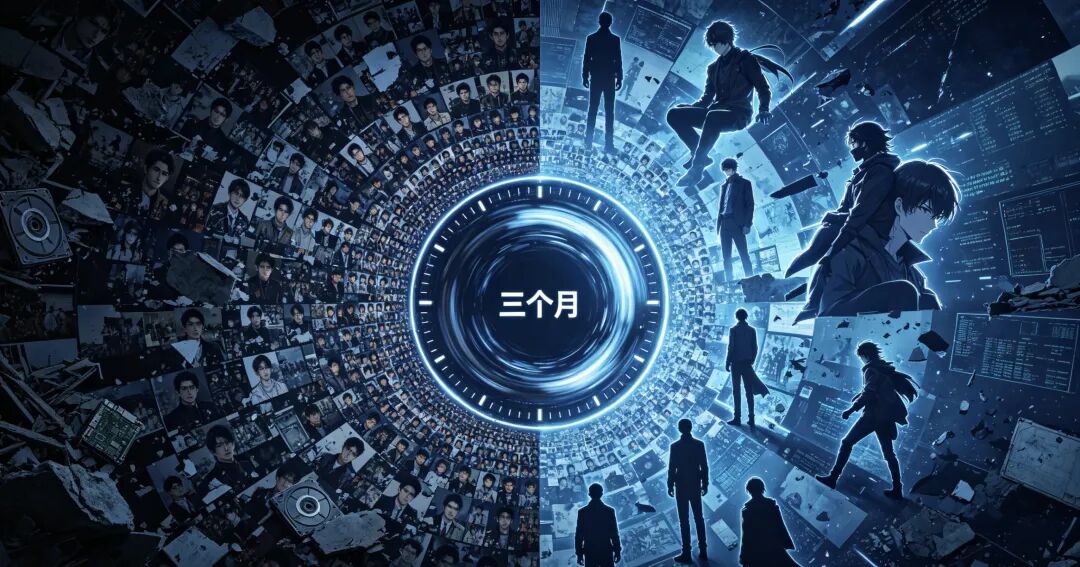
This means that what AI comic dramas really need to face in the next stage is no longer whether they can launch new content, but whether they can retain users after launching. In the past, it opened up the market with efficiency. Next, it needs to extend the market with differentiation. Otherwise, high production capacity will not only bring content increment but also faster genre depreciation.
For AI comic dramas, the real competition will not stop at who can quickly replicate an effective model, but at who can still provide new emotions, new characters, and new story increments after the model is seen through.
This article is from the WeChat official account "Guduo Network Film and Television" (ID: guduowlj), author: 31. Republished by 36Kr with permission.