Visa on arrival: When tourism meets online addictive stories
From single culinary delights to single landmarks, short - video - driven cultural and tourism has now found a new engine - the "landing visa". A large number of tourists travel thousands of kilometers and spend thousands on travel expenses to visit different cities, just to shoot a 15 - second "landing visa" video clip.
The "landing visa" has an almost all - age appeal across the internet. From seniors over 70 to middle - aged and young men and women in the sandwich generation, and even children, everyone is captivated. In terms of identity, from internet influencers to celebrities like Zhang Xinyu, Zheng Kai, and Wang Kailin, as well as foreign tourists from the US, Germany, France, Thailand, Russia, etc., all are "hooked".
"Theatricality" is the essence of the finished videos. For example, the "painful clips" in Weihai, the street racing in Chongqing, and the "true love arrives" scenes in Tibet. Almost all of them are low - cost reproductions of classic and exciting plot segments from popular novels, combined with local characteristics. The character settings are mostly popular in film and TV, such as the broken - hearted, the cool and sassy, and the beautiful but tragic. Moreover, the "landing visa" videos have evolved from single - shot to multi - shot, and are currently evolving from single - plot to multi - plot stories. The plot elements are continuously increasing, and the character relationships are becoming more complex, showing a more "leading - character - centered" narrative quality.
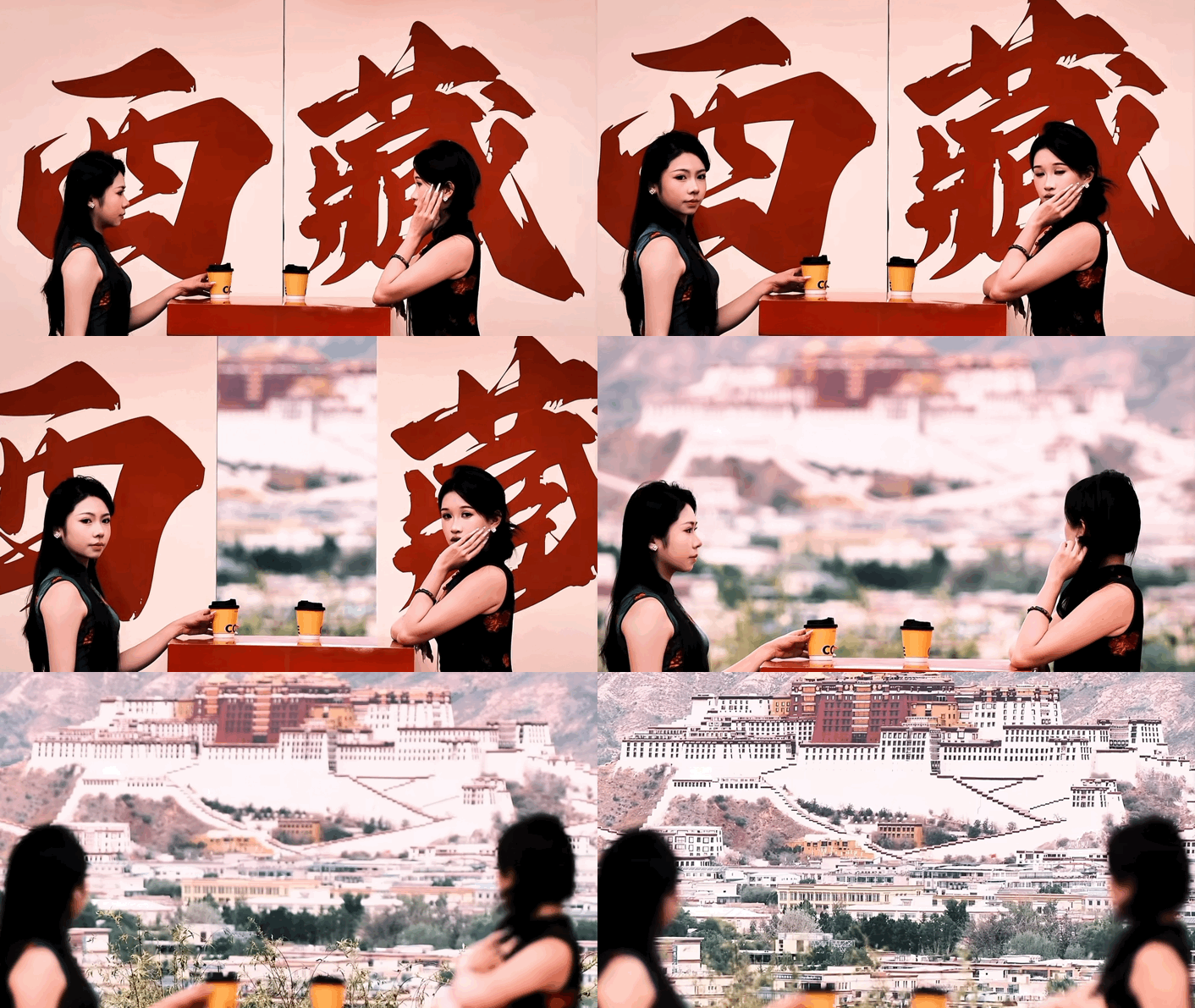
The "landing visa" of "True Love Arrives" in Tibet (Source: Douyin @Potala Palace's Sudden Ascent)
This highly dramatic and emotionally intense project is the result of the market iteration of cultural and tourism. Just sightseeing offers limited experiences. With the pre - requirement of taking good photos, adding a simple narrative provides an opportunity to become a social currency for a certain period.
From the perspective of cultural and tourism promotion, finding an efficient traffic entry is naturally exciting. However, the success of the "landing visa" lies in a bottom - up approach. Once designed from the top - down, the result often turns out to be unsatisfactory. More importantly, considering the changing technological trends, the "landing visa" cannot become a long - term replicable model and can only be a short - term trend. To continuously strengthen the driving force of cultural and tourism to promote consumption, more solutions need to be found.
The Thrilling Novels Come into "Reality"
I wonder if anyone has noticed that the "landing visa" videos have a strong sense of short dramas. It seems like a low - cost reproduction of the exciting plot segments of short dramas.
Firstly, it anchors on popular online novel genres and precisely selects the most emotionally charged plot segments. For example, in the "painful clips" in Weihai, the dim and cold - toned seaside atmosphere, combined with the ascetic - style outfit of a "black coat + blue scarf and thin - framed glasses", along with high - intensity action designs such as running, spinning, kneeling, and pounding the sea, reproduce the climax of a high - ranking official romance novel. The night street racing in Chongqing is imitated by the planning team from a TV series. The high - speed racing plot on the road is combined with the motorcycle - style outfit. Through actions like hugging while flying, spreading hands, and saluting at the end of the shot, it brings out the sassy and charming feeling of an urban martial - arts novel.
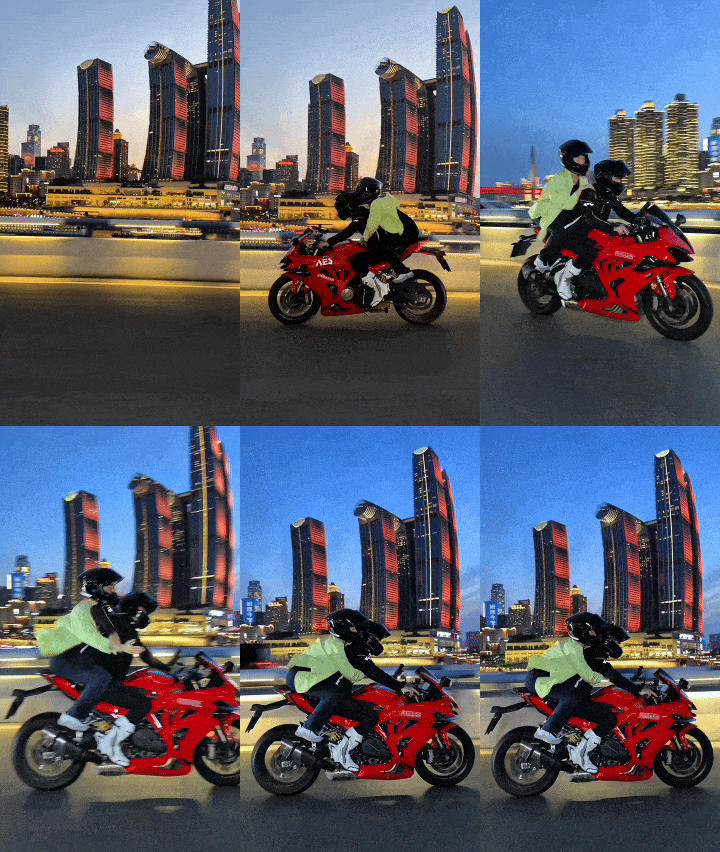
Street racing in Chongqing (Source: Douyin @English Teacher Xiaoyan)
The "landing visa" with dramatic characteristics is also spreading across different places. Recently, in Xiamen, the workplace - style outfits, sunglasses, and commanding gestures near the airport runway echo the theme of urban elites. In Tibet, the "true love arrives" "landing visa" presents a snow - covered love scene with a cinematic feel. Cities like Wuhan, Yuncheng, and Zhoushan have also successively launched "landing visa" projects, choosing themes such as cyber - science fiction and youth - pain literature.
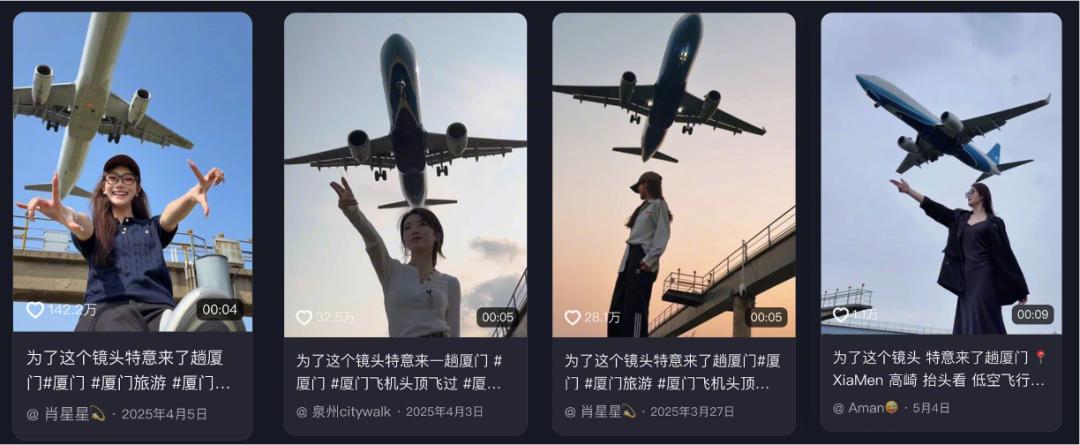
The "landing visa" in Xiamen (Source: Douyin)
Once people find the "landing visa" effective, involution naturally occurs. In terms of presentation, the current "landing visa" videos have evolved from single - shot to multi - shot editing. In terms of plot, customized "awkward dramas" with multi - plot narratives have emerged.
For example, in the "awkward drama" script in Chongqing, in addition to the original late - night street racing content, plots such as chasing the ex - lover to make amends, fateful reunions, and male competition are added, including elements like missing each other in the elevator, dueling for love, opening a bottle cap with abs, and using a rose - umbrella. From the shooting angles to the editing rhythm, classic TV drama scenes are reproduced.
Tourists can play Jinjiang - style characters through shooting, with at least two of the "beautiful, strong, and tragic" attributes. For example, the "landing visa" in Chongqing creates cool and sassy male and female leads who get whatever they want. So when tourists shoot, they should have a fierce look in their eyes, with a bit of nonchalance and stubbornness, and a slight upward curl of the lips to create a cool and unruly feeling. In Weihai, through empty - looking eyes and messy spinning hair, a broken aesthetic with a sense of alienation and confusion is created. In addition, the "landing visa" in Xi'an creates a princess from a fallen kingdom in a turbulent era, and the one in Xiamen creates urban fashion elites.
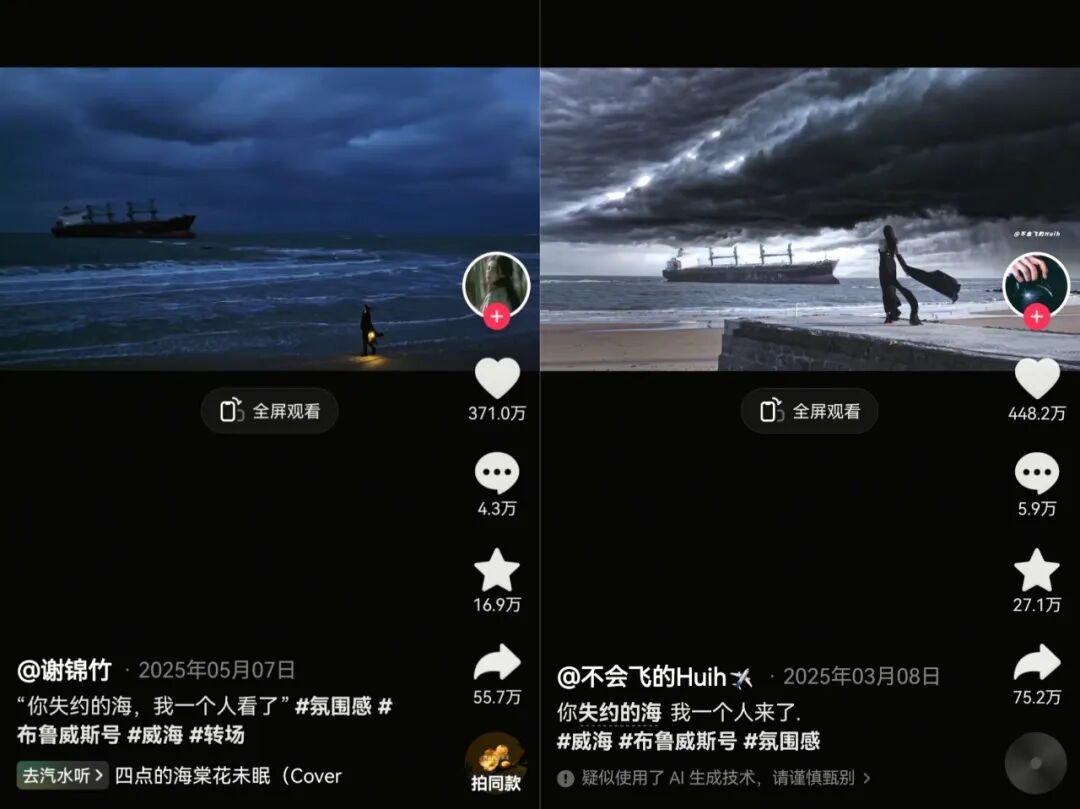
The "painful clips" in Weihai (Source: Douyin)
Therefore, for tourists, the "landing visa" is a low - cost and content - rich way to visit cities. Ordinary tourists only need to spend tens to hundreds of yuan to get a short - drama shooting experience that includes everything from the script, costumes, props to action guidance. They can fully immerse themselves in the shooting atmosphere, finally "bringing the short - drama plot into reality", fulfilling their fantasies about short - drama characters, and enjoying high emotional value. At the same time, they can produce beautiful photos to share on social platforms to attract traffic and quickly complete the indispensable check - in ritual in modern tourism.
However, this is not just the wisdom of netizens. The popularity and spread of the "landing visa" are, to some extent, an inevitable result of the current urban cultural and tourism logic.
The Show - like Transformation of Cultural and Tourism in the Short - Video Context
In recent years, driven by short - video media, tourist destinations are shifting from "cultural landscapes" to "spectacle show - fields".
The most obvious feature of the "show - field" is the high - level condensation of cultural and landscape symbols. At the end of 2023, Harbin became a popular tourist destination through short - videos. However, in the marketing at that time, elements such as the Ice and Snow World, Russian - style architecture, red - sausage cuisine, and local character were discretely distributed. Tourists needed to spend 2 - 3 days to piece together a complete understanding of the city. In 2024, the "Matchmaker Wang's Story - telling" in Kaifeng concentratedly displayed the ancient urban style, local flavor, and core scenic spots on a fixed stage in Wansui Mountain Scenic Area.
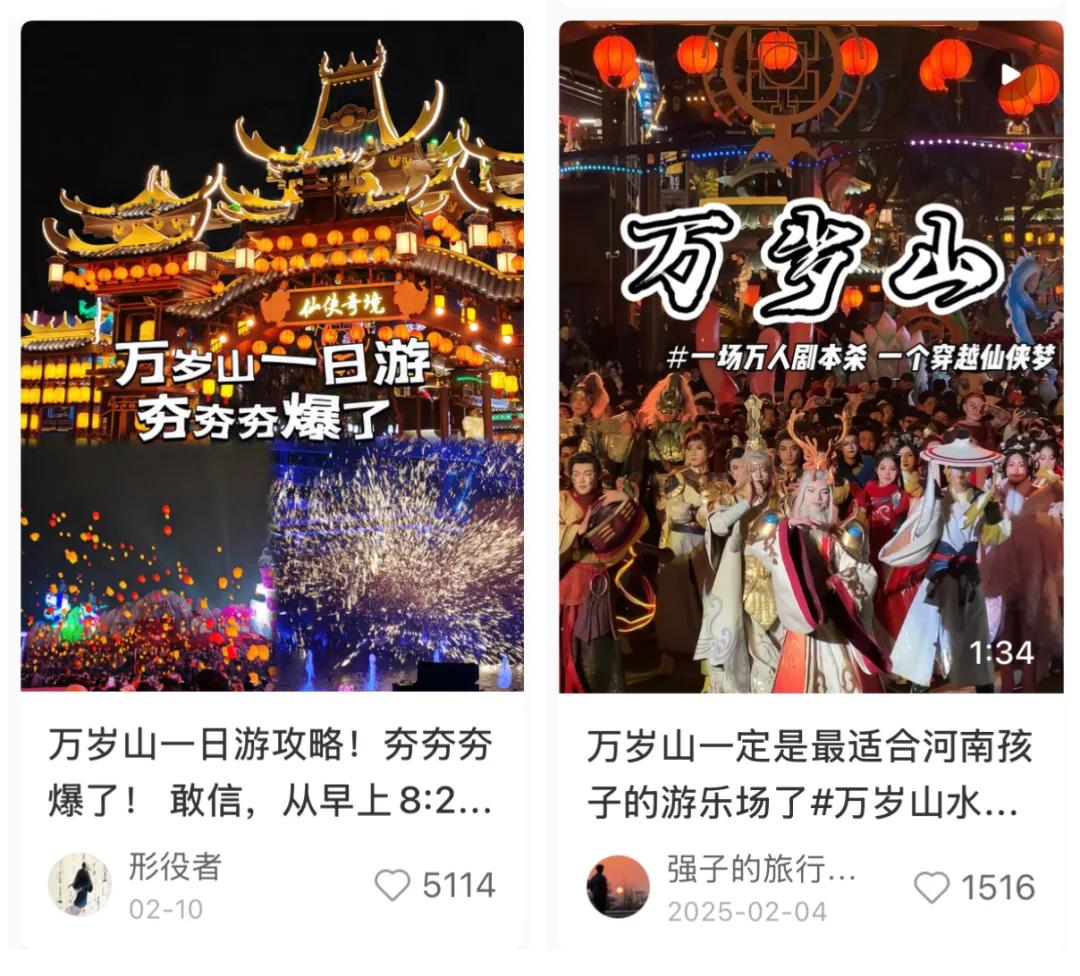
Wansui Mountain Scenic Area (Source: Xiaohongshu)
Subsequently, local symbols were further refined into single visual or behavioral landscapes. In 2025, the flower - wearing tradition in Quanzhou refined the complex Minnan marine culture and female spirit into a "flower - wearing in this life" headgear. This year, the "landing visa" in Weihai compressed the local marine scenery, industrial history, and characteristic cold - toned sea views into video frames. Chongqing condensed the Nanjin Road riverside view, the steel - and - concrete forest of Caiyuanba Bridge, Hongya Cave, the Japanese - style Nanshan Fujiwara Tofu Shop and other internet - famous check - in spots, along with a strong motorcycle atmosphere, into a ten - second video. Tourists can experience the core scenic areas in just 10 minutes of shooting.
When real - world cities become "show - fields", tourists transform from traditional onlookers to creators and performers. For example, they co - create with local shooting teams, use the urban landscape as the background, and construct and perform idealized characters, such as the protagonists with a broken aesthetic or the "pleasure - seekers" with a prosperous life. At the same time, the travel goal has been upgraded to a shareable "aesthetic product". Otherwise, the tourists cannot be considered to have fully "arrived" at the tourist destination. From photos, single - shot videos to story - board narrative videos, the aesthetic and narrative depth of the products are constantly upgrading.
In this model, the instantaneous emotional intensity of travel is continuously increasing. Tourists can perform character roles, have shooting interaction experiences, and visit multiple scenic spots within a dozen minutes, and gain sufficient satisfaction through social sharing after getting good photos. This is something that the traditional travel logic cannot achieve.

The "flower - wearing in this life" headgear in Quanzhou (Source: Xiaohongshu)
The algorithm of short - video platforms is also the key to the effectiveness of this type of cultural and tourism strategy. The platforms naturally tend to push content with a fast pace, strong visuals, high information or high emotional density, because such content can maximize the user's stay time. Therefore, when a video densely presents multiple scenic spots or strong emotional expressions, the algorithm will give more traffic recommendations, making it more widely seen and eventually forming a trend. To obtain more traffic, content creators have also evolved from static pictures to dynamic videos and then to story - board narratives.
However, this does not mean that the travel mode in the short - video context has been completely alienated, nor does it deny the positive significance behind the "show - like" transformation. In fact, compared with traditional slow - paced travel, the "landing visa" project with high information density and high emotional intensity greatly caters to the fast - paced life of contemporary people. It can quickly relieve the boredom and monotony brought by the stylized segments of modern life through novel experiences, while meeting the needs of taking good photos and social sharing.
Therefore, as a cultural and tourism project, the "landing visa" deserves reasonable attention and expansion. However, when it comes to which cities are suitable for what kind of "landing visa" design, if the bottom - up approach is replaced by a top - down one, the result is likely to go awry.
Cultural and Tourism Marketing: From Traffic to Sales
Short - video - driven cultural and tourism marketing has long been trapped in the paradox of "traffic involution" and "ineffective conversion".
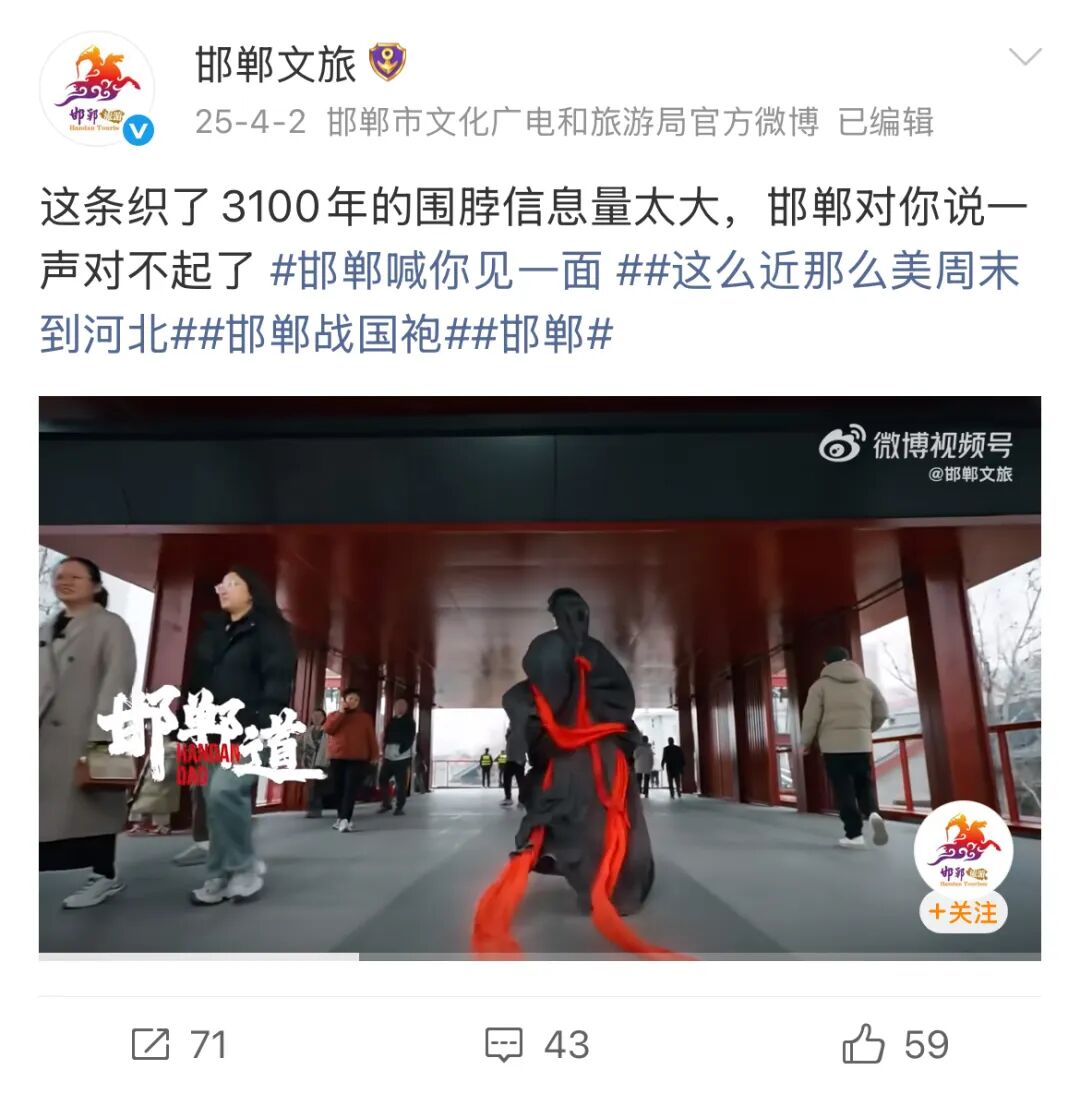
Although traditional promotional videos aim for multi - dimensional presentation, the content is still superficial. After Litang became popular, cultural and tourism directors from various places flocked to "change outfits and appear on camera", missing the point and turning city promotion into a personal show. The prevalence of "Northeast rap" and fast - paced, rhythm - synced videos has erased the uniqueness of local culture through crude audio - visual bombardment, resulting in a homogenized image of cities. Even when there are creative breakthroughs like the "Apology Meeting of the Cultural and Tourism Bureau Director in Handan" and the "Juse Beat It" in Yibin, netizens' attention is mostly on the form, such as "who is the director" and "how funny the meme is". The popularity of the promotion is difficult to convert into actual consumption behavior of tourists.
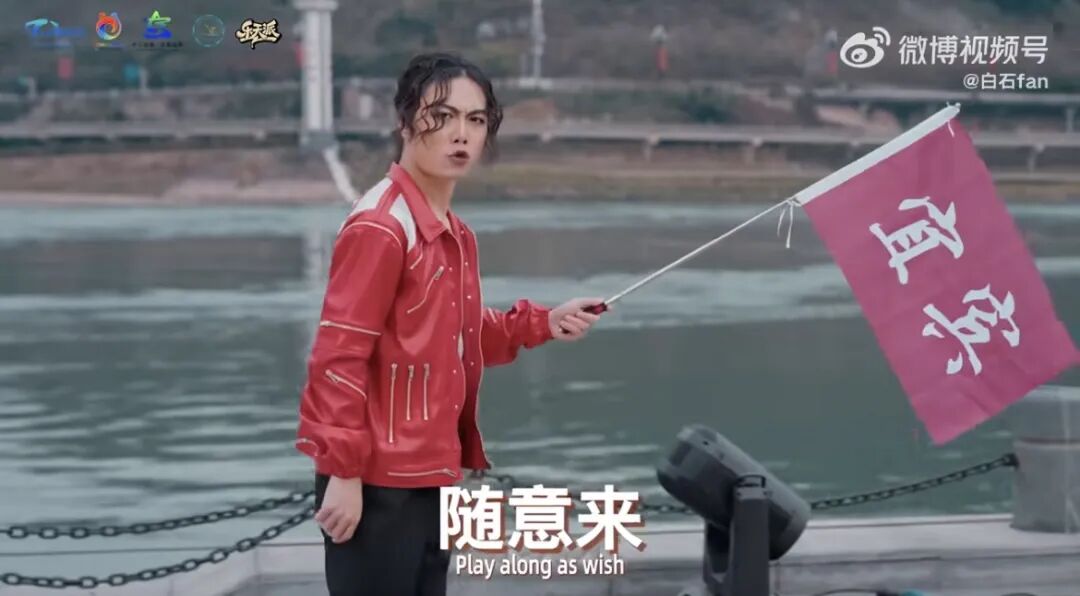
Yibin's "Juse Beat It" (Source: Weibo)
In this context, the "landing visa" provides a way to break the deadlock. Although it was initiated by private shooting groups, different from the high uncertainty of internet influencers' popularity, its characteristics of drama - imitation and photography services make it naturally have an operable logic that can be planned, replicated, and industrialized.
However, the technical aspects and operation processes of the "landing visa" projects do not form a barrier. For example, shooting equipment, story - board scripts, costumes, props, and post - production editing standards can all be quickly replicated. The real challenges lie in theme creativity, emotional value, and aesthetic appeal.
In terms of theme creativity, it should be extracted from the local urban characteristics rather than simple replication. For example, the cyber - landscape, motorcycle industry, and urban street flavor in Chongqing are naturally suitable for the "sassy and handsome" theme. The sense of order, cold - toned urban construction aesthetics, and the tragic atmosphere brought by historical wars in Weihai make it fit the restraint of high - ranking official romance novels. Currently, many official or private for - profit organizations only forcibly apply motorcycle or seaside photo - shooting templates when referring to the "landing visa", making it difficult to truly highlight the city's characteristics and uniqueness.
In addition, the key for promotional videos to move from being watched to inspiring tourists lies in the emotional tension of the plot and the character building. Previously, in the "Apology Meeting of the Cultural and Tourism Bureau Director in Handan", images of "red - dressed warrior robes" and "runaway princesses" were added to echo the historical heritage of the ancient capital of the State of Zhao. However, in essence, it still uses repeated shooting forms to connect scenic spots, rather than truly constructing an immersive story and characters around tourists' emotional needs. Audiences only stay at the stage of watching and do not form a real desire to travel.
In terms of aesthetics, whether it is the shooting background or the design of costumes and props, the core is to