Computers with 4GB of memory are making a comeback, and AI is exhausting the original manufacturers' production capacity: How many people will be affected by this wave of storage price hikes?
What size of RAM should you choose when buying a computer? Note that here we are talking about Random Access Memory (RAM), not Solid State Drive (SSD). If you asked this question ten years ago, the more mainstream answer would be at least 8GB, and it would be even better to go straight for 16GB.
But people ten years ago definitely couldn't have imagined that in 2026, RAM has actually become a kind of luxury. Some brands are selling laptops with 8GB of RAM, and some manufacturers even plan to revive computers with 4GB of RAM.
To put it bluntly, this is an extreme case caused by the skyrocketing storage prices. All major brands are wracking their brains to reduce the memory capacity of their products, trying to scrape out a little profit from the increasing costs so that their products won't be swallowed up by losses.
However, for ordinary users, the reduction of memory capacity will lead to a comprehensive deterioration of the overall experience of devices such as mobile phones and PCs. There are many ways to reduce costs, but cutting down on memory is obviously not the most rational choice.
Mobile Phones Return to the 8GB Era, 4GB PCs Are Too Unrealistic
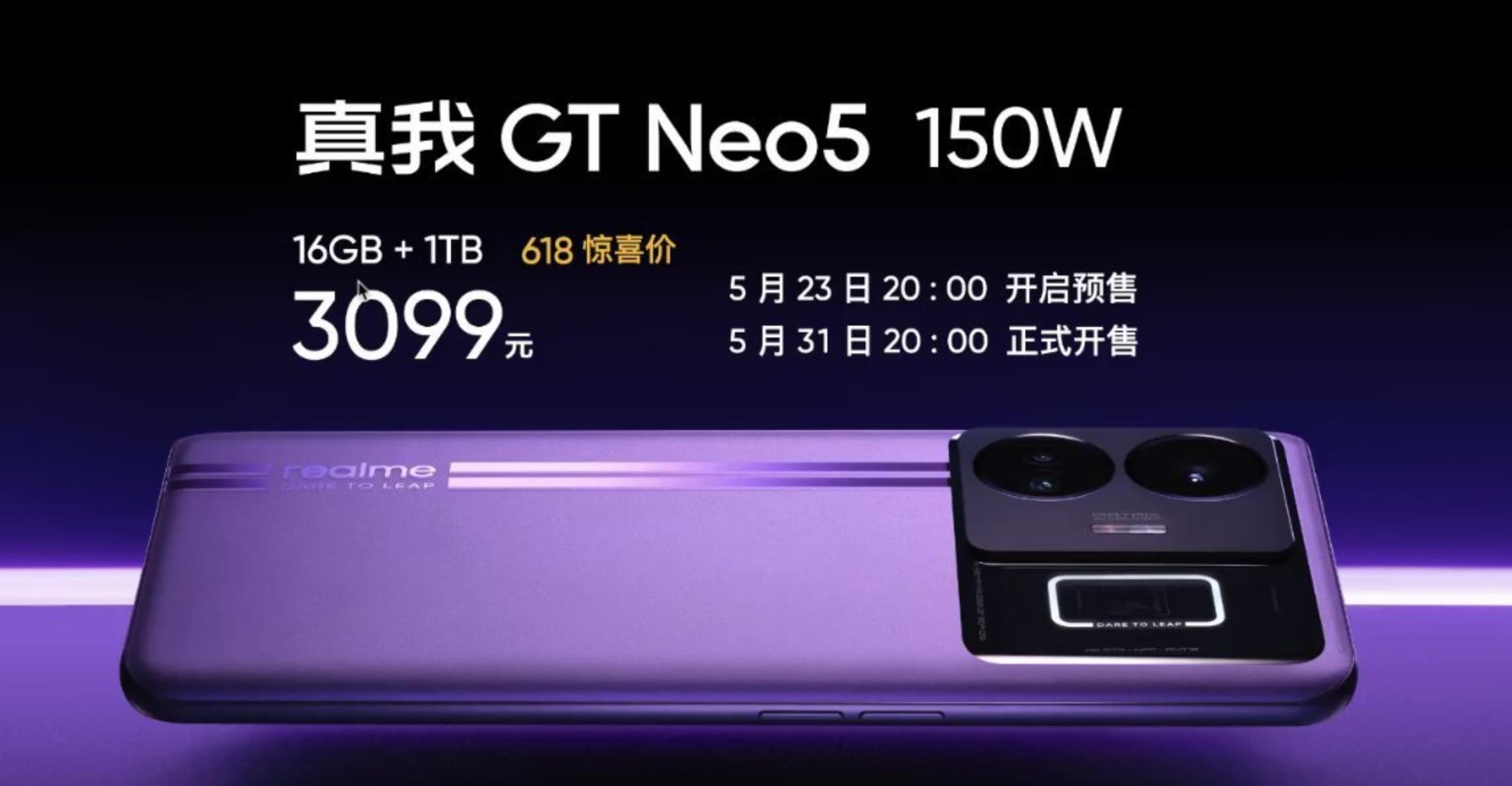
Before this wave of storage price hikes, there was a long period of low memory prices. At that time, mobile phone manufacturers were equipping their phones with large amounts of RAM and storage. The 16GB + 1TB combination became a selling point for many popular products. I still remember that at that time, a mid - to high - end model with a sub - flagship chip and a 16 + 1TB capacity could be priced at around 3000 yuan. For example, the realme GT Neo5 16 + 1TB I bought in 2023, which was equipped with the Snapdragon 8+ chip and had 150W fast charging, cost just over 3000 yuan. It's hard to imagine such a price today.
(Image source: realme)
But in 2026, some mobile phone products have regressed to the 8GB era. For example, the recently released Honor 600 Youth Edition has a base storage combination of 8 + 256GB; the mid - range model A57 released by Samsung in March this year offers capacity versions of 8 + 256GB and 12 + 256GB, with the latter being 400 yuan more expensive than the former.
Apple is no exception. The iPhone 17 released last year comes with 8GB of RAM as standard, and the iPhone 17e launched this year also has 8GB of RAM. However, iPhone has always had a lower memory capacity than Android models, and the storage price hike has indeed delayed Apple's action to upgrade the phone's memory.
Of course, most new phones start with 12GB of RAM. Leaving aside flagship phones, the OPPO Reno16 series, the Honor 600 Super Edition, and the Pro Edition also have a memory capacity of at least 12GB. However, correspondingly, the prices of mid - range models have also quietly increased, mostly reaching above 3000 yuan, especially after a recent collective price adjustment by various brands.
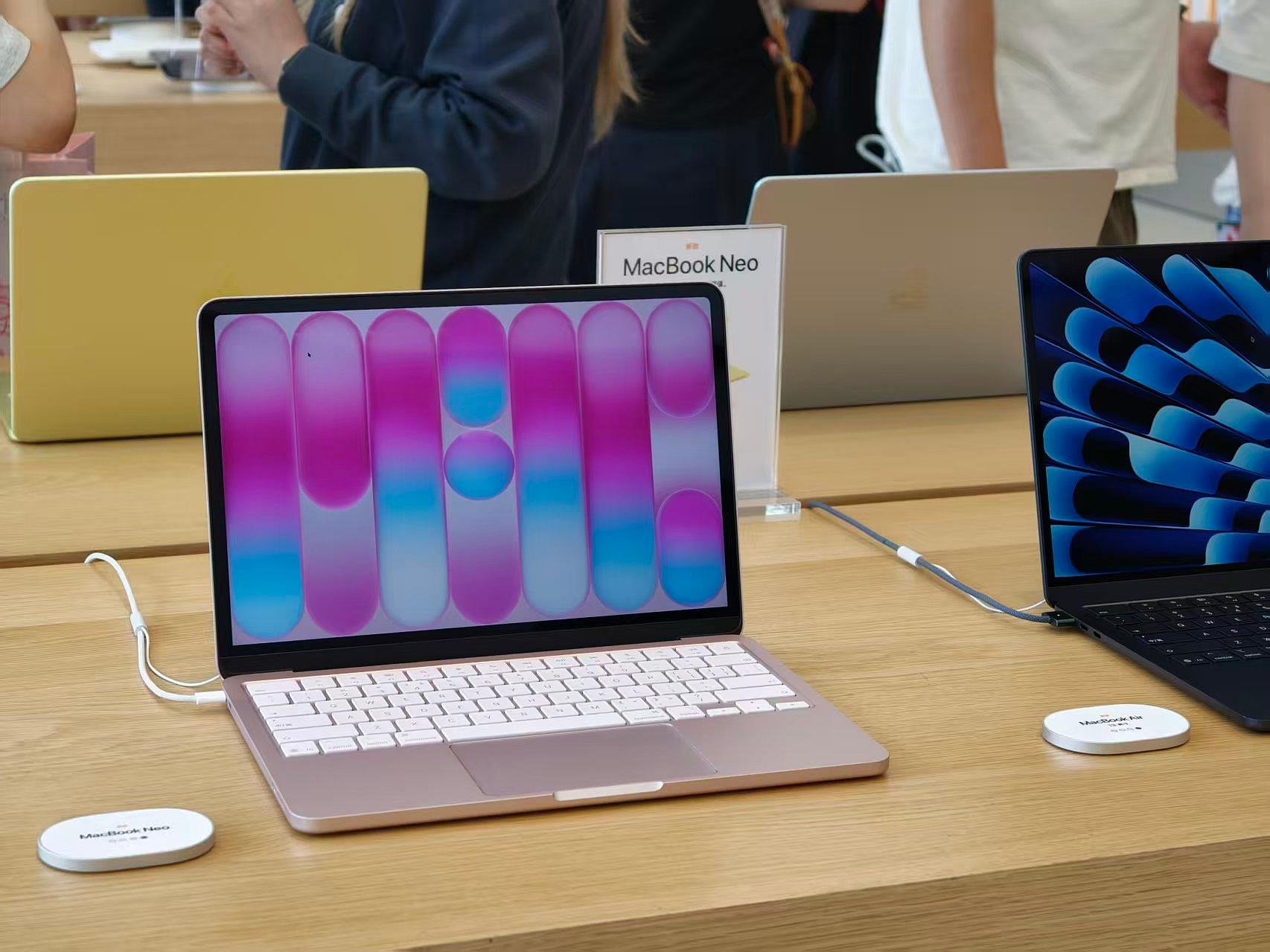
The same is true in the PC field. Previously, Apple, in order to promote the support of Apple Intelligence across all its devices, generously equipped the base models of MacBook Air and Mac mini with 16GB of RAM. But this year, the newly released MacBook Neo only offers an 8GB RAM version, and you can't upgrade to 16GB even if you pay extra. Therefore, many people think that this laptop is just a product to clear the inventory of the A18 Pro chip, which was originally used in the iPhone 16 Pro and only has 8GB of integrated memory.
(Image source: Lei Technology)
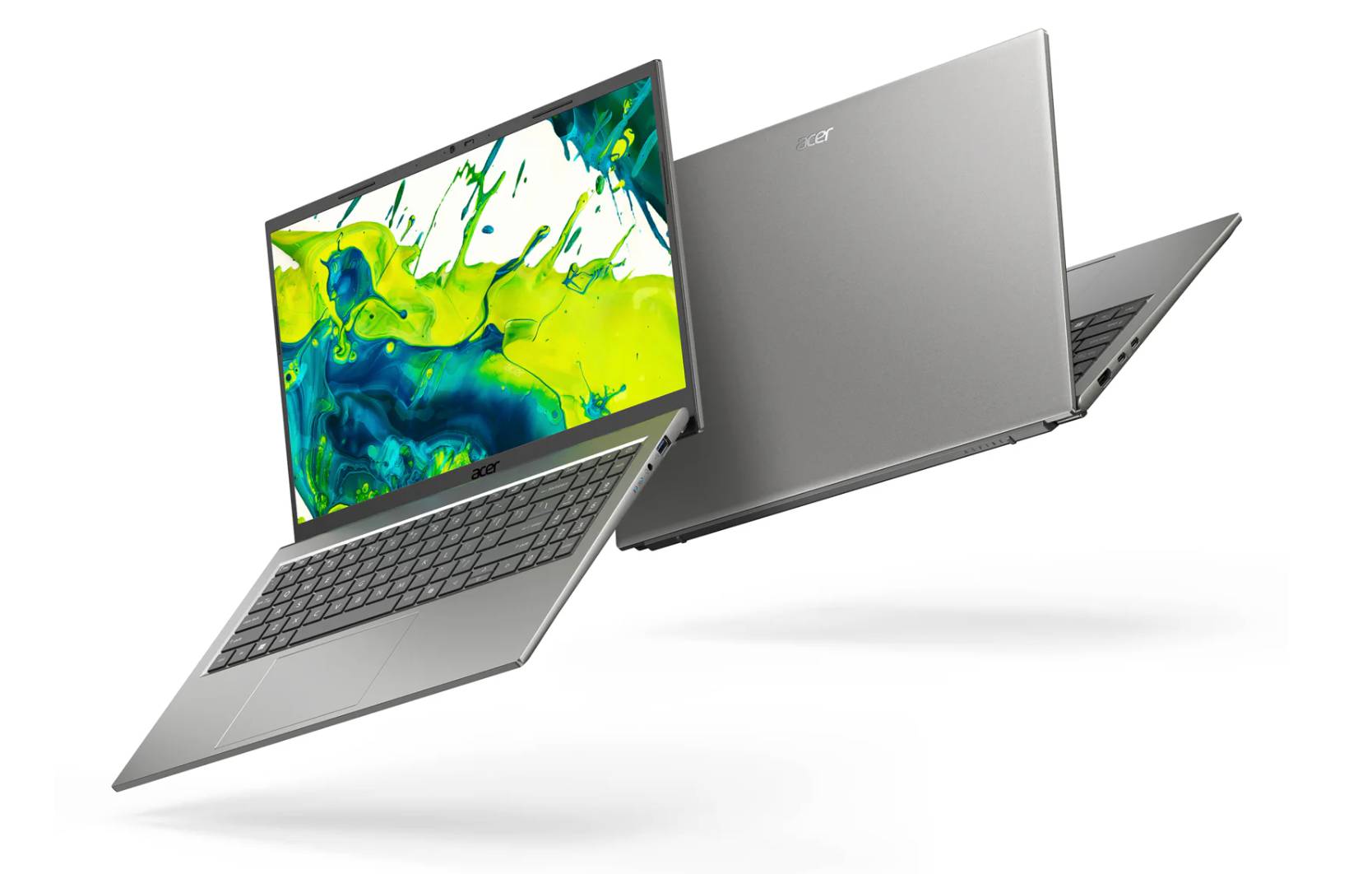
Meanwhile, brands such as Microsoft, HP, Lenovo, and Honor have all launched laptops with 8GB of RAM this year. Moreover, there are even more extreme cases. Recently, PC brand Acer announced the Snapdragon laptop Aspire Go 15. In the parameter section, the description of the memory is "up to 8GB of RAM". This statement seems to imply that there is also a 4GB RAM version of this laptop.
(Image source: Acer)
Acer's new laptop, Aspire Go 15, is equipped with Qualcomm's Snapdragon C chip and targets the entry - level laptop market at $300. Therefore, the overall configuration of this laptop gives a strong sense of cutbacks. For example, it has a 15.6 - inch large screen, but the resolution is only 1080P. Its core selling points are low power consumption and long battery life.
Even so, it still seems quite unrealistic to launch a 4GB version of an entry - level laptop in 2026. After all, PCs with 4GB of RAM were popular more than a decade ago. The MacBook Air I bought in 2015 started with 4GB of RAM, while the Windows camp has generally started with 8GB and quickly entered the 16GB era in the following years.
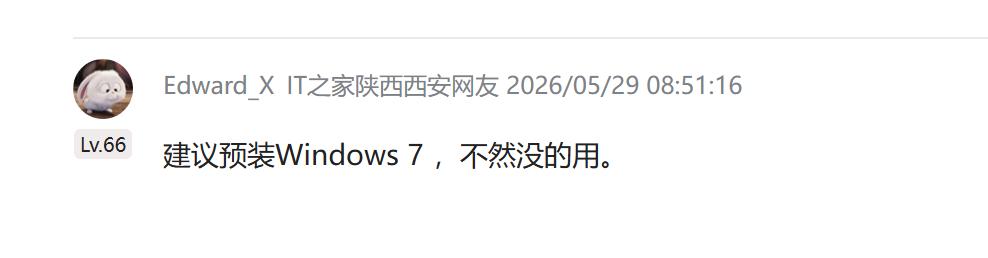
Ordinary users naturally have a lot of complaints about this. In the comment section of IT Home, some users said that a computer with 8GB of RAM can only be barely usable, and a laptop with 4GB of RAM is completely unusable. Some people even joked that instead of pre - installing Windows 11, they should directly install Windows 7 or XP.
(Image source: IT Home)
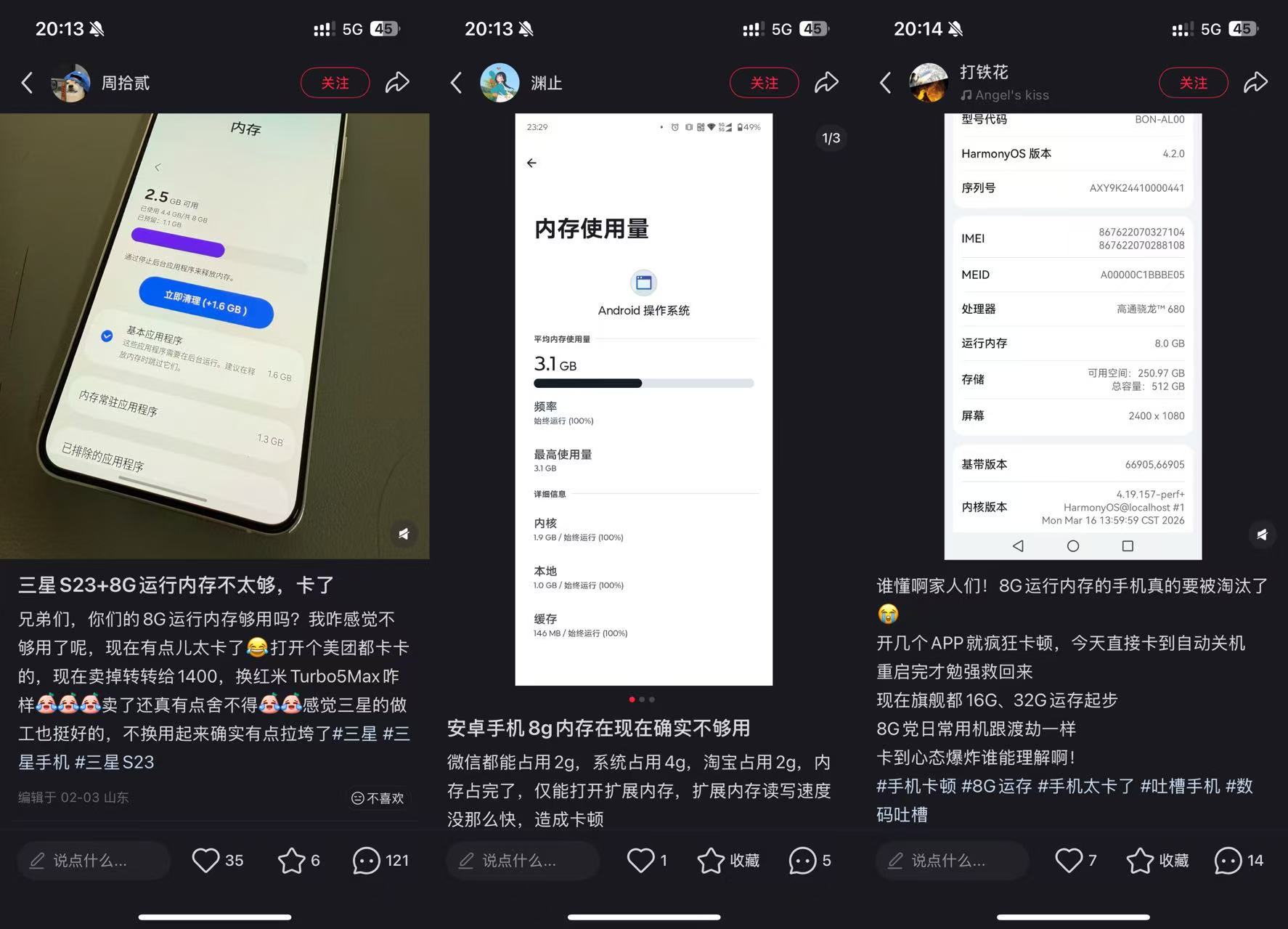
On platforms like Xiaohongshu, most people think that when buying an Android phone, the memory should not be 8GB. It should start from 12GB, and 16GB is the best. Although high - memory phones are more expensive now, the experience is much better than that of low - memory models.
(Image source: Xiaohongshu)
Memory Reduction Will Lead to a Comprehensive Deterioration of Daily and AI Experience
For a long time, smartphone users have had a pain point, that is, the size of apps has been constantly expanding, and the storage space is often insufficient. Now, apps under major Internet companies often take up four or five hundred megabytes, and after using them for a while, they quickly expand to several gigabytes. Mobile games are also big consumers of storage space. There are more and more games with a size of forty or fifty gigabytes or even 100 gigabytes.
The increasingly bloated apps not only erode the storage space but also the memory space. Super apps of large companies often integrate complex functional modules and try their best to occupy space in the user's phone memory for the sake of KPIs. Often, when a user opens a few apps on their phone, the memory is full, and even if the memory capacity is large, the background apps are likely to be killed.
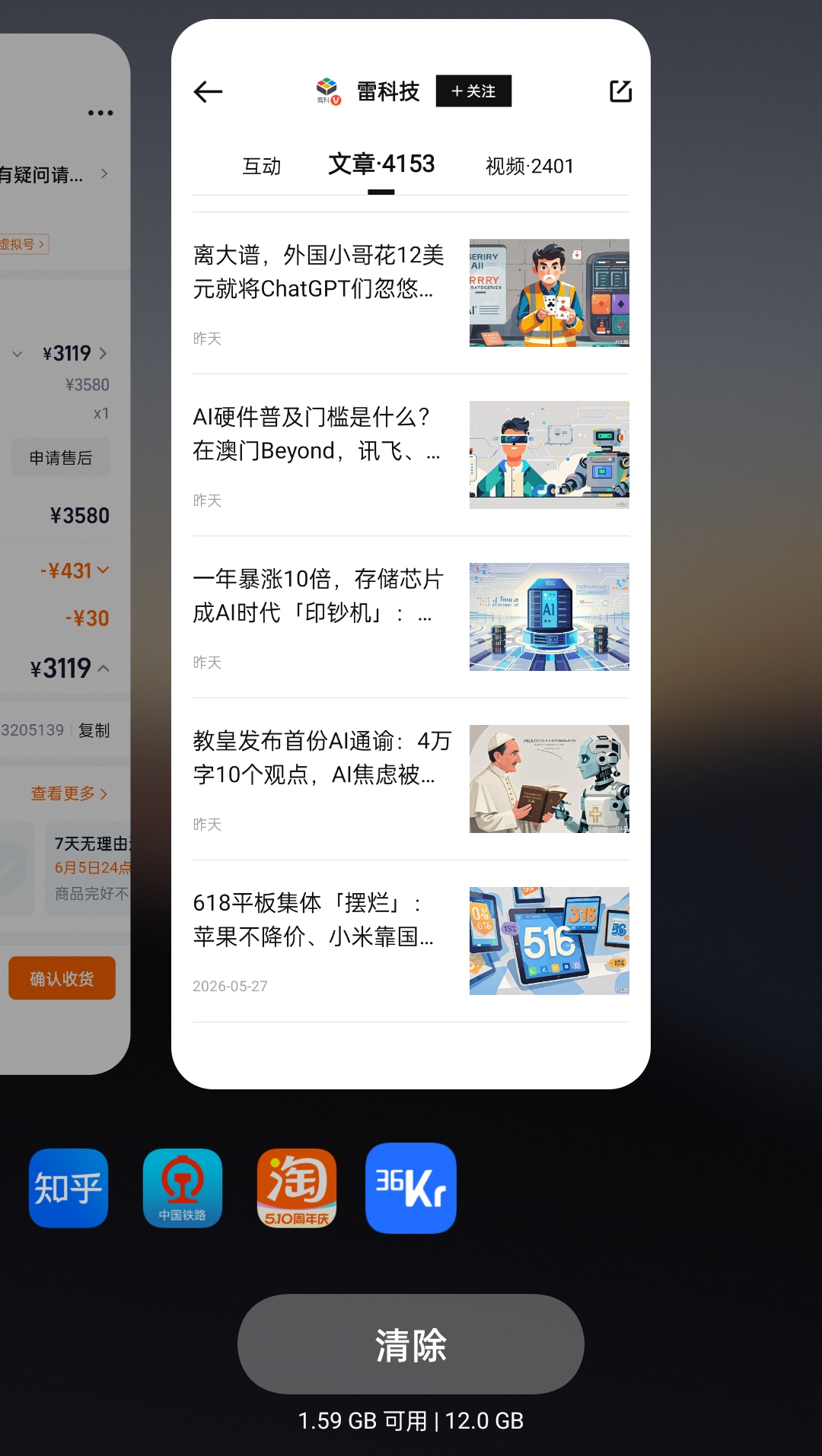
Take my current Android main phone as an example. It has 12GB of RAM, but in normal use, it can only be said to be barely enough. When too many apps are opened, it will become slow and kill background apps. If you still use a phone with 8GB of RAM now, it is difficult to guarantee the smoothness of the daily experience. In my opinion, in the current hardware configuration of smartphones, the imaging and performance are basically a bit excessive, and the bottleneck of the experience now lies in the memory part. A phone with 8GB of RAM is like a wooden barrel with one board removed, and the amount of water it can hold will be greatly reduced.
(Image source: Lei Technology)
The same is true for PC products. Many people may not have noticed that compared with the old version of the system, the Windows 11 system has a significantly increased demand for memory. Although according to the official statement, a minimum of 4GB of RAM is required to install Windows 11, Microsoft recently stated in a document that 16GB of RAM is the minimum for the Windows 11 system, and 32GB of RAM is the "worry - free choice".
The increase in memory usage of the Windows 11 system is largely due to Microsoft's strong promotion of the WebView2 technology. A large number of software built into the system integrates the Chromium - based Edge browser kernel engine (i.e., WebView2). To put it more simply, these software developed by Microsoft have a built - in Google Chromium browser. The product concept of the Google browser is to "trade space for time" and aggressively occupy the computer's memory and hard - disk cache to improve operating efficiency.
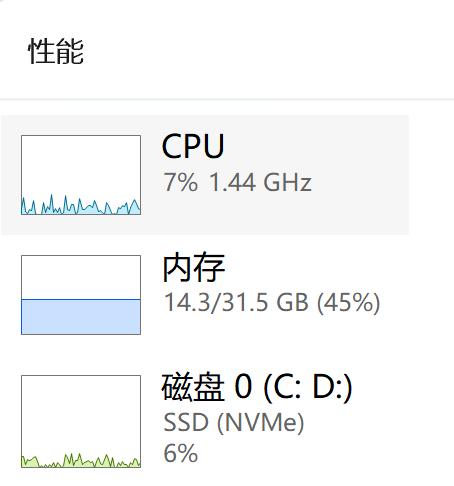
Driven by Microsoft, many third - party software also adopt similar strategies. In the daily experience of users, it is obvious that Windows 11 consumes more memory. Usually, for a PC with 16GB of RAM, even if no third - party software is opened, the Windows 11 system itself will consume 4 - 5GB of memory. Even for a computer with 32GB of large memory, the memory usage can be close to half under low - load conditions.
(Image source: Lei Technology)
Of course, the memory usage of the Windows 11 system is dynamic. If the user's device has only 8GB or even 4GB of RAM, the memory usage will be less.
However, in 2026, it is completely unrealistic to expect a computer with 4GB of RAM to run the Windows 11 system smoothly. Therefore, Acer's idea of secretly launching a cheap laptop with 4GB of RAM has been collectively ridiculed and criticized by netizens.
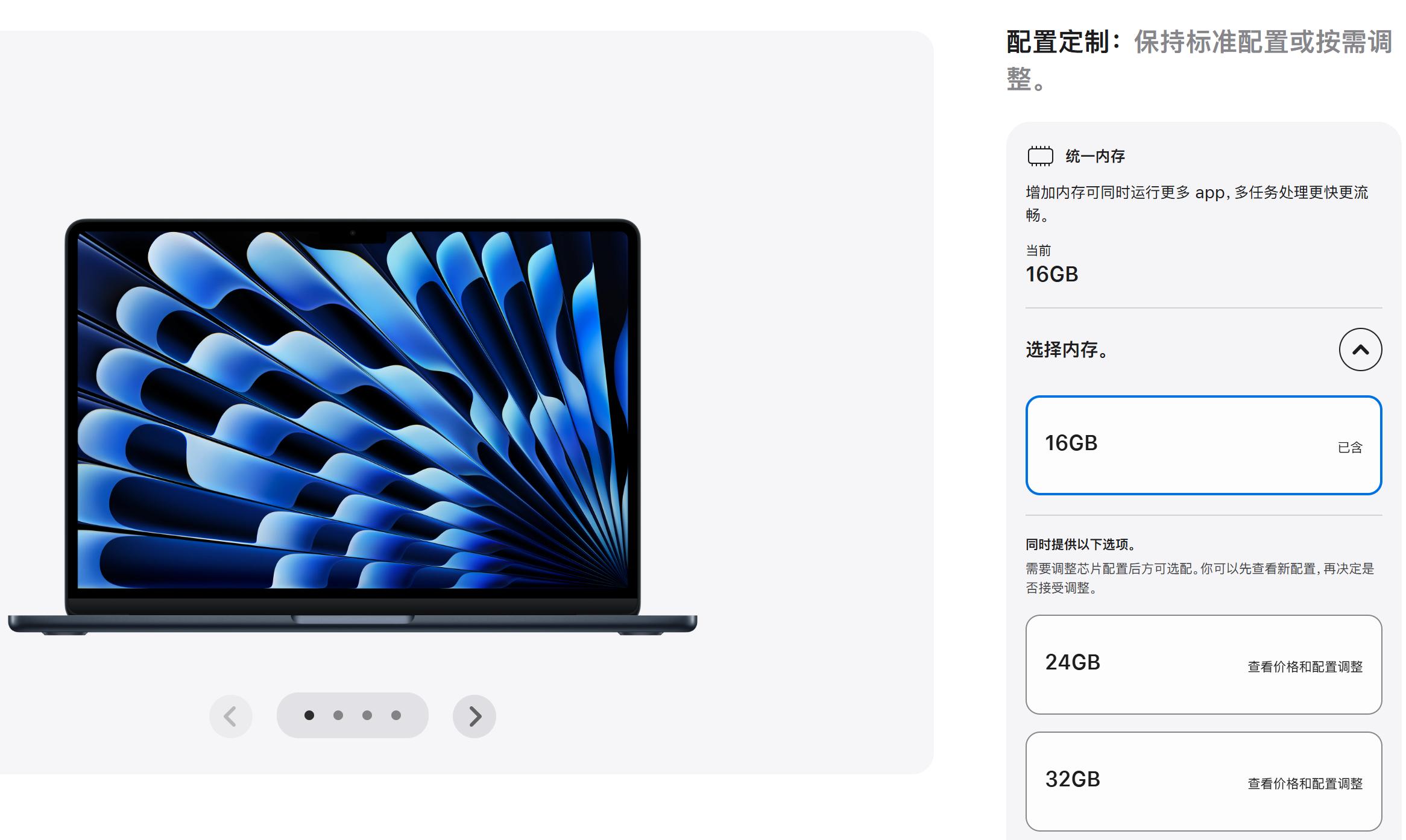
In addition to the smoothness of daily experience, the implementation of edge - side AI will also fail due to insufficient memory capacity. As we mentioned before, Apple increased the starting memory of its Mac series products to 16GB to prepare for AI. At the same time, the starting memory capacity of iPads and iPhones has also reached 8GB. Even the low - cost iPhone 16e is equipped with 8GB of RAM.
(Image source: Apple)
The memory redundancy reserved for AI on mobile phones and PC devices is mainly used in two aspects: one is edge - side AI, and the other is cloud - side AI. Edge - side AI is easy to understand. To run models and AI functions with the computing power of local chips, memory is crucial. On the PC side, the most suitable AI chip is, of course, the NVIDIA graphics card with its own video memory, but it is expensive and not every device has it. Therefore, in many cases, memory often becomes the bottleneck of local AI performance.
Of course, 16GB of RAM is still not enough for local large models, but it can handle some sub - needs with lower computing requirements. At present, the application scenarios of edge - side AI on mobile phones are mainly in the field of image processing, such as photo removal and offline translation. On PCs, some large models with relatively small parameters can be run. Edge - side AI is also applied in game scenarios such as AI super - resolution and frame generation.
Even if mobile phones and PCs adopt the cloud - side AI solution, it will also increase the memory consumption. In the future, when global AI is implemented on devices, AI will inevitably become a real - time, always - responsive presence. Such a system - level application will inevitably occupy a part of the memory resources for a long time. For example, Apple's future upgraded version of Siri with Gemini injected will not only be a more intelligent voice assistant but also a central brain that can retrieve a large amount of local files and data. Its consumption of local hardware resources such as memory will inevitably increase significantly.
In short, if the memory capacity of electronic devices such as mobile phones and PCs in users' hands is significantly reduced, it will inevitably lead to a significant deterioration of the overall experience. As a result, fewer people will be willing to upgrade to new devices.
When Will the Storage Price Hike End?
This wave of storage price hikes has made some happy and many sad. On the one hand, there is the magical scene of Hynix employees getting huge bonuses; on the other hand, terminal manufacturers and ordinary users are deeply affected. The skyrocketing storage prices are ultimately due to the imbalance between supply and demand. The soaring storage demand mainly comes from AI giants, which invest huge amounts of money in AI infrastructure construction and need a continuous supply of memory. In terms of supply, the production capacity of storage giants such as Samsung and Hynix cannot be increased in a short time, so they are naturally more willing to give priority to producing higher - profit memory products such as HBM.
As for terminal brands, they either have to consume the previously stored memory or buy at high prices. Apple has already used its financial power to sign long - term orders with Samsung and Hynix at high prices and has swept the storage market with its large cash flow. Other brands have mostly streamlined their product lines and given priority to allocating storage resources to flagship and mid - range models with higher profits and relatively less sensitivity to memory costs.