If robots are not like humans, can they still be considered "cyborg species"?

Unitree robot in a boxing match. The picture has been processed by AI.
On May 28th, I attended the Tianjin Smart Industry Expo. In the numerous exhibition halls, I walked over 10,000 steps on WeChat in a single day, "observing" a wide variety of products, ranging from domestic computing power, industrial models, to embodied intelligence, AI hardware, and so on.
As a technology industry practitioner, I've participated in quite a few large - scale exhibitions. In the past two years, the most typical characteristic of the industry was the clustering of robot products, and the Tianjin Smart Industry Expo was no exception.
However, if I had to find the most typical difference, it's that here, I saw another future for robots.
01
Reacquaint with Robots
If I hadn't come to the expo, it would have been really hard to realize that even traditional energy companies like PetroChina and Sinopec have already entered the robot field.
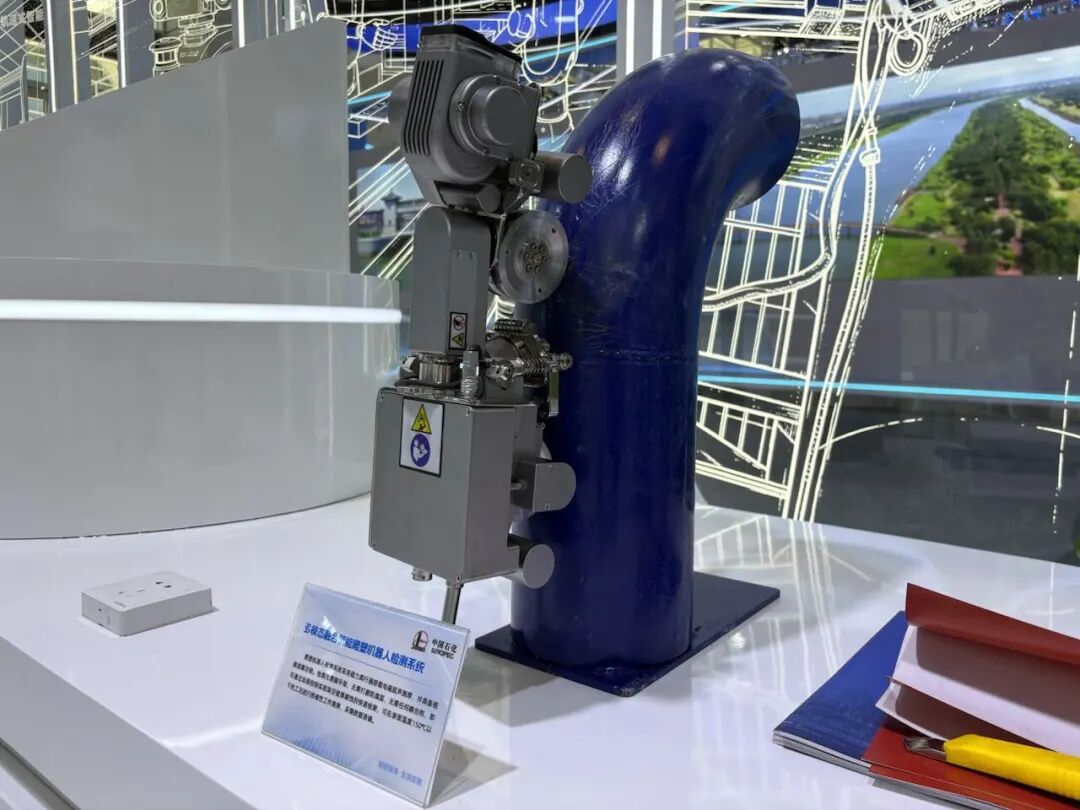
Sinopec's multi-modal wall-climbing robot
Industrial robots are quite different from the humanoid products in the public's inherent impression. They could be a modified robotic dog, a robotic arm, or even a transport trailer. Some of them may not even be accurately described in appearance.
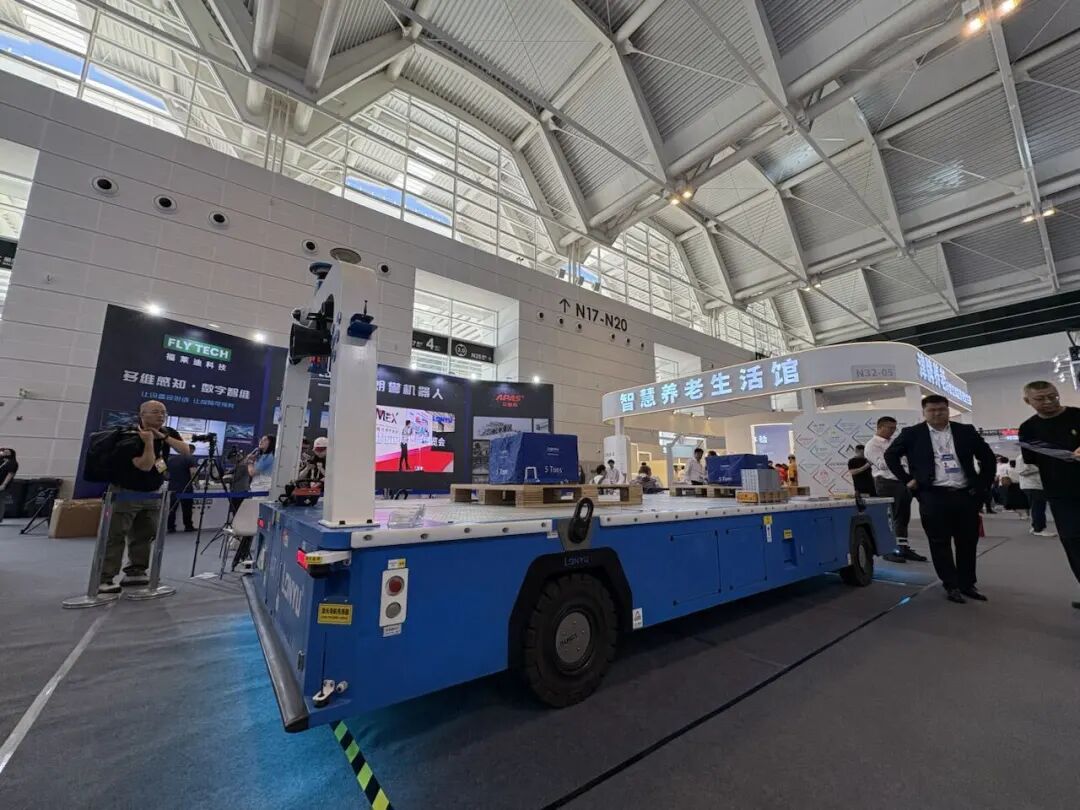
A flatbed trailer robot developed by Wald for ports
A wide variety of non-standard intelligent robots have been deployed on a large scale in the B2B market, covering many fields such as fire emergency response, production inspection, equipment defect detection, aerospace, and even special operations. These intelligent devices can not only avoid the risks of high-risk operations and ensure personal safety but also have inherent advantages in terms of the operating environment and scale that humans cannot match.
At the China Unicom booth, an intelligent robotic arm equipped with laser detection technology was placed in the most prominent position. According to the on-site staff, this device can independently complete the defect detection of car doors and automatically generate data reports, and the entire operation process can be completed within 5 minutes.
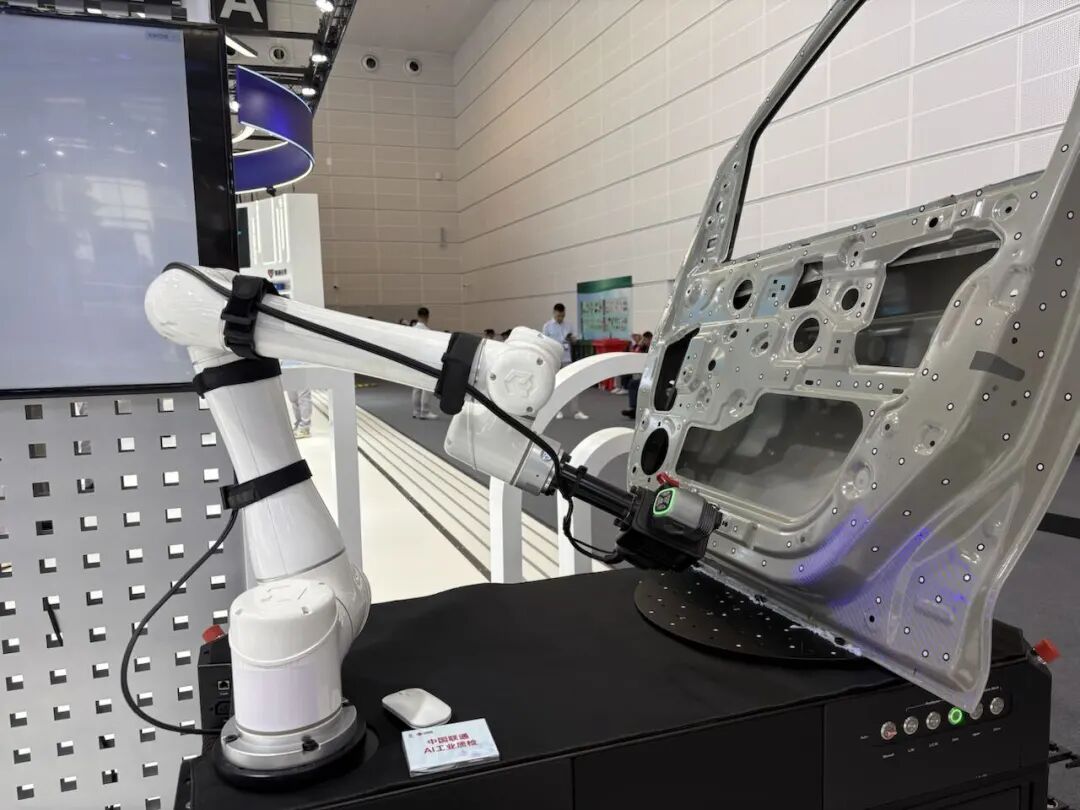
China Unicom's AI industrial quality inspection robotic arm
Similar robotic arms appeared at many booths. Are robotic arms something new? Obviously not. The industrial manufacturing field has been using this form of product for decades. The difference is that current products are integrated with embodied large models - a smarter and more autonomous "brain".
Before seeing these products, there were many discussions in the industry about "whether robots should be humanoid". Supporters believe that being humanoid allows for the reuse of human tools. But during the expo, I thought that for these application scenarios, the most suitable form is the one that matches the scenario. For example, when detecting oil pipelines and power grids, a smaller and more customized form is obviously more appropriate.
Regardless of how the external form of robots and even the entire embodied intelligence industry evolves, the ultimate core will always be intelligence itself.
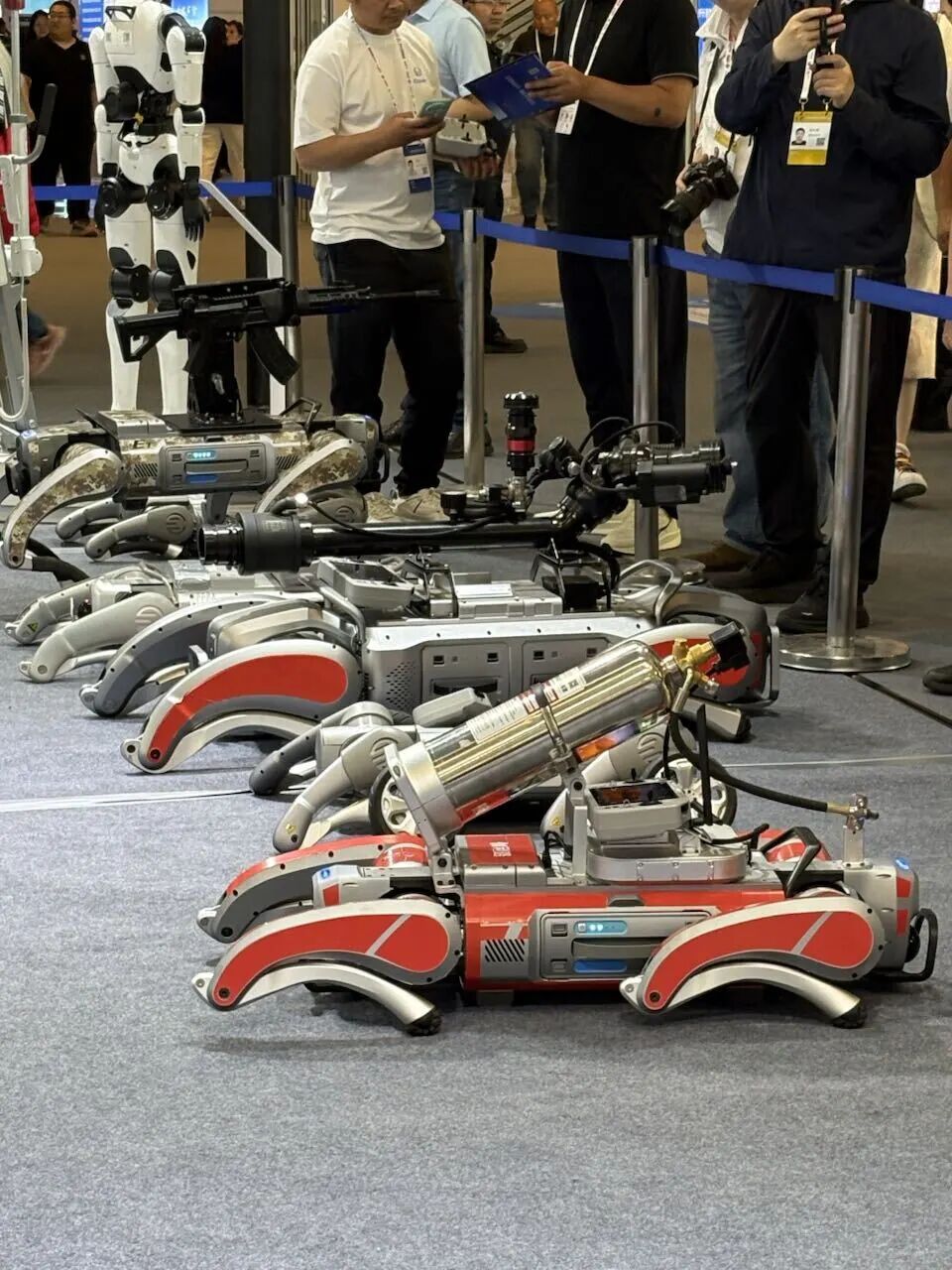
Robotic dogs modified for different purposes
However, just like at other expos, the booths of humanoid products like Unitree still attracted large crowds. After all, dull and vertical scenarios are far less eye-catching than humanoid robots "dancing" and "boxing".
Of course, there was also a nearly "up-close" sensory stimulation.
"You may not think much of it if you've seen too many. I used to only watch them on the screen. Now seeing the real machines offline, watching their joints move and perform various actions, it's quite amazing," said a non-technology industry practitioner.
I also remembered the details I learned a few days ago when visiting ARM China. They said that when they took their partners' humanoid robots to the UK headquarters for a performance, the local colleagues were stunned, but for Chinese audiences, this is almost a common sight.
So, whether it's humanoid or non-humanoid, and regardless of the field, various cases can illustrate one point: application scenarios must be demonstrated so that the public can have a perception and know what it can do, even if it's not fast enough or not very smart yet.
02
The Invisible Future: Computing Power
In the visiting route planned by the organizer, the two exhibition halls N26 and N31, which house the computing power industry, were arranged in a very prominent position. Moreover, in the expo brochure, I noticed a detail. It was written as the "Core Technology Hall for Artificial Intelligence", while the other halls didn't have the word "core".
When communicating with a staff member of the organizer, she clearly said that this arrangement was to allow everyone to see from the underlying infrastructure to various upper-layer applications.
This arrangement shows the current value of computing power infrastructure.
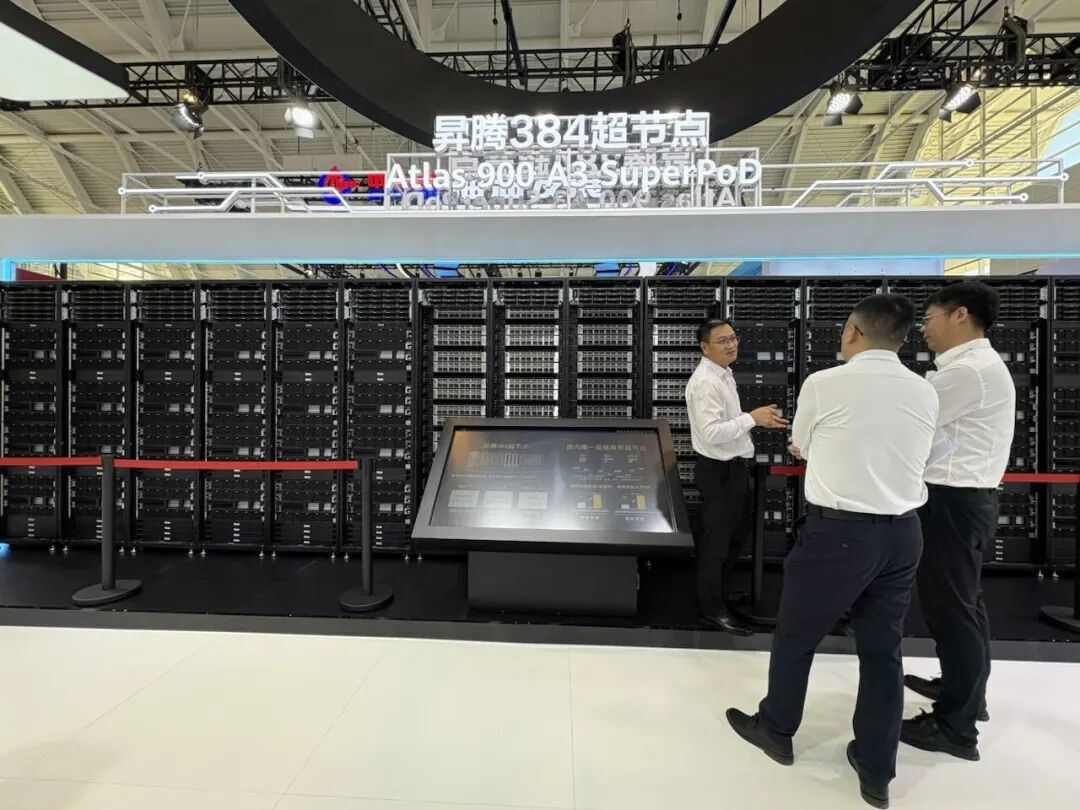
Huawei Ascend 384 super node
At every large-scale technology expo, Huawei's Ascend 384 giant cabinets are the most eye-catching stars of domestic computing power. This huge power-consuming beast runs 24 hours a day, and its power consumption may exceed 10,000 degrees.
However, at this year's Smart Industry Expo, Sugon's 10,000-card super node was also very eye-catching. According to the staff's introduction, 3 cabinets with 648 cards each, and a total of 16 sets, which is 48 such cabinets in total, form a huge computing power monster that drives model inference and calculation.
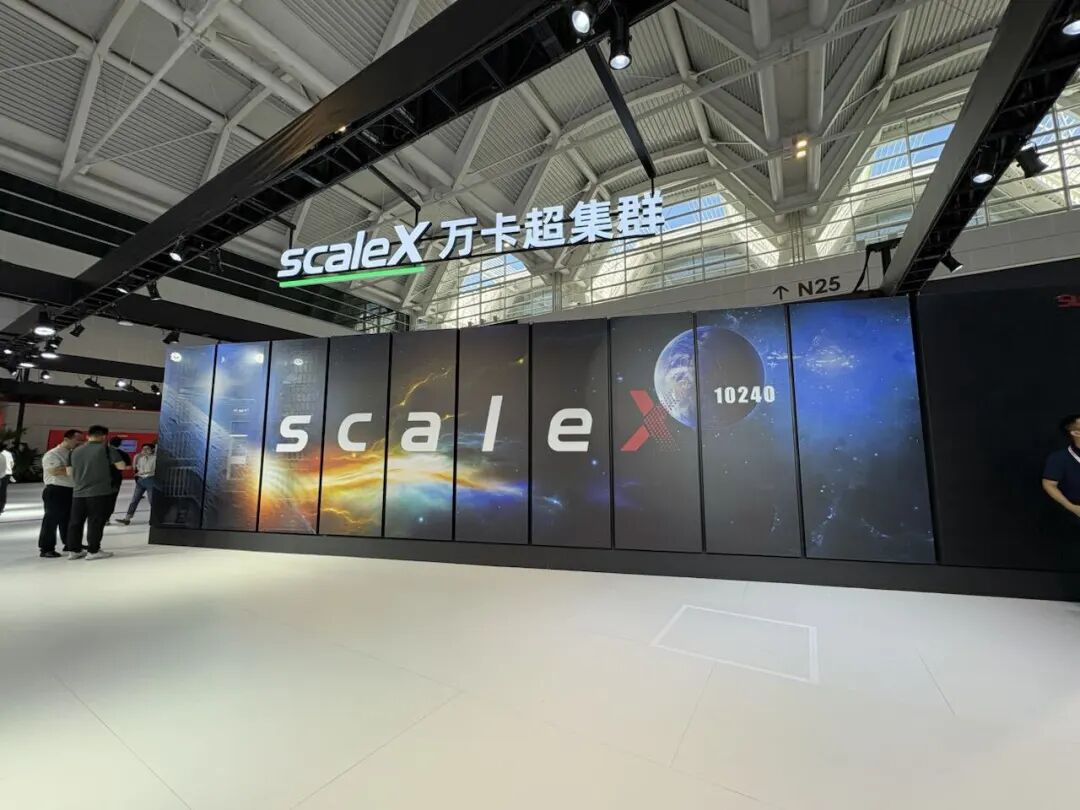
Sugon's 10,000-card cluster
However, compared with the sensory stimulation of robot applications, the underlying hardware such as chip server cabinets is more of a static display, and it's difficult for ordinary audiences to have an emotional resonance. Throughout the expo, in my opinion, only the cabinet liquid cooling circulation system, because of its fluid effect, was more eye-catching.
But if we talk about stimulation, it's still the air-cooled cabinets running at full load. The sharp sound is like the roar of an airplane engine. In that situation, you can truly feel the shock brought by the tangible computing power.
It's really the case of "Once the machine starts, a fortune is made."
For a long time, the public's perception of communication operators has only been limited to civilian services such as mobile phone packages and data communication. Now, major operators are accelerating their transformation.
In the exhibition halls, in addition to the most underlying computing power suppliers like Huawei and Sugon, the figures of operators as computing power distributors also appeared. They purchase domestic computing power on one hand and sell computing power to consumers on the other.
On-site, I also saw that each operator was showing off their token plans, and even some Agent products like "lobster" and "horse". This can be said to be the biggest transformation of operators in the era of artificial intelligence - from traditional telecom operators to computing power operators.
Of course, this is actually just the tip of the iceberg of the operators' transformation. Each operator is currently exploring AI + various industries, but since it's more targeted at B2B enterprise users, C2C consumers have a weaker perception.
03
An AI Era for Ordinary People
Humanoid robots can bring sensory stimulation, while computing power works "silently". What can really make the public feel the inclusiveness of AI are the AI applications, brain-computer interfaces, and exoskeletons that are implemented in various scenarios.
In Hall N31, the Core Technology Hall for Artificial Intelligence, I saw some companion intelligent hardware integrated with multi-modal models, as well as some children's products called "audio-visual" types. They can interact with users and the real world through cameras and microphones, which is extremely practical for children's education, science popularization, and companionship.
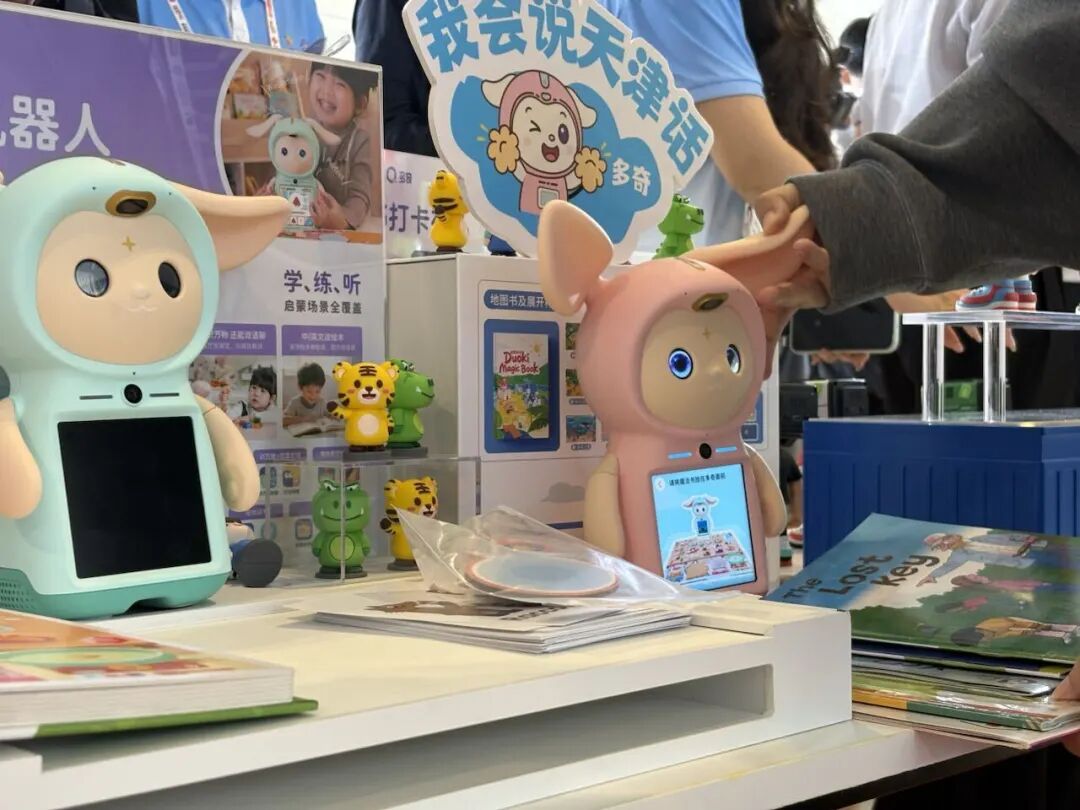
Duoqi desktop companion robot
The only concern is, what if the answer given by the model is wrong? After all, the data used for training may not be absolutely reliable and accurate.
In the past, people always discussed the safety guardrails of models. I think for specific users like children, the reliability of content generation should also be taken into account.
The transformation of intelligent hardware by large models is in progress, and the brain-computer interface is a story between the present and the future.
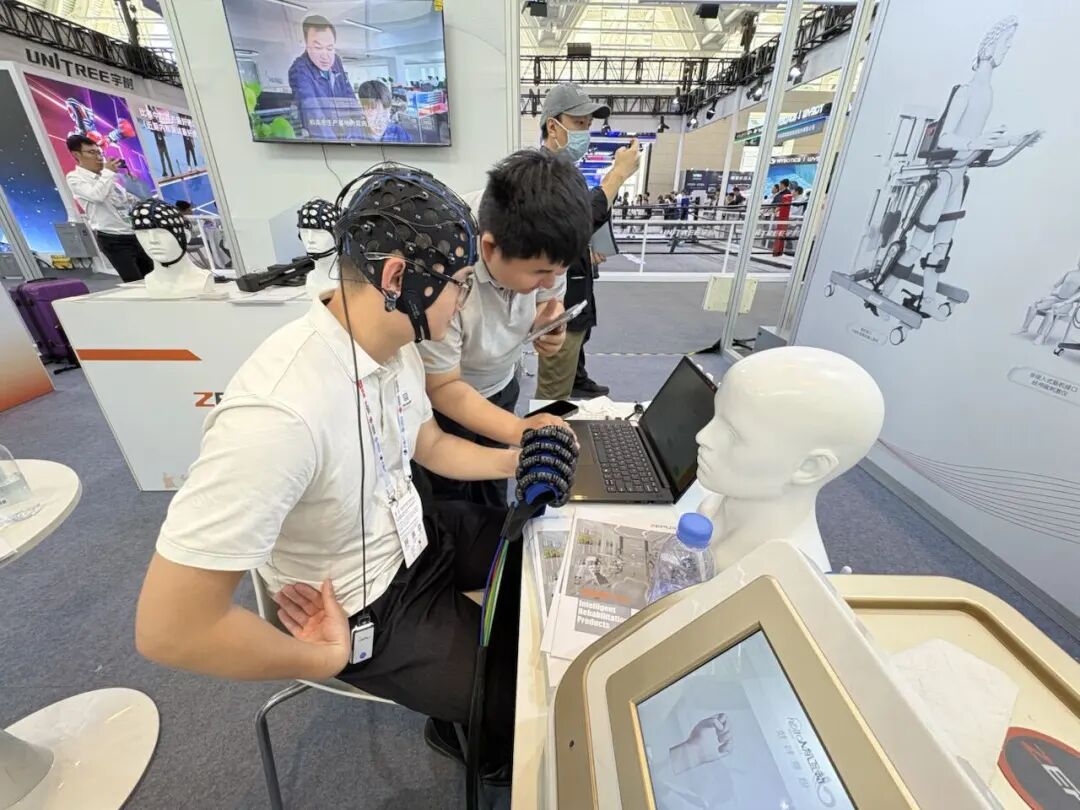
Brain-computer device developed by Aoyi Technology
In the brain-computer and exoskeleton exhibition area, I saw some medical rehabilitation brain-computer interface products based on electroencephalogram signals, and some of them were combined with exoskeleton products for medical rehabilitation.
Actually, in the past two days, I also visited the brain-computer laboratory of Tianjin University School of Medicine. There are many medical and scientific research explorations here, including the auxiliary treatment of some special diseases.
This is actually a concrete manifestation of technological inclusiveness.
If I were to make a request, I would hope that these technologies and scientific research can be implemented faster, more safely, and on a larger scale.
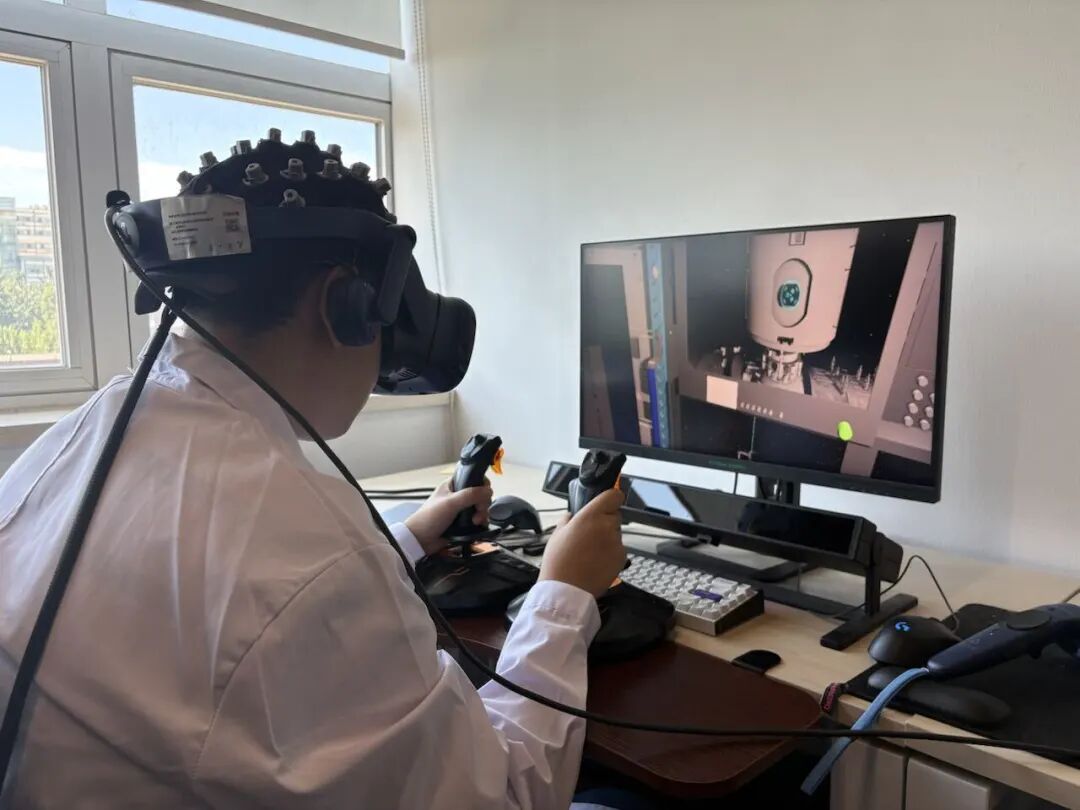
Researchers wearing electroencephalogram headgear and operating a joystick to collect electroencephalogram data
Actually, there are also consumer-grade brain-computer products now, mainly headbands, which can monitor electroencephalogram signals in real-time through sensors. However, the effects of these products currently do not have a unified industry standard and are mainly used for stress relief and sleep improvement.
Some consumer-grade exoskeleton products that are often seen in videos also appeared in the brain-computer and exoskeleton exhibition area.
In terms of appearance, they are not as cool as the mech-style products in the videos, but these products focus on practicality and can assist the elderly when walking, climbing mountains, or hiking.
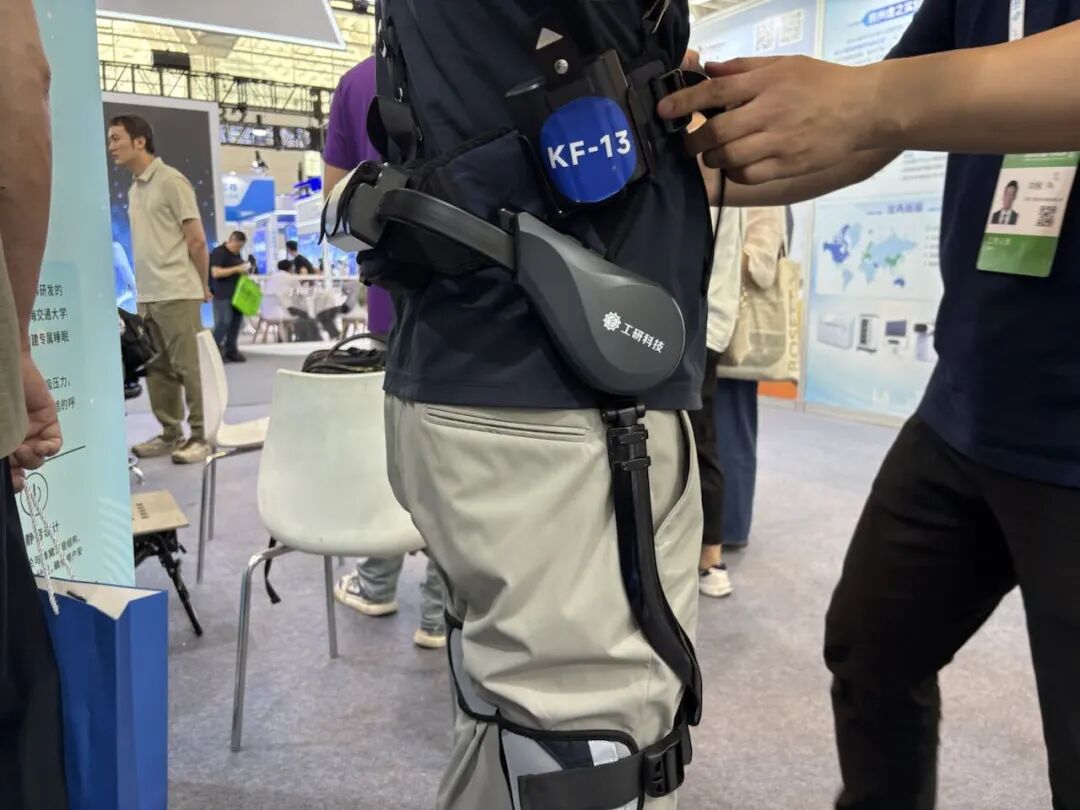
Consumer-grade exoskeleton device developed by Gongyan Technology
"This one doesn't mean you don't need to use any strength at all. It can save about 30% of the effort. One battery can theoretically support a 30-kilometer journey," the on-site staff introduced. "We plan to cooperate with some scenic spots and operate in a rental mode."
Those who have taken their children to scenic spots know that this mode is like renting a children's folding chair, a one-time consumption for convenience, so there should be people interested.
There was also a strange "sweeping robot" in this hall, but it's specifically used to clean swimming pools.
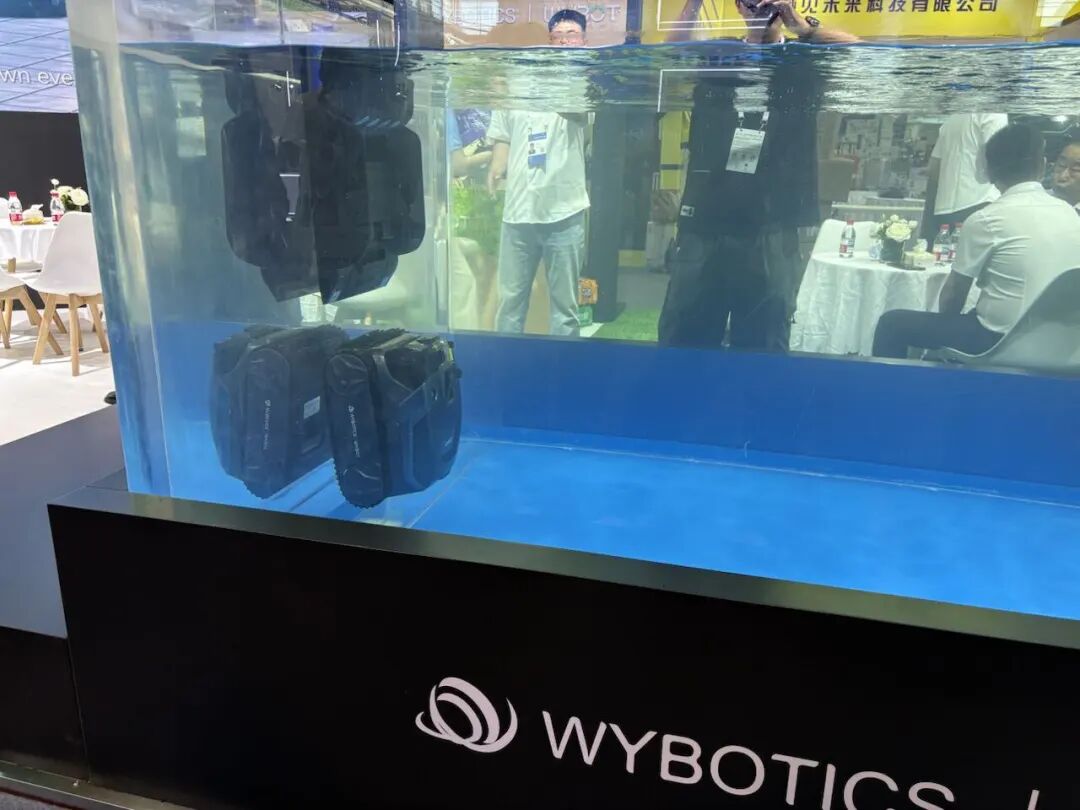
Lightweight swimming pool cleaning robot developed by Wangyuan Technology
The on-site staff introduced that it has an IP68 waterproof rating, can work continuously underwater for 30 days at a time, supports remote control via mobile phone, and the charging pile is also installed in the water.