Snakes, lizards, and parrots. The trendiest emotional consumption is here.
The number of pets has increased significantly and now exceeds that of infants. In the past few years, cats and dogs have always been the most prominent stars. However, you may not know that a group of animals that were originally hidden in Tieba, flower and bird markets, and niche circles are quietly rising.
Song Weilong, a 27 - year - old male celebrity, once posted on social media, saying, "I want a comment section full of reptile pets." As a result, the post received 56,000 likes and more than 6,700 comments. Animals such as iguanas, lizards, chinchillas, parrots, corn snakes, fancy rats, chameleons, crested geckos, and lavender California kingsnakes, which seem fierce to ordinary people, are becoming pets for young people.

Some people keep parrots in their rental apartments, some build "luxury villas" for hamsters, some make a luxurious enclosed shower room for parrots by themselves, some regard a gecko and a corn snake as "family members", some people's budgerigars can recite "Preface to the Orchid Pavilion", and some people find that their pet snakes are very curious...
More and more young people are redefining "pets". Different from "major pets" like cats and dogs, animals once collectively referred to as "minor exotic pets" are changing from "the interest of a few" to a new form of mass consumption. A more frequently mentioned figure is that in 2024, the market scale of minor exotic pets in China has exceeded 10 billion yuan and is still growing at a double - digit rate.
Behind the "rise of exotic pets", the more worthy questions to focus on are: Why do young people start to keep minor exotic pets? What kind of consumption logic will be formed among different exotic pets? And where will this rapidly growing new consumer market ultimately go?
From "Curiosity" to "Companionship"
For empty - nest young people, the more freedom they have on normal days, the lonelier they feel when they are sick. Living alone in a different place makes this emotional need have nowhere to be placed.
Netizen pearl zoo deeply feels this. "I'm being taken care of by a mouse when I'm sick," she posted on Xiaohongshu. She was in a "half - dead state lying in bed" for several days when she was sick. Every time she was about to pass out, her pet mouse would climb to her side, nibble at her, nudge her arm, and twist her finger until she woke up.
In the comment section of pearl zoo, a comment with more than 5,000 likes resonated with a large number of people. "Mice will lick the tongues and mouths of unconscious mice of the same kind and perform 'mouse - CPR', which is a rescue behavior. It wants to save you," the comment said.
On social media, many similar experiences of keeping minor exotic pets have received high interaction. For example, on Xiaohongshu, the topic "Sharing daily experiences of keeping mice" has been viewed more than 2.7 billion times, the topic "Daily life of rabbits" has been viewed more than 1.67 billion times, and the topic "Daily cuddling with little birds" has been viewed more than 1.37 billion times...
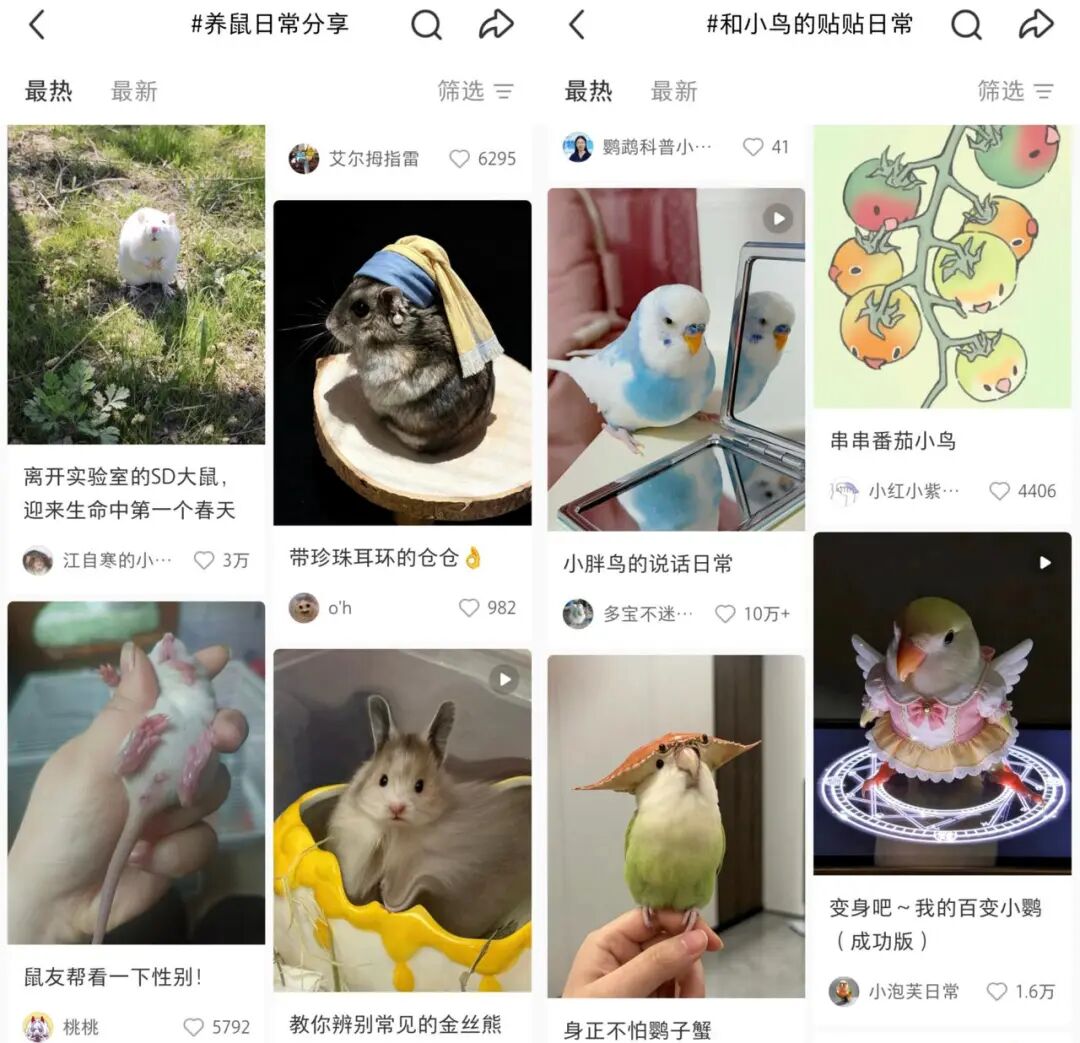
But what really attracts people in these contents is not just the "animals". More precisely, they show a new kind of companionship relationship. These niche pets used to stay in niche circles for a long time, but now they have become popular on mass platforms.
Previously, people's understanding of pets was very functional. Dogs were responsible for companionship and guarding the house, cats for catching mice, and birds for people to watch. But today, they are getting more and more involved in young people's emotional lives. Especially after the trend of living alone and single - person households deepens, pets are no longer just "kept"; they are more like a continuous emotional connection.
"In fact, every industry is like this. When the basic needs are met, it will inevitably develop in a more segmented direction. Minor exotic pets actually reflect people's diverse choices in pet - keeping," said Li Ziming, a relevant person in charge of the small - pet brand Guaijuan. The rise of the minor exotic pet economy is not a sudden event.
After the consumption of cats and dogs has gradually matured, young people's demand for "companionship" has also become more and more segmented. Some people like the furry touch, some like high - interaction, and some just hope that their pets are special enough to be different from others. Li Ziming said, "Whether it's major pets or minor pets, they essentially meet the same need: the desire to invest emotions and have companionship."
Different from cats and dogs, minor exotic pets take up relatively less energy of pet owners and don't cost too much money. For example, hamsters don't need to be walked, don't take up much space, have low costs, and cause little emotional burden. For young people living alone, they are more like a low - stress companion: there is an extra life in the room, but they don't need to take on too heavy responsibilities.
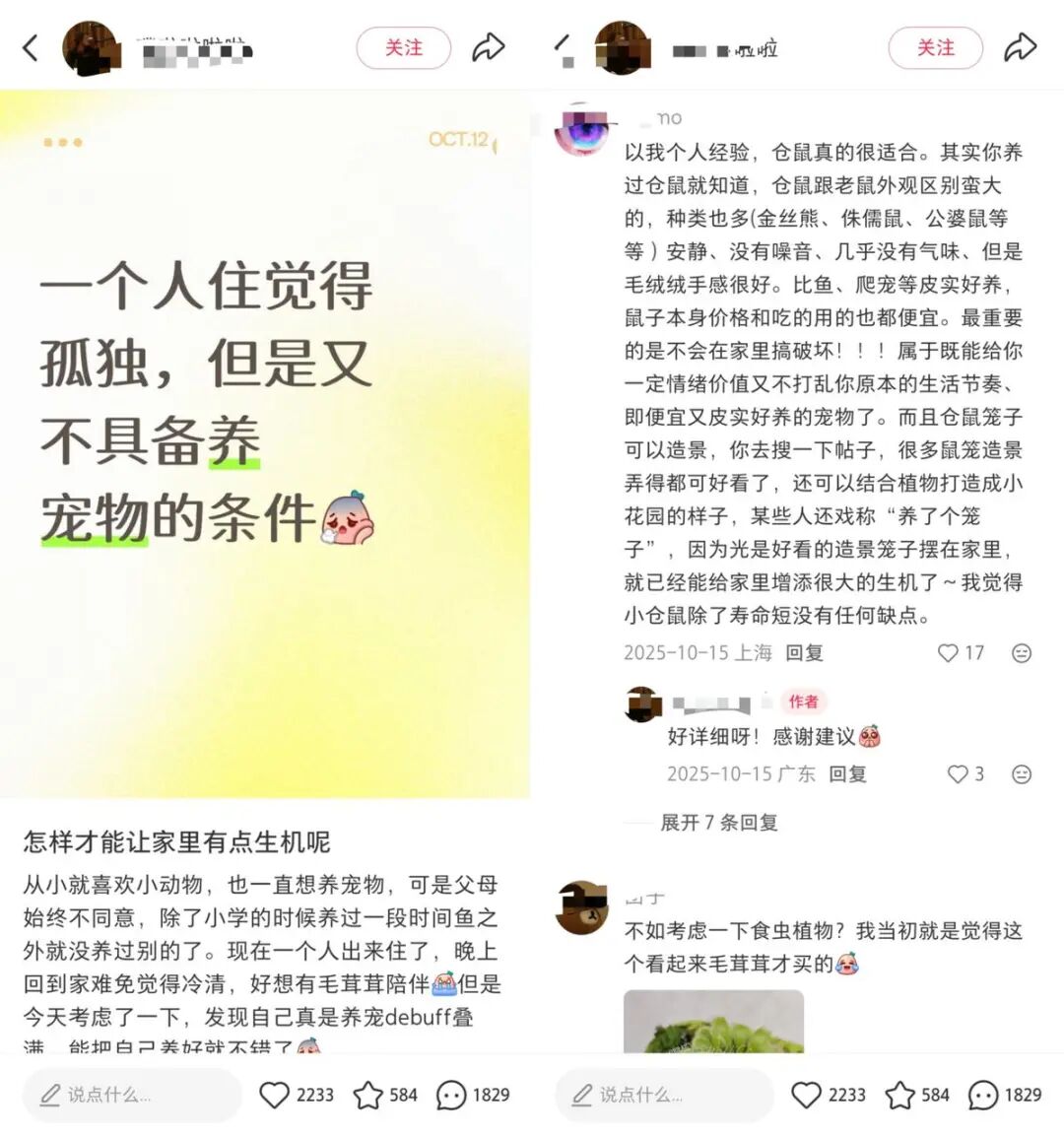
What kind of pet is good to keep when living alone?
Behind this is the change in young people's consumption logic. Keeping pets used to be more like mass consumption, but today it is more like a form of circle - based expression. Young people's choice of what kind of pet to keep is often not because it is "suitable", but because "I like it".
Patopia is a brand of intelligent reptile terrariums. Its founder, Meng Fanjing, has observed that the users of reptile pets are getting younger, and many of them are even post - 2010s. "Their expressions are very straightforward: cute, fun, full of personality, and 'I have what others don't'."
A similar change has also occurred in the parrot market. For a long time in the past, the bird - keeping culture in China was very traditional. In the 1980s and 1990s, most bird - keepers were retired elderly men. They cared about the feathers, calls, and "posture" of birds, which was essentially an ornamental logic. Birds like parrots and finches were more "seen" pets rather than "companion" pets.
Around 2000, the group of parrot - keepers began to be younger, and they pursued emotional value. However, at that time, discussions about parrots were still limited to professional communities and forums, and the audience was still relatively narrow.
Around 2016, short - video platforms like Douyin emerged. The "hand - raising culture" that originally only existed in the bird - keeping circle (taking young birds away from their parent birds and feeding them with special milk powder by humans, so that the birds will be friendly and highly interactive when they grow up) began to gradually enter the public view and attracted a large number of young people.
Yu Lei, the brand manager of IGG Parrot Expert (abbreviated as IGG), has been in contact with parrots since he was four or five years old and has accumulated more than 40 years of bird - keeping experience. He believes that many users initially contact parrots because they "can talk", but what really makes them stay is the emotional interaction.
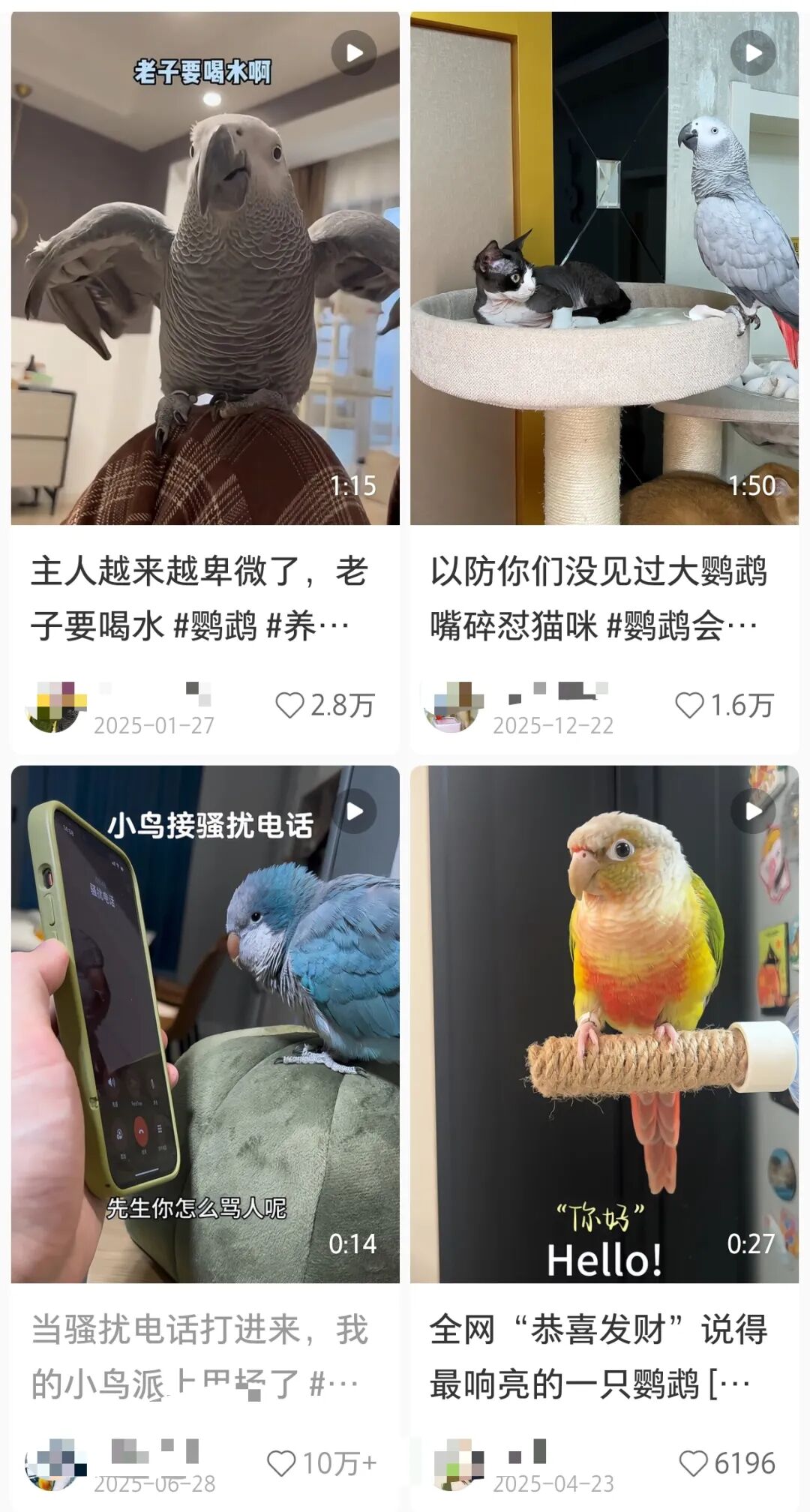
On social media, talking parrots "show their skills"
"The real value of parrots is not just mimicking speech, but that they can recognize their owners, accompany them, and interact with them," Yu Lei believes. Parrots are pets that can bring more emotional value, second only to cats and dogs.
In the past few years, young people's consumption has increasingly emphasized "emotional value" and "personal expression", such as cycling, trendy toys, and collectibles. Minor exotic pets follow a similar logic, and behind it is that young people's emotional needs are becoming more and more segmented.
"Today, people think keeping hamsters and parrots is still a niche thing. Maybe in a few years, it won't be," Li Ziming said. "By then, keeping bacteria or stones might be the new niche."
From "Keeping Alive" to "Keeping Well"
The change in young people's consumption logic is also spreading to the pet industry. In recent years, more and more brands have begun to try to turn "minor exotic pets" into a real consumer industry.
This is especially obvious in the parrot industry, which has been growing rapidly in the past two years. In the past, parrot - keepers could be divided into two types: one type only wanted to "keep the parrots alive" and mainly fed them with self - made mixtures of grain and seeds; the other type hoped to "keep them well and finely" and would choose products from foreign professional brands.
However, the problem is that feeding seed - based food for a long time cannot simulate the natural living state in the wild, the nutritional structure is uncontrollable, and parrots may be picky eaters, which can easily lead to problems in feathers, development, etc. And choosing foreign products may lead to out - of - stock situations due to channel issues.
Yu Lei said that even his friends who have been keeping parrots for two or three decades need a stable and high - quality brand. So, IGG developed its own nourishing pellets, "blending in a good ratio of many seed ingredients, as well as proteins, crude fibers, fats, amino acids, etc., and making them into granular food."
Against the backdrop of a relatively chaotic industry at that time, IGG was the first to conduct 61 food tests on its products. Since then, similar tests in the industry have gradually increased. Moreover, in order to ensure better quality, IGG also applied for the USDA (United States Department of Agriculture) organic certification. This certification requires that all aspects, from soil selection, seed raw materials, to transportation, production, and even storage, must meet the USDA standards.

Certificate of USDA organic certification
On the other hand, ZOOLIN, a mid - to high - end small - pet food brand, focuses on "scientifically replicating the ingredients in the natural habitat". "This is a narrative, but we will do some specific things to verify it," said He Qingli, the brand manager of ZOOLIN. For example, they went back to the original habitats of lovebirds in Africa and cockatiels in Australia to discover raw materials more suitable for the nature of parrots.
According to He Qingli, more than half of the current parrot - keepers are beginners, "The demand is booming, but their understanding is vague." And professional players may have established brand loyalty to foreign big brands like Versele - Laga and Harrison.
Although these novice users may not pursue formulas, ingredients, and refined feeding for now, building a brand needs to "start with the end in mind". Different from small pets with short lifespans like hamsters, parrots can live for 10 years or even longer. As users' experience in keeping parrots increases, they will eventually become professional players who pursue refined and scientific feeding.
Many users have observed from their long - term bird - keeping experiences that parrots of different sizes have different needs for nutrition and pellet sizes. Therefore, ZOOLIN has started to design exclusive formulas for different parrot species.
Cockatiels are well - known for producing a lot of "feather dust" (they have a special kind of downy feathers that continuously grow and break into fine powder for cleaning and waterproofing; the feather dust is actually fine powder formed by keratin metabolism). Compared with other parrot species, they have special requirements for the types and content of proteins. In the special food for cockatiels, ZOOLIN will add high - quality egg sources containing 17 kinds of amino acids to protect the metabolism of their feather dust.
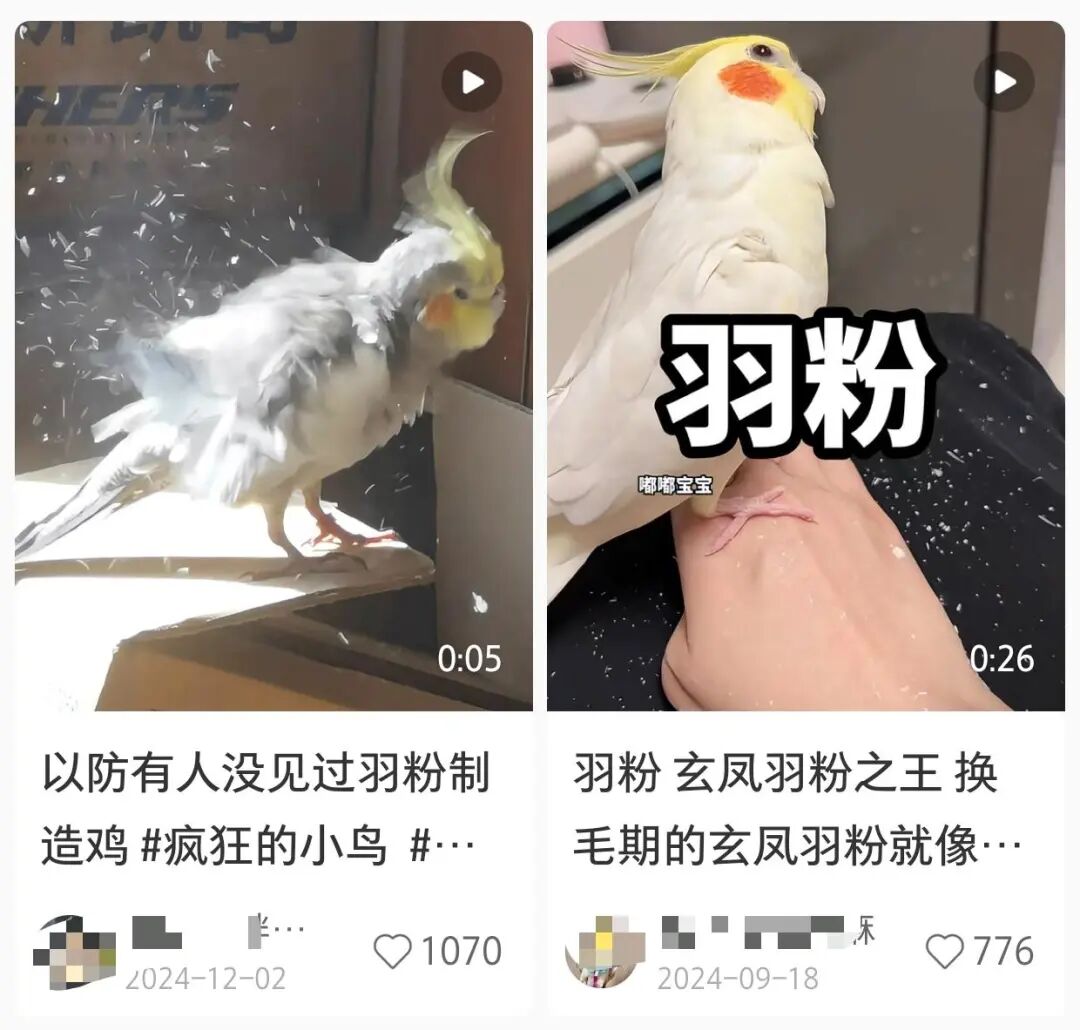
"Feather - dust producers"
Brands like IGG and ZOOLIN are actually turning the past experience - based feeding methods into standardized and industrialized scientific pet - keeping.
Compared with the parrot industry, the reptile - pet industry, which originated in Europe and America, is more like a highly "player - oriented" market. Temperature, humidity, UVB, UVA, heating equipment, bedding, ecosystem... Almost every reptile pet has completely different environmental requirements. In the past, professional players mainly relied on learning from small circles. The problem with the influx of a large number of novice users is that they simply don't know how to keep reptiles.
REPTIZOO, a reptile - pet brand established in 2008, also noticed this and began to promote "package - based" products. Crested gecko packages, blue - snake packages... Users no longer need to study all the equipment by themselves; they can directly purchase a complete set of ecological environment solutions.
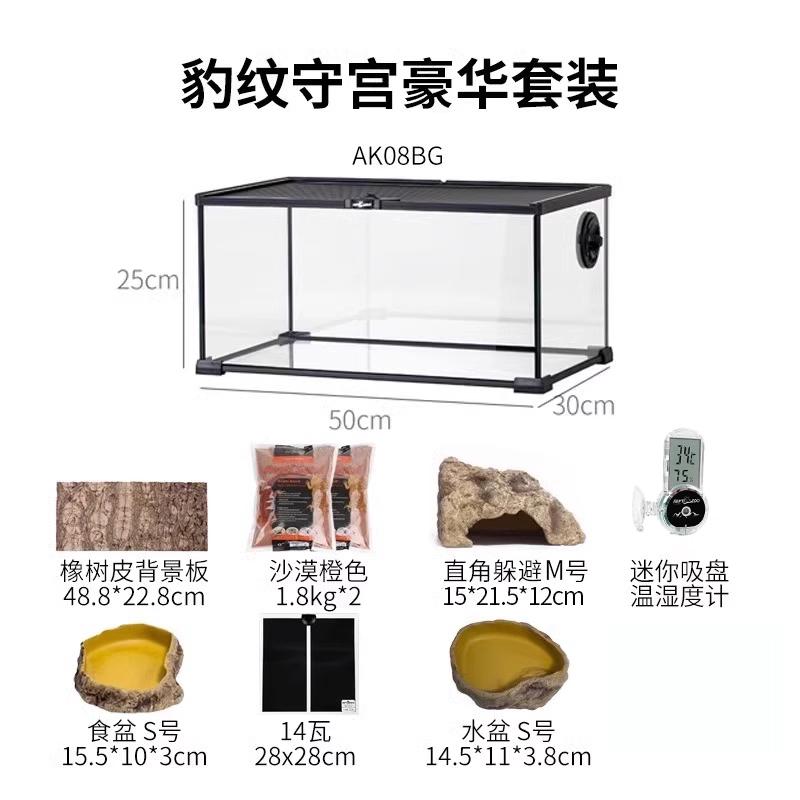
Luxury package for leopard geckos
According to Liu Quan, a relevant person in charge of REPTIZOO, more and more young users, especially female users, actually cannot accept the traditional feeding products mainly consisting of mealworms, frozen mice, and cockroaches. So, REPTIZOO is not limited to making reptile terrariums but also offers industrialized foods and nutritional supplements such as fruit purees and calcium powders. "It provides one - stop shopping."
"The main users of different small - pet product categories are not the same, and we can't generalize. In the small - pet industry, there are no super - big single products, and it's impossible to develop one product to meet everyone's needs," Li Ziming said.
For new brands, they need to be good at discovering segmented needs that have not been met by the market. For example, the traditional hamster running wheel (the most important exercise equipment for hamsters) is actually very troublesome to clean. After cleaning, the rotating shaft is prone to rusting, jamming, and making noise.
"The running wheel we developed before uses a magnetic structure. You can simply pull out the