Even between "brothers" from large companies, accounts should be settled clearly.
In the past, Internet companies competed in terms of scale. Since the marginal cost of delivery in the Internet world is very low, companies could pursue infinite expansion, aiming to recruit more people, develop more products, and reach more users. However, in the AI era, there is a relatively high cost for serving each DAU. When companies want to expand their business and enter more markets, they strive to make fewer but more capable people do more things.
Recently, Liu Qiangdong's "brotherhood theory" has gone viral again.
According to Sina Technology, Liu Qiangdong mentioned in an internal speech at JD.com that the company has launched the "Nirvana Project" to train blue - collar workers in skills such as robot maintenance, helping them transform into white - collar workers and become high - income and socially - needed technical workers.
Liu Qiangdong also emphasized that "these brothers have had a tough time" and promised that JD.com will not lay off any front - line employees replaced by machines and will try its best to keep all the brothers' jobs.
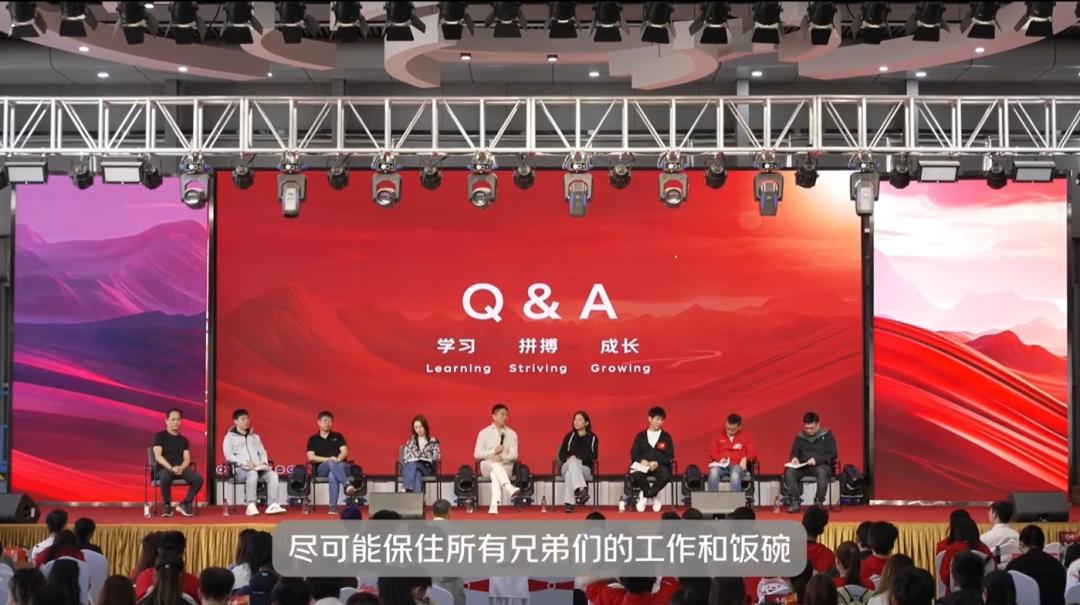
For netizens who are familiar with Liu Qiangdong, this is not the first time they have heard such a "brotherhood theory". At the 2018 World Intelligence Congress, Liu Qiangdong said that "JD.com is still developing at a high - speed and will never lay off any brother."
Of course, in the ever - changing business world, talking about "forever" is a bit of a luxury. However, when major tech giants are laying off a large number of employees in the name of AI, Liu Qiangdong's words really resonate with most workers.
However, sentiment is one thing, and reality is another.
In the increasingly competitive AI era, as the era's dividends gradually fade away, when facing millions of "brothers" behind large companies, whether to lay off employees for efficiency or expand for growth, perhaps every company has its own plan.
Redefining "Brothers"
A year ago, JD.com, Meituan, and Alibaba launched a nationwide takeaway war. The prices of milk tea and coffee dropped to 0 yuan, and takeaway riders became the "golden workforce" that various platforms scrambled for.
JD.com was the first to announce that it would pay the five social insurances and one housing fund for full - time takeaway riders. Meituan also started to pay social insurance for full - time and stable part - time riders from the second quarter of last year. Several major platforms have successively added benefits such as rider apartments and high - temperature subsidies.
But later, as we all know, after being interviewed by relevant departments, the takeaway war came to an end.
More importantly, the three large companies could no longer afford the money - burning war. According to the financial reports of Alibaba, JD.com, and Meituan, from the second to the fourth quarter of 2025, the three companies added a total of 156.8 billion yuan in marketing expenses, which is equivalent to the total profit of the entire takeaway industry at its peak for five years. The three large companies burned through this amount in just nine months.
Even JD.com, which was the first to withdraw from the takeaway war, paid a heavy price. In 2025, JD.com's annual total revenue exceeded 1.3 trillion yuan, a year - on - year increase of 13%. However, its net profit attributable to the parent company was only 19.6 billion yuan, a sharp drop of 52.66% compared with 41.4 billion yuan in 2024.
In the first quarter of 2026, the new business centered on takeaways and instant delivery still had a quarterly loss of up to 10.35 billion yuan. Meanwhile, the group's net profit dropped from 10.9 billion yuan in the same period last year to 5.1 billion yuan, a year - on - year decline of 53%.
The takeaway business has become a "money - guzzling beast" that drags down the performance of large companies. After the 2025 performance financial report meeting, Xu Ran, the CEO of JD.com, said that the total investment in the takeaway business in 2026 will be lower than that in 2025.
For JD.com, the takeaway war has helped the platform open up a strategic entry point for instant retail and coordinated with the e - commerce retail business to make up for the shortfall in traffic. After achieving phased success, JD.com's strategic focus has naturally begun to adjust.
Subsequently, the structural adjustment of the rider team was quickly implemented. According to Xin Sheng of Consumption, recently JD.com's instant delivery service has launched personnel optimization and business adjustment in multiple provinces across the country, with the focus on the front - line takeaway station manager positions.
However, this round of optimization is not a large - scale layoff but mainly involves internal job transfers and rank adjustments. An insider revealed that station managers can be demoted and transferred to rider team leaders, taking on both order - running and grass - roots management tasks. They can also choose to leave voluntarily, but the platform will not provide additional compensation.
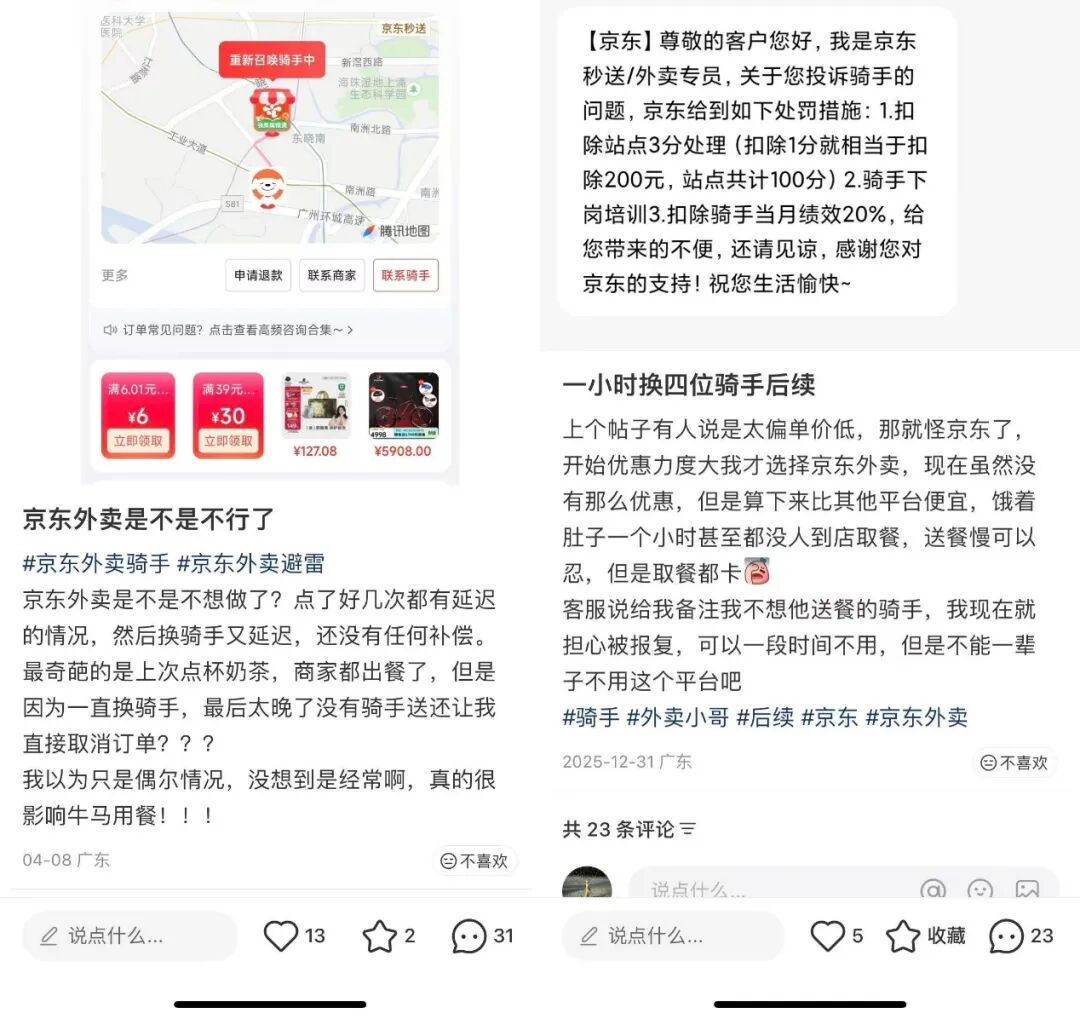
JD.com has not publicly responded to this round of adjustment. However, on social platforms such as Douyin and Xiaohongshu, some netizens claiming to be JD.com riders said that they have been optimized or transferred to part - time riders.

However, while JD.com's instant delivery service is optimizing its personnel, many users also said that it has become increasingly difficult to "wait" for JD.com's takeaways since last year. Either the riders are slow to accept orders, or the takeaways cannot be delivered even after being transferred among several riders, often resulting in a waiting time of more than half an hour.
Putting the above things together makes it quite interesting.
We believe that when JD.com promised to pay the five social insurances and one housing fund for riders, it sincerely regarded front - line employees as "brothers". However, no matter how much a company advocates brotherhood, it has to consider its own financial situation.
Liu Qiangdong also said something similar when JD.com was in a "crisis". In mid - 2025, Liu Qiangdong said bluntly at an executive meeting: "Those who have long - term poor performance and never strive are not my brothers."
The background of this speech was that Liu Qiangdong exposed the company's dirty laundry at the executive meeting, saying that there was a large number of proxy clock - in phenomena in the company, and JD.com's big - company disease was getting worse, forcing Liu Qiangdong to step in and rectify, issuing a harsh warning.
After all, brothers are brothers, and accounts are accounts.
Equal Treatment in Terms of Performance
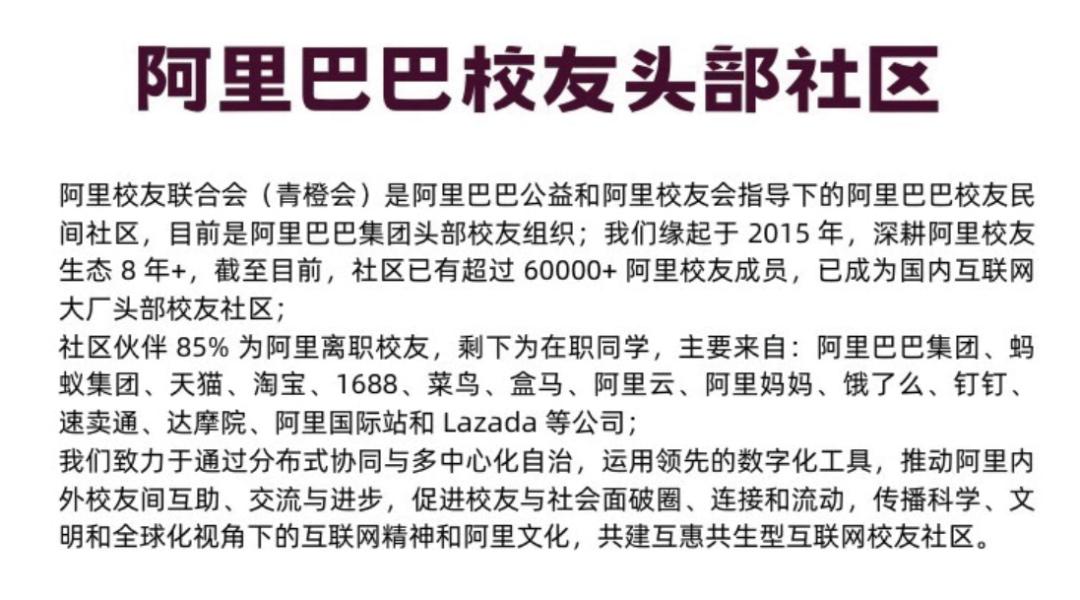
Although Alibaba doesn't talk about "brotherhood", in Alibaba's corporate culture, colleagues call each other "classmates", and when employees leave the company, it is called "graduation". Jack Ma also has a "classmate sentiment".
At Alibaba's "alumni association" in 2018, Jack Ma publicly said, "We are together today not only because we have a common work experience, but also because we have a common taste and common pursuit. Idealism brings us together."
However, whether it is "brotherhood" or "classmate friendship", these are things of the past. Nowadays, not talking about friendship but only about performance is almost the consensus of all large companies.
Since 2023, Alibaba has carried out a flattening reform of its rank system and abolished the P - series rank system.
Specifically, Alibaba replaced the original P4 - P8 levels with levels 14 - 28. Every three levels correspond to a P - level. The salaries and bonuses of employees at levels 14 - 28 are not only linked to their levels. Outstanding employees can be promoted across multiple levels within a year.
In addition, employees at the original P8 level and above will be promoted or demoted through organizational appointments, and their salaries and bonuses will be determined according to the business scale and team size.
You know, Alibaba's "P - series" was once the most proud thing in the Internet industry. Just adding "Alibaba P8" to one's self - introduction often meant a six - figure annual salary and an absolute "hard currency" status in the blind - date market.
But now, the game has changed.
The logic behind this is not hard to understand. When the flow of high - level employees in Alibaba becomes more and more rigid, it is inevitable that some employees will only want to "lie flat and get paid". Only by changing the rigid rank - salary system can more excellent talents be attracted.
Recently, Alibaba also dropped another bombshell, announcing that it will incorporate the 13th - month salary into the year - end bonus and rename it the "Go - Hand - in - Hand Award".
Although the rewards don't seem to have decreased, many netizens think that the uncertainty of getting the rewards has increased. If an employee leaves the company before the 13th - month salary is paid, they may not receive this salary. When the 13th - month salary is paid together with the year - end bonus, it may also be linked to performance.

From the employees' perspective, in the past, they could count on the 13th - month salary as a "guaranteed income", but now, to get this money, they need to prove their loyalty and their ability to continuously deliver high - performance results. Undoubtedly, it has become more "competitive".
But from the company's perspective, whether it is to break the internal organizational rigidity or to provide more promotion channels for truly capable employees, the adjustment of the rank - salary system is imperative.
In addition to Alibaba, other large companies are also quietly doing similar things. Recently, some media reported that Tencent's WeChat Business Group will cancel the "team - leader responsibility system", and employees will be grouped according to projects. The original "team - leader responsibility system" may gradually fade into history.
It can be seen that all large companies' adjustments to their organizational structures and rank - salary systems are aimed at the same goal: to add more flexibility to the original organizational structure. It's not that a high rank can decide everything, but "the capable ones take the lead", and everyone is equal in terms of performance.
More Precise Rewards
Interestingly, large companies seem to be more cautious in their investment in salary and benefits, but they are still generous in the competition for talents in cutting - edge technology fields such as AI and large models.
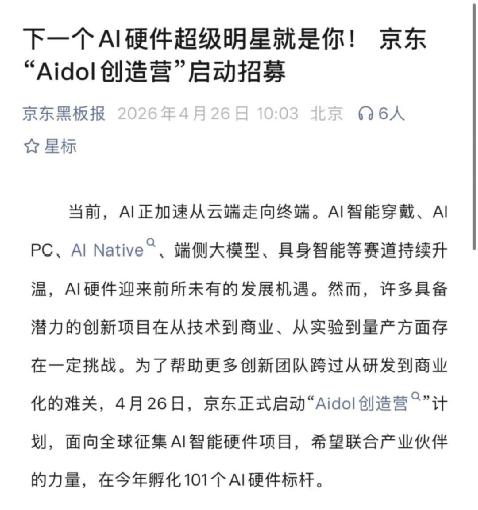
At the end of last year, some media reported that JD.com was recruiting talents in the field of edge - side AI chips, with an annual salary of up to 2 million yuan. In addition to talent recruitment, JD.com also launched the "AIidol Creation Camp" program, soliciting AI intelligent hardware projects globally.
It is reported that Tencent has been poaching people from external teams with high salaries since last year, offering at least double the salary.
In contrast, Alibaba is more inclined to internal training in the AI talent competition. In the past, 90% of the Qwen team under Tongyi Laboratory were fresh graduates recruited by Alibaba, and this department has always been known for its "good atmosphere".
However, now Qwen is also facing the pressure of talent loss. In March this year, Lin Junyang, the technical leader, left Alibaba. Within just three months, the early core founding team members such as the technical leader, post - training leader, and code leader of Qwen have successively left.
It can be seen that large companies have their own business accounts to calculate, but they spare no expense in investing in cutting - edge fields such as AI.
Large companies tighten their extensive rank - salary management systems, and the saved money and resources can be more precisely invested in outstanding talents who can truly bring growth and high performance to the company.
The reason is straightforward because this is a talent pool that is both expensive and scarce.
According to the "2026 Spring Recruitment Workplace Insight Report" released by Maimai, AI scientists/leaders lead with an average monthly salary of 132,800 yuan. In the first seven months of 2025, the number of newly released AI positions increased by more than 10 times year - on - year, and the number of resume submissions also soared by 11 times.
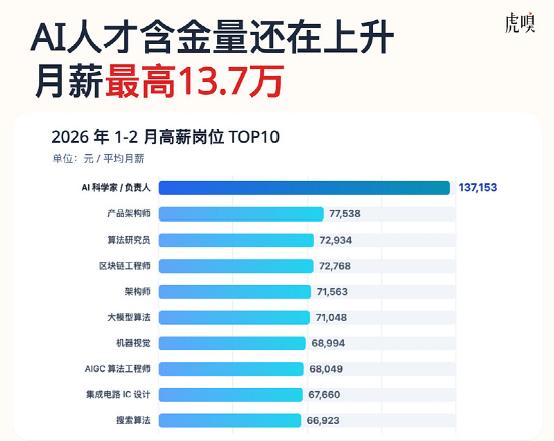
For large companies, an outstanding talent is not a cost but an asset with the highest return rate. This is a strategic investment for the future.
What this reflects is the transformation of the growth path of the entire Internet industry:
In the past, Internet companies competed in terms of scale. Since the marginal cost of delivery in the Internet world is very low, companies could pursue infinite expansion, aiming to recruit more people, develop more products, and reach more users.
However, in the AI era, there is a relatively high cost for serving each DAU. When companies want to expand their business and enter more markets, they strive to make fewer but more capable people do more things.
Under this logic, employees of large companies have very different feelings. Some feel more pressure, while others have broader promotion opportunities. The core is that labor costs have been re - priced in the AI era.