Jensen Huang "Joins" Tsinghua University: Why Does "Old Huang" Join This "Roundtable"?
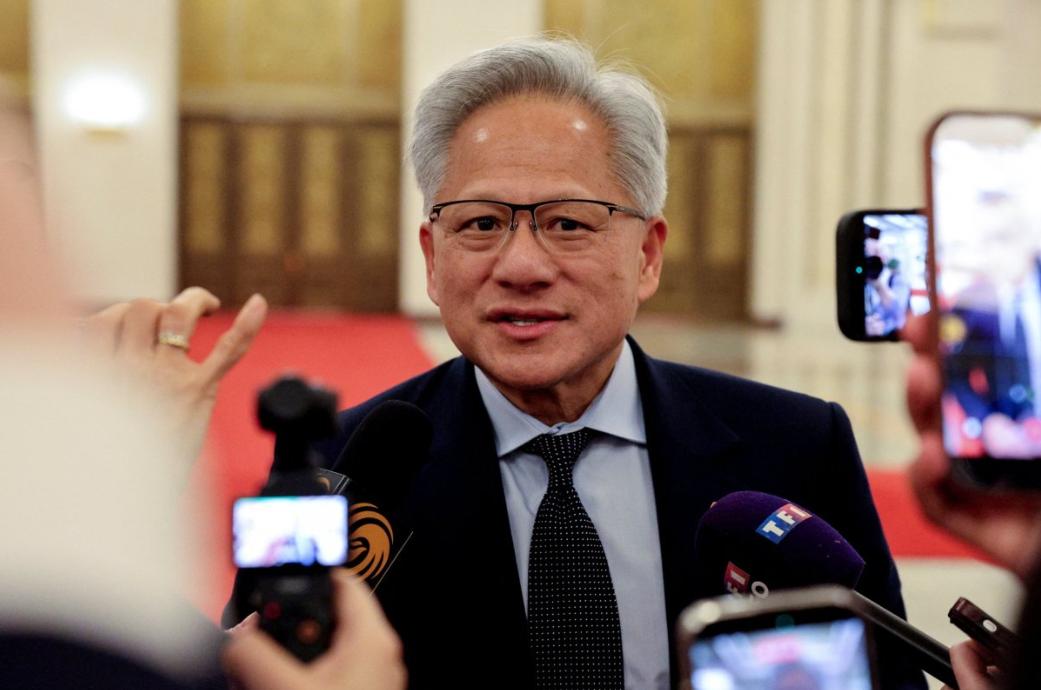
"Is Jensen Huang going to become a professor at Tsinghua University?" A few days ago, a piece of news suddenly hit the trending list, and the comment section instantly turned into a gathering place for jokers. Someone asked, "Is he going to teach how to sell graphics cards at a higher price?" More people were curious: Why is the 'Graphics Card Godfather' who wears a black leather jacket and travels around the world suddenly going to teach at China's top - tier university?
But soon, some people realized something was wrong - there was a bigger mystery behind this news: Why exactly at this time?
You know, in the same week, Jensen Huang personally admitted that NVIDIA has basically ceded the Chinese AI chip market to Huawei. And then he accepted an invitation from Tsinghua University. One step back and one step forward, it doesn't seem like a coincidence.
It all started on May 27. According to reports from multiple media outlets such as the Financial Times, Jensen Huang, the founder and CEO of NVIDIA, has accepted an invitation from the School of Economics and Management at Tsinghua University to join its advisory board. The news comes from insiders and has not been officially announced yet, but it has already caused a stir in the global tech circle.
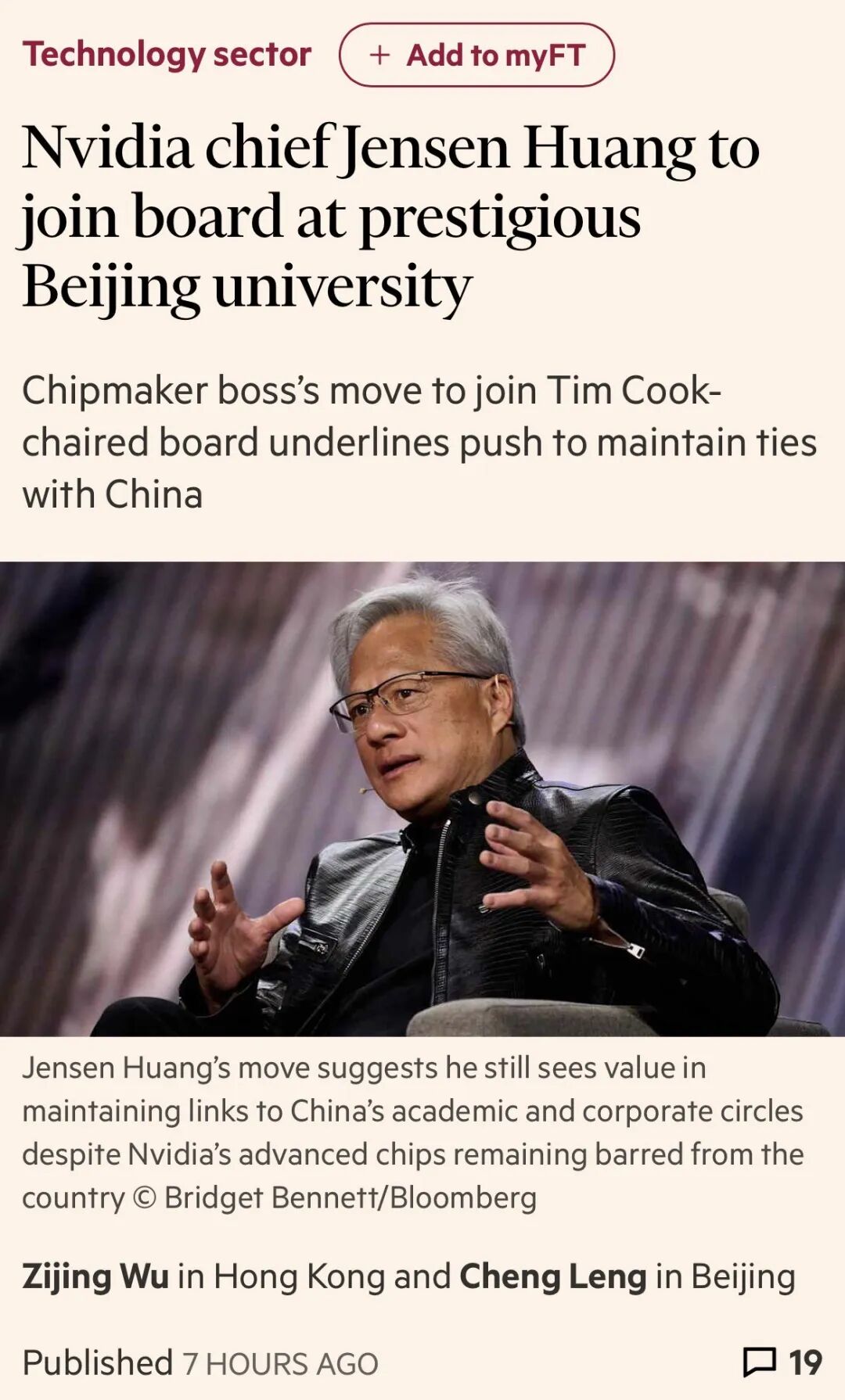
This appointment doesn't appear on the list of Tsinghua's Department of Computer Science or the Institute for Artificial Intelligence and Industrial Internet - although those places seem more suitable for the head of this chip giant. What he finally chose was a seat at the round - table of the School of Economics and Management.
The question is: Why does Jensen Huang, with a net worth of nearly $70 billion and building the world's largest AI empire, appear on the annual meeting list of Tsinghua's School of Economics and Management at this time? What's the magic of that 'round - table'?
01 Tsinghua SEM Advisory Board: The 'Friend Circle' of Global Top - tier CEOs
When it comes to the Tsinghua SEM Advisory Board, in the circle of Chinese business schools, it's the kind of thing that people have only heard of but never seen. This board was established in October 2000. Over the past two decades, the lineup of this board has become incredibly luxurious.
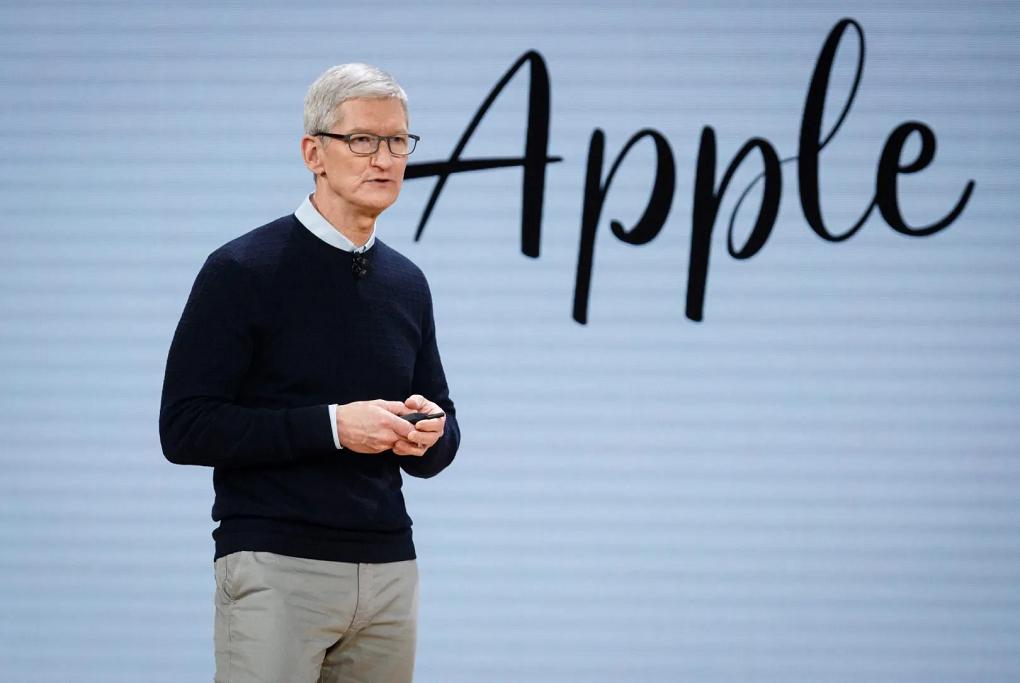
The current chairman is Tim Cook, the CEO of Apple. Just pick a few names from the member list and they'll be enough to shock you: Elon Musk, the CEO of Tesla; Satya Nadella, the CEO of Microsoft; Mark Zuckerberg, the founder of Meta; David Solomon, the CEO of Goldman Sachs; Oliver Zipse, the chairman of BMW... The heads of the world's top five technology companies are almost all here. Robin Li, Jack Ma, and Pony Ma are also on the list.
Moreover, the value of this board is far more than just a 'celebrities' meeting'. In October 2013 and October 2017, overseas members were received by the top decision - makers twice. This means that this board is never just a 'business school consulting institution' - it is the most stable and decent informal communication channel between decision - makers and global business elites.
Sixty - five members from more than 60 global top - tier enterprises hold an annual meeting in Beijing every year. At a gathering of this scale, being able to sit at the table is in itself a status symbol.
What does this round - table mean? For the head of a technology empire with a market value of over $5.5 trillion, he doesn't need Tsinghua to enhance his reputation. What he needs is 'presence'. This round - table gives Jensen Huang a legitimate opportunity - to fly to Beijing every year to communicate with Tsinghua teachers, students, and Chinese entrepreneurs without being repeatedly asked if he's here for technology.
02 From 'Selling Graphics Cards' to 'Making Friends': Jensen Huang's New Strategy in China
Jensen Huang has publicly said many times, "China has a large number of AI talents, which is their precious asset."
So, joining the Tsinghua SEM Advisory Board has become a very clever solution.
Many people think that Jensen Huang joined Tsinghua to teach chip design, but that's a wrong understanding. He finally chose the School of Economics and Management, not the Department of Computer Science. What business school advisors usually talk about is corporate strategy and business management, not specific chip architectures or codes. This identity just provides Jensen Huang with a gentle platform.
On the surface, he takes on a 'teaching position', but in fact, he stays in China in a different way: from'selling products' to'making friends and building an ecosystem'. The forums, classrooms, and alumni networks of the School of Economics and Management are exactly important places to influence business leaders and future decision - makers.
Of course, this round - table also has its limitations. It can provide a communication channel, but it can't replace orders. It's a lubricant, not a cure.
03 The Next Stop of AI Competition: Talent and Ecosystem
The news that Jensen Huang joined the Tsinghua SEM Advisory Board hitting the trending list reflects the core trend: The next main battlefield of AI competition is no longer just single - technology or market, but a comprehensive competition of talent and ecosystem.
If we put this story in a broader context, several key trends are emerging:
First, the changes in the external environment are accelerating the growth of China's domestic AI ecosystem.
Second, countries around the world are seeking self - control of computing power. Although NVIDIA is still the world's largest AI computing power provider, the market pattern is evolving from 'dominated by one' to'multipolar competition'.
Finally, and most importantly, the underlying logic of AI competition is shifting from technology competition to in - depth penetration of talent and ecosystem. Whoever has more talents, a more active developer ecosystem, and can establish institutionalized 'presence' connections at key nodes will take the lead in the next stage.
What Jensen Huang buys with this round - table at Tsinghua is not just 'contact information'.
For the AI ecosystem, this round - table means that between the high walls built by technological competition, the communication channels between business and academia are not completely blocked.
The walls of computing power are getting higher and higher, but the two - way flow of talent has not stopped. Which is the real determining factor for the future of AI? The answer may be simpler than most people think.
This article is from the WeChat official account "First New Voice", author: Jia Yue. Republished by 36Kr with permission.