Is the AI short drama industry facing cut-throat competition? Go overseas to drive 5000% growth.
On the morning of May 27th, Zhangyue Technology's stock hit the daily limit, with Zhongwen Online, Kunlun Wanwei, and Huanrui Century following suit. Behind the collective explosion of short drama concept stocks is an exciting figure - the overseas AI short drama market will see a 6.5 - fold increase this year.
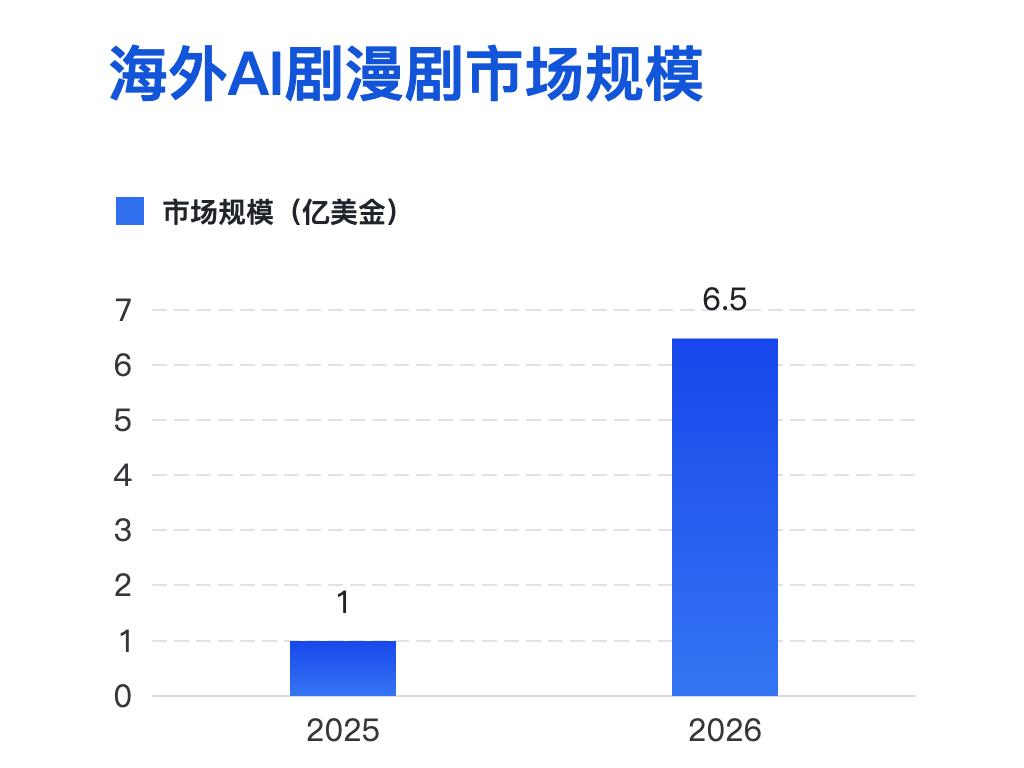
Source: DataEye
However, what's truly shocking is not the figure itself, but the story behind it and the lever that is prying open a multi - billion - dollar market.
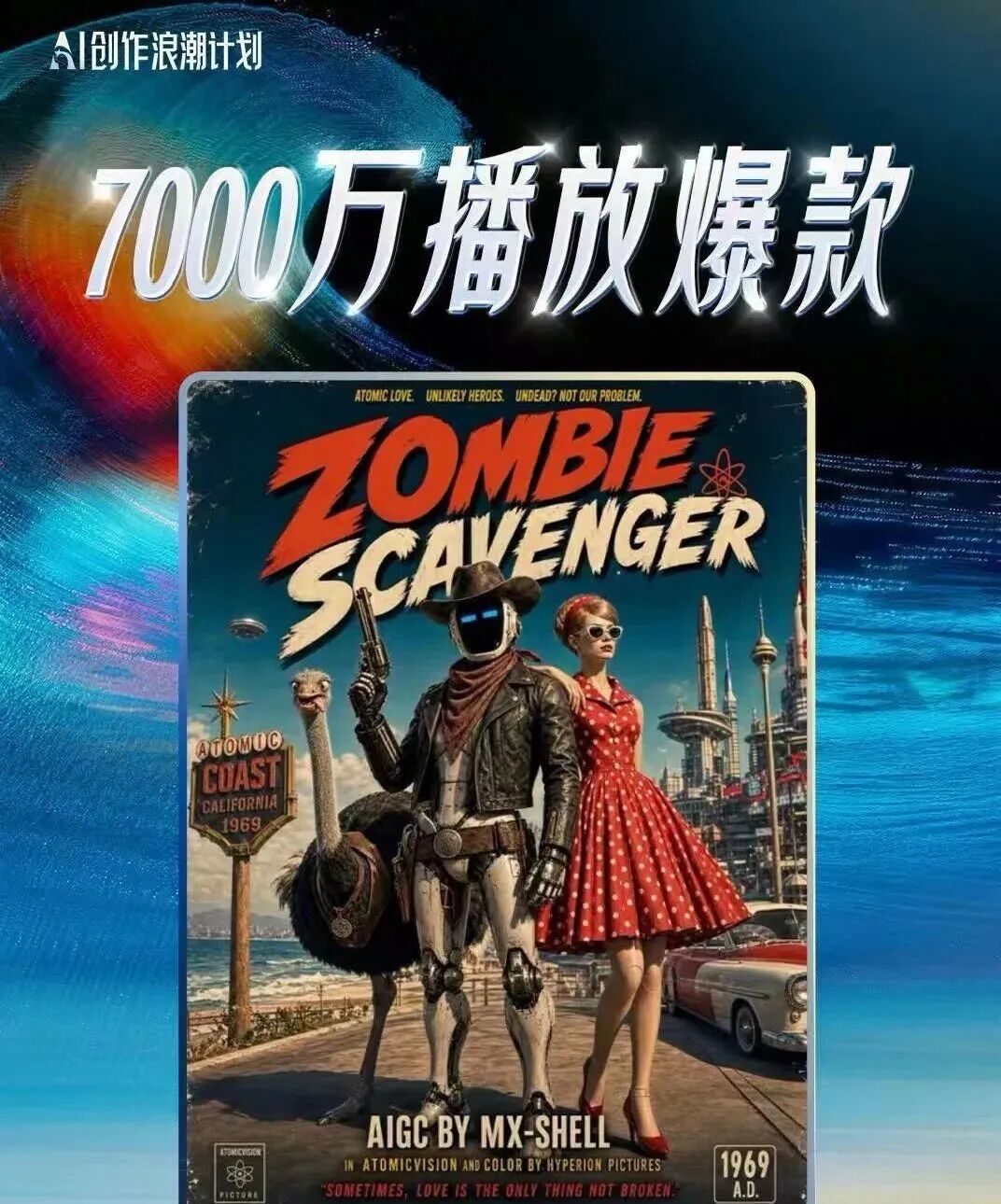
Recently, an AI short film called "Zombie Scavengers" achieved tens of millions of views on overseas platforms. Well - known Hollywood producer PJ Ace publicly searched for the creator online and wanted to offer a job.
When everyone thought it was the work of a top - tier studio, the truth was astonishing - the creator is Liu Ziyu, a 29 - year - old photographer from Yuxi, Yunnan. With a secondary vocational school education and no formal training in film, he works part - time as a wedding videographer during the day. Using an ordinary home computer and a domestic AI tool called "Xiaoyunque", he "manually created" this 3 - minute post - apocalyptic science - fiction short film in just 10 days.
Cost? 3,000 yuan.
This amount isn't even enough for a Hollywood crew's daily boxed lunches. However, its popularity has exceeded that of the hit short drama "The Persian Revenge" that went overseas in April by 2 - 3 times. 72 hours after its release, the total user payment (GMV) of this drama exceeded $500,000.
3,000 yuan vs $500,000, the input - output ratio is over 1,000 times. That is to say, "Zombie Scavengers" may have achieved a return of over 2,000 times. This is an investment performance that even top - tier VCs haven't achieved.
Facing the enthusiastic comments from overseas netizens, the creator Liu Ziyu calmly replied, "I can't understand English." This sentence went viral across the internet because it's so real - the protagonists of AI short dramas going overseas are not the elites of large companies with tens of millions of dollars in funds, but ordinary people who can't even understand English yet can break through cultural barriers with technology.
The fact that ordinary people can create overseas blockbusters indicates that the industry is on the verge of a big change.
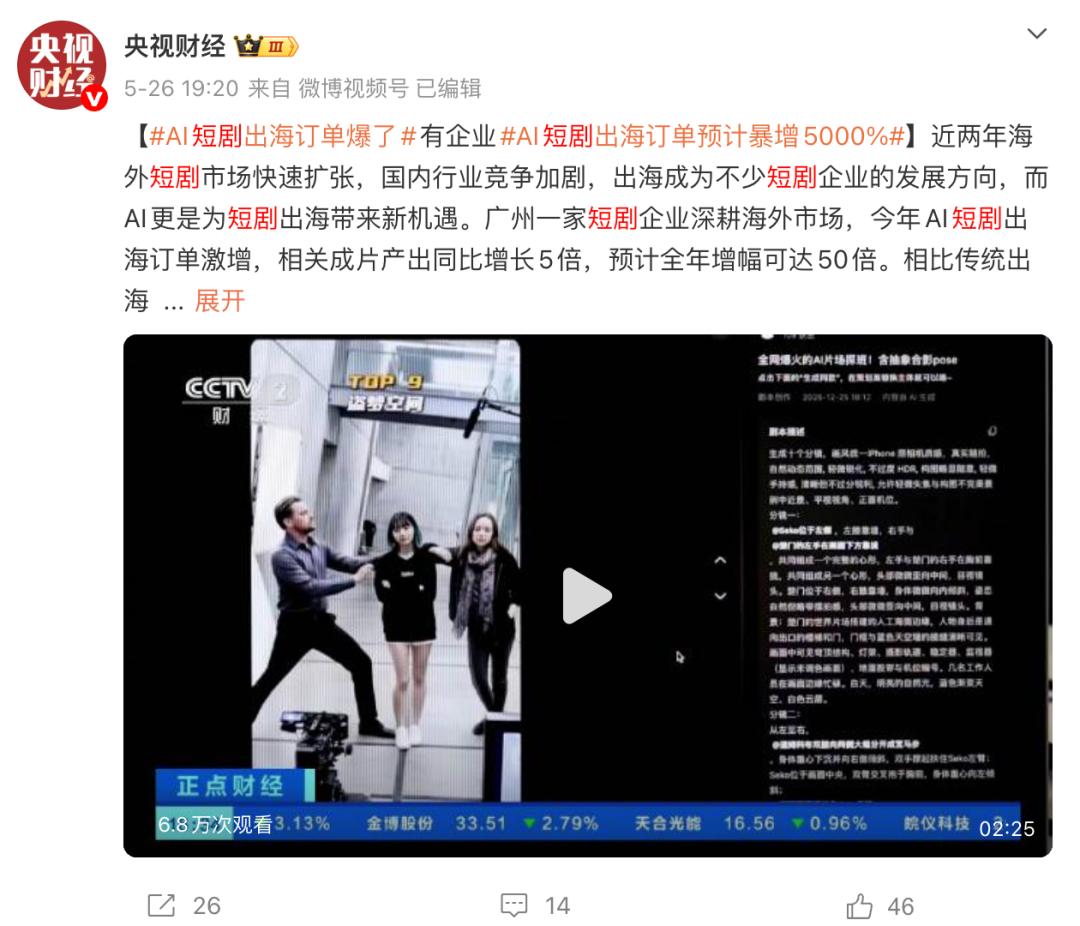
At the beginning of 2026, CCTV Finance reported a figure: The overseas orders for AI short dramas of a short drama enterprise in Guangzhou are expected to skyrocket by 5,000% this year. Not 50%, but 5,000%. The overseas revenue per episode is 40% to 50% higher than that in the domestic market. AI significantly reduces production costs and lowers implementation risks.
The tide is really coming.
Hope in the Intense Competition
In the first half of 2026, the domestic short drama and comic drama market experienced a suffocating level of intense competition.
Data from Tianyancha shows that in the first four months of 2026, over 8,000 new enterprises related to comic dramas were established in China, a year - on - year increase of over 300%. The increase in the number of production enterprises has led to a sharp rise in content output.
Data from DataEye shows that about 20,000 dramas were launched in January, increasing to 34,000 in February, and further reaching 47,000 in March, a month - on - month increase of 38%.
Over - capacity has led to price wars and a halving of revenue shares.
In April 2026, Douyin's Hongguo Short Drama significantly lowered the playback revenue - sharing standard. The revenue per 10,000 effective playbacks dropped from 30 to 100 yuan in previous years to 5 to 10 yuan, a more than 90% decline. What's more fatal is that Hongguo officially cancelled the guaranteed revenue for AI - simulated human scripts in May. All scripts signed after April 27th have been fully converted to a pure revenue - sharing model, with a sharing ratio of only 20%. The revenue - sharing coefficient for simulated human dramas was reduced from 60 to 40, for 3D animated comic dramas from 50 to 40, and for commentary comic dramas from 5 to 1.
What about the mid - tier and lower - tier companies? It's a mess.
In April 2026, a screenshot of a short drama company's work group went viral in the industry. The person - in - charge notified everyone that the revenue from short dramas had plummeted, with only 5 to 10 yuan for 10,000 views. "Such revenue cannot achieve profitability. Stop production and stop recruiting new trainees."
The head of a top - tier comic drama company, Jiangyou, posted on Moments: "Good news: The hit rate is 90%! Bad news: We're losing money."
This is not an isolated case. The revenue of many high - viewership dramas cannot cover the costs. A drama with 25 million views only earns 33,000 yuan, and the overall loss rate in the industry reaches 90%.
The decline in revenue has caused a chain reaction. Over 80% of small and medium - sized teams have suspended updates, leaving a large backlog of content waiting to be broadcast. Mid - tier MCNs have laid off employees and scaled back inefficient projects.
While the domestic market is extremely competitive, the overseas market, after two years of exploration, is starting to show promise.
As early as 2024, when live - action short dramas started to gain popularity overseas, "The Double Life of the Overbearing CEO" on ReelShort made North American housewives pay crazily, and Zhongwen Online's Maple Leaf Interactive became famous overnight. At that time, people thought they had found a goldmine - translate domestic hit short dramas into English, find some foreign models to reshoot them, and then launch them on overseas platforms, and the money would pour in.
However, live - action short dramas have an unavoidable hurdle: cost. The production cost of an 80 - episode short drama starts at least 500,000 yuan. There's no way to save on actors, shooting locations, and post - production. What's even more troublesome is cultural adaptation - the domineering CEO and son - in - law stories, time - travel and palace - intrigue dramas that domestic audiences love don't work well in North America.
The operation director of DramaBox admitted at an industry conference: "We tried direct translation, and the conversion rate was terrible. Later, we specially formed a local screenwriting team, but the cost went up again."
In 2025, the overseas expansion of short dramas entered the 2.0 stage, and buying traffic became the main theme. Three leading platforms, ReelShort, DramaBox, and ShortMax, occupied 80% of the market share. They burned money to acquire users and hoped to recoup the costs through user payments. This strategy worked, but the threshold became higher and higher - without tens of millions of dollars in funds, it was impossible to play.
Just when live - action short dramas were caught in the cycle of "buying traffic - recouping costs - buying more traffic", AI quietly changed the rules of the game.
In the second half of 2025, Kunlun Wanwei's DramaWave platform launched a comic drama module featuring AI - generated dynamic comic short dramas. At first, no one cared, thinking it was just a gimmick - how could an animated drama compare with a live - action one? But a few months later, the data spoke for itself: The monthly active users of DramaWave's AI comic dramas reached tens of millions, and the monthly revenue was in the millions of dollars. The self - produced drama "Seize the Dictionary! I Transferred to the Undead Calamity" became a huge hit overseas. The production cost of a single drama was less than $20,000, but it could generate millions of dollars in revenue.
In short, AI has lowered the threshold for live - action short dramas to go overseas by 80%. The cost of producing content for Chinese and foreign audiences with AI is the same.
At the same time, everyone began to notice that the input - output ratio of AI short dramas and comic dramas going overseas was so attractive that no one could sit still.
The Rush of Chinese Companies
Ma Tao, the general manager of the strategic department of Zhongwen Online, divides the overseas expansion of short dramas into three stages: 1.0 is the model verification stage by ReelShort, 2.0 is the stage of crazy traffic - buying, and 3.0 is the stage of reshuffle with the intervention of AI and the entry of giants. Now, the industry has entered the 3.0 stage.
What are the characteristics of this stage? Two words: Differentiation.
The leading players are increasing their investment. Kunlun Wanwei announced an investment of $500 million in overseas short dramas. By the end of March 2026, it launched three core models, Matrix - Game 3.0 (AI game), SkyReels V4 (AI video), and Mureka V9 (AI music), significantly reducing costs in scriptwriting, storyboarding, image rendering, and dubbing and soundtracking.
As of the end of March 2026, the monthly turnover of Kunlun Wanwei's short drama and AI short drama platforms exceeded $48 million (approximately 326 million yuan), and the ARR (Annual Recurring Revenue) exceeded $570 million (approximately 3.876 billion yuan). The total MAU (Monthly Active Users) ranked first in the overseas short drama market. In April 2026, the monthly turnover of DramaWave under Kunlun Wanwei reached $128 million, officially ranking first among A - share short dramas going overseas and surpassing Zhongwen Online.
Kunlun Wanwei is taking a full - chain approach of content platform + distribution + vertical model, which is equivalent to replicating the entire set of Hongguo + TikTok + Seedance 2.0 overseas.
Maple Leaf Interactive, which expanded overseas earlier, also took intensive actions in 2026, driven by Zhongwen Online's exploration starting from IPs.
On the one hand, ReelShort launched the "Planting the Sun Vertical - Screen Overseas Incentive Program", linked domestic IPs, innovated themes and content overseas, filled the gap in regional content, and simultaneously explored markets in Southeast Asia, Japan, South Korea, the Middle East, and Latin America. On the other hand, it integrated its product matrix of ReelShort (short dramas), Chapters (interactive games), and My Fiction (online novels), promoted the ecological linkage of "short dramas +", and established a special AI comic drama section.
As is well - known, Zhongwen Online's equity in Maple Leaf Interactive has been reduced to 42%. So recently, it has started to support its in - house platform FlareFlow, which became the core engine for revenue growth in the first quarter of 2026, with the company's revenue increasing by 33.12% year - on - year.
Yuewen Group, which has a comprehensive domestic layout, has also recently made a high - profile move to expand overseas.
Relying on the more than 17,000 works translated by AI on its overseas reading platform WebNovel, Yuewen launched the ToonScroll comic drama platform at the end of May, focusing on the dual engines of "high - quality overseas expansion + overseas co - creation" and planning to launch over a thousand comic dramas this year.
As of the end of 2025, WebNovel's revenue increased by 39% year - on - year, contributing more than one - third of the platform's total revenue and providing a powerful IP ammunition depot for short dramas to go overseas.

Seeing that the overseas market has been occupied by some domestic listed companies that got a head start, cash - rich TikTok also fully exerted itself in the overseas short drama market in 2026.
In the first quarter of 2026, the total revenue - sharing of TikTok short dramas exceeded $24 million (approximately 170 million yuan). In April, the monthly revenue - sharing of TikTok short dramas exceeded $15 million, equivalent to over 100 million yuan, accounting for more than 60% of the platform's total revenue - sharing in the first quarter of this year. Among them, the revenue - sharing of AI short dramas exceeded $2 million, a month - on - month increase of over 300%, becoming the fastest - growing segment.
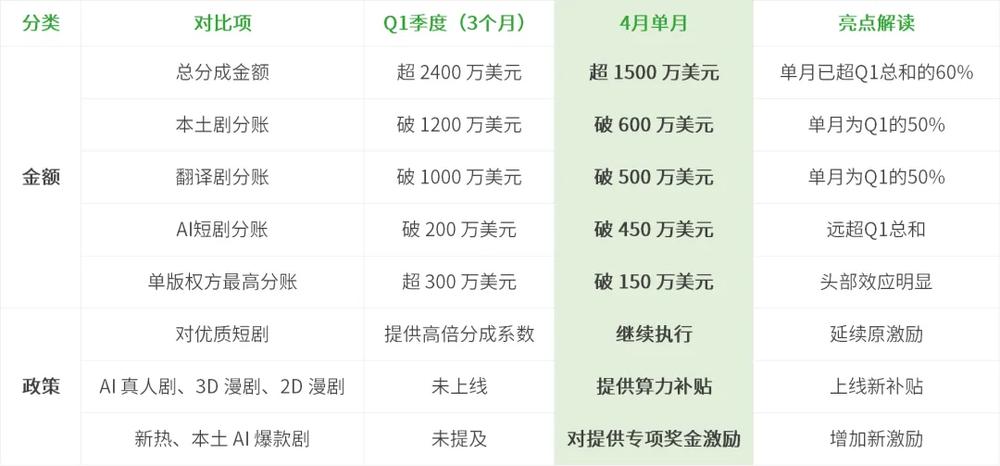
Source: Entertainment New Voice
TikTok upgraded short dramas to a first - level content category on the main site, launched a dedicated "short drama information stream", aggregated over 50,000 dramas, and introduced a traffic incentive policy of up to 20 times.
However, not all players are moving forward at full speed. Although DramaBox under Dianzhong Technology had a turnover of $74 million in April 2026, ranking third among A - share short dramas going overseas, the company stated that the net profit margin of its short drama business was less than 1%, facing the dilemma of "increasing revenue but not increasing profits".
The actions of listed companies have also stimulated some regional companies.
Suzhou's Mouding Cross - border Company launched the ApexTale platform in May 2026, claiming to be able to "generate an 80 - minute short drama in as fast as two days with a single - drama cost as low as 100 yuan". The Lingang New Area announced the launch of a digital culture overseas expansion strategy on April 8th and released a policy service package for digital culture overseas expansion. Yidian Tianxia deepened its cooperation with Google on the overseas expansion of AI comic dramas, reducing the production cost of a single AI comic drama video to the 100 - yuan level.
After the wave of live - streaming e - commerce going overseas, a wave of AI content going overseas is also emerging. Everyone is looking forward to creating blockbusters like "Zombie Scavengers".
The Essence of the Chase
The overseas expansion of AI short dramas in 2026 is at a delicate juncture.
On the one hand, the market scale is expanding rapidly. Chen Ruiqing, the chairman of Dianzhong Technology, estimates that the overseas short drama market scale will reach $6 -