Unitree has not gone public yet, and its biggest competitor has come up with a $1 billion unicorn.
Unitree hasn't gone public yet, but Zhipu Robotics can't wait any longer. Zhipu Robotics, which has completed capital accumulation through Shangwei New Materials, has made another big move.
In the current humanoid robot market, Unitree and Zhipu Robotics are like two giants standing side by side. Both claim that their shipment volume ranks first in the world.
Just at the critical moment when Unitree is about to pass the review, Zhipu Robotics chooses to take the initiative. This time, it is targeting robotic hands.
A few days ago, AGILINK, a company under Zhipu Robotics, completed another round of financing worth hundreds of millions of RMB. After the investment, its valuation exceeded $1 billion, officially entering the unicorn club. This company was established independently by Zhipu Robotics at the beginning of this year by splitting off its dexterous hand team as a whole.
What's even more eye - catching is that it has only been five months since AGILINK became independent, and this is already the fourth round of financing it has received after the spin - off. Four rounds of financing in five months, with capital chasing after it, is extremely rare in the entire robotics industry.
Whether from the perspective of financing speed, valuation growth, or industrial positioning, AGILINK's start can be described as fierce.
And this fierceness is just a microcosm of Zhipu Robotics' continuous progress.
In the past year, Zhipu Robotics crossed the threshold of mass - producing over ten thousand units, with its revenue exceeding 1 billion RMB. From product shipment to capital operation, and then to the spin - off of core components, it has almost caught every window of opportunity since the rise of humanoid robots.
It is precisely because of this momentum that AGILINK, which has only been established for five months, dares to set a bigger goal: to become the number one in the market share of the dexterous hand industry.
However, if Zhipu Robotics wants its "hand" to be the best, it may first have to face an embarrassing reality: the best customers may be the ones least willing to buy its "hand".
The Confidence to Be the Number One in Market Share
AGILINK's claim to be the "number one in market share" is not just wishful thinking. Since its birth, this company has been on a different level from ordinary dexterous hand start - ups.
On January 14th this year, AGILINK was officially established. As a dexterous hand company spun off from Zhipu Robotics, Zhipu Robotics invested 4 million RMB and holds 80% of the shares. The core team is led by Xiong Kun, the person in charge of Zhipu Robotics' dexterous hand project.
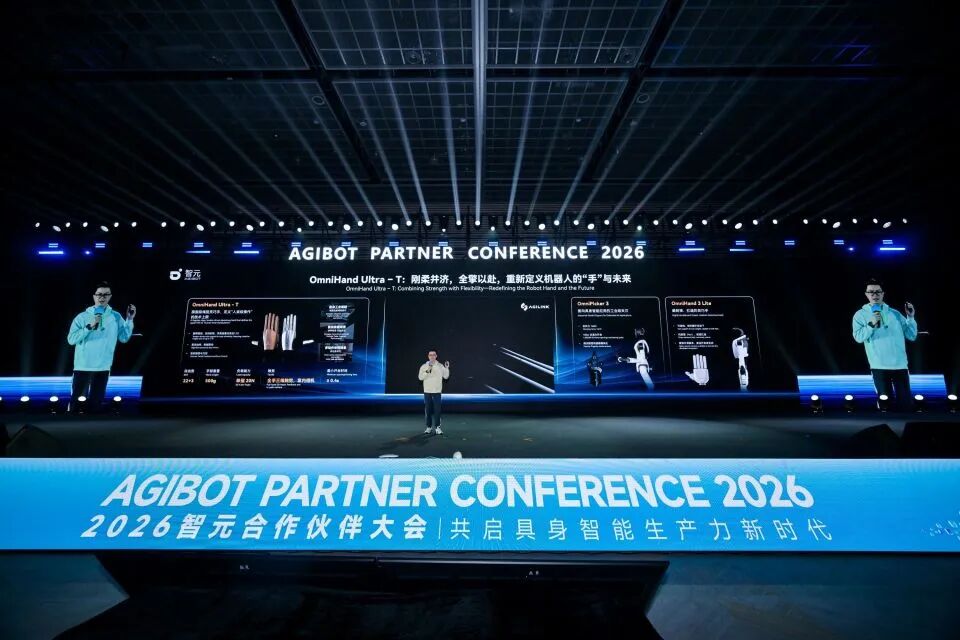
In other words, it is not a new company that starts from scratch to build a team, find a direction, and make prototypes. Instead, it directly inherits the dexterous hand capabilities that Zhipu Robotics has accumulated in the mass production of humanoid robots, which is very important.
For many dexterous hand companies, the real difficulty is not just making a hand. The real challenge for dexterous hands is to integrate them into real robots and complete delivery, operation, and feedback together with the whole machine.
Completing a single grab in the laboratory is completely different from continuous operation in a real - world scenario for several months.
AGILINK's first trump card is Zhipu Robotics itself.
The mass production of over ten thousand units and the revenue of 1 billion RMB mentioned earlier are not only Zhipu Robotics' achievements but also mean that AGILINK was born with real customers for the whole machine, real delivery scenarios, and guidance for mass production.
This means that it doesn't need to first take the prototype to find customers and then wait for the customers' robots to be verified. From its establishment, it can follow Zhipu Robotics' product shipments and enter real - world scenarios to accumulate experience in engineering, supply chain, and product iteration.
This constitutes a hard - to - replicate competitive advantage for AGILINK compared with independent dexterous hand companies.
Another source of AGILINK's confidence lies in its multi - route layout in the technical approach.
Currently, in the dexterous hand industry, the mainstream technical routes are roughly divided into direct - drive and cable - drive. Direct - drive has fast response and precise control, but weight, heat dissipation, and volume can easily become problems. Cable - drive is lighter, more flexible, and closer to the proportion of a human hand, but control, maintenance, and long - term accuracy maintenance are more difficult.
AGILINK has chosen to combine direct - drive and cable - drive and further develop a hybrid drive system: using cable - drive to reduce weight and using direct - drive at key positions to supplement strength and accuracy.
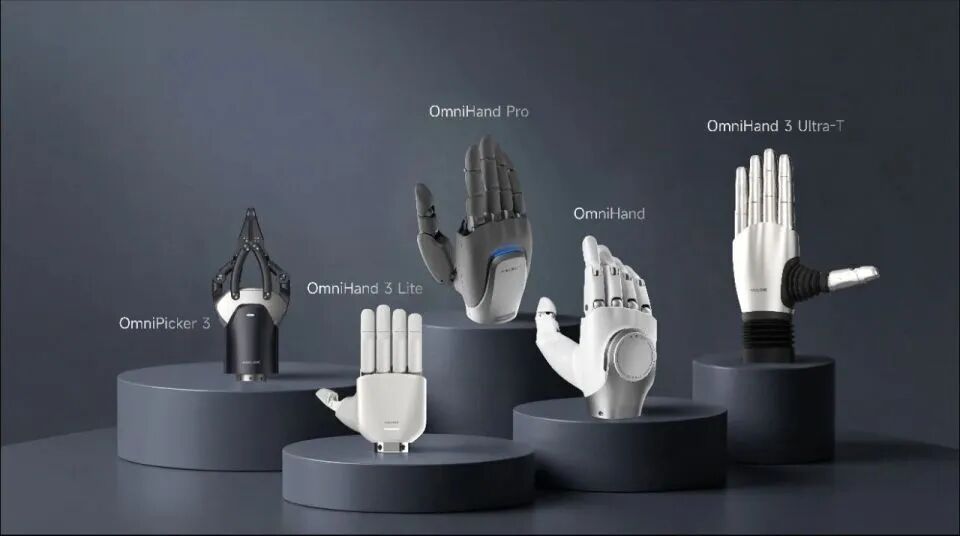
In the latest OmniHand 3 series, the flagship model uses a cable - drive - based solution with local direct - drive enhancement. It achieves 22 + 3 degrees of freedom with a weight of less than 500 grams and is equipped with a tactile array, force - control system, and fingertip vision.
The key of this solution is not just to make the dexterous hand look more like a human hand, but to find a balance among flexibility, strength, perception, cost, and reliability as much as possible.
After all, for robots, it's not difficult to complete a single grab at a press conference. The real challenge is to operate continuously, perform repeated operations, and maintain long - term stability after entering scenarios such as factories, logistics, and scientific research.
Therefore, AGILINK's confidence doesn't come solely from its financing speed, nor just from Zhipu Robotics.
Its real confidence lies in the fact that Zhipu Robotics provides the basic foundation for early mass production, and AGILINK itself has come up with a dexterous hand solution that has been verified in the whole - machine system.
This gives it the qualification to set the grand goal of being the "number one in market share".
However, this doesn't mean that the most valuable customers in the industry will definitely buy its products.
The Stronger the Hand, the Harder to Sell
However, a real problem facing AGILINK is that the more important the dexterous hand is, the more difficult it is to sell to leading customers.
It's not because AGILINK's hand is not strong enough, but because this hand is too crucial.
To evaluate whether a robot can work, we need to see if it can grab, carry, use tools, complete fine assembly, and even repeat the same action thousands of times on the production line without errors.
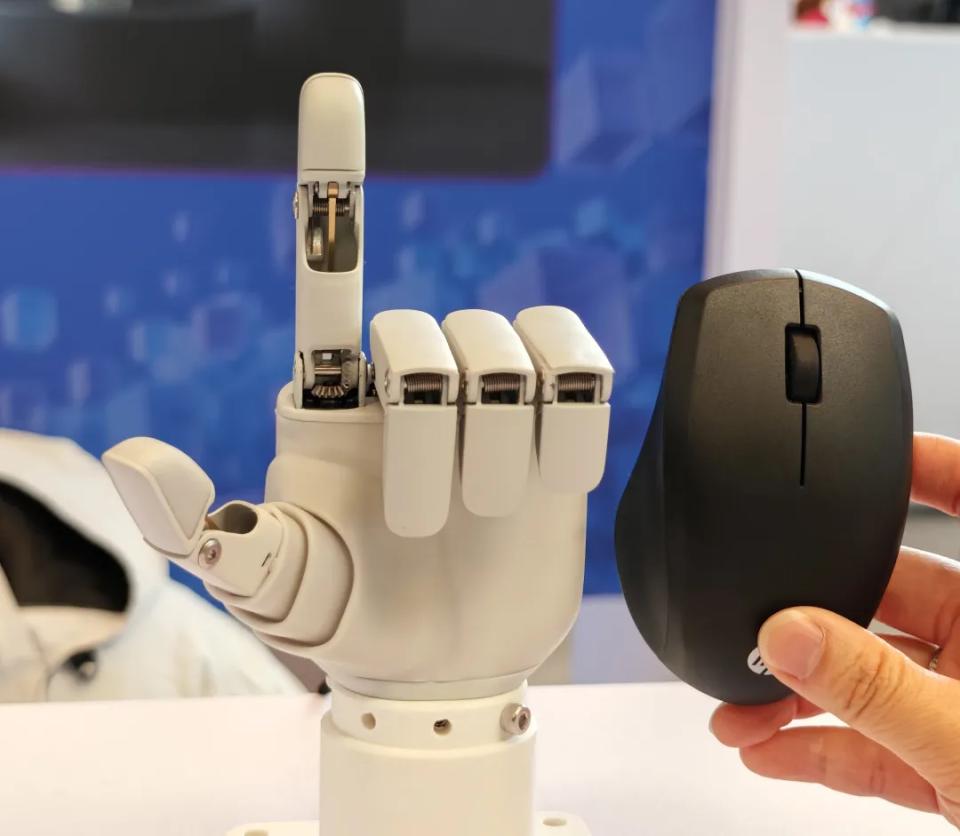
All these capabilities ultimately depend on the dexterous hand.
A good dexterous hand is directly related to the robot's control algorithm, motion planning, force feedback, overall energy consumption, and even the operation data accumulated by the robot in real - world tasks. These are the most core assets of robot companies.
Therefore, the more leading the whole - machine manufacturers are, the more they hope to keep the key capabilities in their own hands. What they need is not just an end - effector that can grab things, but a set of capabilities deeply integrated with their own robot architecture, motion control, operation model, and data system.
Outsourcing the dexterous hand can, of course, lower the R & D threshold and speed up product launch in the short term. But in the long run, it may also mean handing over the most important operation entry to others.
The more leading large companies are, the less likely they are to accept a situation where:
When their robots are working in real - world scenarios, the most critical operation data is accumulated by others through the external dexterous hand system.
To put it bluntly, leading manufacturers are unlikely to let AGILINK collect data for them and ultimately do all the work for others.
That's why, in the field of humanoid robots, most capable whole - machine manufacturers are developing their own dexterous hands. Players like Unitree, Ubtech, and Leju have all been deploying their own dexterous hand solutions.
This also puts AGILINK in an embarrassing situation.
To become the number one in the industry in terms of market share, it must enter the robot systems of more external customers. However, the leading customers, who are the most valuable, have the greatest shipment potential, and can contribute the most real - world data, are often the least willing to buy its hands.
Perhaps AGILINK will shift its target more towards mid - tier robot manufacturers, scientific research institutions, and industrial customers.
These customers may not have the ability to develop dexterous hands from scratch and are more in need of a mature, deliverable, and maintainable external solution. Purchasing AGILINK's dexterous hands can save R & D time and speed up the introduction of robots into specific scenarios.
However, the problem is that these customers may not be able to support AGILINK's vision of being the "number one in market share".
On the one hand, the shipment scale of mid - tier manufacturers is limited, making it difficult to provide a large enough market share. On the other hand, their application scenarios may be more vertical, and they may not need a dexterous hand with high degrees of freedom, high perception ability, and high price and engineering complexity.
In other words, the customers who can really afford, use, and maximize AGILINK's value may prefer to develop their own hands, while the customers who are more willing to outsource may not need such a powerful hand.
Transforming from a Supplier to a General - Purpose Platform
For AGILINK, the real challenge to becoming the number one in the dexterous hand industry is not to prove that Zhipu Robotics needs it, but to prove that it can find enough customers outside of Zhipu Robotics who are willing to use its products in the long term.
The good news is that the entire dexterous hand market is growing rapidly.
GGII predicts that by 2030, the sales volume of robotic dexterous hands in China will exceed 340,000 units, with a compound annual growth rate of nearly 90% from 2024 to 2030. QYResearch predicts that the global multi - fingered dexterous hand market will exceed $5 billion in 2030.
This means that it is very likely that the dexterous hand market will form an independent market before the large - scale mass production of humanoid robots.
However, a large market doesn't mean that AGILINK can definitely benefit from it.
It is facing a market with highly segmented demands: leading whole - machine manufacturers tend to develop their own products, mid - tier manufacturers care more about cost and delivery, and scientific research institutions and industrial customers value adaptability, stability, and maintenance more.
This also means that for AGILINK to become the number one, it can't rely solely on having the "strongest hand".
First of all, it needs to prove whether this hand can break away from the Zhipu Robotics system. As the core supplier of Zhipu Robotics' dexterous hands, AGILINK has actually obtained a considerable market share in advance through the Zhipu Robotics system.
However, if AGILINK can only follow Zhipu Robotics' product shipments, its ceiling will be limited by Zhipu Robotics' own scale.
A real industry leader can't be supported by just one big customer.
AGILINK needs to prove that this dexterous hand can not only be adapted to Zhipu Robotics' internal solutions but also has the general - purpose capabilities to be integrated by more robot manufacturers, scientific research institutions, and industrial customers.
It should be able to adapt to different robot bodies, different control systems, and different task scenarios, and also enable customers not to invest too much in secondary development and maintenance costs.
However, it's not easy to achieve this.
Among professional dexterous hand companies, Lingxin Qiaoshou has become an unavoidable competitor for AGILINK.
In the past year, Lingxin Qiaoshou has become one of the companies with the fastest financing and mass - production speed in the dexterous hand market. It not only achieved the mass production of high - degree - of - freedom dexterous hands at the thousand - unit level first but also quickly opened up the market with its lightweight and low - cost products. It is reported that its global market share has exceeded 80%.
This shows that the competition in the dexterous hand market has shifted from simply "who has stronger technology" to a multi - dimensional competition that considers price, delivery cycle, stability, maintenance cost, and the ability to be quickly integrated into one's own robot system.
For AGILINK, the mass - production experience and technical accumulation brought by Zhipu Robotics are its advantages. However, in the external market, it has to compete with competitors that are cheaper, lighter, and have a wider market presence for customers.
More importantly, AGILINK needs to provide external customers with a clear data boundary.
As mentioned earlier, data is the most sensitive asset for whole - machine manufacturers. Therefore, AGILINK can't just position itself as a data entry point.
It must make customers believe that by purchasing AGILINK's dexterous hands, they don't have to worry about handing over their core operation data to others and can obtain a reliable product that can be continuously upgraded, adapted, and stably delivered.
In other words, what AGILINK really needs to achieve is the transformation from a "supplier to Zhipu Robotics" to an "industry - wide general - purpose platform".
Therefore, the real suspense in AGILINK's story of striving for the number one market share lies in whether customers outside of Zhipu Robotics are willing to equip their robots with this "Zhipu - developed hand".
This article is from the WeChat official account "Blue Letter Plan", author: Chester. Republished by 36Kr with permission.