There is a dazzling array of AI earphones. Why do tech giants all want to capture your ears?
Since the beginning of this year, the AI race has entered the deep - water zone. On the one hand, companies such as Alibaba, Zhipu, DeepSeek, Tencent, ByteDance, Darkside of the Moon, and Xiaomi have taken turns to make moves. New models are updated on a weekly basis, and performance indicators are constantly being refreshed. On the other hand, the tech giants are also accelerating their layout of AI hardware. AI glasses, AI phones, AI PCs, and robots have become the key directions, with efforts being made in both software and hardware.
Compared with these key sectors, an unassuming AI hardware product is quietly in a cut - throat competition. Three days ago, the first PK live - broadcast of JD's "Aidol Creation Camp" came to an end. More than 50 brands and startup teams brought various cutting - edge AI hardware products to compete on the same stage. Finally, the Guangfan AI earphone stood out with its active AI and independent networking capabilities and received a full house of approval.
Last Wednesday, the AI hardware company "Future Intelligence" officially launched the viaim iFlytek Intelligent Agent Earphone, which for the first time introduced the "project" function, elevating the positioning of the earphone from a single - use audio tool to an "office AI Agent" with long - term memory. At the end of last month, at the 34th Shenzhen Gifts Fair, the Apex AI Intelligent Computing Earphone exhibited by sanag integrated seven core models in the ear part.
Considering the earlier R & D progress of Dangbei Air1, ByteDance's Ola Friend, and Apple's first AI hardware "visual earphone", it seems that overnight, AI earphones have suddenly become a key sector for various companies, leaving people overwhelmed.
Whether it's startups or tech giants, they all seem to be telling us that earphones will be your next "wearable computer". So, in the era of all - around AI with endless new concepts and technologies, are the AI earphones flooding the market real productivity tools or just a gimmick?
The "Apple Moment" Hasn't Arrived Yet, but the Sector Is Already Boiling
Amid the excitement of AI earphones, the industry doesn't have only one way forward. Based on their different technological accumulations, ecological directions, and different focuses on the perception and execution links, the new products released intensively recently have formed three technological routes.
The visual perception AI earphone exhibited by Guangfan at JD's "Aidol Creation Camp" follows the multi - modal perception route. In the first PK live - broadcast, the most eye - catching feature of this earphone is the binocular visual perception module mounted on the ear hook. Mounting a camera on the earphone is like adding a pair of eyes, which can identify the surrounding environment, objects, and scenes in real - time, and conduct voice interaction and information prompts.
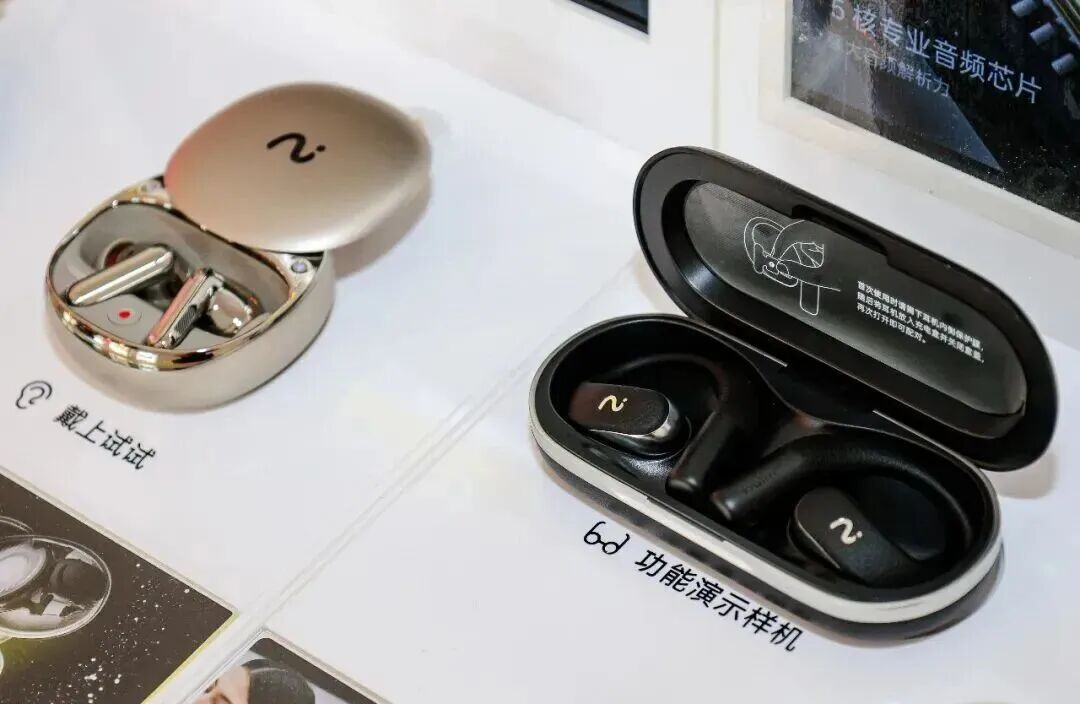
Imagine that when you enter a restaurant, it will automatically recommend dishes. When you are wandering around a mall or a hospital looking for a parking space, it will actively recommend nearby available parking spaces. This multi - modal attempt aims to make the earphone independent of the mobile phone and connect to the network, becoming a next - generation AI wearable terminal with environmental perception ability and complete independence.
The viaim iFlytek Intelligent Agent Earphone launched by "Future Intelligence" focuses on integrating AI productivity into the office scenario. In the past, most of what AI conference earphones could do was recording, transcription, summarization, and extraction of to - do items. Once a meeting ended, the task of AI was over. However, in reality, many people's office scenarios are fragmented and continuous. A project often involves multiple meetings, rounds of communication, and multiple documents.
The project function and long - term memory system first introduced by viaim support putting the earphone recordings, external audio uploaded from the mobile phone, and background documents such as Word and PDF into a specific project space. In this way, AI can understand not just an isolated recording but the complete context of a project across time and carriers, and produce closed - loop work results. Upgrading from processing single - piece content to promoting a task is a typical Agent - oriented path.
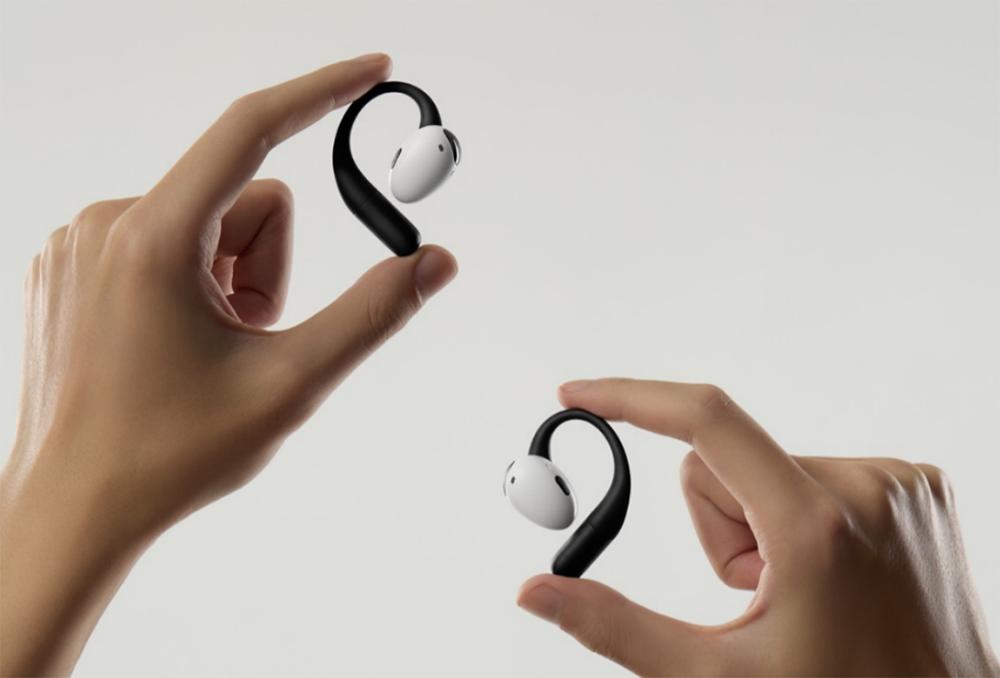
Different from the previous two, the Apex AI Intelligent Computing Earphone of sanag follows the consumer - wearable route that most companies are optimistic about. On the premise of ensuring the healthy and comfortable experience of the clip - on earphone, it piles up AI large models crazily to have as many functions as possible.
According to the information provided by the official, Apex has seven core AI models built - in, including practical tools such as simultaneous interpretation and meeting recording, as well as entertainment functions such as AIGC painting and music generation. In addition, using the in - ear integrated deep PPG sensor and combined with AI algorithms, Apex can analyze the user's fatigue, heart rate, and blood oxygen in real - time and remind the user of their sitting posture. With this all - day comprehensive assistant, Apex tries to turn the earphone into an "all - day AI entrance".

However, these products are just appetizers, and the real heavy - weight players haven't officially entered the arena yet. Since the year before last, Apple has been exploring the feasibility of embedding a camera sensor into AirPods. According to the latest report from a Bloomberg reporter, the first AI earphone has entered the Design Verification Test (DVT) stage and will be released as early as September this year along with iOS27 and the new Siri 2.0.
Judging from the currently leaked information, once Apple implements the three - in - one multi - modal solution of "vision + hearing + lip - reading micro - movement", the existing AI earphones will face a huge generational gap in experience and will be difficult to catch up.
After Apple enters the market, the definition of AI earphones may change from helping you process sound to helping AI understand the real world you are in, which will force the industry to upgrade from voice AI to visual - language - audio multi - modal AI. At the same time, the camera is likely to become a new dividing line for high - end AI earphones. In the past, high - end earphones were distinguished by active noise cancellation, lossless audio, spatial audio, wearing comfort, and brand premium. In the future, the real competition among high - end AI earphones may be in camera modules, sensor fusion, edge - side AI computing power, low - power visual processing, privacy protection, and AI scenario capabilities.
In addition, seamless cross - device collaboration is also the core advantage of the Apple ecosystem. For ordinary AI earphone manufacturers, it's not difficult to access a large model and do translation and transcription. The difficult part is to embed AI capabilities into the system - level experience. The industry predicts that as giants like Apple enter the market, the ecological shortcomings will knock many small and medium - sized manufacturers out of the game.
Why Are the Giants Betting on AI Earphones All at Once?
After the explosion of generative AI, lightweight wearable devices combined with AI have become one of the most interesting product directions for many technology companies. But why are audio manufacturers focusing on acoustics, software companies focusing on AI, and Internet giants all eager to focus on this small earphone device this year?
The reason is actually very simple. For small and medium - sized manufacturers, the old sectors are already over - competitive, and the earphone industry urgently needs a new story. While tech or large - model giants like Apple and ByteDance need to compete for the "first entrance" of human - machine interaction through AI earphones.
In the past few years, wireless earphones have completed several rounds of upgrades with active noise cancellation, spatial audio, call noise cancellation, and battery life. Many functions have now become standard for earphones priced at a hundred yuan, and the market has long been in a cut - throat price war. Hardware manufacturers urgently need a new story to increase product premium and stimulate the demand for replacement. AI is undoubtedly the most suitable hot topic at present.
This year, the iteration of the supply chain and large models has just reached the point where it can support the needs of hardware manufacturers. After the bottlenecks of chip cost and power consumption are broken, voice recognition, speaker separation, and key information extraction, which could only be run in the cloud in the past, can now be directly completed on earphones with milliwatt - level power consumption. Only then have AI earphones truly moved from the PPT stage to mass production.
The core of the entry of giants such as iFlytek and ByteDance into the AI earphone sector is to compete for the core entrance of the next - generation human - machine interaction, an input method that is closer to human intentions than keyboards, voices, and touchscreens. No matter how powerful the large model is, it needs a "body". Otherwise, the technology can only stay in the App and cannot be truly integrated into the user's daily life.
Currently, the mobile phone is of course the most important entrance, but the problem is that it needs to be taken out. Whether it's waking up the voice assistant or opening an App, there is a certain cost to reach. And earphones are naturally suitable for the human body, worn for a long time, and have a pure voice - interaction scenario. They may be the closest to zero - disturbance AI interaction among all consumer electronics categories at present.
Apple's layout needs to be analyzed separately. Currently, the development of the low - cost Vision Pro has stopped, Siri has been criticized for being unable to answer basic questions for ten years, and the progress of Apple Intelligence is nearly a year behind schedule. In the new wave of AI, Apple's AI software and hardware are actually lagging behind Silicon Valley giants and many Chinese companies, and there is no hope of catching up in the short term.

Facing this reality, Apple has chosen to avoid direct competition and instead seek breakthroughs through hardware sales and service ecosystems. The advantage of AirPods becomes apparent here. It is currently the hardware with the highest penetration rate and the most mature user acceptance among Apple's products except the iPhone. Transplanting AI visual perception ability directly onto an entrance that has been verified by the market has a much lower trial - and - error cost than starting from scratch to make glasses or pendants.
If Apple's AI earphone is truly launched on the market, it may change the current pattern of the wearable AI market. Smart glasses are no longer the only answer for a portable visual Agent, and earphones are also an important entrance. This also conforms to Apple's consistent thinking: it may not be the first to invent hardware, but it is good at turning complex technologies into experiences that users can understand, developers can call, and the ecosystem can undertake.
Is It Real Productivity or a Marketing Gimmick?
Currently, in most daily scenarios, AI earphones are still more of a marketing gimmick than practical. Although the functions advertised by the official are more and more dazzling, they are not enough to truly change users' work and life.
From a positive perspective, AI earphones have proven their value in multiple fields such as office work, translation, and health.
Traditional meeting records require people to listen and take notes at the same time, which is easy to miss important information, and the subsequent voice - sorting work is boring and inefficient. AI earphones can do simultaneous interpretation, automatic recording, transcription, extract key points, and even generate to - do lists. For office workers who often attend meetings, it can significantly improve work efficiency.
viaim goes a step further, focusing on "office meetings" to maximize the functional value of the AI assistant. Through the "project" function, users can place multiple recordings, external audio, and document materials under the same project, customer, course, or research topic in the same space. In this way, the information scattered in different times and carriers can be connected.
In addition, health monitoring is also a key direction for AI earphones in the future. Whether it's early physical examinations, later smart watches, or various health Apps, in essence, they all require users to actively participate. The advantage of AI earphones is that they are more comfortable to wear, which can make health monitoring more unnoticeable and has a natural advantage in the "AI health +" field.
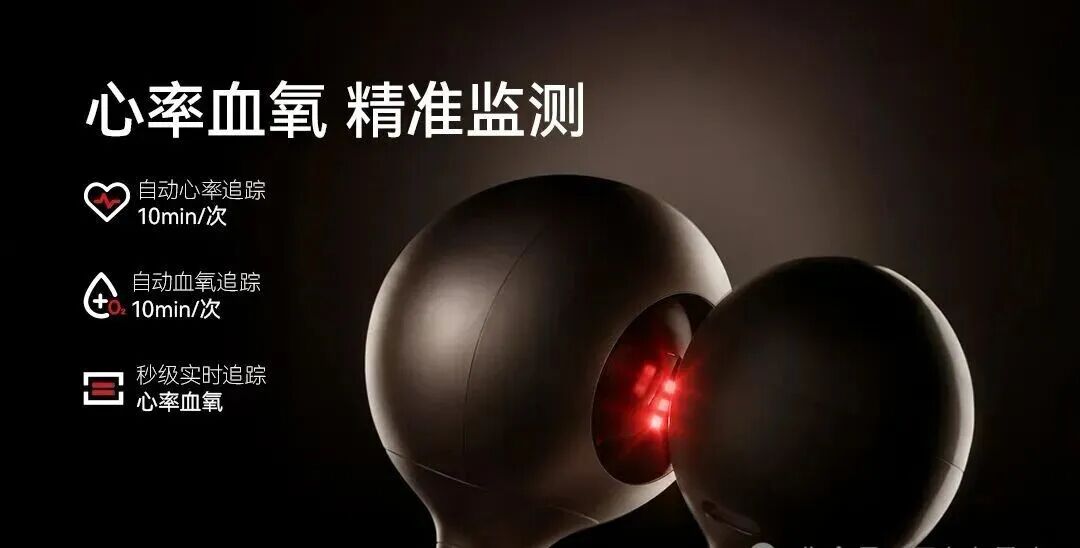
However, apart from the difference in wearing experience, AI earphones currently don't have a significant advantage over smart watches and smart bracelets in terms of functionality. They also perform basic functions such as real - time monitoring of heart rate, blood oxygen, and sitting posture, and reminding users to pay attention to their health. The real competitiveness of AI earphones lies in what watches can't do, and with a better experience, such as in - ear heart rate, hearing health, sound environment, and voice interaction.
Besides, you have to admit that many functions of current AI earphones are more of a gimmick and have serious homogeneity. For example, the AIGC painting and music generation functions, although they sound cool, are difficult to operate and display finely on such a small screen of the earphone. Most users will just give them a try when they first buy the earphone.
Currently, almost all AI earphones are mainly promoting functions such as meeting records, simultaneous interpretation, and voice assistants, lacking real differentiated innovation. Many manufacturers just add a large - model interface to traditional earphones and dare to call them AI earphones. Users need to describe a painting by voice into the air and then take out their mobile phones to view the picture in the App. This kind of design just for the sake of AI is a complete waste.
In the long run, the real opportunity for AI earphones is to evolve from an accessory of the mobile phone to an independent personal intelligent terminal that can be worn comfortably for a long time, more conveniently and freely helping users track their daily activities and assist in their daily work. If a large cost is spent but only a small problem is solved, and it's just a gimmick, it is doomed not to go far.
This article is from the WeChat official account "AI Value Officer", author: Ai Jie. It is published by 36Kr with authorization.