The baking industry is cooling down, but these 10 trends are quietly making money.
In 2026, the baking industry was shockingly cold.
The flow of people was sparse, and capital was cautious. The queuing miracles and franchise scams of previous years had become old news.
The entire industry was chewing on the same word: "cut - throat competition".
But competition itself has never been the problem; competing in the wrong direction is.
In the past three years, the baking industry mainly made money from emotional value. Exaggerated shapes, exotic colors, and cultural labels could attract a wave of attention on social media. However, after consumers' health awareness was upgraded, the after - effects of this approach emerged. Industrial small cakes made with high - sugar, high - fat, and low - quality flavorings were being abandoned.
The baking industry will not decline. Instead, it is undergoing a cruel supply - side elimination competition. Changes such as raw material reconstruction, product form iteration, and sensory upgrade are happening simultaneously.
Based on first - hand research and supply - chain tracking, Lijin has sorted out 10 important trends in the future of the baking industry. Seizing these opportunities may lead to the creation of the next billion - level hit product.
Trend 1: The integration of medicine and food turns from a concept into real efficacy
In the past, the combination of Chinese and Western elements in baking was just for show. Mousse shaped like a lion dance and bread with Chinese - style labels. This kind of fake Chinese - style trend that only focused on visual symbols no longer has room for premium pricing.
In 2026, the ones that can achieve large - scale success are those that transform the integration of medicine and food from a conceptual addition into real efficacy delivery.
The wolfberry Swiss roll is not just about adding a few wolfberries to the cream for decoration. Instead, freeze - drying technology is used to turn wolfberries into ultra - fine powder and press it into the cake base, and then low - sugar wolfberry jam is combined with buttercream. The same logic applies to donkey - hide gelatin and black sesame toast, and tuckahoe eight - treasure cake bagels.
Use Western high - frequency product categories as carriers and incorporate the real efficacy of Chinese herbs.
The consumer psychology it targets is simple: stay up late at night and eat the most nourishing rolls. The selling point is no longer Chinese style, but real effectiveness.
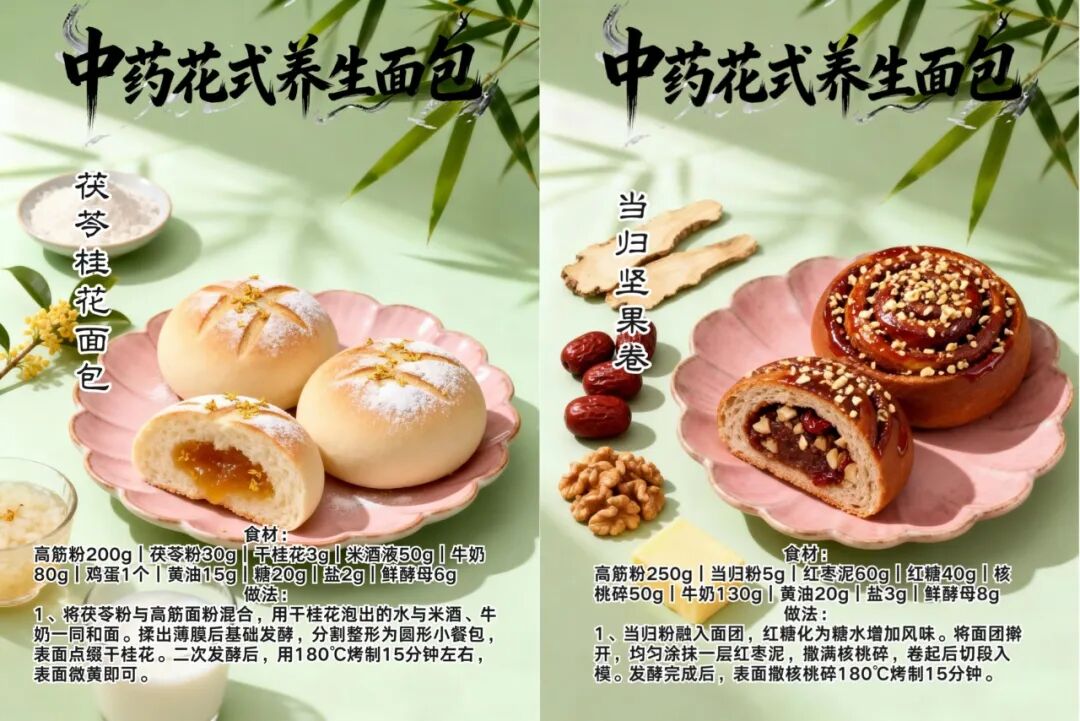
Baked products integrating medicine and food. Source: Internet
Trend 2: Regional ingredients and local flavors are on the rise
Vanilla, chocolate, and strawberry, the three kings in the baking industry, have long bored consumers in every city.
Yunnan black truffles, Chaoshan salted licorice olives, Sichuan green peppercorns, and Jiangsu and Zhejiang preserved mustard greens are making their way into European bread and Chinese pastries.
The local flavors of saltiness, sourness, and spiciness combined with Western dough create a strong sense of contrast and high memorability. In essence, it uses China's vast regional food culture to compete with standardized Western recipes.
The sales of Sam's Club's black truffle baking products have stabilized at the tens of millions level, and several regional hit products have emerged. The model is replicable.
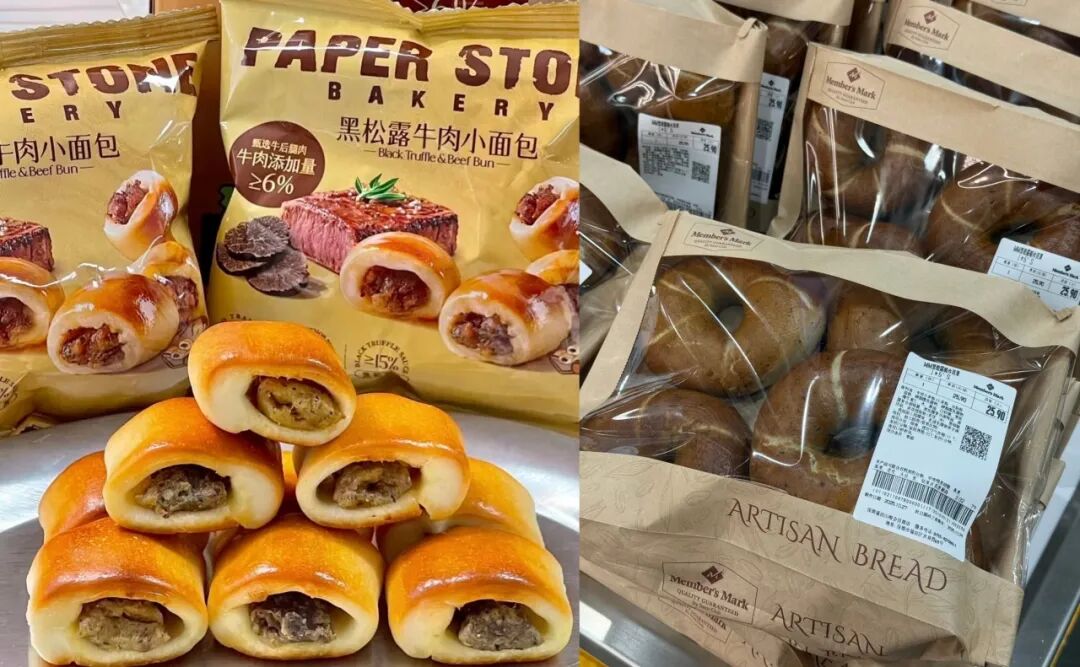
Some black truffle products from Sam's Club. Source: Internet
Trend 3: Composite texture and bite - feeling become the new battleground
After visual aesthetic fatigue, the main battlefield of cut - throat competition has shifted to the taste experience.
The popularity of mochi brioche is not accidental. The brioche provides the softness of rich butter, the mochi provides the chewy and stretchy texture, and the filling has a bursting and flowing center.
With one bite, four textures - crispness, stickiness, chewiness, and smoothness - appear simultaneously. This complex combination of ingredients is not only delicious but also a technical barrier.
Composite textures have extremely high requirements for dough temperature, proofing time, and filling moisture control. Factory assembly lines cannot achieve perfect standardization, making it the most practical barrier for independent brands against large manufacturers.
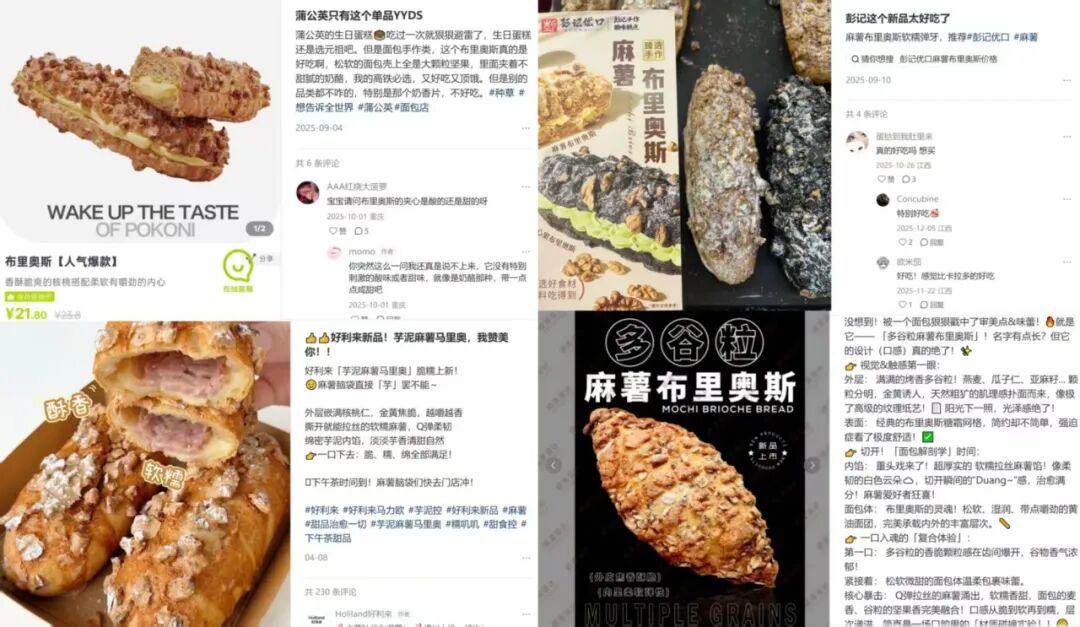
Discussions about mochi brioche on social media. Source: Internet
Trend 4: Low - GI products are prevalent, and health - orientation enters a deeper stage
The labels of "sugar - free" or "sugar - substitute" have become ubiquitous. Consumers are now focusing on the GI value, not whether there is sucrose in the ingredient list.
True sugar control is not just replacing white sugar with erythritol, but changing the flour base. The introduction of a large amount of slowly digestible starch and the long - time fermentation process of old dough can slow down the hydrolysis of carbohydrates.
Bread with low - GI certification from authoritative institutions is changing from an optional consumption item to a necessity for diabetics, pregnant women, and people on a diet. Moreover, the low - GI certification also enhances the product's value.
The barriers here are raw material selection and certification endorsement, not marketing and packaging. There are few people who can do it, and even fewer brands are willing to do it.
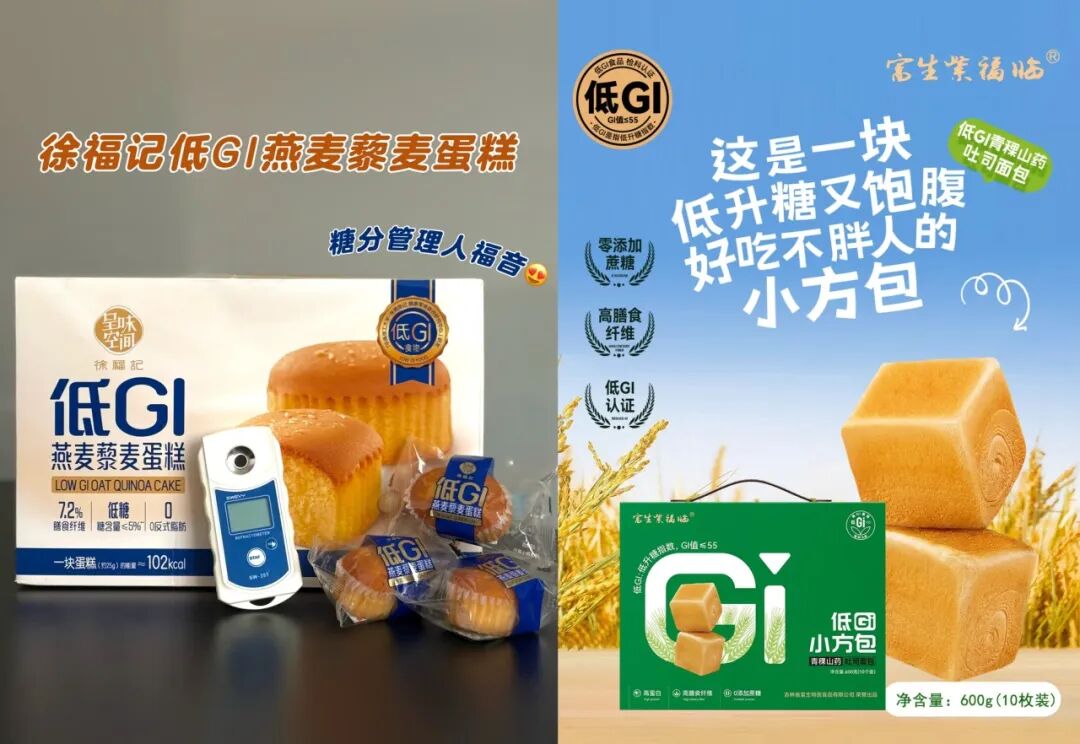
Promotion of low - GI products on the market. Source: Internet
Trend 5: Plant - based products move from an environmental concept to sensory delivery
Plant - based baking is no longer just a self - indulgence of a niche environmental - protection group. It is becoming the first choice for high - net - worth individuals in first - tier cities for health improvement.
For people with lactose intolerance, gluten allergy, or those who pursue a light diet, pure - vegan recipes without animal milk and eggs have a stronger ability to command a higher unit price. Pioneer brands have successfully recreated the smooth texture of Basque cheesecake and mousse using cold - pressed coconut oil, oat milk, and pistachio milk.
Plant - based products not only offer higher perceived value but also have high user stickiness. Once the market is opened, the repurchase rate is relatively stable.
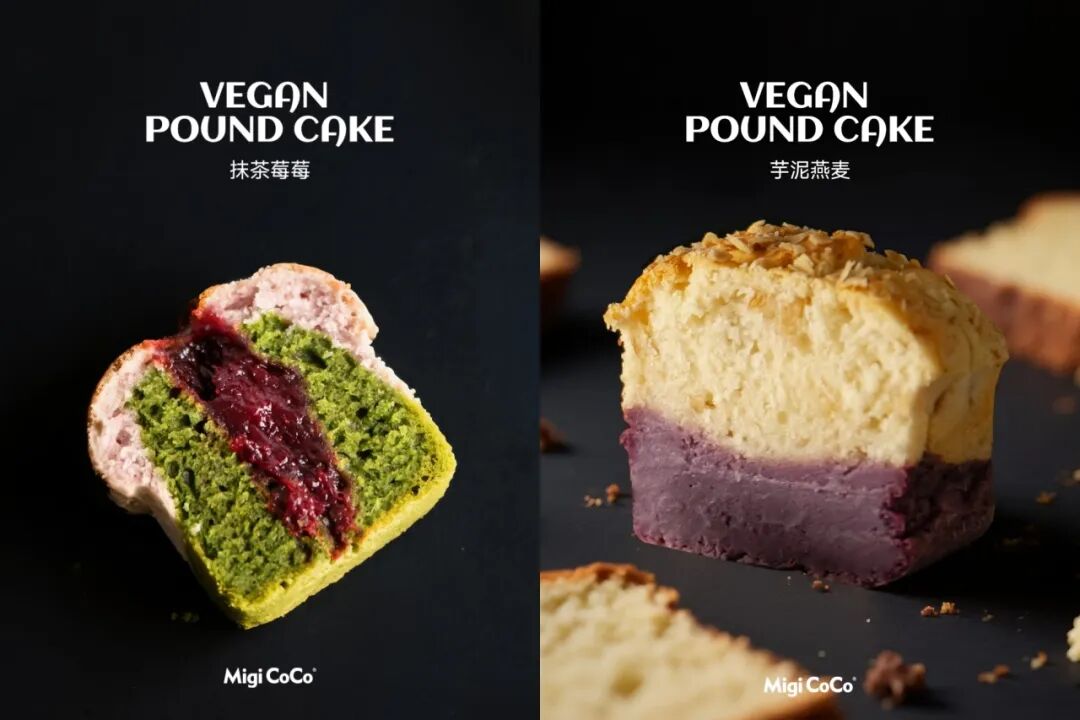
Various plant - based baked products. Source: Internet
Trend 6: Clean - label ingredient lists move from the back to the front
Checking the ingredient list has become a shopping habit for most consumers. Smart brands no longer hide but turn transparency into an offensive marketing weapon.
Remove preservatives, artificial colors, and non - dairy creamer, and print the streamlined ingredient list in the largest font in the center of the packaging. While competitors' ingredient lists are full of chemical terms, your packaging says "flour, water, yeast, butter, salt, and that's it" on the front.
This minimalist formula marketing is a direct blow to traditional industrial baking.
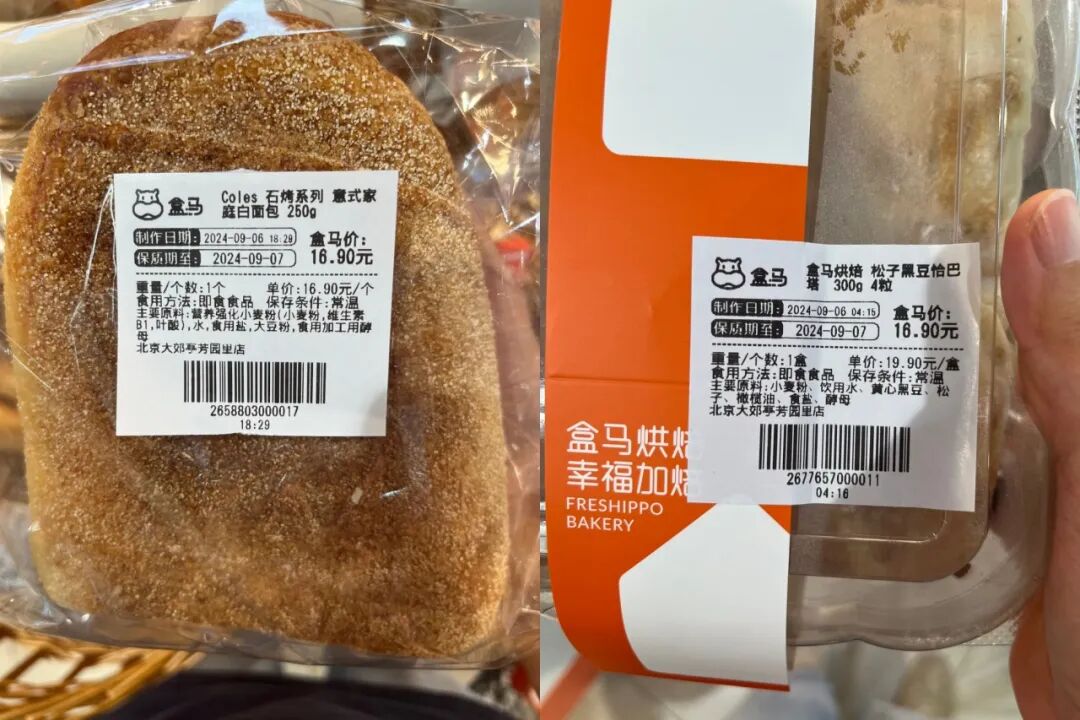
Ingredient lists of some baked products from Hema. Source: Internet
Trend 7: High - fiber aesthetic and roughness become new selling points
"Melting in the mouth" was once the highest praise in the era of refined carbohydrates, but now it's the opposite.
The usage of whole - wheat flour, rye flour, and oat bran is rising sharply. The "real roughness" with a granular texture and the aroma of wheat bran is actively pursued.
Roughness makes people feel that the product is healthier and more valuable.
Resistant dextrin and inulin have moved from the health - supplement section to the ingredient list of daily toast. Products that can clearly indicate "containing 10g of dietary fiber per piece" on the packaging have a much higher conversion rate among office workers who sit for long hours than ordinary soft European bread.
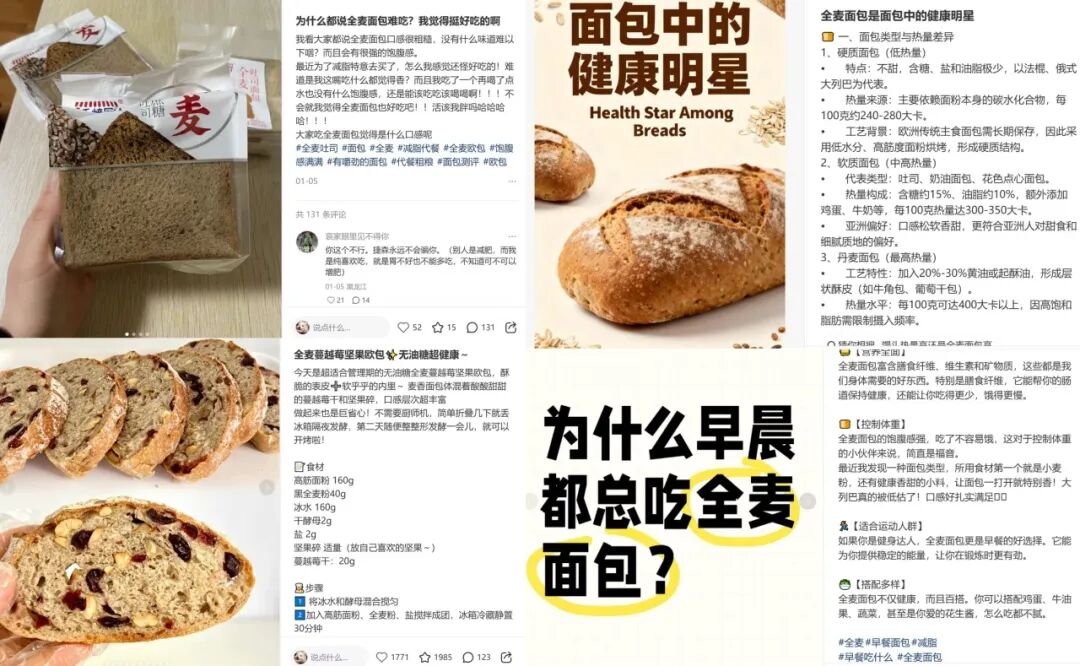
Discussions about whole - wheat bread on social media. Source: Internet
Trend 8: Mini energy packs are becoming staple foods
During the period of cautious consumption, the budget for emotional treats is the first to be cut, while the budget for filling the stomach remains stable.
The baking industry is undergoing a transformation towards being a staple food. People need staple foods that can keep them full and look presentable.
The large - sized internet - famous dirty buns are gradually being marginalized, and "energy packs" with smaller sizes, controllable calories, and strong satiety are taking their place. By embedding the products into high - frequency daily scenarios such as a snack at 10 a.m., a pick - me - up at 4 p.m., and post - workout carbohydrate replenishment, the repurchase rate can be stabilized.
Reducing the size and increasing the consumption frequency is the underlying logic of the staple - food line.
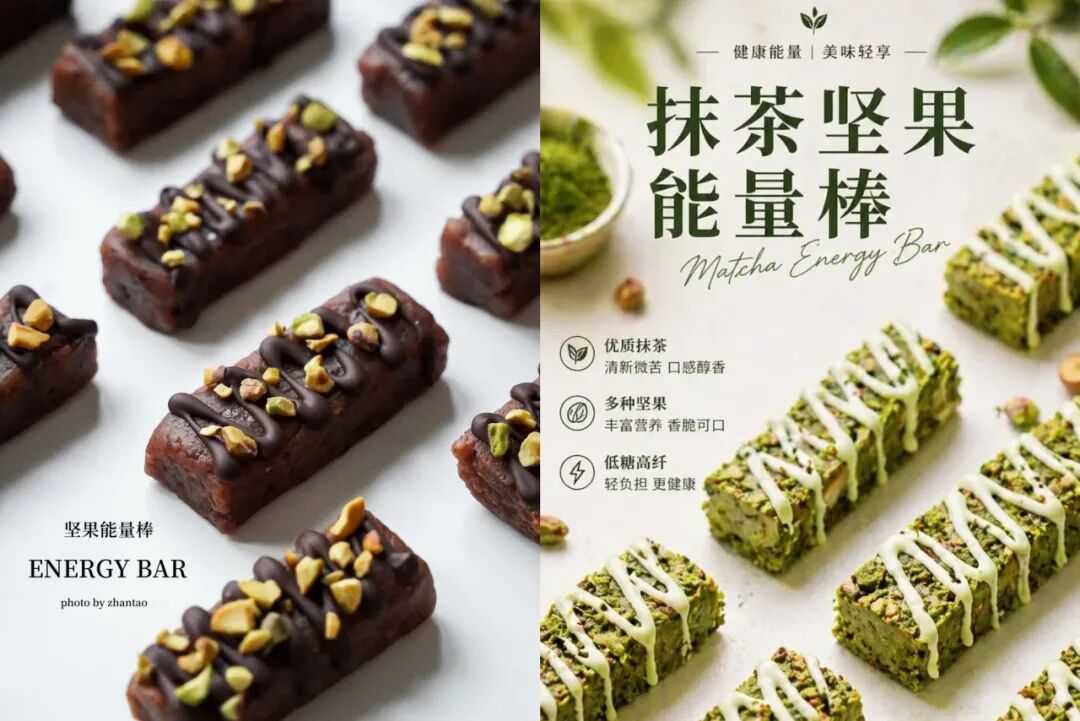
Mini energy bars. Source: Internet
Trend 9: The refrigerated short - shelf - life area is a threshold
Industrial bread with a long shelf - life at room temperature is becoming increasingly difficult to sell in offline stores. Pre - warehouses and cold - chain logistics have redefined consumers' perception of freshness.
Short - shelf - life and ice - feeling baked products such as ice - skin dough, refrigerated puffs, and ice bagels are on the rise.
The technology of freeze - resistant dough combined with animal milk fat ensures that the products remain soft and sticky even in the refrigerated state. It blurs the boundary between baked goods and ice cream and provides a refreshing feeling that room - temperature bread cannot offer in summer or in well - heated indoor environments.
The high threshold of cold - chain and cold - processing technology makes it a natural barrier, and not everyone can enter this field.
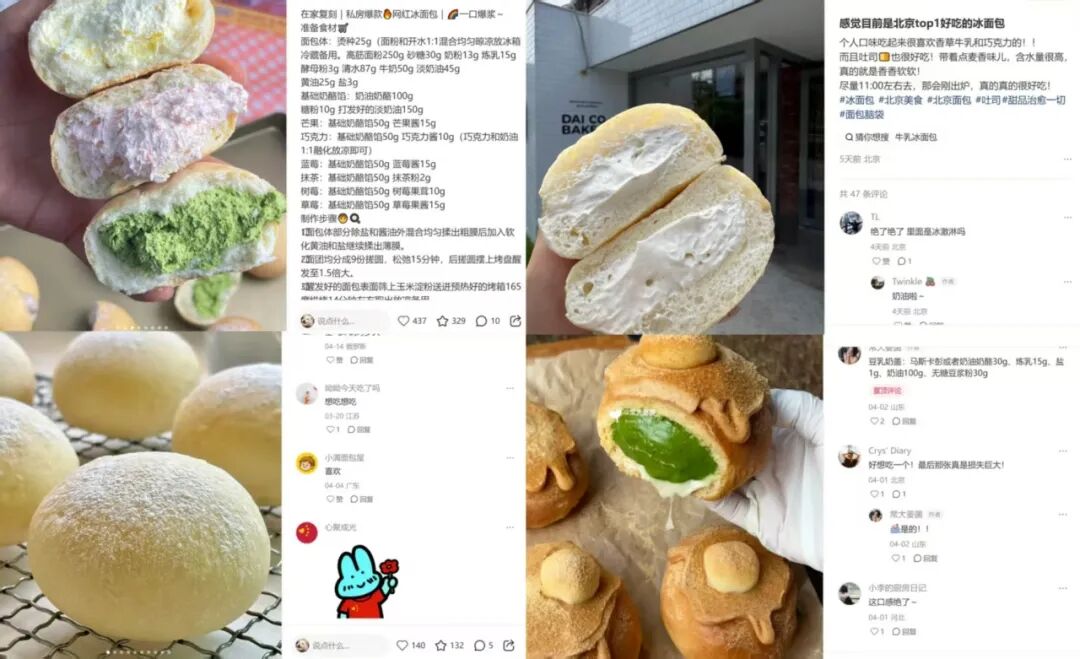
Discussions about ice bread on social media. Source: Internet
Trend 10: Super single - product independent stores are the last way out
The basic bread products of Sam's Club and Hema, with their extremely low supply - chain costs, have defeated a number of traditional chain bakeries.
Competing on price for basic products, independent stores will always lose.
The only way to break the deadlock is to abandon the "big and comprehensive" approach and focus on a specific vertical category to the extreme.
A specialty store that only sells 5 types of handmade toast focuses on the fermentation breathing feeling and the aroma of freshly baked bread. The handmade touch, the experience of freshly baked products, and the use of high - quality ingredients are areas that large - scale warehouse supermarkets cannot easily enter for now.
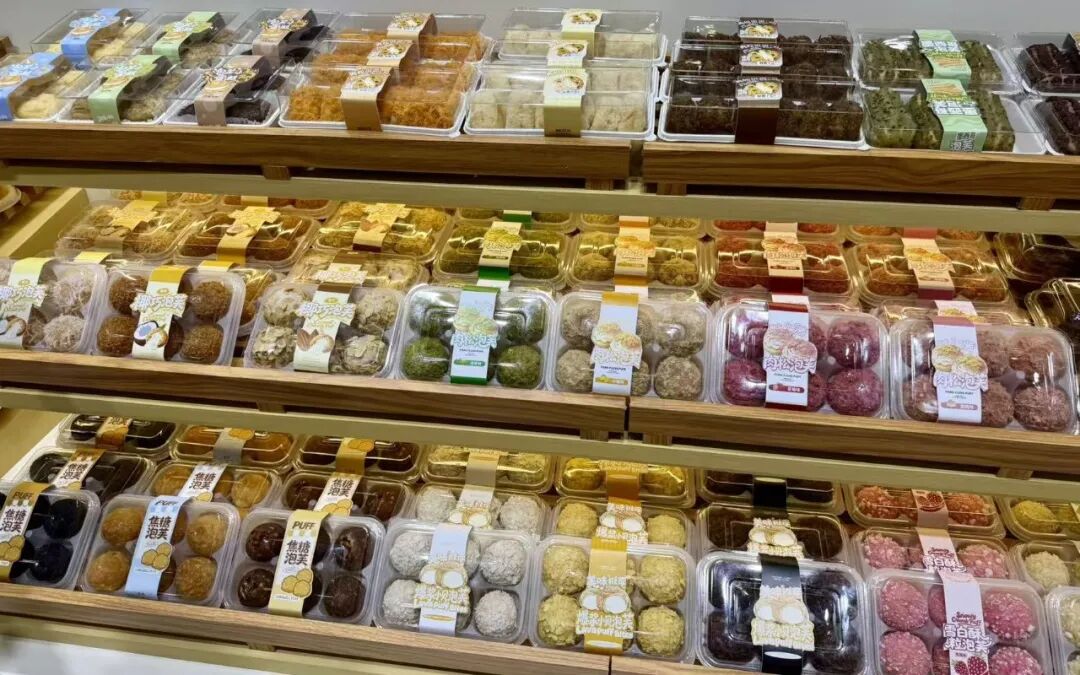
Puff product shelves. Source: Photo by Gege
Comments
The increasing cut - throat competition in the baking industry is something the industry should have recognized earlier.
The era when making money just by being bold and good at marketing is over. Consumers are now carefully checking the ingredient list, the GI value, and thinking about how their bodies will react after eating. The threshold for entering the industry has increased.
All the cut - throat competition is due to the fact that the products on the supply side have not kept up with the upgrading on the demand side. Using the heavy - oil and heavy - sugar recipes from five years ago to deal with today's consumers will inevitably lead to being eliminated.
In the 2026 baking battlefield, the product foundation is more important than anything else. Those who can integrate cultural narratives, sensory ingredient combinations, and raw - material technologies will be able to continue doing business in this cooling market.
This article is from the WeChat official account "Lijin". Author: Lijin. Republished by 36Kr with permission.