China's leading Alzheimer's tau antibody enters non-human primate validation, Zhaoyi Bioscience launches financing
I. Unmet Clinical Needs for AD Await Breakthrough, and the Development Window for the p-tau217 Target has Arrived
Against the backdrop of the global aging trend, Alzheimer's disease (AD) has emerged as a major public health issue threatening the health of the elderly and impeding social development. Currently, there is a large global population of AD patients, and there are significant unmet clinical needs. Existing therapies struggle to halt the disease progression. The current mainstream drugs targeting the Aβ pathway have limited efficacy in delaying cognitive decline and are associated with a high risk of ARIA adverse reactions. Multiple broad-spectrum total tau antibodies that advanced to Phase II clinical trials have all failed, mainly due to two core drawbacks: the inability to distinguish between physiological and pathogenic tau and insufficient brain penetration efficiency. As a core driving biomarker in the pathological process of AD, p-tau217 is recognized by the global academic community as superior to the Aβ target, yet there are no targeted and mature therapeutic drugs available globally. Zhaoyi Biopharmaceutical Technology (Hainan) Co., Ltd. leverages more than a decade of scientific research in the field of AD at Xiamen University to develop a pipeline of p-tau217/TfR bispecific antibodies, directly addressing the core pain points in the industry.
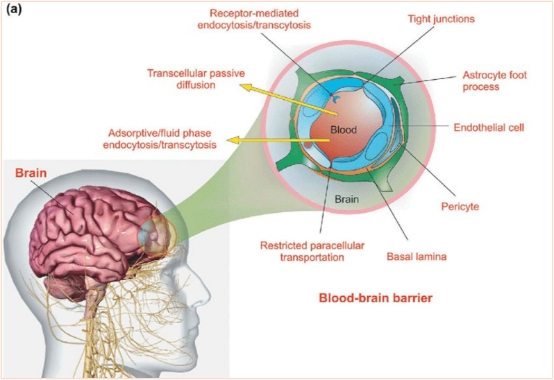
Illustration: The complex structure of the blood-brain barrier (BBB) and its substance transport mechanism
II. Pipeline R & D Progresses Steadily and has Entered the Critical PCC Validation Stage in Cynomolgus Monkeys
Basic research on the core target of the project was initiated in the Xiamen University system in 2021. After multiple rounds of mechanism verification and technological accumulation, the pipeline development was officially launched in 2022. Key molecular technology breakthroughs were achieved in 2025. Currently, it has fully entered the critical PCC validation stage in non-human primates (cynomolgus monkeys), ranking among the leading pipelines in the domestic R & D progress in the same field.
III. Top-Notch Academic R & D Team, Relying on the Deep Scientific Research Foundation of Xiamen University in Alzheimer's Disease
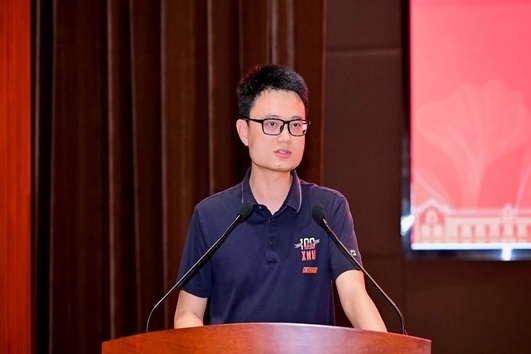
The project is built on a complete international R & D team. The R & D foundation stems from the research group led by Professor Xu Huaxi, who studied under Nobel laureate Paul Greengard and has been deeply involved in the pathological mechanism of AD tau for decades. Dr. Zhao Yingjun, the founder and CEO of the company, is a professor at the School of Medicine of Xiamen University. He is a jointly trained doctor by the School of Pharmacy of Xiamen University and Sanford Burnham Prebys in the United States. He has served as a postdoctoral fellow and research assistant professor at overseas research institutes and is a national high-level overseas young talent. He has long been engaged in the research of AD diagnosis and immunotherapy. The project has invited a national outstanding young scientist to serve as the chief scientist of the company. The core R & D personnel all have overseas scientific research experience. Top-tier clinical experts in neurology from tertiary hospitals are invited to serve as clinical consultants, and full-time professional personnel for drug registration in China and the United States are provided to build an integrated R & D, clinical, and registration team. More than 80% of the team members hold doctoral degrees.
IV. Differentiated Advantages of Bispecific Antibodies, Simultaneously Overcoming the Two Industry Barriers of BBB Penetration and ARIA
This pipeline features a differentiated first-in-class (FIC) potential brain-shuttle bispecific antibody, which has multiple core technological advantages over existing domestic and international pipelines. The pipeline is equipped with a self-optimized TfR transcytosis brain-shuttle technology, fundamentally solving the two top industry barriers for AD drugs. Relying on the TfR receptor-mediated active transport pathway, the brain exposure of the antibody is nearly 25 times higher than that of the first-generation molecules, enabling efficient penetration through the blood-brain barrier to reach the brain parenchymal lesions. The optimized delivery pathway significantly reduces drug accumulation in the blood vessel walls, avoiding the risks of ARIA cerebral edema and cerebral hemorrhage commonly associated with Aβ drugs from a mechanistic perspective, with a safety rating of Grade A. Meanwhile, the molecule precisely and specifically binds to the disease-specific p-tau217 without interfering with the physiological tau protein that maintains cell homeostasis, completely avoiding the motor injury side effects caused by total tau antibodies and blocking the pathological cascade reaction of AD at the source to achieve disease-modifying treatment rather than just symptom relief.
V. Comprehensive Preclinical Data Validation, Excellent Efficacy and Safety Performance in Large Animals
Early animal data have fully verified the potential efficacy: After 8 weeks of continuous administration to APP/PS1 double transgenic mice, their spatial memory ability recovered to over 90% of that of wild-type mice, and pathological damages such as brain atrophy and neuronal apoptosis were significantly repaired. The non-human primate experiments have obtained IACUC ethical approval, and a complete set of long-term administration, behavioral observation, and multi-dimensional pathological detection tests have been carried out. The overall core indicators are superior to those of similar pipelines under research at the same stage.
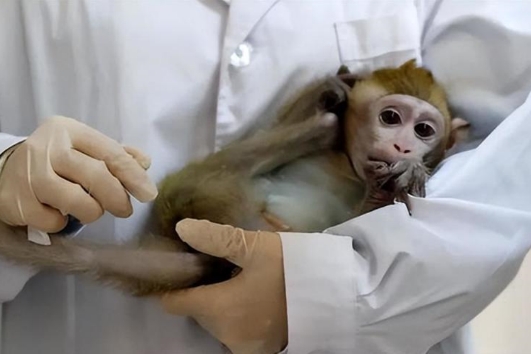
Illustration: The physiological and pathological characteristics of the brains of non-human primates are highly similar to those of humans
VI. Common Shortcomings in Industry Pipelines, This Project Forms Unique Differentiation
In recent years, the industry's R & D layout has been increasingly tilted towards the Tau pathway. However, most preclinical pipelines only stop at the mouse model and do not conduct systematic evaluations in cynomolgus monkeys. Even for the few total tau pipelines that have entered clinical trials, the non-human primate experiments only involve short-term and simple efficacy observations, lacking long-term and multi-dimensional complete data. This has become the key reason for the failure of multiple total tau monoclonal antibodies in Phase II clinical trials. The development route of targeting p-tau217 combined with the self-developed TfR shuttle platform perfectly avoids the current common R & D defects in the industry, with outstanding scarcity.
VII. Planning for the Pre-IND Round of Financing, Advancing the IND Applications in China and the United States According to Clear Milestones
Zhaoyi Biopharmaceutical is currently officially promoting the Pre-IND round of financing, aiming to raise 20 - 30 million yuan by offering 15% - 20% equity. All the raised funds will be used for preclinical R & D of the pipeline, continuous iteration of the TfR technology, and expansion of the core team, and will be implemented steadily according to the established R & D milestones: Within 12 months, the bispecific antibody molecules will be refined and optimized, and the full set of long-term efficacy and safety evaluations in cynomolgus monkeys will be completed to strengthen the exclusive technological barrier. From 12 to 18 months, CMC process development will be advanced, and preparations for Pre-IND communication in China and the United States will be carried out simultaneously. From 18 to 24 months, the full set of preclinical studies will be completed, and IND applications will be submitted in both China and the United States. After the key preclinical nodes are completed in 24 months, the next round of financing will be initiated.
VIII. Industry Consensus: p-tau217 + TfR Shuttle is the Optimal Development Route for the Next Generation of AD
There is a general consensus in the industry that insufficient efficiency in crossing the blood-brain barrier, uncontrollable ARIA safety risks, and the inability to distinguish between physiological and pathological tau are the three core problems that have long restricted the development of innovative AD drugs. The combination of the TfR brain-shuttle delivery system and the p-tau217 specific target is currently the most promising development path for the next generation of AD disease-modifying therapies. The non-human primate model is the gold standard for evaluating the real translational value of targets. In China, p-tau217 pipelines that simultaneously master the self-developed TfR shuttle technology and have completed the full-cycle efficacy verification in cynomolgus monkeys are relatively scarce.
IX. Founder's R & D Outlook: Accelerating the Clinical Translation of Innovative Therapies Based on Core Technologies
Regarding the pipeline R & D and the industry status quo, Zhao Yingjun stated that the failure rate of AD new drug R & D remains high, and the failure of many total tau pipelines in clinical trials fully confirms the importance of target selection and brain delivery technology. Relying on the mature tau research system at Xiamen University and inheriting the years of cutting-edge scientific research accumulation of Professor Xu Huaxi, the team pre - arranged in the differentiated p-tau217 bispecific antibody track. It has now passed the most difficult early technology exploration stage and is one of the few domestic R & D teams that simultaneously possess a self-developed BBB shuttle platform and have completed the efficacy verification in non-human primates. After the successful financing in this round, the team will continue to iterate the core TfR shuttle technology, fully promote the full-cycle verification in cynomolgus monkeys and the preparations for IND applications in China and the United States, accelerate the clinical translation of innovative therapies, and bring new treatment options to tens of millions of AD patients as soon as possible, fulfilling the team's original intention of in - depth research in the field of neurodegenerative diseases for many years.