WeChat mini-games with 50 million in revenue won't share profits. Abandon high user growth and start competing in AI.
Just today (May 27), the 2026 WeChat Mini-Game Developers Conference was held at the Hangzhou Baima Lake International Convention and Exhibition Center. In the morning, Li Qing from the WeChat Mini-Game team led everyone to review the data changes over the past nine years.
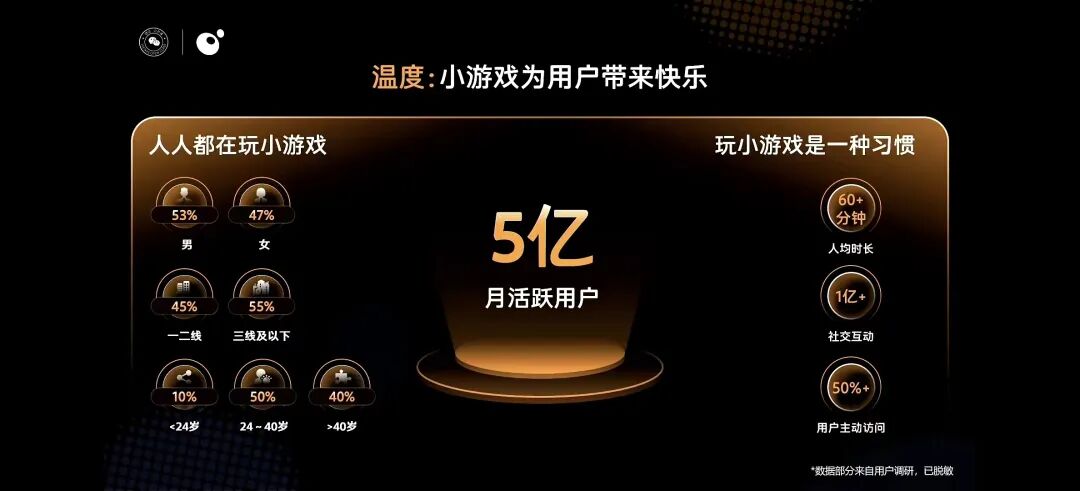
Let's start with the users. Thanks to the development of the female-oriented game market, the number of female players has increased significantly. Currently, in WeChat mini-games, men account for just over 53%, while women account for more than 47%. In terms of urban distribution, users from first- and second-tier cities account for over 45%, and those from third-tier cities and below account for over 55%, showing a relatively balanced overall distribution. In terms of age, people aged 24 to 40 account for half, and users over 40 years old account for 40%.
A notable change is that users are spending more time on the games. Thanks to the continuous exploration of social features in WeChat mini-games, the average daily usage time of users has now exceeded 60 minutes; the daily number of interactions between friends exceeds 100 million; more than half of the monthly active users actively enter the games through WeChat's unique features.
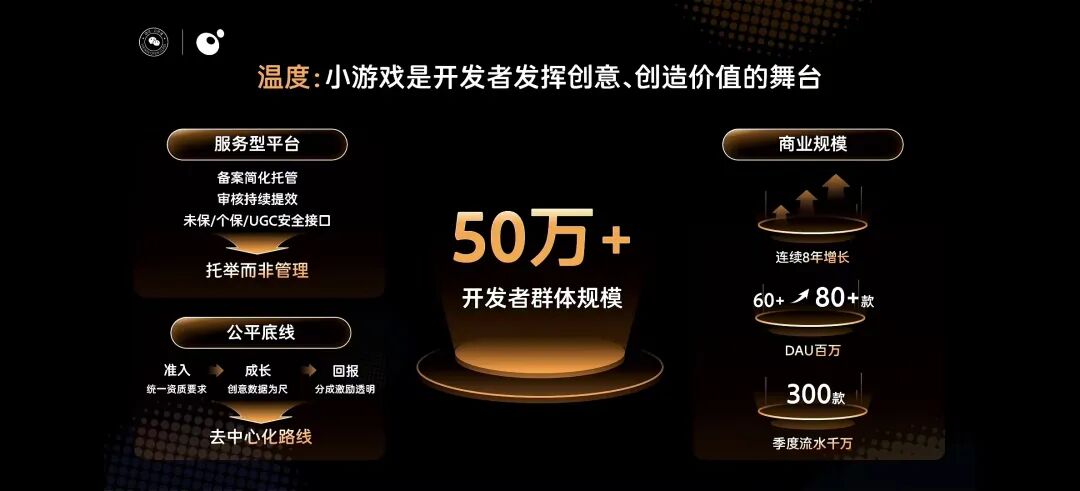
Now let's look at the development side. In recent years, with the implementation of decentralized policies such as faster filing and review processes and revenue-sharing incentives, the total number of WeChat mini-game developers has now exceeded 500,000, and 80% of the teams have fewer than 30 members. The number of games with a daily active user base of over one million has increased from 60 last year to 80; the number of games with a quarterly revenue of over ten million has exceeded 300.
It's worth noting that in terms of policy incentives, both IAP and IAA are being promoted simultaneously. Among them, newly launched IAP games can enjoy two-stage incentives. A single newly launched IAP game can enjoy a maximum of 50 million yuan in revenue without revenue sharing and can receive a total incentive of 20 million yuan. IAA has also introduced new support policies. On the basis of a 50% cash share, an additional 40% advertising credit (for 30 days) or 35% advertising credit (for 90 days) can be added, with a maximum share of up to 90%.
Considering the changes in the mini-game market and the rise of AI, to some extent, the move to increase incentive policies indicates that WeChat mini-games have entered a new stage of exploration.
The most direct example is that during the interview, Li Qing said that although the monthly active user base of mini-games remains high, there is limited room for significant growth. If we include the users of APP mobile games, the overall penetration rate of mobile game users in China is already very high, and the user growth of WeChat mini-games is approaching the population ceiling.
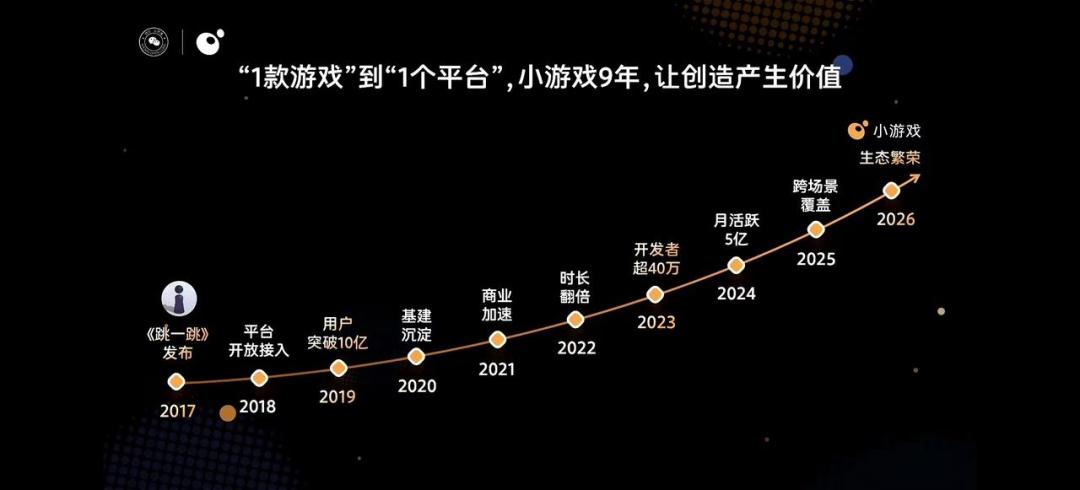
The theme of 2026 is "Ecological Prosperity".
Therefore, instead of pursuing an increase from 500 million to 600 million users, Li Qing believes that more attention should be paid to how to improve the active user structure, how to encourage users to engage more frequently, and how to explore structural growth in specific scenarios. In other words, the focus of WeChat mini-games in the future is no longer just to "increase the total user base" but to "deepen user retention, extend user engagement time, and strengthen scenario penetration". This is also the theme of WeChat mini-games in 2026 - "Ecological Prosperity".
Another highlight of this conference is AI (in fact, 60% of the questions in the interview were related to AI). WeChat's attitude towards AI in mini-games is clear: it is not a future concept but a real tool that is being integrated into various aspects of development, operation, promotion, and content interaction. For example, in development, Tencent Cloud's Workbuddy can provide full-link support from concept to implementation, making it easier to refine details from art style to level design.
Overall, this year may not be a year of explosive growth in monthly active users for WeChat mini-games, but it will definitely be a year of significant change.
IAA, IAP, and PC: Three Pillars of Growth
By 2026, WeChat mini-games are no longer relying on a single category or a single breakthrough for growth. Instead, IAA, IAP, and PC are all making progress simultaneously. This is also the key to ecological prosperity.
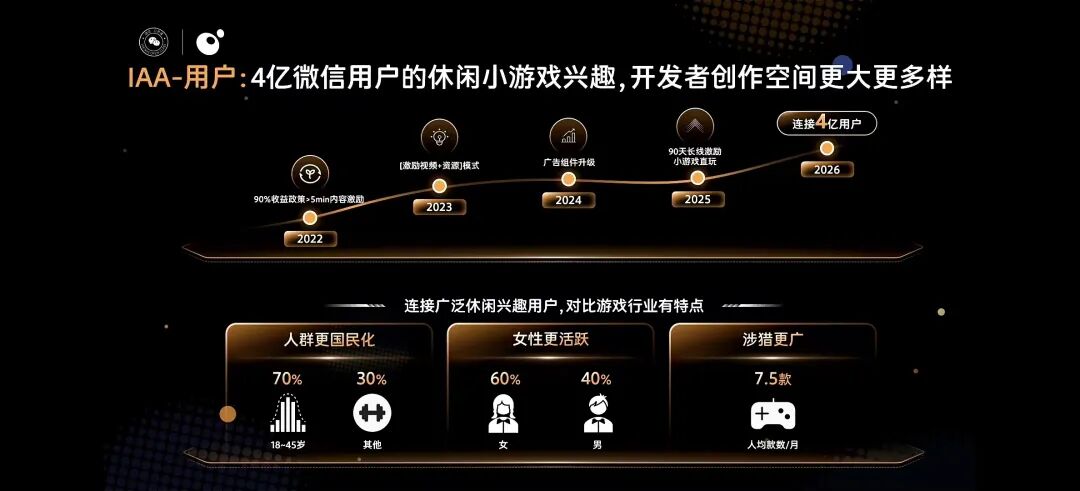
In the IAA segment, thanks to the emergence of new categories like "Arrow-like" and the continuous operation of existing products, the monthly active user base of IAA mini-games has reached 400 million. There are more than 1,400 developers with a monthly revenue of over one million, and new products with a monthly revenue in the tens of millions are also emerging frequently. It has become an ideal platform for everyone, especially small and medium-sized developers, to create and find employment.
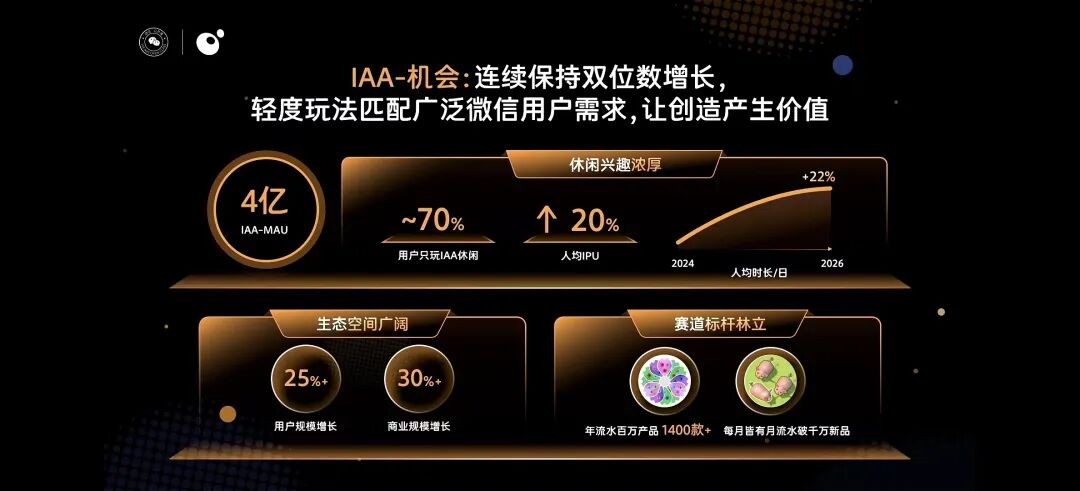
Unlike traditional games, which are mainly targeted at young men, the user profile of WeChat IAA is quite unique. Official data shows that users aged 18 - 45 account for 70%, and the proportion of women is as high as 60%. Their activity level is significantly higher than that of the traditional game market. Moreover, IAA users are particularly willing to try new games, with each user playing an average of 7.5 games per month, far exceeding the mainstream market model of sticking to one game. This "multi-game, high-frequency switching" habit provides a huge space for creative experimentation with various light and medium-level gameplay.
In terms of category evolution, casual games are undergoing multiple rounds of changes, such as theme stacking, 3D experience upgrades, and level mechanism reconstructions. For example, in the match-3 genre, from traditional match-3 to screw mahjong match-3, and then to the 3D match-3 boom, the scale of the genre has been continuously reaching new highs.
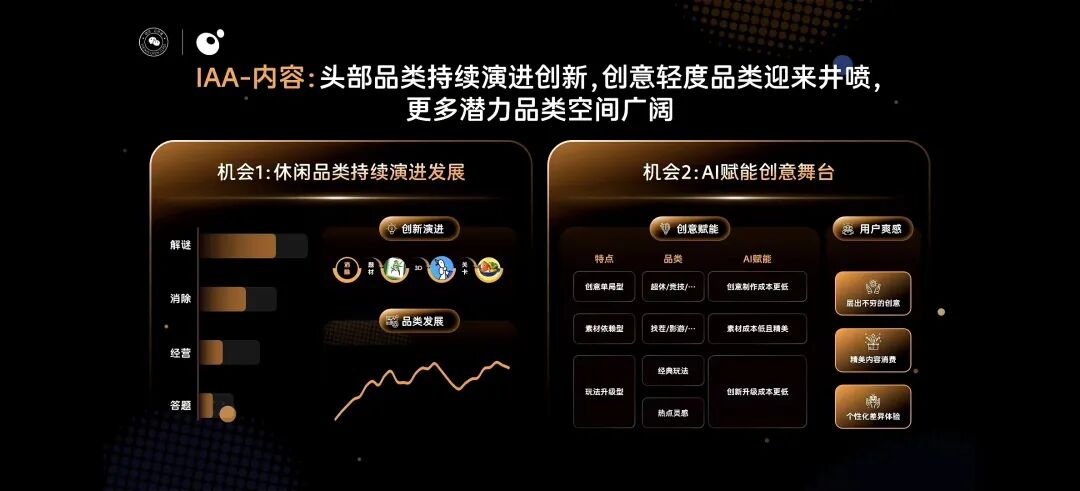
The WeChat team predicts that with the support of AI, the following three categories will have obvious opportunities: first, single-round creative games (such as hyper-casual competitive games driven by strong rules, which are suitable for quickly generating prototypes using natural language); second, material-dependent games (such as spot-the-difference and traffic-driving games centered around pictures or videos, where AI can output high-quality materials at low cost); third, gameplay-upgraded games (integrating real-life inspiration into classic gameplay).
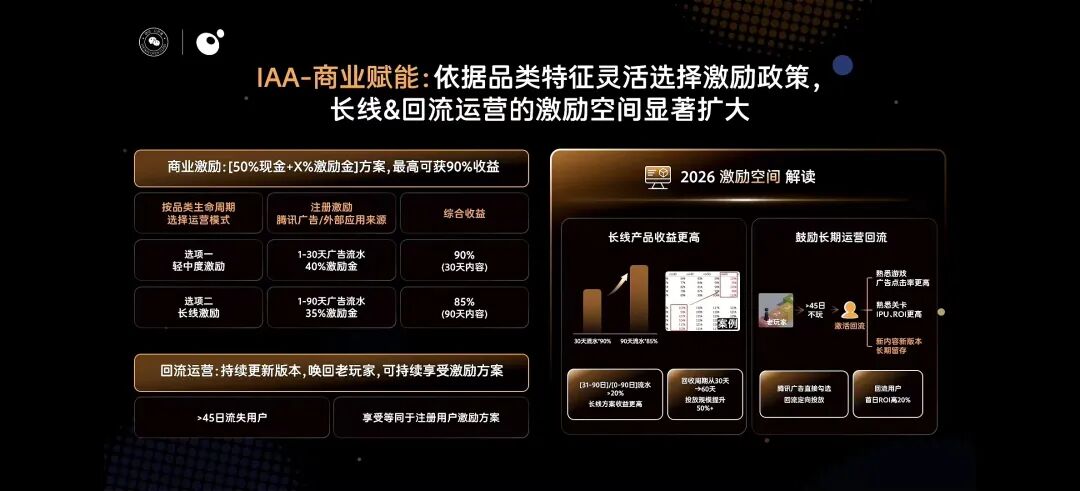
In addition, this year, IAA has received new policy support: on the basis of a 50% cash share, an additional 40% advertising credit (for 30 days) or 35% advertising credit (for 90 days) can be added, with a maximum share of up to 90%. There is also a new reactivation policy: for users who have been inactive for more than 45 days, the incentive for reactivation is the same as that for new users. The LTV of reactivated users on the first day has increased by more than 20%, and the daily reactivation cost of some games has exceeded 100,000 yuan.
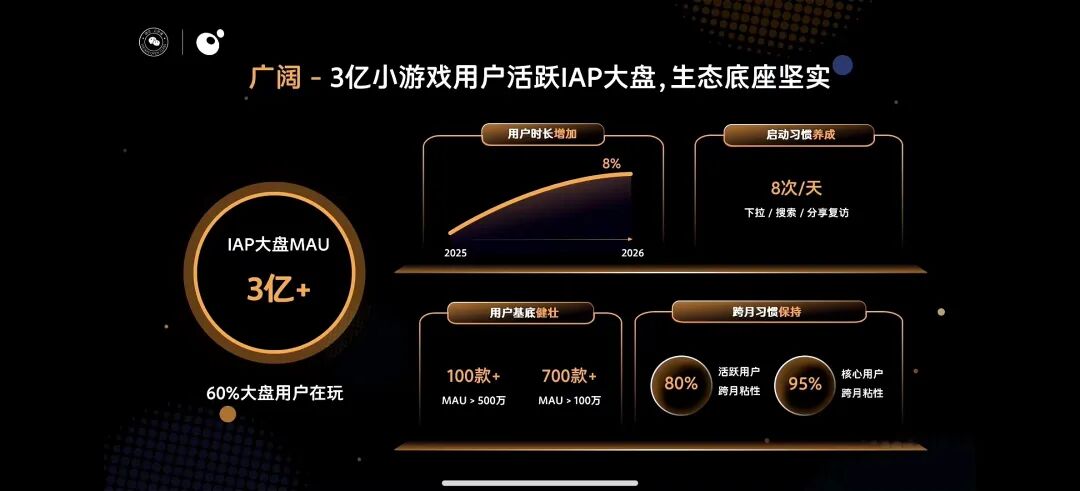
In the IAP segment, there is also a balanced and diverse situation. Data shows that IAP games account for 60% of the total monthly active user base (about 300 million users). The average game-playing time per user has increased by 8% year-on-year, with an average of 8 daily revisits per game. The top products can achieve 20 - 30 revisits per day. There are more than 700 games with a monthly active user base of over one million, and more than 100 games with a monthly active user base of over five million.
Among them, the revenue of mid- and high-intensity categories (SLG, MMO) is stable, and the revenue from card games has increased significantly. The casual game segment has seen even more explosive growth - the annual growth rate of simulation games has exceeded 200%, and the growth rate of 2-in-1 games has remained above 70%. There are already 10 products in the casual game category with a monthly revenue of over ten million.
The official has provided three potential future directions:
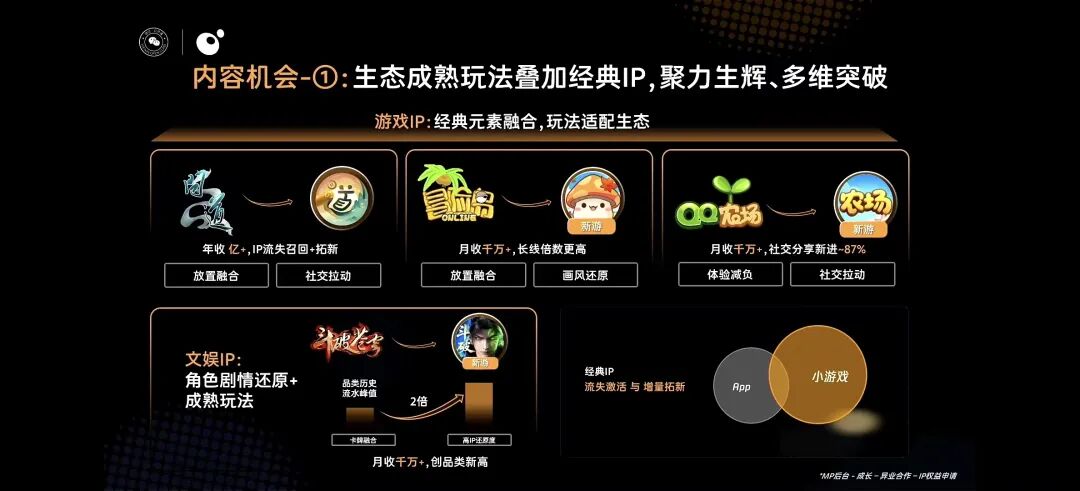
The first is to combine classic gameplay with IP. Some products have achieved a monthly revenue of over 50 million, and more than 50% of the new users are from outside the IP circle.
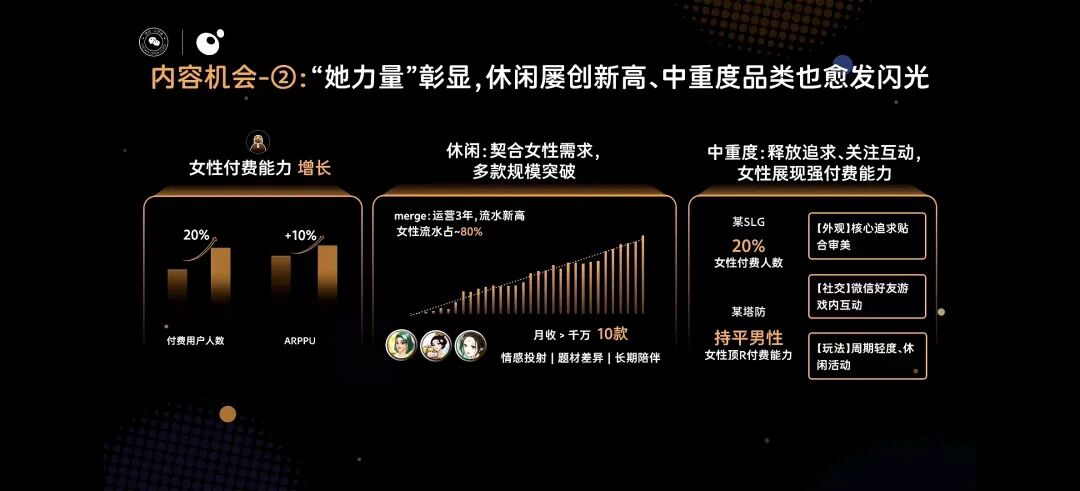
The second is the "She Power". The number of female paying users has increased by 20% annually, the ARPPU has increased by 10%, and the retention rate 36 days after payment has reached 80% - 90%. The long-term revenue cycle can be extended to over half a year. Even in more intense categories such as SLG and MMO, the payment of female users has also increased significantly.
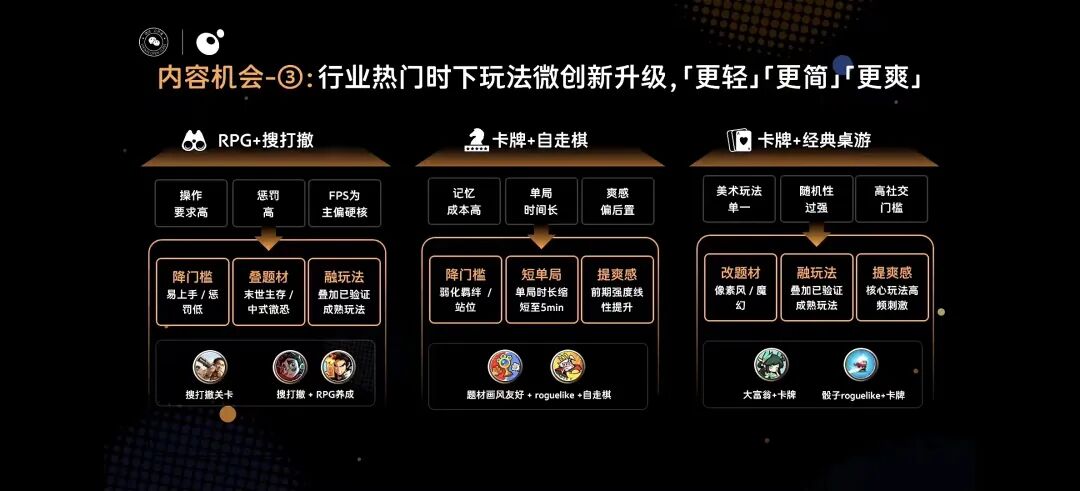
The third is the innovation and integration of gameplay (such as roguelike + auto-battler, board game + card game). Several new products with a monthly revenue of over ten million have already emerged. In terms of established categories, the historical registration scale of idle, card, and tower defense games has reached 300 - 500 million, with 10 - 20 million paying users, indicating room for further penetration. In more intense fields such as MOBA, FPS, and ARPG, some new categories are also emerging.
Now let's look at WeChat PC mini-games. It has evolved from an "external screen for mobile devices" to an independent and unique ecosystem. Data shows that in the past year, the monthly active user base of PC mini-games has increased by 10% year-on-year, and more than 40% of them are exclusive users (only play on the PC). In terms of user profile, the core group aged 24 - 40 accounts for 60%, with a better understanding of games and a stronger willingness to pay.
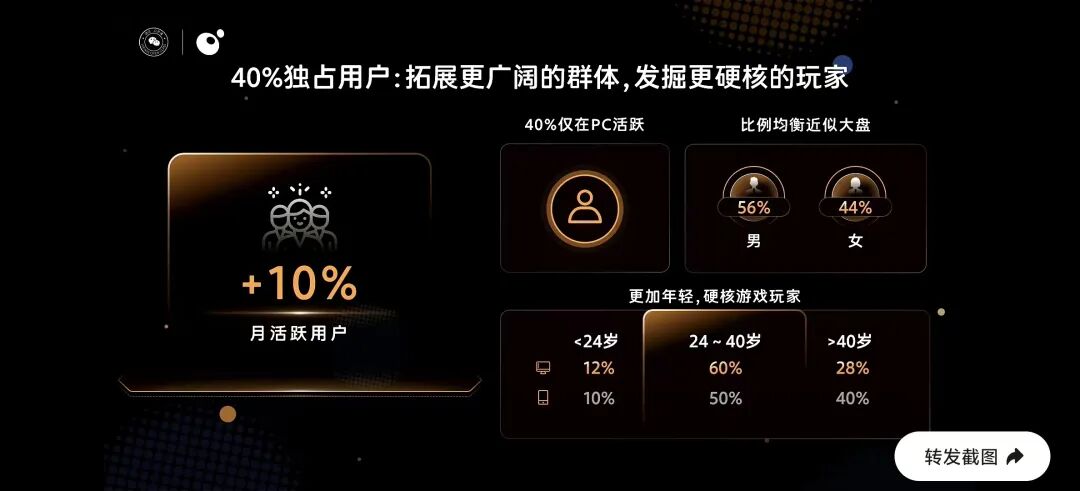
The characteristics of the PC version are that the online time is twice that of the mobile version, and the payment level is higher. Moreover, the PC and mobile versions are not in a competitive relationship - once users become "dual-active", not only does the PC version contribute more than twice the incremental time, but the activity level on the mobile version also doubles, creating a mutually reinforcing effect.
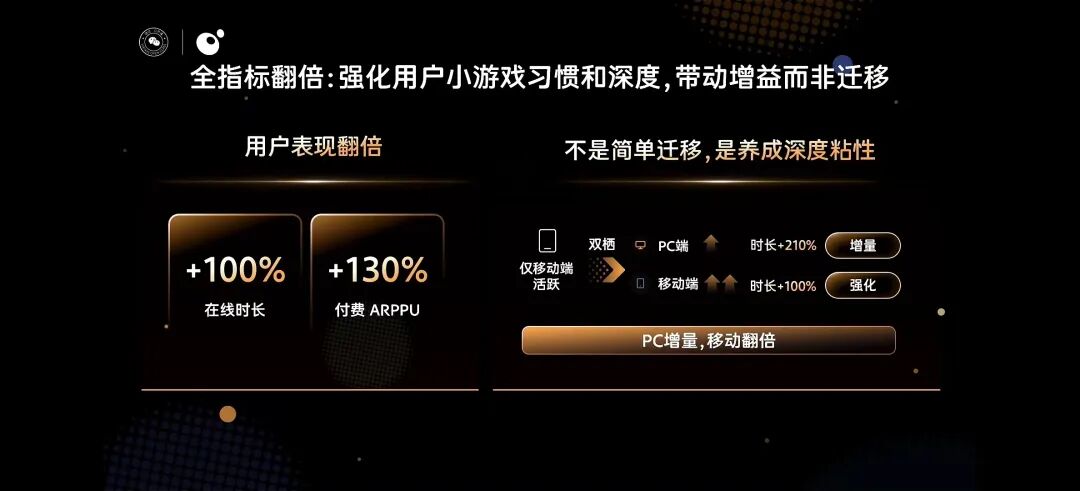
Currently, the top categories on the PC version are MMO and tower defense games. The revenue share (penetration rate) of categories such as Legend, idle, and action games is particularly prominent on the PC. Categories with high operational complexity (such as action games) and strong long-term play requirements (such as idle and tower defense games) have obvious advantages on the PC. The platform recommends that developers upgrade the graphics quality, adapt to the keyboard and mouse, and reconstruct the game hierarchy (allowing users to play, watch, and socialize simultaneously) for the PC version, and shift the gameplay rhythm from "fast" to "immersive".
