Price hikes, review bottlenecks, declining revenue shares: The turning point for AI dramas. Some are leaving the circle, while others are holding on. Those who don't improve quality will be out.
Since the middle and late April, the AI drama/comic drama industry has successively encountered three major storms.
Before the 1-billion-hit dramas arrived, there were price hikes in computing power, a reduction in revenue sharing, stricter reviews, and a significant cut in minimum guarantees.
The first storm comes from the cost side. Since April 18th, Alibaba Cloud and Baidu Smart Cloud have officially raised the prices of AI computing power. The maximum increase in computing power cards is about 34%, and the increase in storage is about 30%. The prices of mainstream AI drama and comic drama tools have also been raised accordingly.
The second storm is from the platform side. The reviews of leading platforms have become significantly stricter. Tens of thousands of works have been taken off the shelves, and the review of new dramas has been frequently delayed.
The third storm comes from the revenue side. Since mid-May, some practitioners have found that the revenue sharing of platforms such as Hongguo has declined.
With the overall contraction and the siphoning effect of leading players, the reshuffle of the industry has already begun.
Production End: Double Squeeze of Cost and Revenue
(1) In terms of cost, the price hike of computing power directly erodes profits
The price hikes of computing power and tools are the first disaster-level storm for this round of AI dramas and comic dramas.
The first to bear the brunt is the production end. When it comes to the comic drama production end, it directly leads to a significant increase in industry costs and a significant shrinkage in profits. For large factories with "annual computing power quotas" and stable project guarantees, the impact of the price hike is relatively limited. However, most small and medium-sized manufacturers and individual creators have fallen into a dilemma.
In the past, when computing power was relatively cheap and AI tool providers offered large subsidies, people paid more attention to prompt words and models to improve time efficiency and reduce labor costs. However, the price hike due to the short supply of external computing power has led to a synchronous price increase by tool providers, making everyone in the production process more concerned about usage efficiency.
"Before April, the cost of making a one-minute comic drama was about 100 yuan. Now, under normal circumstances, it basically reaches 200 - 300 yuan, and for high-quality dramas, it can even be higher." Yang Yun, an AI drama director with two years of work experience, has witnessed the transformation of AI comic dramas from a "low-cost carnival" to a "high-cost burden." He told the DataEye Research Institute that the company's performance appraisal for the new quarter has specifically added a rule that "the Token usage of each drama should not exceed 150 million units."
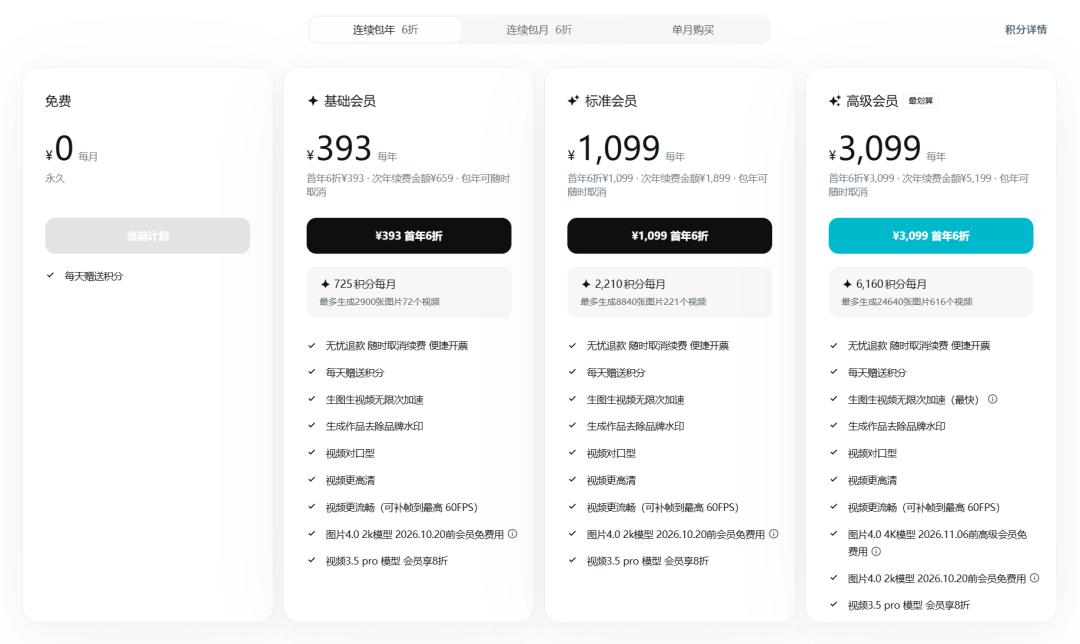
Compared with small and medium-sized manufacturers, the situation of individual creators may be even more difficult. The once-pursued "zero-cost entrepreneurship in AI comic dramas" has basically become a bubble.
"Not only do we have to bear the computing power cost ourselves, but we also have to bear the risk of the finished product not being accepted, which is equivalent to double pressure." Ye Zi, an individual creator who has been working on AI comic dramas for a year, recently experienced a "total loss" in a bid competition. "During the bid competition, everyone made works according to high-quality standards, and a lot of computing power was spent. As a result, due to market price fluctuations, the actual cost exceeded the budget. We couldn't hand in a high-quality finished product on time. If it wasn't accepted, we could only try to sell the finished drama at a reduced price. Many people who entered the industry with me have basically left the circle now."
(2) In terms of revenue: The threshold for launching dramas has been raised, while the revenue sharing per 10,000 views has declined
Some practitioners have reported a decline in revenue sharing per 10,000 views, which is another recent disaster-level storm. The simultaneous occurrence of rising costs and declining revenues has severely compressed the living space of the production end.
The DataEye Research Institute believes that the revenue sharing of AI dramas and comic dramas is affected by multiple variables, among which the completion rate and the number of ad displays/conversions are the most core factors.
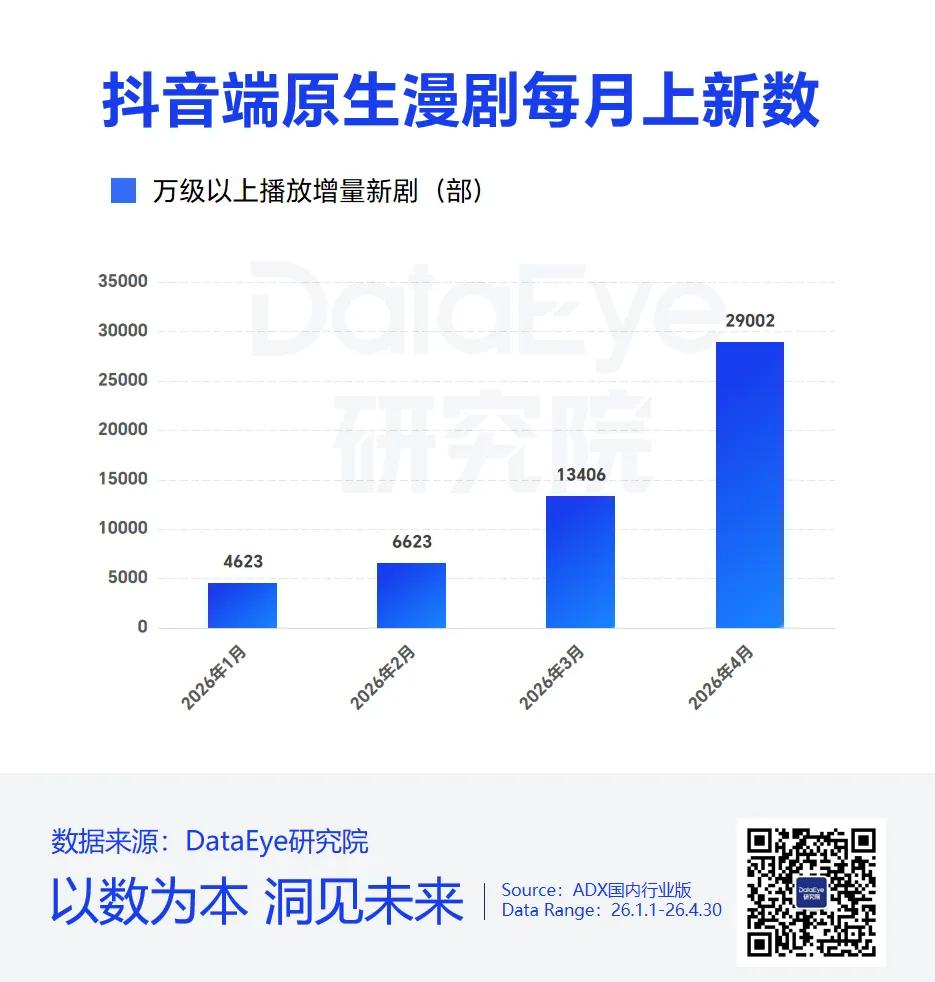
Firstly, the ceiling of dramas themselves is gradually rising. The new dramas from leading and mid-tier players have extremely strong single-drama explosive power. They exchange quality for quantity and siphon the revenues of tail-end works. The number of AI dramas/comic dramas with a playback increase of over 10,000 has increased significantly, rising from 13,400 in March to 29,000 in April. The ceiling of AI dramas has increased from 400 million to over 900 million.
Secondly, playback volume does not equal ad conversion volume. Although the monthly playback volume of AI dramas and comic dramas has reached hundreds of billions, "playback" is only a shallow level of exposure. Many free drama users swipe away before entering the ad display stage, and the proportion of "effective exposure" that can be billed by advertisers is limited. Low completion rates, high swipe rates, and broken conversion links directly lower the ROI of ad placements. The growth of advertising budgets has a rigid ceiling. When the monetization efficiency of unit traffic declines and the budget growth rate cannot keep up with the explosion of playback volume, a decline in revenue becomes inevitable.
Thirdly, traffic is being evenly distributed. AI tools have made the creation of comic dramas easier. With the equalization of technology, more competitors have joined, evenly distributing the cold-start traffic. Given the limited resources and traffic support that platforms can provide, there will be fewer and more intense competitions for leading or hit dramas. In April alone, about 44,000 new AI dramas/comic dramas were added. Among the new dramas, 267 had a playback volume of over 100 million, and 6,458 had a playback increase of over 1 million.
Industrial Chain Response: Stratification and Differentiation, Seeking Survival Routes
Price hikes, review delays, declining revenue sharing, and cut - throat competition in production quotes... The pressure is transmitted along the industrial chain, and the coping strategies of different entities also show distinct stratification characteristics.
(1) Large Factories: Increase Investment Against the Trend to Seize Market Share
Different from the struggles of small and medium-sized manufacturers and individual creators, some large factories regard the reshuffle as an opportunity to expand their market share. Their confidence comes from four levels of structural advantages:
Firstly, cost resistance. For leading production parties, with sufficient funds and stable order volumes, they usually sign "annual computing power quotas" with tool providers to lock in long - term low - cost resources. Those with more strength can also expand their business chains, develop integrated tool platforms, or self - develop AI generation models to fundamentally reduce the impact of external computing power price fluctuations.
Secondly, content industrialization. The industry competition has moved away from the wild - growth stage of "competing in quantity and speed" and has shifted to a comprehensive strength competition in technology, IP, industrialized production, and traffic distribution. Large factories rely on full - process control from script polishing, AI rendering, post - production refinement to compliance review, which greatly improves the output efficiency of high - quality dramas. This is a systematic ability that small and medium - sized teams cannot replicate in the short term.
Thirdly, IP barriers. Leading platforms such as Migu, Yuewen, and Zhangyue have a large number of IP reserves. While continuously opening up the authorization cooperation of online literature IPs, they also build a full - link closed - loop of "IP - tool - content" to ensure that they can occupy a certain share in each link of the industry and improve their risk - resistance ability.
Fourthly, platform synergy and compliance security. Mainstream platforms tilt traffic and revenue sharing towards self - produced content or the works of leading manufacturers with close cooperation through exclusive channels, independent apps, and creator support programs. On the other hand, as the vanguard of "rules," large factories not only have professional compliance teams familiar with platform rules but may also be "participants" in rule - making. They are naturally better able to accurately avoid the risks of being taken off the shelves and review delays than other small and medium - sized manufacturers, ensuring continuous monetization.
(2) Small and Medium - Sized Manufacturers: "Small Boats Are Difficult to Turn Around," Some Exit the Market, Some "Take Unconventional Routes"
Facing multiple pressures, many small and medium - sized manufacturers choose to exit the market passively. In many comic drama resource docking groups and industry exchange groups, messages about transferring Tokens and selling annual tool packages are not uncommon.
"We just bought an annual tool package at the end of March, but then the price increased in April, and we couldn't get new projects. The annual package was basically useless, so we had to transfer it at a discounted price to get some money back." Lin Zhe said that small and medium - sized manufacturers are like small boats that are difficult to turn around. "If you buy an annual package today, you may have no work tomorrow and will eventually be forced out of the market."
Some small teams even said, "Buying annual or monthly packages is not as good as going to Xianyu." A manufacturer in Changsha said that the generation price of the official large - scale model is 1 - 2 yuan per second, while the price of third - party tool platforms is only 0.6 yuan, and it may be even lower on second - hand platforms.
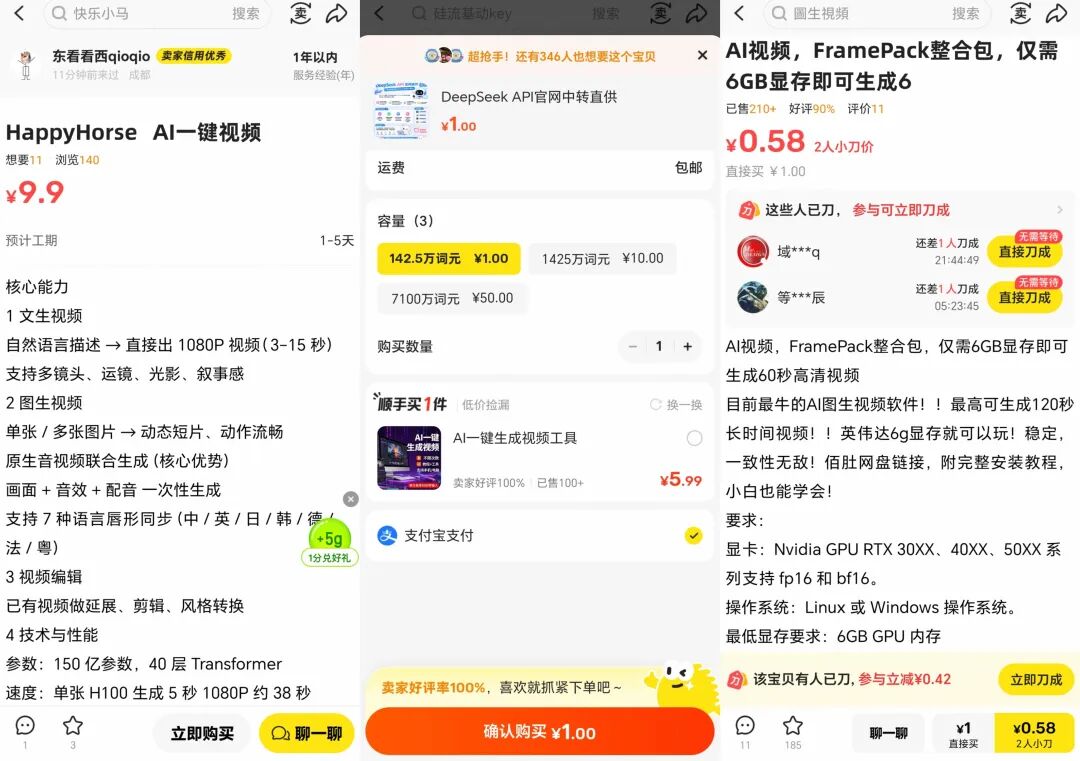
The main reason behind this is that, on the one hand, the points of most tool packages are cleared at the end of the month. Compared with leading manufacturers, small manufacturers do not have stable orders and can only adapt to the situation. On the other hand, AI models are evolving rapidly. Today, you may be using model A, but tomorrow, model B may be more efficient and cheaper.
Some small manufacturers choose to "change the form but not the essence" by increasing the utilization rate of materials to save costs, but this method often operates on the edge of compliance. According to a production party in Hengyang, Hunan, the waste film rate of their team for a drama is about 20%, and the main problem to be adjusted is the consistency of character faces.
Some production parties also reuse waste film materials as advertising slices or re - edit and combine the materials generated by the same set of script prompts to pretend to be new dramas, thereby reducing computing power consumption.
"We now use the same set of scripts and materials, only changing the actors' faces, and keeping the scenes and long - distance views basically unchanged. This can also save a lot of computing power costs." Wang Hao, the person - in - charge of a small production party, admitted that although this method is relatively efficient, the problem of homogenization is relatively serious, and the platforms may not approve it.
(3) Film and Television Bases: Urgently Seeking Transformation, Lowering Prices to "Attract Customers" for Survival
The cooling of AI comic dramas has also made the film and television bases that emerged last year anxious. "When live - action dramas were popular before, the bases basically didn't worry about rentals. But after the explosion of AI dramas, the vacancy rate of the bases has significantly increased, and they can only attract customers by lowering prices and providing value - added services." Lulu revealed. "Now, after negotiation, the cost of renting a base for two or three days may even be cheaper than buying Tokens with the same amount of computing power. Many bases have also launched packages of 'live - action shooting + AI assistance' to attract small and medium - sized production parties to cooperate."
Zhao Lei, the person - in - charge of a short - drama base in Xi'an, also confirmed this situation to the DataEye Research Institute: "Our venue rental fee has been reduced from 300 yuan per hour to less than 200 yuan, and we also provide free lighting and props to retain customers. After the cooling of AI dramas, the orders of the base have decreased by about half, and we can only barely survive through preferential policies."
Another direction is that some production parties in Shenzhen and Zhejiang are choosing to upgrade the domestic shooting bases to create scenes for overseas dramas for the use of some overseas local drama shooting and production teams. However, Zhao Lei said, "Upgrading the facilities requires costs, and it also takes time to build. Maybe the trend will pass before the venue is upgraded."
Industry Controversy: Rumors and Conspiracy Theories Are Rife, Who Is "Reaping the Benefits"?
The drastic changes in the past month have filled the industry with a sense of distrust. Some people have lost all their money, while others are suspected of "profiting from it." The "Token conspiracy theory," "revenue plunge theory," and "draw efficiency decline theory" in the industry have quietly emerged.
"The tool I use hasn't directly increased the price, but the generation effect of the same prompt words seems to be much worse. The debugging process probably requires more points, which is actually equivalent to a disguised price hike." Hong Jie, an AI director, complained to the DataEye Research Institute. The tool providers seem not to have raised the price, but they transfer the cost pressure to users by reducing efficiency and increasing ineffective consumption. "It's like reaping the benefits in another way, and we can only bear it passively."
However, in the view of tool providers, it is more of a helpless move. A Jie, a computer - major graduate and current AI tool trainer, explained: "Tool providers have been working hard to optimize the model deduction efficiency. To keep the price as low as possible, we have to continuously adjust the tool architecture and invest a large amount of computing power and manpower. The better the model, the higher the cost. Without an appropriate price increase, it is basically difficult to cover the cost."
In fact, there may not be a real "winner" in the current industry. Tool providers, production parties, and individual creators are all bearing different degrees of cost pressure. Behind the controversy is the collective anxiety of the industry as it enters a deep - adjustment period from wild growth.
Exploration of the Way Out: Multiple Breakthroughs for Survival
The "wild - growth" era of the comic drama production industry has basically ended. Each manufacturer is actively looking for a way to break the deadlock. Currently, there are mainly three paths in the industry, each with its own advantages and disadvantages and certain hidden risks.
(1) Return to Live - Action Production, Focus on "Low - Cost Live - Action Shooting"
Lulu, a producer who has long been involved in comic drama projects, observed that "the salary of a good AI director has risen to over 50,000 yuan, even higher than that of some live - action shooting directors. For a high - quality AI comic drama, including manpower and computing power, the cost is at least 200,000 - 300,000 yuan." Many small and medium - sized production parties choose to "take a step back" and temporarily abandon AI comic dramas, returning to the live - action short - drama track or a partial live - action approach.
"If the cost of AI production is not much different from that of live - action, of course, we prefer live - action. The emotional expression of live - action cannot be fully replicated by AI at present." Zhang Feng, the person - in - charge of a small and medium - sized production party, said that without hiring leading actors and not making super - high - quality dramas, the cost of live - action short dramas is not as high as expected.
Zhang Feng's team has recently completed the transformation and mainly undertakes short dramas with rural themes and for the sinking market: "These dramas have fewer scene changes and can be shot in the sample rooms of the base. The cost is even lower than that of high - quality AI comic dramas. Moreover, the platforms' support for live - action short dramas is gradually increasing. As long as the content meets the market demand, there is a high probability of getting a good revenue sharing." Lulu