Wang Huiwen's box outlines the new flow of wealth in the AI era.
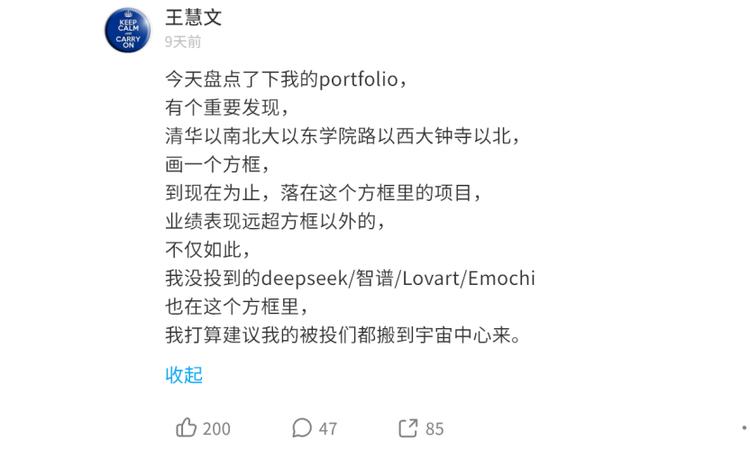
The area outlined by Wang Huiwen in Haidian, Beijing, is becoming increasingly valuable.
Zhipu is within this area. On its first day of listing, its market value was HK$52.8 billion, and by the close on May 26, it reached HK$600 billion. In just over four months, it increased tenfold. Yuezhianmian is also in this area. When Alibaba invested in 2024, its valuation was about US$2.5 billion, and now it has exceeded US$20 billion. In two years, its valuation has increased sevenfold.
DeepSeek is actually also in this area. It is located in the Rongke Information Center, surrounded by tech giants such as Apple, NVIDIA, and AMD. Its valuation has also skyrocketed. In early May, the rumored financing scale was 50 billion yuan. Just over ten days later, this figure became 70 billion yuan.
The area outlined by Wang Huiwen is like a treasure basin, attracting the attention of various capitals. On the other side of the Pacific Ocean in San Francisco, a similar wealth story is unfolding.
These figures are shocking, but the more interesting question is that in the AI era, although models can be trained in the cloud, teams can be globally distributed, and remote work is already well - established, a huge amount of wealth has flowed into a smaller area.
We want to continue talking about Wang Huiwen's area. We not only want to talk about wealth itself but also see how AI drives the flow of wealth.
1
Two Places Repriced by AI across the Pacific
Wang Huiwen's area is south of Tsinghua University, east of Peking University, west of Xueyuan Road, and north of Dazhongsi.
On the map, it is just a small square with an area of only 14 square kilometers. But in the real world, it is an asset that is attracting more and more attention and becoming increasingly valuable. In addition to Zhipu, Yuezhianmian, and DeepSeek mentioned earlier, there is a long list of names within this area.
Let's take a few examples. Mianbi Intelligence crossed the unicorn threshold in the first quarter of this year. Shengshu Technology completed a nearly 2 - billion - yuan Series B financing in April. Lovart is a star in the AI application track, and Yinhe Tongyong is one of the leading players in the domestic embodied intelligence field. All of these are within the area.
The more carefully you examine this area, the clearer your perception of "every inch of land is precious" will be.
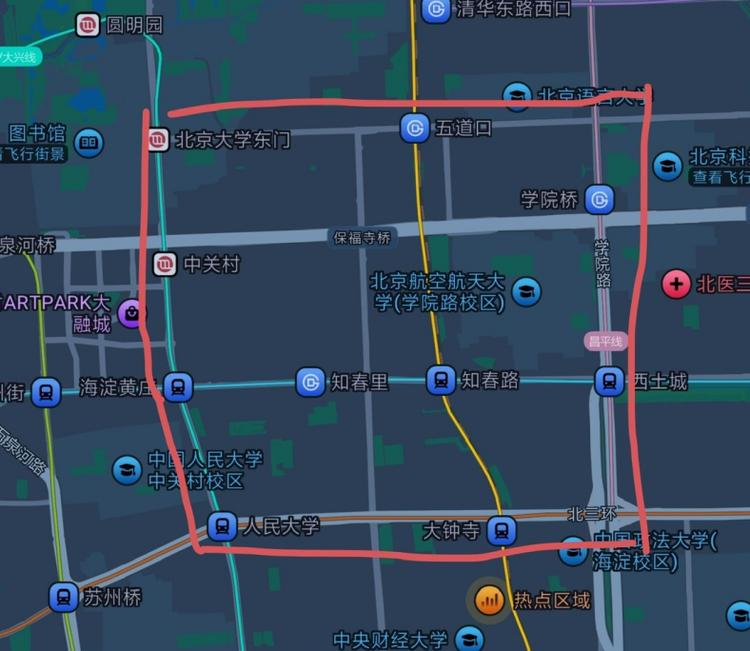
However, this area was not unique only in the AI era; it just realized its potential once again. As Wang Huiwen said, in the mobile Internet era, ByteDance, Xiaomi, Meituan, Kuaishou, and Didi were all in this area in their early days.
On the other side of the Pacific Ocean, a similar story is playing out, but with a more dramatic plot.
From 2020 to 2022, San Francisco experienced a widely - predicted decline. During the pandemic, the office vacancy rate once exceeded 30%, shops around Market Street closed in droves, and the media declared "San Francisco is dead." But then, AI arrived.
In less than a year, Hayes Valley, a neighborhood originally known for its cafes and artisanal shops, was renamed "Brain Valley" by journalists. Hacker houses like AGI House and Genesis House have become regular gathering places for AI entrepreneurs on weekends and for demo days during the week.
The densest wealth - gathering area is SoMa and the areas of Yerba Buena and Showplace Square extending to its south. Anthropic is located on Howard Street, turning this street into the "AI Alley." Harvey, a vertical AI company targeting the legal industry, has significantly expanded its territory here.
The office space released by Airbnb has been absorbed by companies like Scale AI, and Perplexity has moved into the place where Meta used to be located. In addition, AI infrastructure and robot basic model companies such as Together AI and Physical Intelligence have also gathered here.
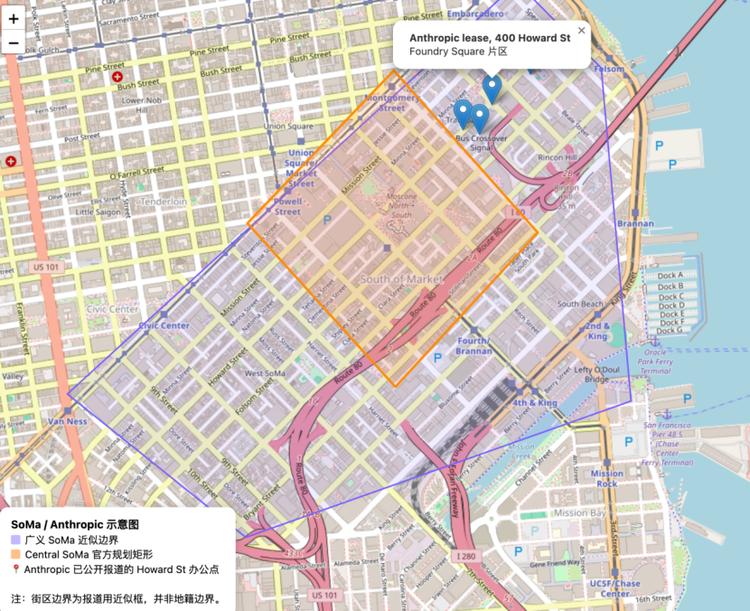
The figures of wealth growth here are even more astonishing.
In 13 months, Harvey's valuation increased from US$3 billion to US$11 billion. In less than two years, Perplexity's valuation climbed from hundreds of millions of dollars to about US$20 billion. The most - watched company, of course, is Anthropic. According to FT, it is close to completing a US$30 - billion financing round, and its valuation may reach US$900 billion.
Overall, both SoMa in San Francisco and the Haidian neighborhood outlined by Wang Huiwen have been pushed to the center of the stage by AI, creating new wealth myths.
But why has the wealth in the AI era chosen these two pieces of land?
2
What Determines the Flow of Wealth Is Not Just the "Density" of Resources
The cloud - based, remote, and distributed work models have long been highly developed, and the trend of digital nomads was once enviable. However, in the AI era, wealth has flowed into a smaller geographical space. There are at least three driving forces behind this.
"Density" is the first layer, and it is also a well - discussed one.
Let's first look at Wang Huiwen's area. Beijing has about 43% of the country's top AI talents, and more than 80% of them are in Haidian. Within the area outlined by Wang Huiwen, the most crucial elements of the domestic AI industry are concentrated.
Algorithmic talents from top universities, engineering capabilities accumulated by Internet giants, an active investor network, as well as computing power suppliers, industrial scenario providers, and continuously updated policy resources are all here. As a result of the interaction of these elements, there may be hundreds of AI companies in one building. The figures from the AI Origin Community are more intuitive. Now, more than 400 companies have settled here, and over 70% of them are AI companies.
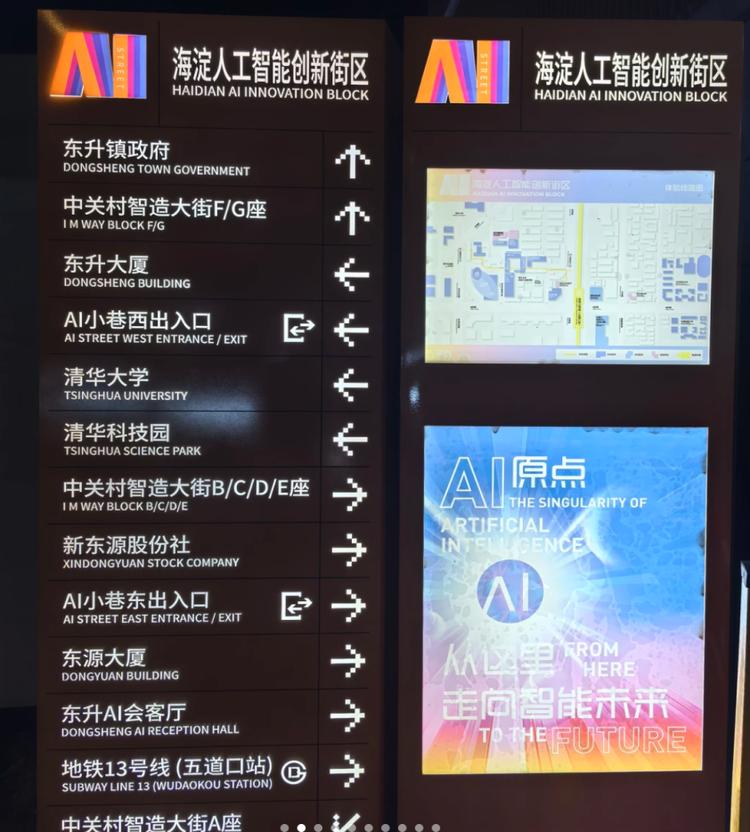
The high concentration of AI in Haidian is evident.
The direct benefit of high density is to reduce the cost of team - building. An entrepreneur in the field of embodied intelligence described his experience of recruiting in Haidian: More than 90% of his team members graduated from 985 - level universities, and more than half of them are from nearby universities such as Tsinghua and Beihang. "We even saved the talent - screening process."
This entrepreneur's project is also within Wang Huiwen's area.
San Francisco also has such high density. On Howard Street, Anthropic occupies four buildings in a row. Within a one - kilometer radius of South Park, the entrepreneurial community and venture - capital partners' offices highly overlap.
However, resource density itself is not the key factor. If that were the case, remote - collaboration tools would naturally dilute this advantage. On the contrary, in the AI era, the premium of resource density is higher than in the mobile Internet era because density also affects "speed."
In the AI era, the indicator of speed is becoming increasingly important.
Technological iteration, product iteration, user expectations, and capital consensus are all being refreshed at a breath - taking frequency. An opportunity can turn into a trap in just a few months. Being one step slower means not just falling behind but being out of the game.
Both Haidian and SoMa in San Francisco compress not only space but also time. They increase the speed of connecting talents with each other, the speed of talents' access to information, and the speed of failure and recombination by an order of magnitude, thereby increasing the overall probability of entrepreneurial success.
Even a quick failure is worth celebrating. It means that the team can change direction, talents can be re - combined, and experience can be carried into the next round of entrepreneurship. Wang Huiwen's own company, Light Year Beyond, is an example. After it was acquired, its core members quickly entered the next wave of AI projects, and some of these projects have already thrived.
However, speed is not the ultimate answer. The third layer driving the flow of wealth is judgment. This is what is truly scarce in the AI wave.
Judging which technology route will succeed, which team is reliable, whether the valuation is reasonable or a bubble, and whether to go all - in on a certain direction at this time - such judgments are often more valuable than any resources. And sometimes, these high - value judgments cannot be conveyed across the screen.
Specifically, remote meetings on Feishu or Zoom are prepared for known topics, but the conversations that truly change judgments often happen in the elevator after a meeting, in the casual chat after a dinner, or in a coffee shop during a daily encounter.
"Someone I know is also working on this" "A few of us discussed for twenty minutes at the door after watching that demo yesterday" - the tone, expression, sudden pauses, and thoughts during the chat are all important clues for forming judgments. And these clues can only be perceived through face - to - face communication.
From this perspective, the real value of Haidian and San Francisco is that they have gathered more reliable judges.
An entrepreneur in Haidian can meet ten people with different judgments on the same issue within a week, then refer to their opinions to form his own judgment, and then decide the direction of the project.
In summary, high - density resources improve the efficiency of connection, high - speed iteration shortens the trial - and - error cycle, and the scarcest thing is the judgments given by various experts at the forefront of AI.
Both the area outlined by Wang Huiwen on the Haidian map and AI entrepreneurial clusters like SoMa in San Francisco compress these three elements together.
3
More Wealth and Ambition Are Still Flowing into the Area
The dividends brought by the AI wave are showing a clearer flow direction.
It first flows to the capital owners who control computing power and models, to platform - type companies that can monetize AI capabilities on a large scale, and to high - skilled workers who can mobilize AI tools and organizational resources.
On a more macro level, a few cities and a few neighborhoods are absorbing the world's scarcest AI resources at an unprecedented speed. San Francisco and Haidian are the two most obvious poles of this trend, and they are still siphoning various resources and top talents.
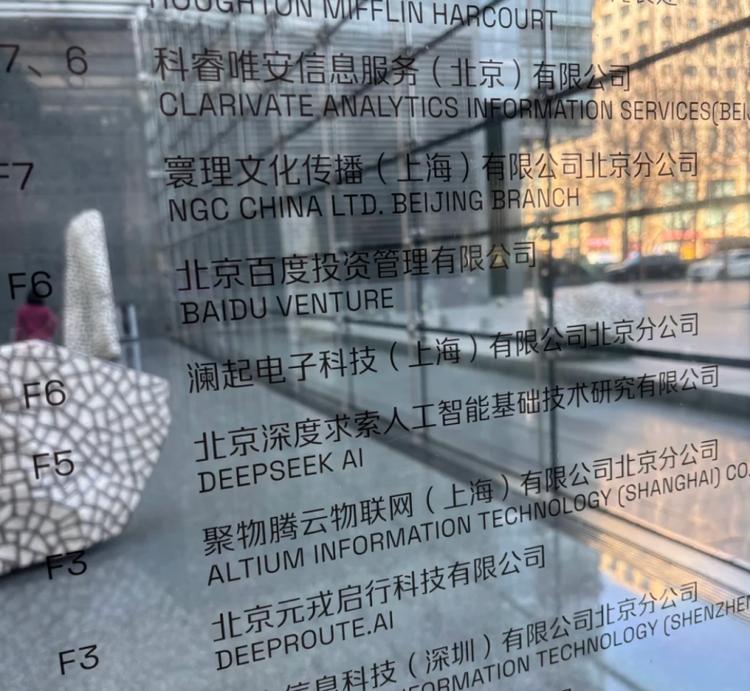
DeepSeek within the area
In San Francisco, the return of talents has changed from a community phenomenon to a real - estate phenomenon.
In 2025, AI companies accounted for a quarter of the total office leasing area in San Francisco and more than 80% of the new leasing area. YC brought the AI Startup School back to the city. The most vivid example is a cross - border migration. Leaping AI, a company that develops voice and SMS AI agents, moved its company from Germany to San Francisco. Its revenue doubled in two months, and it completed a US$4.7 - million seed - round financing in one week.
Haidian has an additional attraction. Dongsheng Town, where the Origin Building is located, is a good example. The town government vacated its office building for scientific research institutions and technology companies. In their own words, "Everything gives way to innovation."
This makes innovation more convenient and the AI exploration in Haidian smoother.
Actually, on the other hand, the story in San Francisco is mainly concentrated on the model, software, and AI infrastructure layers, while Haidian is different. The top universities, scientific research institutions, policy resources, and industrial scenarios gathered here can provide continuous support for AI from basic research, model algorithms to robot ontology research and development, intelligent hardware integration, scenario data collection, and manufacturing implementation. As a result, a large number of hard - technology projects have emerged.
On Zhongguancun East Road, Guangzixinli has integrated the computing - power anxiety into an optoelectronic - integrated computing chip. In the Tsinghua Science Park, Yuanmu Intelligence is trying to make large models understand factories and hand over production scheduling, R & D, and production processes to industrial intelligent agents. Further towards Dinghao Building, Yinhe Tongyong's humanoid robots have moved from the laboratory to shopping malls, scenic spots, and convenience - retail scenarios, enabling them to receive customers, identify needs, pick up goods, and complete deliveries.
Some of them are already mature, and some are still in the early stage, but they all make Haidian's AI cross the screen and enter more complex scenarios, becoming capabilities that can be deployed and called in the physical world.
This will of course create new wealth, and in essence, it means new opportunities.
Overall, in the AI - driven trend, the importance of "location" is more prominent. Whether it is a person or a project, its fate is likely to be determined by its location. Returning to Wang Huiwen's area, it not only outlines the flow of wealth in the AI era but also outlines the most imaginative entrepreneurial fertile ground.
For entrepreneurs who want to seize AI opportunities, if they don't enter the area, they'd better not be too far away from it.
This article is from the WeChat official account "Silicon Star People Pro," author: Li Nan. Republished by 36Kr with permission.