Even when Tesla's FSD enters the Chinese market, it will also go through the process from being usable, easy to use to being user-friendly.
Tesla's FSD Supervised version has officially landed in China. This long - awaited arrival after seven years is not just a simple introduction of features. Instead, it represents a "major test" for the world's top intelligent driving system to face China's complex road conditions, data compliance barriers, and the encirclement of local technologies. The journey from "barely usable" to "truly useful" is an inevitable path for the implementation and iteration of all intelligent driving technologies. And the ability to form a data closed - loop is not only the core key for FSD to break through the localization adaptation but also a crucial variable for China's intelligent driving to shift from catching up to leading. More importantly, the value of data has long transcended the boundaries of single - vehicle intelligence. It is not limited to the well - known Robotaxi but also deeply empowers diverse scenarios such as public shuttles, trunk logistics, and autonomous driving in closed parks, comprehensively reconstructing the underlying ecosystem and business model of the autonomous driving industry.
FSD's Entry into China: A Seven - Year - Delayed Localization Make - up Exam
Replicating the Iron Law of Intelligent Driving Technology Iteration
On May 21, 2026, Tesla officially announced that the FSD Supervised version was officially available in the Chinese market. After seven years of repeated delays, stripping away the hype in the capital market and the industry's glamour, in essence, it is a long - term iterative process for the world's top intelligent driving system to adapt to China's local rules, complex road conditions, and user needs.
Looking back on the entire arduous process, in 2019, Tesla China launched the FSD paid optional package, but it remained in a "futures state" for a long time. In February 2025, it briefly offered a limited - time free trial, but was hastily suspended due to poor adaptation and compliance disputes. To adapt to the domestic regulatory system, Tesla even voluntarily deleted brand - related terms, removing the core label of "fully autonomous driving" and defining the domestic FSD as an L2 - level assisted driving system that requires full - time human supervision, clearly clarifying the technical boundaries and safety responsibilities.
The officially announced "available in China" version is still not the full - fledged version in the North American market. In terms of the actual implementation, only the V13 basic version has been pushed in China, while North America has already iterated to V14.3.3. There is a generational gap between the two in terms of model parameter quantity, spatio - temporal memory ability, and complex scenario processing ability. Third - party test data confirms the gap: in the complex scenario of mixed traffic of people and vehicles during the morning rush hour in super - first - tier cities, the FSD Chinese version requires up to 3.8 take - overs per 100 kilometers, the success rate of unprotected left turns is only 70%, and the recognition rate of non - standard scenarios such as food delivery vehicles cutting in, non - motorized vehicles going in the wrong direction, and temporary road construction is less than 50%. The experience is significantly behind that of local intelligent driving systems such as Huawei ADS and XPeng XNGP.
The core problem is not that Tesla's algorithm architecture is backward, but the long - term lack of high - quality local scenario data. The core logic of Tesla's pure vision technology route is to rely on a large amount of real - world road condition data to feed the neural network and make up for the physical limitations of hardware perception through hundreds of millions of scenario samples. However, after entering the Chinese market, the overseas mature model is not facing a simple "copying problem". Data compliance, local training, and road scenario differences will all affect the model migration efficiency. The capabilities developed on North American roads need to be retrained, verified, and adapted in China's complex traffic environment.
To break the deadlock, Tesla has established an AI training center in Shanghai to achieve a compliant closed - loop of local data storage and training. At the same time, it has intensively recruited intelligent driving test teams in nine Chinese cities to make up for the local data shortfall. These actions precisely confirm the ultimate iteration law of the intelligent driving industry: the implementation of any autonomous driving technology must go through the complete process of "usable - easy to use - useful". Usable means the implementation of the technical framework, easy to use means the adaptation to local scenarios, and useful means the continuous evolution of the data closed - loop. No overseas technology can achieve direct dominance without making up for the lack of local data.
In the past five years, China's intelligent driving industry has risen rapidly, with the penetration rate of new cars with L2 - level assisted driving exceeding 69%. Local manufacturers have shifted from following and imitating to independently surpassing, and their core advantage lies in in - depth exploration of local scenarios and accumulation of a large amount of exclusive data. FSD's entry into China is not the beginning of a one - sided attack but a formal entry into the world's most demanding intelligent driving iteration arena, subject to the scenario testing and data reshaping of the Chinese market.
Data: The Core Foundation of Single - Vehicle Intelligence
Running Through the Entire Cycle of Intelligent Driving Iteration
In the autonomous driving industry, hardware determines the lower limit of technology, algorithms determine the iteration speed, and data determines the upper limit of technology. For single - vehicle intelligence, data is the core productive force throughout the entire process from "usable" to "useful". It is the only core variable to solve scenario short - comings, optimize algorithm models, and strengthen the safety bottom line.
2.1 Scenario Data: The Only Solution to Solve Local Adaptation Problems
The universality of autonomous driving technology is relative, while the particularity of scenarios is absolute. Road conditions in Europe and the United States are regular, and the behavior of traffic participants is standardized. In contrast, Chinese urban roads are characterized by high - density mixed traffic of people and vehicles, with non - standard scenarios, sudden scenarios, and personalized traffic behaviors emerging one after another. These are all blind spots that overseas training data has never covered.
The problems such as occupying bus lanes, randomly changing lanes on solid lines, and being unable to predict non - motorized vehicles cutting in during the early domestic trial of FSD are not essentially due to algorithmic logical errors. Instead, the model has never learned the "operating rules" of Chinese traffic scenarios through local data. In regular standardized road conditions, all intelligent driving systems can operate stably. What really differentiates the experience and determines whether the system is "useful" is a large amount of long - tail, extreme, and locally exclusive scenario data.
The core purpose of Tesla's establishment of a local data closed - loop and expansion of the test team is to continuously collect, clean, and label Chinese - characteristic scenario data, enabling the neural network to complete the "cognitive reshaping" of local road conditions. The reason why local manufacturers such as Huawei and XPeng can achieve an experience advantage is precisely that they rely on billions of kilometers of local driving data to cover complex urban road conditions, non - standard rural roads, and extreme weather scenarios.
2.2 Closed - Loop Data: The Core Driving Force for Continuous OTA Evolution of the Model
There is no ultimate version of the model in autonomous driving, only a continuously evolving system. The real industry barrier is never a one - time algorithm breakthrough but an efficient positive closed - loop of data collection - problem discovery - model training - OTA push - scenario verification.
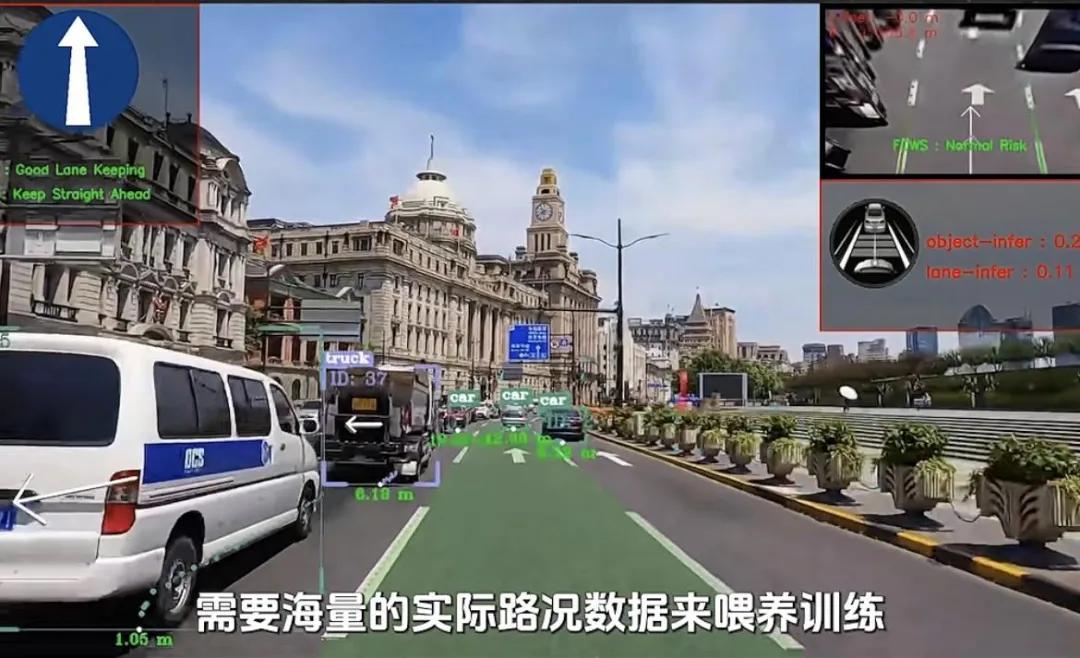
Tesla's globally leading core strength comes from its global driving data reserve of billions of miles, which supports a ten - fold increase in the number of neural network parameters and the iteration of a high - order model with spatio - temporal memory and prediction capabilities. The core pain point for the lagging iteration of the Chinese version of FSD is that the local data closed - loop is not yet mature: insufficient data accumulation time, scarcity of high - value scenario samples, and low efficiency of local training have led to a much slower model iteration speed than in the North American market.
In contrast, domestic leading players such as XPeng's VLA end - to - end large model and Huawei's ADS full - scenario intelligent driving system rely on real - time data feedback from millions of mass - produced vehicles to achieve weekly and monthly model optimizations, quickly fixing scenario bugs and improving traffic efficiency. In the second half of the intelligent driving era, as hardware homogenization becomes more and more serious, the iteration efficiency of the data closed - loop has become the core competitive barrier for automobile manufacturers.
2.3 Extreme Data: The Core Guarantee to Maintain the Safety Bottom Line of Autonomous Driving
The biggest threshold for intelligent driving to progress from "usable" to "reliable and useful" is safety and stability. Stable performance in regular scenarios only proves that the technology is usable. The ability to handle extreme scenarios such as heavy rain, backlight, alternating light and dark in tunnels, unlit roads at night, and sudden obstacles is the core standard to measure the maturity of the technology.
The probability of such extreme scenarios is low, but the risk is extremely high. Only by relying on a large amount of real - world road test data can the model learn risk characteristics in advance and form a prediction mechanism. Tesla's product definition of "human supervision" is essentially due to the lack of local extreme scenario data, making it unable to ensure full - scenario safety. The safety advantage of domestic intelligent driving systems comes from years of precipitation of local extreme road condition data, enabling precise responses to high - risk scenarios.
Data is the Underlying Cornerstone of All Autonomous Driving Business Scenarios
Industry public opinion has long focused on high - level intelligent driving in passenger cars and Robotaxi, which can easily lead to a cognitive misunderstanding: the value of autonomous driving is only limited to personal travel. In fact, from urban public commuting, trunk freight logistics, to industrial operations in ports and mines, and urban end - user livelihood services, the implementation logic of all autonomous driving commercialization scenarios is highly unified: hardware equipment ensures the usability of the scenario, and the exclusive data closed - loop determines whether the scenario can be scaled, normalized, and used at low cost. Different vertical scenarios have completely different road conditions, operating rules, and driving logics. General algorithms cannot meet the segmented needs. Only by continuously accumulating scenario - specific data and completing model iteration and optimization can the last barrier from test demos to large - scale commercial use be broken. This is also the key for leading manufacturers in various autonomous driving tracks to build core competitiveness.
In the urban public commuting scenario, Mogu Auto's Robobus represents the enabling value of data for public autonomous driving. Robobuses operate at low speeds, have fixed routes, and face dense mixed traffic of people and vehicles, with extremely high requirements for driving smoothness and avoidance safety. Relying on a large amount of real - world data from urban micro - circulations, scenic area and park shuttles, and commuting, Mogu Auto has built the world's largest bus model dataset based on a multi - modal dataset of vision and solid - state lidar. At the same time, relying on the real - world road traffic data continuously collected by roadside perception devices, it has formed a unique roadside dataset for training prediction and decision - making planning models, achieving stable commercial implementation in multiple cities.
In the trunk logistics and industrial closed - loop scenarios, the commercial value of data is even more intuitive. In the field of autonomous driving for heavy - duty trucks on trunk routes, Yingche Technology and PlusAI were able to achieve high - speed normal operation first. It is not through hardware stacking but by accumulating a large amount of data from heavy - load long - distance driving. By learning about driving conditions such as night driving, bad weather, merging and exiting on highways, and platooning, the model continuously optimizes the car - following logic, risk - avoidance strategies, and energy - saving algorithms. At the same time, it relies on vehicle wear - and - tear data for early maintenance, significantly reducing the freight accident rate and operating costs, and enabling autonomous heavy - duty trucks to move from test demos to real - world commercial use. The same applies to closed - loop scenarios such as ports, mines, and parks. Only by relying on training with exclusive terrain, operation, and obstacle - avoidance data can unmanned mining trucks, container trucks, and cleaning vehicles adapt to special operating rules and achieve all - weather unmanned operations.
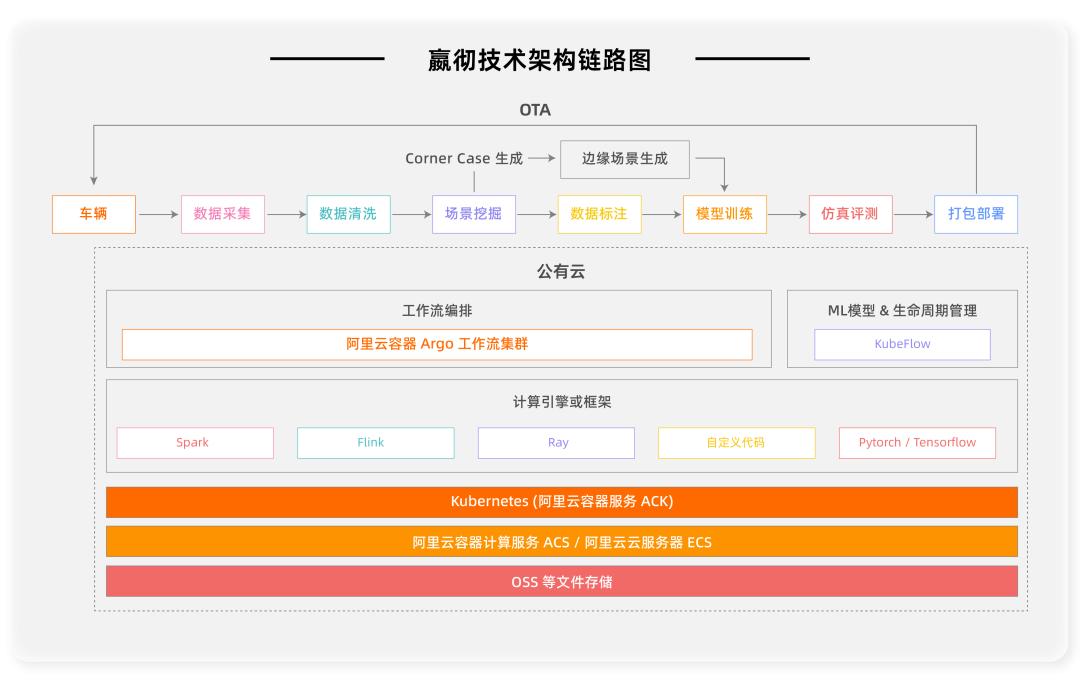
In addition, the iterative upgrade of urban end - user autonomous driving scenarios such as unmanned delivery, automatic parking, and unmanned sanitation also highly depends on data accumulation. Various real - world scenario data continuously fills the perception blind spots of equipment, optimizes traffic and obstacle - avoidance logics, enabling autonomous driving to gradually shift from an exclusive configuration for high - end passenger cars to serving urban governance and livelihood scenarios. Overall, whether it is carrying people and goods on open roads or industrial operations in closed - loop scenarios, data is the core means for autonomous driving to progress from "usable" to "useful and commercially viable". The more complex the scenario, the more obvious the value of data iteration.
The Data Closed - Loop Defines the Global Discourse Power in Autonomous Driving
The deep - seated industry significance of FSD's entry into China does not lie in whether Tesla can seize more market share but in officially announcing that the intelligent driving industry has bid farewell to the primary competition stage of "hardware stacking and parameter comparison" and entered a new era of data closed - loop competition.
In the past few years, China's intelligent driving industry has achieved a catch - up through hardware localization and rapid function iteration. However, the hardware barrier is quickly disappearing: the cost of sensors is continuously decreasing, high - computing - power chips are gradually becoming popular, and basic algorithms are open - source and shared. Currently, the only core barrier that cannot be replicated or quickly caught up with is local scenario data and an efficient data iteration system.
China's data localization compliance policy has built a data moat for the local industry. All overseas intelligent driving technologies that want to take root in the Chinese market must adapt to local data rules and accumulate local scenario data, which provides a time window for domestic automobile manufacturers to continuously catch up and achieve surpassing.
Tesla has the world's top general data closed - loop ability but lacks China - specific scenario data. Domestic automobile manufacturers, relying on the advantage of mass - production scale, continuously accumulate all - dimensional data from urban roads, livelihood scenarios, and industrial operations, gradually establishing an advantage in local adaptation, scenario implementation, and business iteration. In the future competition of autonomous driving, it will no longer be a comparison of single algorithms and hardware but a comprehensive competition of data volume, data quality, closed - loop efficiency, and scenario adaptability.
For China's intelligent driving industry, this is a rare opportunity. By firmly safeguarding local data sovereignty and continuously delving into scenario - based data closed - loops, local manufacturers can continuously amplify the local experience advantage and make up for technical short - comings. In the future global competition of autonomous driving, it will ultimately come down to a data competition. China's intelligent driving industry, with the advantage of local scenarios and data, is also expected to grow from a follower to an important definer of global industry development.