Warsh took over the scepter, and Bernanke's signposts were overturned.
On May 22, 2026, in the East Room of the White House. Kevin Warsh placed his right hand on the Bible, and Supreme Court Justice Thomas finished reading the oath. Trump stood a few steps away, smiling. This was the first time since Alan Greenspan in 1987 that a Federal Reserve Chair had been sworn in at the White House. The confirmation result of 54 votes in favor and 45 votes against was the most partisan vote in the history of Federal Reserve Chair nominations.
In his speech, Warsh cited Greenspan and mentioned Paul Volcker, but he didn't mention one person at all - Ben Bernanke. He had worked with Bernanke for five years and fought side by side in those all - night conference calls in 2008. But at this moment, he deliberately avoided that name.
This was not just a simple oversight. What Warsh wanted to overthrow was precisely the policy framework that Bernanke had built over eight years. He wanted to shrink the bloated balance sheet from the Bernanke era, reduce forward guidance, and redefine the inflation gauge. The market's reaction was more honest than any speech: In the week when Warsh took office, the yield on the 30 - year U.S. Treasury bond reached its highest level since 2007, and interest - rate futures fully priced in the expectation of an interest - rate hike before the end of the year - while six months ago, the market was betting on two to three interest - rate cuts.
Overthrowing a framework doesn't mean solving the problems that the framework tried to answer. Warsh could avoid Bernanke's name, but he couldn't avoid the fundamental contradictions that Bernanke had faced - transparency and flexibility, intervention and restraint, emergency tools and normalized risks. These contradictions don't disappear with the change of the Chair; they will reappear in new forms in a new economic environment.
To understand why Warsh is so different from Bernanke, we first need to start with who Warsh is.
Who is Warsh? An "atypical" central bank governor spanning three sectors
Completely different from Bernanke's "academic" label, Warsh's resume is full of a different path.
He was born in Albany, New York in 1970. He entered Stanford University as a tennis special - recruited student in high school and obtained a bachelor's degree in public policy in 1992. He originally wanted to continue studying economics, but at his father's insistence, he switched to law. He graduated from Harvard Law School with a Juris Doctor degree with honors in 1995.
After graduation, Warsh didn't join a law firm. Instead, he joined the mergers and acquisitions department of Morgan Stanley's New York headquarters and worked there for seven years, successively serving as vice - president and executive director. This Wall Street career allowed him to be deeply involved in dozens of large - scale corporate mergers and acquisitions and also helped him build a deep network of contacts in the financial circle. In the "9·11" attacks in 2001, he witnessed the collapse of the World Trade Center with his own eyes. This experience prompted him to leave the private sector and turn to public service.
In 2002, Warsh joined the George W. Bush administration, serving as a special assistant to the President for economic policy and the executive secretary of the White House National Economic Council, responsible for finance, capital markets, and banking. Four years later, he was nominated to the Federal Reserve. In January 2006, at the age of 35, Warsh became the youngest member of the Federal Reserve Board in history.
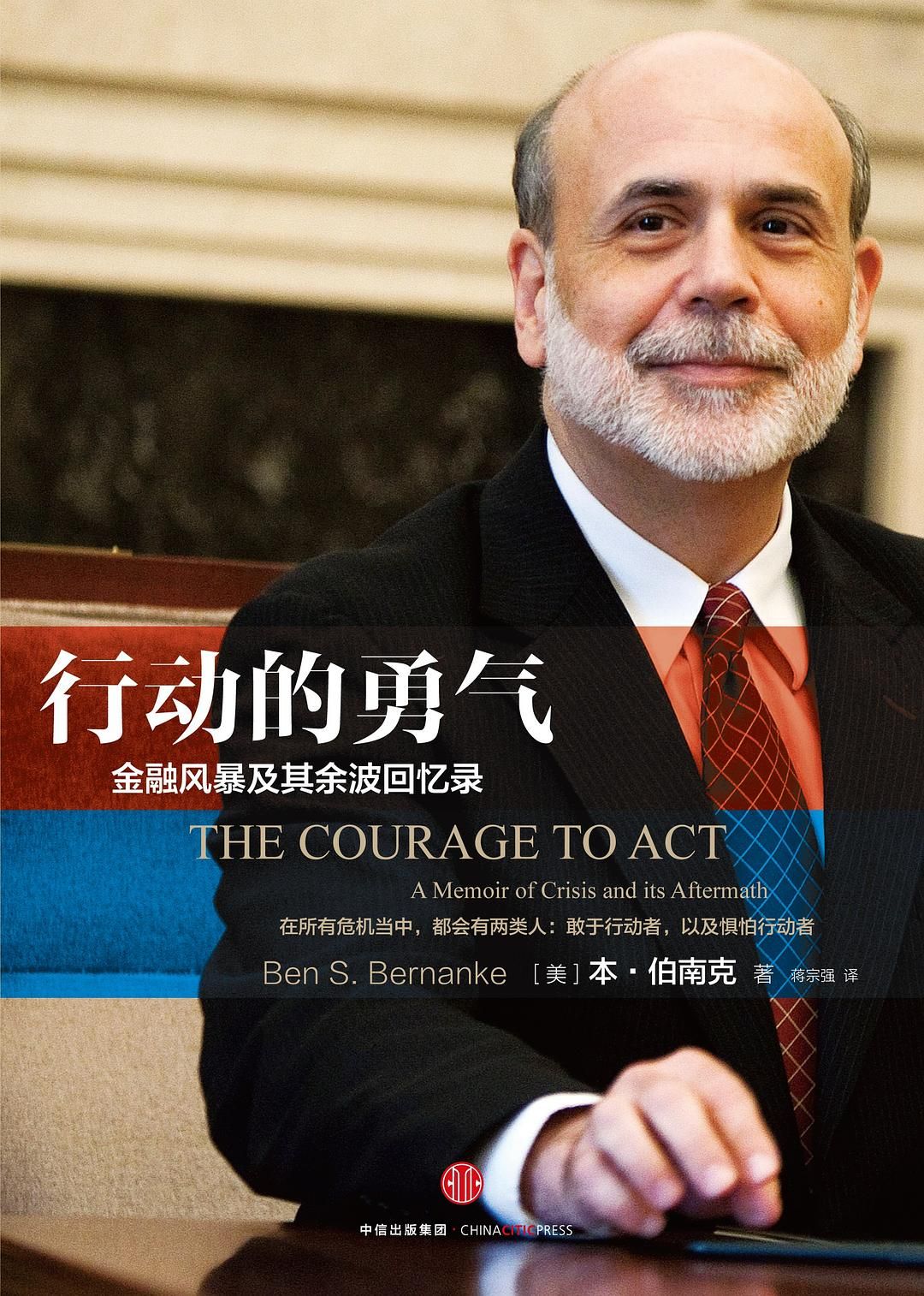
Bernanke later commented on Warsh in The Courage to Act that "his political and market acumen and his numerous contacts on Wall Street prove his valuable worth."
David Wessel, a Pulitzer Prize winner in the United States, once compared Warsh with Bernanke, then - Vice Chairman Donald Kohn, and then - President of the New York Fed Timothy Geithner as the "Four Musketeers" - this evaluation fixed Warsh's position in the core circle of the Federal Reserve's crisis response.
In addition, Warsh is the wealthiest among all former Federal Reserve Chairs. His wife, Jane Lauder, is an heir to the Estée Lauder fortune, and his father - in - law, Ronald Lauder, is not only a 60 - year - long friend of Trump but also a major donor to the Republican Party. Warsh's personal assets are estimated to be between $131 million and $209 million. This hidden power thread later became a key factor in determining his nomination fate.
Why is Warsh so different from Bernanke?
The differences between Warsh and Bernanke cannot be simply summarized by the labels of "hawk" and "dove". Three deep - seated dividing lines place their decision - making coordinates in different positions.
The first line: Academic vs. Wall Street, the confrontation between data logic and market intuition.
Bernanke is a standard economist: He taught at Princeton University for 17 years, published a large number of academic papers, and tended to use theories and data to persuade the audience in public. His entire decision - making framework is rooted in a twenty - year academic study of the Great Depression.
Warsh doesn't have a doctorate in economics, but he has honed another ability in Morgan Stanley's mergers and acquisitions transactions - he trusts more the intelligence and intuition captured from the front line of Wall Street.
At the emergency FOMC meeting in September 2008, when most officials had turned their attention to deflation risks and liquidity shortages, Warsh still expressed his concern about inflation with market intuition: "Although the prices of the entire basket of commodities - not just energy, metals, and food - are falling, which is encouraging, I still can't put aside my concerns about the upside risks of inflation." Regarding the impact of Lehman's bankruptcy, he added: "The evidence from the past 24 to 48 hours is still unclear, and it will take a few more days to see if the market can find a clear balance on its own."
While Bernanke was determined to extinguish the fire driven by the model's conclusion, Warsh smelled the long - term inflation risks caused by over - issuance in the market signals.
The second line: Fear of deflation vs. Vigilance against inflation, different historical reference coordinates.
Bernanke's entire decision - making framework takes the Great Depression as the origin. The most painful picture in his mind is the decade - long disaster in the early 1930s when more than 7,000 banks failed one after another, credit supply collapsed, and the economy fell into a deflationary spiral. He wrote in The Courage to Act that the Federal Reserve in the 1930s had the tools but lacked the courage to act. He would rather bear the side effects of "doing too much" than tolerate the irreversible consequences of "doing too little".
Warsh's reference is the high - inflation era of the 1970s. Influenced by the Friedmanite monetary school, he is more worried about the long - term consequences of monetary easing. Warsh, who once assisted Friedman in his research at Stanford, repeatedly emphasized the statement: "Inflation is a choice." The Federal Reserve's balance sheet swelled from less than $1 trillion in 2008 to more than $6 trillion, which made Warsh think of not the deflationary spiral of the 1930s but the tragic scene in the 1970s when Paul Volcker had to use a 20% interest rate to force a brake after inflation expectations became unanchored.
Two "worst - case scenarios" determine two directions.
The third line: Intervention in credit vs. Institutional discipline, the divergence on QE2.
The two fought side by side in the early days of the financial crisis. Warsh supported QE1 and zero - interest rates in 2008, and Bernanke also relied on his market intelligence and political connections.
But in November 2010, after the Federal Reserve launched the second round of quantitative easing (QE2) worth $600 billion, a rift appeared. Warsh called the bond - buying program a "poor substitute for growth - promoting policies" in a Wall Street Journal commentary and told Bernanke face - to - face: "If I were in your position now, I wouldn't lead the Federal Reserve in this direction." But he still voted in favor, only to submit his resignation two months later.
In the history of the Federal Reserve, there are very few governors who have voluntarily resigned due to policy differences. Warsh doesn't oppose unconventional intervention but opposes the normalization of unconventional tools. He believes that QE1 was "putting out the fire", while QE2 and later became "artificial stimulus", with diminishing marginal returns and making the market dependent on the Federal Reserve.
The framework left by Bernanke: Transparency, tools, and the courage to act
No matter how Warsh adjusts the direction, three things left by Bernanke are still the underlying logic of the Federal Reserve today. They are not dogmas but three sets of unavoidable dilemmas - Bernanke had to make choices in the crisis, and Warsh also needs to make choices in peacetime.
The first set of coordinates: The benefits and costs of transparent communication.
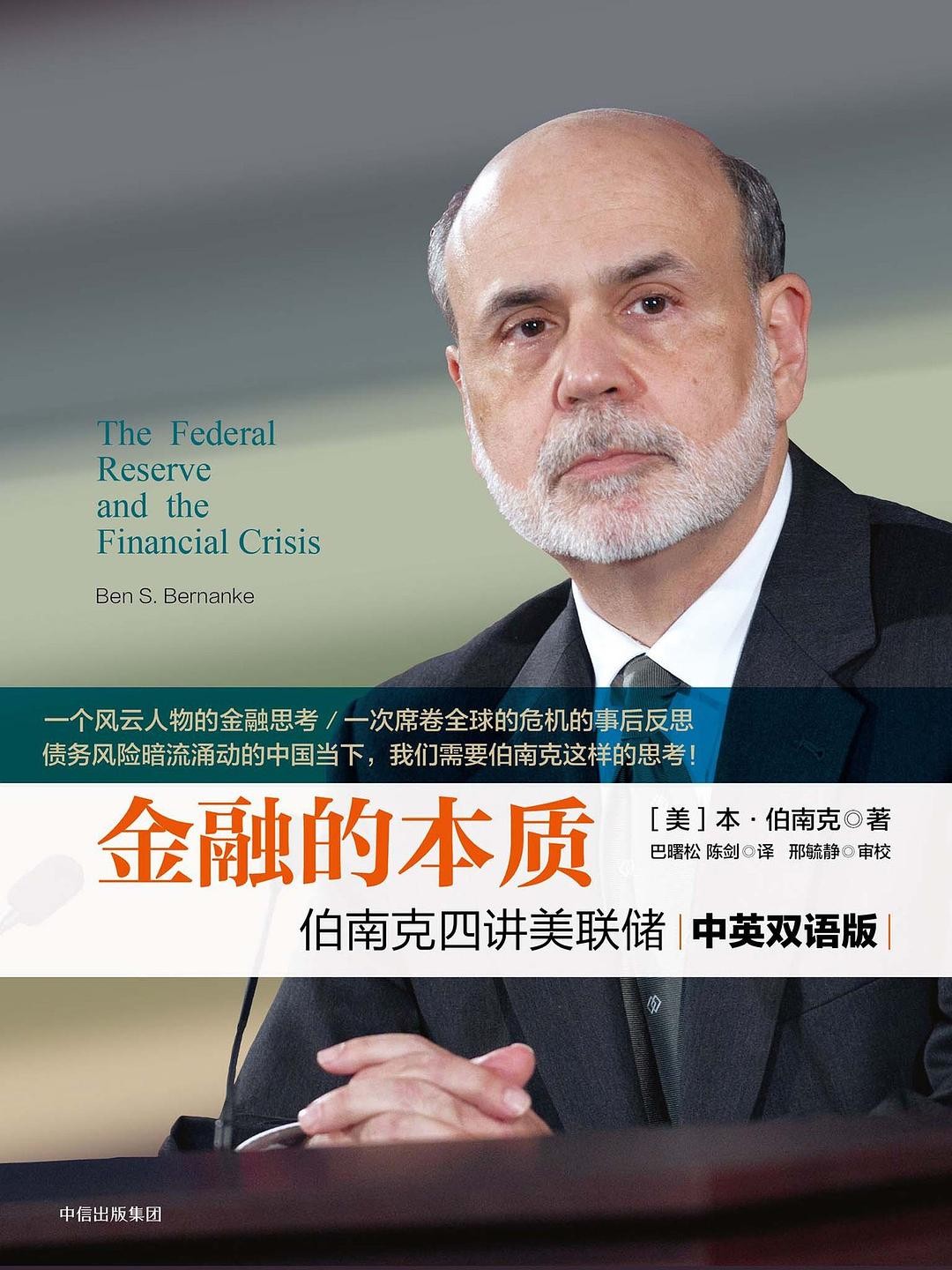
Bernanke has a frequently - quoted saying: "For monetary policy to have an impact, 98% is about communication and 2% is about the policy itself." (Excerpted from The Federal Reserve and the Financial Crisis).
He overthrew Greenspan's "deliberate obfuscation" and introduced regular press conferences, dot plots, and quarterly economic outlooks. This transparent mechanism was tested in the 2008 crisis - when Bernanke explained "what is quantitative easing" in language that ordinary people could understand, the signal he sent was: The Federal Reserve was not hiding anything, was not in a panic, and everything was under control.
But transparency comes at a cost. The dot plot has gradually been interpreted by the market as a policy commitment rather than a prediction, and the Federal Reserve has been locked in by its own forward - guidance management. In 2013, when Bernanke merely hinted at "a possible reduction in bond - buying", it triggered a global "taper tantrum". The side effects of transparency were fully exposed at this moment.
Warsh clearly stated that he wants to reduce forward guidance and downplay the dot plot. This kind of reflection makes sense, but the problem is that the market has gotten used to the transparent paradigm. Will a sudden and significant reduction in communication lead to confusion in expectations? When a crisis strikes again, what the market needs is precisely a clear, firm, and predictable voice.
The second set of coordinates: The emergency value and normalization risks of unconventional tools.
The QE, forward guidance, and term auction facilities developed by Bernanke during the crisis prevented a second Great Depression. But the problem is that these tools have been used for a long time after the crisis and have gradually changed from "unconventional" to "conventional". The Federal Reserve's balance sheet has swelled from $900 billion in 2008 to still as high as $6.7 trillion today. The market has gotten used to the idea that "the Federal Reserve will provide a safety net", and moral hazard and asset - price bubbles have accumulated accordingly.
Warsh advocates a significant reduction in the balance sheet, which means choosing to "be more worried about normalization risks" in this dilemma. This choice is reasonable, but the cost is that when the next crisis comes, the market may not believe that the Federal Reserve still has the ability or willingness to expand the balance sheet again, and this expectation itself will accelerate the arrival of the crisis.
The third set of coordinates: The courage to act and the difficulty of exiting.
In The Courage to Act, Bernanke wrote a detail. In 2009, a senior senator asked him: "What gives you the right to use taxpayers' money to save those Wall Street bastards who caused the crisis?" Bernanke's answer was: "If I don't save them, the small businesses in your constituency that rely on bank loans to operate won't be able to pay their employees' salaries next month."
This is the core of Bernanke's decision - making philosophy: In the face of extreme uncertainty, it's better to do too much than too little. He said in a speech in 2014: "If we didn't do something, the United States might have fallen into complete deflation in 2011. History has clearly told us that by then, it would be too late."
But the "courage to act" may turn into "recklessness in action" in peacetime. Bernanke himself also admitted that if he had known that QE would last so long, he would have considered an exit strategy earlier. He didn't provide a clear exit roadmap - this is not his individual mistake but a common dilemma for all crisis managers.
This is precisely Warsh's historical opportunity. What he takes over is not a crisis but the "after - effects" left by a crisis. His combination of "interest - rate cuts + balance - sheet reduction", his adjustment of the inflation measure, and his reflection on transparency are all essentially answering the question of "how to exit". But exiting itself also has risks. Warsh needs to walk a tightrope between "exiting" and "stability".
Even out of office, he is still defining the boundaries for the Federal Reserve
After leaving office, Bernanke joined the Brookings Institution as a distinguished senior fellow. His influence continues in three ways.
First, he is the most authoritative guardian of the Federal Reserve's independence. In July 2025, when Trump publicly threatened to fire Jerome Powell and demanded a significant interest - rate cut, Bernanke and Janet Yellen co - authored an article with unusually harsh wording: "As former Federal Reserve Chairs, we know from our own experiences and history that the Federal Reserve's ability to act independently is crucial for its effective management of the economy. Recent interventions in this independence... may cause long - lasting and serious economic damage." They traced historical lessons - the Federal Reserve was forced to suppress interest rates during World War II, leading to post - war inflation, and Arthur Burns kept interest rates low under pressure in the 1970s, ultimately triggering stagflation. This is the second time that former Chairs have co - signed an appeal to respect the Federal Reserve's independence. In 2019, four former Chairs - Paul Volcker, Alan Greenspan, Ben Bernanke, and Janet Yellen - jointly published a signed article in support of Powell. Volcker has passed away, and Greenspan is 99 years old. Bernanke is the only crisis responder still active in public discourse today.
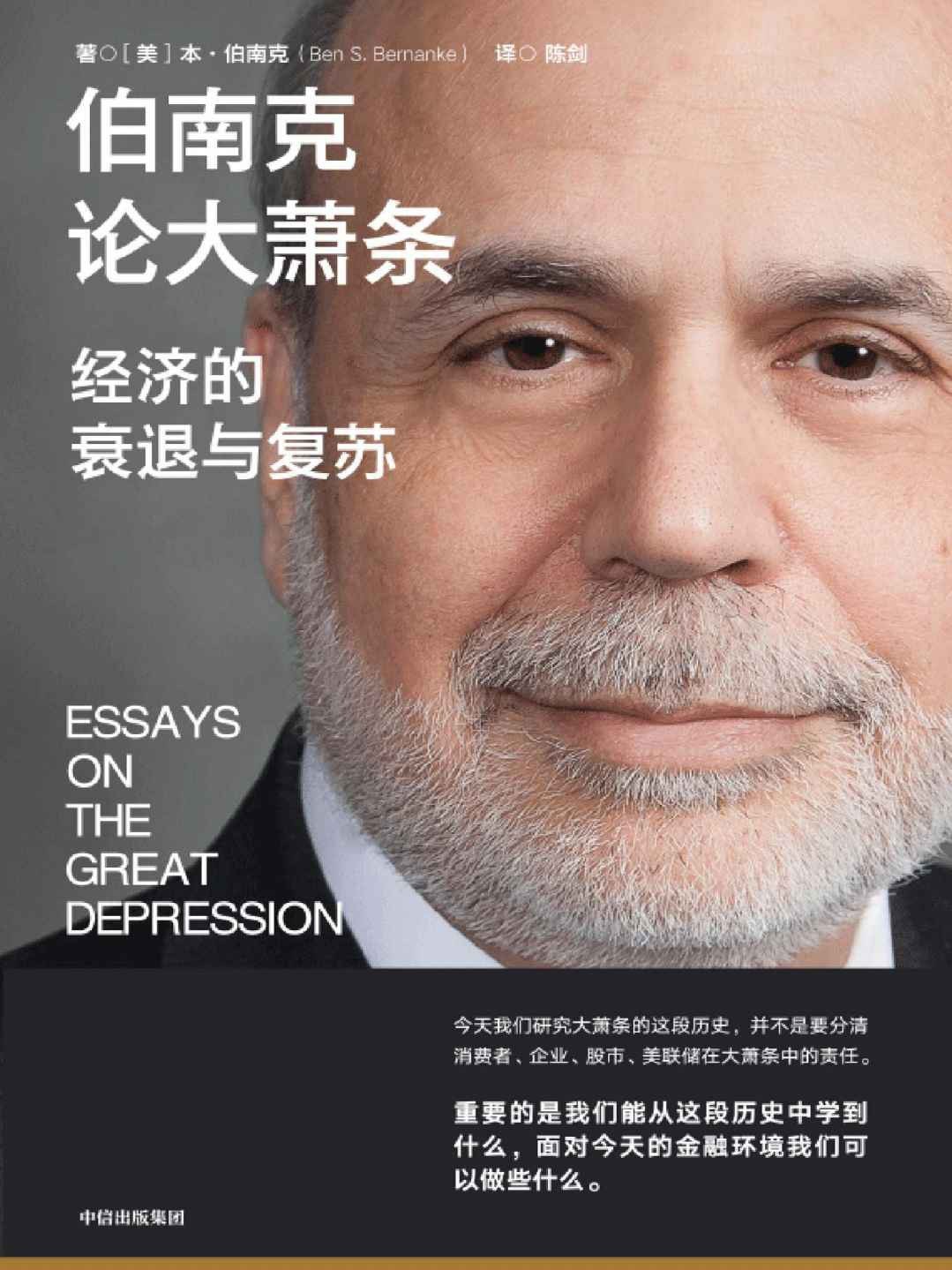
Second, his academic framework is still the standard paradigm for understanding the financial crisis. In November 2025, Bernanke published an academic article on "credit, debt - deflation, and the Great Depression" at the Brookings Institution, continuing to deepen his research on the amplification mechanism of the financial crisis. The "financial accelerator" theory has long become standard content in macroeconomics textbooks and has been incorporated into the crisis - warning framework by central banks around the world. The origin of these achievements is Essays on the Great Depression.
Third, his latest views on inflation and central - bank communication still influence policy discussions. In March 2025, Bernanke pointed out in a speech: "The inflation we have experienced has made future inflation control more difficult because businesses will find it easier to raise prices, consumers may be more sensitive to inflation, and their expectations may be adjusted." He suggested that the Federal Reserve clearly distinguish between the basic forecast and risk scenarios in its policy statements. This transparent communication method is an idea that Bernanke has repeatedly advocated.
Conclusion
Currently, War