A "love letter" worth 1.1 billion hides a forgotten century-old business group
On May 26, the box office of Love Letter to Grandma had exceeded 1.1 billion yuan.
When it first entered the May Day holiday movie season, its screening rate was only 1.6%. The box office on its opening day was 3.77 million yuan, and the total box - office predictions given by multiple platforms were only in the tens of millions of yuan range. However, 25 days later, it became the first domestic film to join the "billion - yuan club" after the Spring Festival movie season in 2026.
This is an unprecedented "box - office miracle". More than 90% of the film is in the Chaoshan dialect, which is hard for non - locals to understand. All the actors are ordinary people, there are no popular stars, no big - budget production, and the cost is rumored to be only 14 million yuan. At the beginning of its release, in most people's perception, it was just another niche art film destined to be buried in the movie season.
Until May 5, the "plot" completely reversed. It got a score of 9.0 on Douban, which later rose to 9.2. It became the domestic drama with the highest score in the past decade. As the word - of - mouth spread, the screening rate climbed all the way to over 50% at its peak. The proportion of audiences from non - Chaoshan areas also increased from 10% at the beginning to over 50%.
The movie first gained momentum in Chaoshan. During the preview stage, the box office in Shantou alone exceeded 3.6 million yuan. Then it spread across Guangdong Province and then the whole country. Its box office exceeded 100 million yuan on the tenth day of its release. On Mother's Day, it topped the national single - day box - office chart. This curve that spread from the south to the north and expanded layer by layer from the Chaoshan circle was jokingly called the "Northern Expedition" by netizens. A film critic mentioned in a podcast that for a long time, the Chaoshan dialect was a rare guest on the big screen. This time, the Chaoshan people "stood up straight".
The story itself is not complicated. Xiao Wei, a grandson in debt, believing the family legend that "his grandfather became a billionaire in Thailand", went to Thailand to find his relatives without telling his grandma (Ye Shurou), but dug out a truth that spanned half a century. His grandfather, Zheng Musheng, died in a foreign land in 1960. For decades, it was a stranger, Xie Nanzhi, who wrote letters, sent money, and supported the family in his name.
Blue Hongchun also handled the story very restraintly. There were no slow - motion shots or emotional background music when Zheng Musheng died. He was pushed into the river by outlaws by the river, and his life came to an abrupt end. Years later, after Shurou learned the truth that Nanzhi had guarded for decades, she went to Thailand to express her gratitude. But by then, Nanzhi had lost her memory. She just stared blankly at Shurou and repeatedly asked, "Did you receive the salted pork?"
How did such a movie that almost had "niche" written all over it succeed?
No stars, pure dialect, strong regional and artistic qualities are almost equivalent to a "box - office poison" in the eyes of traditional film and television capital. Blue Hongchun faced repeated rejections when looking for investment in the early stage. For the first two months of casting, there was no income at all. The breakthrough came from a simple method. Zhu Liyun, a Chaoshan native who had worked as an accountant and a planner in the team, rewrote the script into a more readable novel, hoping to impress investors.
According to the crew members' recollection, nearly half of the funds were raised by "telling the story until the investors were moved to tears". More than 70% of the investment came from local enterprises with the same cultural heritage. Among the four producers, Jin Ant Film, Rongde Holdings, and Lichun Film are all based in Shenzhen. Only Damai Entertainment, the main promoter, is a well - known name in the industry.
In addition to corporate investment, the movie also used "crowdfunding". According to Fan Deng, the founder of Fanshu App, a Chaoshan young man told him that part of the investment in this movie was raised by more than 100 Chaoshan young people, "tens of thousands of yuan per person", and many of them were purely driven by sentiment and didn't expect to make money.
No one expected that this sentiment would eventually turn into the most cost - effective investment in the Chinese film industry in recent years. According to the domestic box - office sharing convention, the producer can get about 40% of the total box office. If the final box office, as predicted by various platforms, is between 1.6 billion and 1.8 billion yuan, the producer's share will reach 600 million to 700 million yuan, and the return on investment is estimated to be 30 to 50 times by the industry.
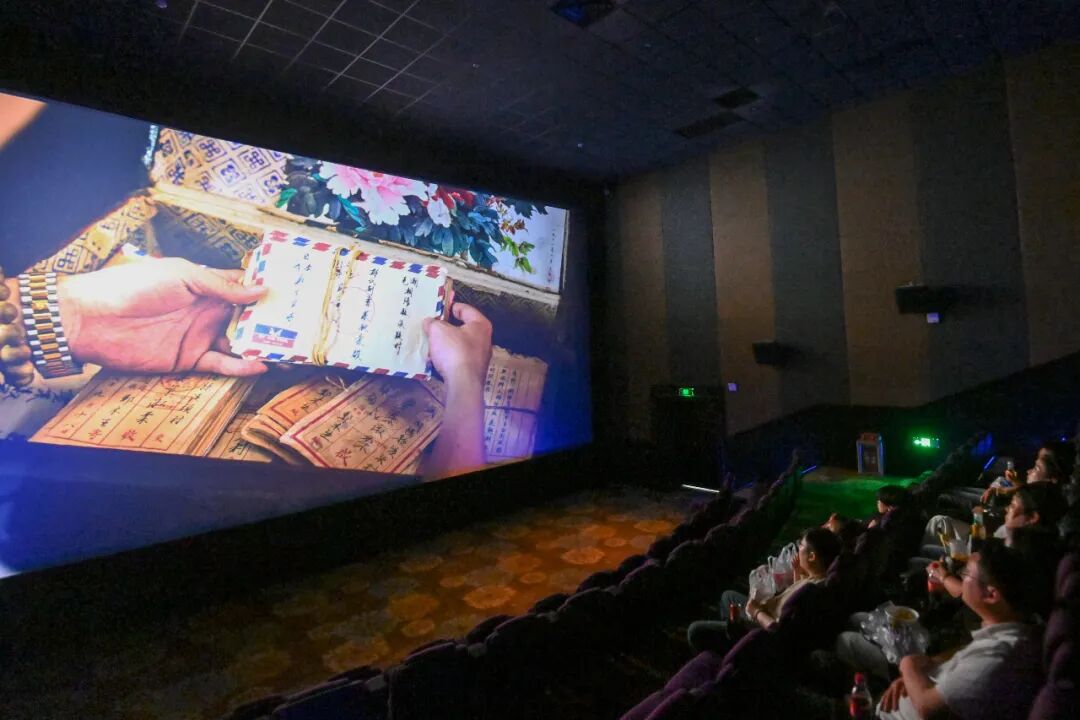
Source: Visual China
Since the movie was released until the time of writing, the cumulative increase in Damai Entertainment's stock price has exceeded 8%. Although the producer Zheng Xuanxuan said cautiously afterwards that the movie was not as "low - cost" as the outside world rumored, the input - output ratio of this business is enough to make a bunch of big - budget movies ashamed.
Before the release, Blue Hongchun had a clear plan in mind. As the founder of Lichun Film, he was not only a director but also a businessman. He set the passing line for himself as a score of 8 on Douban and believed that he could get back the cost with the box office in Chaoshan and Guangdong.
Cost - saving was a constant theme. Although casting took nine months, there was only one criterion: "empathy is more important than acting skills", rather than relying on popular actors. Wu Shaoqing, who played the grandma, is an 84 - year - old local woman who had never acted before. Her improvised line "Dying so early, how can a widow and orphans survive" became the finishing touch. The leading actress, Li Sitong, is a student majoring in finance at Guangdong University of Finance and Economics. Many Chaoshan - native extras in Hengdian specially took leave to come back and act for free...
Many "local methods" were also used in shooting. An iPad was used as a monitor. The moving shots were achieved by tying the camera to the steel pipe support of an electric tricycle. For the cross - border shooting in Thailand, there were only four people, a single - lens reflex camera, and a set of sound - recording equipment...
The promotion and distribution were also grassroots. The roadshows initially only took place within Guangdong Province. The list of thanks at the end of the movie was described by netizens as a "map of Shantou snacks". Most of the sponsors were local milk tea shops, beef ball shops, and preserved fruit stalls...
At the beginning of the movie, Xiao Wei's self - confession goes like this: "Grandma said that one should have a sense of righteousness. One without righteousness is not worth making friends with." Inside the screen, it is a story about "righteousness"; outside the screen, it is also a group of people who, relying on "righteousness", made this business happen.
01
Credit
Why can the Chaoshan people "pool" a movie in this way?
The Chaoshan people often use the local dialect phrase "at the end of the province and the corner of the country" to mock the remoteness of their hometown. Surrounded by mountains on three sides and facing the sea on one side, with a dense population and limited production resources. Since the Qing Dynasty, countless Chaoshan youths boarded the "red - headed boats" and sailed across the sea to Siam, Singapore, and Malaya to make a living.
It is recorded that between 1822 and 1858, in 36 years, the number of Chinese living in Siam soared from more than 40,000 to more than 1.5 million, and three - fifths of them were Chaoshan people who set sail from Zhanglin Port. A well - known Chaoshan folk song goes: With a stream of tears and a boat of people, a bath towel in hand to go overseas... The steamship sails across the Qizhou Ocean, and looking back, I can no longer see my hometown.
In that environment, there were no established rules to protect these overseas Chinese. The only thing they could rely on was their fellow villagers, clansmen, and the trust based on blood and geography. In the movie, 17 - year - old guaranteed and arranged accommodation for Musheng, a stranger he just met, all based on this kind of trust.
What embodies this credit system is the "overseas Chinese remittance letter". In the Chaoshan dialect, "pi" means "letter". "Overseas Chinese remittance letter" is a combination of the remittance and the letter sent by overseas Chinese back to their hometown, emphasizing the "integration of money and letter". In 2013, it was included in the Memory of the World Register by UNESCO.
In an era lacking supervision, an overseas Chinese remittance letter had to cross the sea twice and be accurately delivered to two places. It all relied on the conscience of the deliverymen and the credibility of the remittance - letter agency owners. In the Shantou Overseas Chinese Remittance Letter Cultural Relics Museum, there is a seal on the envelope of a remittance - letter agency that reads: "If the original remittance letter is lost during the postal journey, the remittance money will be returned." It means that if the letter is lost on the way, the remittance - letter agency will still compensate the recipient with the money.
The scene in the movie where people pool money for a strange young man is not fictional.
In a remittance - letter agency in Siam, a young man who had just "gone overseas" was holding an empty pocket and crying anxiously. His mother was sick, but he had no money to send back to his hometown. The news spread among the fellow villagers, and a group of unfamiliar Chaoshan people gathered around and stuffed the money in their hands to him one by one, saying, "Don't worry, there are fellow villagers here."
This scene condenses countless real stories of overseas Chinese. In an era when there were no banks, no contracts, and no official institutions to support people in a foreign land, a Chaoshan person could only rely on another Chaoshan person.
Blue Hongchun said that more than 90% of the details in Love Letter to Grandma come from such real historical events. Even Zheng Musheng has a prototype - his mother's uncle, an overseas Chinese who made a living by pedaling a tricycle in Siam. He sent his hard - earned money back home to support his younger siblings to go to college, and only his ashes finally returned to his hometown.
Blue Hongchun himself spent 10 years gradually building up "credit" for the business of dialect movies.
When shooting the documentary Taste of the Four Seas, his team visited several countries and more than 300 Chaoshan families scattered in Southeast Asia, listening to their stories and regrets caused by "going overseas". Most of these stories did not involve grand farewells, and the narrators described them casually, "as if they were talking about other people's things". But he "felt sad every time he listened to one". After finishing the outline, he didn't rush to write the script. Instead, he conducted a six - month investigation first, self - mocking as "an undergraduate doing a doctoral thesis".
Many people he met during these visits later became part of the movie. Blue Hongchun recalled that the members of the Thai Teochew Association came to him voluntarily to be extras. In a Chaoshan - native village in Vietnam, they met Sister Fen, who was in her seventies and still insisted on teaching children Chinese and the Chaoshan dialect. After the movie became popular, Sister Fen also returned to Shantou with the help of others and set foot on the land that her father had missed day and night.
Blue Hongchun said in an interview that in the past, many people couldn't return home for decades due to various reasons. Their families or friends would hide the news of their death, continue to send money home, and write letters in the tone of "he is still alive". In that era, the illiteracy rate was high. Writing a letter required dictation and asking a "gentleman" to write on their behalf. The recipients were often illiterate and needed someone to read the letter to them. A remittance letter often passed through the hands of two or three people, resulting in various miscommunications and misunderstandings. This layer of "implicit aesthetics and drama" was written into the plot by him.
The semi - classical and semi - vernacular phrases in the letters in the movie, such as "I admire your ability to manage the family, but don't be overly thrifty. I'll take care of everything" and "I'm very glad to see the children growing up healthily. This is the pride we've achieved together", when read in the Chaoshan dialect, are almost like another form of ancient poetry. Blue Hongchun said that the characters of Shurou and Nanzhi don't have a complete story prototype. "They are just like the dear relatives around him that he is familiar with."
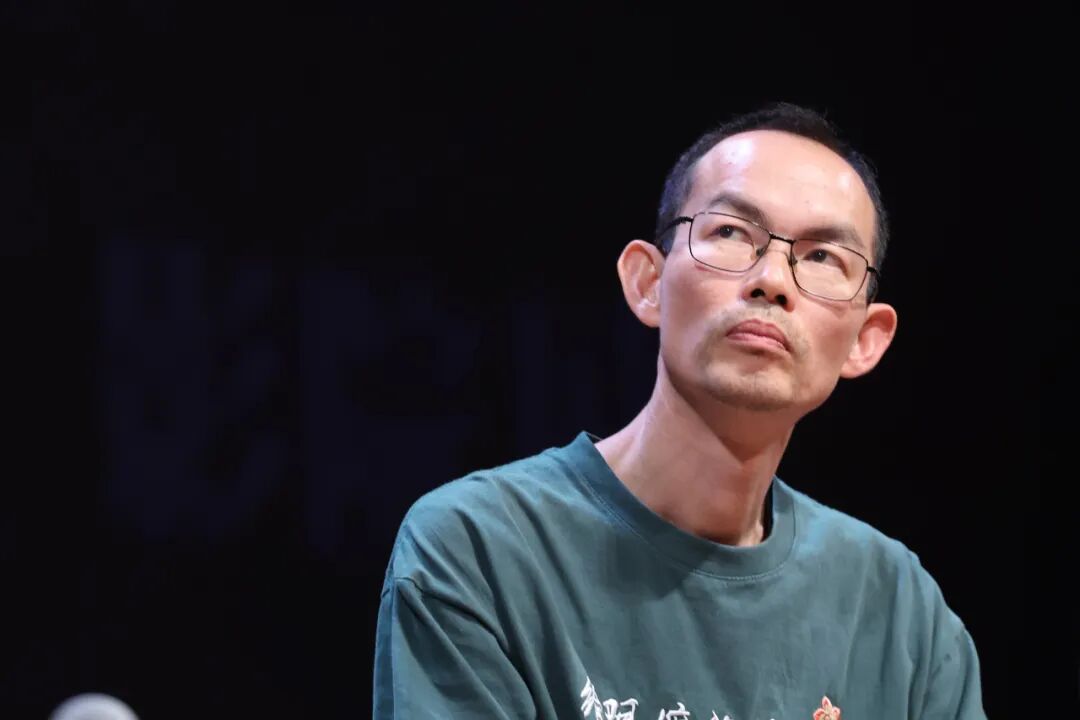
Director Blue Hongchun. Source: Visual China
Born in Shantou in 1985, he graduated from the Chinese Department of South China Normal University. He worked as a documentary director at Phoenix Satellite TV for 6 years. In 2016, he resigned to start a business, embarking on a 10 - year journey - he wanted to make movies for the Chaoshan people.
In 2018, he and his partner Zheng Runqi made the first Chaoshan - dialect theater movie in China, Dad, I Can Do It, with a cost of several million yuan. It finally achieved a box office of 47.07 million yuan. The profit was not much, but it proved one thing: the market lacked such rooted and regional stories.
In 2022, Take You to Meet My Mom told the story of a Chaoshan young man from Shenzhen taking his divorced girlfriend from Hangzhou back to his hometown to meet his parents. The cost was about 10 million yuan, the box office was 23.74 million yuan, and it got a score of 7.4 on Douban.
However, these two movies were almost purely "regional business". Guangdong Province contributed 97.8% and 97.9% of the box office respectively.
After making movies about his father and mother, Blue Hongchun naturally thought of his grandma for the third one. It was also the good reputation and the production team accumulated from the previous two movies that made the Chaoshan - dialect movie break through the circle for the first time. Zheng Runqi, who accompanied him to "give it a try" back then, played the grandson Xiao Wei who traveled thousands of miles to find his relatives in this movie.
According to movie fans, this spread from the near to the far is due to the well - known unity of the Chaoshan people. Those who can speak the Chaoshan dialect are "jiaji ren" (which means "one's own people" in the Chaoshan dialect). A film critic from Shanwei's first reaction after watching the movie was, "I finally understand how the Shanghai people felt when watching The Blossoms."
02
The "Renaissance" of Chaoshan Businessmen
Beyond Blue Hongchun's small - character narrative, the same local system has also built a huge wealth myth - the Chaoshan businessmen. This once - powerful term in the Chinese business map has faded away for a long time, but that's also what makes it charming.
There is a saying that "where there is tide, there are Chaoshan people; where there is money to be made, there are Chaoshan businessmen." It is rumored that at the peak, 40% of the market value of the Hong Kong stock market was in the hands of the Chaoshan people. There are more than 5 million Chaoshan people in Thailand, almost controlling the country's economic lifeline. The richest Chinese in Southeast Asia used to be all Chaoshan people.
It's not a random choice to set the story in Siam in the movie. Behind poor overseas Chinese like Zheng Musheng was the same wave of immigration, from which several of the richest families in Thailand emerged.
Chen Bichen, whose