Can you understand what cats are saying by wearing an AI collar worth 800 yuan?
Which pet owner doesn't want to understand what their cats or dogs are trying to say when they make sounds, or make them understand human language?
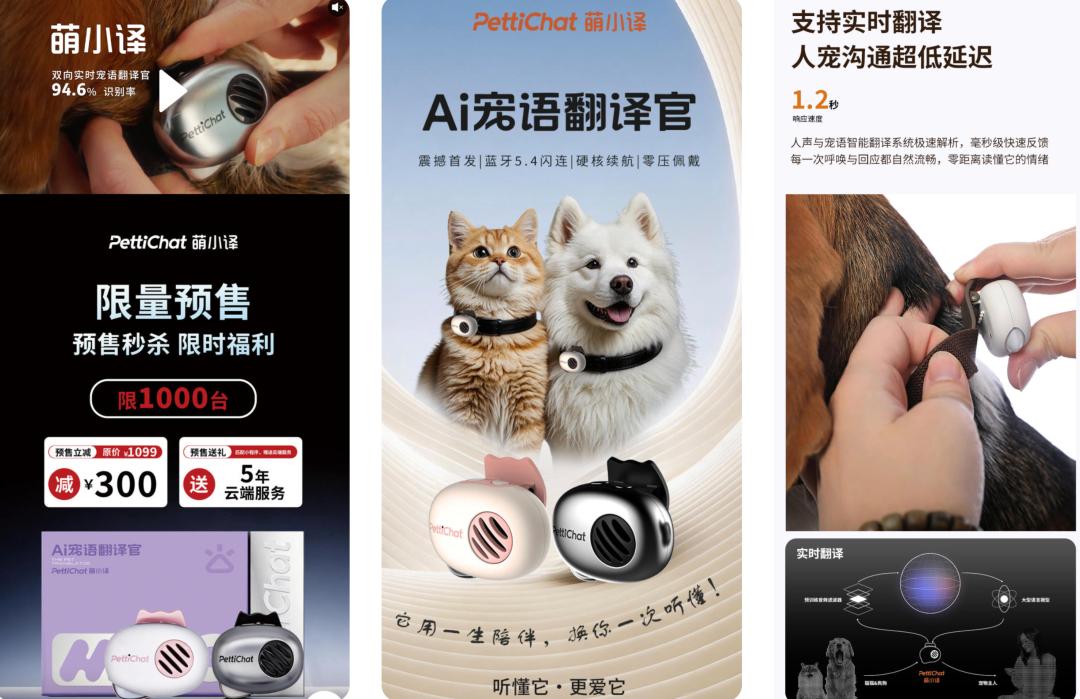
A company named "Moe Translator" in Hangzhou recently launched a product. For just 800 yuan, it can achieve two - way translation between us and pets, and the accuracy rate reaches 94.6%.
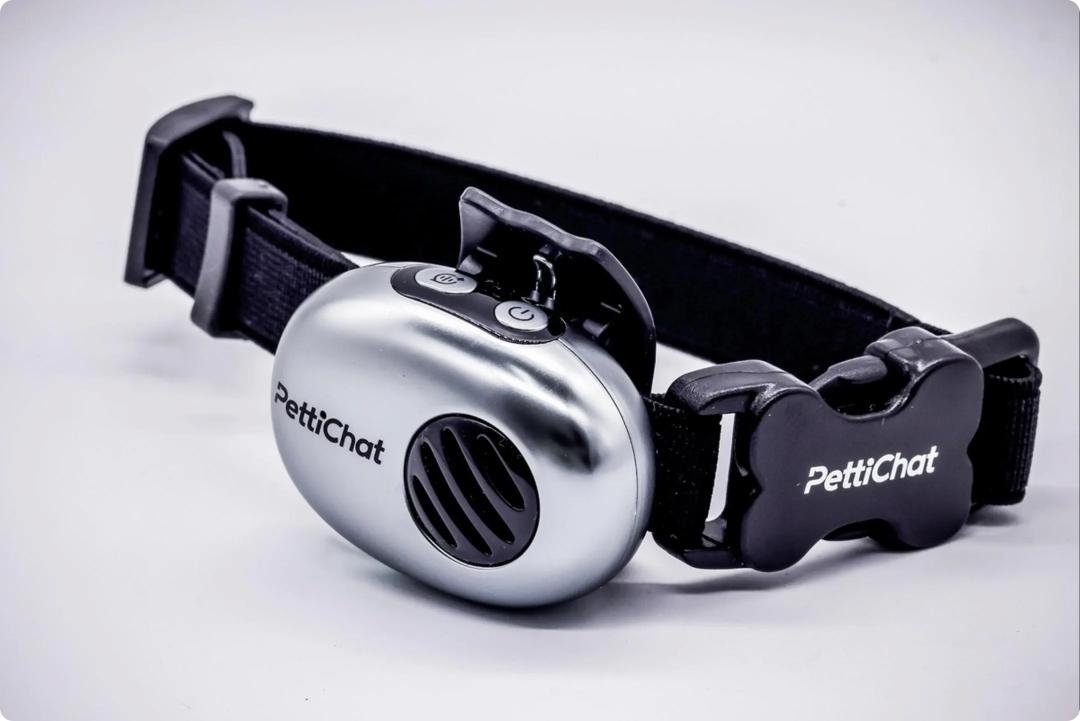
Through an AI collar with both sound - recording and playback functions, combined with a mobile phone app, the AI collar will convert the sounds of cats and dogs into text and display it in the app's dialog box. Users can send messages in the dialog box, and the collar will emit "meows" or "barks" to make pets "understand" human words.
It sounds particularly unreliable. After all, there are a large number of similar products if we simply search in WeChat mini - programs. Some directly state "for entertainment only, don't take it seriously", and some also use the banner of AI, mainly analyzing emotions through voice recordings with AI.
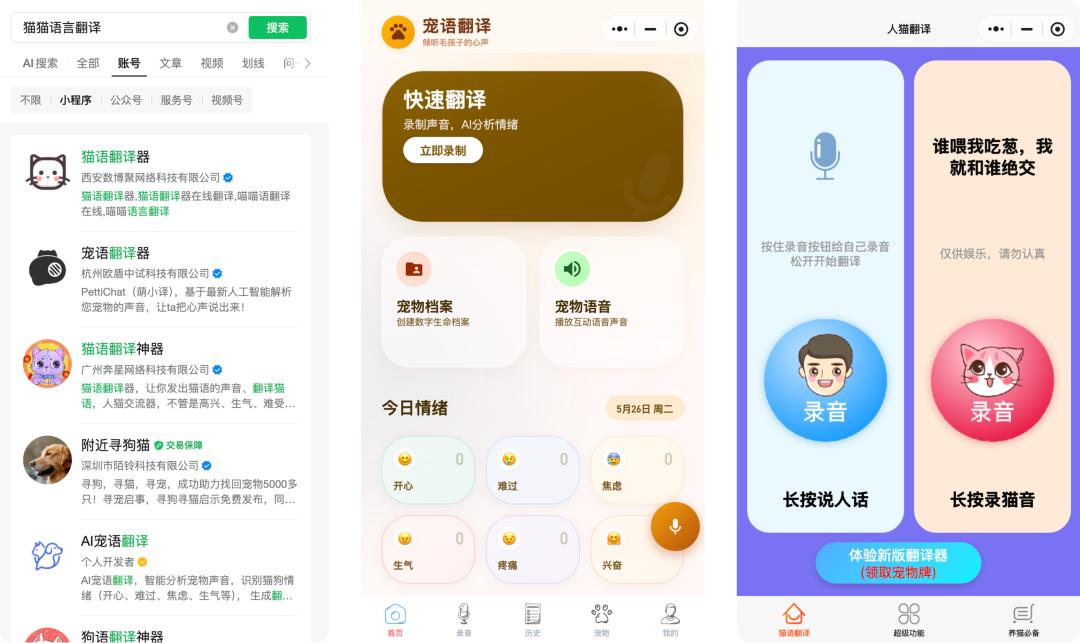
The AI pet language translation shown in the picture is driven by the Qwen - Omni large - model.
On the other hand, we have no way to verify what cats and dogs are saying. The translator could simply use some general scenarios that are less likely to be wrong, such as expressions like "I'm hungry", "I want to go out", "I'm not feeling well", "Someone is coming".
And translating our words into cat or dog language will probably lead to verification failure due to the limited cognition of pets.
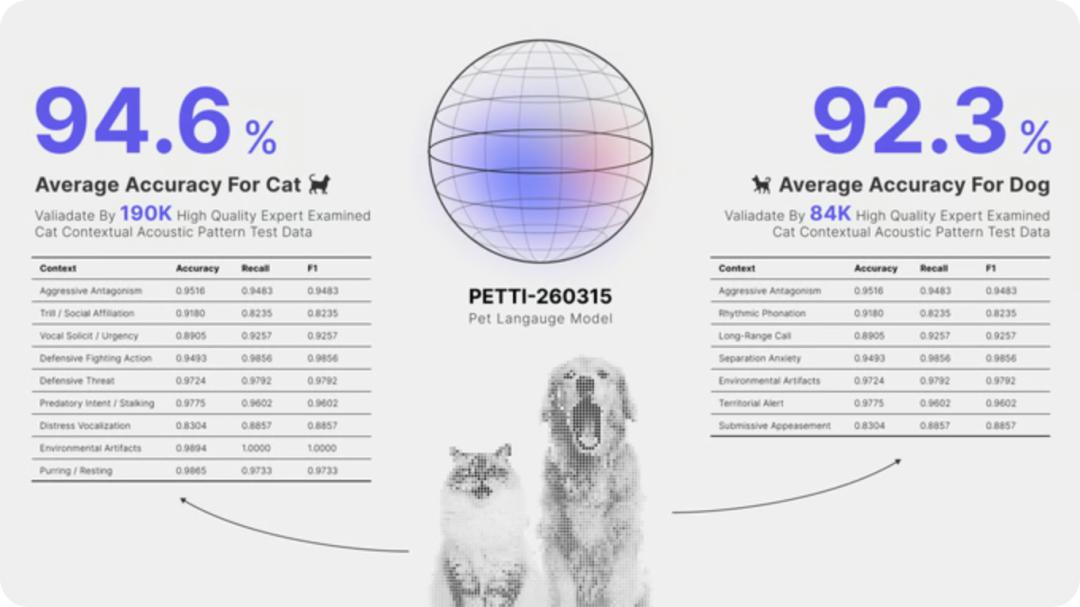
But for such a "mysterious" thing, there are still indicators to measure, and it has achieved 94.6%.
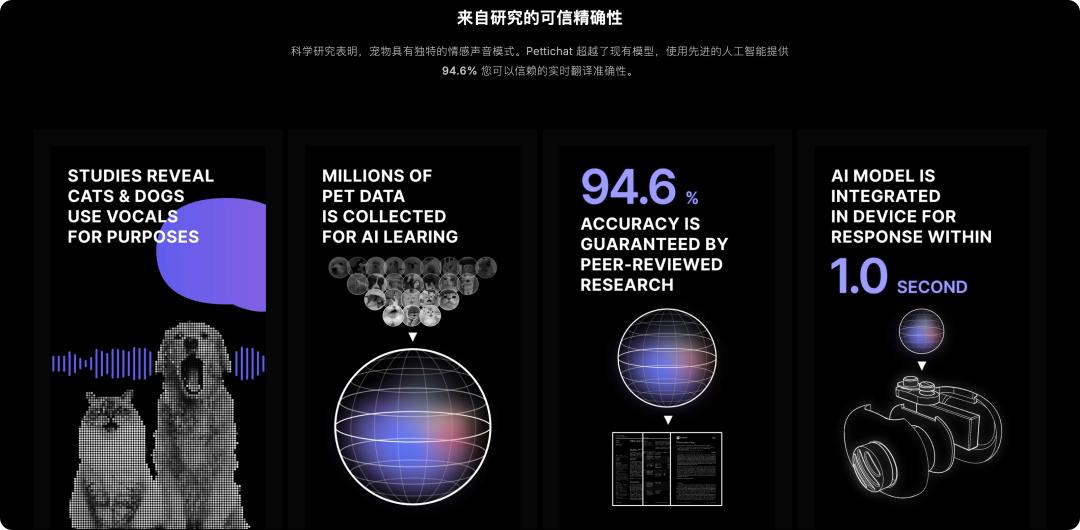
PettiChat official website: pettichat.com
The AI collar launched by Moe Translator has also attracted a lot of attention on X. Netizens are discussing this Chinese AI pet translation startup. Some netizens directly said, "The 95% accuracy rate is based on the premise that you can verify what they are saying, and you simply can't. So it's pure nonsense, haha."
Despite some controversies, PettiChat is still very popular. It has successfully raised funds from 863 supporters on the crowdfunding platform Kickstarter, with a subscribed amount of 140,000 Hong Kong dollars.
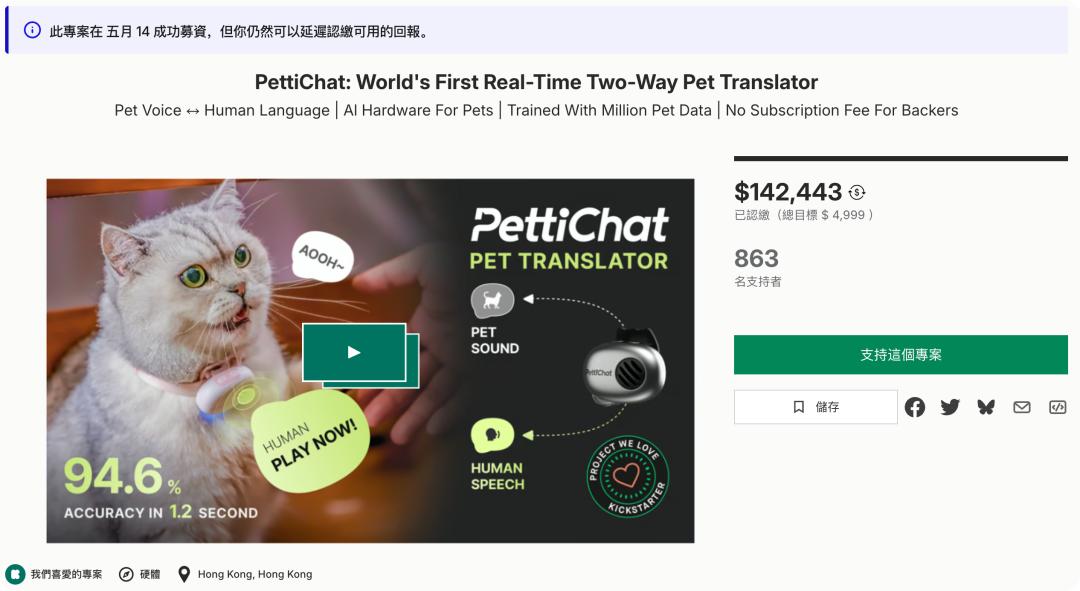
During the crowdfunding stage, the product was sold for $119, approximately 800 yuan. After the crowdfunding ended, the current overseas price is $149.
According to the records in the WeChat store, 190 people have purchased the product at the pre - sale price of 799 yuan. In the product review section, some users posted customer photos and said, "It's quite interesting to occasionally hear what our furry kids are thinking."
The translated pet languages are also quite user - friendly. There are not only a large number of modal particles like "ma~", "na", "wei", "yi", "heihei", "yaya", "huhu", but also expressions full of emotions like "You're welcome" and "Don't forget me".
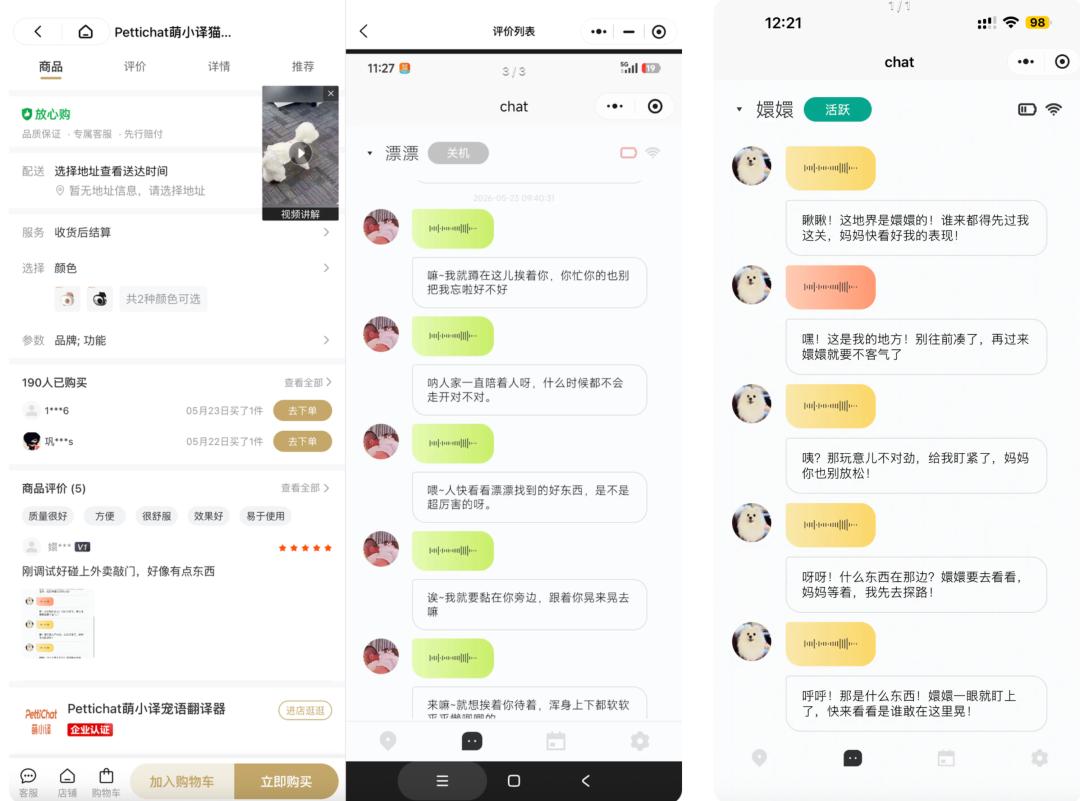
Can pets really understand so much information?
So, how is the accuracy of PettiChat measured? Are these similar products a form of IQ tax?
Pet translation devices that have been constantly doubted and updated
In 2002, the Japanese toy company Takara launched BowLingual, a "dog emotion translation" project.
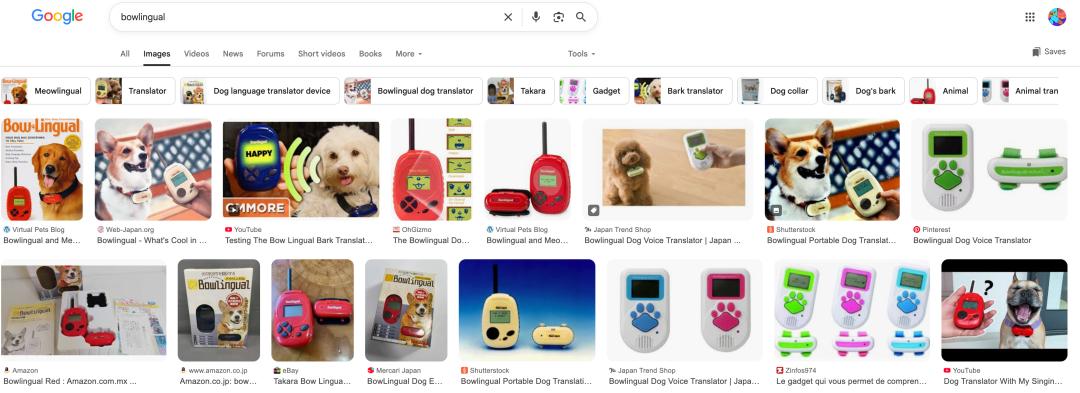
Its working method is very simple: record with a microphone, and then classify dog barks into several emotional states, such as "happy", "anxious", "angry". The principle is close to a gimmick, but it was actually sold, and it won the Ig Nobel Prize. The comment said, "It achieved peaceful communication between humans and dogs, so it won the Peace Prize."
Twenty years later, similar AI tools have emerged in an endless stream. The mini - programs mentioned at the beginning, as well as specialized applications, have started using machine learning to analyze cat meows and label each meow.
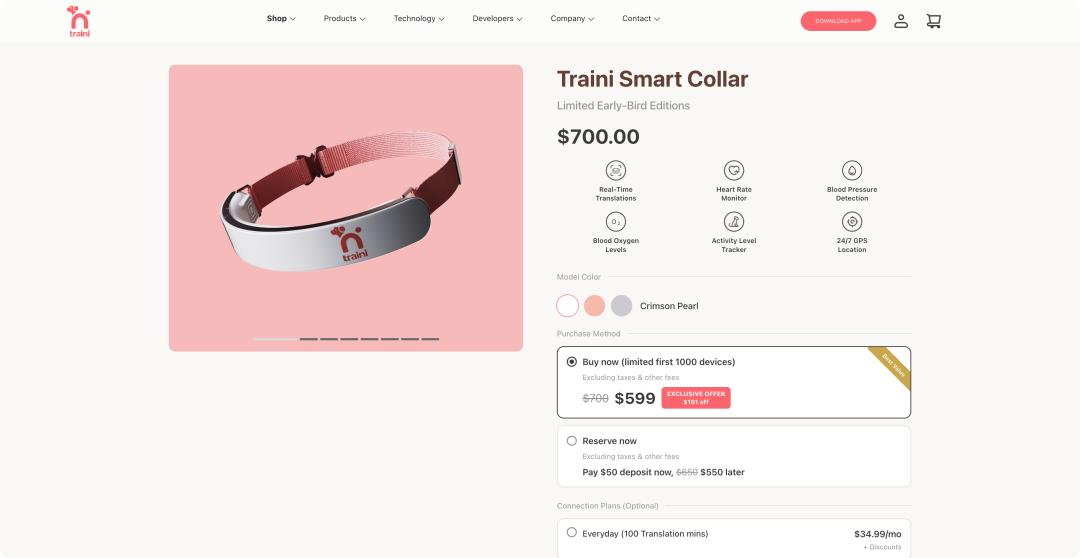
At the CES exhibition at the beginning of the year, Traini also launched an AI collar, positioned as a one - way "human - to - dog" translation. When we speak, it converts our words into acoustic signals that dogs can understand.
The desire to establish communication with pets seems to have never been extinguished. With the evolution of technology, we are becoming more and more convinced that it is somewhat possible to communicate with cats and dogs.
PettiChat, which has attracted everyone's attention this time, has done one more thing than previous products: it has presented a set of test data.
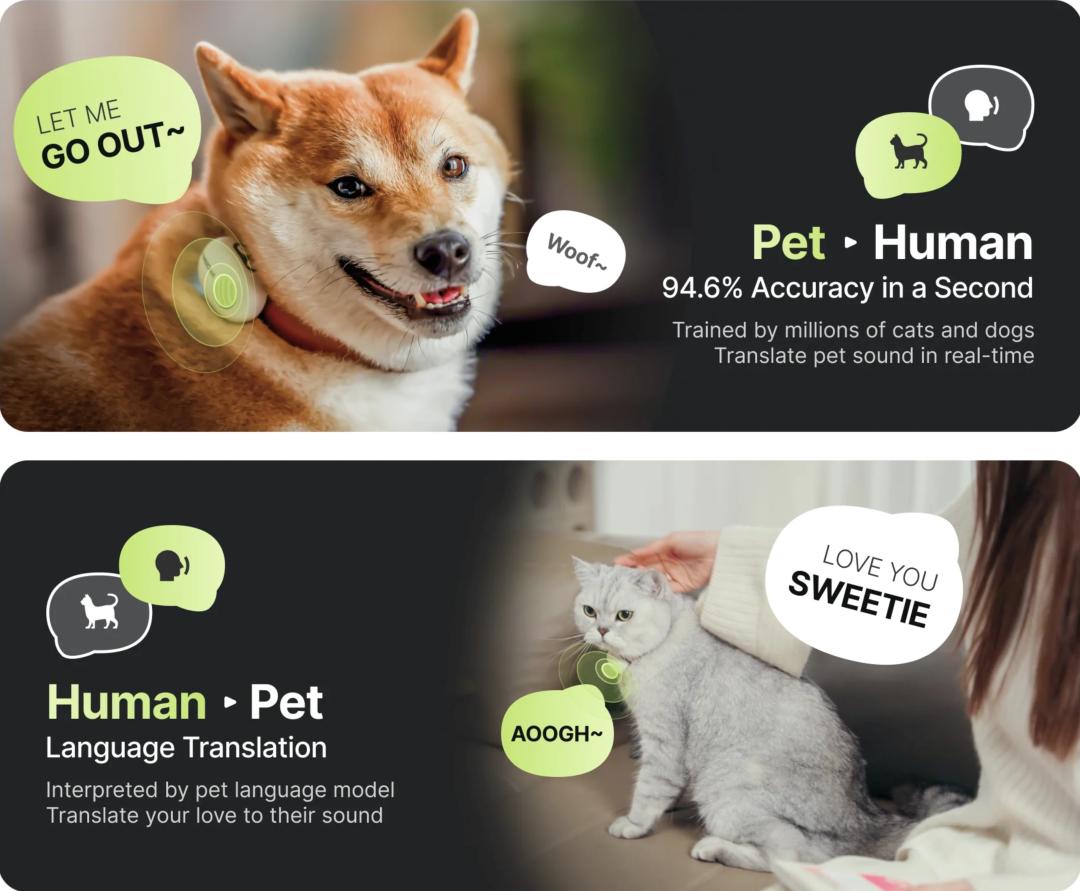
In terms of appearance, PettiChat weighs 27 grams. When clipped on the collar, it really won't cause additional burden on pets.
Inside this small device, there is an edge - computing chip that directly processes audio, with a minimum latency of 40 milliseconds. It doesn't need to be continuously connected to the Internet, and only briefly uses cloud resources when analyzing sounds. It also has other capabilities such as IP65 water - proofing, supporting 1000 translations on a single charge, and 100 - hour GPS tracking.
According to their promotion on the crowdfunding platform, the acoustic model they use is based on more than 1.5 million pet bark samples, combined with peer - reviewed research in animal behavior. The final result is that the accuracy of recognizing emotional states based solely on sound patterns reaches 91 - 92%. After adding the dimension of posture monitoring, the comprehensive accuracy in laboratory conditions reaches 94.6%.
More than 5 million pet voiceprint data
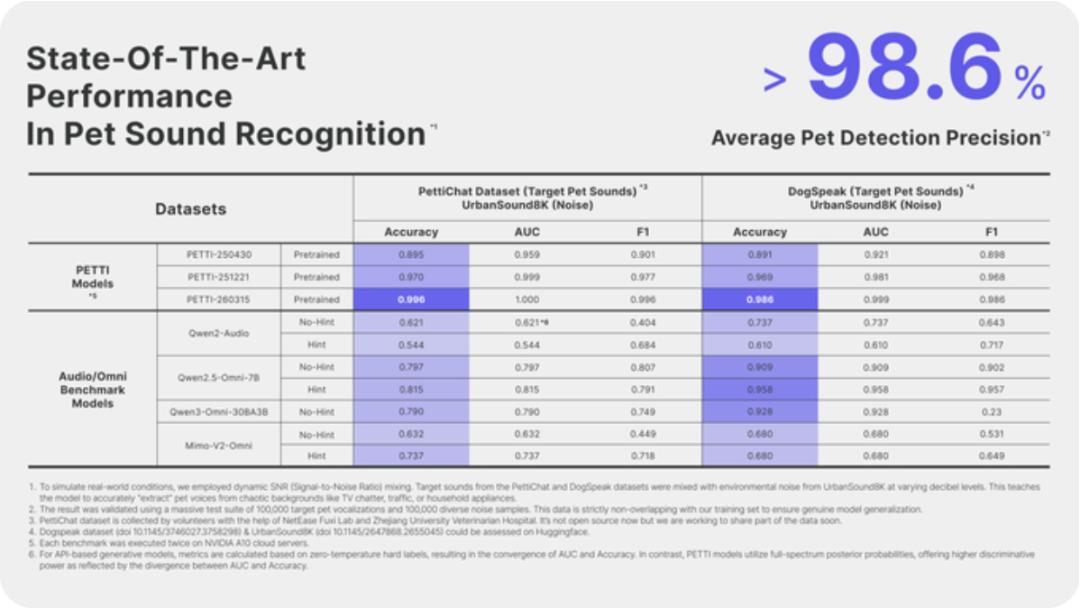
There are two somewhat unclear promotional pictures on the crowdfunding page, listing the benchmarks on which these data were tested. After looking closely, we found that two papers were mentioned.
One is DogSpeak, a canine vocalization classification dataset from the top multimedia conference MM 2025.
In this paper, the author proposed a large - scale dog bark dataset called DogSpeak, aiming to study whether it is possible to determine the gender, breed, and even the identity of a dog just by its barks.
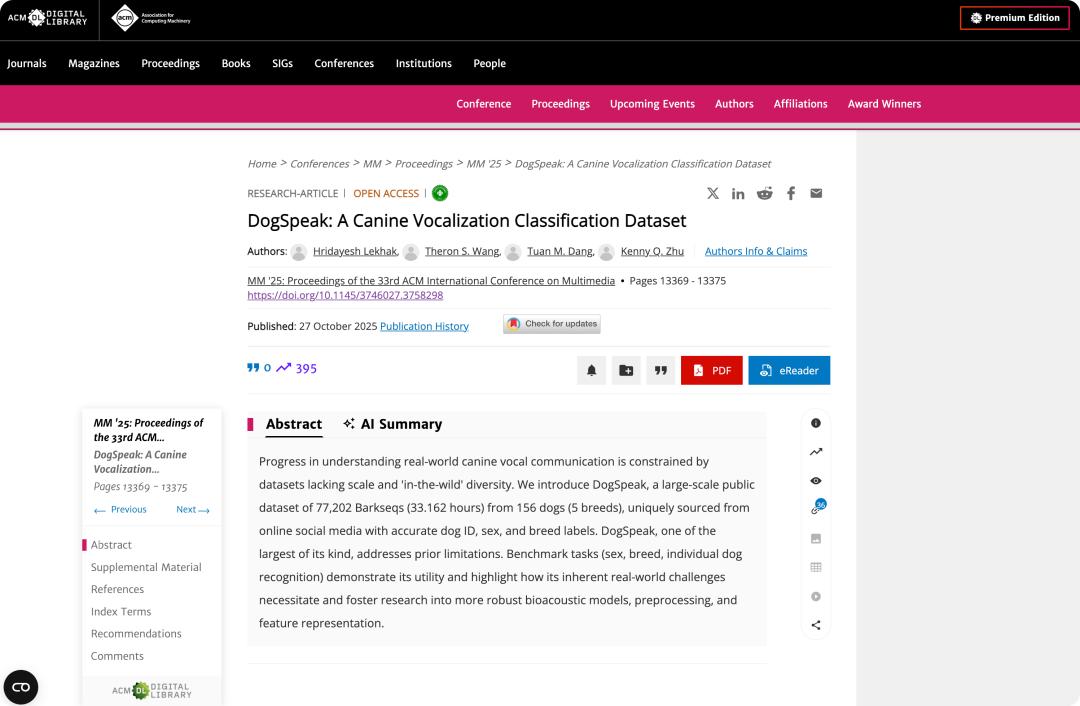
The data source is dog videos on social media platforms such as YouTube and TikTok. The author first searched for videos of five breeds: Huskies, Chihuahuas, German Shepherds, Pit Bulls, and Shiba Inus. Then, the identity, gender, and breed of the dogs were confirmed based on channel information, titles, comments, etc.
Finally, 156 dogs, 5 breeds, 77,202 dog bark sequences, and 33.162 hours of pure dog barks were obtained. These data were not labeled with what the dogs were doing for different sounds, nor were any contextual information added.
The main experimental task in the paper was to determine the gender, breed, and identity of the dogs through sound sequences. The experimental results showed that these tasks were not as easy as expected. It is very difficult to perfectly solve the problem of dog bark recognition in real and complex environments relying solely on "pure acoustic features".
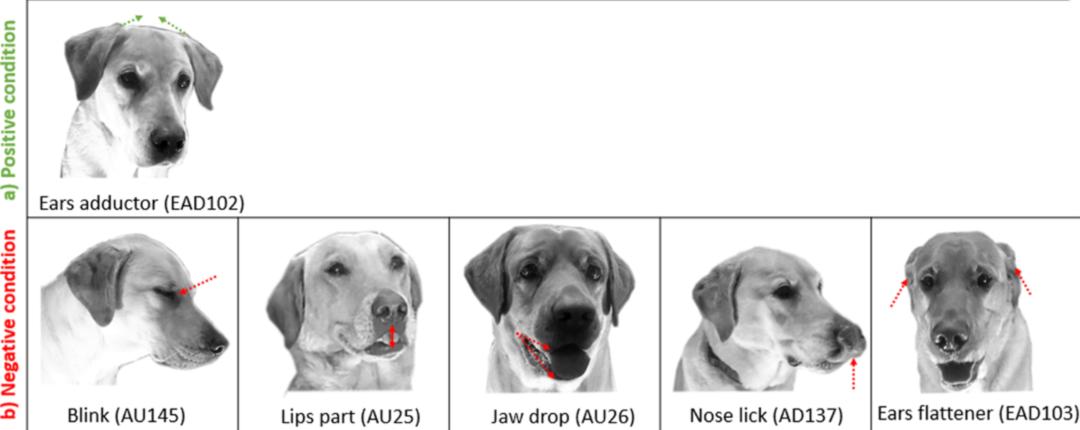
Facial expressions can be considered.
At the end of the paper, the author suggested that future research should go beyond the comfort zone of traditional audio technology and explore more advanced structural, rhythmic, and even potential "linguistic" features of dogs.
The other paper is also from MM, a dataset and classification method for urban sound research in 2014. This is a classic dataset paper in the field of urban environmental sound classification. Its core contributions are the UrbanSound8K dataset and the urban sound classification method.

The author classified urban sounds into major categories such as human voices, nature, machinery, and music, and then further divided them into specific sound sources such as dog barks, car horns, sirens, drilling, air - conditioners, and street music.
PettiChat referenced the datasets of these two papers for testing. In addition, in cooperation with the College of Animal Sciences at Zhejiang University, it has accumulated more than 5 million pet voiceprint data, approximately 1.5 million labeled data. At the same time, the environmental sounds from UrbanSound were added to the dataset to ensure robustness in real - world environments.
The model used by PettiChat is based on the Tongyi Qianwen large - model of Alibaba Cloud. The models involved in the testing include Qwen2 - Audio without pre - training, Qwen2.5 - Omni - 7B, Qwen3 - Omni - 30BA3B, and Xiaomi Mino - V2 - Omni.

They created a large independent test set based on these voiceprint data and UrbanSound 8K. It contains "audio samples of pet barks with background noise superimposed", for example, a dog bark or a cat meow with the sounds of TV, traffic, household appliances, and streets added to create a mixed audio closer to real - life situations.
There are also various noise samples, which may be background sounds without pet voices, used to test whether the model will misjudge ordinary noise as pet barks.
These samples include both pet barks with noise and pure noise/non - pet sounds, which are only used to test whether the model can accurately identify pet sounds in a complex real - world environment. Under this test, the Petti model achieved