China's version of Waymo, Robotaxi revenue soars 395%
Is autonomous driving just a money-burning venture?
Pony.ai is the first to disagree.
As soon as the Q1 financial report for 2026 was released, the data spoke for themselves:
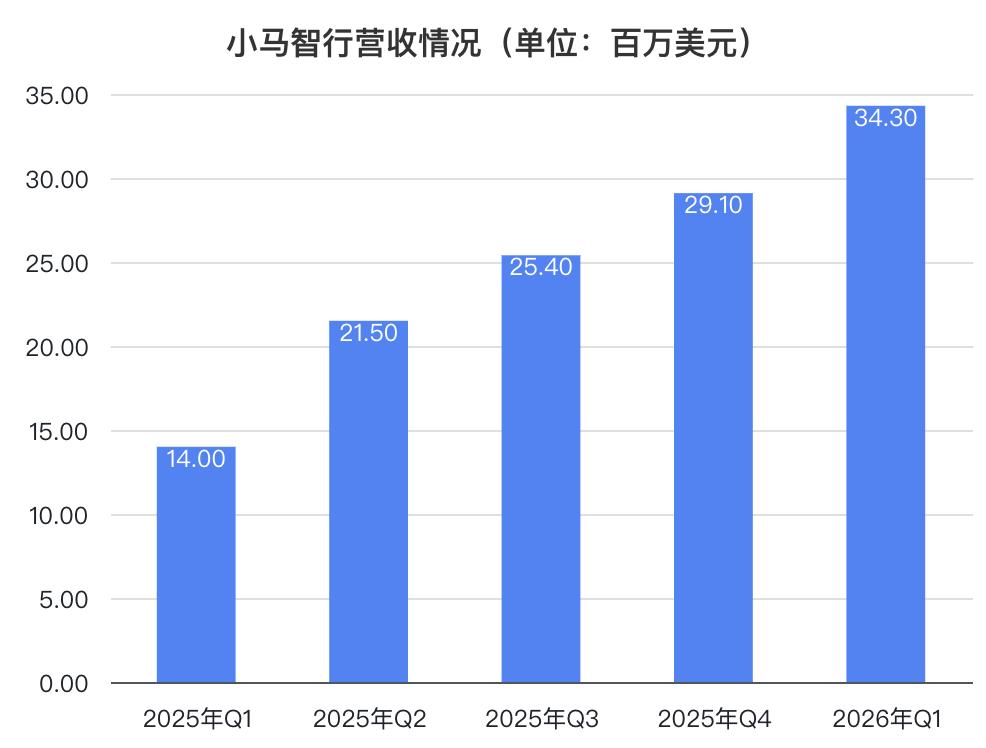
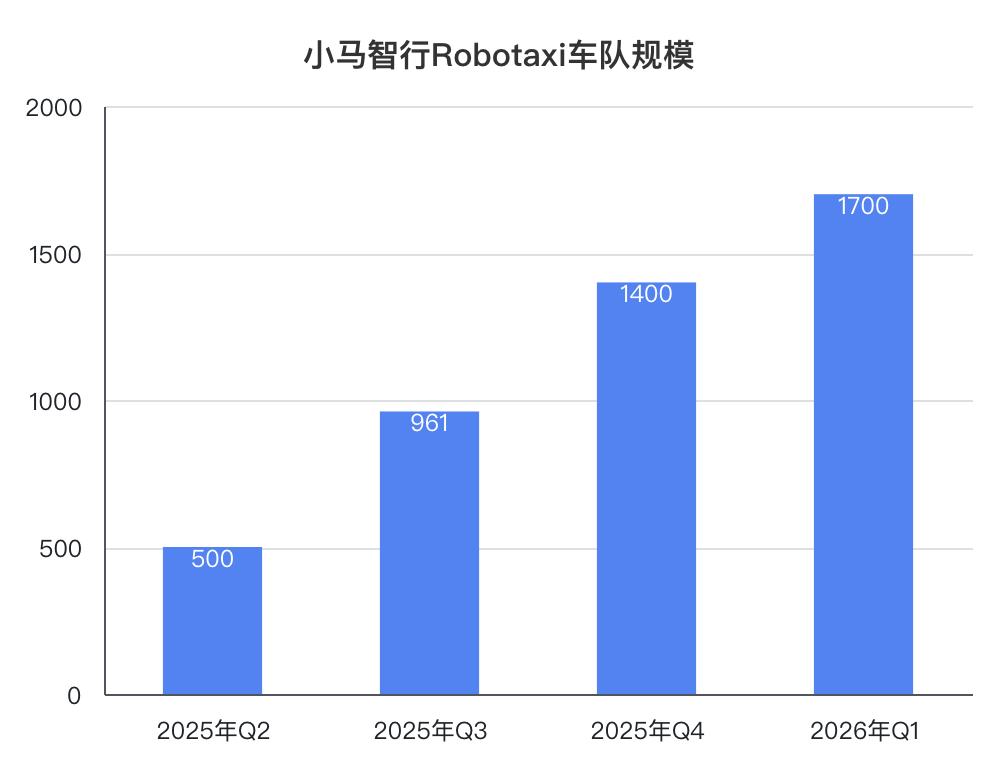
The total revenue reached $34.3 million, a staggering 145% year-on-year increase. The passenger fares from Robotaxi quadrupled by 4.5 times. The fleet size stood at 1,700 vehicles, and the goal is to expand it to 3,500 by the end of the year.
Although losses still exist, the operating losses hardly increased. With revenues doubling while losses not doubling, this reflects real operating quality.
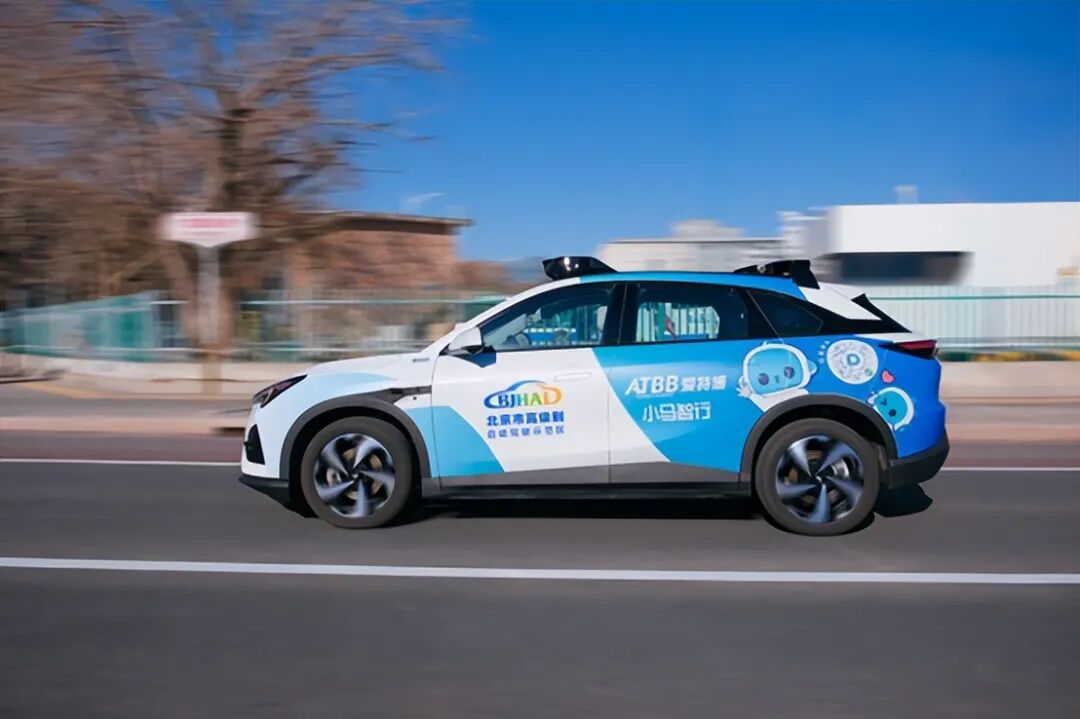
More importantly, co-construction, which represents the future business model of Robotaxi, was implemented for the first time: it penetrated into Croatia overseas (the first fully driverless commercial operation in Europe).
Previously, people used to ask: Can Robotaxi really make money?
Now, Pony.ai counters with: Take a look at this muscle. Is it strong enough?
Pony.ai's Basic Performance in Q1
The first point is that the revenue growth rate outpaced the loss growth rate.
In Q1 2026, Pony.ai's total revenue was $34.3 million, compared to $14 million in the same period last year - a 145% increase.
The operating losses increased from $56.04 million to $58.34 million, only a 4% expansion.
Revenues more than doubled, while losses remained largely unchanged. This is what we call operating leverage - for every dollar of loss, more revenue was generated.
For autonomous driving companies in the early stages of commercialization, this is a more reliable sign of health than "profitability".
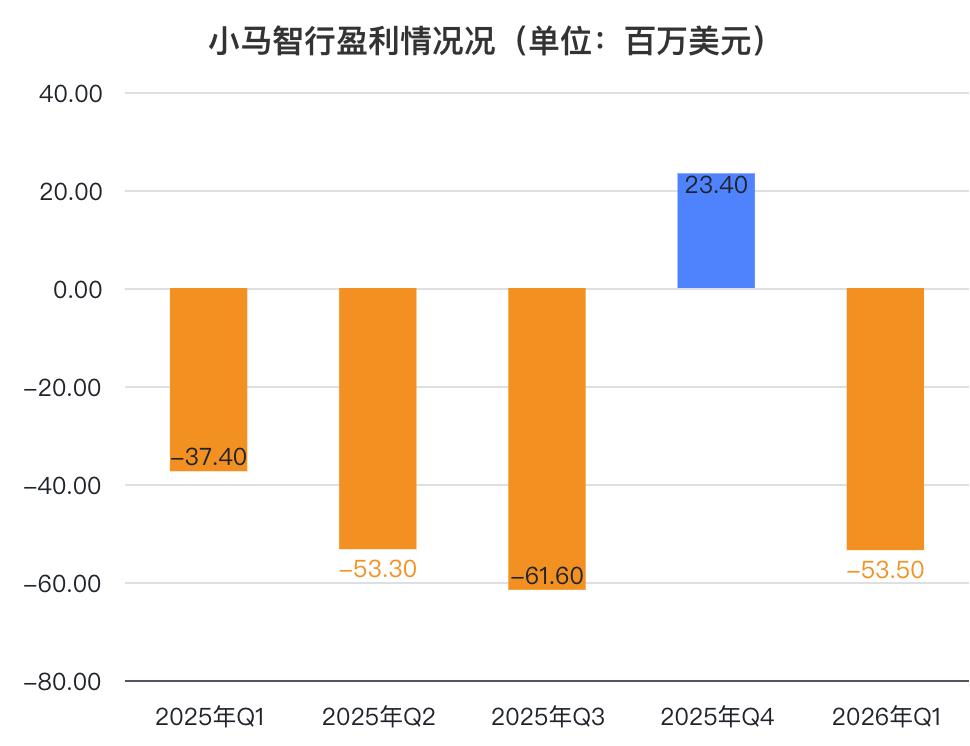
Of course, the GAAP net loss expanded to $53.51 million, a 43% increase.
However, there were "non-operating" factors at play: the investment income decreased. In Q4 2025, the book profit was due to the floating profit from the investment in Moore Threads.
Excluding equity incentives and fair value changes, the Non-GAAP net loss was $41.2 million, an increase from $23.84 million in the same period last year - this was because R & D and sales expenses were increasing to support a larger fleet and faster expansion.
In a nutshell: The stage of burning money for growth is not over yet, but the efficiency of converting money has significantly improved.
Breaking down the revenue:
The product revenue (mainly from the autonomous driving domain controller ADC) soared from $3.6 million to $17.5 million, a 384% increase. The ADC shipment volume increased by more than 5 times year-on-year, mainly from the markets of low-speed unmanned delivery, cleaning vehicles, logistics, and humanoid robots.
The service revenue (Robotaxi + Robotruck) increased from $10.4 million to $16.7 million, a 61% increase.
The growth rate of product revenue was much higher than that of service revenue. Hardware volume came first, and service profit followed.
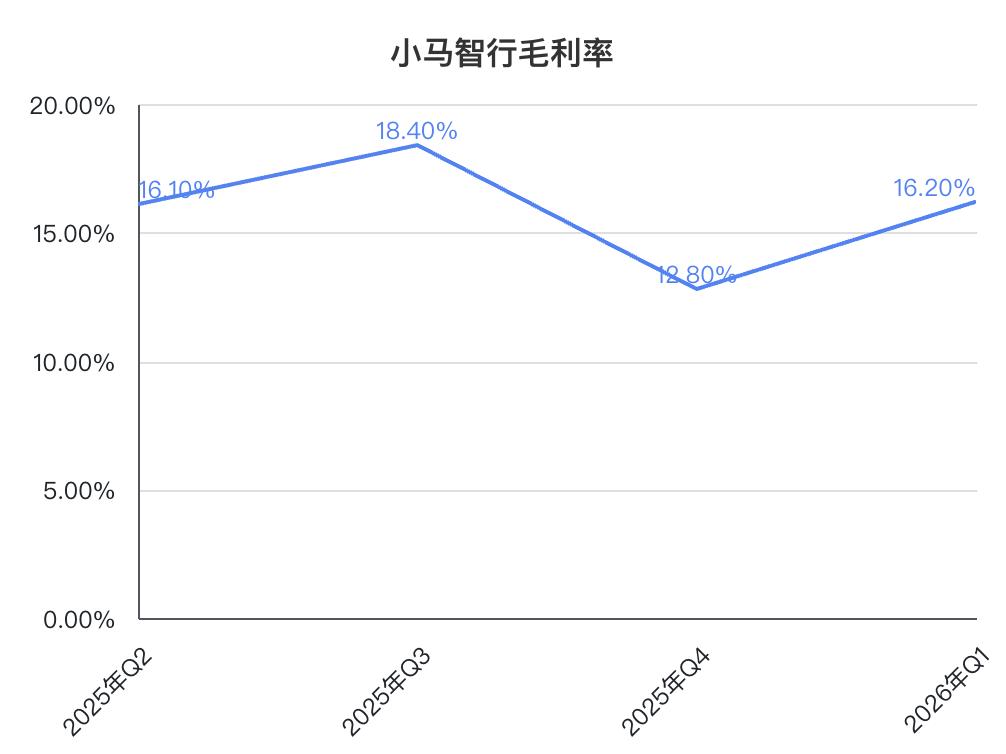
However, this also led to the growth of the overall gross profit margin being diluted by low-margin businesses:
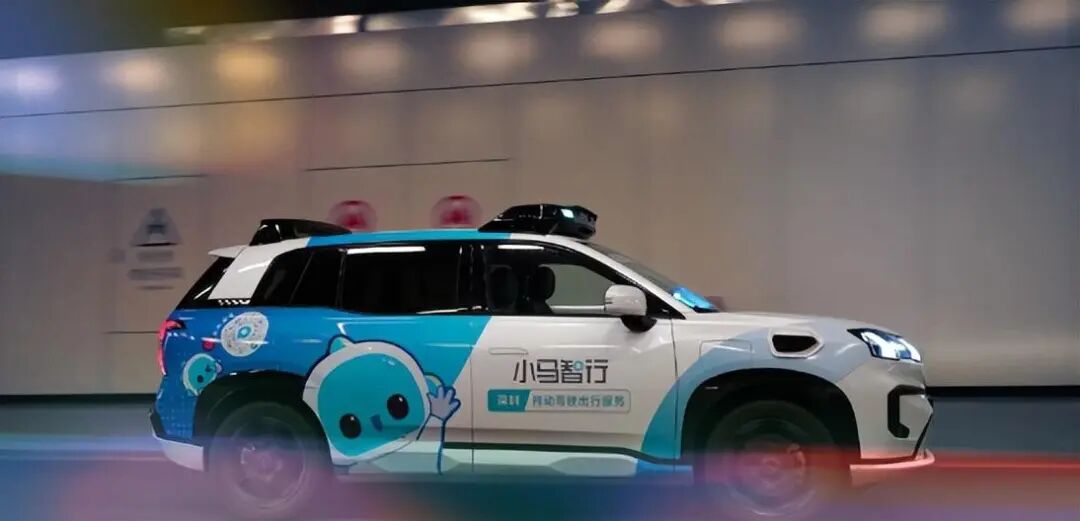
Nevertheless, the Robotaxi business remained strong: the year-on-year revenue increased from $1.7 million to $8.6 million, a 395% increase.
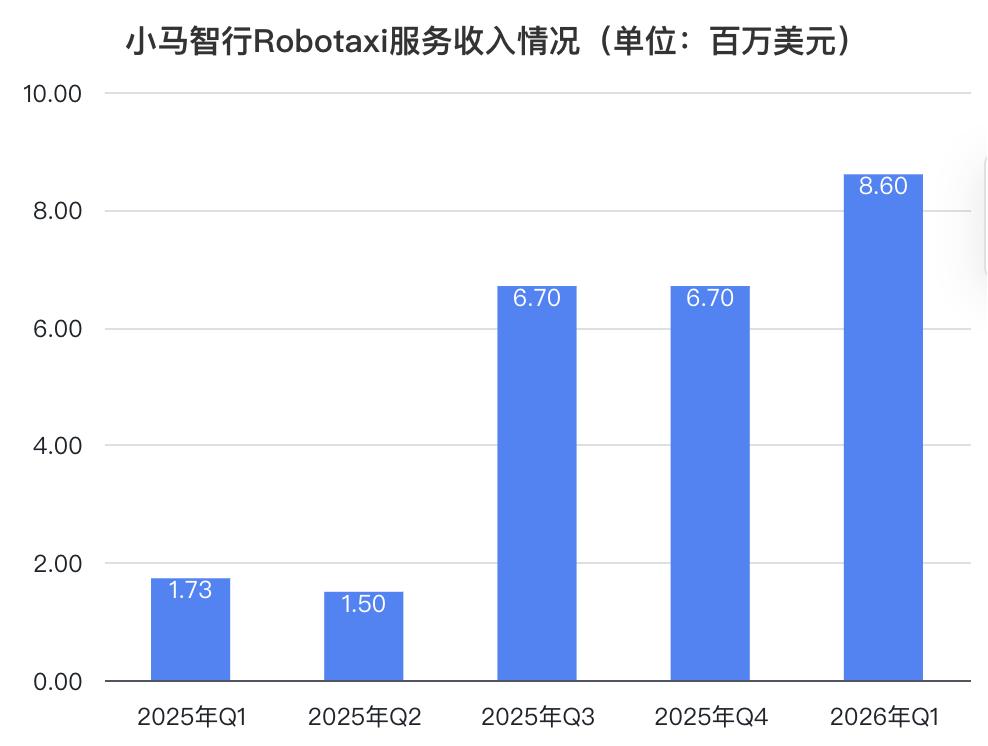
The passenger fare revenue skyrocketed by 456.5%.
The growth rate of the fleet was astonishing. In Q1 2025, Pony.ai's Robotaxi fleet had about 350 vehicles (the production of the 7th - generation vehicles was just ramping up). By May 2026, this number had increased to 1,776 - a nearly 5 - fold increase in a year.
The goal set at the beginning of the year was to have a fleet of 3,000 vehicles by the end of the year. However, after the Q1 financial report was released, the management was extremely confident and directly raised the target to over 3,500 vehicles.
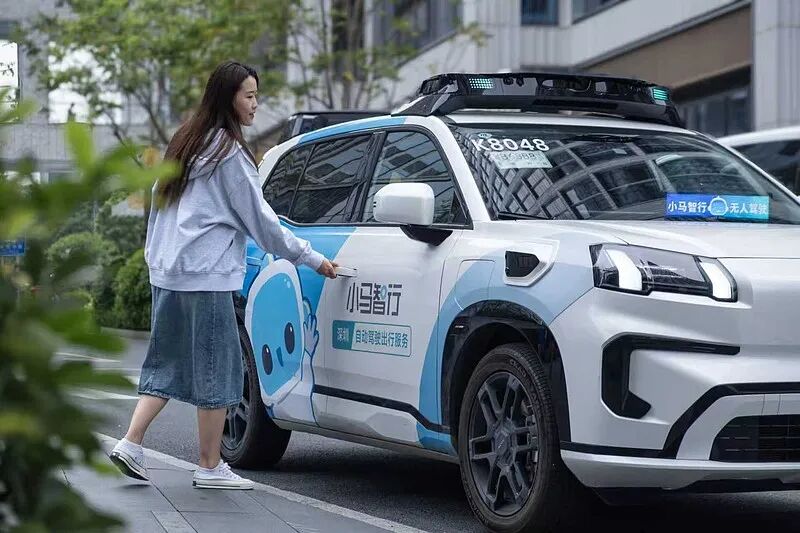
Behind this was the corresponding user growth: the number of registered users in China was more than 3 times that of the same period last year.
In May, the average daily paid orders increased by 119% compared to January. Especially during the May Day holiday: the average daily orders skyrocketed by 544% year-on-year.
The inflection point signal was very clear: users were not just "trying it out", but "truly using" it.
Users were paying for the "safe, stable, and private" driverless experience, rather than just for the novelty.
How did Pony.ai achieve this?
The first driving factor was that the 7th - generation vehicles moved from the "laboratory" to the "assembly line" - the physical carrier of this round of explosion.
The 7th - generation vehicles were not pre - installed for mass production. They were deeply cooperated with three major platforms, Toyota (BZ4X), GAC, and BAIC, and were directly produced on the production lines of the vehicle manufacturers.
The first effect was a cliff - like drop in costs. The number of lidars and sensors was significantly reduced, and a more highly integrated domestic solution was adopted.
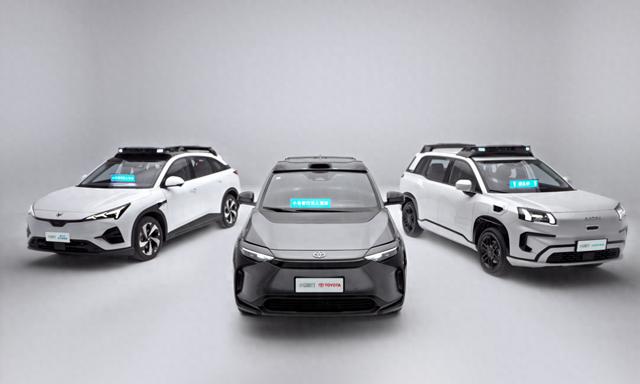
The goal for 2027 is to reduce the total vehicle BOM cost (including the autonomous driving kit) to less than 230,000 RMB.
The reduction in the cost of Robotaxi vehicles actually showed its benefits at the end of 2025 - the unit economic model (UE) turned positive:
In Shenzhen, the 7th - generation Pony.ai vehicles had an average daily net revenue of 338 RMB, with an average of 23 orders per day, and the peak reached 394 RMB for 25 orders. The daily depreciation of each vehicle was about 169 RMB, and the operating cost was about 169 RMB, totaling 338 RMB - exactly the break - even point. The vehicle could break even with 23 orders, and more orders meant more profit.
The second factor was the first implementation of the co - construction model, and the start of asset - light rental income.
There was an easily overlooked detail in the Q1 financial report: the co - construction fleet model started to generate revenue.
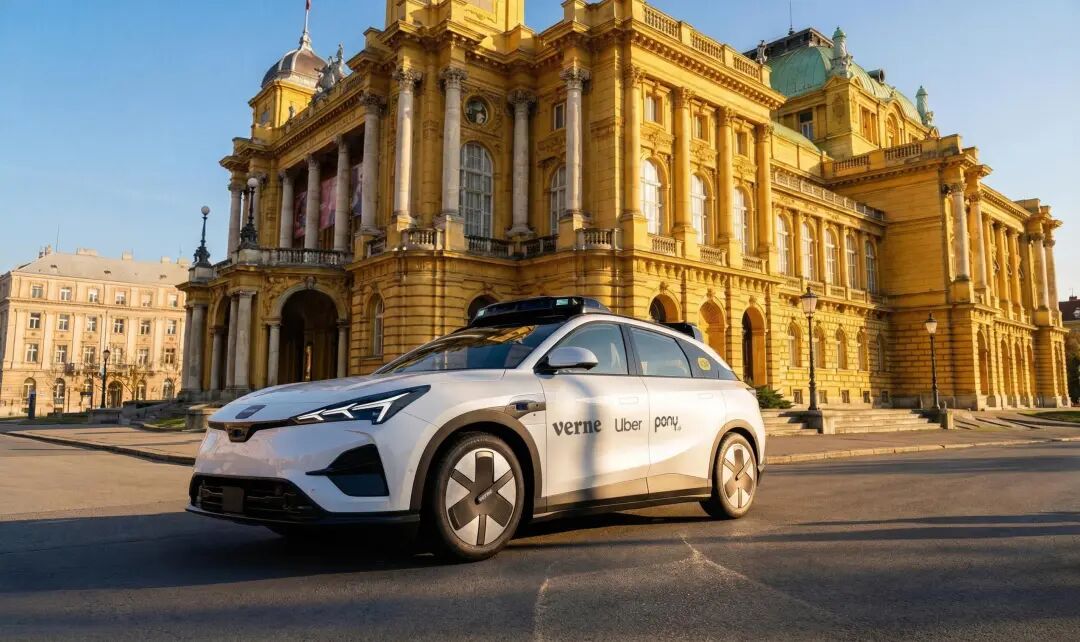
Previously, Pony.ai used to buy vehicles, operate them, and take orders on its own - a heavy - asset model with slow expansion.
Now, partners (such as Qi Chuxing, Verne, etc.) are responsible for the vehicles and operations, while Pony.ai provides the "AI driver" technology and receives technology licensing fees and revenue sharing.
This is like changing from being a "driver" to a "coach".
CFO Wang Haojun said that technology licensing is a high - gross - margin business. Although the scale was still small in Q1 (the co - construction partners were just starting out), the direction was clear: asset - light, scalable, and high - margin.
In the future, the self - operated fleet will be retained mainly for technology verification and iteration; large - scale expansion will rely on co - construction, and Pony.ai will earn "commission" money, that is, the licensing fees for the AI driver.
The third factor was the World Model 2.0.
The 5 - fold growth of the fleet and its widespread deployment at home and abroad were supported by PonyWorld 2.0.
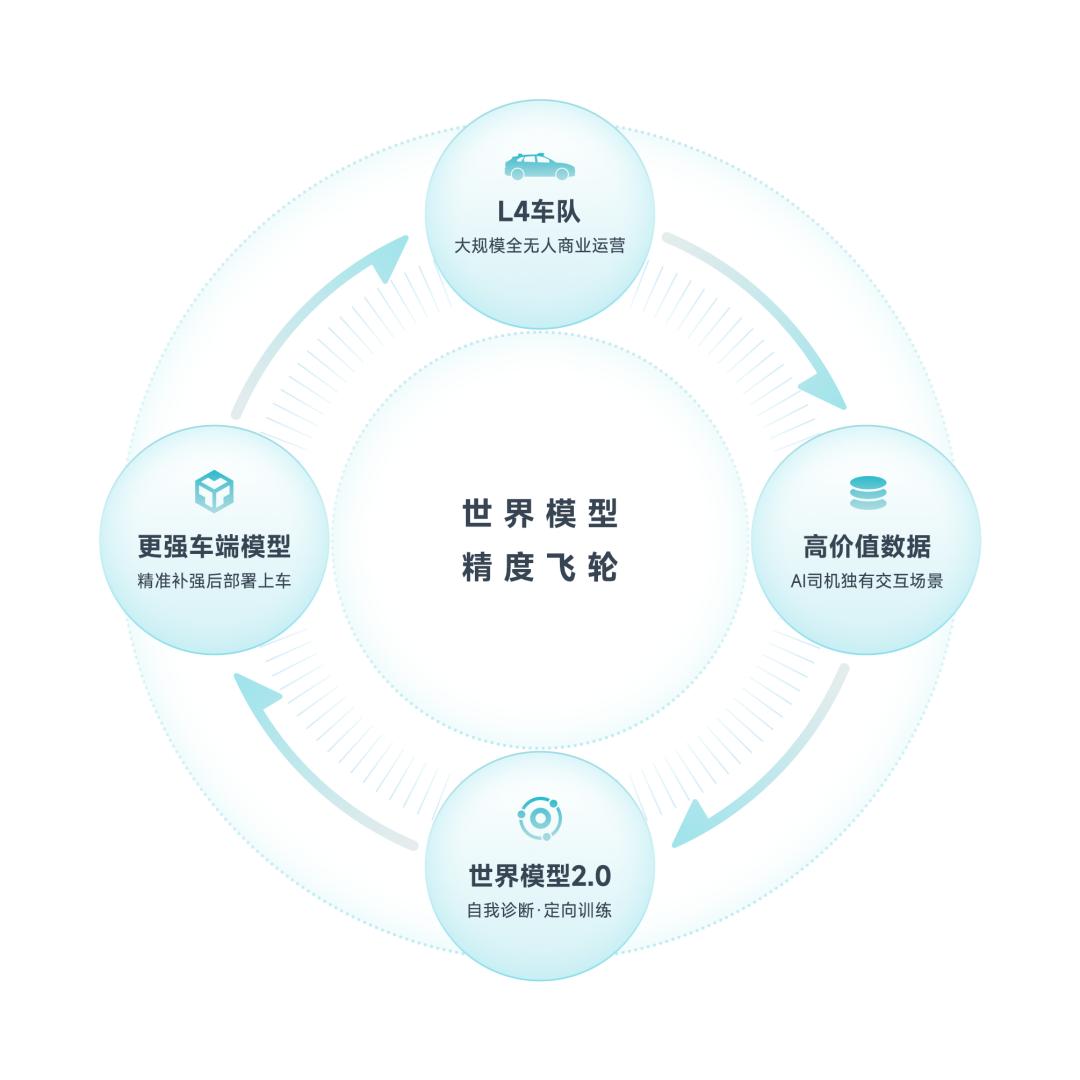
This was not an ordinary software upgrade. The core change was a shift from "imitating human driving data" to "self - evolution of AI in a virtual environment".
Simply put, in the past, autonomous driving was like "watching a lot of human driving videos and learning to drive"; now, autonomous driving is like "crashing billions of times in the virtual world and learning how not to crash".
It is claimed that the safety level is 10 times higher than that of human drivers.
The value of this technology system was especially evident in overseas expansion.
As of Q1, Pony.ai had deployed Robotaxi in 9 countries, and Croatia was the first country in Europe to have fully driverless commercial services. In addition, Qatar, Singapore, and South Korea had opened services to the public. Dubai was also promoting the full - scale driverless deployment.
Why was it able to expand so quickly?
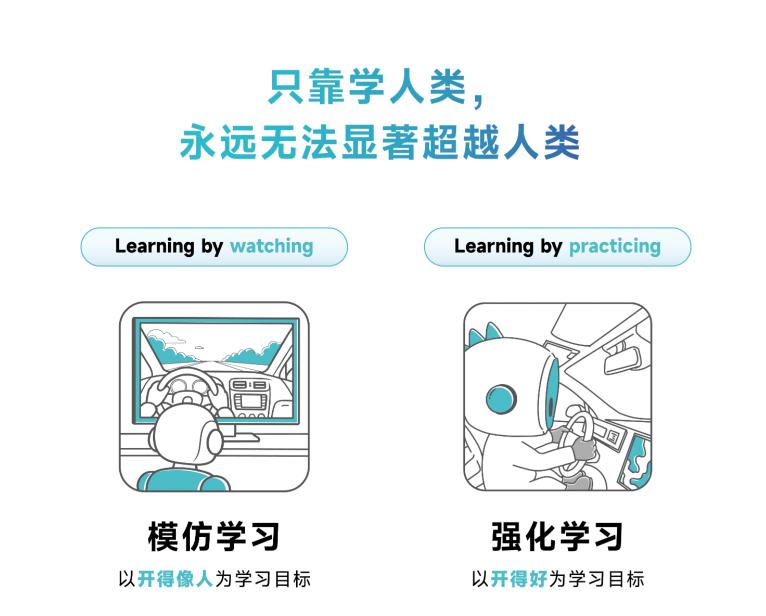
The self - evolution of AI in the virtual environment actually means that the generative world model continuously generates training cases for various tricky and complex corner cases.
Physical boundary conditions such as different weather, lighting, types of traffic participants, speed, and acceleration can be changed at will, allowing for extrapolation.
This is much more efficient than the conventional method of collecting data through real - world road tests. Years of work can be compressed into months or even days - the generalization ability across regions, climates, and traffic rules does not require a large amount of adaptation when "opening a city" in each new location.
Tesla hasn't reached the scale - up stage yet, but Pony.ai has already touched the threshold
Q1 was the starting point, not the end, of "narrowing the operating losses" for Pony.ai.
An easily overlooked detail in the financial report was that the operating loss rate was improving.
In Q4 2025, the operating loss rate (operating loss/revenue) was about 254%; in Q1 2026, this figure dropped to 170%.
As revenues increased, the proportion of losses decreased.
This indicates that the peak of the upfront investment (7th - generation R & D, cooperation fees with vehicle manufacturers) has passed, and what follows is the decline in marginal costs brought about by large - scale production.
CFO Wang Haojun once gave a long - term guidance: when the fleet size reaches 100,000 vehicles, the company can achieve overall operating profit, and this may happen between 2029 and 2030.
There is still a long way to go from 1,700 vehicles to 100,000 vehicles. However, Q1 proved that this path has been solidly paved.
In addition, the "revenue quality" of Pony.ai's Robotaxi is more worthy of attention than the "revenue growth rate".
Many companies can use subsidies to get orders, but Pony.ai's situation is different: even though the discounted price is higher than that of entry - level online car - hailing services (express cars), users are still willing to use it.
The orders during the May Day holiday skyrocketed by 544% not because of issuing coupons, but because of service stability. During the holiday when the travel demand soared, traditional online car - hailing services might be unavailable, charge extra fees, or make users wait for a long time, but Robotaxi could accept orders stably 24/7.