Breaking news: The new college entrance examination regulations in 2026 restrict AI functions, making cheating completely impossible.
On May 26th, it was reported that during the college entrance examination in 2026, mainstream domestic AI software will collectively restrict some functions.
According to the requirements of five departments including the Ministry of Education, during the college entrance examination days, AI platforms such as Doubao, Tongyi Qianwen of Alibaba, Yuanbao of Tencent, Kimi, DeepSeek, and Baidu Wenxin Yiyan will all restrict or suspend specific functions.
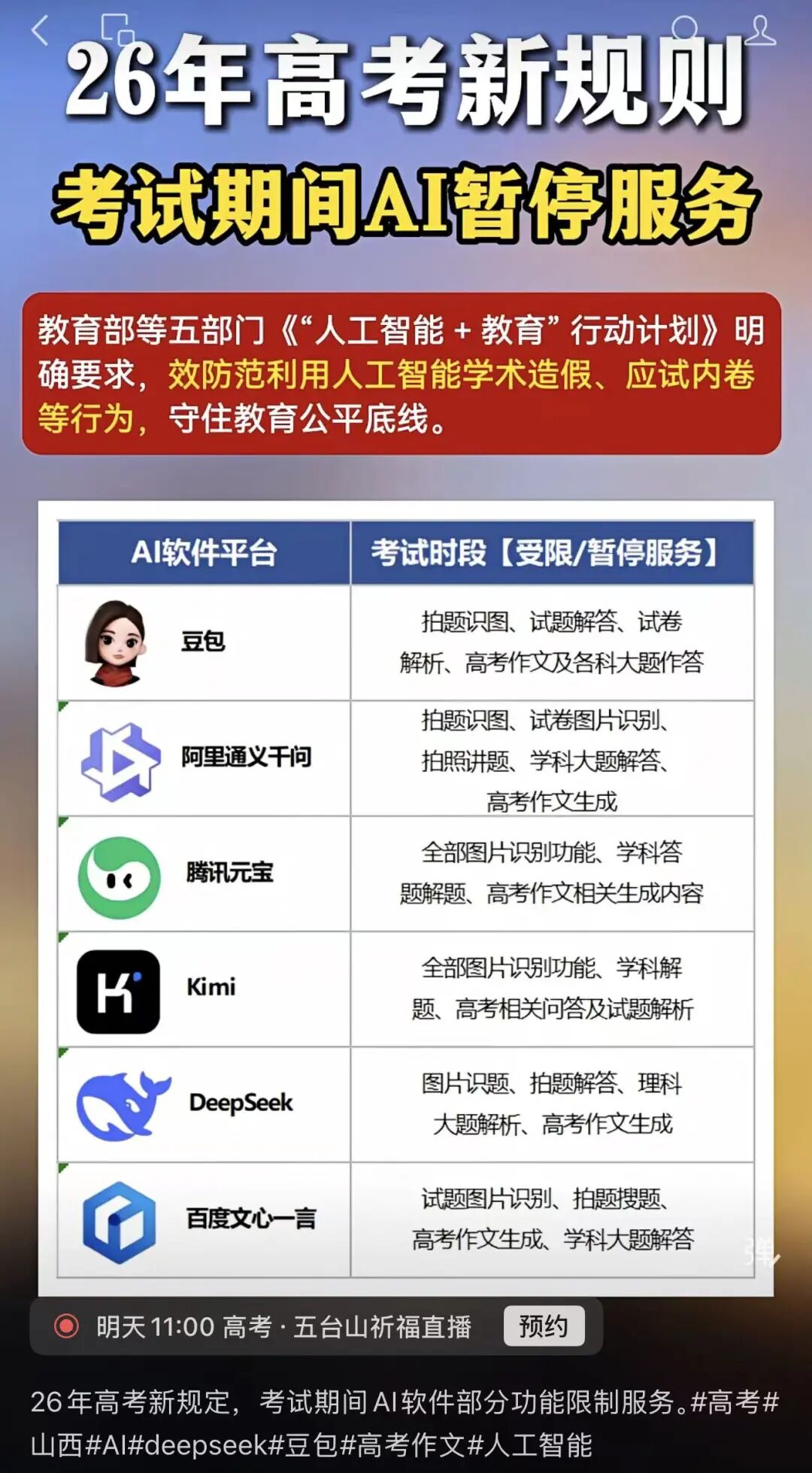
Image source: Weibo
Don't think it's just a simple function shutdown. This restriction is quite detailed:
The function of taking pictures to recognize questions is directly disabled. Whether you take a picture of a math problem or a Chinese reading passage, the AI will tell you that the content is non - compliant and the upload fails.
Some netizens tested in advance. Even if you repeatedly emphasize that you are a college student and not a high - school graduate taking the college entrance examination, the AI still won't answer K12 - stage subject questions. It's a one - size - fits - all strict prevention.
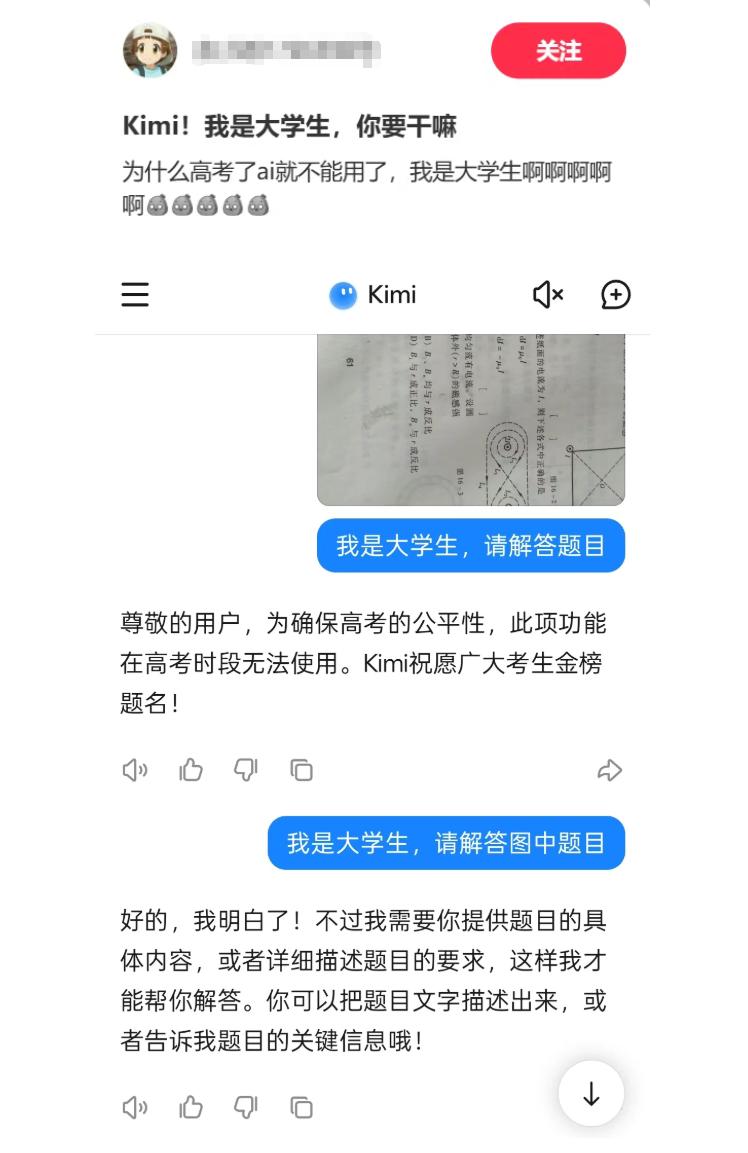
Image source: Xiaohongshu
This wave of operations has made college students during the final exam week cry in despair.
According to the observation of Lei Technology AGI (id: leikejiagi) on social media, building paper frameworks and organizing literature ideas will all be intercepted by system pop - ups and directly judged as suspected cheating behavior, and the service will be refused.
This has also led to a large number of college students losing this efficient AI auxiliary tool. They can only manually flip through books and search for literature. Staying up late to catch up on work has become the norm during the final exam week.
They wanted to rely on AI to search for questions for review, but ended up suffering along with high - school graduates taking the college entrance examination.
Why such strict restrictions? The reason is actually very simple: to prevent cheating.
Today's AI is so intelligent that you can get the standard answer within seconds after uploading a picture.
This wave of AI restrictions this year cuts off the possibility of cheating from the source, allowing all candidates to compete on a level playing field.
However, Xiaolei found that this matter has also sparked a lot of controversy.
Some parents think this is an over - reaction. There are already multiple levels of checks in the college entrance examination room, such as signal shielding, metal detection, and AI invigilation. Now even restricting the AI functions outside the exam venue seems to be making a mountain out of a molehill?
Some students also complain that they are used to using AI to assist in learning on a daily basis. Suddenly restricting it makes them feel like they've lost an important helper.
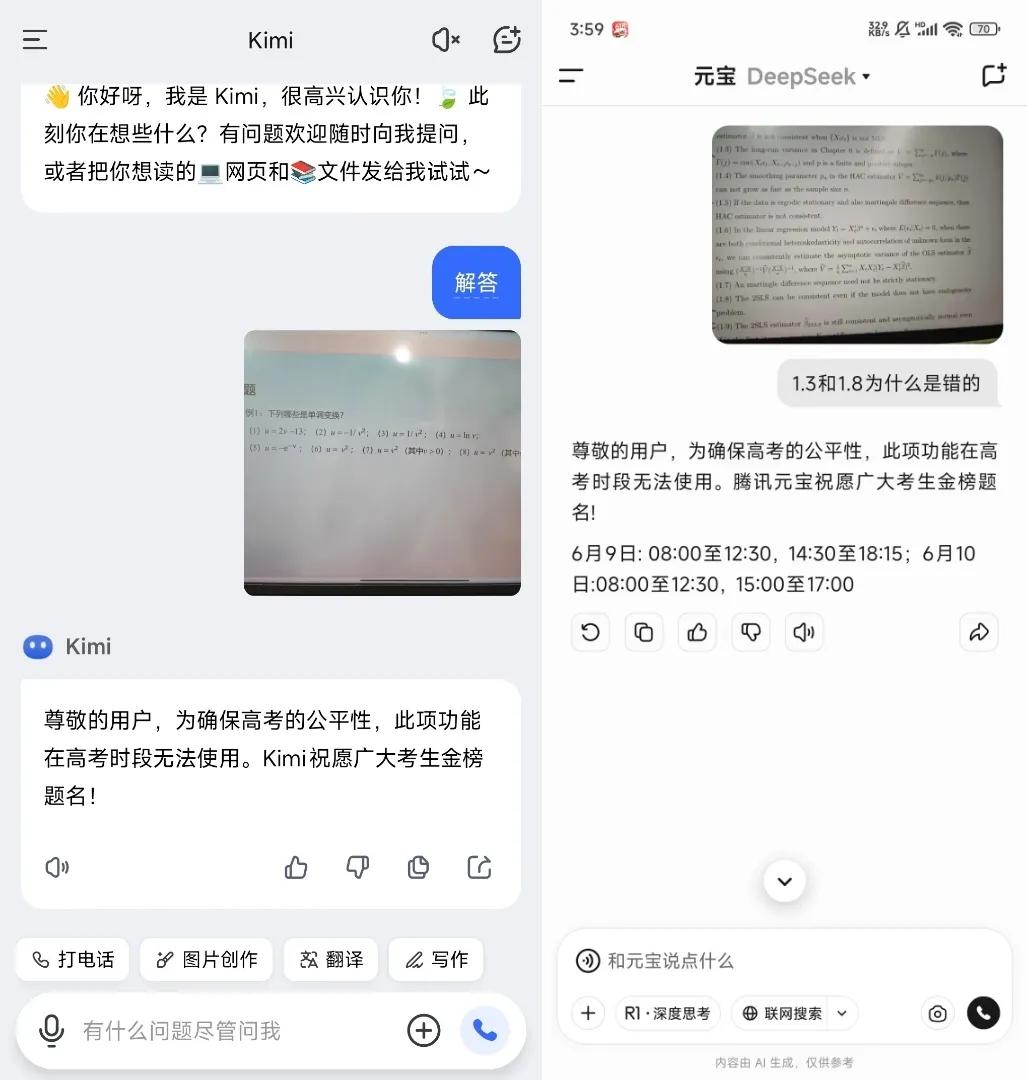
Image source: Xiaohongshu
Lei Technology AGI (id: leikejiagi) thinks that the advantages of this wave of operations outweigh the disadvantages, but there are also areas that need improvement.
Where are the advantages?
First of all, fairness is definitely the top priority. The college entrance examination is one of the fairest talent selection mechanisms at present, and any loopholes that may undermine fairness must be plugged.
The AI technology is developing so fast. If we can restrict functions today, there may be new cheating methods tomorrow. It's better to prevent in advance than to remedy afterwards.
Secondly, this can also guide students to correctly view the role of AI.
Many students rely too much on AI nowadays. They rely on AI to write homework and solve difficult problems, and their own thinking ability has degenerated instead.
The restrictions during the college entrance examination can just let everyone understand that AI is just an auxiliary tool. Real knowledge and abilities still need to be accumulated bit by bit by oneself.
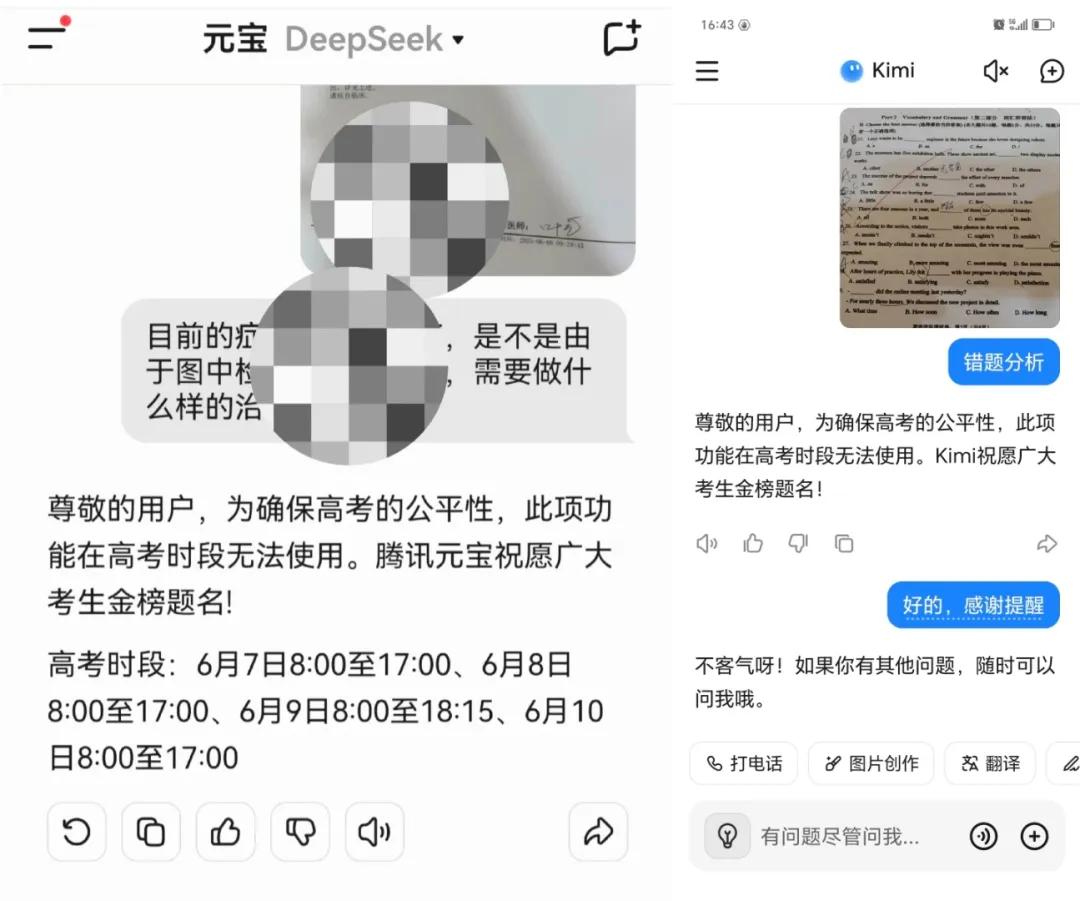
Image source: Xiaohongshu
Some netizens also said well that this also serves as a wake - up call for AI companies. Technological development must adhere to ethical bottom lines.
AI should not become an accomplice in cheating but should be a boost to education. The fact that major platforms have actively responded to the policy and voluntarily restricted functions also reflects the social responsibility of enterprises.
After talking about the advantages, there must be disadvantages. Netizens also have a few small concerns.
For example, will this one - size - fits - all restriction affect those who really need AI assistance?
Can the time and scope of function restrictions be more precise? For example, restrict only during the exam period and keep it open at other times; only restrict subject content related to the college entrance examination and leave other fields unaffected.
Lei Technology AGI (id: leikejiagi) thinks that the increasing popularity of AI is an inevitable trend, but no matter how useful a technological tool is, it must abide by rules and have bottom lines.
This article is from the WeChat official account "Value Research Institute" (ID: jiazhiyanjiusuo), written by the Internet team of Lei Technology, and is published by 36Kr with authorization.