Is the algorithm doubling every year and the chip doubling every two years? A significant confirmation: AI is self-accelerating and unstoppable.
The Singularity is approaching!
Economists can no longer sit still.
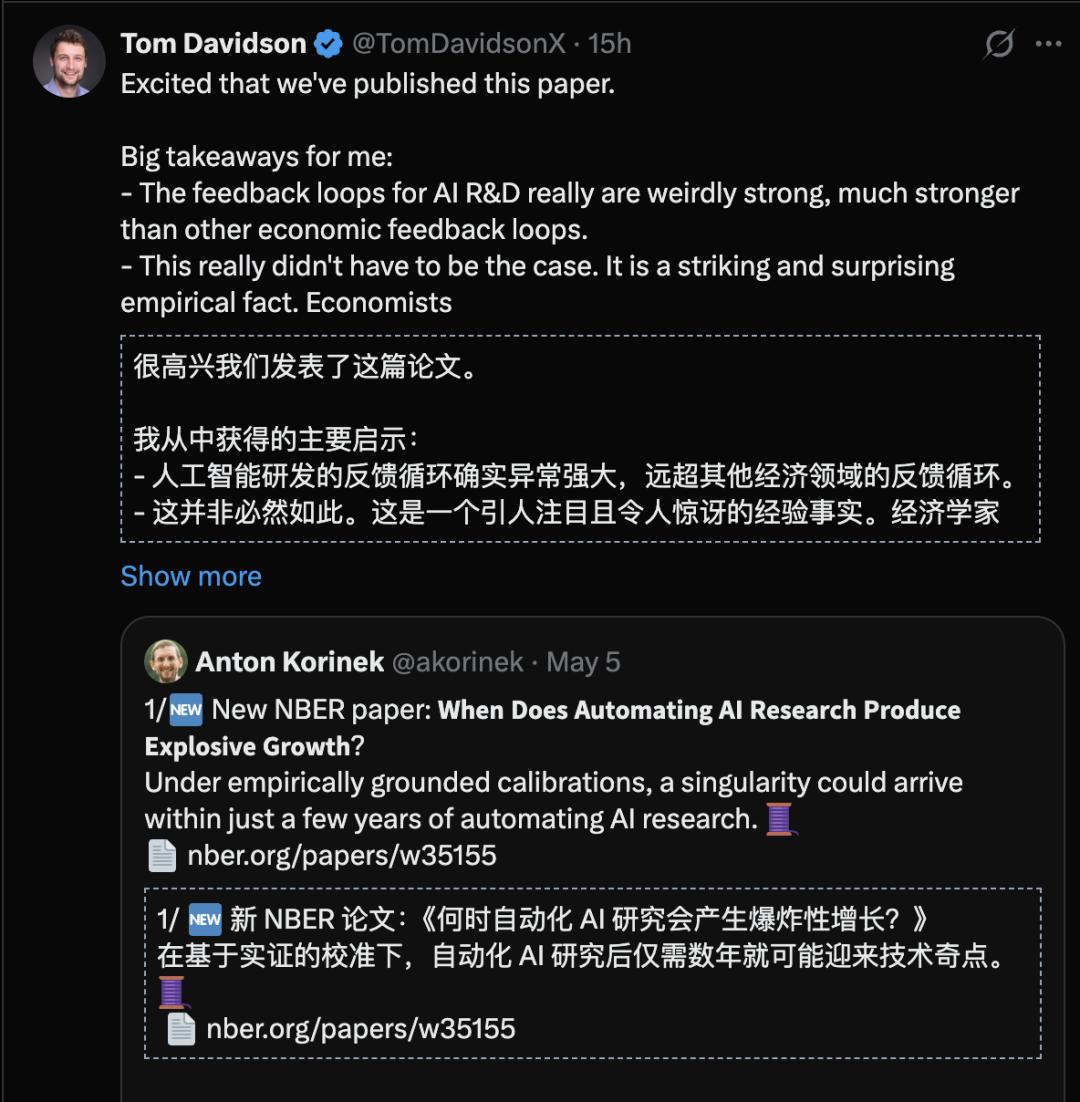
Tom Davidson, a senior researcher at Forethought, just excitedly reposted a new paper from the NBER with a caption that said, "Economists, you need to pay immediate attention to this fact."
What fact?
AI is accelerating its own evolution at a speed never seen in human history.
This is not a metaphor. It's based on data.
Chip efficiency doubles every two years. Algorithm efficiency doubles every year.
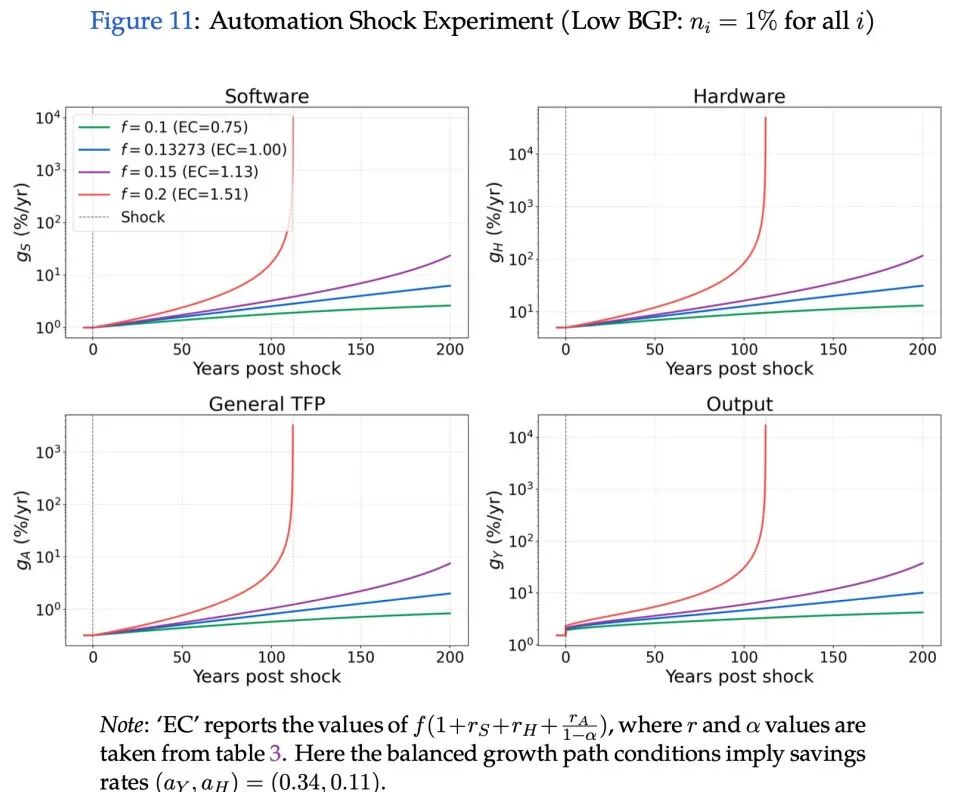
The combination of these two exponential curves forms a positive feedback loop that economists have never seen in any other industry.
What's even scarier is that this feedback loop is accelerating.
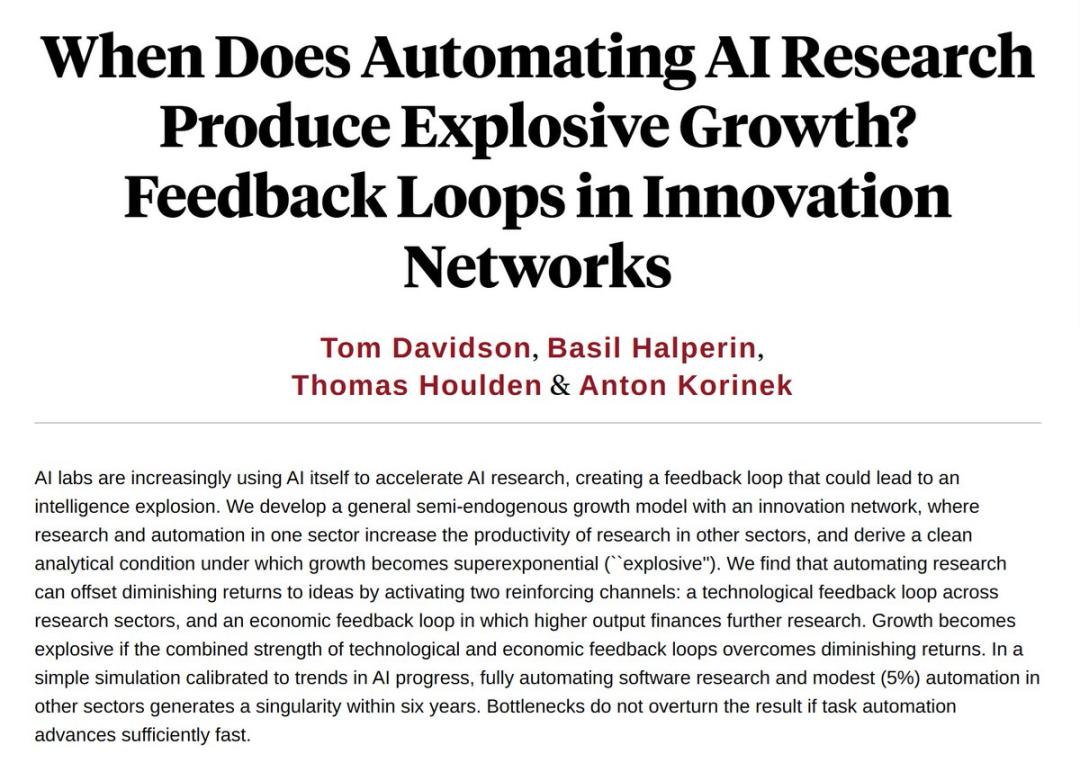
Paper title: When Does Automating AI Research Produce Explosive Growth? Feedback Loops in Innovation Networks
Paper link: https://www.nber.org/papers/w35155
This is not a certainty. It's a striking and surprising empirical fact.
Economists should pay high attention and listen carefully.
- First, empirically, the phenomenon of "it's getting harder to find good ideas" has a much weaker impact in the field of artificial intelligence than in other technological fields.
- Second, the absolute progress speed of AI technology is astonishing. The efficiency of AI chips doubles every two years, and the efficiency of algorithms doubles about every year.
- Third, when AI capabilities improve, we can automate more tasks.
To achieve a significant acceleration in growth, complete automation is not necessary. Partial and continuous improvement in automation is sufficient. As long as the remaining tasks are automated quickly enough, the human bottleneck can be avoided.
And they have actually estimated this speed!
AI's complete self - iteration is just around the corner
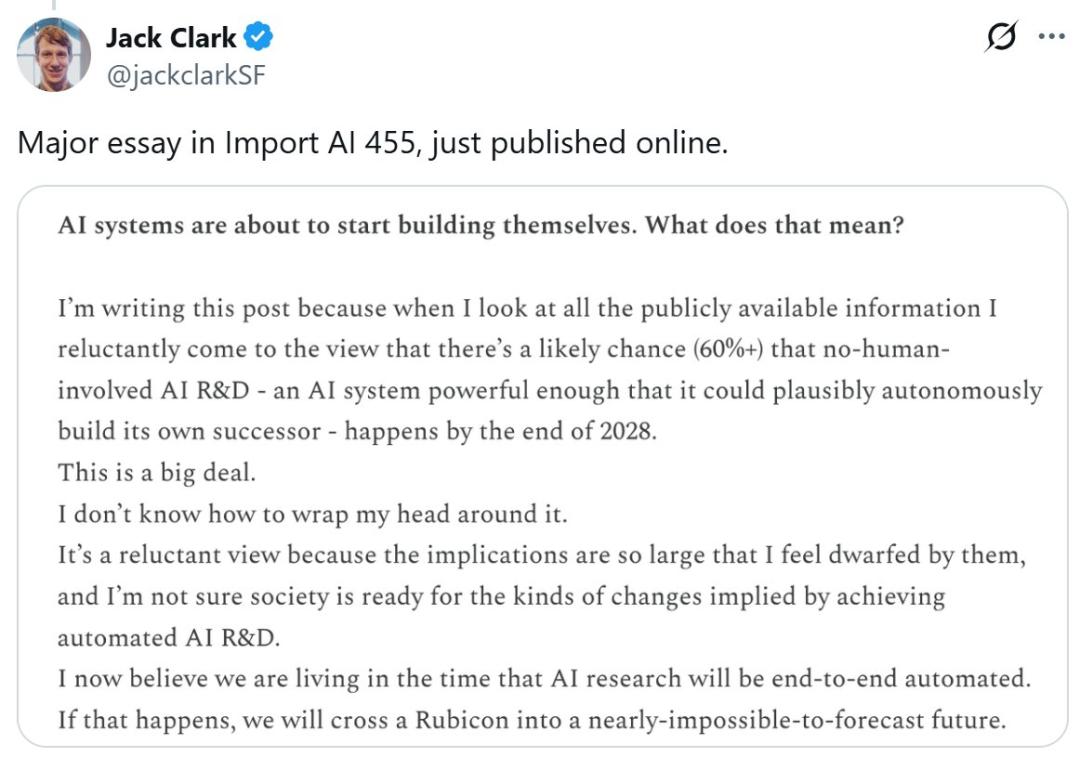
Recently, Jack Clark, co - founder and policy lead at Anthropic, after reviewing all publicly available information, reluctantly came to the view that by the end of 2028, there is a fairly high probability (over 60%) that there will be an "unmanned AI R & D" — an AI system powerful enough to autonomously build its next - generation system.
He believes that "if this really happens, we will cross a Rubicon and enter an almost unpredictable future."
Link: https://importai.substack.com/p/import-ai-455-automating-ai-research
This prediction is not an exaggeration.
Last year, Altman predicted that by March 2028, a real automated "AI researcher" would be born.
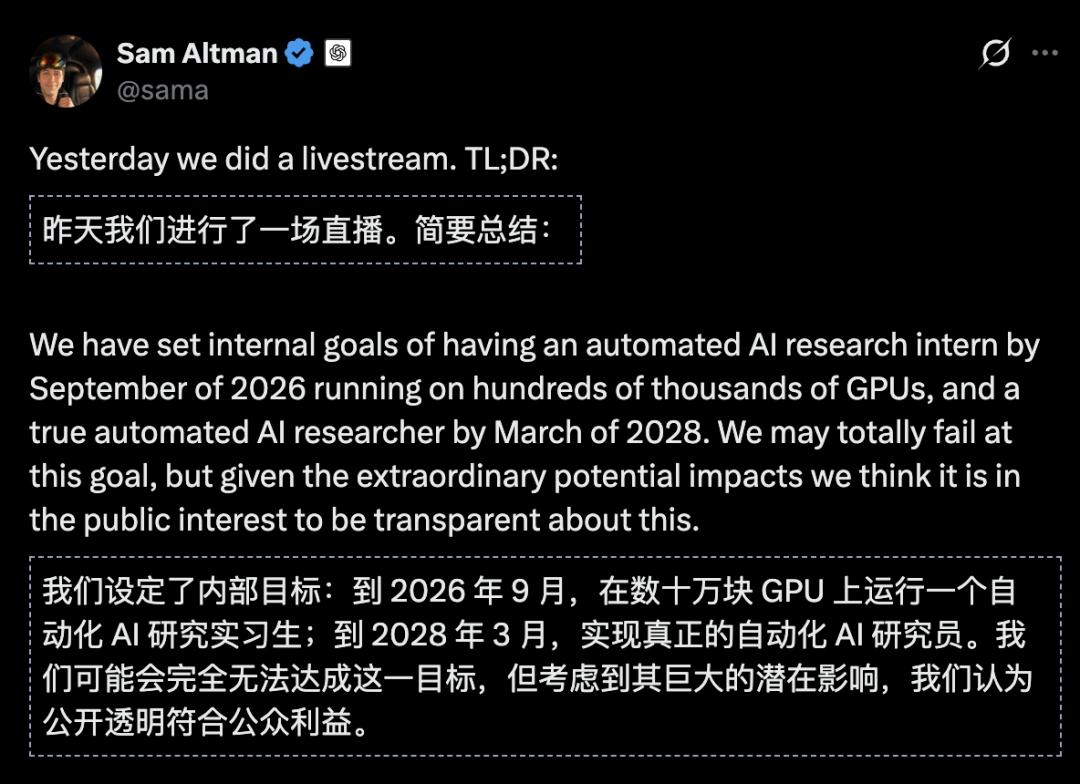
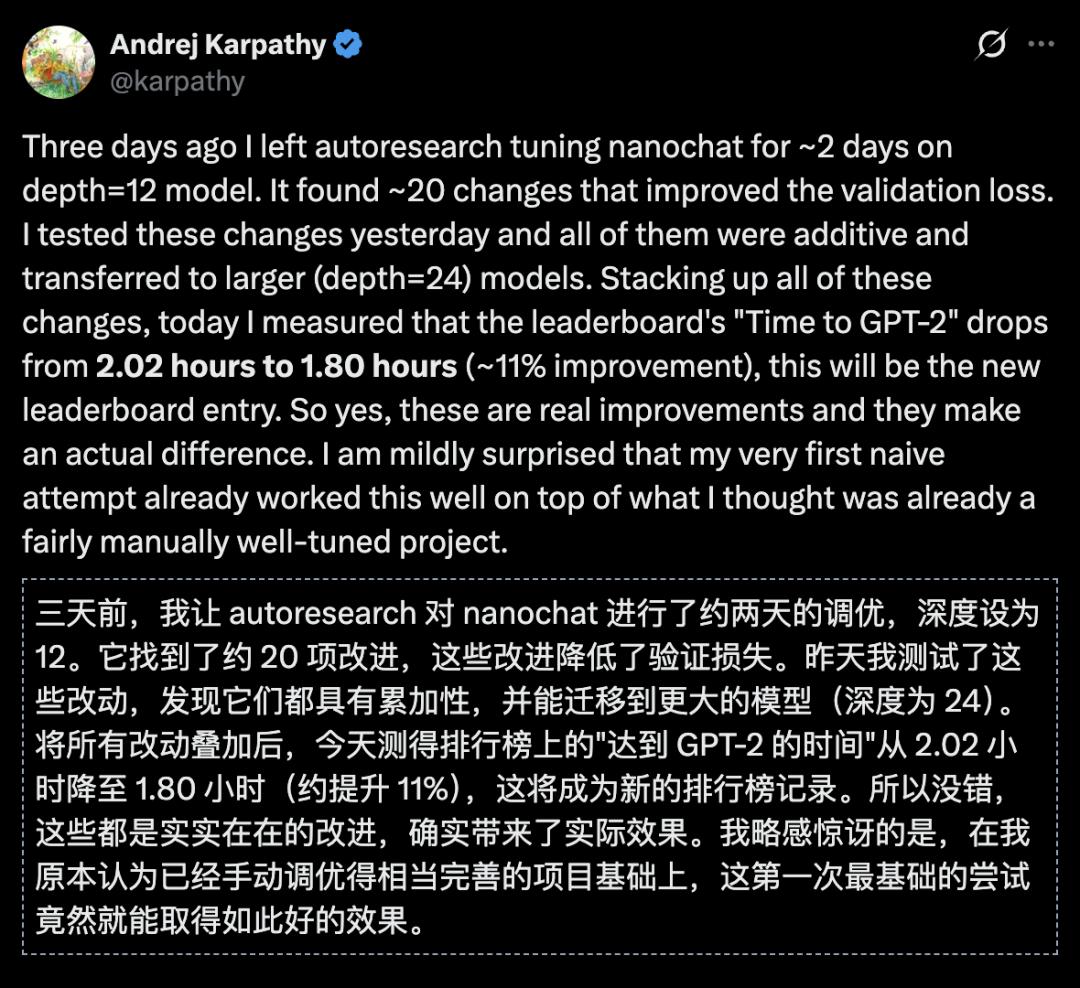
Karpathy fine - tuned a 12 - layer deep neural network using "autoresearch" and achieved an 11% improvement in two days.
The question is: What does this mean for "economic growth"?
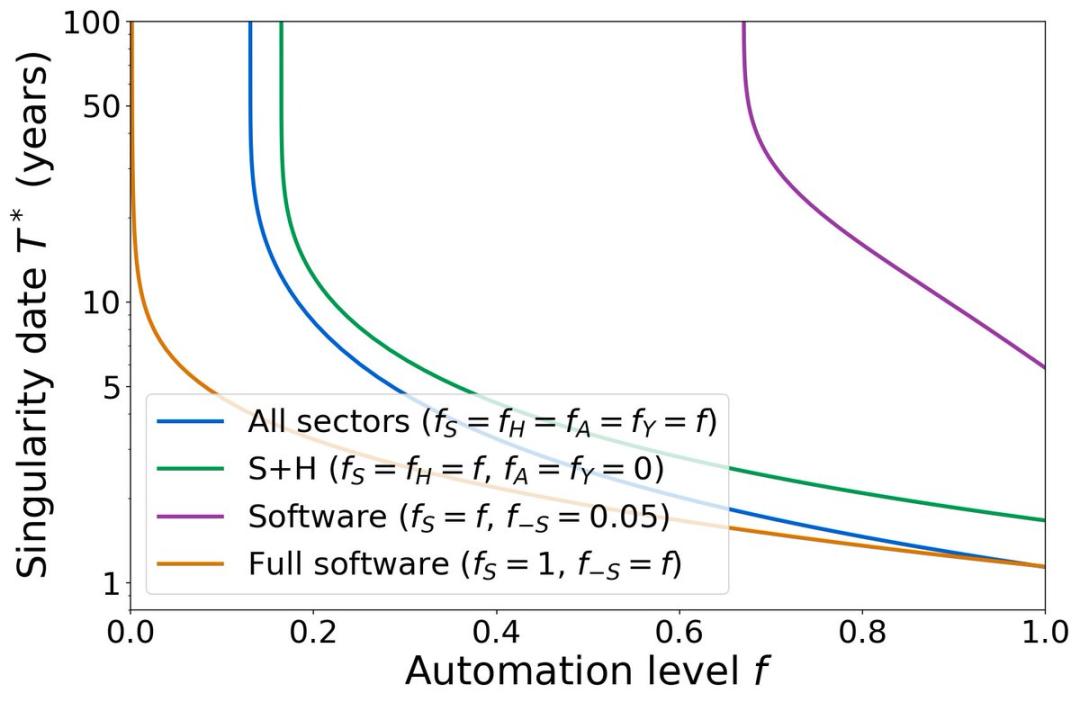
Core conclusion: Full automation of software R & D + only 5% automation in other industries → Enter the singularity (explosive growth) in about 6 years.
Will automating AI research lead to the singularity in 6 years?
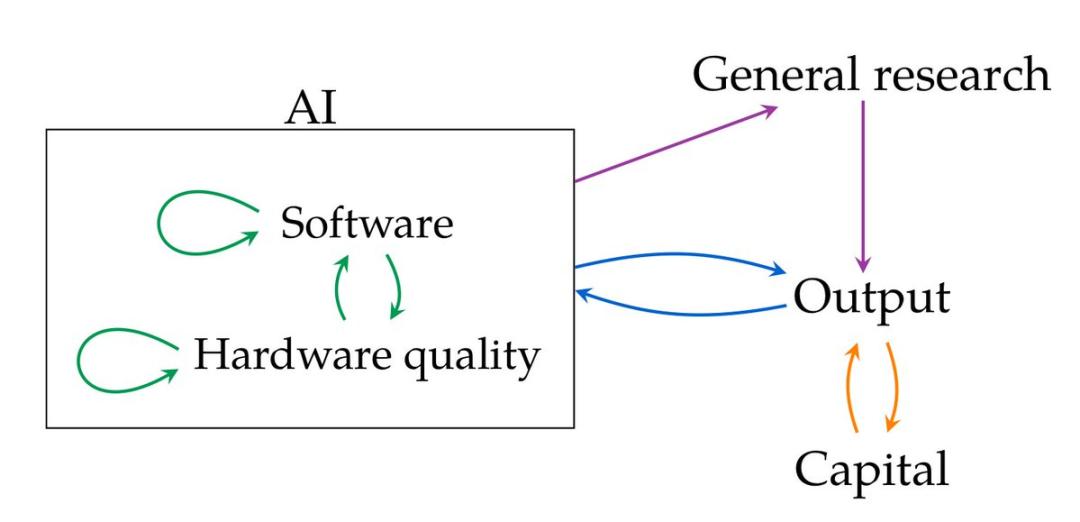
They proposed a semi - endogenous growth model with an innovation network: software, hardware, and total factor productivity (TFP) are mutually permeable.
AI automation activates two enhancement channels:
- Technological feedback loop
- Economic feedback loop (Output provides funds for research)
Technological feedback loops also exist in other fields: There is Moore's Law in semiconductors, AI - assisted drug discovery in pharmaceuticals, and the learning curve of renewable technologies in energy.
But this paper from the NBER (No. w35155) uses empirical data to reveal a fact that has shocked economists: The strength of the feedback loop in AI R & D far exceeds that in all other technological fields.
The reason lies in a key variable — the "ideas getting harder to find" effect.
In almost all technological fields, as the low - hanging fruits are picked, it's getting harder and harder to find breakthrough ideas.
This is the case in semiconductors, pharmaceuticals, and agriculture.
This is a classic pessimistic argument in economic growth theory: Technological progress will eventually slow down because all the easy things have been done.
But AI breaks this rule. The "ideas getting harder to find" effect in the field of AI is much weaker than in other technologies.
In other words — The innovation space of AI is not narrowing with progress, but is continuously expanding.
Why do other technologies hit a wall, while AI doesn't?
The paper gives a subtle explanation: The core tool for AI R & D is AI itself.
In traditional technological fields, R & D tools and R & D objects are separated:
You use a computer to design chips, but the computer won't automatically become a better chip - design tool.
You use AI to screen drug molecules, but the screening results won't make the AI better at screening.
AI is different: A better AI model → stronger AI R & D capabilities → a better AI model. This closed - loop is self - referential.
This is what Tom Davidson calls the "super - strong feedback loop."
The results of each round of improvement directly become the tools for the next round of improvement. The base of exponential growth is also increasing.
Chip efficiency doubles every two years. Algorithm efficiency doubles every year. The combination of the two makes the growth rate of AI's effective computing power far exceed the prediction of any single Moore's Law.
Partial automation is enough, no need for full automation
Here comes the most counter - intuitive conclusion of the paper: You don't need to achieve 100% automation of AI R & D.
Partial automation is enough to detonate this feedback loop.
Many people's imagination of AI replacing human researchers is linear — either fully automated or useless.
But the paper's model shows that as long as AI can undertake some key links in the R & D process (such as code writing, experiment design, and paper retrieval), it's enough to break the growth bottleneck of the number of human researchers.
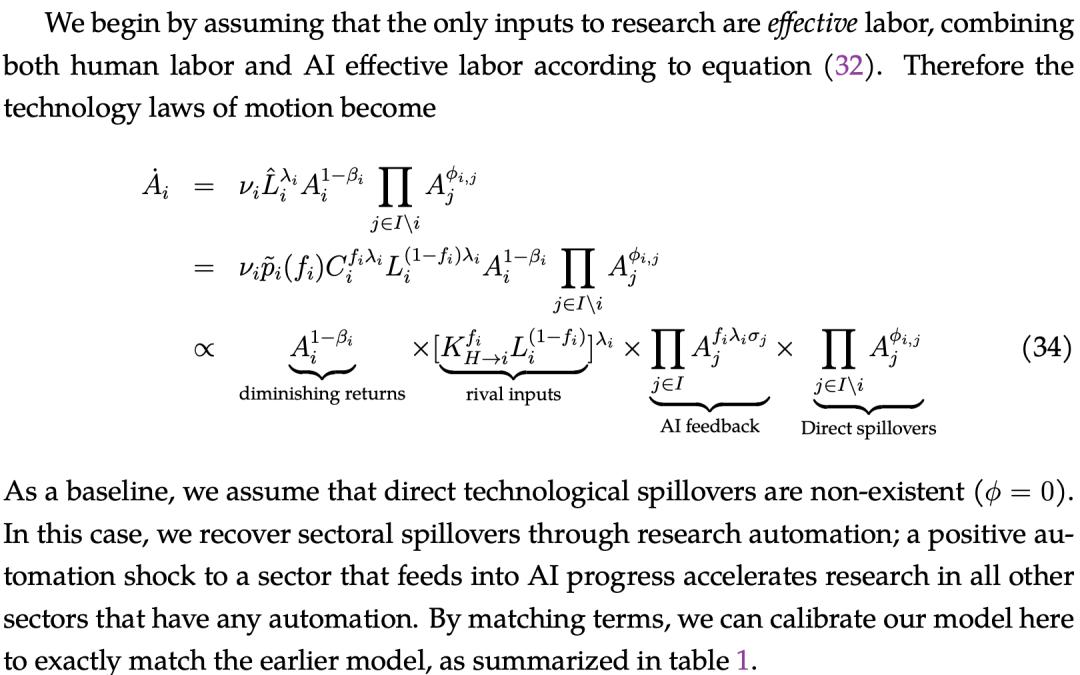
There is a simple analytical condition: When the comprehensive strength of the feedback loop exceeds 1, growth will tilt and enter an "explosive state," and the contribution of each automated department is proportional to its R & D return.

They have a counter - intuitive discovery: Most people focus on the automation of software first, but the influence of hardware R & D is actually greater.
The return on hardware research is about 5 times higher: Automating one - fold of chip design tasks has the same economic promotion effect as automating five - fold of software tasks.
When many people talk about AI, they always fall into the "omnipotent" misunderstanding:
Unless AI can completely replace human scientists, growth will be stuck by that last bit of the "human bottleneck."
The NBER's research has completely shattered this illusion.
The paper proposes a precise threshold: 13%.
As long as the R & D automation rate of the entire industry reaches 13% (or the automation rate of the software and hardware R & D fields reaches 17%), the engine called the "singularity" will be completely ignited.
Once this critical point is crossed, the strength of the feedback loop will exceed "1", and the growth curve will directly change from a slope to a cliff.
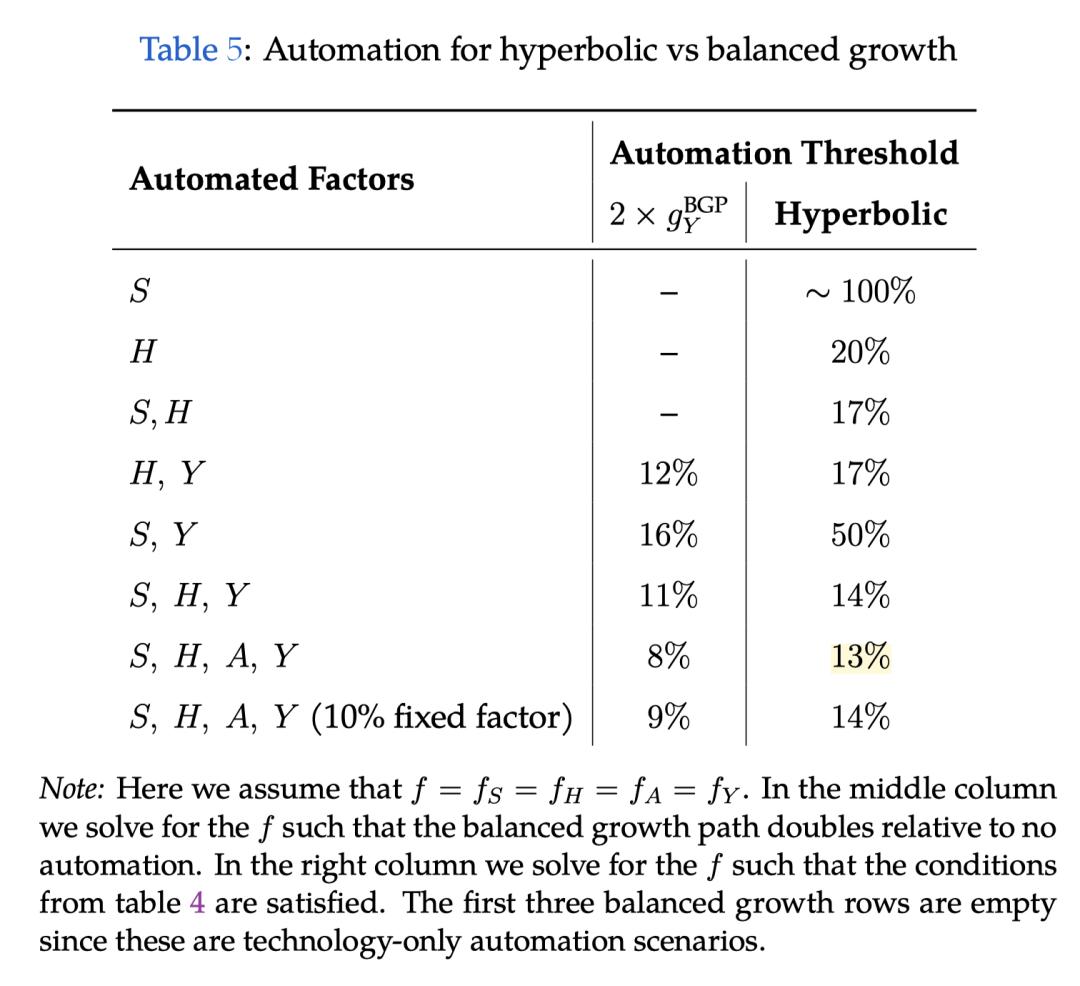
After calibration, an automation rate of only 13% in the entire industry can trigger explosive growth; if limited to the software and hardware industries, 17% is required.
As long as automation continues to advance fast enough, the bottleneck cannot reverse this trend.
You don't need to wait until AI can independently publish papers in Nature. As long as AI can enable 1,000 existing researchers to do the work that used to require 5,000 people, the feedback loop has already been ignited.
Pay immediate attention!
And the current situation is that this ignition may have already happened.
The paper conducted a set of simulations.
Based on the current progress rate of AI chips and algorithms, based on the empirical strength of the feedback loop, and based on the extremely low level of the "ideas getting harder to find" effect in the field of AI —
The conclusion is: In 6 years, AI may reach the critical point of self - iteration.
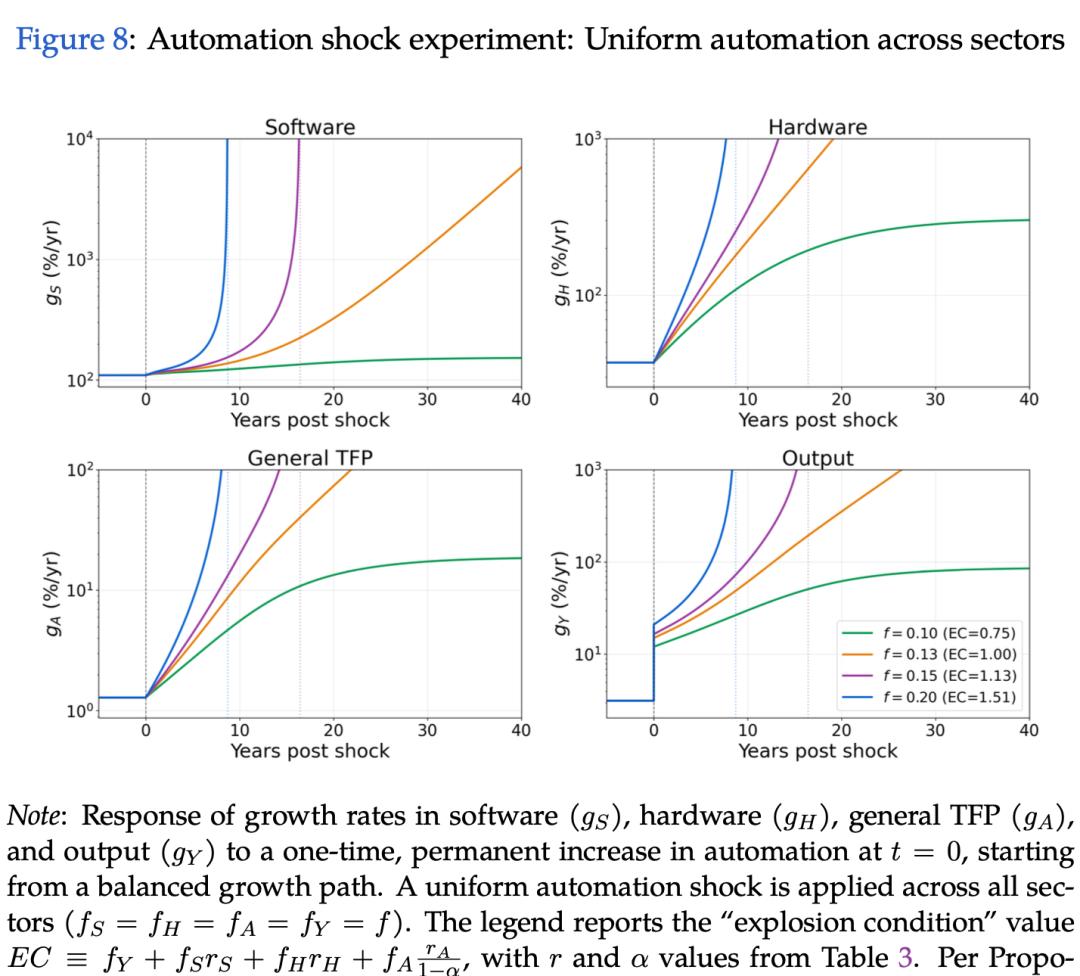
6 years. Not 60 years, not 600 years.
Around 2032.
If the paper's model is correct, the self - improvement speed of AI will exceed the contribution speed of human researchers. By then, the main force in AI R & D will no longer be humans, but AI itself.
The sentence Tom Davidson wrote when reposting this paper is particularly eye - catching now: "Economists, you need to pay immediate attention to this fact."
It's not "pay attention" or "think about it," but "pay immediate attention."
There has never been a shortage of doubts about exponential growth. The most common rebuttal is that every time someone has announced that "the singularity is approaching" in history, it has ultimately proven to be an over - extrapolation.
The proponents of Moore's Law once predicted that strong AI would arrive in 2020. Kurzweil predicted the singularity in 2045 back in 2005, and there are still 19 years to go.
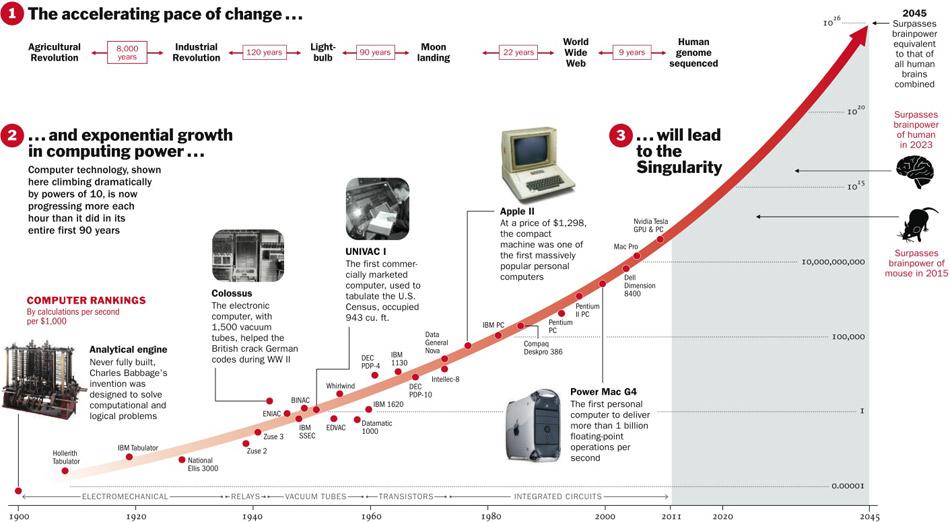
The AI winter — more than once — has proven that the exponential curve can suddenly break.