In the AI era, big tech companies are returning to the PC battlefield.
As the application of AI technology enters the deep - water zone, the PC, once regarded as a "sunset terminal", has suddenly become the focus of attention for technology giants.
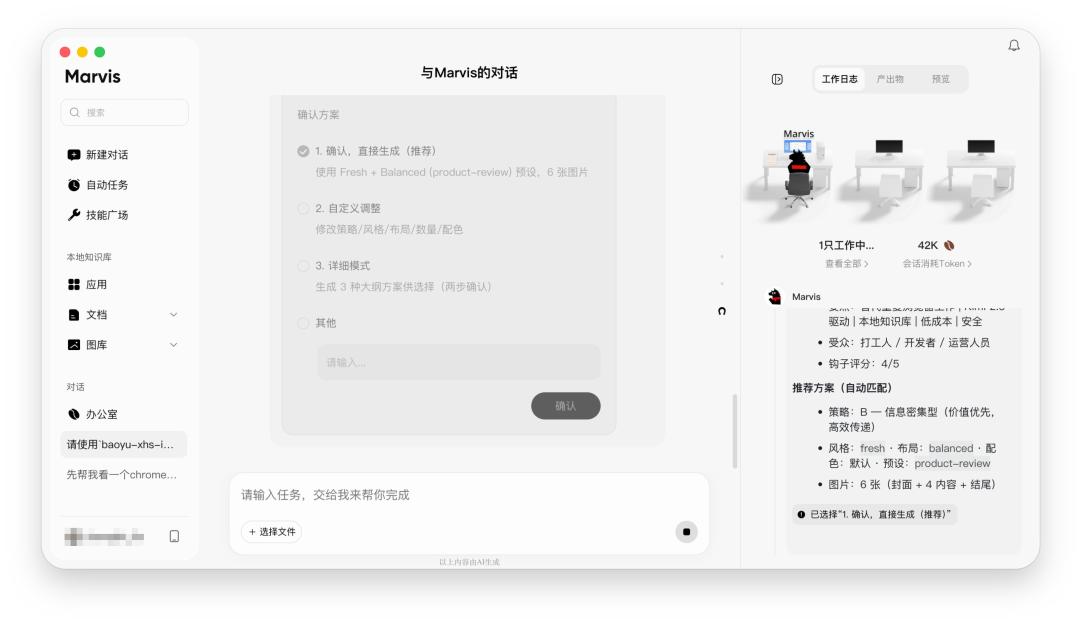
Image source: Tencent
On May 21, 2026, Tencent launched Marvis, an AI assistant at the operating system level, which can turn an entire computer into an object for conversation. It was launched simultaneously on Windows, macOS, and Android platforms. It should be noted that although Marvis offers an Android version, it mainly exists in the form of a Chatbot on mobile devices. It can only evolve into its "ultimate form" after being connected to a computer.
Since 2026, Tencent has not only launched Marvis, an AI assistant based on PCs, but also created PC - side AI products such as QClaw and WorkBuddy. Meanwhile, building AI products around PCs is becoming a major trend in the technology industry. Alibaba, Baidu, and ByteDance have also launched products such as Qoder Work, DuMate, and Trae respectively.
As is well - known, with the maturity of smartphones, the technology industry has long entered the era of mobile Internet, and the PC ecosystem has gradually been marginalized. Now, it is extremely abnormal that technology companies are building AI products around PCs.
So, the question arises: Against the backdrop that smartphones remain the popular computing platform, why do a large number of technology companies unanimously increase their investment in PC - side software? How will the relationship between PCs and smartphones change as AI applications gradually mature?
In the era of mobile Internet, PCs were "put in the cold palace"
Different from being gradually solidified as office equipment today, more than a decade ago, when smartphones were not yet mature, the PC was the most important popular computing terminal, meeting users' diverse needs such as Internet access, socializing, and entertainment. Therefore, it was the core battlefield for technology companies to build product systems and compete for ecological entry points.
At that time, Baidu, Alibaba, and Tencent built businesses such as Baidu Search, Taobao, and QQ respectively around the search, shopping, and social needs of PC users, and became the three major Internet giants overnight. Meanwhile, many startup companies also created products such as WPS, Thunder, and PPS to meet users' fragmented needs.
Among them, because it controlled the most core search entry in the PC Internet, Baidu was once the dominant player in the Chinese Internet industry. In March 2011, Baidu's market value reached $48.1 billion, surpassing Tencent and becoming the Chinese Internet company with the highest market value at that time.
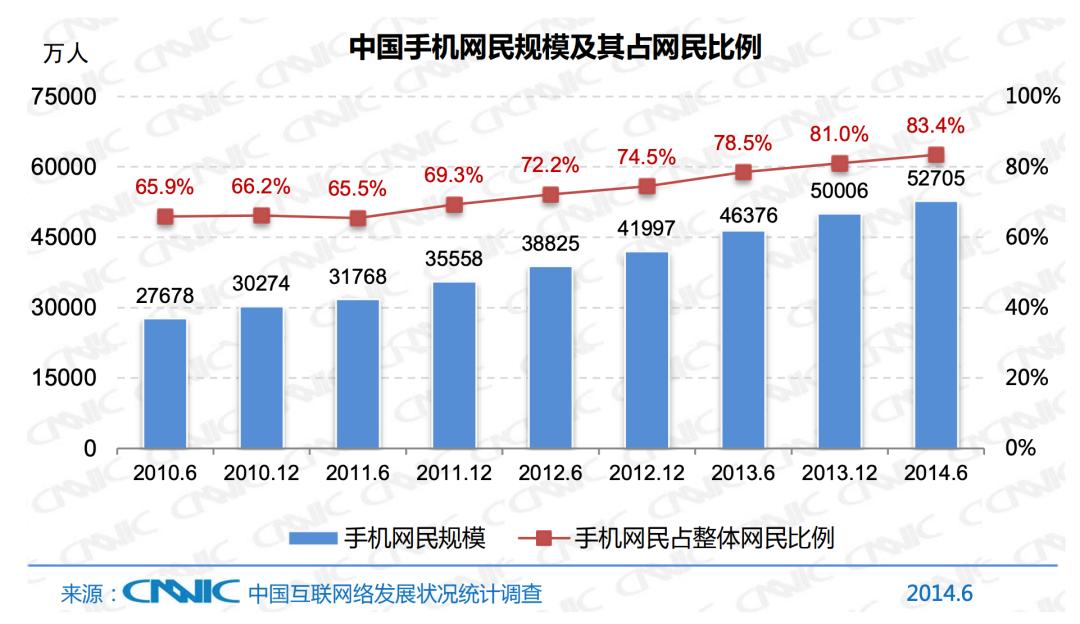
Image source: China Internet Network Information Center
However, after 2007, as the iPhone opened the door to the era of smartphones, the attractiveness of PCs to users began to decline. Data disclosed by the China Internet Network Information Center shows that from June 2010 to June 2014, the number of mobile Internet users in China increased from 277 million to 527 million, a significant increase of 90.25%; the proportion increased from 65.9% to 83.4%, a rise of 17.5 percentage points.
In this context, a large number of Internet companies catered to the wave of the smartphone era and carried out mobile transformation. Alibaba established a foothold with Taobao on mobile devices, Tencent obtained the "ticket" to the new era through WeChat, and ByteDance emerged as a new force in the mobile Internet field with Toutiao.
In this regard, in October 2014, Ma Huateng, the Chairman and CEO of Tencent, pointed out sharply in an open letter that "mobile Internet is the real Internet, which will connect everything and disrupt all industries."
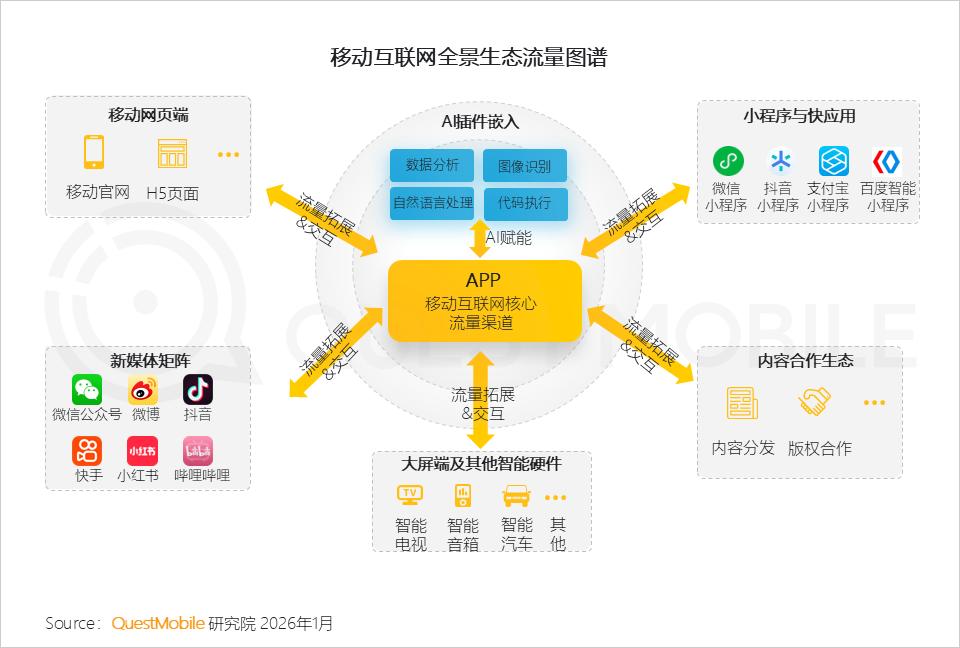
Image source: QuestMobile
Facts have proved that Ma Huateng's judgment was insightful. Due to the advantages of smartphones such as portability, all - day Internet access, and wide - range scenario adaptation, the mobile Internet has rapidly penetrated into fields such as shopping, travel, and entertainment, giving rise to a broader business space.
As smartphones have become the popular computing platform, the strategic focus of Internet companies has completely shifted to the mobile Internet. PCs are no longer the preferred carriers for innovative products. At the beginning of the launch of many mobile applications, desktop versions are not even provided synchronously.
For example, Douyin was launched as early as 2016, but it was not until June 2021, when the traffic dividend of the mobile Internet was fading, that its web version was launched.
Although Xianyu once launched a web version, under the wave of the mobile Internet, in order to direct users to the App, it repeatedly cut the functions of the web version after 2016 and even abandoned it in 2019. It was not until 2024 that the web version of Xianyu was relaunched, but its functions are not perfect.
AI releases productivity, and PCs have scenario advantages
In recent years, as AI technology has gradually matured, although technology companies are also actively deploying mobile - side AI products, different from the era of mobile Internet, these new AI products are often adapted to the PC side synchronously, and even take the PC as the main carrier.
In addition to the products such as Marvis, Qoder Work, and DuMate recently launched by Chinese technology companies mentioned above, overseas technology companies have also created PC - side AI products such as Claude Code, Codex, and Gemini CLI.
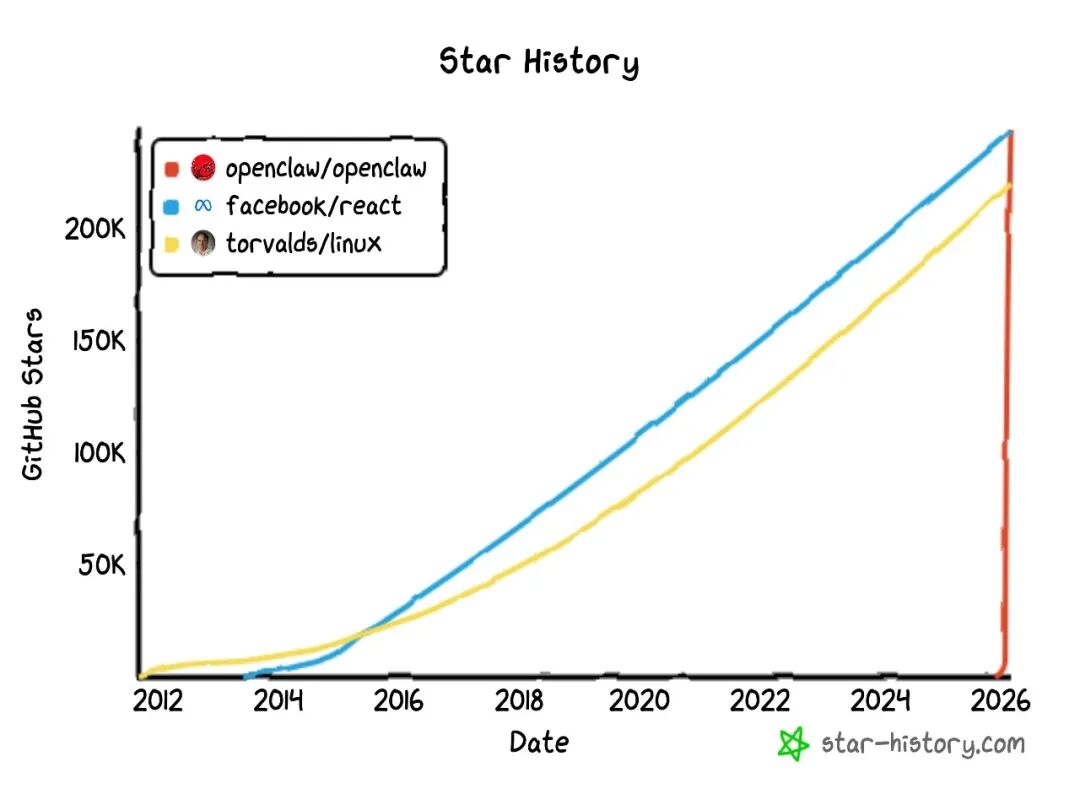
Image source: OpenClaw
What's even more abnormal is that although most users have migrated to the mobile Internet, many recently launched PC - side AI products have won the popularity of a large number of users. For example, within just over two months after its launch on the open - source platform GitHub, OpenClaw received more than 300,000 "stars", surpassing Linux and becoming the most popular open - source project on the platform.
If the popularity of OpenClaw on GitHub mainly affected the circle of programmers, then the subsequent national "shrimp - raising" craze means that the product has successfully "broken out of the circle" and penetrated into the mass market.
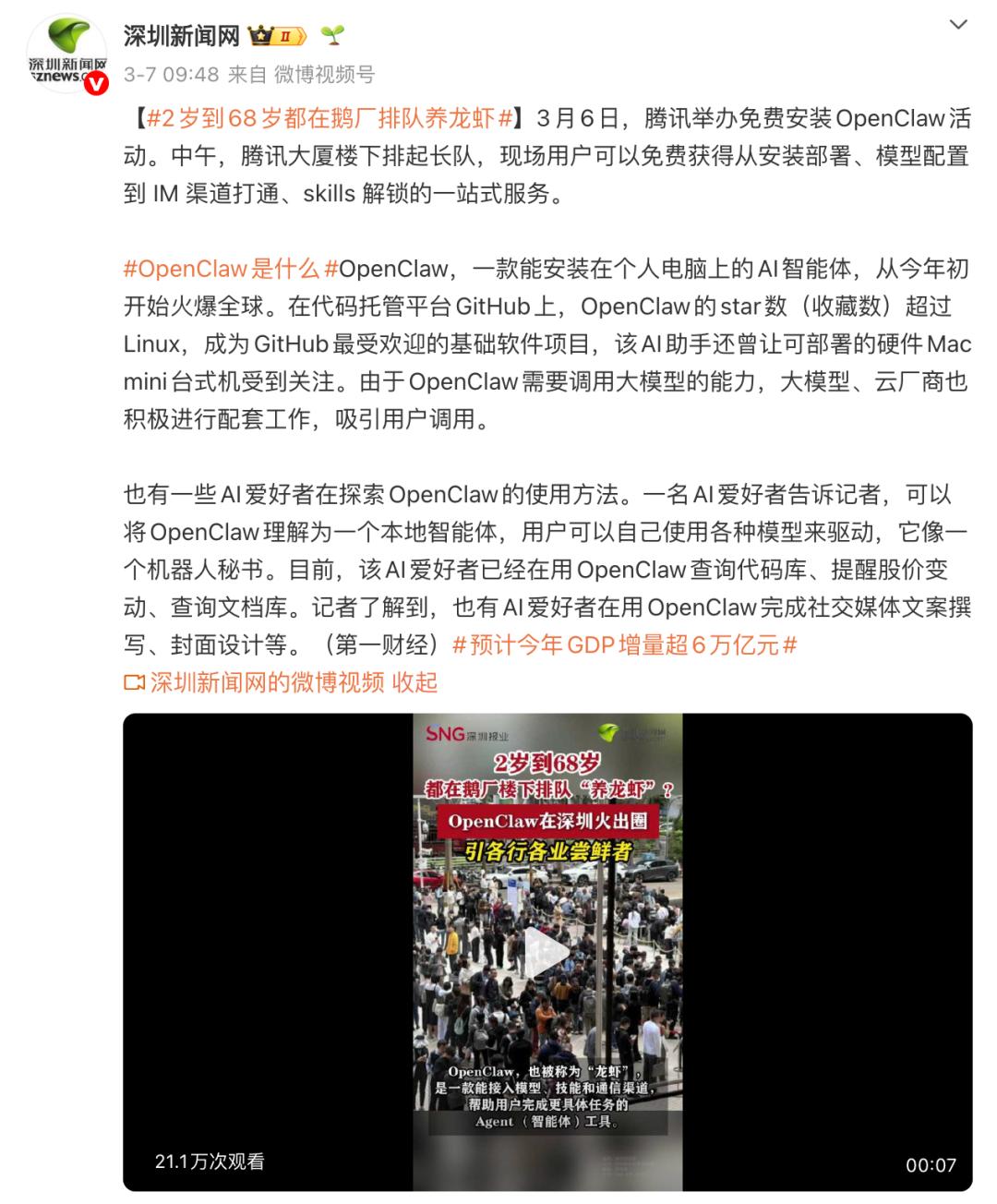
Image source: Shenzhen News Network
According to Shenzhen News Network, in early March 2026, Tencent held a free installation event for OpenClaw in Shenzhen. The event site was crowded with people, attracting early adopters from all walks of life, including children and the elderly. "Many people are not familiar with programming, cloud computing and other processes, but they came out of curiosity or work needs."
The reason is that different from smartphones, which are more inclined to entertainment and life scenarios, the advantages of PCs are mainly reflected in productivity scenarios. When applying AI technology, it is easier to achieve positive feedback.

Image source: "Luo Yonghao's Crossroads"
In this regard, in mid - May 2026, when guesting on the podcast "Luo Yonghao's Crossroads", Li Xiang, the Chairman and CEO of Li Auto, talked about why ordinary users have limited perception of AI. He said, "An important point of an Agent is that it must have a real work and production environment to get good feedback. Ordinary users will find it boring after playing for a while because there is no production feedback."
Actually, since 2025, the mobile - side AI assistants launched by technology companies such as Alibaba, Tencent, and ByteDance have also been continuously strengthening their "task - handling" capabilities. However, limited by the isolated ecosystem of the mobile Internet, most of these AI products can only complete the service closed - loop within their own systems, unable to truly achieve cross - platform services, and difficult to bring a subversive user experience.
In contrast, the fragmentation degree of the PC ecosystem is relatively low, and Windows and macOS can provide system - level execution rights for applications. AI agents represented by OpenClaw can deeply integrate the user's computer - side data and truly achieve "executing tasks with one sentence".
From the perspective of demand, when users use a PC, they often have clear production requirements for office and creation. They also have a higher acceptance of AI agent products that can improve efficiency and perform complex operations.
Not only is it more in line with users' needs, but in the field of AI agents, compared with smartphones, PCs also have significant advantages in terms of computing power, memory, battery life and other configurations.
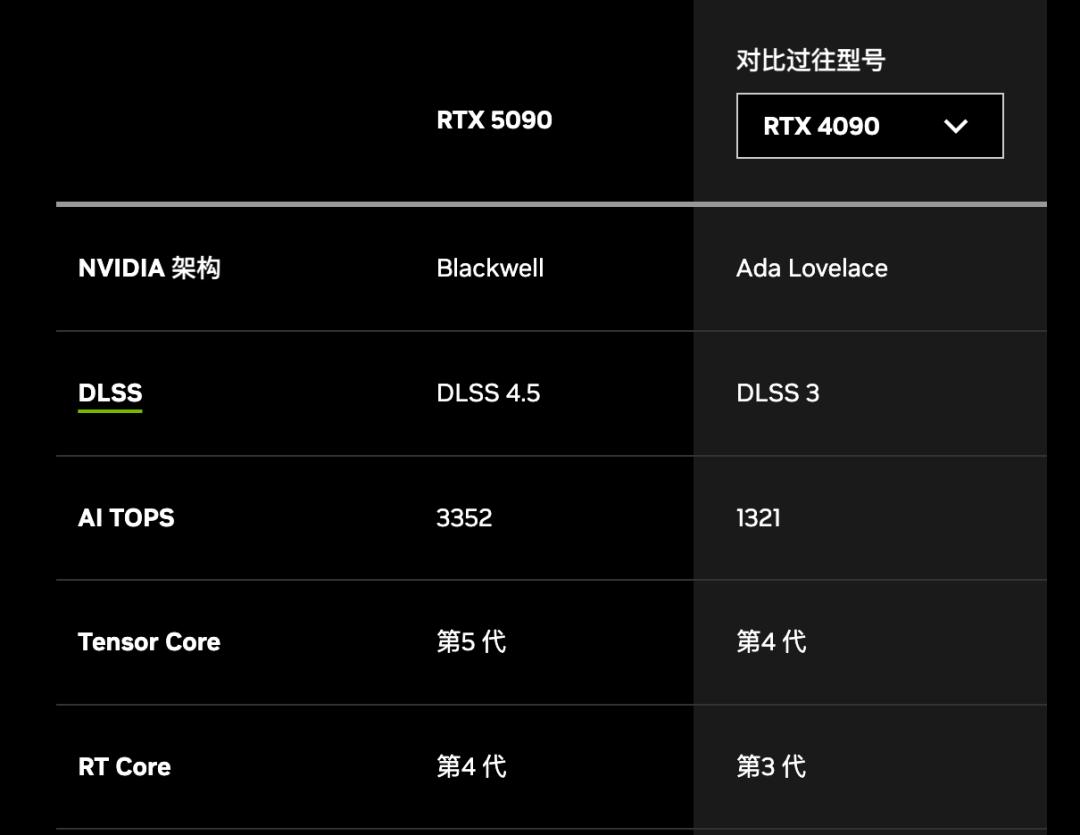
Image source: NVIDIA
For example, NVIDIA's flagship graphics card, RTX 5090, has 92 billion transistors and an AI computing power of up to 3352 TOPS, which can be regarded as the user's private "Token factory". In contrast, the AI computing power of the fifth - generation Snapdragon 8 Extreme, the flagship processor in the current mobile phone industry, is only 80 TOPS, which is difficult to meet users' high - intensity edge - side computing power requirements.
Generally speaking, in the AI era, it is not accidental that large technology companies are building AI products around PCs. Compared with smartphones, in terms of hardware performance, system openness, or users' usage scenarios, PCs are more suitable for the implementation and evolution of AI agents.
It can be said that AI is reshaping the PC from an "office tool" to the core entry point of the next - generation computing ecosystem.
In the next era, the hybrid computing architecture may become the mainstream
The unanimous investment of large technology companies in AI agents has brought the marginalized PC back to the center of the technology industry. However, due to its bulkiness, it is difficult for this device to become a user's portable computing terminal. This means that in the AI era, the relationship between PCs and portable terminals such as smartphones may not follow the substitution logic of one rising while the other falling.
Although cloud - based large models have scale advantages and stronger capabilities, since each user has a large amount of private and personalized data, the personal computing center in the AI era will still be mainly based on local devices.
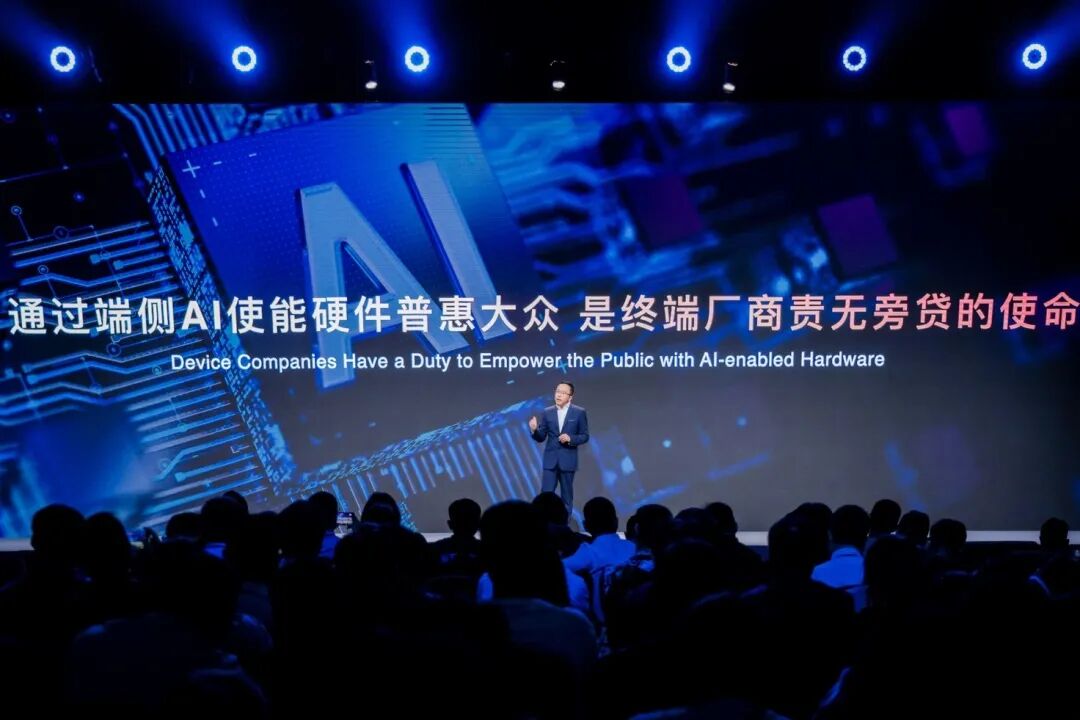
Image source: Honor
In this regard, in June 2024, Zhao Ming, the former CEO of Honor, said, "Many capabilities of edge - side AI are not available in cloud - based AI. Its advantages are mainly reflected in the learning of users' personal data and the protection of personal privacy. The future development of edge - side AI must better empower consumers and better coexist with network AI."
In this context, PCs with stronger edge - side computing power and higher system openness are expected to evolve from productivity tools to "home computing centers", responsible for storing users' personal data and providing edge - side computing power. When the local computing power is insufficient, the AI agents on the PC can call advanced cloud - based large models through the home Wi - Fi to solve complex tasks.
However, compared with smart terminals such as mobile phones, PCs also have disadvantages such as poor portability and dependence on a fixed desktop usage environment. Therefore, in the future, users' computing needs may not be limited to a single terminal, but may become a "hybrid architecture".
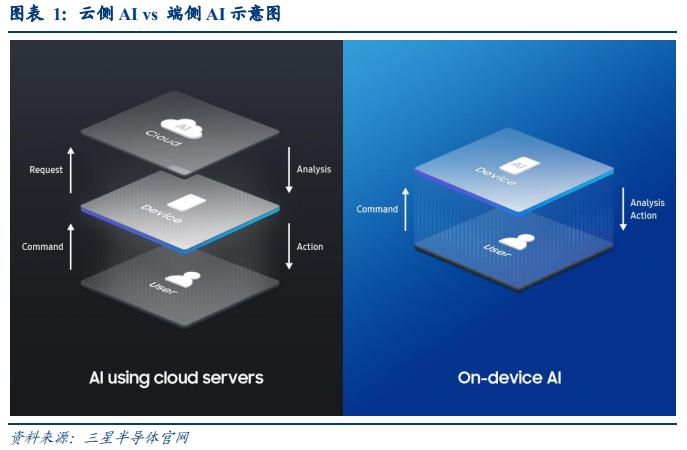
Image source: Huibo Investment Research
The PC at home mainly undertakes high - intensity computing tasks by coordinating edge - side and cloud - based computing power. On this basis, portable terminals can deeply cooperate with the PC to efficiently execute corresponding tasks.
For example, users can hand over fleeting ideas to the AI agent on the PC through wearable devices such as smart glasses and smart headphones. By opening the IM software on the mobile phone, users can intuitively view the task execution status of the AI agent.
Obviously, in the AI era, although the user's computing center will also shift, it is unlikely to be monopolized by a single terminal as in the era of PC Internet or mobile Internet. PCs, smartphones, wearable devices, and even more edge devices will be deeply integrated.
In this system, PCs with stronger edge - side computing power, higher openness, and a productivity ecosystem will become the core center for personal data, AI agents, and complex task scheduling, and their strategic position will become increasingly important.
From this perspective, the core strategic goal of large technology companies returning to the PC battlefield in the AI era is not to launch AI products, but to compete for the entry point and control of the next - generation digital world.
If a technology company can occupy the "control console" of the PC in the AI era, it will have the opportunity to dominate the future human - computer interaction paradigm and ecological order.
Next, it is still unknown which Internet company will obtain the "ticket" to the