QuestMobile AI Platform Credibility Logic and Information Source Preference Research Report: The Reconfiguration of Information Distribution Weights and the Leap of User Behavior - The Key to Brand Asset Reconstruction Lies Behind These Two Changes
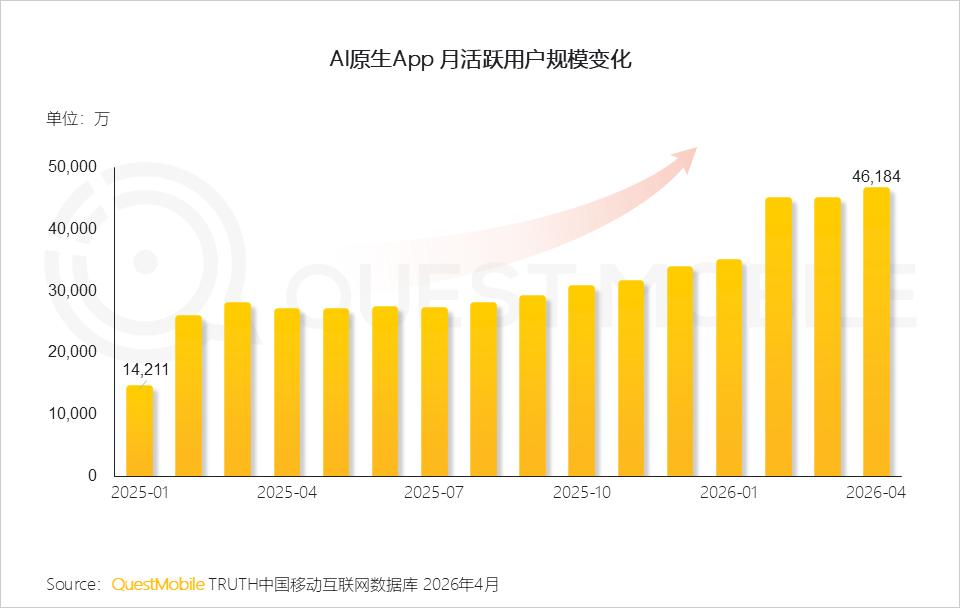
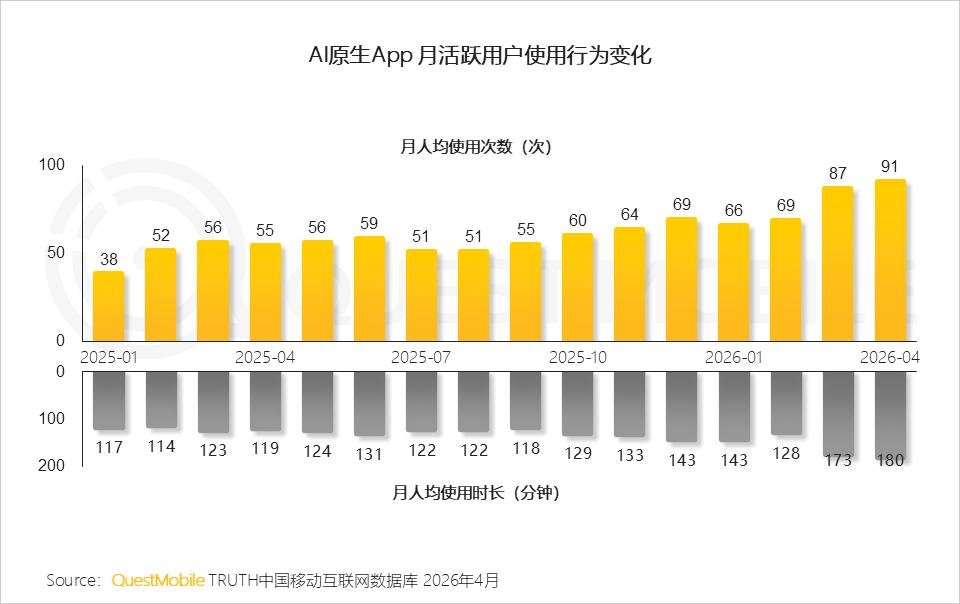
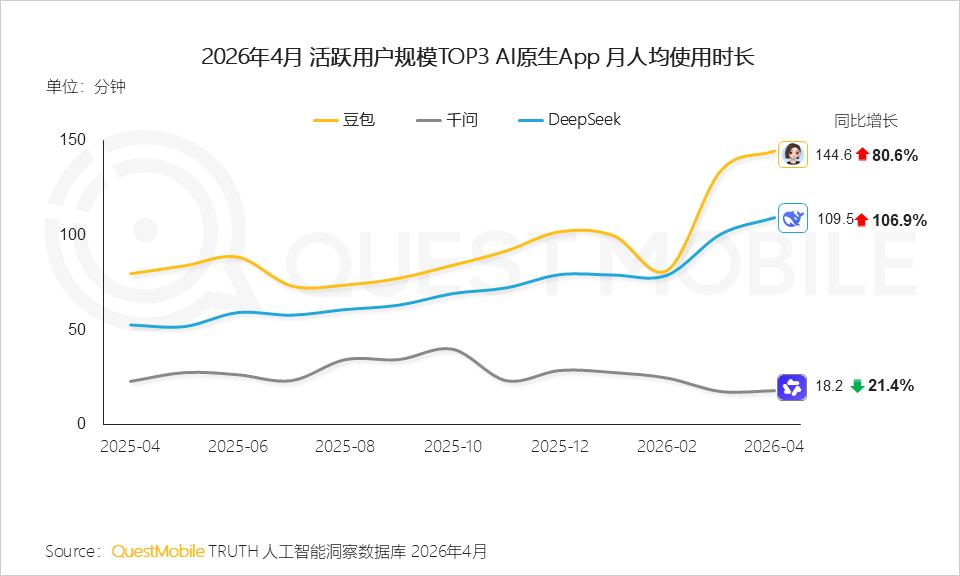
Today, I'd like to share with you the Insights Report on Search Traffic Distribution and Evaluation of AI Platforms. According to QuestMobile data, as of April 2026, the monthly active user scale of AI-native apps reached 461 million. The average monthly usage times and duration per user reached 91 times and 180 minutes respectively. Among them, the average monthly usage duration per user of Doubao and DeepSeek was 144.6 minutes and 109.5 minutes respectively, with a year-on-year increase of 80.6% and 106.9%. The trend of large-scale application is obvious, which has brought about fundamental changes in users' information acquisition paths and decision-making models. The information collection and source preference of AI platforms have quietly become the "ghost" influencing user behavior.
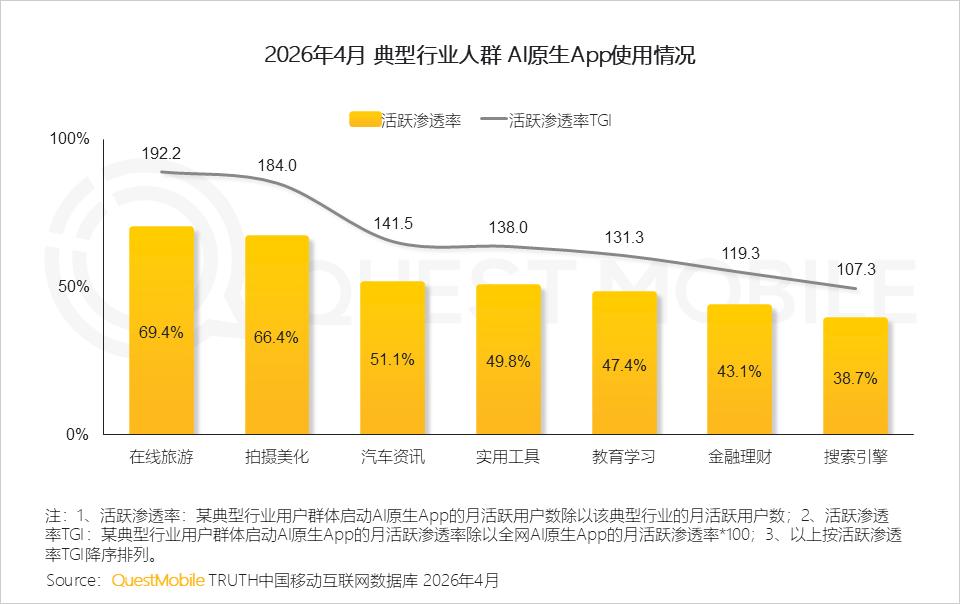
This behavioral change is manifested at two major levels. On the one hand, the user groups of AI-native apps highly overlap with users in multiple industries, and the penetration rate continues to deepen. For example, in the fields of online travel, photo beautification, automobile information, utility tools, education and learning, financial management, and search engines, the proportion of users using AI-native apps reached 69.4%, 66.4%, 51.1%, 49.8%, 47.4%, 43.1%, and 38.7% respectively. These industries basically have "high requirements for information summarization and extraction" and "high decision-making link needs", and users tend to use AI-native apps as auxiliary tools.
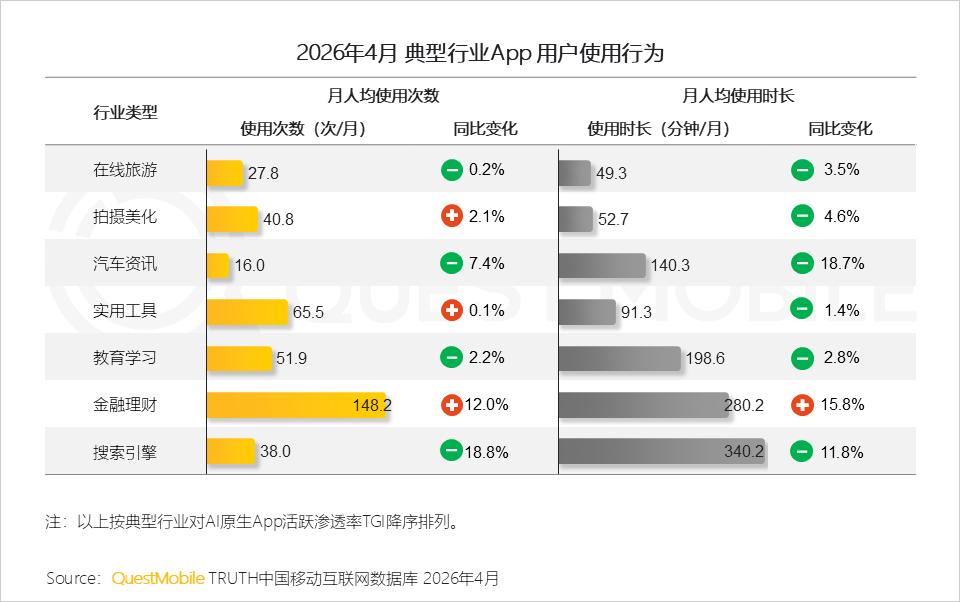
On the other hand, the increasing stickiness of AI-native apps has led to a continuous decline in the user stickiness of multiple traditional industry apps. For example, in April 2026, the average monthly usage times of search engine apps was 38.0 times, and the average monthly usage duration per user was 340.2 minutes, with a year-on-year decrease of 18.8% and 11.8% respectively. At the same time, industries such as online travel, automobile information, and education and learning also showed varying degrees of decline.
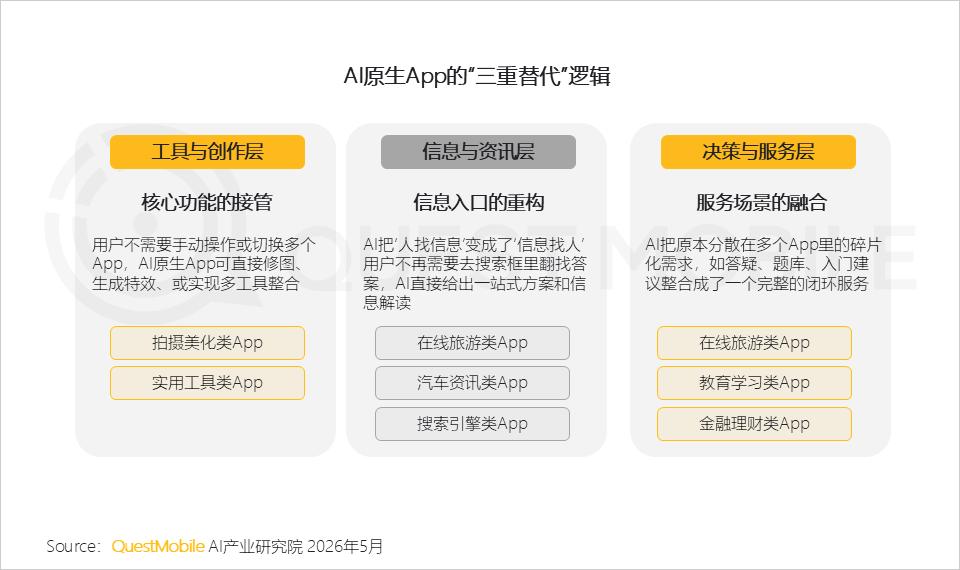
Behind these two major behavioral changes lies a profound change from the "Internet era (PC + mobile)" to the "AI era". The problems of "information silos" and "information chimneys" of websites and apps that have been difficult to solve in the Internet era have been completely solved by AI-native apps through the "triple substitution" of core function takeover, information entry reconstruction, and service scenario integration. "Information finding people" has also become a reality from a vision.
However, this also brings new problems: reliable information sources are crucial. The frequent occurrence of information source pollution and AI poisoning in recent days has caused many problems, from various consumption decisions to property safety, and even the safety of underage users. Obviously, this will become the key to the continuous game between "bad money" and "good money" in the future.
The heavy-handed rectification by relevant departments has already taken place, which will inevitably become a crucial industry variable. In this process, the "reliable data assets" in the AI search path are not only the prerequisite for "brand recommendation" but also the basis for "brand mention", and will inevitably become the "core asset composition" for brand building and development in the AI era.
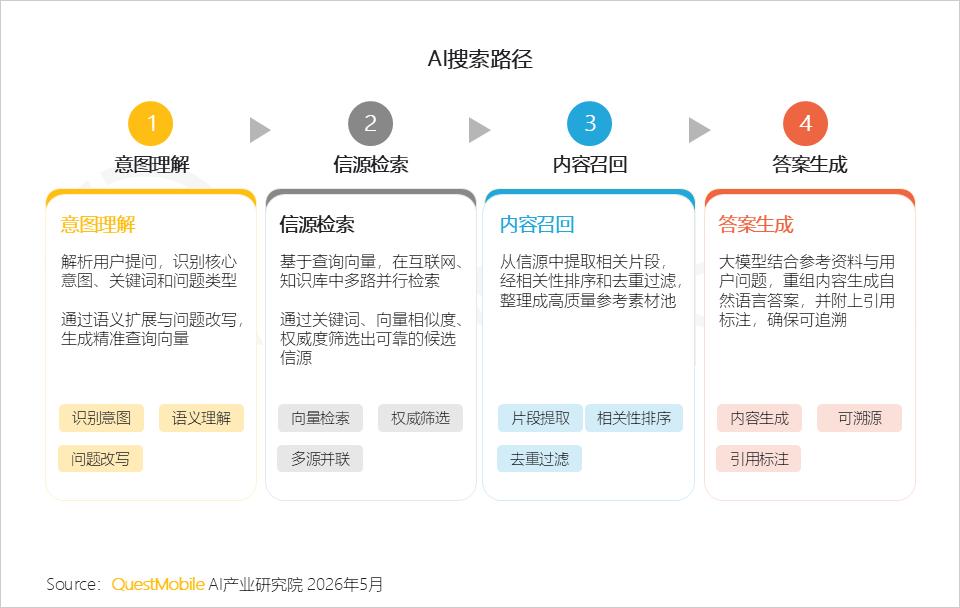
From "intention understanding" to "information source retrieval", "content recall", and then to "answer generation", the "reliable data assets" of brands must achieve both "coverage in breadth" and "precision in depth"... How to do it specifically? You may as well read the report.
1
AI is reconstructing the information distribution mechanisms of multiple industries through three paths
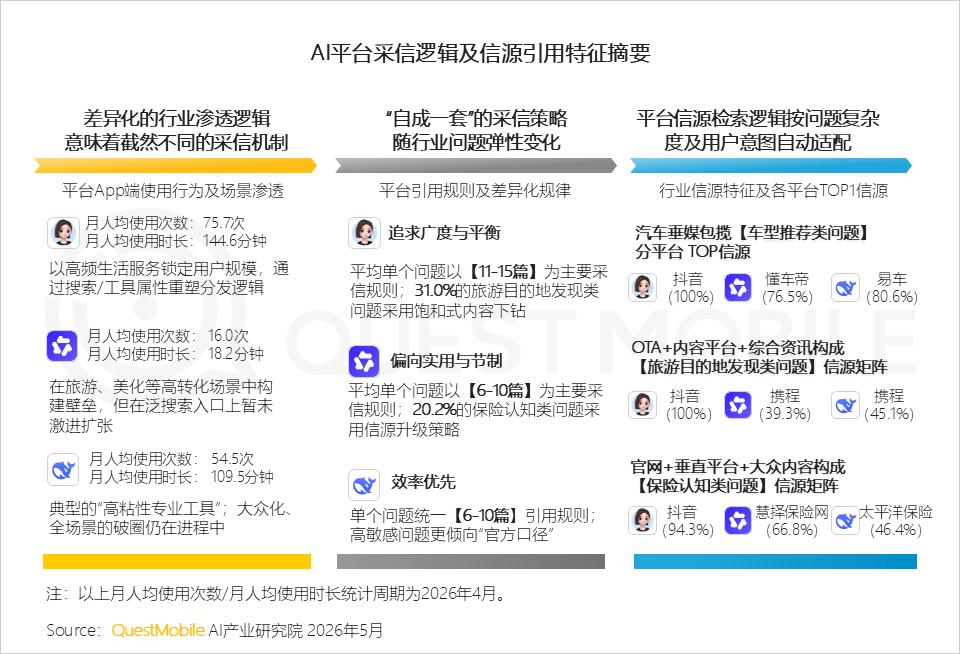
1. Summary of the credibility logic and information source citation characteristics of AI platforms
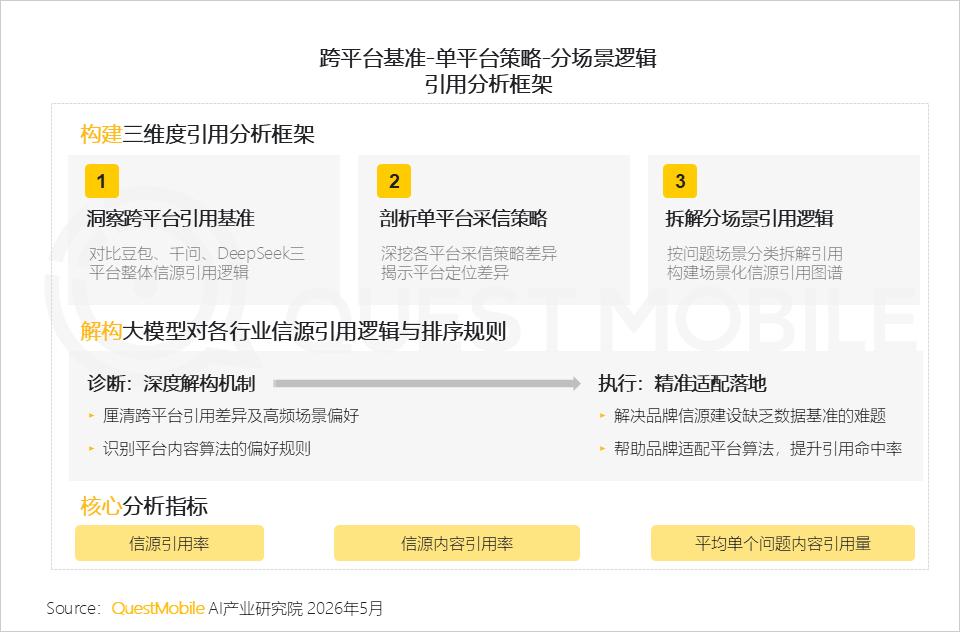
2. Relying on a three-dimensional citation analysis framework, aiming to penetrate the algorithm black box and accurately quantify the underlying credibility logic of the platform and the value evaluation of information source assets
3. At the beginning of this year, AI-native apps entered the fast lane of large-scale popularization. With the geometric expansion of the 460 million user base, a change in the "information distribution right" has already begun
4. User behavior data further confirms the transfer of power: the increase in both usage frequency and duration means that AI is gradually becoming the "first contact point" for users to obtain information
5. Industry attributes determine the penetration speed of AI: industries with high decision-making costs and high information entropy are the highlands of AI "information takeover", such as tourism, automobiles, and financial management
According to QuestMobile data, the proportion of users using AI-native apps among online travel, automobile information, and financial management users is 69.4%, 51.1%, and 43.1% respectively, and the penetration TGI is 192.2, 141.5, and 119.3 respectively.
6. The decline in the usage indicators of traditional industry apps means a change from "search interaction" to "question-and-answer interaction": users are increasingly inclined to the "direct-giving" mode of AI
According to QuestMobile data, in April 2026, the average monthly usage times of search engine apps was 38.0 times, and the average monthly usage duration per user was 340.2 minutes, with a year-on-year decrease of 18.8% and 11.8% respectively.
7. The impact of AI on traditional industry apps is not only the diversion of users but also the internalization of capabilities, reconstruction of entry, and integration of scenarios at the underlying logic level of AI applications
It is worth noting that online travel is a special case; with the full-link connection represented by "Qianwen + Fliggy", the substitution logic of AI is directly upgraded to the integration of service scenarios.
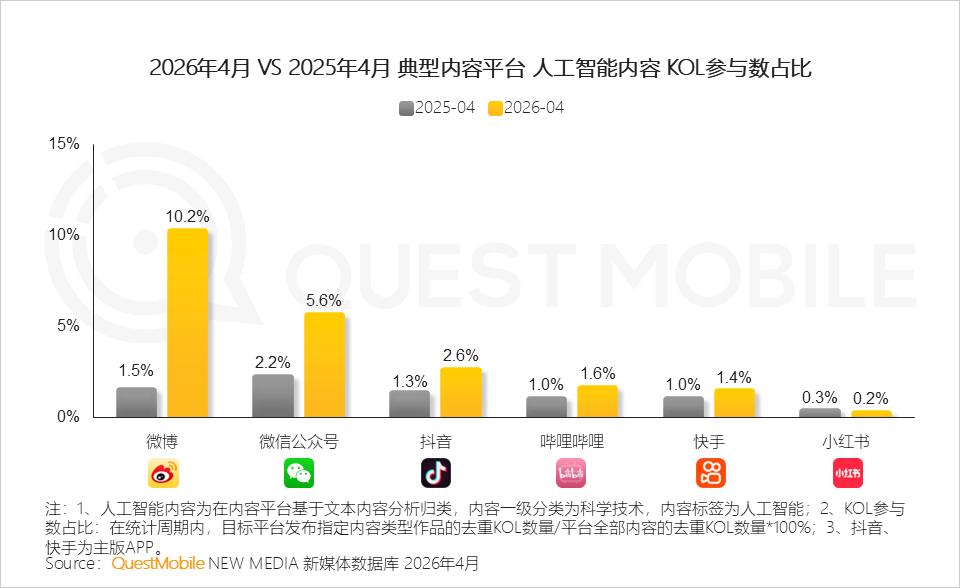
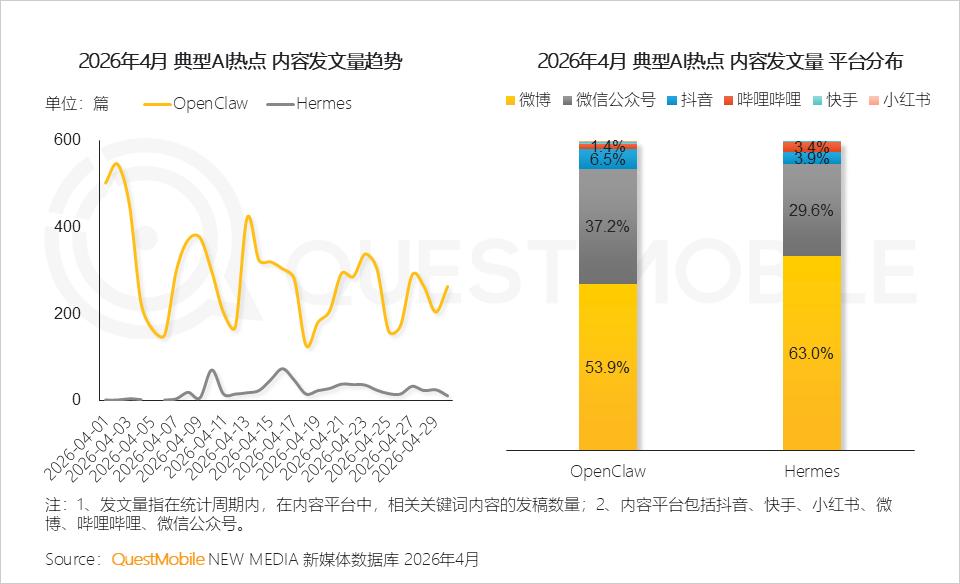
8. The AI boom has also penetrated into the content ecosystem. In April 2026, the proportion of AI content KOL participation on platforms such as Weibo and official accounts increased significantly compared with the same period last year. Content platforms are becoming the core positions for AI topic dissemination and user education
9. From the dissemination data of hot AI topics such as OpenClaw and Hermes, it can be seen that multi-platform linkage and diffusion form a content dissemination matrix with the leading role of the head and resonance across the whole domain
The total proportion of posts on AI hot topics on Weibo and WeChat official accounts exceeds 90%.
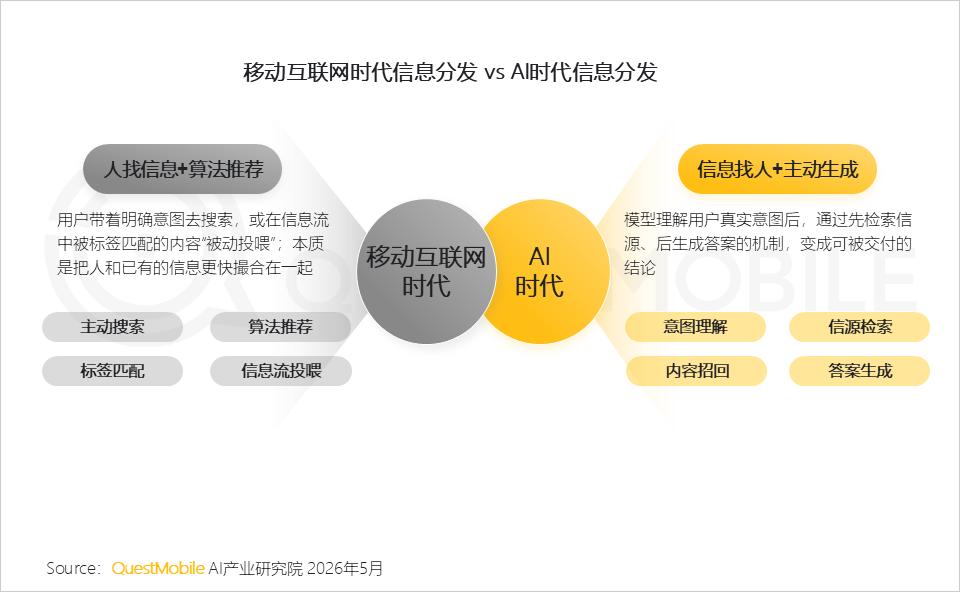
10. The change in the underlying logic essentially stems from the reconstruction of the information distribution mechanism by AI: from "people looking for information" to "information looking for people"
The frequent occurrence of information source pollution and AI poisoning in recent days is forcing brands to shift from "traffic thinking" to the construction of "reliable information source assets".
11. In the AI search path, information sources are the "digital asset warehouse" of brands. They are not only the prerequisite for "brand recommendation" but also the basis for "brand mention"
Among them, information source retrieval is the "coverage in breadth", and content recall is the "precision in depth". Only with the wide coverage of information sources can the in-depth purification of content be achieved.
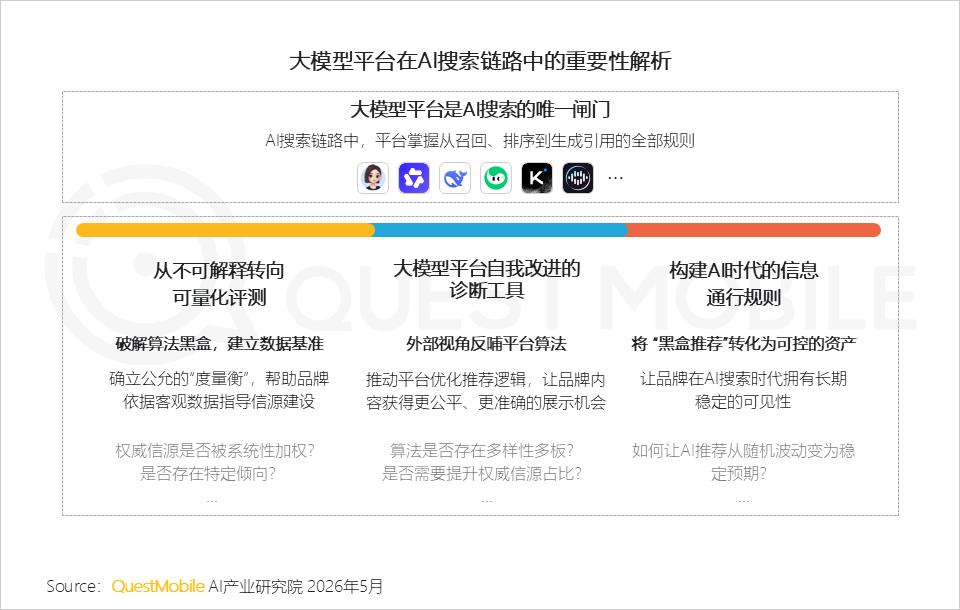
12. Deeply deconstructing the citation logic of large model platforms is the key for brands to break through the information source barrier, jump out of the algorithm blind zone, transform passive adaptation into active control, and thus lock in the incremental dividends of AI
2
The three penetration logics of platforms mean that
it is urgent to establish a systematic credibility research system
1. The high-frequency usage behavior of leading applications confirms that AI is becoming a new traffic hub, reshaping the path for users to obtain information
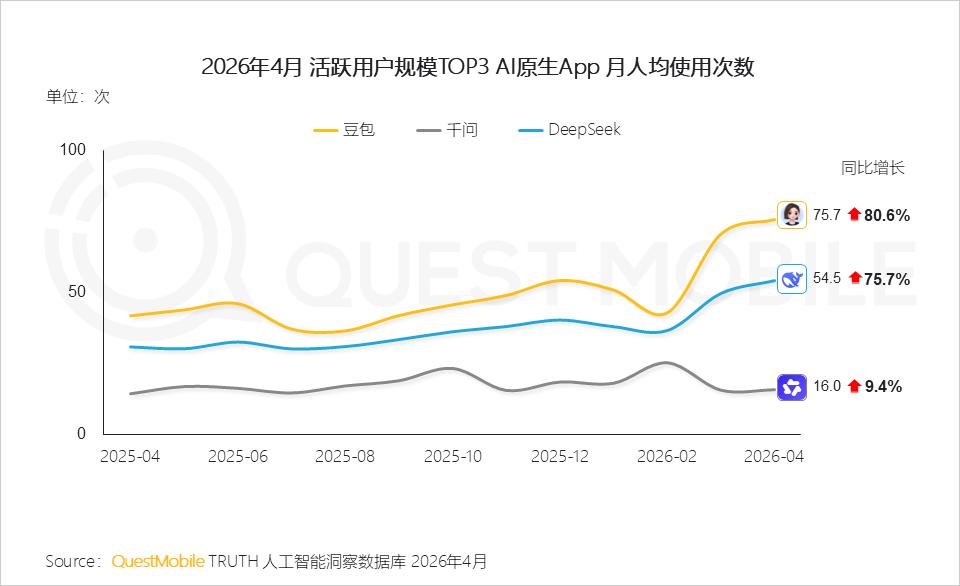
According to QuestMobile data, in April 2026, the average usage times per user of Doubao, Qianwen, and DeepSeek were 75.7, 16.0, and 54.5 times respectively, with a year-on-year increase of 80.6%, 9.4%, and 75.7% respectively.
2. The continuous extension of usage duration indicates that AI is gradually becoming an important information and decision-making field, driving the smooth transition of the distribution logic from "search and jump" to "dialogue and retention"
This change makes brand content implantation and scenario-based exposure based on Generation Engine Optimization (GEO) a new growth point after traditional search.
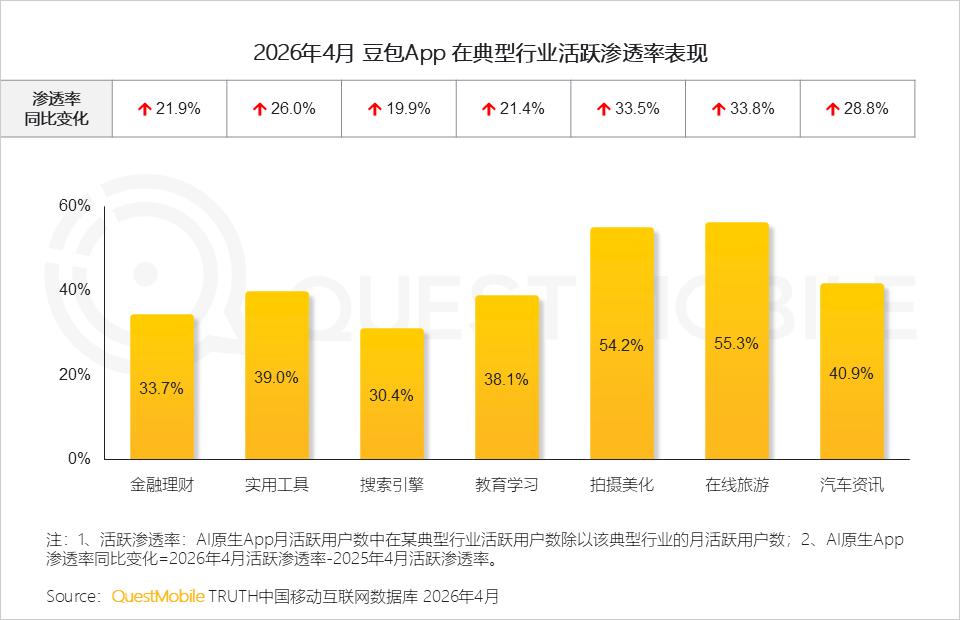
3. Doubao locks in the user scale through high-frequency life services (travel/beautification), reshapes the distribution logic with search/tool attributes, and achieves wide coverage across industries
According to QuestMobile data, in April 2026, 55.3% of users of travel apps also used Doubao, and the proportion of users of automobile information apps who also used Doubao was 40.9%.
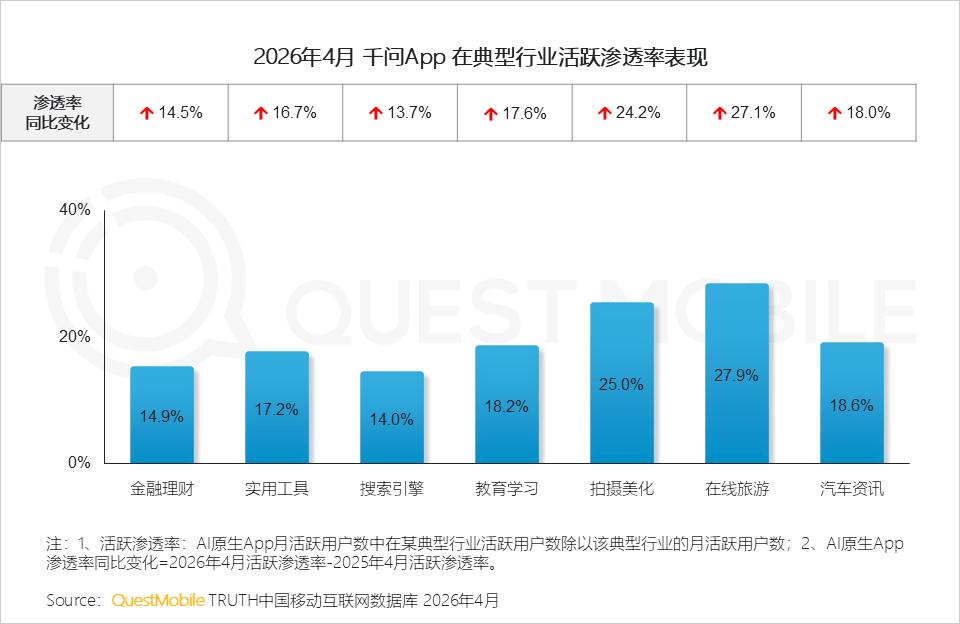
4. The difference of Qianwen lies in "emphasizing scenarios and de-emphasizing entrances": it builds barriers in high-conversion scenarios such as travel and beautification. Although it has not expanded aggressively in the general search entrance for the time being, it also leaves room for in-depth exploration of user value in vertical fields
5. DeepSeek is a typical "highly sticky professional tool" and has not fully achieved broad-spectrum penetration across all industries. The process of breaking through the circle in the mass market and all scenarios is still ongoing
