16 listed companies diversify into silver-haired technology: Behind the rigid needs of 320 million elderly people, industry giants are collectively seeking a second growth pole
In last week's article "Raking in 54.4 billion! Annual reports of 30 silver - haired technology companies are out. Who is vying for the trillion - dollar blue ocean, the giants or the dark horses?", AgeClub conducted an in - depth review of the performance of some listed companies in the silver - haired technology track. The common feature of these enterprises is that none of them started with silver - haired business, but their original technological capabilities and product genes are naturally in line with the elderly care scenario.
However, there is another type of player in the track: Their original main businesses have nothing to do with the elderly care field. While focusing on their own business, they have turned to deploy in the silver - haired technology. They are not extending their original business naturally, but are the "catfish" that break in from the outside and stir up the industry pattern.
If the enterprises within the track are "overflowing with capabilities", then these cross - border players answer a more fundamental question: As "outsiders", why can these enterprises also get a share in the silver - haired technology field?
PART 01
Cross - border Map: Who is Getting In?
Laofengxiang (600612.SH), an established jewelry brand, might be the most unexpected one.
In 2025, Laofengxiang launched the "Lingyu·Youban" AI smart glasses, which have four major functions: real - time voice navigation, multi - language translation, medicine recognition, and intelligent companionship, clearly entering the silver - haired technology track.
Although this is insignificant in Laofengxiang's revenue, the industry signal it releases is far more valuable than the product itself. When a consumer goods giant with no obvious connection starts to make smart technology products for the elderly, it shows that the attractiveness of the silver - haired track has transcended industry boundaries.
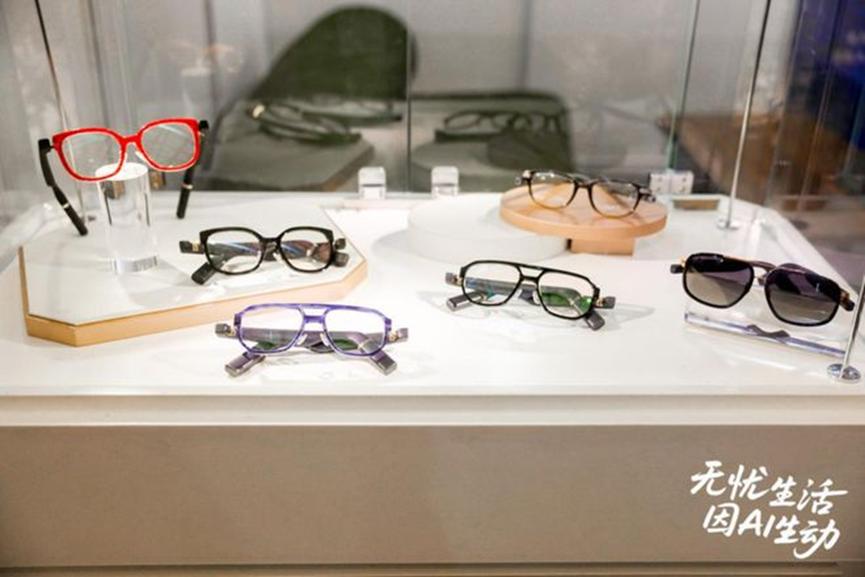
Image source: Huangpu, Shanghai
Compared with Laofengxiang's sudden entry, BOE (000725.SZ), a panel giant with annual revenue exceeding 200 billion, seemingly has nothing to do with silver - haired smart technology. In fact, it has been exploring in this field for 12 years. Looking through the company's annual report, smart medical and engineering has become an independent business segment of BOE. In 2025, the revenue of this segment reached 1.902 billion yuan, a year - on - year increase of 3.40%.

Image source: BOE
Currently, BOE has deployed 5 digital hospitals in Beijing, Hefei, Chengdu, and Suzhou, with a total of over 5,600 beds. It has thousands of medical experts and has served over 4 million customers in total. It has also built a smart elderly care community "Jincheng Shiguang" in Chengdu, featuring "integration of medical care and elderly care, technology - enabled, and shared vitality".
Home appliance enterprises have long had examples of cross - bordering into silver - haired smart technology. Haier's Haier Health Care and Haier Biotech have already entered the field and have become one of the benchmark enterprises in the field. Currently, more home appliance enterprises intend to follow suit, aiming to open the door to the silver - haired smart technology track.
SKYWORTH DIGITAL (000810.SZ) achieved a revenue of 8.8 billion yuan in 2025, a year - on - year increase of 1.33%. Constrained by the overall decline of the TV industry, its net profit was 180 million yuan, a year - on - year decrease of 28.28%.
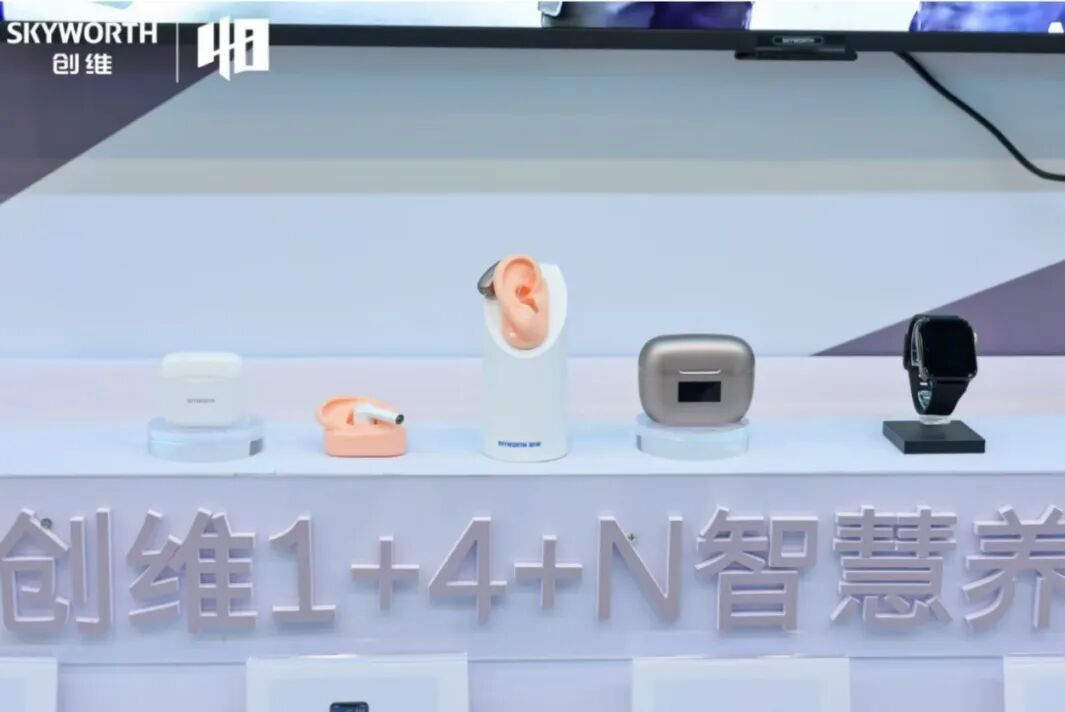
Image source: SKYWORTH Smart Home official account
In 2025, SKYWORTH DIGITAL launched a "1 + 4+N" smart elderly care solution, with the TV as the interaction center, covering four major scenarios: intelligent companionship, safety monitoring, AI health management, and cognitive training. It attempts to turn the TV in the living room into an elderly care entrance, transforming "watching TV" from an entertainment behavior into a form of self - health management.
Compared with the above three enterprises, Quectel Wireless Solutions (603236.SH) may have a much smaller cross - border scope when entering the silver - haired smart technology track. As a leading domestic Internet of Things module company, its revenue in 2025 was 24.326 billion yuan, a year - on - year increase of over 30%, and the net profit was 837 million yuan, a year - on - year increase of over 40%. Its main business is very stable.
On this basis, Quectel Wireless Solutions launched the RD6000CC millimeter - wave radar fall detection module, which does not use a camera and does not infringe on privacy. It can sense whether an elderly person has fallen and automatically alarm. From the interconnection of all things to the family protection of the elderly, the demand in the elderly care scenario is certain and has a large increment.
When four unrelated industries converge in the same direction, it shows that the silver - haired economy has changed from a topic within an industry to a cross - industry consensus.
Of course, there are far more than these four listed companies cross - bordering into the silver - haired smart technology track.
For example, iFlytek (002230.SZ) mainly focuses on education, medical care, and smart cities. The silver - haired business is not in its traditional business scope, but it has launched smart hearing aids and voice remote controls for the elderly;
TOPSUN (002139.SZ) has cross - bordered from intelligent controllers to silver - haired smart hardware and has launched products for the elderly care scenario such as electronic blood pressure monitors, smart bathrooms, and cleaning robots;
Edifier (002351.SZ), which mainly targets young consumers, also made efforts in age - friendly audio products in 2025, launching easy - to - use hearing - aid earphones and health - monitoring earphones...
PART 02
Entry Logic: The Common Code of Cross - border Players
At first glance, cross - border players are very different from each other. However, in fact, they follow the same cross - border logic, and it is this underlying logic that explains why silver - haired smart technology is becoming a "gravitational field".
1. Technology Transfer: Not Starting from Scratch
The biggest difference between cross - border players and those within the track is that none of the cross - border players starts from scratch. Starting from scratch is entrepreneurship, not cross - bordering.
BOE's display technology has become the basis for medical imaging and smart wards. Facing the high - brightness environment in the operating room, the Mini LED backlight technology is also transferred from consumer - grade products; Quectel Wireless Solutions' millimeter - wave radar, originally used for factory safety monitoring and traffic flow sensing, is moved to the elderly's homes for fall detection. The hardware hardly needs to be changed, only the algorithm and scenario adaptation need to be adjusted.
SKYWORTH's "1 + 4+N" smart elderly care solution has the TV as the center, which SKYWORTH has been making for decades. Laofengxiang, which seems to have the largest span, has actually been involved in the eyewear industry for many years.
This is not a career change, but reuse. In this game, cross - border players do not discard the cards they already have to "draw new cards", but examine whether the current resources in their hands can be used in the silver - haired economy game.
In fact, this is the biggest reliance of cross - border players. The ability to simply transfer technology is the cornerstone and threshold for entering the silver - haired smart technology track.
As a leading domestic lighting company, Foshan Lighting directly reuses a large amount of its lighting technology according to the actual needs and situations of the elderly, and can even be included in the "2025 Promotion Catalog of Elderly Products" of the Ministry of Industry and Information Technology. However, for an enterprise without a technical foundation to enter the age - friendly lighting track, it is undoubtedly starting from scratch.
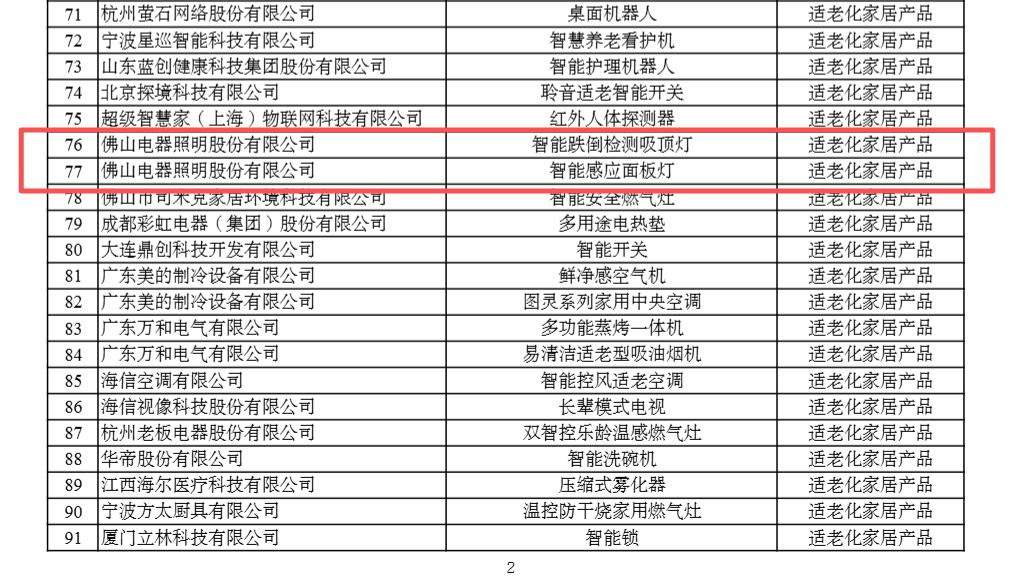
Image source: Ministry of Industry and Information Technology
The trial - and - error cost of this model is much lower than starting from scratch. The only thing that needs to be invested is the secondary development for the scenario. This also explains why cross - border players often start with "single products" and from scenarios, rather than "spreading the pie" at the beginning.
2. Brand Trust: Trust is Rarer than Technology
Laofengxiang was founded in 1848 and is one of the "China Time - honored Brands" with the longest history among domestic existing jewelry brands that has been in continuous operation. When an elderly person comes into contact with Laofengxiang's products, they will not doubt the reliability of the brand. This trust is accumulated over decades.
So when Laofengxiang transfers this trust from jewelry to AI glasses, it doesn't need to spend several years to build brand awareness like a startup technology company.
Similarly, home appliance enterprises such as SKYWORTH, Haier, and Midea have natural advantages when cross - bordering into silver - haired smart technology compared with other enterprises.
Most of these enterprises have grown up under the eyes of the elderly. The brand has deeply penetrated the minds of the elderly and is naturally embedded in the elderly's living space. This is incomparable even to the currently popular HarmonyOS Smart Home and Mi Home.
Trust is a concept that is difficult to quantify, but it is an extremely important variable. For pure technology companies or startup companies making silver - haired smart products, the biggest obstacle is often not the technology itself, but that the elderly don't trust you. They know nothing about the enterprise and the product, which also amplifies the elderly's unease and resistance to the product.
Cross - border players do not bring the most cutting - edge and disruptive technologies. Instead, they bring brands that the elderly already trust and just - enough technology. In the silver - haired technology market, trust is rarer than technology.
3. Main Business Anxiety, Seeking Growth and Realization
Almost all cross - border enterprises have a set of similar financial data behind them.
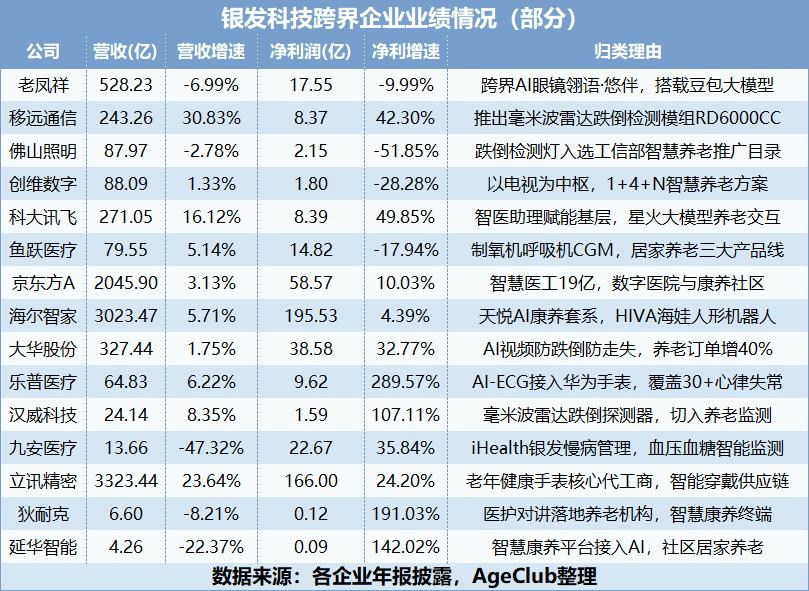
SKYWORTH DIGITAL's net profit declined by 28.28% in 2025, and the stock competition in the TV industry seems to have no end; under the continuously high gold price, a large amount of consumer willingness has been suppressed, and Laofengxiang is also facing the ceiling of consumer growth; BOE has experienced the brutal cycle of the panel industry and knows the risks of a single main business. In 2025, its profit scale was less than a quarter of the peak of 25.961 billion yuan in 2021.
This means that for many companies, the silver - haired economy is not an "emotional investment", but a rational consideration under the pressure of the main business.
Currently, there are 323 million elderly people in China, accounting for about 23% of the total population. There are about 20 million new elderly people every year, and the policy window of the long - term care insurance system across the country has opened. For enterprises, this is a definite increment that cannot be ignored.
Technology transfer lowers the technical threshold for cross - bordering, brand trust provides the user base for cross - bordering, and main business anxiety creates the motivation for cross - bordering. When these three factors converge, cross - bordering into silver - haired smart technology becomes almost a natural thing. It's not a question of "can they do it", but a question of "do they want to do it seriously".
From jewelry to panels, from home appliances to communications, the greater the span, the stronger the signal, indicating that more and more enterprises are proving this signal with practical actions.
PART 03
Rooting Difficulties: Three - layer Competition Pattern
Although many enterprises are scrambling to enter the silver - haired technology track, it has to be admitted that the current situation is still easy to cross - border but difficult to root. The silver - haired related businesses of most cross - border enterprises still cannot have a place in the financial statements.
From the annual reports of listed companies, people can't see how much revenue Laofengxiang's AI glasses have generated, nor do they know what proportion Quectel Wireless Solutions' fall - detection millimeter - wave radar occupies in the total revenue of 24.3 billion yuan. Even Haier Smart Home, which has been deeply involved in the silver - haired smart track for many years, is difficult to find the revenue of its health care business in the annual report.
An enterprise like BOE that can independently initiate a project for "smart medical and engineering" is an exception. Although the silver - haired business is still part of the medical business, it may also be the first step for cross - border enterprises to "go out".
The silver - haired smart technology track has formed a three - layer competition structure: The giants try to build platforms and ecosystems, creating an integrated ecosystem; medium - sized companies focus on vertical scenarios, trying to translate their enterprise's advantageous scenarios; small enterprises, limited by scale and funds, focus more on single - point breakthroughs.
After cross - border players enter, they still need to answer three progressive questions:
1. Can the silver - haired business be developed, and can the scenarios be made to work?
2. How should the silver - haired business be carried out, through single - product trials or strategic investment?
Third, and most importantly, when the main business encounters problems, will the silver - haired business be the first to be cut?
In fact, such examples are not rare. Yuyuan Co., Ltd. built a high - end elderly care project "Xingjian Lanting" in Ningbo in 2014 and finally sold it in 2025; Oceanwide Holdings lost control of Beijing Cloverleaf in 2019 after selling its shares, and China Resources Land announced in 2023 that it would gradually withdraw from the health care business.
