30,000, six months, cancellation: In 2026, the first batch of bosses of "one-person companies" have exited the stage.
“Earn over 10,000 yuan a month just by typing,” “Let AI work for you,” “One-person companies are the future”...
The opening script of 2026 is even more sensational than short dramas. On one hand, AI tools have lowered the barriers; on the other hand, trendy fads like “crayfish” are everywhere. It seems that as long as you register an OPC, you can win effortlessly.
AI has become the cheapest stimulant, and one-person companies are the latest “lottery tickets” that the Internet sells to gamblers waiting for a breakthrough.
Pity, reality is not a PPT.
Renaming an individual business as a “one-person company” doesn't stop you from worrying about next month's social security. Those who claim to “make money lying down” often stand up and take your tuition fees.
We interviewed these solo entrepreneurs at the forefront of the trend. After removing the get-rich-quick filter of online marketing accounts, you'll find that the so-called “era dividends” are often just a celebration of survivor bias.
01
Individual businesses, brand owners, and one-person companies: same wine in different bottles
In just half a year, Liao Ran completed the entire life cycle of a “one-person company” founder: registration, trial, struggle, cancellation, and returning to the workplace to work.
In October 2025, when this post-95s former big company employee quit his job, he had 30,000 yuan in savings and the confidence given by AI.
He took a fancy to the popular overseas model of “turning pet photos into cartoon T-shirts.”
At that time, a former overseas colleague launched an AI startup project. The project allowed users to upload their pet photos, use AI to generate patterns in different styles, and customize and purchase the styles they wanted.
The former colleague made a small fortune from this, which also inspired Liao Ran. “In the past, this dream died due to high design outsourcing fees and communication costs,” but now with AI, the cost of solo entrepreneurship has been greatly reduced.
He registered a business license and became a real “lone commander.” From design, product selection to shipping and after-sales, he did everything alone. The first product was a quote canvas bag priced at 39.9 yuan - lightweight, with low inventory pressure, and seemingly safe.

Picture | Liao Ran's project at that time was to make similar canvas bags
But he soon hit the iron wall of the AI era: homogenization.
When AI leveled the design barrier, Liao Ran's “creativity” was no longer an advantage but became a common product on e-commerce platforms.
The same product was sold for 19.9 yuan across the network, and he had no price advantage. If he wanted to create brand premium, AI couldn't provide him with scarce creative essence.
What's more cruel is the real cost: Previously, he didn't have to worry about the five social insurances and one housing fund in the big company, but now it's like a mountain pressing on him, with a monthly fixed expenditure of nearly 3,000 yuan.
Combined with the backlog of the first batch of products, the procurement of consumables, and the investment in platform promotion, Liao Ran burned through 30,000 yuan in half a year, and his revenue was less than a fraction of that.
Liao Ran admitted defeat and returned to the workplace, downgrading his entrepreneurship to a side business. His lesson is straightforward: “For most people, one-person companies are suitable for a trial in leisure time, but definitely not for going all out.”
Liao Ran is not an exception. He is a standard sample in the 2026 “one-person company” craze.
According to relevant entrepreneurship research in 2026, the entrepreneurs of one-person companies show a trend of youthfulness (those born in the 1990s, 2000s, and under 35 years old account for nearly 60%), and more than 44% of the entrepreneurs come from Internet or technology giants, with an obvious color of “escaping from the workplace” or transformation.
In addition, according to the latest data, as of mid-2025, the stock of one-person companies across the country has exceeded 16 million, accounting for 27.4% of the total number of enterprises in the country.
This means that for every 4 new enterprises, one is a “one-person company.”
One-person companies focus on “light assets and low costs.” Industry statistics show that the vast majority (about 90%) of solo startups actually have start-up funds of less than 500 US dollars (equivalent to more than 3,000 yuan) to within 100,000 yuan.
Former employees like Liao Ran, who have a few tens of thousands of yuan in savings and want to turn things around with AI, are undoubtedly the main force of this 16 million army.
But the other side of this frenzy is an astonishing elimination rate. According to the observation of more than 2,500 samples in the one-person company community SoloNest, only 20% of the companies have achieved a closed business loop.
Cheng Zhao, who has been deeply involved in the independent game circle in Shenzhen, witnessed the ups and downs of this absurd wave.
As early as 2022, he survived in the form of a one-person studio. When the concept of “brand owner” became popular last year, he took full control of the core decision-making of the project, outsourced some non-core links such as art, and coordinated various affairs with the help of AI, being fully responsible for the operation direction of the project.
But since the second half of last year, Cheng Zhao has been persuading people to “calm down.” “After the trend of AI plus super individuals in entrepreneurship exploded last year, in cafes and incubators in Shenzhen, there were solo entrepreneurs everywhere. Many people didn't have the ability at all and just wanted to enter because it was a trendy field.”
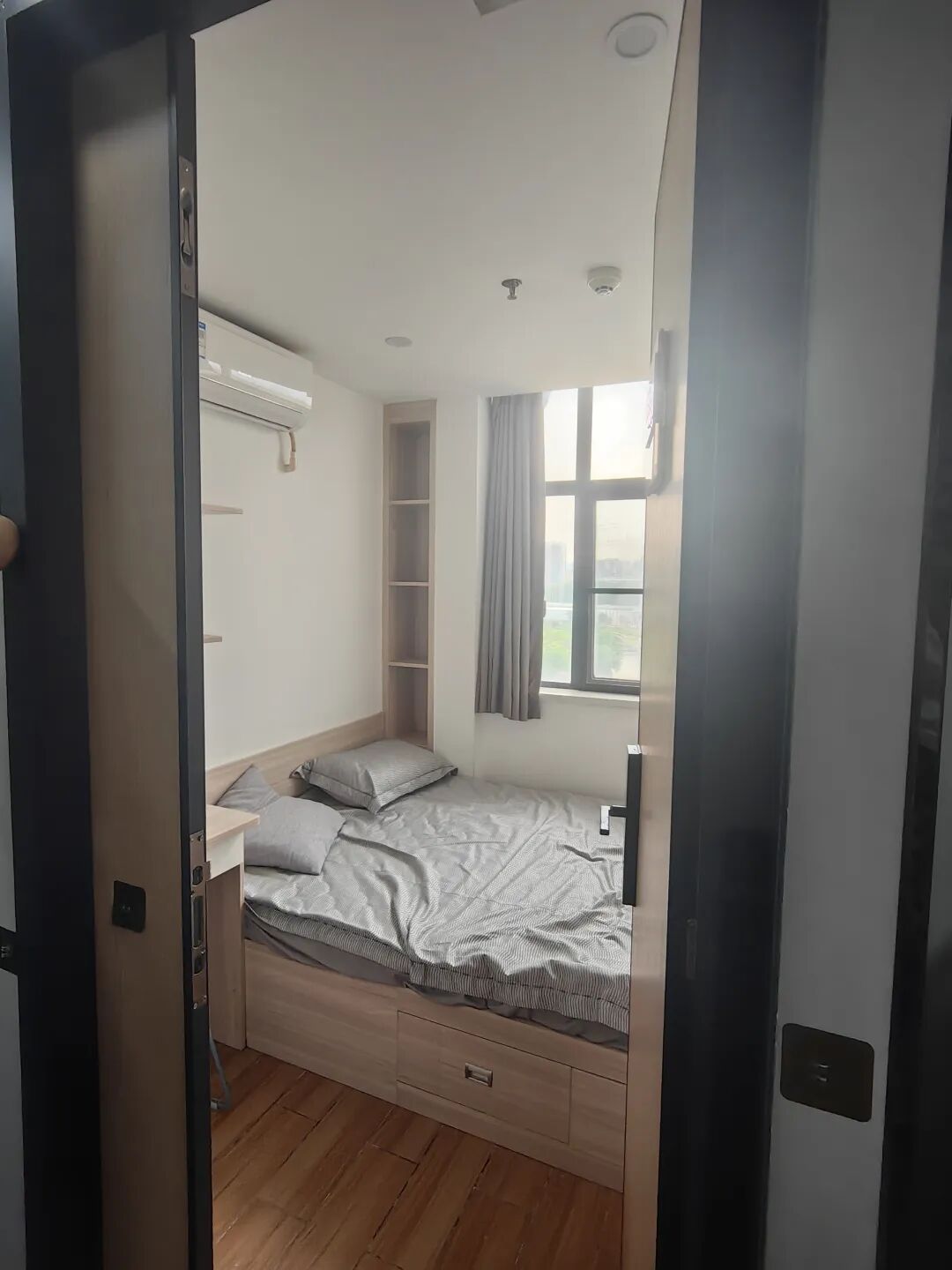
Picture | In Shenzhen, some “one-person company” entrepreneurs rent apartments where the office and living spaces highly overlap
One year later, Cheng Zhao found that the trend had become even hotter. OPC parks were springing up everywhere, and cafes had become the activity centers for OPC entrepreneurs.
The hotter the trend, the fewer familiar faces. Cheng Zhao estimated that in just one year, the retention rate in the Shenzhen OPC circle was less than one-tenth.
In 2026, which is called the “Year of One-Person Companies,” is actually the end year for countless solo entrepreneurs.
AI gives everyone a brush, but most people draw the same pattern.
02
AI can create bosses, but not customers
AI can create bosses, but it can't create customers.
When Liao Ran reflected on that half-year, he said a painful thing: “I got the order wrong. I thought that once I made the product, someone would buy it.”
In the 2026 “one-person company” wave, most people like Liao Ran reversed the cause and effect.
AI is extremely good at making “production” cheap and simple, but it can't solve the core problem of “who to sell to.”
When the supply side is infinitely increased while the demand side remains stagnant, “too many monks and too little porridge” has become the most brutal reality in this field.
Cheng Zhao saw it clearly in Shenzhen.
In the past half-year, he watched countless newbies flock to the “AI + cultural and creative, AI + short dramas, AI + design” fields. They joined groups crazily, studied tool tutorials, and polished product templates, but few people thought about: Where are my customers?
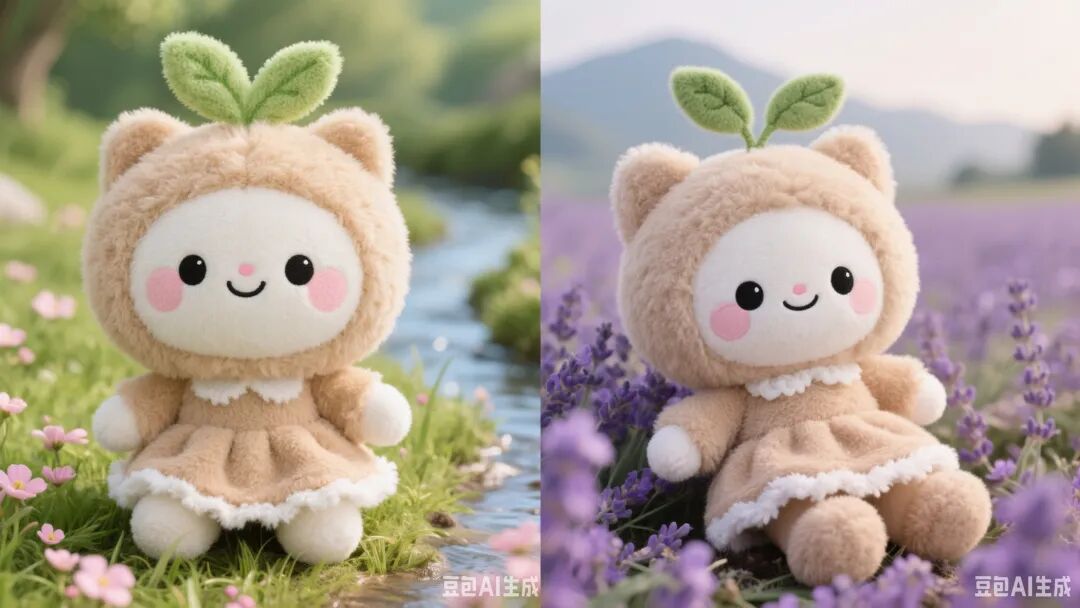
Picture | Some entrepreneurs used AI to generate reference pictures of cultural and creative dolls, but the production side said it was difficult to achieve 1:1 production
“It's like joining a part-time job group and finding that everyone in the group is looking for a job, and no one is hiring,” Cheng Zhao said.
Zhang Ziqiang, who is in charge of the operation of an OPC park, confirmed this.
The OPC park is an innovation and entrepreneurship space specially designed to support “one-person companies.” The park he works in focuses on incubating AI one-person companies. Different from traditional shared offices, the enterprises that enter the park need to meet the review threshold of the “AI +” field.
Even with the access threshold set, Zhang Ziqiang admitted that among the newly established startups in the park within a year, 90% have not established a mature and feasible business model. He also found that in the exchange meetings often held in the park, “the most popular topics are always how to keep the company alive and how to make the project profitable.”
Even if there is demand, it doesn't mean that “one-person companies” can survive smoothly.
Among all those who were deceived by the “AI omnipotence theory,” Guo Qi's failure is the most regrettable.
Different from Liao Ran, who was a “newcomer” starting from scratch, Guo Qi was an “experienced player” with practical experience. She had worked in a traditional event planning company for many years, specializing in offline events with intangible cultural heritage themes.
Because she had been in this industry for a long time, she had a group of high-net-worth customer resources and knew the pain points of the industry very well: offline events are extremely dependent on manpower, the process is cumbersome, and the profit ceiling is extremely low, which is “hard-earned money.”
At the end of 2025, seeing the rapid development of AI tools, Guo Qi made a bold decision: to quit her job and start her own business.
Her business logic sounded impeccable - using AI to package non-standard intangible cultural heritage experiences (such as handicrafts and incense-making) into standardized “cultural and creative material packages” and directly supply them to event companies. In this way, she could get rid of the heavy manpower execution and achieve large-scale profits through the wholesale model.
The first popular product she chose was the hottest “incense beads” on the Internet. At that time, she was full of confidence: AI was responsible for brand positioning, visual design, and standardized manuals, and she was responsible for connecting with the original customer channels.
However, reality gave her a hard slap in the face.
AI could write beautiful copy, but it couldn't blend a qualified spice. The core of the incense beads lies in the “incense formula ratio,” which is not code but the experience accumulated by old masters over decades of trials.
As long as the humidity and purity of each batch of incense powder are slightly different, the perfect ratio given by AI will become invalid immediately. To solve the problems of the supply chain and raw material stability, Guo Qi ran all over the production areas alone, but the result was still “one problem after another.”
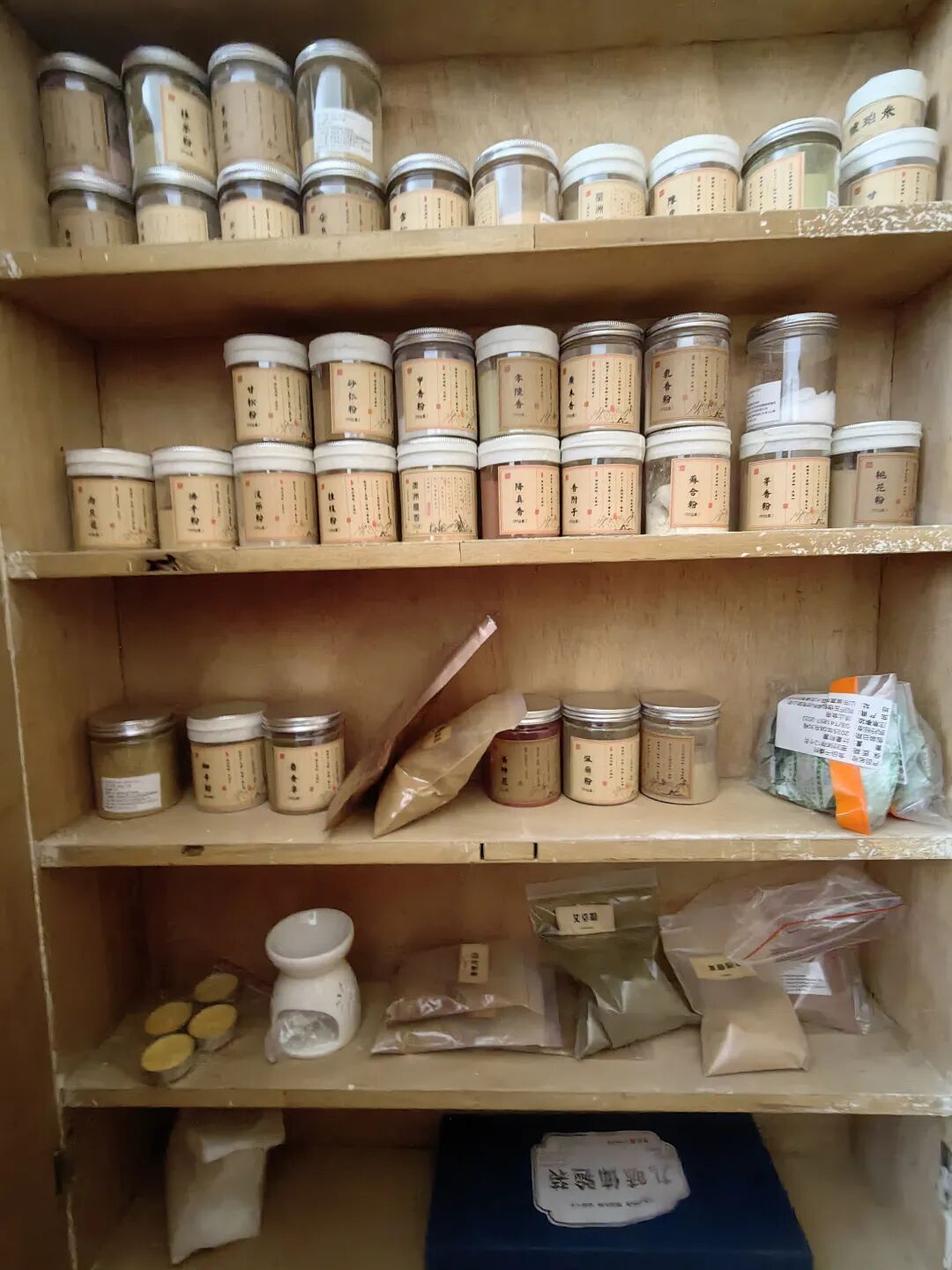
Picture | Some samples of incense powder are still stored in Guo Qi's home
“AI can solve typesetting, but it can't solve the supply chain; it can solve copywriting, but it can't solve craftsmanship.” After spending a large amount of trial-and-error fees, Guo Qi realized that a one-person company is not “one person + AI,” but “one person taking on everything.”
Even if you are lucky enough to make your product work and avoid the supply chain traps, there are still greater uncontrollable factors waiting for you.
A friend of Cheng Zhao who is engaged in AI comic dramas caught the trend in 2025 and made his first pot of gold. But at the beginning of 2026, as soon as the platform algorithm changed and the traffic was tilted towards AI short dramas, his comic drama business revenue dropped sharply.
To make matters worse, with the surge in AI users, the computing power costs of major platforms have also skyrocketed. High-definition rendering and long-content generation have started to charge, and the prices are getting higher and higher. For small one-person companies, this is like taking away the firewood from under the pot.
An even more hidden killer lies in the “character” of AI.
Liao Ran reflected that in the big company, a new project had to go through team discussions, debates, and doubts before it could be launched. But in a one-person company, he was facing AI. “AI is a probability model. It will just go along with what you say, like a yes-man.”
This kind of “obedience” easily creates an information cocoon, making entrepreneurs fall into blind self-confidence until the capital chain breaks and they see the reality clearly.
“In the final analysis, AI is just an efficiency tool. It has never changed the essence of entrepreneurship,” Cheng Zhao said.
The market doesn't care about how advanced tools you use. It only cares about whether you can survive.
03
Selling courses, getting subsidies, seeking financing,
What's left of one-person companies without these?
If we summarize the first two parts into one sentence, it is: AI makes entrepreneurship easier, but also makes it easier to fail.
Since the barriers remain and many people are leaving, why do new entrants not back off? The answer lies not in the industry but in people's hearts and business.
First, it is the misleading of survivor bias.
Cheng Zhao is one of the very few who survived. Taking the independent game production that Cheng Zhao is engaged in as an example, in the traditional model, it usually takes three or four months to conceive, code, produce, and launch a small game.
With the help of AI tools, Cheng Zhao compressed the overall development cycle to about one and a half months, greatly reducing the time and labor costs.
The few surviving entrepreneurs around him are all the same - they all have mature industry experience and stable customer sources, and AI only optimizes the work process and amplifies their