While most AI sports coaches are still searching for PMF, an AI running app has already achieved a monthly revenue of $5 million.
A few days ago at an offline AI event, we heard a very typical and alluring startup idea.
There was a skiing coach on - site who mentioned that he realized traditional skiing teaching was a high - cost, customized service. So he thought of creating an AI skiing teaching product to offer affordable and large - scale skiing teaching services. When this idea was first put forward, everyone present responded positively because using AI software services to transform a traditional high - cost field with clear user demand is almost one of the most standard startup stories today.
However, as the conversation went on, problems emerged one by one. The mainstream approach of AI skiing teaching relies on video recognition of movements, but obtaining high - quality videos is a major issue. If users record by themselves, the shooting angle and lens distortion will affect the judgment; having someone else film them is too costly. At the recognition stage, thick ski suits, helmets, and protective gear will cover most of the body's joint points. What's even worse is that skiing is a typical seasonal sport, and business can only be done for a few months a year.
All in all, a seemingly wonderful "AI skiing coach" service often doesn't work as smoothly in the real ski field.
There are many similar products on Xiaohongshu. AI tennis coaches, AI badminton coaches, and even more niche sports have been attempted. In the era of Vibe Coding, anyone can create a product prototype in a few days and conduct market tests, but most products are still far from achieving Product - Market Fit (PMF).
That's why when we saw that a running training app called Runna achieved $5 million in monthly in - app purchases in just four years and was acquired by Strava, the world's largest fitness community, last year, we were particularly interested. Why did Runna stand out when most projects that aimed to "turn sports coaching experience into products" remained at the demo stage?
A Startup Starting from a PDF
A common inertial thinking in AI sports coaching is to understand the coach's value as "observing and correcting movements". It seems that the most important ability of a real - life coach is to visually check if the movements are standard, so AI should also have a pair of "eyes" through cameras, posture recognition, and motion analysis. However, this is very difficult to achieve. In contrast, Runna doesn't focus on "instantaneous motion correction" but on training planning. The latter may not seem as flashy, but it is a long - term, continuous control of the training process, closer to the "strategic brain" in coaching services.
According to the founder Dom Maskell's later recollection, this inspiration came from his desire to improve his running performance during the pandemic. He found that running apps on the market were very rigid and couldn't adjust training schedules flexibly according to personal schedules. For example, Dom could only train on Tuesdays, Thursdays, and Saturdays and wanted to do long - distance runs on Saturdays. So he asked his college friend Ben, who was a private running coach at the time. Ben customized a training plan for him every week through Google Docs. Under Ben's specialized guidance, Dom improved quickly. He not only refreshed his 5 - km running record but also successfully completed his first marathon. Then he began to think that not everyone could afford a top - notch coach like Ben. So, was it possible to turn this into a product?

Photo of Dom Maskell | Source: instagram
This starting point is very important. It means that Runna's earliest reference was not "a real - life coach on - site" but a part of the capabilities of a real - life running coach that could be delivered remotely, which is to formulate training plans around users' goals and continuously adjust them according to users' schedules and execution.
Dom and Ben spent nine months developing an engine that could automatically generate running plans and packaged it as a website service called "The Run Buddy", which was officially launched in 2021. After users input information such as running goals (5 km, half - marathon, or full - marathon), running ability, available training time, and the time they want to do long - distance runs, and pay a price ranging from £20 to £80 (Dom said this price is about one - fifth of what Ben charges as a running coach), a customized training plan in PDF format will be sent to the user's email within 15 minutes. At this stage, they sold more than 1,000 running plans, which greatly boosted the confidence of this startup duo.
Looking back, the service and delivery at that time were a bit rough. For example, the PDF was not flexible. If users needed to change the running plan due to unexpected situations such as a long - distance business trip or found the original pace too fast to keep up with, they had to contact the customer service by email. Dom would then manually generate a new plan and send it back to the user. However, it successfully verified the market value of "customized running plans". The market at that time lacked professional running plan services that could fit personal schedules, and users gave feedback through real - money payments.
Convenience Is Value
Today's Runna App looks very different from that original PDF, but it is highly consistent in terms of the core delivery value. It always aims to provide a professional, customized running training planning service that adapts to users' schedules and physical fitness, rather than making users adapt to the plan.
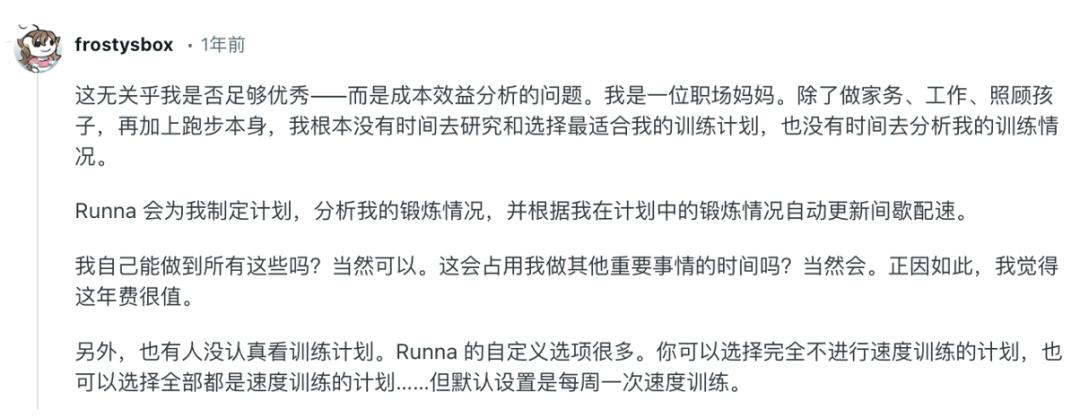
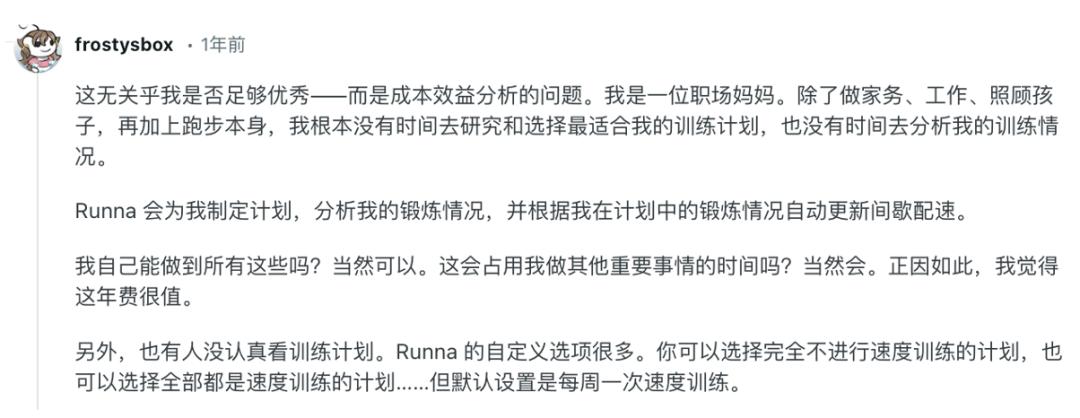
This is also a point that many external observers tend to overlook. Runna has achieved personalized, dynamic adjustment of running training plans and device linkage. However, for a large number of ordinary users, the more direct attraction is actually convenience.
There are also many ready - made running training plans on the market. In theory, users only need to insert the plans into their schedules and adjust the pace and rhythm according to their status. However, the problem is that this kind of planning requires time, energy, and continuous investment. For people with a fast - paced work and life, Runna truly allows users to start training as soon as they open the app, just like having a coach.
Now, when users enter the app, they can first select a goal, such as running a faster 5 - km, their first half - marathon, or full - marathon. Then they input their current level, the number of training days per week, and their schedule. The system will generate a personalized training plan. After that, the training content can be synchronized to devices such as Apple Watch and Garmin. Users can get real - time voice guidance during the run. After the training, the system will dynamically adjust the subsequent plan based on the completion status, historical progress, and schedule changes. In addition to running, Runna also incorporates strength training, flexibility training, and other content into the training system. Runna is no longer just a plan generator but a dynamic training system centered around runners' goals.
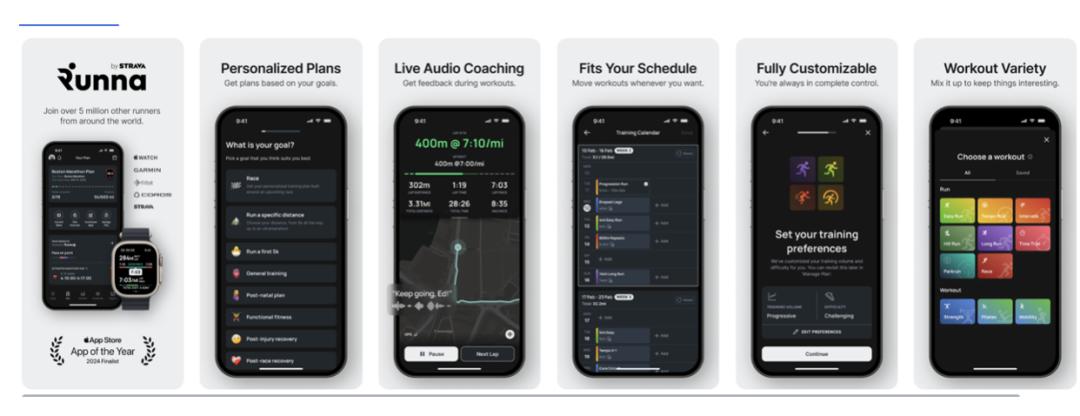
Runna App | Source: Diandian Data
In a way, Runna turns the decision - making and feedback of a real - life coach into a system. This might be the part that impressed Dom when Ben was guiding him. Besides knowing what training to do every day, the coach would also adjust the subsequent training plan based on the training performance. Instead of replacing "the coach's eyes", Runna seems to be more about amplifying "the coach's brain". In the context of running training, enabling users to "follow the training mindlessly" might be a part that is closer to the value users are paying for.
Riding on the wave of the global popularity of marathon events in the past few years, Runna has grown into a leading player in the running training field. Before being officially acquired by Strava, it had raised more than £8 million in financing. Runna's subscription price has always been relatively high, reaching $19.99 per month, but judging from the revenue, users have fully recognized its value.
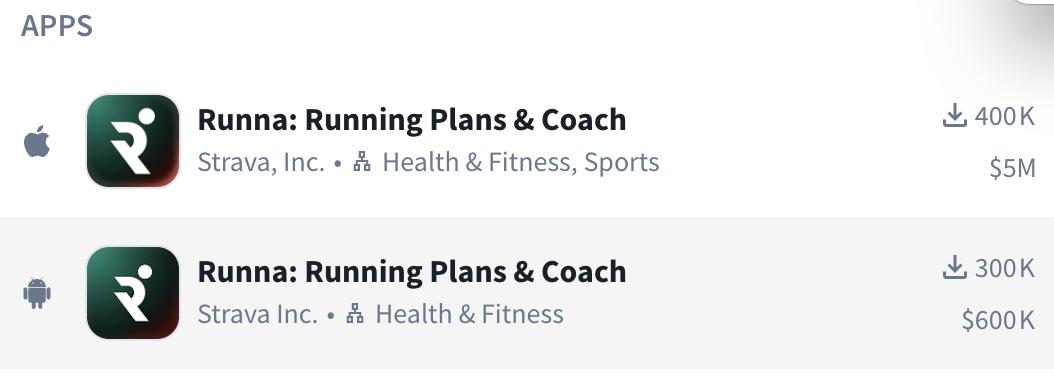
Runna's monthly revenue reached $5.6 million | Source: Sensor Tower
Does AI Make Sports Easier?
Compared with China, sports are more deeply integrated into the daily lives of people in Europe and the United States. This is reflected in relatively low gym prices (compared to the local average income), more abundant club resources, a more mature sports event economy, and a stronger public participation atmosphere. However, precisely because sports are already so popular, Runna stands out by doing something traditional and more practical: making sports easier.
Sports are already against human nature. If an AI coach requires you to set up a tripod, upload videos, and endure the frustration of continuous correction, it doesn't seem logical. Runna's successful experience is to save users' "mental effort", which is also the direction that many sports products are exploring.
Fitbod, an AI fitness app with a monthly income of over $2 million, doesn't solve the problem of "how to do a standard squat" but an earlier problem: what to train when you enter the gym. Many people give up fitness not because they don't know the movements but because they start to feel decision - making fatigue as soon as they stand in the equipment area. What should I train today? Which exercises should I do? What weight should I use? How many sets? Fitbod doesn't emphasize movement teaching but directly generates a daily training plan based on users' training records, recovery status, and the history of available equipment. For users, the value of AI lies not in correction but in efficiently saving attention.
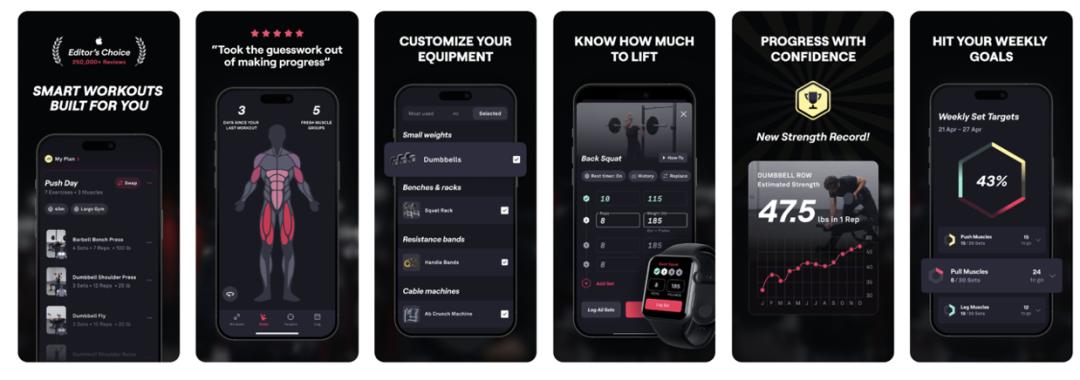
Fitbod App Store poster | Source: Diandian Data
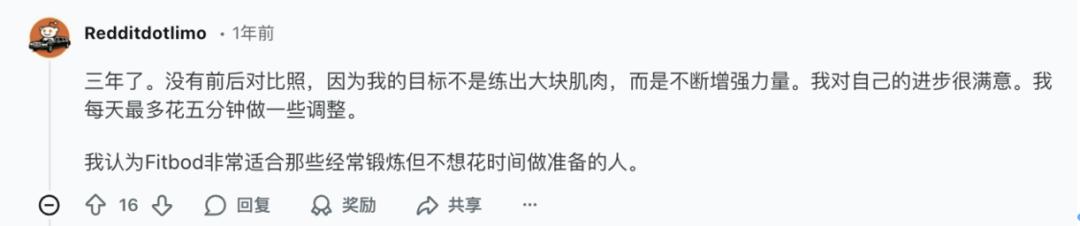
Fitbod user reviews | Source: Reddit
Another example is Gentler Streak, which won the Apple Design Award in 2024. It offers another way of simplification. Most sports apps emphasize punching in and achieving goals. Once users are in a bad state and can't complete the tasks, they are likely to fall into frustration and eventually quit completely. However, as its name suggests, Gentler Streak has the opposite logic. It focuses on your heart rate, fatigue, and recovery status. When you are too tired or in a bad state, it will actively suggest that you rest or only do a light activity, reducing the probability of quitting due to not meeting the standards. Gentler Streak makes sports easier by reducing users' psychological burden.
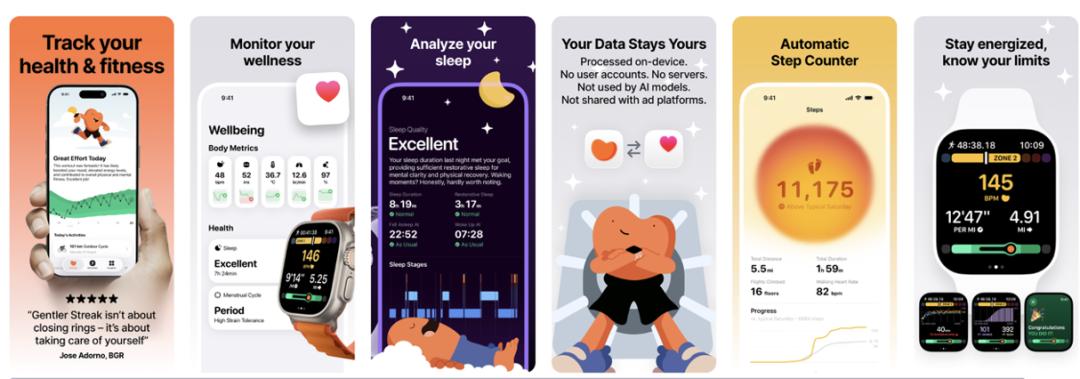
Gentler Streak App Store poster | Source: Diandian Data
Conclusion
Going back to the question at the beginning of the article, why did Runna succeed? We think it's because this team finally found the value that users are willing to pay for continuously. It captures the more valuable and scalable part of coaching, which can plan, adjust, accompany, and provide feedback, ultimately saving users time, energy, and decision - making burden.
In a way, this might also be a more valuable path for AI sports products to follow. After all, many learning and health apps have proven that what really attracts users to stay is not the professional and accurate nature of the product but whether it makes something that is originally hard to stick to a little easier.
This article is from the WeChat official account "Baijing Chuhai" (ID: baijingapp), written by Li Shuang and edited by Yin Guanxiao. It is published by 36Kr with permission.