Your memory and self may have been "drifting" all along.
For decades, neuroscience has been built on an almost self - evident premise: The brain requires stable neural coding. Certain neurons are responsible for recognizing specific shapes, some cells correspond to spatial positions, and others are involved in motor control. In other words, if the external world remains unchanged, the neurons in the brain responsible for representing this information should also remain relatively stable. That's why humans can continuously recognize the same face, remember the same location, and maintain stable behaviors and memories.
However, in the past decade or so, a series of studies have gradually shaken this classic view.
In 2012, Harvard doctoral student Laura Driscoll began to track the activity of individual neurons in the mouse brain. She originally just wanted to verify a "stable baseline" - to observe which neurons would consistently respond in the same way when the mouse performed the same task. In the experiment, the mice needed to navigate repeatedly in a virtual maze, and the researchers recorded the neural activity in the parietal cortex over a long period. According to traditional theory, as long as the task remained unchanged, the neurons responsible for encoding the maze location should remain stable over the long term.
The result was unexpected. Cells that fired strongly at a certain location in the maze on the first day might hardly respond a few weeks later; while neurons that were originally silent began to be activated at the same location. More importantly, there were no obvious changes in the mice themselves. They still followed the same route and completed the same task, and their behavioral performance remained stable. The only thing that changed was the activity pattern of the neurons themselves.
Laura Driscoll later recalled that at that time, she almost thought there was a serious error in the experiment because the result "completely went against everyone's expectations".
In 2017, after this study was published, a concept later called "representational drift" began to receive wide attention. The so - called "drift" refers to the fact that the way neurons respond to the same stimulus, the same behavior, and even the same environment changes continuously over time. That is to say, the neural coding inside the brain is not as fixed as people thought, but more like a continuously reorganized dynamic system.
This discovery caused a huge shock because it challenged many of the most core theoretical foundations of modern neuroscience. In the 1950s, David Hubel and Torsten Wiesel discovered that neurons in the visual cortex would respond selectively to specific directions and shapes. This work laid the classic model of "function - specific neurons". Subsequently, John O’Keefe proposed the "place cell" theory, arguing that certain neurons in the hippocampus would be activated when an animal was at a specific spatial location. Later, the "engram" theory further suggested that memories are stored in the brain in the form of stable neuron populations. In fact, experiments have shown that artificially stimulating specific hippocampal neurons can re - evoke corresponding memories, while inhibiting these cells can weaken memory retrieval.
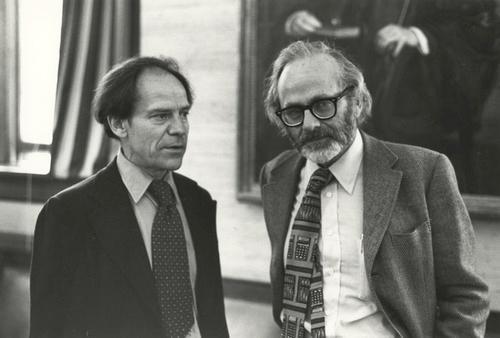
Torsten Wiesel (left) David Hubel (right)
Therefore, the emergence of "drift" seems to touch on a fundamental question: If the neurons responsible for memory and perception are constantly changing, where exactly are memories stored?
In fact, before Driscoll, some researchers had vaguely observed similar phenomena. In the early 2000s, Clifford Kentros at the Kavli Institute for Systems Neuroscience in Norway also found that the response of neurons to spatial locations changed over time when he was recording hippocampal activity over the long term. He initially also thought it was an experimental error, but even after repeating the experiment, this instability still existed. Kentros later described that the brain "doesn't work the way you think it does".
With the advancement of technology, more and more studies have observed similar phenomena in different brain regions. In addition to the hippocampus, representational drift has also occurred in areas such as the visual cortex and the olfactory cortex. For example, in the piriform cortex responsible for odor processing, researchers found that after one month, the neural activity pattern of mice was almost uncorrelated with the initial one.
This is particularly confusing because olfactory recognition is generally considered to require extremely stable neural coding. If neurons are constantly changing, why can the brain still stably recognize the smell of "coffee" or "smoke"?
As more and more evidence accumulates, the neuroscience community has begun to gradually accept that drift may not be an experimental error, but a real property of the brain. At the same time, new problems have become more complex. If the activity of neurons is constantly changing, why can humans maintain stable perception, behavior, and self - identity?
Currently, an important view is that what is truly stable may be the overall structure formed by the entire neuron population. Driscoll's earliest research actually showed that although individual neurons constantly change their response patterns, the higher - level population activity patterns are relatively stable. This view implies that the brain may be more "distributed" than the traditional model. Memory, cognition, and perception are not borne by a single fixed neuron, but are jointly maintained by a continuously flowing and constantly reorganized network.
So, does this drift itself have a function?
One important direction is related to "time". Some scientists believe that drift may help the brain label memories with time. For example, when a mouse experiences two events in a short period, the brain often uses similar neuron populations to encode these experiences; but if the two events are separated by a long time, different cell populations will be recruited. Researchers believe that this gradually changing neural representation may help the brain distinguish between "just happened" and "a long time ago" events.
Some researchers also believe that drift may be related to the memory update mechanism. Because if the same group of neurons always perform the same function, it will be difficult for the brain to integrate new experiences. Continuously changing neural coding actually leaves room for the system to absorb new information.
However, controversies still exist. Some studies have not found obvious drift. For example, Michael Yartsev from the University of California, Berkeley found in a bat study that hippocampal neurons remained highly stable over several weeks. Since bats have extremely strong spatial memory, he believes that many so - called "drifts" may be the result of not strictly controlling behavioral variables in the experiment. Even if an animal seems to be performing the same task, subtle differences in speed, attention, alertness, and even body posture can change the neural activity pattern. Some people in motor cortex research have also found that as long as behavioral conditions are strictly controlled, the relationship between neuron activity and behavior can actually remain stable over the long term.
Therefore, the real debate in the field is no longer just "whether drift exists", but which changes are real neural reorganizations and which are just superficial phenomena caused by changes in behavior and internal states?
However, regardless of the controversy, this direction has begun to influence research on brain - machine interfaces and artificial intelligence. There is a classic problem in modern AI systems - "catastrophic forgetting", that is, it is easy to lose old abilities after learning new tasks. But the biological brain seems to maintain long - term stability in continuous change. Researchers have therefore begun to suspect that perhaps this "drift within stability" is precisely an important mechanism for the brain to avoid forgetting. For brain - machine interfaces, if neural coding drifts over time, long - term implanted devices cannot rely on fixed signal mapping, but must have continuous adaptive capabilities, otherwise the devices will eventually gradually fail.
A researcher compared "representational drift" to the discovery of dark matter in physics: it makes people realize that the real operating mechanism of the brain may be much more complex than existing theories. In a sense, this study tells us that stability in the brain may never be static.
Compilation source:
https://www.nature.com/articles/d41586-026-01554-0
This article is from the WeChat official account "Neural Reality" (ID: neureality). Author: NR. Republished by 36Kr with permission.