A major reshuffle in the copyright market: A desperate move under AI anxiety
The "gold rush" in the music copyright market in the last decade finally evolved into a "major reshuffle" in the first half of 2026.
Sony Music Publishing joined hands with GIC to acquire the copyright giant Recognition for $4 billion. BMG merged with Concord to form a company worth tens of billions of dollars. Primary Wave swallowed Kobalt to become a top - tier player valued at $7 billion. This series of crazy transactions will rewrite the existing landscape of the music industry.
Recognition's predecessor was Hipgnosis Songs, a once - star enterprise in the copyright market. In the past decade, it successively acquired the copyright assets of superstars such as Justin Bieber, Shakira, and Justin Timberlake, and ultimately became a stepping - stone for the giants.
Kobalt was once hailed as "the most notable music company in the 21st century", but in the end, it was sold to the new copyright upstart, Primary Wave. Concord has been active in the copyright market in recent years and is now helping BGM become a new music giant.
The major reshuffle in the copyright market in the first half of 2026 is not accidental. We believe it is a manifestation of the re - evaluation of the value of classic IPs against the backdrop of the AI explosion. AI is making the market increasingly anxious, and the value certainty of classic IPs makes music companies stake everything on buying peace of mind.
Major Reshuffle in the Copyright Market
In the past decade, the "gold rush" with lavish spending in the music copyright market has created some industry stars. In this round of reshuffle, some have become the targets of the reshuffle, while others have become the protagonists of the reshuffle.
On May 11, Sony Music Publishing (SMP for short), a copyright provider under the Sony Music Group, announced a joint acquisition of the copyright provider Recognition with the Singaporean sovereign wealth fund GIC. The industry estimates that the transaction value is as high as $4 billion.
Why is Recognition so valuable? Because its predecessor, Hipgnosis Songs, spent a total of $2.2 billion to acquire the copyrights (including partial rights) of 45,000 old songs, involving well - known high - traffic songs such as "Locked Out of Heaven" (Bruno Mars), "Bad Romance" (Lady Gaga), "Umbrella" (Rihanna), and "All I Want For Christmas Is You" (Mariah Carey).
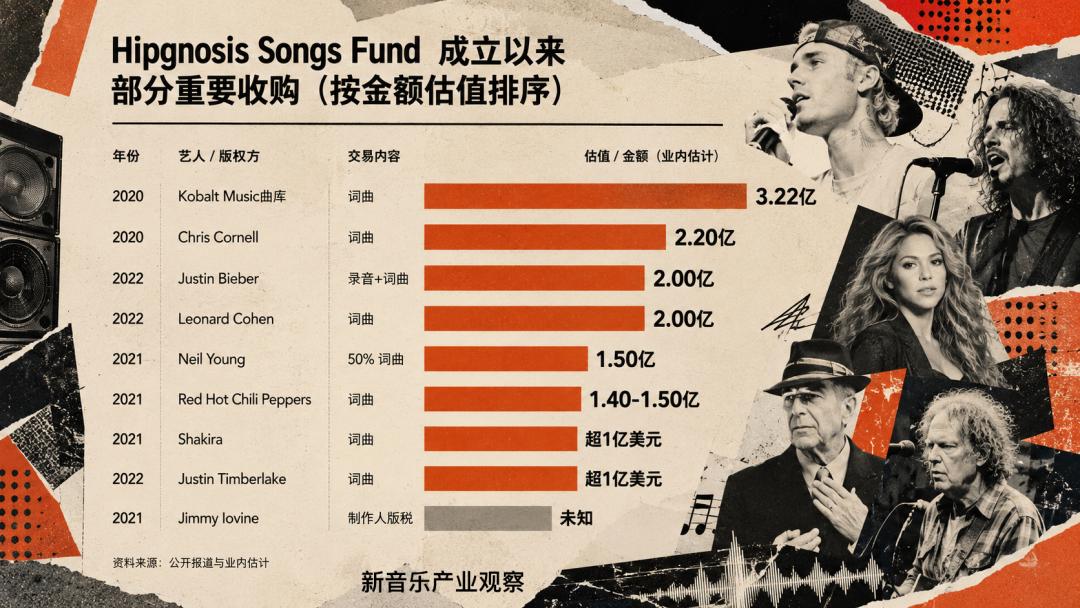
In 2024, Blackstone won in a fierce competition with Concord and acquired Hipgnosis Songs for $1.6 billion, and then reorganized it into the Recognition Music Group. From $1.6 billion to $4 billion, in less than two years, the market value of Recognition has doubled, which shows the capital's confidence in classic IPs.
Although it failed to acquire Hipgnosis Songs, Concord holds the copyrights of many artists such as Pink Floyd, Daft Punk, Phil Collins, and Imagine Dragons, so it has become a target coveted by other companies.
On April 28, 2026, the German music company BMG announced a merger with Concord to form a new BMG. Bertelsmann holds a 67% stake and becomes the largest shareholder of the company. The industry estimates that the transaction value is between $6.6 billion and $7 billion, making it the highest - value capital transaction in the music market in recent years.
Today's BMG is a new company reorganized by Bertelsmann in 2008 after Sony Music abandoned the BMG brand. The key turning point in its growth was the acquisition of the copyright assets of nearly one million songs from Virgin Music Publishing in 2013. After merging with Concord, the new BMG is valued at up to $15 billion, becoming the fourth - largest music company in the world, second only to the "Big Three" - Universal, Sony, and Warner.
In contrast, the transaction in which Primary Wave announced the acquisition of Kobalt on March 23 this year may not be as eye - catching, but it also has the potential to impact the existing landscape of the music industry.
Primary Wave is a new copyright upstart that grew by acquiring the copyrights of Kurt Cobain, the lead singer of the Nirvana band. In recent years, it has acquired classic IPs such as Whitney Houston and The Doors. After acquiring Kobalt, Primary Wave's market valuation is as high as $7 billion, becoming a new top - tier player in the music market.
Spending Money for Peace of Mind
Within less than two months, there have been multiple large - scale transactions worth billions of dollars, which is a rare capital dynamic in the copyright market. This inevitably links people to the rapid advancement trend of AI music in the industry.
Although according to the data released by Apple Music and Deezer, the current traffic share of AI songs is less than 1%, anxiety is spreading in the industry.
Especially among the creator community, they are highly sensitive to potential income impacts. In February this year, a survey by the UK copyright agency PRS for Music showed that 80% of musicians are worried about the development of AI music, and 76% of the surveyed musicians believe that AI may have a "negative impact" on their livelihoods.
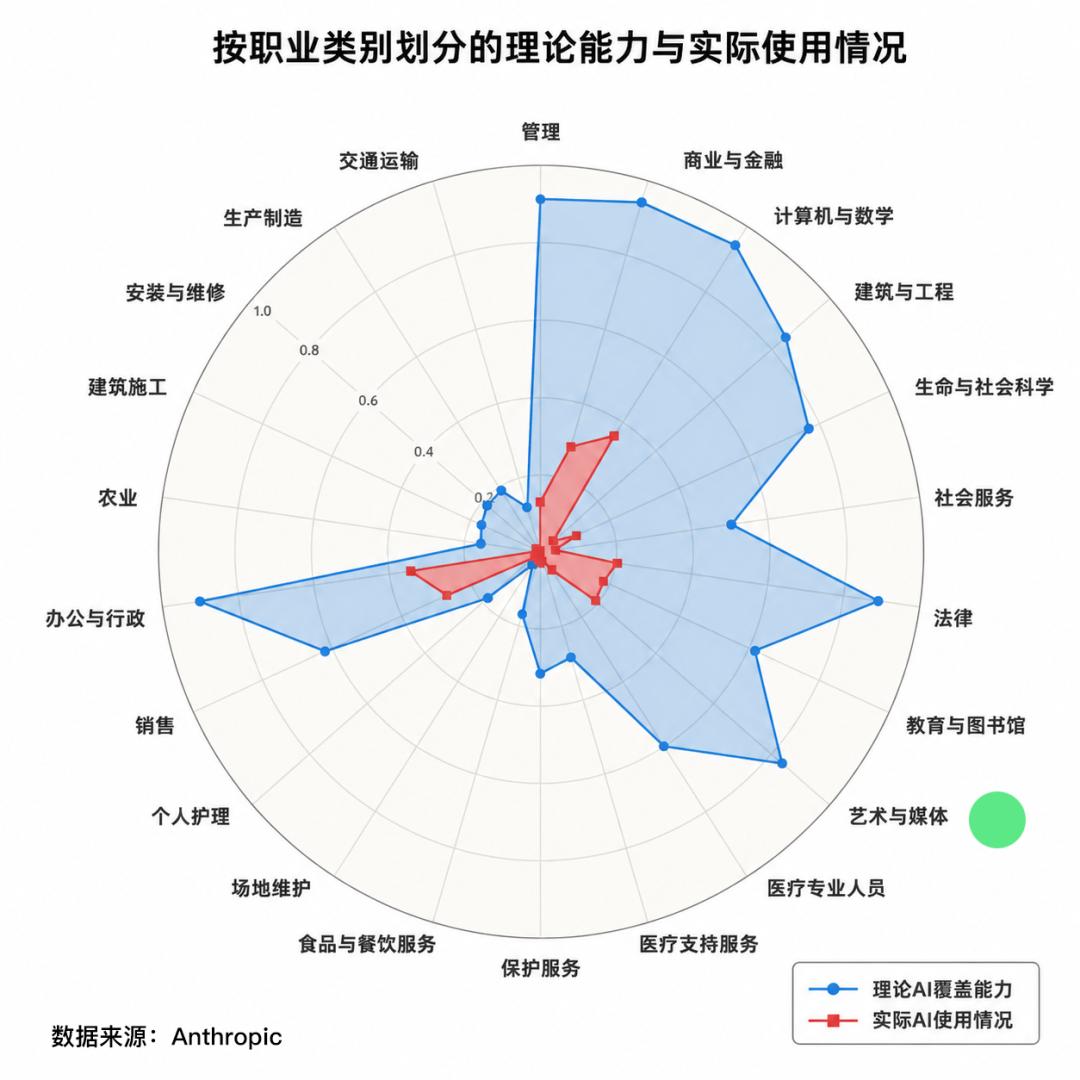
Musicians' concerns are not unfounded. Anthropic's theoretical model shows that in the fields of art and media, the potential for AI to penetrate occupations is as high as 80%, which means that 80% of practitioners will be affected. CISAC's economic model predicts that AI - generated music will account for about 20% of the traditional streaming market in 2028, putting 24% of human creators' incomes at risk.
The partial replacement of human music by AI music will be a long - term process. As AI continues to penetrate, in a foreseeable future music scenario, human works will no longer be the only source for users to obtain music. AI can generate high - quality music on demand, thereby reshaping the creation, consumption, distribution, and copyright systems.
This forces music companies to think about countermeasures, optimize asset allocation, and invest money in the parts of human works that are difficult to be replaced, that is, classic IPs.
Firstly, classic IPs have long - term market - verified returns. Their playback volume and licensing demand are relatively stable, and even in the case of AI penetration, their income will not fluctuate significantly. Secondly, classic IPs carry cultural memories and emotional values, forming an "emotional moat" that enables them to maintain their core value in the face of market changes.
On the same day when SMP announced the acquisition of Recognition, the global box office of the Michael Jackson biopic exceeded $500 million, and many old songs topped the charts. "Billie Jean" ranked second on Spotify's daily play list, and the first was Justin Bieber's old song "Beauty and a Beat".
All of this may seem unrelated, but it reflects the same trend: the re - confirmation of the value of classic IPs.
With the out - of - control supply of new songs, it is becoming increasingly difficult for new artists and new works to break into the market. AI will only intensify this trend. But even if AI music becomes the mainstream one day, we can almost be sure that there will still be many people who want to listen to "Billie Jean" or "Beauty and a Beat".
It is this certainty that makes music companies eager to spend money for peace of mind. A research report by Fourth Pillar targeting 125 investment decision - makers and senior advisors worldwide also shows that only 4% of investors are very worried that AI may have a negative impact on the value of music copyright assets.
Classic IPs: The Last Line of Defense
In the first half of this year, all the phenomenal events in the music circle are related to "memory".
The "return" of Michael Jackson, the return of Justin Bieber, the return of Jay Chou, and the return of BTS have finally awakened the collective memories of users of different age groups and regions, re - activating the IPs and creating regional or global "cultural moments".
After performing at Coachella, many of Justin Bieber's old songs became popular again. Among them, "Beauty and a Beat" ranked first on Spotify's daily play list for 29 days. After the release of the biopic, Michael Jackson's music platform data set multiple new records. "Billie Jean" finally topped the global Spotify chart, becoming the oldest - ever champion single on Spotify.
What we see from this is not only the charm of the works but also the power of "memory". This is why the New Music Industry Observation has repeatedly emphasized the importance of "memory economy".
Under the general trend of AI continuously replacing human creation, the incremental supply in the music market is becoming more and more individualized. In the future, AI will be able to generate content instantly according to users' emotions, scenarios, and needs. The consumption logic of new songs is shifting from "mass communication" to "individual companionship".
As a result, fewer new works will be able to enter the collective memory, and it will be more difficult for new artists to form real public recognition. Therefore, they have to strengthen their personal circles and establish deeper emotional relationships with their core fans.
However, those classic IPs that have occupied human memory can still create "cultural moments" with mass participation, creating huge wealth through various means such as streaming playback, synchronization licensing, live performances, and derivative income, including AI - based secondary creation.
Universal Music previously reached an agreement with Spotify to allow compliant AI cover versions and remixes, which reflects this trend. Gustav Söderström, the co - CEO of Spotify, once emphasized that existing IPs have the highest value in the music market, and AI - based secondary creation helps to further release the long - term value of existing IPs.
This was once verified in the case of Stefanie Sun. During the wave of "AI Stefanie Sun" cover versions, netizens used new technologies to evoke personal memories, indirectly proving that Stefanie Sun is not an "obscure singer".
Therefore, classic IPs are becoming the most important "defensive assets" for music companies and the last line of defense. As long as they can continuously activate memories, classic IPs can ensure the continuous growth of the music industry's income.
In addition to spending money for peace of mind, music companies are also finding ways to create conditions for activating classic IPs. Warner Music recently spent $300 million to buy the recording copyrights of Red Hot Chili Peppers and also reached a cooperation on musicians' documentaries with Netflix and Paramount, all paving the way for the "memory economy". Pophouse, founded by members of ABBA, spent a large amount of money to acquire most of the shares of Tina Turner's copyright assets, which is considered to be a possible reference to ABBA's virtual residency to develop Tina Turner's IP.
In the AI era, what is truly scarce is no longer content production ability but memory operation ability. The New Music Industry Observation believes that AI - based secondary creation, documentaries, and virtual performances, together with existing IP development methods, will form a diversified memory operation system that will continuously release the potential value of classic IPs in the future.

From this perspective, what capital is vying for is not copyright but human memory.
This article is from the WeChat official account “New Music Industry Observation” (ID: takoff), author: Ling Yiyi. Republished by 36Kr with permission.