Behind Tesla's FSD entry into China, Momenta, DeepRoute.ai and others are "racing against time"
There is a new story in the autonomous driving industry.
On May 20th, as Unisound Technology (1511.HK) was listed on the main board of the Hong Kong Stock Exchange, one of the earliest domestic companies to deploy L4 autonomous driving has become the latest example in China's autonomous driving IPO wave. The listing of Unisound Technology is also regarded by many industry insiders as an important signal that the industry has truly entered the capitalization cycle.
Just one day later, another piece of news quickly stirred up the intelligent driving industry: on May 21st, Tesla announced that its supervised version of FSD would be launched in the Chinese market.
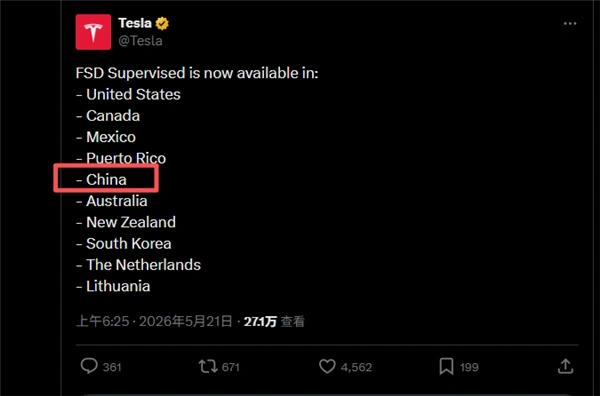
Source: Screenshot from the X platform
On one hand, Chinese intelligent driving companies are collectively rushing into the capital market; on the other hand, the world's strongest autonomous driving player is penetrating the Chinese market. To some extent, it seems like two industry stages have converged at the same time.
01. Race among Intelligent Driving Companies for IPO
As the fastest - moving company in this intelligent driving IPO wave, the uniqueness of Unisound Technology lies in that it is not a typical NOA supplier for passenger cars.
Compared with players like Momenta, DeepRoute - AI, and Qingzhou Zhihang, which mainly focus on the mass - production route of urban NOA, Unisound Technology has long focused on the implementation of L4 autonomous driving in closed or semi - closed scenarios such as airports, factory areas, ports, logistics, and urban shuttles. It is not telling a story of "advanced driver assistance", but a story of "full - scenario L4 commercialization".
To some extent, Unisound Technology is trying to prove to the capital market that L4 autonomous driving is not just a technological concept, but has begun to form real commercial orders and operational capabilities. However, the characteristics of "high investment and long cycle" in the autonomous driving industry are still very obvious in Unisound Technology.
The prospectus shows that from 2023 to 2025, Unisound Technology's revenues were 161 million yuan, 265 million yuan, and 328 million yuan respectively, with a cumulative loss of about 655 million yuan in three years; during the same period, R & D investments reached 184 million yuan, 196 million yuan, and 234 million yuan respectively, accounting for more than 100% of the revenue at the highest.
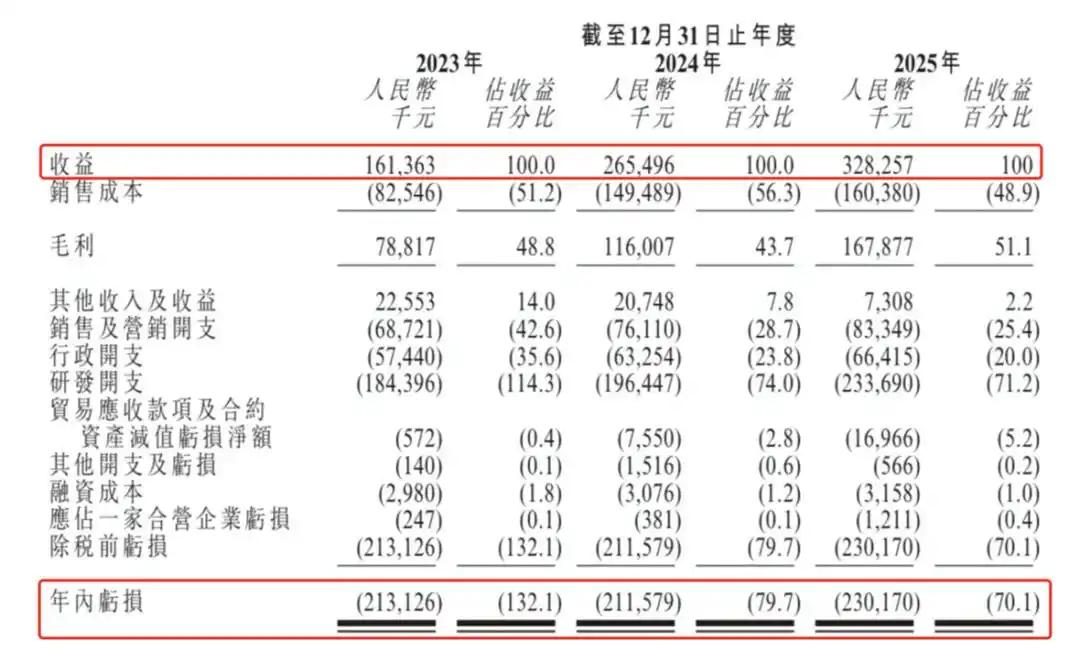
Source: Unisound Technology
It is worth mentioning that Unisound Technology's stock price broke below the issue price on the first day of listing. The company's issue price was HK$60.3 per share, and the opening price was HK$56.00 per share. As of May 22nd, it closed at HK$59 per share, with a total market value of HK$9.587 billion. This also reflects that to some extent, the attitude of the secondary market towards the autonomous driving industry has begun to shift from technological imagination to commercial reality.
Besides Unisound Technology, a larger - scale IPO wave of intelligent driving companies is surging.
There have been continuous reports in the market that third - party providers of advanced driver assistance solutions such as Momenta, DeepRoute - AI, and Qingzhou Zhihang have secretly submitted IPO materials to the Hong Kong Stock Exchange. According to a report by "36Kr", DeepRoute - AI even submitted its listing materials at the end of 2025, two months earlier than Momenta. If everything goes smoothly, these companies may be listed collectively in the second half of 2026.
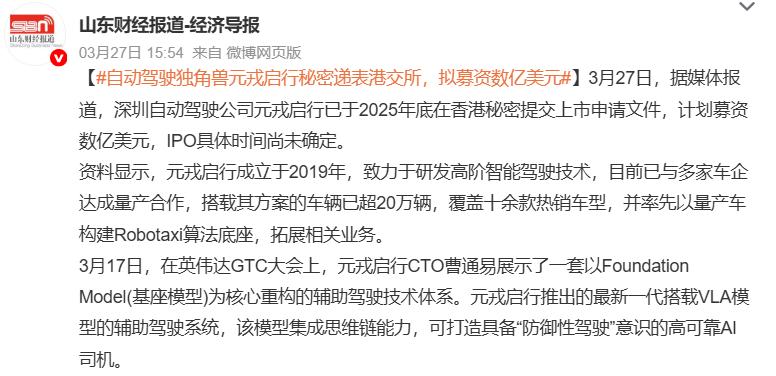
Source: Screenshot from Weibo
In addition, Furitek, which has long focused on ADAS and advanced driver assistance solutions, has officially launched preparations for its Hong Kong IPO; Mainline Technology, which focuses on autonomous trucks and trunk logistics scenarios, has also started to promote its plan to list in Hong Kong; Qianli Technology, an intelligent driving supplier, is also reported to be promoting its Hong Kong IPO.
Interestingly, almost all intelligent driving companies in this round have chosen to list in Hong Kong. Since the Hong Kong Stock Exchange introduced the "18C" rule in 2023, "specialized technology companies" in fields such as autonomous driving, AI, and large models have had a relatively clear listing channel. According to the 18C rule, even if a company has not made a profit, as long as it has sufficient R & D investment, technological barriers, and market space, it can still list in Hong Kong.
The autonomous driving industry exactly meets this characteristic. It has long - term losses, high R & D investment, and a long commercialization cycle, but at the same time, it has huge industrial imagination space and clear implementation scenarios. Previously, Black Sesame Intelligence and Horizon have successfully listed on the Hong Kong Stock Exchange through this rule.
However, the core that has supported the continuous capital - burning in the industry in the past few years has actually been the financing in the primary market. But after 2025, the attitude of the entire primary market towards autonomous driving has cooled significantly. Now, those who are still willing to continuously bet on autonomous driving are basically mainly automakers, local state - owned assets, and industrial capital, and the patience of traditional VC/PE in the autonomous driving track has obviously declined.
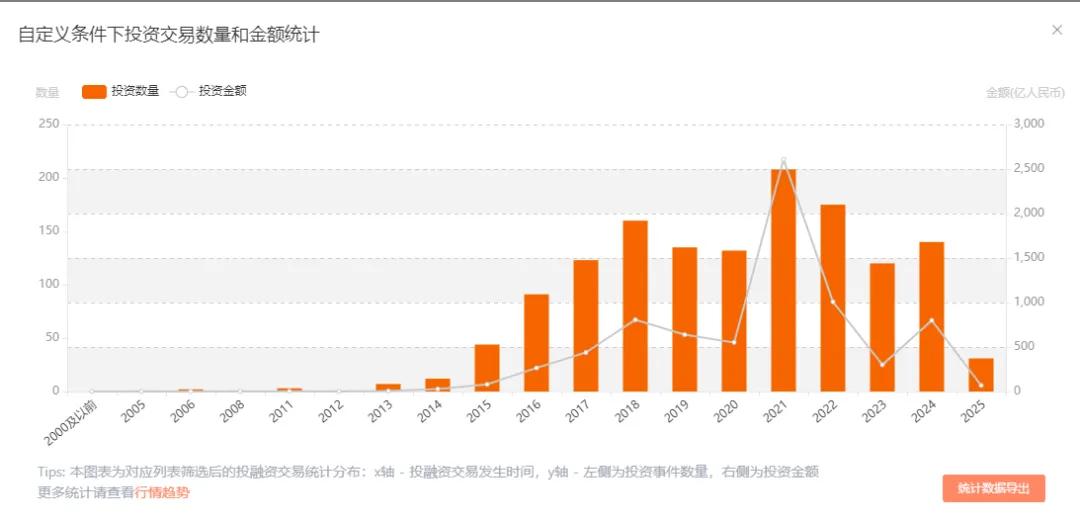
Picture: Trend of intelligent driving investment events. Source: IT Juzi
For many autonomous driving companies, it is becoming increasingly difficult to support the R & D consumption in the large - model era only by relying on primary - market financing. With the entry of Tesla's supervised version of FSD into China, this pressure has been further compressed into a clear "time window".
Previously, the growth of Chinese intelligent driving companies was essentially based on a relatively special market environment, that is, Tesla's FSD had never really entered the Chinese market, so local suppliers had a precious development window period.
However, as the supervised version of FSD begins to enter the Chinese market, the rhythm of the entire industry is bound to accelerate further. The industry generally expects that once the full - fledged version of FSD is fully commercialized in China, the choice of intelligent driving suppliers for domestic automakers will undergo a structural change, and the market share and valuation logic of independent intelligent driving companies will face re - evaluation.
In other words, these companies need to complete their IPOs before Tesla further forms an advantage; otherwise, the market may not give the same pricing and valuation. The current race among intelligent driving companies for IPO is essentially a "survival positioning battle" against time.
02. Initiating the Narrative of Physical AI
Meanwhile, behind the wave of Hong Kong IPOs, another obvious change in the industry is that the narrative mode of autonomous driving companies is changing.
In the past few years, the core of industry competition has mainly revolved around "functions". For example, whether there is map - less NOA, how many cities it can cover, and how high the takeover rate is. The core logic is still rule - based engineering, modular development, and manual parameter adjustment, which is essentially a competition in the small - model paradigm.
However, in 2026, more and more industry players have reached a consensus: the small - model route is approaching its ceiling, and the second half of autonomous driving will enter the "Physical AI era" under the large - model paradigm. This is especially evident at this year's Beijing Auto Show and subsequent industry forums.
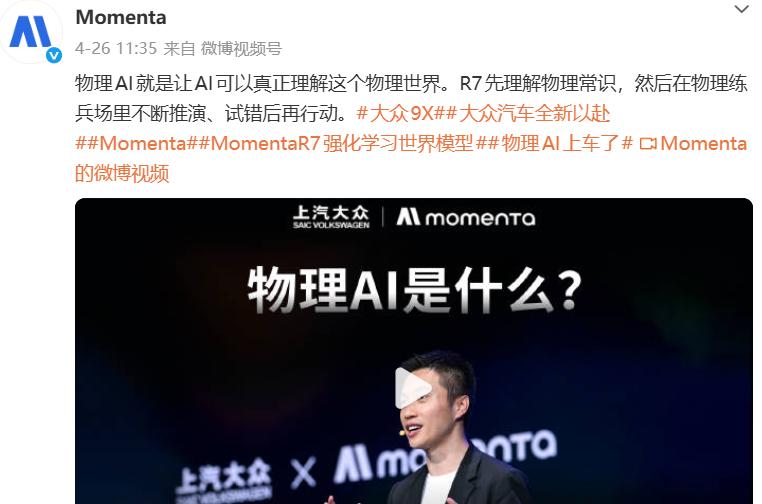
For example, at the Beijing Auto Show, DeepRoute - AI emphasized the "base model" and the "Physical AI" route. Even its CEO, Zhou Guang, proposed the goal of making the company the AI infrastructure for the physical world in the future; Zhuoyu put forward the concept of "Mobile Physical AI" in an attempt to get rid of the market perception of being a "low - cost NOA solution provider" in the past; Momenta mentioned that the era of Physical AI has arrived, and autonomous driving is the first entry point for Physical AI implementation.
Source: Screenshot from Weibo
Behind this change, it is not just a simple upgrade of the technical route. More importantly, the autonomous driving industry needs a new capital narrative.
Now, in the eyes of many investors, the autonomous driving track is no longer as "attractive" as it was in the early days. Especially after the popularity of embodied intelligence and humanoid robots, more and more funds are flowing towards the AI direction with a larger market space.
To some extent, the autonomous driving industry is facing "narrative anxiety". After all, if it is just advanced driver assistance, the market space seems to be becoming limited. But if it is elevated to "Physical AI", the imagination space of the entire industry will be reopened.
This is why more and more autonomous driving companies are beginning to actively emphasize that autonomous driving is not the end, but just an entry point for Physical AI with the earliest implementation, the richest data, and the most complex engineering. At the 2026 China Electric Vehicle 100 - Person Forum, Zhuoyu's CEO, Shen Shaojie, even directly stated: "In the future, all surviving autonomous driving companies will transform into Physical AI companies. This is not a strategic judgment, but a survival choice!"
Of course, to transform into a Physical AI company, it is necessary to change the previous small - model paradigm that relies on rule - based engineering, modular development, and manual parameter adjustment, and enter a new stage centered on large models. In this stage, what really determines competitiveness is no longer who has more functions, but who has a larger model scale, stronger data - closed - loop capabilities, and more sustainable computing power and capital investment capabilities.
Zhou Guang, the CEO of DeepRoute - AI, gave a very representative judgment at a recent industry forum: In the past, the ceiling of the capabilities of the small - model architecture could only reach the takeover level of about 100 kilometers. After Tesla's FSD V14 switched to the large - model route and upgraded to a computing platform of over 500 TOPS, it has begun to move towards the takeover level of 1000 kilometers.
This means that the entire autonomous driving industry has actually entered the stage of a "large - model arms race". Behind this change, the requirements for capital, computing power, and R & D systems have also begun to increase unprecedentedly. For example, Horizon's R & D investment last year exceeded 5 billion yuan, and Zhuoyu's electricity cost for computing power training alone reached more than one billion or even two billion yuan a year.
In essence, these companies are trying to prove one thing: they are not only advanced driver assistance solution providers, but also AI companies. Because for these companies, they need to convince not only automaker customers, but also investors and the secondary market.
Especially in the context of the current capital market's great enthusiasm for AI, how to transform from an intelligent driving function company into an "AI platform company" has become a new common topic for the entire industry.
03. The Industry Enters the Elimination Stage
Behind the capital enthusiasm and the new narrative of "Physical AI", the real reality of the autonomous driving industry is not that easy. Although from the overall perspective of the industry, Chinese autonomous driving companies are indeed rapidly entering the mass - production stage.
For example, Momenta has cumulatively equipped more than 700,000 vehicles; Qingzhou Zhihang's advanced driver assistance system has been installed in more than one million vehicles, and it only took eight months to increase from 500,000 to one million; DeepRoute - AI expects to deliver more than one million advanced driver assistance systems by the end of 2026; and Zhuoyu has more than 20 cooperation customers, covering 32 brands, with more than 50 mass - produced models in total, and is rapidly expanding into heavy trucks, unmanned logistics vehicles, and Robotaxis.
Even latecomers like Qianli Technology have started to gain momentum rapidly. As of the end of March 2026, its intelligent driving solutions have been installed in 460,000 vehicles, and it has set a goal of reaching one million vehicles by the end of 2026, aiming to become a global leading intelligent driving supplier.
This means that the autonomous driving industry has formed real mass - production capabilities and commercial orders. But on the other hand, the entire industry is still generally in a loss - making state. For example, Unisound Technology mentioned above is a typical case.
In addition to financial pressure, another major challenge for the industry comes from the governance and organizational levels. Because when the autonomous driving industry enters the "large - model era", the competition is no longer just about function competition, but has begun to turn into a war of attrition around computing power, data, talent, and long - term investment capabilities.
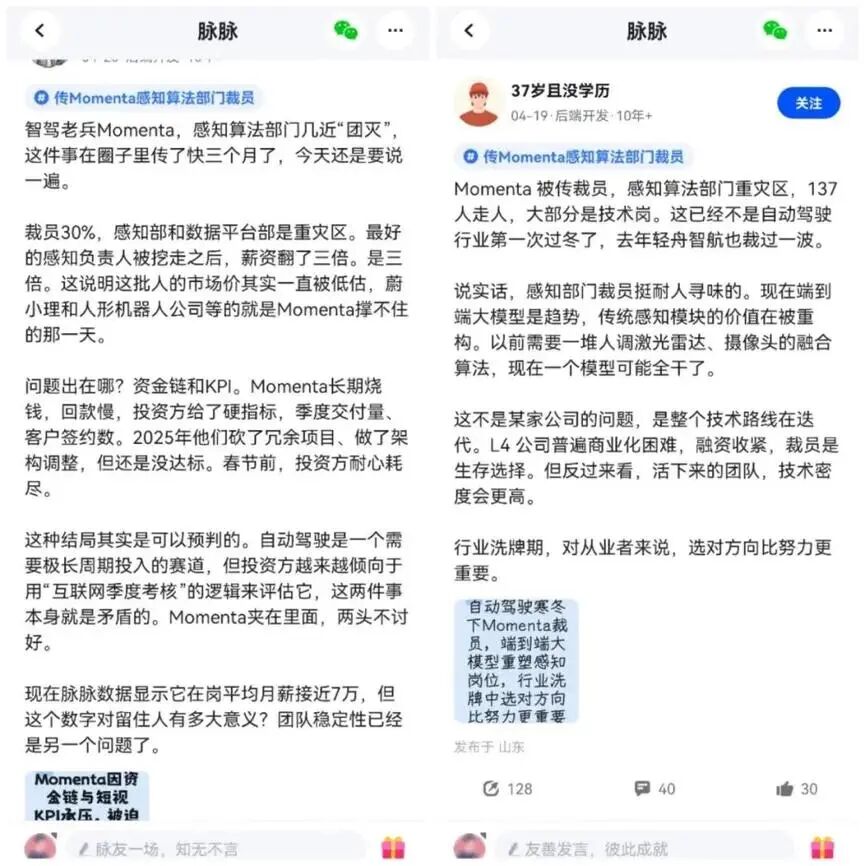
This change is rapidly increasing the organizational pressure on the entire industry. For example, Unisound Technology's prospectus shows that from 2023 to 2025, the turnover rates of the company's R & D personnel were 16.0%, 28.6%, and 20.6% respectively. In April this year, Momenta was also reported to have carried out large - scale personnel adjustments, and the perception algorithm department and the data platform department became the hardest - hit areas for layoffs. It was reported that 137 people left the perception algorithm team. Behind the significant reduction of the traditional perception algorithm team, it may be related to Momenta's shift to the world - model technology route based on reinforcement learning.
Source: Screenshot from Maimai
This actually reflects the common problem faced by the entire industry: on one hand, the R & D investment brought by the large - model and Physical AI routes is constantly expanding; on the other hand, the cost of talent competition and organizational consumption is getting higher and higher. As a result, layoffs, organizational contraction, and efficiency optimization have begun to appear frequently in the industry.
A more realistic problem than organizational pressure is that automakers are regaining the initiative in advanced driver assistance. In the past few years, many automakers highly relied on third - party intelligent driving suppliers due to the