Is it still profitable to rent out robots at 3000 yuan a day?
What will be the fastest-depreciating product in 2026?
Some people say that embodied robots must be on the list.
During the Spring Festival Gala in 2025, robots performed a yangge dance. Suddenly, people across the country and even the world became extremely enthusiastic about these humanoid robots.
Renting out robots has also become a lucrative business, with the daily rental fee reaching up to 30,000 yuan at most.
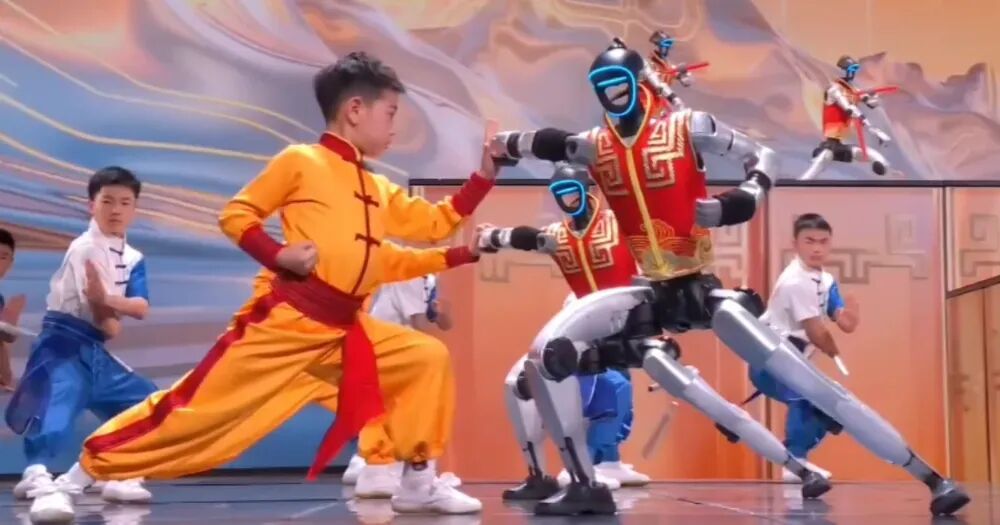
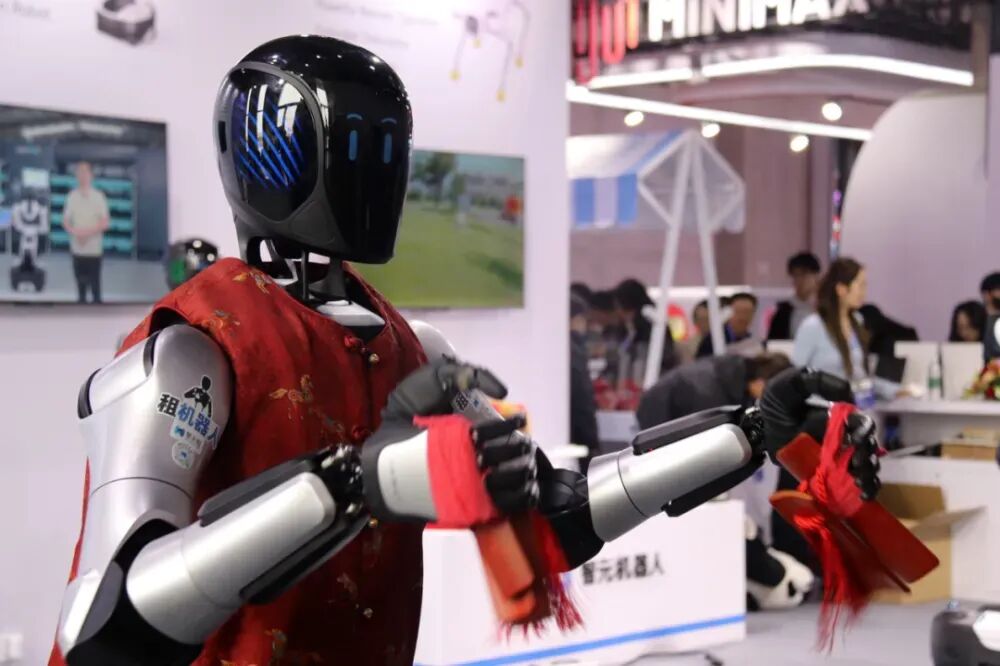
Now, robots have become more advanced. For example, during this year's Spring Festival Gala, robots practiced martial arts with children and played the role of swordsmanship masters, which made the national audience marvel at the power of technology.
However, in reality, the daily rental fee for robots has not increased; instead, it has dropped to around 3,000 yuan per day.
What exactly is going on behind this?
Do robots have to be priced lower?
The embodied robot industry, although at the forefront of technology and in the media spotlight, is actually an age - old business.
The manufacturing of its main body requires the collaboration of the entire supply chain, and manufacturers can only make money on each unit sold.
— It lacks value - preservation space, has little cultural premium, and cannot be shared for use.
Every time it appears in public, it also requires round - the - clock on - site services from technical personnel.
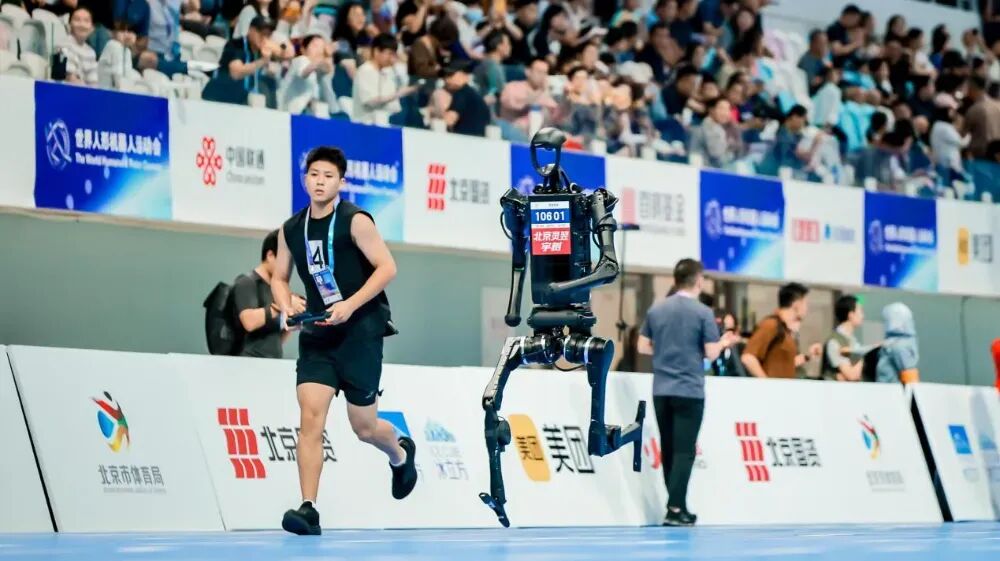
Therefore, the high price of robots has become the biggest obstacle on its commercialization path.
However, the pricing of robots depends not only on the cost of the supply chain but also on the solutions provided by service providers.
In terms of the supply chain, the cost of each component that makes up the robot's main body was once astonishingly high.
Looking back at 2018, the cost of a high - performance joint for a robot was as high as 50,000 - 60,000 yuan.
However, with the continuous upgrading of technology, the cost of the entire industrial chain has been rapidly declining.
By 2025, the cost of joints with the same performance had dropped to 500 - 600 yuan, only a fraction of what it was eight years ago.
Similarly, the price of the "six - axis force sensor," a key component of robots, has dropped from the 100,000 - yuan range to less than 5,000 yuan; the price of the "planetary roller screw" has dropped from over 10,000 yuan to less than 1,000 yuan.
In order to achieve a commercial closed - loop, the entire industry is in a long - term cost revolution.
For this reason, Wang Xingxing, the founder of Unitree Robotics, pointed out that the core purpose of reducing the price of robots is for the ecosystem:
"We hope to offer a better price so that more people are willing to make purchases. Only when the shipment volume and usage volume are large enough can the entire ecosystem thrive."
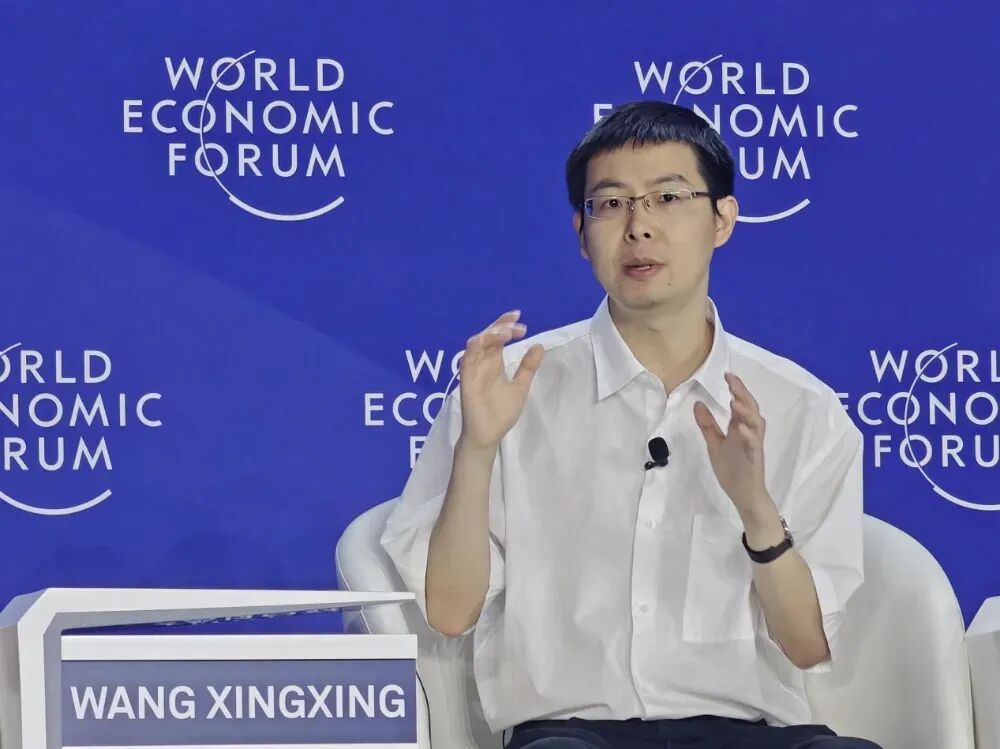
Unitree's logic is to continuously reduce the price of new - generation products through its "chain - leader" position, and then, by expanding its market share, force the supply chain to further reduce prices, thereby promoting positive cash flow in the entire industry.
Behind the idea of "using the market to command suppliers" is the underlying foundation called the "Moore's Law of Made in China":
China's high - tech manufacturing industry is achieving product performance improvement and cost reduction at an astonishing and predictable speed and scale.
Among these, the most mysterious force is the technological iteration of small giant companies.
For example, the "planetary roller screw" mentioned earlier is a high - precision, high - load, and highly reliable transmission component that determines the flexibility of a robot's movements.
The longer the screw, the greater the range of the robot's kicking and arm - stretching movements; the finer the internal thread, the higher the precision of the robot's movements, the easier the debugging, and the smoother the movements.
But at first, if we wanted to use the "planetary roller screw," we could only import it from abroad, and the "length - to - diameter ratio" of the imported screw was only 1:5, which severely restricted the robot's movements and made it look very clumsy.
With China's technological breakthroughs, some enterprises have inserted an endoscope - like "bent grinding rod" into the interior of a slimmer screw with a "length - to - diameter ratio of 1:10" to perform more detailed thread carving, and the price has dropped to 1/20 of that of imported products.
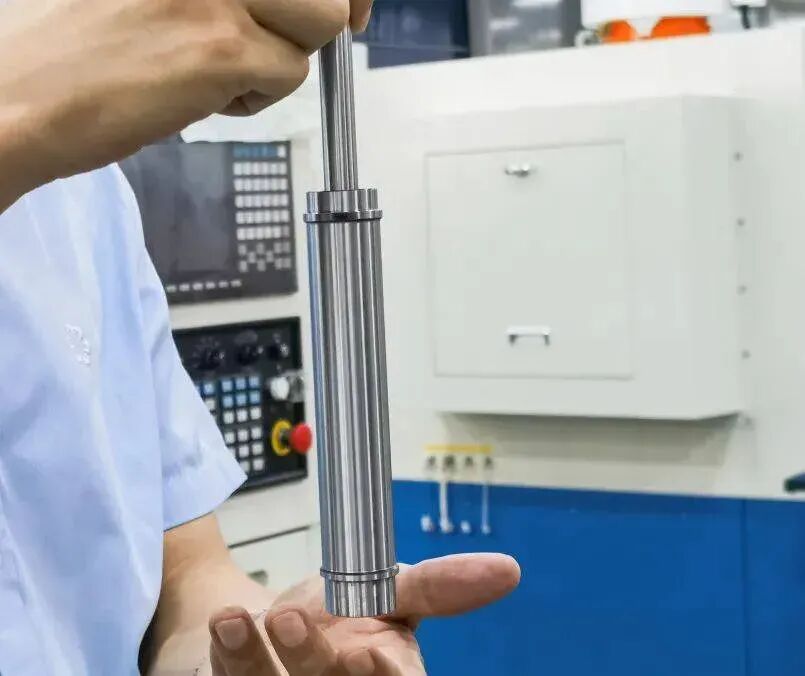
Planetary roller screw
This makes Chinese robots more cool, more flexible, and more cost - effective than foreign ones.
In the world of martial arts, only speed can prevail.
On the basis of technological upgrading, China's industrial chain efficiency also leads the world.
China's robot industry features rapid technological iteration, fast supply adjustment, quick product upgrading, and can flexibly adapt to the ever - changing and huge market to achieve economies of scale.
In the Robot Valley in Nanshan District, Shenzhen, within a 40 - kilometer park, 80% of the components needed to assemble a robot can be sourced. It only takes fifteen minutes for UBTech to purchase a Pacini tactile sensor.
In this regard, it seems quite difficult for our country's robots to maintain high - price sales in small quantities.
Is renting robots no longer appealing?
There is a contradiction regarding the rental fee of robots:
As the selling price of robots decreases, the cost for rental platforms to purchase robots has come down, but it seems more difficult to make money.
The most direct reason is that as the selling price of new - model robots decreases, it is difficult for rental platforms to increase the price they charge consumers, thus lengthening the pay - back period.
For example, at the peak in early 2025, some rental companies invested 100,000 yuan to buy a robot. With a daily rental fee of 20,000 yuan, they could recoup their investment in just five days of rental.
Now, many new - type robots can be bought for 30,000 - 50,000 yuan, but the daily rental fee for robots has also dropped to the range of 2,000 - 5,000 yuan. It takes 10 - 20 days to recoup the investment.
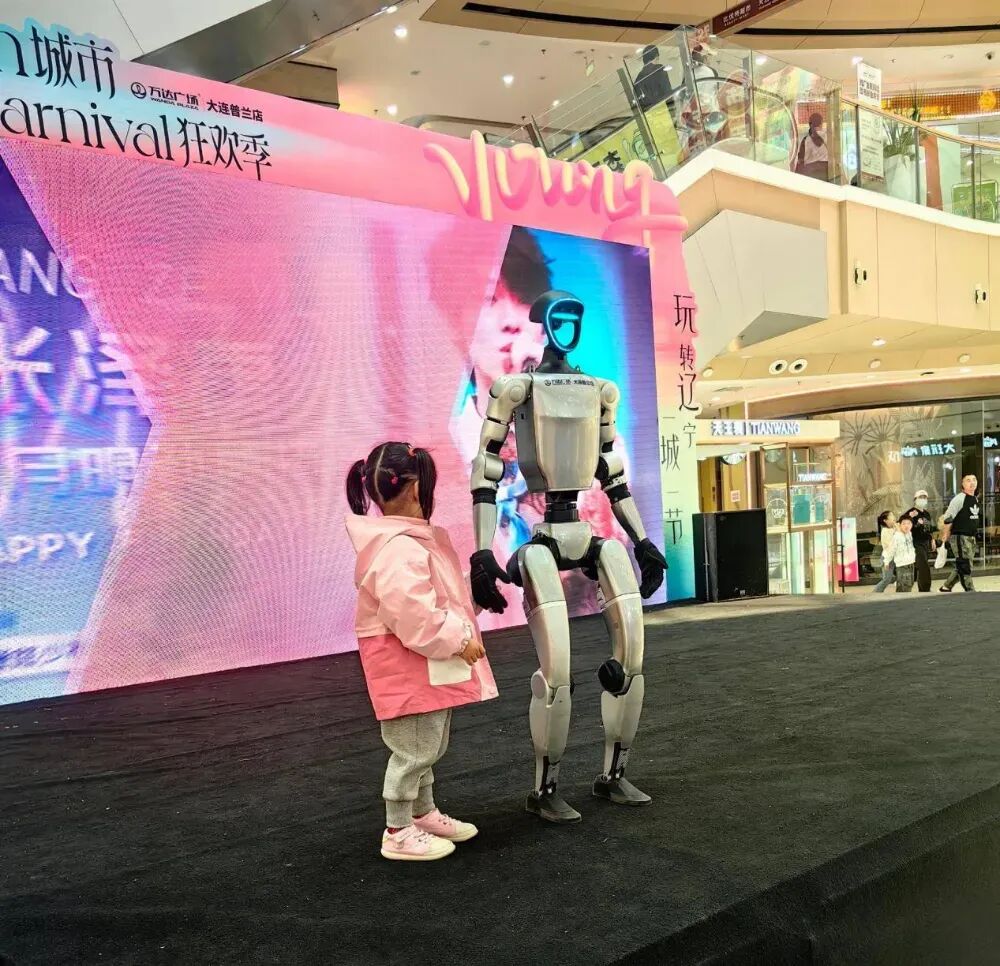
The problem is that the current robot rental market is no longer as hot as it was at the beginning of last year, and it's getting harder to rent out robots.
For example, for a robot worth 100,000 - 200,000 yuan, if it can be rented out for 10 to 15 days a month with a monthly rental fee of around 50,000 yuan, considering various maintenance, personnel, and marketing costs, it takes merchants several months to recoup their investment.
If we classify merchants, different merchants have different profit - making logics.
After the Spring Festival Gala in 2025, Huaqiangbei in Shenzhen quickly deployed the robot rental business based on its information advantage.
At the height of the popularity, the daily rental fee for robot rental stalls on the fifth floor of SEG Plaza in Huaqiangbei reached over 10,000 yuan, and there were continuous streams of people every day.
However, as the craze for robot performances subsided, the stalls in Huaqiangbei became deserted.
After careful review, we can find that Huaqiangbei made money not through technology but through information and time differences.
When robots were in short supply, top players quickly bought equipment through personal connections and then rented them to video content creators at a price of 10,000 - 30,000 yuan. They hyped up the business through short - term huge profits and attracted more people to enter the market with successful cases.
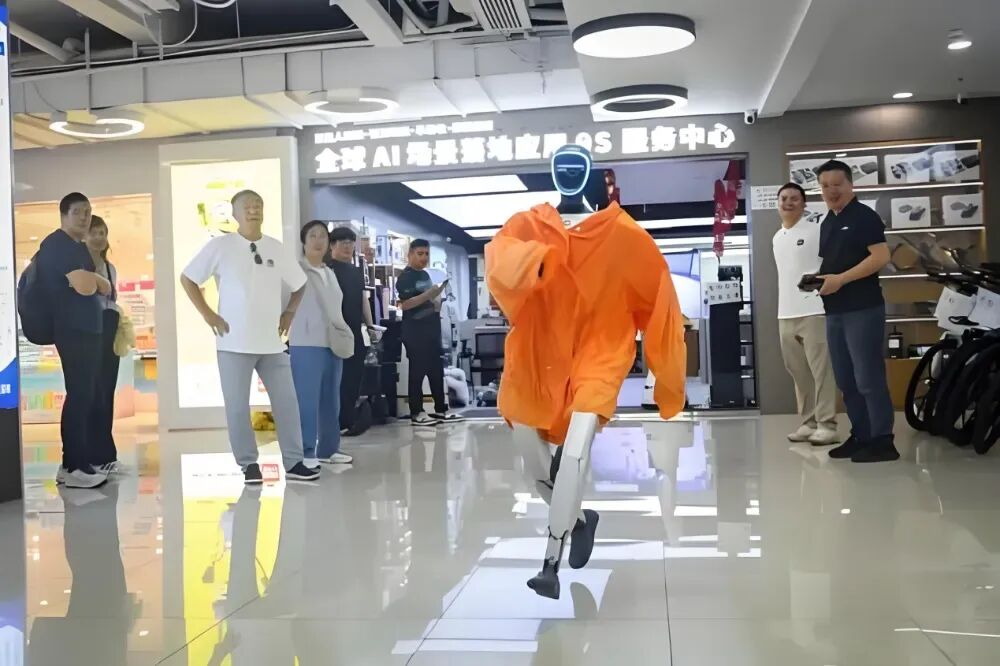
Only a very small number of extreme - style merchants dare to play this extreme game with large information gaps, large investment scales, and high risks of losses.
Subsequent robot rental companies were mostly attracted into the market by these "adventurers" and intended to do long - term business.
What they didn't expect was that renting out robots, seemingly high - end, actually involves a lot of hard work.
First of all, there are two cost black holes in the robot rental business:
First, the repurchase rate is low, and the advertising and marketing costs of rental platforms are difficult to achieve "compound interest."
Second, the operation and service costs are high.
Users may only rent one robot, but rental merchants must provide various services such as body cleaning, performance testing, pre - programming and debugging, and maintenance. They also need to arrange technical personnel to accompany each robot throughout the process. If the robot breaks down, the rental platform has to bear the repair cost.
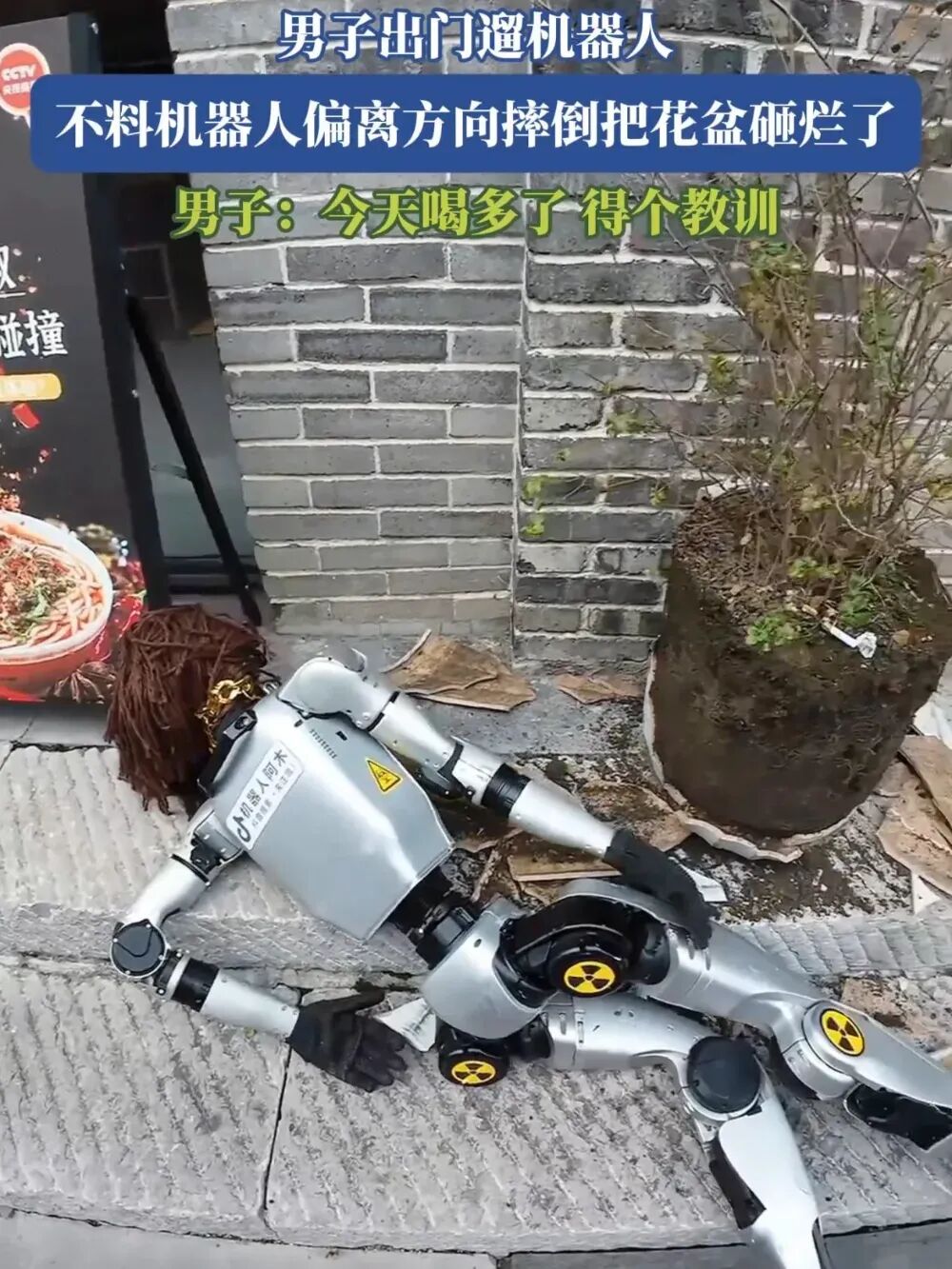
A robot that fell while walking
As the embodied robot industry develops, while information becomes more transparent, the operating costs of rental platforms have not decreased. Instead, many platforms have to perform more complex programming and debugging for customers' personalized needs.
Even to acquire customers, rental companies have to continuously buy traffic on short - video platforms. In the end, the gross profit from a single rental may not even cover the advertising cost.
In the end, many merchants can only earn a meager amount of hard - earned money from renting out a robot once.
Meanwhile, the curiosity and admiration of ordinary people for robots seem to have diminished.
Because more and more people have found that apart from performing, embodied robots can do very little.
Exhibition guidance, scenic - spot commentary, wedding introductions...
These scenarios seem diverse, but they all have one thing in common: isolated display.
Either being too close or having a high - EQ conversation may cause them to crash immediately.
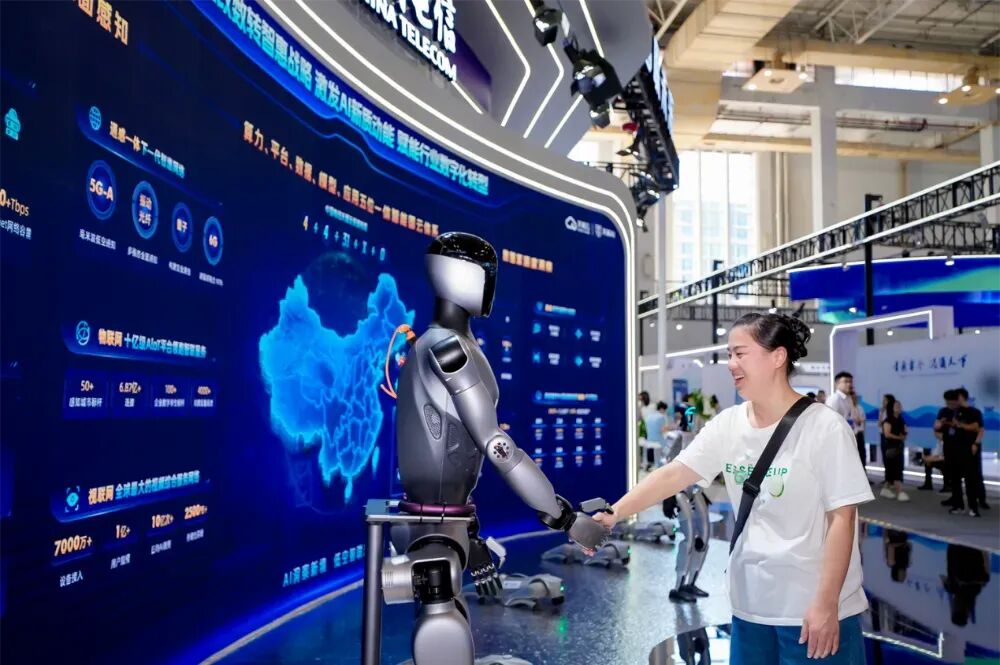
The public's scrutiny is becoming more rational, and many people no longer expect to be taken care of and accompanied by robots.
The more frequently robots appear, the lower the audience's sensitivity to them, and the thinner the merchants' cash flow.
Squeeze out the bubbles and understand them
The perceived coldness in the robot market this year is in contrast to the booming situation of the entire industry last year.
In 2025, there were 610 financing events in the Chinese robot field, with a total financing amount of over 57 billion yuan, nearly three times that of the same period in 2024.
As of April 2026 this year, the total disclosed financing scale in the domestic embodied intelligence field has reached 55.6 billion yuan, and it is expected to reach a multiple of that in 2025 by the end of the year.
This has made the valuation of China's robot industry full of imagination for a while and has also priced the "emotional value" too high.
Bubbles are both a catalyst for the robot industry and a touchstone for its business model.
In the early stage of industrial development, colorful bubbles can complete capital aggregation, talent attraction, and market education in a very short time.
This has enabled the robot industrial chain to quickly complete self - iteration and maturity at a very low time cost.
However, at the same time, bubbles are illusions.
They disguise the stories that capital likes to hear as general market demand and equate the public's short - term curiosity with long - term sustainable business operations.
At the beginning of last year, robots were novel toys that the public had never seen before. Their value was reflected in their scarcity and topicality. A robot that could carry bags and do grocery shopping for its owner was much more expensive than one that could only do yangge dances and recite tongue - twisters.
At this time, the rental fee was for the experience, and there was no upper limit to the price.
If merchants regard such prosperity as a business opportunity, it is difficult for them to have the last laugh.
At the beginning of this year, the well - known robot rental platform "Wanji Yizu" suddenly fell into a major public - opinion crisis due to issues such as lost - contact customer service, false advertising, and hidden fees.
This platform was supported by capital, and its model had attracted much market attention.
