Market value upgrade of the autonomous driving industry: From technological prowess to full-scenario applications, what kind of transformation is needed?
Uisee Technology successfully listed on the Hong Kong Stock Exchange, becoming a benchmark for full - scenario L4 autonomous driving listings. This breakthrough in the capital market has completely rewritten the industry's valuation criteria. In the past, the capital market was used to pricing companies based on technical parameters and road test mileage. Now, the investment logic has completely shifted to commercialization implementation capabilities, multi - scenario revenue volume, and cash - flow generation levels. The dividend of technological involution in a single track is fading. The full - domain L4 autonomous driving track covering Robobus, Robovan, Robotruck, and Robotaxi has opened up both growth certainty and valuation imagination space, and has become a core track with high allocation value in the primary market.
Technology narratives shed their bubbles
The valuation of the single Robotaxi model has reached its peak
After more than a decade of development in the domestic autonomous driving industry, the urban manned unmanned vehicle track was once the focus of capital attention. Leading players such as Baidu Apollo Go, Pony.ai, and WeRide have continuously increased their investment in urban open - road tests, continuously iterating on perception, decision - making, and control algorithms, and promoting the continuous expansion of the industry's technological boundaries.
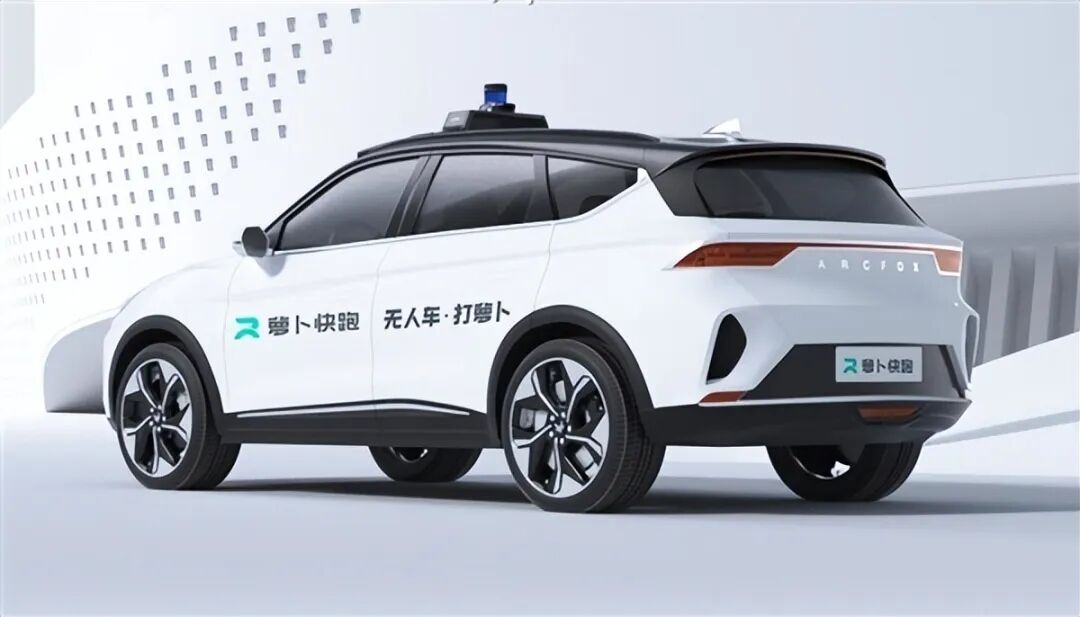
However, as a high - complexity open scenario, the commercialization process of Robotaxi faces objective challenges: the approval cycle for operating permissions on urban public roads is long, the road conditions are complex and changeable, and the requirements for safety redundancy are high, resulting in high operating costs and a longer than expected profit cycle per vehicle. Its business model is highly dependent on the large - scale operation in a single city, and variables such as passenger sources, road networks, and policies will all affect the stability of the profit model.
For this reason, the valuation logic of the capital market for Robotaxi is changing - from simply chasing technological breakthroughs and scale expansion to paying more attention to the quality and efficiency of commercialization implementation. Although the single Robotaxi story still has long - term imagination space, the short - term revenue structure is relatively concentrated and the cash - flow return cycle is long, which has prompted the market to re - examine the rationality of its valuation. More and more investors realize that while deeply cultivating the Robotaxi track, expanding multi - scenario layouts may be a more stable value - growth path.
Full - scenario L4 becomes the core valuation line
Multi - category unmanned vehicles open up incremental space
Breaking free from the shackles of a single track, relying on a unified technical base, and simultaneously deploying multi - category vehicle models such as Robobus, Robovan, Robotruck, unmanned carriers in closed parks, and Robotaxi, the full - scenario L4 autonomous driving that covers closed, semi - closed, and open full - domain road conditions has become the core logic for the industry's valuation leap. The same self - developed L4 system can be reused across vehicle models and scenarios, significantly reducing R & D costs. Multiple businesses generate revenue simultaneously, and the ability to resist cycles and policy risks is significantly stronger. The superposition of multiple growth curves continuously raises the upper limit of the enterprise's value.
1. Robobus: A rigid demand for urban micro - circulation. MobilityGo's full - scenario implementation sets a benchmark
Robobus is mainly used for park shuttles, urban micro - circulation, scenic - area commuting, and fixed - route passenger transportation in the suburbs. It belongs to a semi - closed and highly stable scenario with fixed routes, gentle vehicle speeds, concentrated passenger flows, and low accident risks. It is the manned track where L4 autonomous driving can achieve large - scale profitability the fastest.
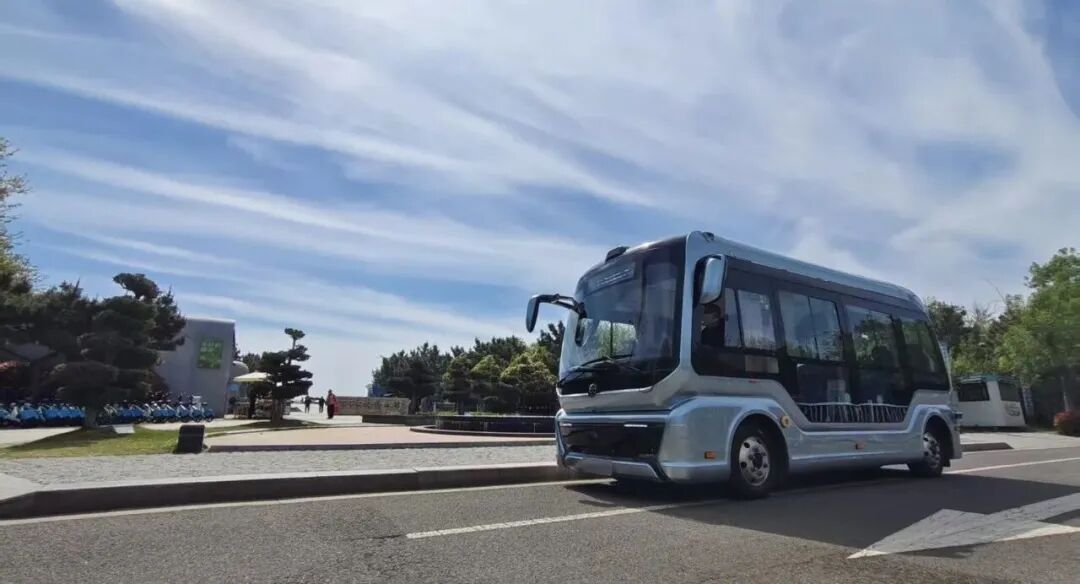
Among many players, MobilityGo has become an absolute benchmark in the Robobus track with its full - scenario implementation capabilities. Its commercialization cases cover diverse domestic scenarios and have successfully expanded overseas, verifying the full - domain adaptability and commercial value of L4 buses.
Large - scale operation on domestic urban open roads: MobilityGo's self - developed MOGOBUS B2 is the first pre - installed mass - produced L4 autonomous driving bus in China to complete the announcement and filing with the Ministry of Industry and Information Technology. It has been in regular operation on open roads in more than 20 cities such as Beijing Yizhuang, Shanghai Jiading, and Tianjin Xiqing. It has accumulated over 5 million kilometers of safe driving and served over 200,000 passengers.
Breakthrough in cross - border medical special scenarios: In March 2026, MobilityGo opened the first cross - border autonomous driving micro - circulation line for medical treatment in China, the "Qianwan Medical Line", connecting Hengqin Port, the First Affiliated Hospital of Guangzhou Medical University, Hengqin Hospital, and surrounding communities. The whole journey is 7 kilometers, with a bus every 30 minutes and full - week operation, opening up the "last mile" of cross - border medical treatment and becoming a benchmark case for smart transportation in the Greater Bay Area.
High - level breakthrough in overseas markets: In October 2025, MobilityGo won the sole bid for Singapore's first official L4 - level RoboBus project. The MOGOBUS B4 model meets international safety standards and will be put into operation on bus routes in core areas such as Marina Bay Cruise Centre and Gardens by the Bay in the second half of 2026. It is planned to be integrated into Singapore's public transportation system within three years, marking that China's L4 bus technology has been recognized by the world's most demanding market.
Commercial verification in major events: The MOGOBUS B2 has successively served top - level events such as the Universiade, the World Internet Conference in Wuzhen, the F1 Shanghai Grand Prix, and the China International Consumer Products Expo. It has run stably in scenarios with dense passenger flows and complex road conditions, proving its reliability and commercial adaptability.
MobilityGo's full - scenario implementation of Robobus has constructed a complete expansion path of "closed park → urban micro - circulation → cross - border line → overseas bus". The stable government and enterprise procurement, short payment cycle, and strong predictability of revenue provide continuous cash flow for the enterprise and become a solid foundation for supporting the valuation.
2. Robovan: The golden track for last - mile logistics. Neolix's full - scenario implementation leads the world
Robovan focuses on scenarios such as same - city delivery, park freight, community supermarket replenishment, and urban sanitation clearance. It is the commercial unmanned vehicle category with the widest implementation scope and the largest market space. The scenario fragmentation degree is high, the operation threshold is low, and there are few implementation restrictions. It is not restricted by the strict control of urban main roads. 24 - hour continuous operation can extremely compress labor costs, and its commercial monetization efficiency ranks among the top in the whole track.
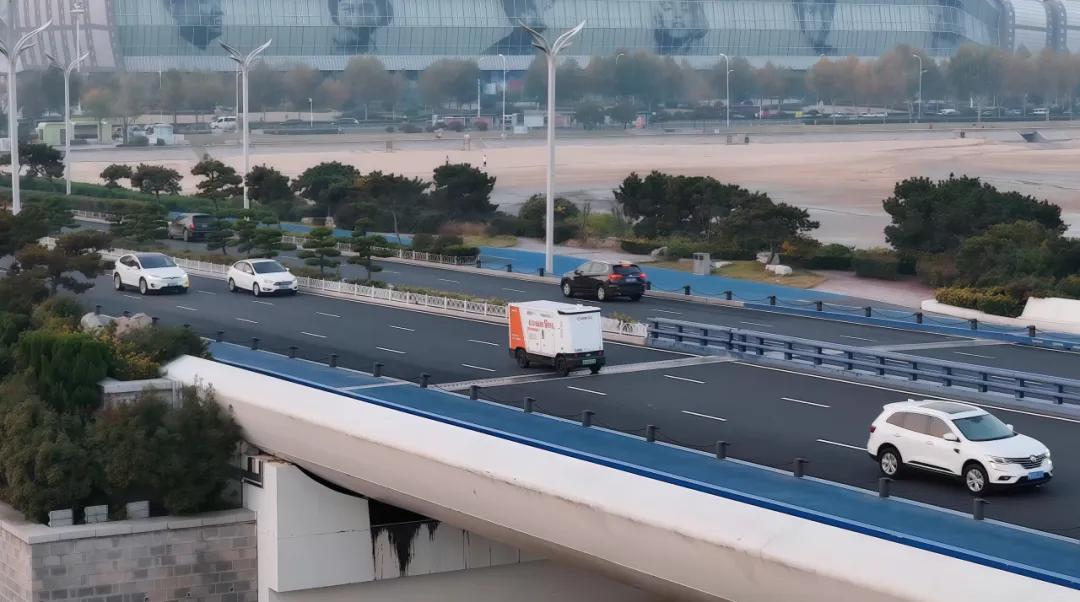
Neolix, as a global leader in unmanned delivery, has constructed an unmanned delivery network covering domestic urban and rural areas and many overseas countries with the full - scenario implementation + RaaS (Robovan - as - a - Service) model, verifying the large - scale profitability potential of Robovan.
Benchmark for large - scale urban instant delivery: Since June 2025, Neolix has deployed over 1,200 unmanned vehicles in Qingdao, building the world's largest single - city unmanned vehicle fleet. It has cooperated with Didi Delivery to carry out instant delivery, with a maximum of over 6,500 orders per day. It has provided over 1.5 million delivery services in total and traveled over 40 million kilometers. The fleet covers communities, business districts, and office buildings, providing delivery services for express delivery, fresh produce, catering, and department store products.
Deep implementation in industrial belts for B2B: In the Nantong home textile industrial belt, over 260 unmanned vehicles have been deployed, covering 3,500 service points. They transport over 100,000 pieces of home textile products per day, serving hundreds of factories and e - commerce enterprises, and opening up the whole - link unmanned operation from "factory - warehouse - store" in the industrial belt. At the same time, it serves express delivery giants such as SF Express, JD.com, and China Post, becoming a core supplier of unmanned vehicles for domestic express delivery and logistics.
Full - scenario coverage in urban and rural areas: The product matrix covers X1 (last 100 - meter delivery), X3 (delivery on narrow urban roads), X6 (large - load urban distribution), and H12 (regional distribution). It is suitable for all scenarios such as communities, parks, scenic areas, and rural roads. It has been implemented in cities such as Linyi and Weifang, and has also deployed extended scenarios such as sanitation and security inspections, with non - express scenarios accounting for over 50%.
Accelerated global expansion: Since the end of 2025, the RaaS model has expanded overseas, covering countries such as the United Arab Emirates, South Korea, Singapore, and Portugal. It is suitable for overseas community, business district, and logistics park scenarios, replicating the successful domestic experience.
Neolix's full - scenario implementation has formed a diversified revenue structure of "instant retail + industrial belt logistics + urban and rural delivery + overseas expansion". The RaaS model lowers the threshold for customers to use, with payment by order/mileage. It is asset - light and expands quickly, and can achieve multiple - fold revenue growth in the short term. It is a high - elasticity growth segment favored by the primary market.
3. Robotruck: A hardcore track for heavy - load logistics. Kalmar Dynamics' full - scenario implementation achieves profitability
Robotruck covers three core directions: port container trucks, heavy - load transportation in mining areas, and inter - city trunk - line freight. It belongs to a heavy - asset and high - value commercial scenario. The labor cost in the freight industry is high, the shortage of drivers continues to expand, and the safety management and control of long - distance heavy - load transportation is difficult. The implementation of autonomous driving can directly achieve cost reduction, efficiency improvement, and safety upgrading, and the industry has a strong willingness to replace.
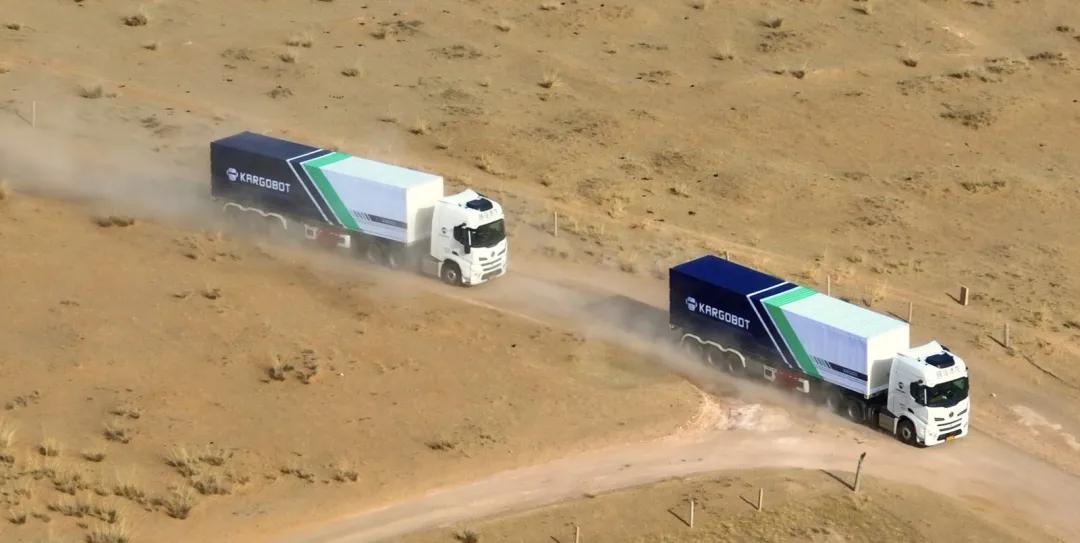
Kalmar Dynamics, as a benchmark for autonomous driving in trunk - line logistics, has achieved full - scenario commercialization implementation in mining areas, ports, and inter - city trunk lines with the hybrid intelligent formation mode, and has taken the lead in achieving profitability per vehicle, verifying the profit model and expansion potential of Robotruck.
Full - process unmanned operation in mining areas: The world's largest L4 unmanned heavy - truck fleet (about