From rule-maker to the challenged, is VISA's "toll road" empire still stable?
Dig out your bank card. Can you always see the blue-and-white "VISA" logo in the bottom right corner on the back or the bottom left corner on the front?
This logo is so common that it is almost ignored.
However, behind this unassuming logo lies a "payment empire" that processes an average of 900 million transactions per day and earns $20.1 billion annually.
VISA doesn't issue cards, provide loans, or take risks. It only takes a tiny "toll" when each transaction is completed.
In this way, it has quietly built a market value of over $600 billion and defined the rules of modern electronic payment.
However, after more than half a century of smooth operation, this "toll road" has encountered new challenges.
And it all started on that morning in 1958.
1
Origin: Born in Chaos and Order
In September 1958, in Fresno, California, USA, an unstamped envelope quietly appeared in the mailboxes of about 60,000 households.
After opening it, people found a credit card with a limit of $300 inside. There was no need to apply or be reviewed. They could start spending immediately after signing.
This financial experiment called the "Fresno Drop" was the work of local banker Joseph Williams.
At that time, American middle-class families mainly relied on cash, checks, or the accounting books of local shops for consumption. For large payments, they had to negotiate with the bank with difficulty. The whole process was not only cumbersome and slow but also full of restrictions on application and usage rules.
Williams noticed that middle-class families after World War II were not unwilling to consume; they just found it too troublesome to spend money.
He believed that as long as a simple, decent, and immediately available credit could be provided, people would consume more frequently and without burden - even be willing to consume in advance.
The method to verify this crazy conjecture was very simple: directly stuff 60,000 unsecured credit cards into the mailboxes of each family like flyers.
However, the result was disastrous.
More than 20% of cardholders didn't intend to pay back at all. Crimes such as forged signatures, gang fraud, and black - market reselling of credit cards were endless.
These situations directly led to a huge loss of over $8 million for the project that year. The planner, Williams, was immediately fired by the bank.
However, in the midst of the chaos, American financial institutions noticed a truth hidden by the disorder: despite the rampant fraud, people were still using these cards frequently.
They realized that people were willing to spend money. The real problem was not the lack of demand but the lack of rules.
So, relevant financial institutions began to take remedial measures. They tightened the card - issuing standards on one hand and reconstructed the transaction process on the other.
By 1961, this dying project miraculously turned a profit.
As the whole model was quickly established, the financial management institution authorized it to banks across the country and formed a loose alliance called "BankAmericard".
However, the seeds of disorder germinated again.
Due to the overly rapid expansion of the alliance, a unified technical standard had not been formed. Local banks acted independently, and even the most basic risk defense - the customer blacklist - could not be shared.
The result was a continuous occurrence of "criminal arbitrage" across the country.
For example, a criminal who succeeded in defrauding in California could still use their credit card smoothly in New York, and the bank had no control over them.
Without a doubt, banks began to have a large number of bad debts.
This newly formed national credit card network was on the verge of suffocation again before it could taste the benefits of scale.
It can be said that this out - of - control experiment starting from the mailbox verified the huge demand for "contactless payment" but also exposed the fundamental problem under wild growth: without rules, no matter how good the dream is, it cannot be realized.
How to deal with various bad debts soon became a headache for major banks across the United States.
In 1968, Dee Hock, an ordinary clerk from a small bank in Seattle, was assigned the task of cleaning up the "bad debts" by the bank.
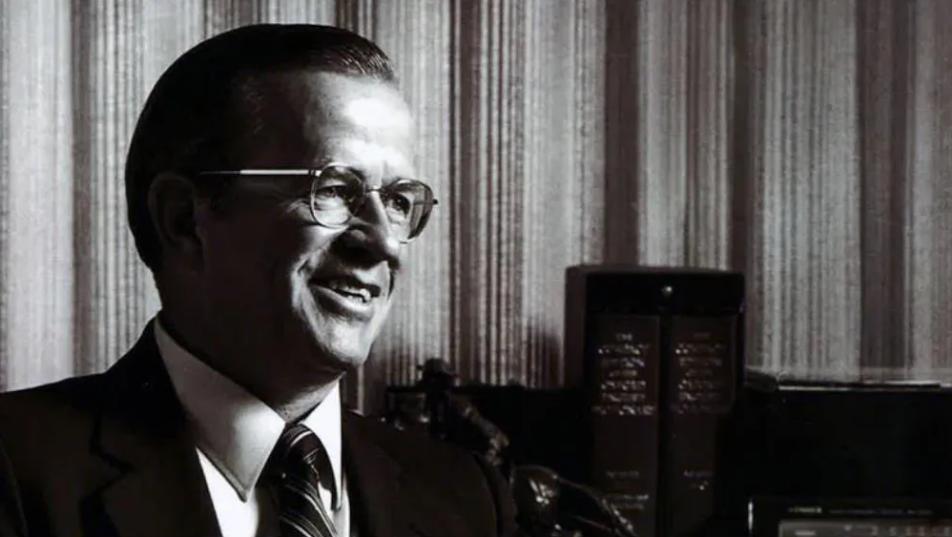
In the financial industry full of elites, in his 20s, Hock only had an associate degree and was an ordinary bank clerk.
However, it was when sorting out this mess that he discovered a fundamental contradiction: every bank was blaming the system for malfunctioning, but none was willing to give up its control.
Hock realized that the fundamental problem of the chaotic credit card system was not technology or poor management but a structural deadlock.
That is, every bank wanted to have the final say on this payment "highway", but no one had the ability to dredge and manage the whole pipeline on its own.
2
Model: The King of Channels
The turning point came at a subsequent heated "BankAmericard" alliance meeting.
As a representative, Hock put forward a bold suggestion: "Instead of complaining here, let's re - establish the rules ourselves."
Unexpectedly, this proposal was adopted.
Based on the principle of "whoever raises the problem solves it", Hock immediately presented a well - prepared plan.
His idea was actually very simple. It was to establish a new organization jointly owned by all member banks on the basis of the alliance, that is, a new model of "no boss, only rules".
This new organization doesn't issue bank cards, doesn't compete with banks for customers, and doesn't even take risks. The only thing it has to do is to establish unified technical standards, risk control, and settlement rules, just like a set of "traffic rules" that all banks must follow.
This means that although these banks are competitors in the market, on this payment "highway", everyone has to drive according to the same "traffic rules".
In 1970, a new organization, "National BankAmericard Inc.", was born.
At the founding meeting, in order to solve the contradiction between competition and cooperation among banks, Hock, as the convener, put forward his management concept and named it "chaordic".
This word comes from the combination of Chaos and Order, meaning a symbiotic entity of chaos and order.
In Hock's view, the truly vital systems in nature are not controlled by a single center but "grow" by themselves through the interaction of members. Just like an ant colony, without a queen ant's command, it can cooperate efficiently.
The core of the "chaordic" theory lies in this: The best systems are not strictly controlled but grow naturally through the natural collision of order and chaos under certain rules.
In other words, The new organization doesn't rely on a single center to give orders but relies on members to follow common rules and cooperate autonomously, thus becoming more flexible and resilient.
In 1976, this organization got the name that would later be used globally: VISA.
This word itself has no actual meaning but was chosen because it is easy to pronounce in most languages. Moreover, from its very beginning, VISA has anchored a fundamental principle: not to be a bank but to be a pipeline.
Specifically, VISA not only doesn't issue cards, doesn't absorb deposits, but also doesn't have any direct lending relationship with customers. It only acts as a neutral channel for the flow of funds and information between banks.
This pure intermediary role of "not issuing cards, not providing loans, and not taking credit risks" is both the toughest armor for VISA to resist the cyclical storms in the future and, because of its extreme purity, will face the fundamental challenge of being bypassed by new technologies in the future.
So, how does a "pipeline" that doesn't take risks make a profit?
3
Hidden Concerns: Loosening Barriers
When it comes to how VISA makes money, the secret lies behind every seemingly simple card - swiping transaction.
Take a cup of coffee worth $100 as an example. When you swipe your card on a POS machine, the transaction is almost completed instantly.
However, the problem is that your money doesn't immediately enter the coffee shop's account. Instead, it first goes through your card - issuing bank, then through VISA's network, then through the acquiring institution, and finally reaches the merchant.
Therefore, the coffee shop doesn't actually receive the $100 you paid in the end but about $97 to $98. The few dollars that "evaporate" in the middle are called "merchant discount fees" in the industry.
In each such transaction, this $2 - 3 "merchant discount fee" is basically distributed among the three parties in the chain according to a predetermined ratio: the card - issuing bank accounts for about 75%, the acquiring institution about 18%, and VISA fixes about 7%.
For that $100 cup of coffee, VISA earns about $0.3.
It may seem like a small amount, but you should know that VISA processed a total of 257.5 billion transactions in the fiscal year 2025.
This means that with this seemingly meager single - transaction income, it achieved a net income of $40 billion and a net profit of $20.1 billion in the fiscal year 2025. Its net profit margin has been maintained above 50% for a long time, about twice that of Apple Inc. (about 26.9%) in the same period.
More importantly, this money is earned very easily.
Since the card - issuing bank takes the credit risk of cardholders and the acquiring bank takes the business risk of merchants, VISA stays out of the matter.
VISA doesn't need to care whether you are buying coffee or paying off gambling debts, nor does it need to care whether that coffee shop will go bankrupt next month. Its task is only to verify whether the transaction is compliant in milliseconds and then take its cut and leave.
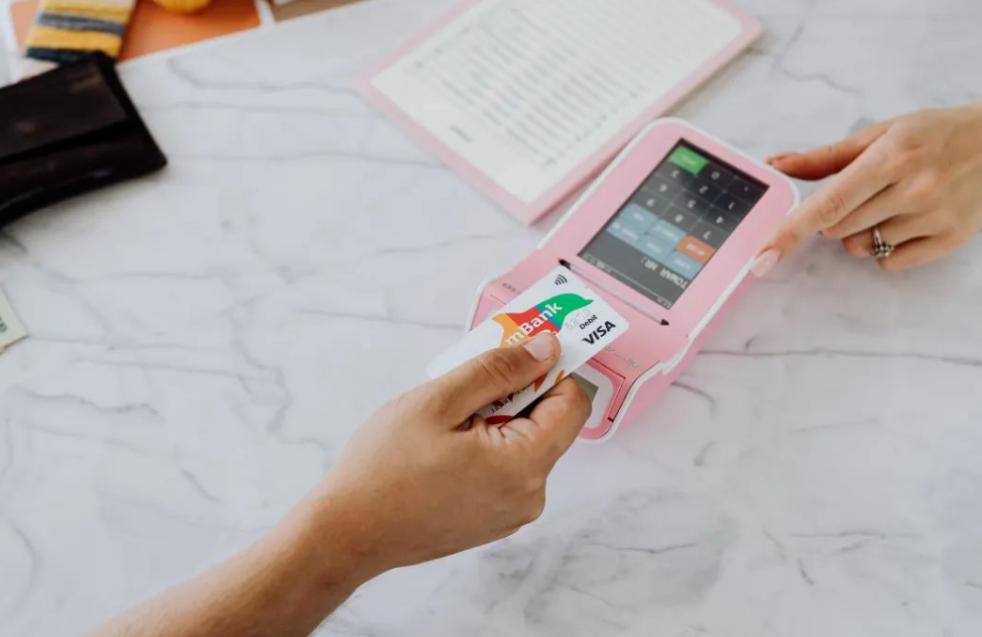
Because of this purity, this business has amazing scalability. VISA has been able to devote all its energy to the construction and expansion of the "channel" itself. Eventually, like water, electricity, and gas, it has penetrated into the capillaries of global business and become an ubiquitous but often ignored basic payment infrastructure.
Most of the time, users choose VISA not because of preference but because they have no other choice.
In fact, the high stickiness between VISA and the payment system benefits from a "flywheel effect" that has been running for decades: the more merchants are connected, the more cardholders rely on it; the more cardholders there are, the more merchants dare not not connect.
The interdependent and mutually reinforcing power between merchants and cardholders has also pushed VISA into a self - reinforcing growth loop.
This pure pipeline model of "not issuing cards, not providing loans, and not taking risks" forms an extremely stable closed - loop. It is this closed - loop that has become the foundation for VISA to remain standing in the face of industry storms time and time again.
The global financial crisis in 2008 also became the best test of its "three - no" model.
At that time, when institutions such as Lehman Brothers collapsed one after another due to their "toxic" assets, causing the credit system to collapse, VISA remained unscathed because of its pure neutrality.
Even in the same year when market confidence hit rock bottom, VISA still went public against the trend with this clear model, setting the largest IPO in US history.
This also reveals a profound law: When the systematic trust collapses, the party that doesn't participate in speculation but only provides transparent infrastructure becomes the most reliable safe haven in the storm.
Based on this trust, VISA has continued to expand after going public, with its tentacles reaching all over the world.
As of 2025, VISA has covered more than 150 million merchants globally, connected nearly 15,000 financial institutions, and together with Mastercard, controls more than 80% of the global bank card market share.
However, just when this payment highway is bustling with traffic and seems indestructible, new challengers have quietly emerged.
They don't want to "rebuild" a road but try to create a way of travel that doesn't need this road.
4
Subversion: Double Impact
The new competitors come from a type of digital currency called "stablecoins".
What exactly are stablecoins?
In essence, you can think of it as a "digital US dollar" running on the Internet blockchain. It is pegged to the real US dollar at a 1:1 ratio. In theory, you can exchange 1 stablecoin for 1 US dollar in cash at any time.
Its core design allows it to completely bypass the traditional currency exchange system, thus showing a simple and "brutal" advantage: It supports instant global transfers with almost zero cost and completely bypasses the old network of banks and credit card organizations.
To put it more simply, if VISA has built an efficient global toll road, then what stablecoins achieve is a "value instant transfer" that almost ignores geographical and financial boundaries.
The transformation brought about by the efficiency and cost of this "transfer" is extremely shocking.
For example, for a $100 cross - border remittance, it takes several days and dozens of dollars in fees through traditional wire transfer; using the VISA network, merchants need to be deducted 1.5% to 3.5% of the fee; while using stablecoins, the arrival time is less than a minute, and the cost can be less than 1 cent.
What's even more terrifying is that for VISA, the emergence of stablecoins not only represents a cheaper payment cost but also challenges the very logic of VISA's existence.
Because the real threat of stablecoins doesn't lie in being "cheaper" but in making the entire toll - collection structure unnecessary.
In the stablecoin transaction model, the core link of the card - issuing bank, card network, and acquiring bank that has been operating for decades is completely bypassed.
The money directly "jumps" from the buyer's digital wallet to the seller's digital wallet. There is no "middleman making a profit", so there is naturally no chance to collect any "toll".
This is not just about "saving money"; it makes VISA's carefully maintained toll road suddenly become irrelevant.
In 2025, American companies paid more than $200 billion in credit card fees.
Facing such a huge cost burden and the direct pursuit of profit, merchants will naturally prefer stablecoin settlement.
As of the end of 2025, the global stablecoin market value has approached $