The old and new kings of global social networking
The revenue gap between ByteDance and Meta is very narrow. They not only operate in the same main battlefield but also possess similar capabilities and temperaments. Their competition shows a "mirror-image" growth characteristic, where they expose each other's weaknesses and drive each other's evolution.
ByteDance and Meta
As an unlisted tech giant, how much money ByteDance (hereinafter referred to as "ByteDance") earns each year has always attracted much attention.
Previously, Bloomberg reported that ByteDance's internal revenue target for 2025 is approximately $186 billion (equivalent to about 1.27 trillion RMB). According to the estimation of the US research institution Sacra, ByteDance's revenue in 2025 will reach $198.3 billion (equivalent to about 1.35 trillion RMB). In terms of profit, it surpassed Alibaba and Tencent in 2024.
ByteDance is still growing rapidly, especially overseas. Media reports indicate that its overseas revenue increased by nearly 50% in 2025, far exceeding the domestic growth rate of about 20%. The proportion of overseas business revenue also rose from 25% in 2024 to over 30%.
In the field of AI, which is crucial for the future, ByteDance is also making significant efforts. It has made arrangements across the entire industrial chain, including models, applications, computing power, and hardware. As a new-generation "national-level" application, Doubao has over 340 million monthly active users, and its influence on the C-side far exceeds that of other competitors.
Looking back more than two years ago, in the article "Tencent vs. ByteDance: Six Years of Offensive and Defensive Struggles between Two Generations of Internet Giants", we reviewed the six-year business battle between ByteDance and Tencent. At that time, ByteDance had just surpassed Tencent in terms of revenue and profit. After years of entanglement, the boundaries between the two became clearer, and their relationship shifted from competition to a truce.
At that time, many people analyzed that after surpassing Tencent, ByteDance's main competitor would be Meta across the ocean.
Meta's revenue last year was $200.9 billion, and ByteDance is very close to it. The reason why they can be regarded as the strongest competitors for many years to come is not only that their scales are gradually approaching and their capabilities are comparable but also that they are almost in the same main battlefield.
As the global social media giant, Meta's core products include platforms such as Facebook, Instagram, and WhatsApp. Although ByteDance's cash cows, Douyin and TikTok, are not strong-relationship social software, in a broad sense, they are still social software: the connection between content and people is essentially the connection between people behind the content. With functions such as content interaction, relationship building, and instant communication, they form a unique "content social" ecosystem.
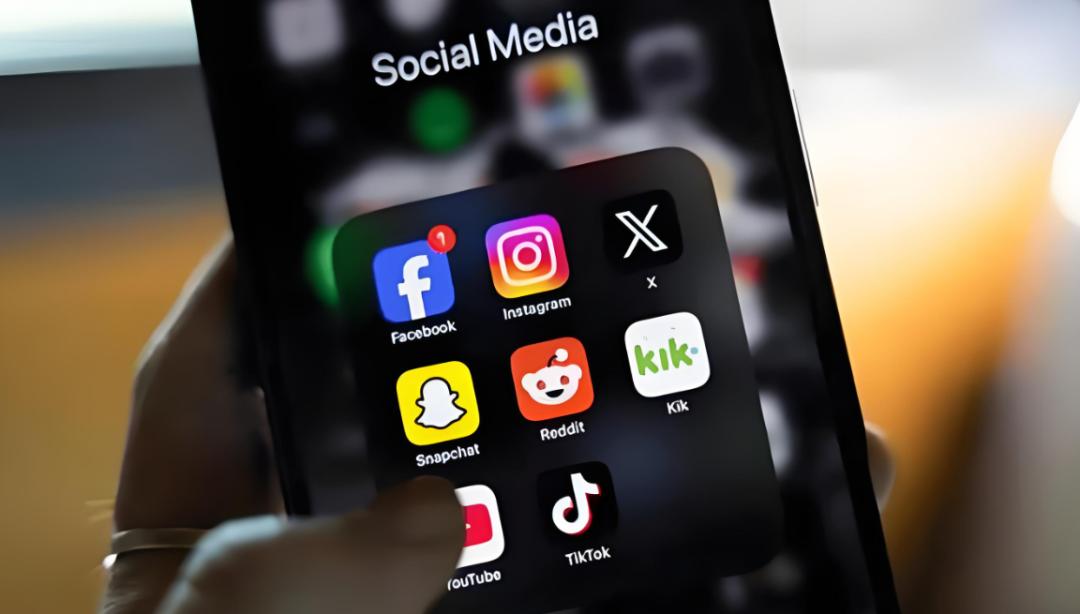
Both of their social products are immersive and high-frequency super apps. In simple terms, they are very time-consuming.
Before TikTok gained popularity, in the areas covered by Meta's social "suite", except for long - form video platforms like YouTube, almost no one could compete with Meta in terms of user time. ByteDance surpassed Tencent a few years ago to become the company with the largest share of total user time on the Chinese mobile side.
The two social giants have formed a strong siphon effect on users' time in the East and the West respectively.
With the rise of TikTok, Meta felt an unprecedented threat and even launched short - video applications like Lasso and Reels, which are imitations of TikTok, to counter it.
The competition for users' attention directly determines their respective revenues.
In Meta's revenue of over $200 billion, advertising revenue accounts for as high as 97%, which is its absolute core revenue source. It is predicted that Meta will surpass Google to become the world's largest digital advertising company this year, finally reaching the top of the global advertising industry after more than 20 years.
Google's advertising revenue mainly comes from Google Search and the long - form video platform YouTube, with a growth rate of 14% last year, while Meta's growth rate exceeded 20%.
In contrast, as a younger platform, TikTok has a stronger growth momentum. Multiple institutions estimate that TikTok's advertising revenue exceeded $30 billion in 2025. Coupled with Douyin's advertising revenue of 420 billion RMB in the Chinese market, ByteDance's advertising revenue is also close to $100 billion.
In addition to advertising, e - commerce is another important part of ByteDance's business. In 2025, the global GMV of TikTok Shop was close to $100 billion, almost doubling compared to the previous year.
Besides having almost the same revenue sources currently, the two companies are often compared because they have similar temperaments.
Their founders, Mark Zuckerberg and Zhang Yiming, are both born in the 1980s, with only one - year age difference. They both have extremely rational personalities.
Zuckerberg is so rational that he is even regarded as a "robot". He believes that people are like 0s and 1s in a computer, and all activities can be quantified. Zhang Yiming also trusts data and logical reasoning. He once adjusted himself like taming an algorithm, dividing his day into small segments and precisely completing each plan. A colleague said, "He really works like a machine."

Both of them have built an organizational system that emphasizes data - driven decision - making and extreme pursuit of growth. They believe in the same strategic aesthetic of violence: in a certain track, use far more resources than competitors and quickly build barriers through a "saturation attack" to achieve a miraculous breakthrough.
This is called "achieving miracles with great efforts" at ByteDance. Meta and Zuckerberg also have slogans and expressions such as "move fast and break things" and "it's better to over - invest than to fall behind". They have implemented this strategy in tracks such as short - video, hardware, and AI.
However, even though the two companies can be called "two giants" and are very similar, there are still significant differences in their development logics, and they even form a deep complementarity.
ByteDance, which started from information distribution, learned from Meta to strengthen social relationship chains and expand text - and - image content, and borrowed Meta's mature advertising commercialization system. Meta, which started from acquaintance - based social networking, imitated ByteDance to focus on short - video, improved the algorithm recommendation logic, and launched Edits, similar to CapCut (ByteDance's overseas short - video editing application), to lower the threshold for video production.
This "mirror - image" growth is the most interesting part of the business competition and makes their competition full of more highlights.
Role Model and Rival
If we look at a longer time frame, the competition between ByteDance and Meta can be roughly divided into three stages.
The first stage was before 2017. During this stage, ByteDance was in the strategic learning period and was not really in competition with Meta (which was called Facebook at that time). It was more of an imitation of Facebook.
In early media interviews, Zhang Yiming repeatedly expressed his admiration for Facebook.
Since the launch of Toutiao, ByteDance has "stood on the shoulders of giants" and borrowed two powerful tools developed by Facebook over the years.
Firstly, making growth the primary goal of the company. Although concepts like "growth" and "monthly active users" are now very common and even overused, they were not given a high strategic position before until Facebook established them as the key indicators to guide the company's development.
Around 2007, when Facebook's user base reached 90 million, its growth stagnated, and many people doubted whether it could break through 100 million users.
At that time, Chamath Palihapitiya, the vice - president of Facebook, proposed a plan: a high - energy team with a high degree of freedom, whose task was to focus on user acquisition and retention.
This team, like a special forces unit, was the growth team. Their task was to improve Facebook's "North Star metric" (i.e., the primary key indicator): monthly active users.
The North Star metric is like a baton for an organization. Choosing the right one can unite the entire organization to achieve the goal, while choosing the wrong one will lead to the opposite result.
Facebook's growth team was data - driven. Through data collection at key points and data analysis, combined with website optimization, paid advertising, A/B testing, and operational promotion, they achieved precise growth optimization.
The goals they set were quite aggressive, and they usually achieved 60% - 70% by the end of the year. If the completion rate exceeded 80%, it meant the goals were set too low.
ByteDance inherited Facebook's concept of "growth first" but took "daily active users" and "usage time" as key indicators, and all growth strategies revolved around these indicators.
Zhang Yiming once explained this:
"Facebook has a social relationship chain, and users continue to use it because they don't want to lose contact with their friends, so its MAU is naturally stable. But we don't have a native social relationship chain, and we must rely on content attraction to maintain user activity. Usage time and DAU are the foundation of our survival."
In the early days of ByteDance, it did not divide into business units by business lines. Instead, it separated the user growth department and made it one of the three core departments along with the technology department and the commercialization department.
The user growth department was responsible for formulating growth strategies for all products on the platform, which also laid the foundation for the rise of Douyin.
Secondly, in - feed advertising.
Facebook first launched the news feed in 2006, which centralized the dynamic content posted by friends and the public - domain content posted by influencers, celebrities, and media on the homepage. In terms of product form, it was more like Weibo, but Weibo did not have the acquaintance - based social network like Facebook and WeChat.
The news feed is now a standard feature of all social software, but it was a huge innovation 20 years ago.
However, Facebook waited for a full six years until 2012 to embed advertisements in the news feed and start large - scale in - feed advertising monetization.
The reason for the long wait was that in the PC era, Zuckerberg had some attachments to the newly - established Facebook and thought that placing advertisements in the collection of friends' dynamic content would affect the user experience. So, Facebook's advertisements were concentrated on the right sidebar of the page.
But in the mobile era, the screen size was much smaller compared to the PC, and the right sidebar was squeezed out. Coupled with Facebook's slow transformation on the mobile side, new players like Snapchat, Instagram, and WhatsApp emerged on the mobile side, which made the newly - listed Facebook face great doubts and its stock price plummeted.
So, Zuckerberg gave up his stubbornness and started to make money with in - feed advertising.
This directly led to an explosion in Facebook's profitability, and in - feed advertising began to change the direction of the entire advertising industry.
Facebook has proven that mobile in - feed advertising is a highly profitable business. From the very beginning, ByteDance did not struggle between advertising and user experience. It regarded advertisements as "valuable information" and used the personalized recommendation algorithm to extend this logic from the "social graph connecting people" to the "interest graph connecting content and people".
In 2013, when the daily active users of Toutiao were less than 2 million, Zhang Yiming invited Zhang Lidong to form an advertising business team and plan the construction of the in - feed advertising system. After the rise of Douyin, ByteDance replicated the in - feed advertising ecosystem to Douyin.
As ByteDance launched more products, the OceanEngine, which integrates the entire - link in - feed advertising resources, was launched and became the core pillar of ByteDance's commercialization.
When Facebook used in - feed advertising to challenge Google, the search advertising giant, ByteDance was in a battle with Baidu and Tencent. In 2016, ByteDance's advertising revenue was close to 10 billion RMB, about 50 billion RMB in 2018, and exceeded the advertising revenues of Baidu and Tencent in 2019.
In addition to the above two aspects, in terms of organizational management, such as organizational flattening, talent recruitment, internal information circulation, maintaining the entrepreneurial culture, and increasing talent density, we can see the influence of technology giants like Facebook, Google, Amazon, and Netflix.
ByteDance aimed to be a global technology company from its establishment. In 2015, it launched the overseas version of Toutiao, TopBuzz, in overseas markets such as North America and Brazil. Perhaps while learning from Facebook, ByteDance had already regarded it as a rival in the global market.
What really brought them into direct competition was TikTok.
From Watching to Offensive and Defensive
From 2017 to 2019, it can be regarded as the strategic evaluation period of Facebook towards TikTok.
The rise of TikTok began when ByteDance spent $1 billion to acquire Musical.ly, a leading music short - video platform in North America. Musical.ly was later merged with TikTok, which was self - developed by ByteDance, and the name TikTok was retained.
Previously, Facebook and Kuaishou also tried to acquire Musical.ly and even started negotiations earlier than ByteDance. One person was very important for ByteDance to finally acquire it - Fu Sheng, the founder of Cheetah Mobile, who was an angel investor in Musical.ly and had the right of veto.
Fu Sheng put forward many conditions, such as buying News Republic, an information platform under Cheetah Mobile, and Live.me, a live - streaming platform, and Zhang Yiming agreed to all of them. This shows ByteDance's determination and courage in expanding its short - video business overseas.
Compared with ByteDance, Facebook, which started from text - and - image - based social networking, did not show much attention to short - video.
Facebook conducted a survey on Musical.ly in 2016 and concluded that "it was not as popular as it seemed". At that time, Musical.ly had fallen into a growth bottleneck. More than 65% of its users were teenagers under 20, and it still seemed to be a niche product.
Facebook's underestimation of TikTok also stemmed from its confidence in sniping emerging competitors.
It spent $1 billion to buy Instagram in 2012 and $19 billion to acquire WhatsApp in 2014. For companies like Snapchat that refused Facebook's sky - high acquisition offers, they faced pixel - level replication, commonly known as "copying", and Snapchat's value was greatly reduced.
Under Facebook's strategic wait - and - see attitude, TikTok was injected with the core recommendation engine of Douyin. ByteDance's growth team focused on improving TikTok's various indicators like a laser beam, and TikTok's various creators grew wildly to form an ecosystem. TikTok demonstrated what real "explosive growth" was:
In January 2018, TikTok's global monthly active user number was 55 million. By the end of the year, this number increased to 270 million, and it exceeded 500 million after another year.
