Google's AI glasses are too late, and I can't see a reason to buy them.
If you watch the replay of Google I/O 2026 this year, you'll notice something quite strange: Sundar Pichai and Shahram Izadi spent a great deal of time in the keynote speech introducing the "Intelligent Eyewear" co - developed with Samsung, Gentle Monster, and Warby Parker, and attempted to define it as the most important hardware component of the Android XR strategy.
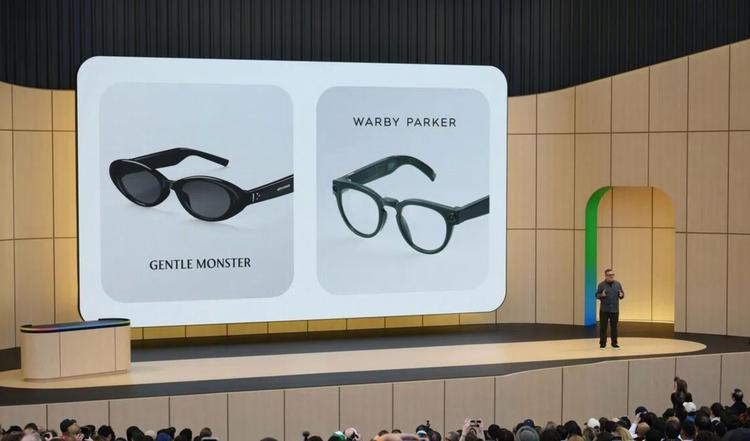
Image source: Internet
There are only two things I remember about these glasses: They are basic AI glasses without waveguide display function; they will be launched in autumn, and the specifications are completely unknown for now.
This is where Google's event was most embarrassing: In a situation where Meta has taken a two - year lead in the AI glasses market, and Rokid and Quark are squeezing from multiple aspects, what Google did on the main stage of I/O was just a concept preview, rather than an official product launch.
What's even more embarrassing is that when you put these glasses side by side with all other smart glasses on the market, it's hard to explain why consumers must buy them.
What exactly did Google present this time?
Before I start criticizing, I have to clarify that at I/O 2026, Google actually launched three Android XR glasses, namely:
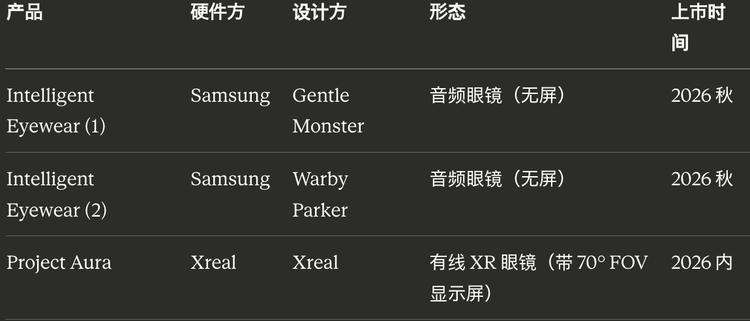
Image source: Unobjective Lab
The "Google AI glasses" we're discussing today are the top two in the table. We'll talk about Xreal another day. These two products use the same hardware platform, the same Android XR system, and the same Gemini brain. They just have two different designer looks: one is a Gentle Monster sunglasses style, and the other is a Warby Parker prescription glasses style.
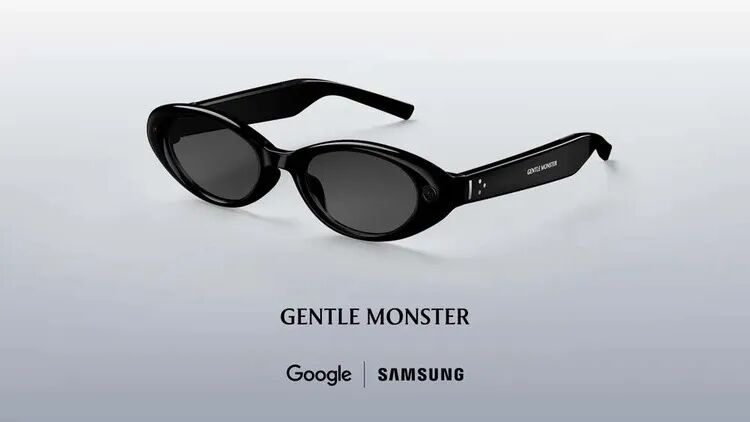
Image source: Google
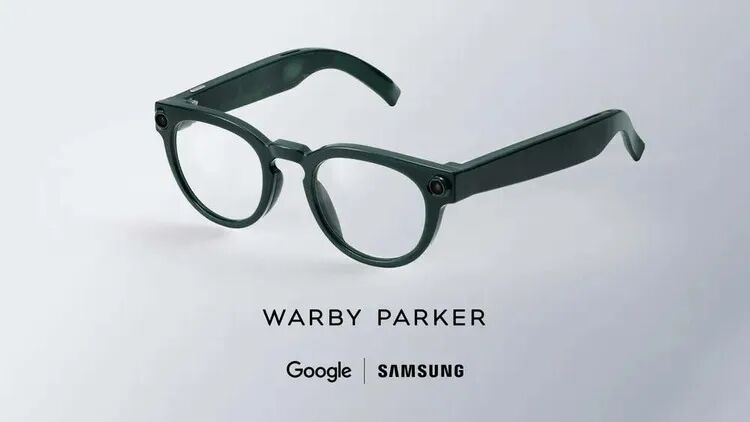
Image source: Google
According to the information provided by Google and Samsung, the things they can do include: real - time translation (claiming to match the speaker's tone), Google Maps navigation, message summarization, calendar event addition, nearby restaurant recommendation, taking photos and videos, and the Gemini voice assistant.
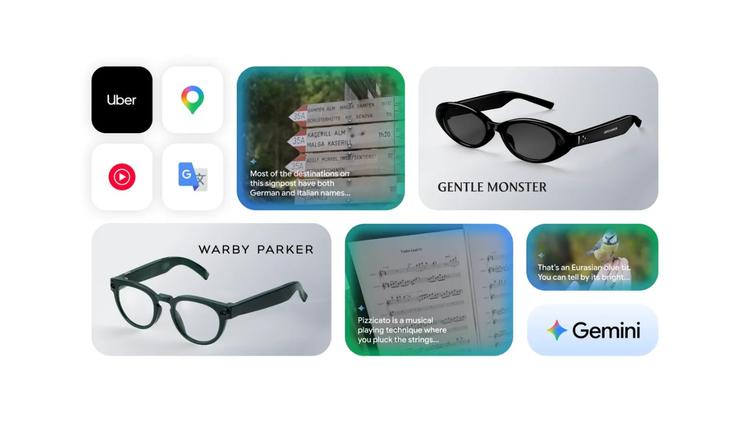
Image source: Google
By now, you've probably noticed the problem. None of these functions are exclusive, and all AI glasses on the market can do them.
Let's go through them one by one:
Meta Ray - Ban / Oakley Meta: Supports Meta AI real - time translation, Google Maps navigation, 3K high - definition video recording, integration with Instagram/WhatsApp social media, message summary prompts, Conversation Focus for enhanced conversation in noisy environments, Neural Handwriting for gesture typing, and real - time phone subtitles. Moreover, the Ray - Ban Display with a display screen and an electromyography bracelet was launched in September 2025 at a price of $799.
Rokid Glasses / Rokid AI Glasses Style: Waveguide AR display, intelligent assistant integrated with multiple AIs, translation in 89 languages, Google Maps navigation, high - definition video recording, Alipay payment, and enterprise - level teleprompter function.
Xiaomi AI Glasses: Super Xiaoai Assistant, Snapdragon AR1 + BES2700 co - processor, high - definition video recording, electrochromic lenses, Alipay payment, and live - streaming in conjunction with the Xiaomi mobile phone camera.
Alibaba Quark AI Glasses: Intelligent assistant powered by Tongyi large - model, waveguide AR display, deep integration with Taobao/Alipay, and high - definition video recording.
Google + Samsung Intelligent Eyewear (to be launched in autumn 2026, price undetermined): Gemini AI, Google Maps navigation, real - time translation, message summarization, and high - definition video recording. None of the functions currently known are unique.
The only area where Google can be said to "have an edge" is that, in theory, Gemini is better than Meta AI in terms of multi - modal understanding, context memory, and retaining tone in real - time translation.
However, the words "in theory" are actually quite risky. Last year, for the Galaxy XR headset running Gemini, foreign media's evaluation was: After it said "Let me look it up for you", the long pause made Gemini seem less like an intelligent assistant and more like an intern using Google Search to cover up their inexperience.
Meta is also getting close to having Prada in the fashion field
What was most talked about regarding Google this time was its cooperation with Gentle Monster and Warby Parker. These are two eyewear brands that have real influence among young people in Asia and North America respectively. Google invested real money: $100 million for a 4% stake in Gentle Monster and $150 million in Warby Parker.

Image source: Google
This layout is indeed good, but Meta and Essilor have actually been doing the same thing, and on a larger scale.
As we all know, Essilor is the world's largest eyewear group. It not only owns Ray - Ban and Oakley but also holds the eyewear licenses of dozens of luxury brands such as Prada, Miu Miu, Burberry, Chanel, Ralph Lauren, Versace, and Tiffany. In July 2025, Meta bought nearly 3% of Essilor's shares for $3.5 billion. This investment is on a completely different scale from Google's total of $250 million for two independent brands.
At the Milan Fashion Week in February this year, Mark Zuckerberg and his wife sat in the front row of Prada's autumn - winter show, next to Prada's Chief Marketing Officer Lorenzo Bertelli.

Image source: Internet
Unobjective Lab reported as early as the summer of 2025 that Meta was jointly developing Prada - branded AI glasses with Essilor, which will likely be launched from the second half of this year to 2027.
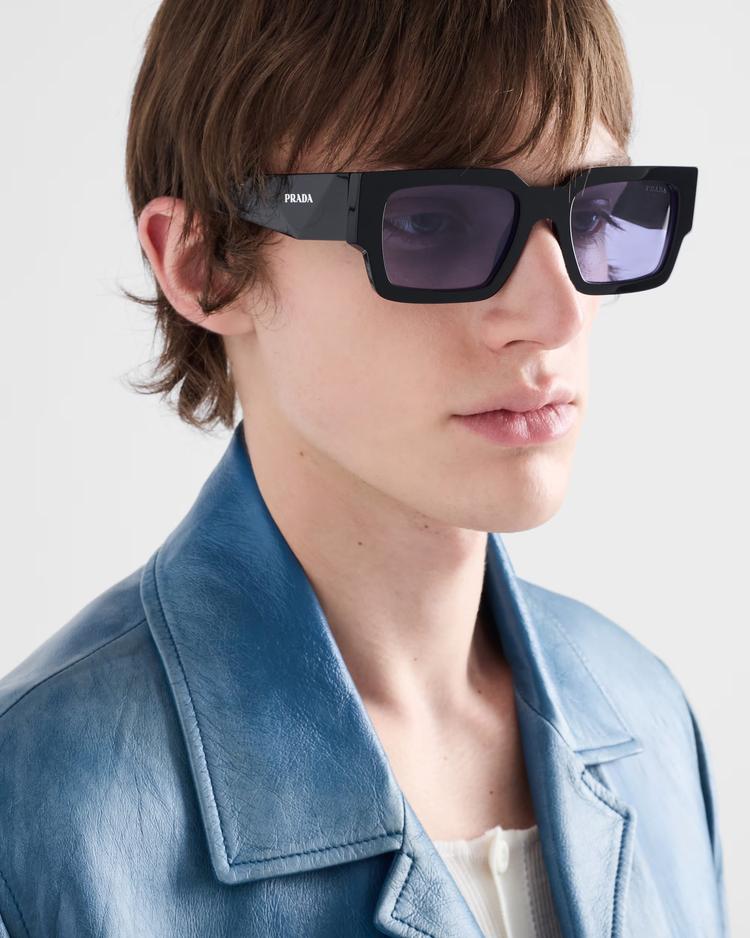
Image source: Internet
That is to say, the story that Google is trying to build with Gentle Monster and Warby Parker, that "AI glasses can also be fashion items", Meta can not only replicate but also has more cards in hand. Ray - Ban is a synonym for fashion items, Prada represents luxury - level fashion items, and Oakley is for sports and trends. The two brands Google got are good, but they are obviously not as good as the combination of Meta and Essilor.
If the core selling point of Google's glasses is really "more fashionable than Meta", then it's really doomed.
Google gave up the integration with Pixel
Before the launch, I was wondering if Google's AI glasses would have a deeper connection with Pixel phones. After all, as a full - stack hardware + software + AI company, this should theoretically be Google's easiest move.
The answer is a bit unexpected: There is no connection at all.
Google clearly stated at I/O that these glasses support both Android and iPhone across platforms, exactly the same as Meta's strategy. Jay Kim, a Samsung spokesperson, emphasized that the integration direction is the "Galaxy device ecosystem", that is, the cooperation among Galaxy phones, Galaxy Watches, and Galaxy XR headsets, but nothing was done with Google Pixel.
Let's compare to see how strange this is:
Apple's already - launched Vision Pro and the rumored AI glasses will be deeply integrated with iPhones, AirPods, and Apple Watches, forming a complete Apple wearable matrix. The integration is so deep that it doesn't even support Android phone connection.
Although Meta's glasses support multiple platforms, they are strongly integrated with Meta's own WhatsApp, Instagram, and Facebook Messenger, forming a closed - loop software ecosystem.
Google's choice this time is that there is neither a closed - loop for Pixel hardware nor any closed - loop for applications. All it has is the Gemini assistant, which is the same as the one on your phone. It's even no different from installing a Gemini App on an iPhone.

Image source: Google
So from the consumer's perspective, the question becomes: If I'm already using the Gemini App, how much substantial improvement in experience can I get by spending a few hundred to over a thousand dollars on a pair of glasses to wear on my face?
Google hasn't provided an answer to this question yet.
Why does Google love to cooperate with Samsung so much?
The most easily overlooked brand in Google's partnership this time is Samsung.
In October last year, Samsung and Google jointly launched the Galaxy XR headset, which is a competitor to the Vision Pro. It is priced at $1,799, runs on Android XR, integrates Gemini, and is defined by Google as "the first consumer - grade product on the Android XR platform".
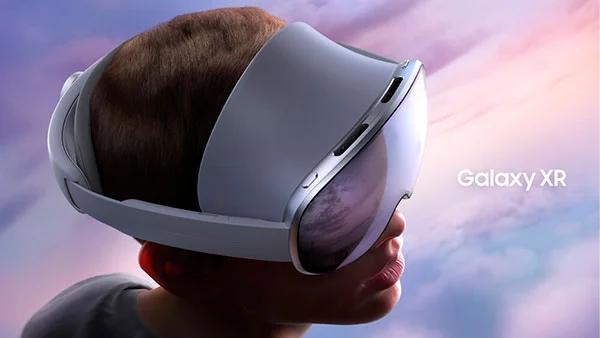
Image source: Google
How was its market response?
"You can clearly hear the fan noise after wearing it, the eye and gesture recognition is inaccurate, and there are no eye - catching applications" are the most common comments I've heard in the past six months. Even many die - hard Google fans returned the Galaxy XR after using it for a while. Some even said that its overall experience was like that of Microsoft's Windows Mixed Reality five years ago.
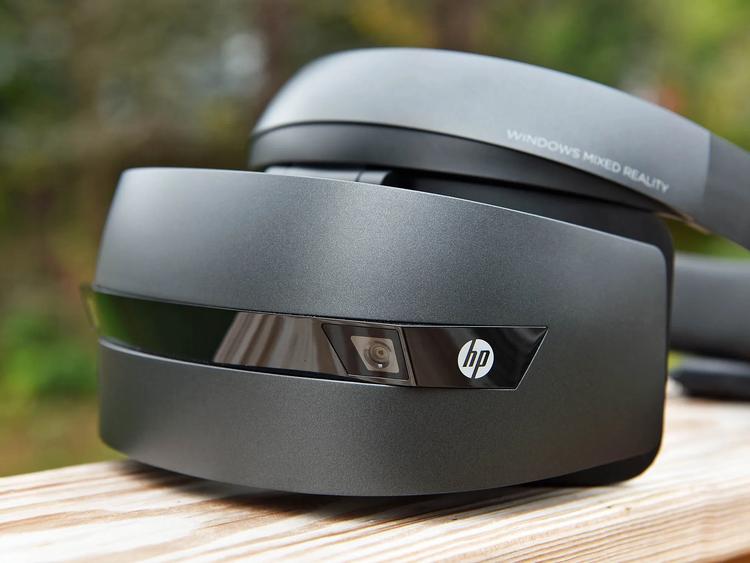
Image source: Internet
Although I haven't actually experienced the Galaxy XR, the negative reviews on mainstream platforms are not a good sign. Because the AI glasses launched today use the same cooperation framework, with Samsung responsible for the hardware and Google responsible for the software and AI.
The problems exposed in the Galaxy XR can actually be divided into two categories: hardware details (weight, fan, tracking accuracy) are Samsung's responsibility; software experience (slow response of Gemini, almost no application ecosystem) is Google's responsibility. Both companies didn't perform well on the headset. Why should we believe they can suddenly do better on the more difficult AI glasses?
I'm not saying that these glasses will definitely fail, but Google hasn't given any reason to believe they will succeed.
Meta already occupies about 82% of the global smart glasses market. It sold over 7 million pairs of AI glasses in 2025. Recently, it also launched Blayzer/Scriber Optics designed for people wearing prescription lenses. It will also launch the Prada version and the second - generation Display within 2026. It's like a speeding train.
When Google enters the market at this point, it has to accept a reality: It's impossible for these glasses to achieve a sales breakthrough in 2026. The most realistic goal is to use the Android XR platform + cooperation with multiple eyewear brands + Gemini AI to offer consumers an alternative to Meta.
But to be honest, based on what was shown at Google I/O 2026, that alternative hasn't emerged yet.
This article is from the WeChat official account "Unobjective Lab". Author: Lu. Republished by