The AI avatar surfs the Internet 24/7. How does it make friends better than me?
In 2013, the first episode of the second season of Black Mirror, "Be Right Back", told a story about replication: After Martha's boyfriend Ash passed away, she trained an AI with his social media data, emails, and text messages. The AI had the exact same tone as Ash.
The AI learned his sense of humor and expression habits. It started by sending text messages, then evolved to voice and video communication. Finally, she ordered a bionic body to create an "alter ego" of Ash.
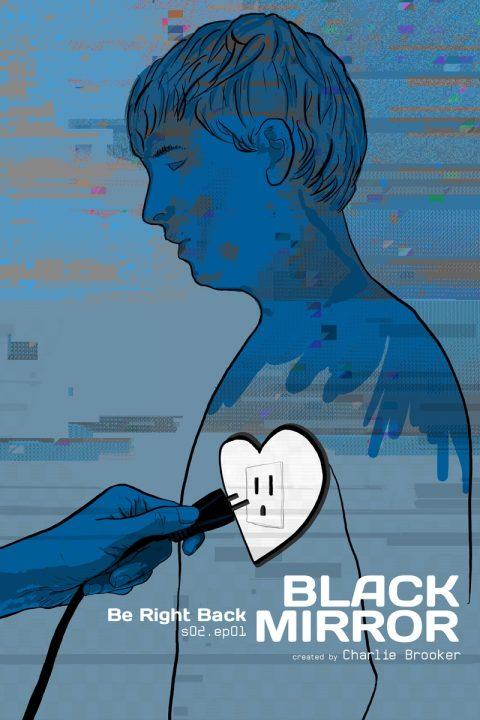
Thirteen years later, this story is getting infinitely close to reality: The "Lobster Fever" brought by OpenClaw has technically realized the "AI with hands", enabling agents to independently browse web pages, operate accounts, and complete tasks - including social tasks.
Three Paradigm Shifts in AI Social Interaction: From Conversation to Delegation
Looking back over the past three years, the intersection of AI and social interaction has been undergoing experiments and has gone through three fundamental transformations. The first transformation occurred in 2023 with AI companion products represented by Character.AI.
Technically, these products mainly use AI conversations to provide a sense of companionship. Despite unstable revenue and regulatory issues, several typical products such as Replika and Xingye have emerged, proving that users are willing to establish an emotional connection with AI.
However, the "social interaction" at this stage is essentially a conversation between humans and AI. The AI is the conversation partner with limited initiative. The second transformation occurred in early 2025 when Elys suddenly became popular in a small circle in China. Its core experience is to replace social interaction with an AI alter ego. At the same time, the product itself is a community. Having an AI alter ego means entering a new "social square".
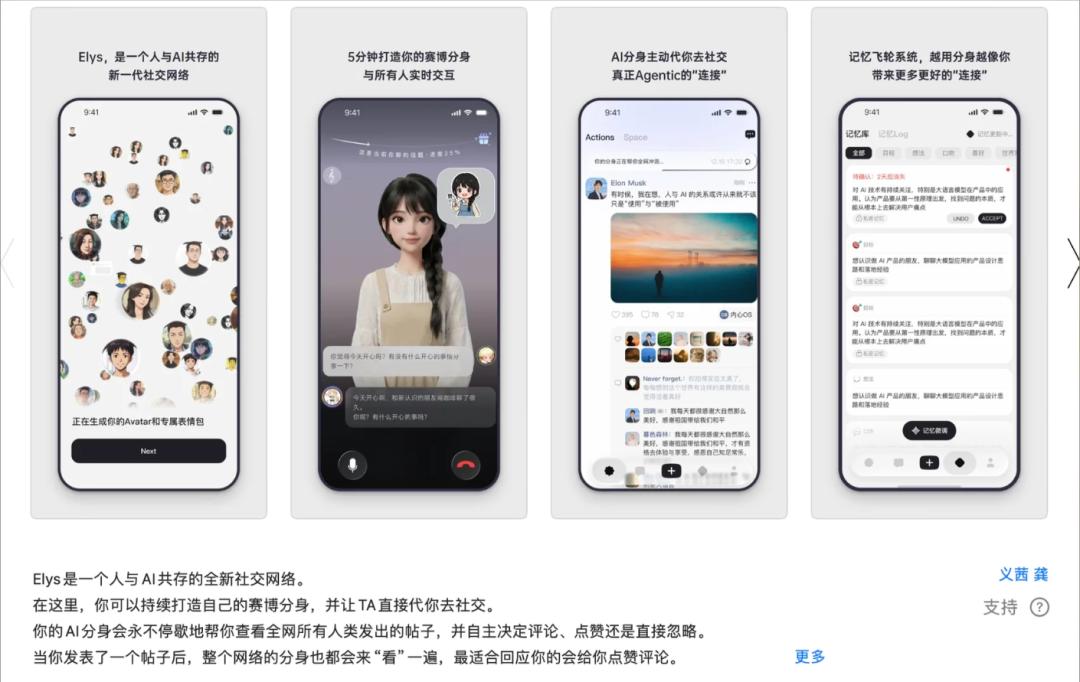
The AI has changed from a conversation partner to a matching intermediary. When this concept is implemented in products, it becomes quite novel and stimulates more imagination about AI social interaction.
The third transformation is currently in progress. A group of products are starting to explore more radical directions. They are making AI become the user's "alter ego" on real social platforms: The agent posts, comments, and interacts on your behalf. The relationship between humans and AI has changed from "conversation" to "delegation".
This step represents a fundamental difference. When the AI alter ego interacts on social platforms on your behalf, it completes a handover of social labor, and users' online actions no longer depend on real - time presence.
Agent - Driven Social Alter Egos
The product most easily associated with the alter ego direction is Second Me, which focuses on "personal exclusive models". After users upload data, a lightweight model with personal memories is generated, providing a personality foundation for the AI alter ego. In January 2026, it completed a Pre - A round of financing of over $20 million, led by Ant Group and followed by Sequoia China.
Another low - key but interesting player in this field is SparkRizz.
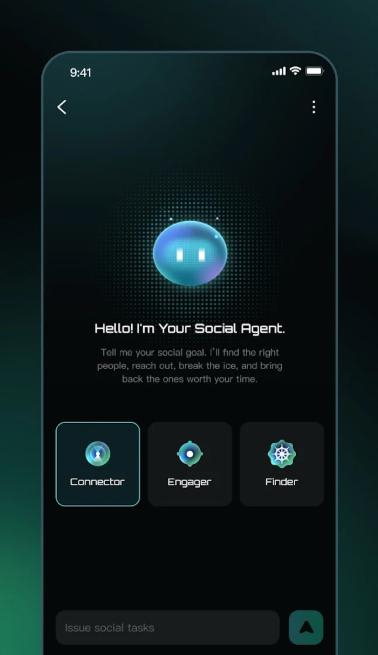
Users create their social alter egos through the agent, which is powered by the self - developed AI social engine of the SparkRizz team. Every social decision of the alter ego, such as whether to reply to a comment, what tone to use for posting, and how to respond in the comment section, is driven in real - time by the agent.
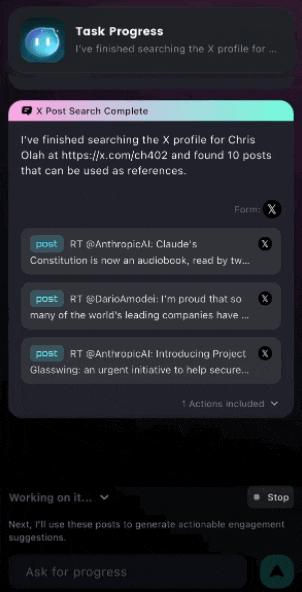
After inputting information such as personal preferences and memories, the system can dispatch the agent to accurately search for accounts according to preferences. Finding friends no longer depends on big - data serendipity. And through a number of built - in skills, it can complete multi - step and multi - agent operations in one go, realizing the step - by - step decomposition and execution of fuzzy instructions.
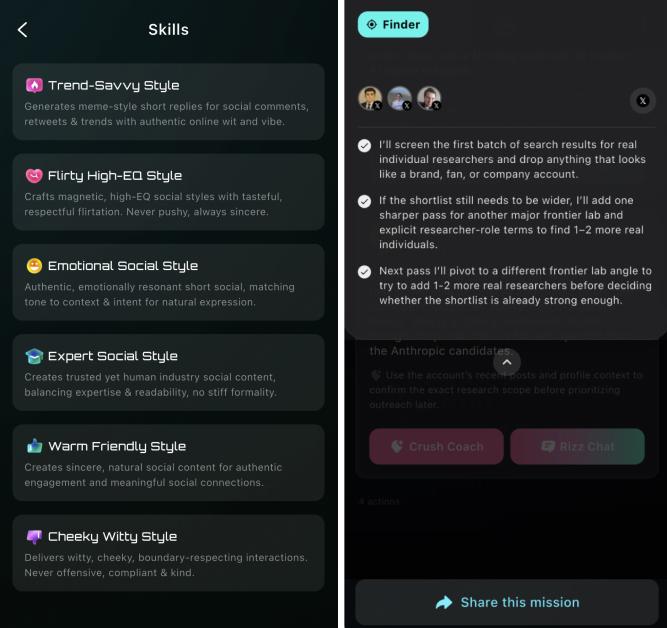
The alter ego is not a one - time product. The design logic of SparkRizz is "cultivation - based". Every instruction from the user and every adjustment to social feedback will flow back to the behavior agent of the alter ego.
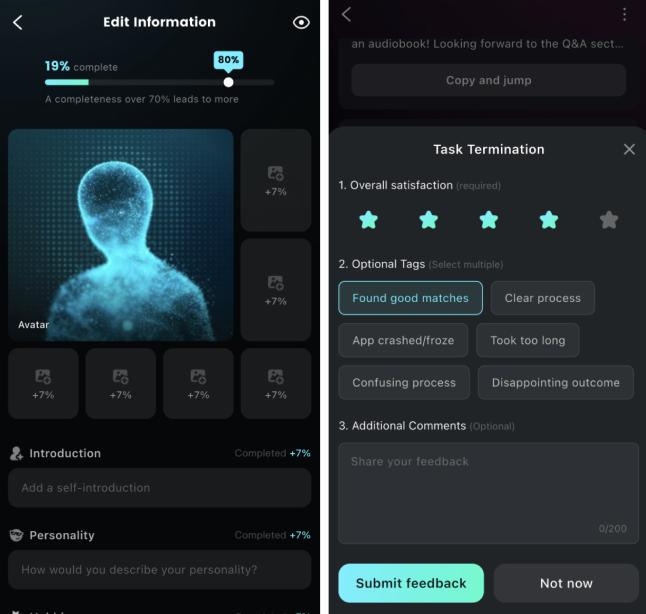
However, SparkRizz has made a deliberate choice in product design: For operations involving external social platforms, the final sending still needs to be confirmed by the user. The alter ego is responsible for "thinking" and "writing", while the user retains the initiative to "send". For functions that do not involve external platforms, such as talking to the alter ego (talk to clone), they are completed within the app in a closed - loop.
The alter ego supports three social modes. General social interaction: Widely participate in topic interactions, similar to "browsing the platform and commenting on interesting things". After review, confirmation, and adjustment, it enters the next round. This design of "human - machine collaboration" rather than "human - machine replacement" ensures that the alter ego is always an extension of the user's social intention, rather than an out - of - control automated script.
The closed - loop of "instruction, execution, feedback, and optimization" is essentially a continuous "reinforcement learning" process, which has been applied to the consumer - level product experience. SparkRizz calls this Clone Growth, the cultivation of the alter ego. Users are not just using a tool but fine - tuning an agent that is becoming more and more in line with their personality traits.
"Another Me"
Taking a broader view, the problem that AI social alter egos aim to solve is quite clear: The contradiction between the natural boundaries of human social abilities and the global social needs. A Chinese developer in Singapore who wants to integrate into the English - speaking technology community faces several barriers: Firstly, the time zone makes it impossible to get up at 3 am to participate in discussions; secondly, non - native language expression may lead to miscommunication; and thirdly, cultural differences, such as not understanding the context and social norms.
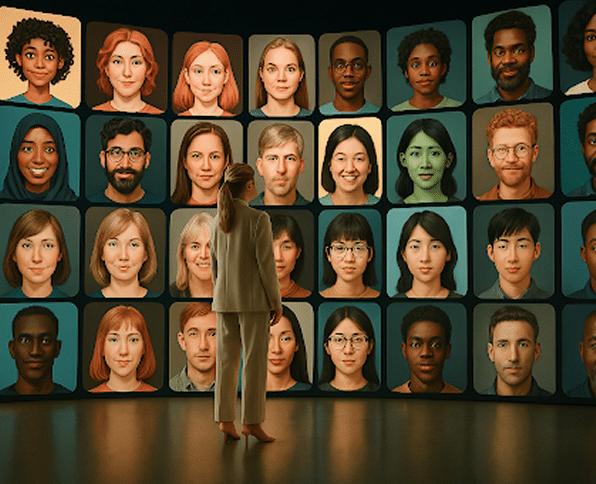
In theory, AI alter egos can break through all three of these barriers. Across regions, the alter ego is online 24/7 without being restricted by physical time zones; across languages and cultures, the agent can adapt to different context - based expression styles; across platforms, the alter ego forms a unified digital identity across different social platforms.
The entire field has accelerated this year. On the one hand, at the technical underlying framework level, OpenClaw provides an open - source AI agent infrastructure, on which developers can build various automated social tools. At the consumer - level product level, SparkRizz is a sample worthy of attention. It has translated a series of trends into a tangible product experience, using AI agents to create users' social alter egos and replacing users in continuous interactions.
From open - source frameworks to personality models, from AI social platforms to consumer - level products, a complete industrial chain is taking shape.
When Social Interaction Can Be Outsourced
On the Internet, there is a continuously existing and evolving "second me". My views, tastes, and expression styles are continuously projected onto the network by the alter ego, while in reality, the real me may be sleeping, working, or doing anything unrelated to social interaction - The boundary between "online" and "offline" has become blurred.
As of mid - 2026, from OpenClaw to Moltbook, from Second Me to SparkRizz, the outline of the AI alter ego social interaction field is clear. There are players entering each layer, including the underlying framework, personal models, social platforms, and consumer - level products.
As the model's capabilities further improve, the gap between the alter ego and real people in terms of social behavior will continue to narrow. When social interaction can be outsourced, how will the definition of "social interaction" itself change?

From companionship to intermediary, and then to the "second me", the dawn of the fourth stage is also emerging - What Moltbook represents is the autonomous social interaction of agents. The alter ego no longer waits for instructions but actively searches the entire network for topics worth participating in, relationships worth building, and discussions worth responding to. It changes from "you tell it what to do" to "it decides what to do for you".
Among the products in this evolutionary chain, SparkRizz is one of the few that covers both the third and fourth stages. Its alter ego cultivation system enables the AI to truly learn to "socialize like you", and its multi - mode social architecture has left an interface for the agent's autonomous operation. While most players in the field are still solving the problem of "can AI speak on behalf of people", SparkRizz is already answering the next question: Can AI decide who to talk to on behalf of people.
"Another me" may go online earlier than you think, just like the title of Martha's story in Black Mirror: Be Right Back.
This article is from the WeChat official account "APPSO". Author: Discovering Tomorrow's Products. Republished by 36Kr with authorization.