After colleague.skill: Who is really "distilling" office workers?
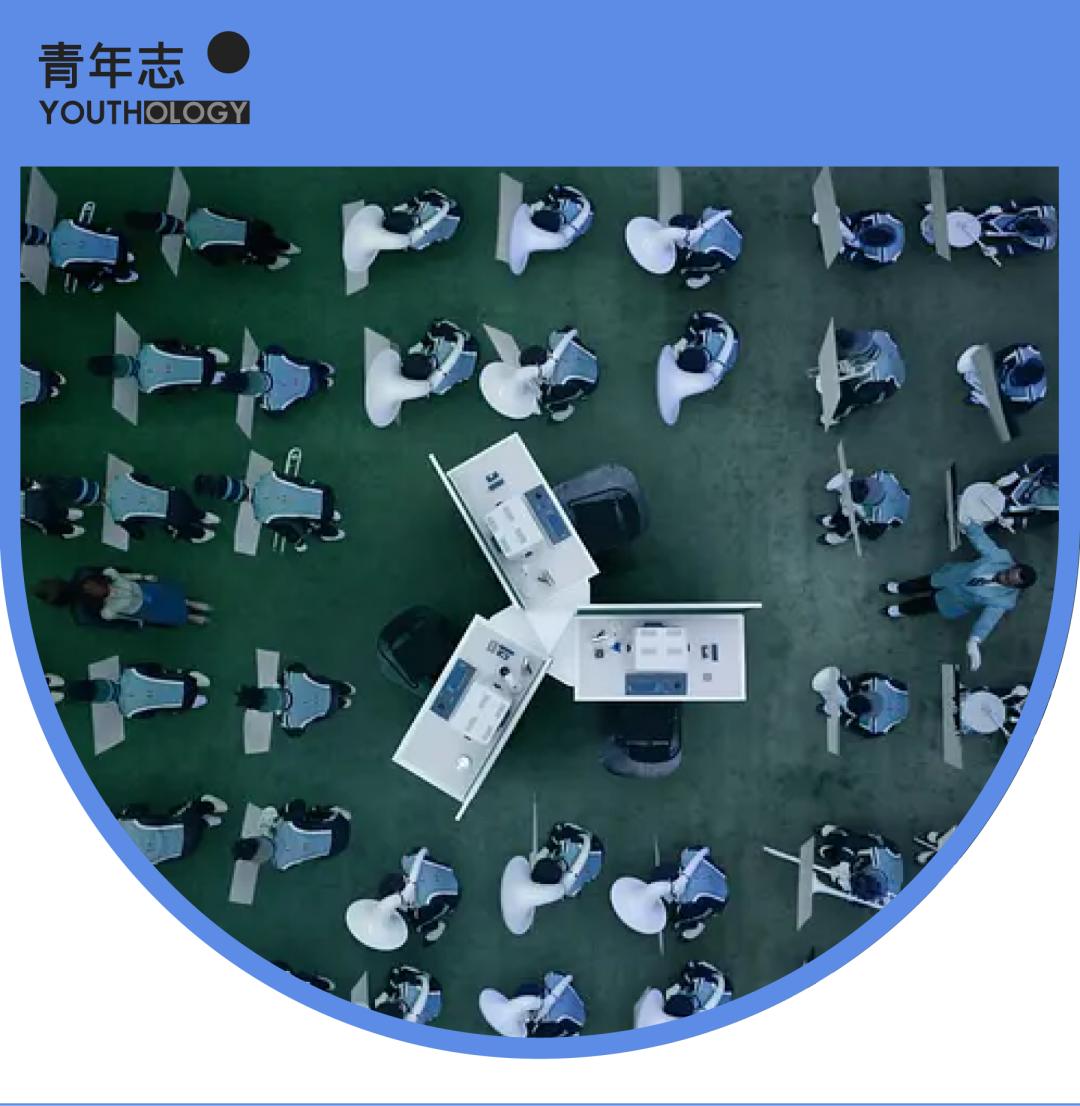
There is a project on GitHub called colleague-skill, which was developed in just four hours. It gained 6,700 stars in three days and exceeded 14,000 stars in three weeks. In the Chinese-speaking world, it's referred to as "colleague.skill", and the actions it performs are called "refining" and "distillation". This has ignited the recent widespread anxiety about AI replacing human jobs in China, and "anti-distillation" has become a popular term.
The project's author is Zhou Tianyi, a 24-year-old engineer at the Shanghai Artificial Intelligence Laboratory. According to his statement to The Paper, this project is a by-product developed in just four hours by the team during their research on "agent security". Just this "four hours" is enough to suggest that our understanding of it might be exaggerated. Looking at the source code, what it does is quite simple: it organizes descriptions of a specific colleague, chat excerpts, and document fragments into three Markdown files (SKILL.md, work.md, persona.md), which usually add up to just a few dozen kilobytes, and uses them to drive AI to mimic that person's behavior and output.
It runs on the "Agent Skills" open standard announced by Anthropic in December 2025 and can be easily mobilized. Of course, this is not "distillation". True distillation requires a large amount of personal data to train a small model with meaningful parameters. Colleague.skill is far from achieving this. Calling it "distillation" is a literary metaphor, not a technical description.
However, this metaphor has been quite successful. With just four hours of coding and the slogan "Transform the cold farewell into a warm Skill. Welcome to cyber immortality", it has gained 14,000 stars. According to the normal pace of open-source projects on GitHub, this is a number that top open-source frameworks usually take a year to reach. Derivatives quickly followed: ex-colleague.skill, boss.skill, mentor.skill, parents.skill, immortality.skill, Nuwa.skill. On April 13th, the author upgraded the project to dot-skill, claiming it can "distill anyone".
Those who have actually used "colleague.skill" know that it's almost impossible for it to replace a real colleague. Even if it shows some results, the credit should go to the large model itself. Simply packaging tasks and giving them to Claude usually yields good results. This project is essentially a conceptual piece, even with a touch of performance art. What makes it seem serious is that the Chinese-speaking world has poured an entire era's worth of labor anxiety into it.
However, as AI has been widely applied for four years, the anxiety about being replaced by AI is real. Where is the real "distillation" happening, and how does it occur? How should we address the issue of "job replacement by AI" from technical, legislative, and other aspects?
The real distillation is happening at Meta
It is possible to distill a person. In April 2026, Reuters and Platformer simultaneously reported on an internal project at Meta called the "Model Capability Initiative" (MCI). It runs software on the work computers of Meta's US employees to collect four types of data: mouse movements, keyboard inputs, application context, and occasional screen snapshots. This data enters the training pipeline of Meta's Super Intelligence Laboratory, with the goal of training an agent that can perform daily office tasks in a real computer environment, such as selecting drop-down menus, using shortcuts, switching between applications, and completing complex tasks.
The training paradigm is called "behavior cloning". Meta's Chief Technology Officer, Bosworth, described the goal in an internal memo: "The vision we are building is that agents will do most of the work, and our role will be to direct, review, and help them improve." There is also a more crucial term in the memo - "closed-loop": the agent can "automatically see where we think we need to intervene through review and feedback, and do better next time". This is a standard description of behavior cloning and feedback learning engineering. In this way, a person's work can be cloned.
When an employee asked on the internal forum if they could opt out of the project, Bosworth replied, "There is no opt-out option on the work computer provided by the company." In other words, everyone will be replicated in this way. The final product of MCI is the updated model weights, which can be deployed, replicated, and used as a computing entity to replace old employees before new employees join. This is the real distillation.
This is also the fundamental difference between MCI and colleague.skill. Colleague.skill consists of a few dozen kilobytes of Markdown files, which are temporarily loaded and read by AI during a conversation. MCI is a training task on a GPU cluster, and the output is model parameters that will be used in every inference. Although they both claim to "distill people", their essences are completely different.
The direction represented by MCI is, of course, more serious and terrifying. In June 2025, Meta acquired a 49% stake in Scale AI for $14.3 billion and appointed Alexandr Wang, the founder of this data annotation company, as the head of its Super Intelligence Laboratory. Alexandr Wang said in 2024, "For many of the capabilities we want to build into the model, the biggest obstacle is actually the lack of data. There is no truly valuable agent data pool anywhere." MCI is Meta's internal answer to this problem - since there is no external data source, they collect it from their own employees.
As the training data on the public Internet is nearly exhausted, the next data source is the labor process of employees themselves. This has become an allegory of "spinning a cocoon around oneself" in the AI era. In theory, any company with a large number of employees, work equipment, and a collaboration platform can replicate this project.
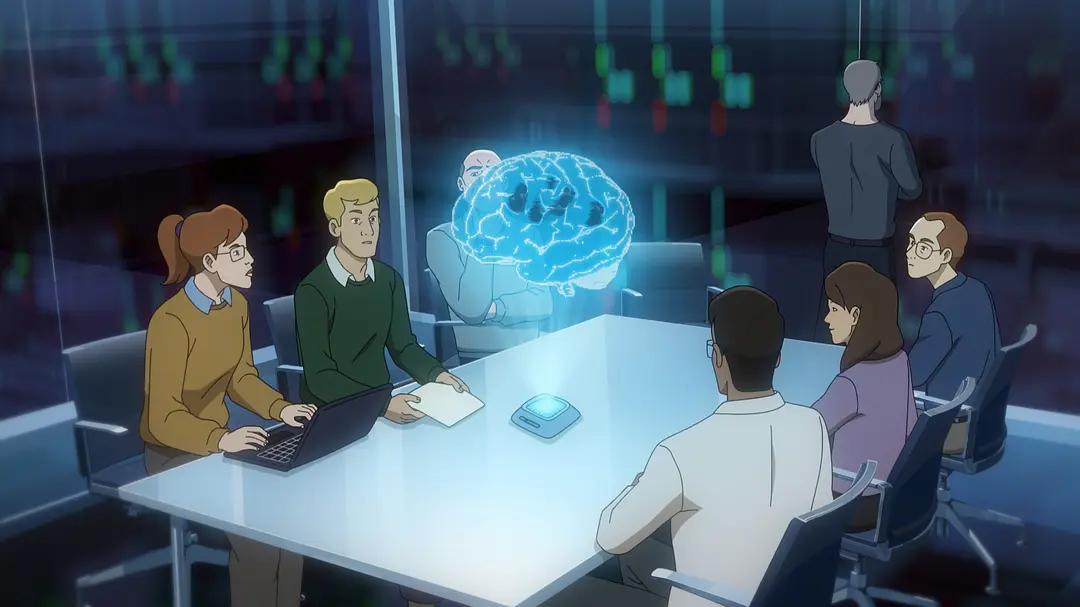
Animation: Pantheon
A successful metaphor, a misdirected fear
So, the question is: since MCI and colleague.skill are fundamentally different in engineering, why does the Chinese-speaking world use the same term "distillation" to describe them?
This is another classic case in communication studies. Colleague.skill hits three rhetorical devices at once: "digital immortality" in science fiction, "refining" in Chinese mythology, and "being devoured by algorithms" in apocalyptic narratives, each corresponding to a set of existing emotional responses.
What problems will the exaggerated use of colleague.skill by the media bring? If it's just another case of anxiety mongering, it's not surprising, as there is no shortage of such things these days. But the key here is to distinguish the difference between colleague.skill and MCI. The fear of the former is explicit, the fear of "documenting" an individual, but it may mislead us from the real direction we should be vigilant about. Employees can see colleague.skill on GitHub and write anti-distillation tools to contaminate it, and related content is very popular on Xiaohongshu. Opposing this kind of "personal replication" like colleague.skill is easy, but it's likely to be the wrong direction.
The real threat is not a few dozen kilobytes of files, but something more in line with the logic of MCI: the conversations collected in the background of Feishu, the retrieval-based knowledge base accumulated by DingTalk, the Token assessment in the company, and the increasing number of skills. These have no public links, no GitHub issues, and no visible open-source projects to oppose, but they are the closest to "job replacement by AI".
The second consequence is that after mixing colleague.skill and MCI, companies gain rhetorical flexibility. When distillation = colleague.skill = MCI = the digital avatar of a former employee = the company's knowledge base = any AI project, once the former is proven to be a technical misunderstanding and excessive worry, this "harmlessness" will spread to the more dangerous areas of the latter. Companies can use the same excuse: "We're just accumulating knowledge" or "We're just optimizing the process", which sounds much less harmful.
The real fear should be directed at "the assetization of the labor subject", and "distilling an individual" is actually a confusion.

Animation: Pantheon
More widespread replacement is already everywhere
The documentation of colleague.skill clearly states its data sources: Feishu's automatic API, DingTalk's browser login status, email .eml files, and WeChat chat records. That is to say, it doesn't "collect" data itself; it uses data that has already been collected. Collaboration platforms continuously generate chat records, document versions, Wiki revisions, multi-dimensional tables, approval records, and meeting minutes in the workflows of hundreds of millions of employees every day. This data stream has existed long before the emergence of colleague.skill.
InfoQ reported in May 2026 that a game media company had trained a recently departed HR specialist into an "AI digital human" to continue working in the company. This digital human can currently handle consulting, create PPTs, and make tables. An employee named Xiaoyu at the company described it as, "The colleague I was chatting and joking with yesterday has become an AI today." The company claims that it has obtained the consent of the individual. However, this project was not developed using colleague.skill on GitHub; it was developed using the company's own work data.
In fact, a person is unlikely to become a single individualized skill but may become a variety of different tools. The core scenarios of Anthropic's open standard are very specific: the legal department creates Markdown files for contract review standards, the finance department creates Markdown files for reimbursement rules, and the engineering department creates Markdown files for code specifications. Long before the emergence of colleague.skill, skills had already flooded in Chinese companies that are aggressively promoting AI.
In a report by Jizhou, it was mentioned that in a manufacturing company where a person named Chen Pengfei (a pseudonym) works, there are thousands of skills in the internal skill library, and the company spends nearly ten million RMB on large model calls every month. Another example is a "breathing skill" developed by Ye Xiao (a pseudonym) at a Silicon Valley tech giant - a team skill that automatically captures company document changes and updates them to the retrieval-based knowledge base, enabling it to handle the team's work even when many people are on leave or there are many urgent tasks. The leadership is very satisfied. Task replacement, rather than individual replacement, has already begun.
A more systematic version is at Alibaba. In March 2026, Alibaba established the ATH Business Group, directly led by President Wu Yongming, and launched an internal AI development tool called "Meoo". According to Alibaba's official disclosure, over 10,000 employees are using Meoo, most of whom are from non-technical positions such as finance, design, product management, and operations. It can be regarded as a comprehensive enterprise skill library and a new skill generation platform, capable of meeting many practical needs of operational positions, such as generating H5 pages.
Compared with colleague.skill, this mechanism can be called "background distillation" - on the basis of the existing data pool of the enterprise's own collaboration platform, it adds internal RAG, skill libraries, and digital employee architectures to continuously extract employees' labor processes into trainable assets. The political economy of background distillation is completely different from that of colleague.skill on GitHub. It is invisible, cannot be forked, cannot be protested in the issue area, and does not require any external open-source projects. It is simply an extended use of Feishu and DingTalk within the enterprise.
The reason why colleague.skill has caused anxiety in the Chinese-speaking world is precisely that it provides a visible proxy for the usually invisible "background distillation". It's just a Markdown project written in four hours, but it has absorbed all the emotions accumulated by Chinese tech giants' quiet progress in the past year or two. Emotions have found a visible and scoldable outlet. However, scolding this outlet has no impact on what is really happening in the background of Feishu.

TV series: Upload
Three-stage replacement: task splitting, supervision concentration, and salary compression
We often think that being replaced by AI means "I'm being replicated", but the actual mechanism is that my job is split into eight tasks, six of which are assigned to agents as skills, and the remaining two are given to a few supervisors.
This mechanism can be called "three-stage replacement": task splitting, supervision concentration, and salary compression. These three stages are not abstract inferences but are the public strategies of Meta, Alibaba, and many small and medium-sized enterprises in 2026.
Meta has made the strategy clearest at the strategic level. The core sentence from Bosworth's internal memo in April has been quoted before: "Agents will do most of the work, and our role will be to direct, review, and help them improve." Complemented by Zuckerberg's statement during the Q1 2026 earnings call, which roughly means that projects that used to require a large team can now be completed by a very talented individual in the future. Together, these two statements form a complete political economy description of the "three-stage replacement": agents do the work (task splitting), humans direct and review (supervision concentration), and the large teams of the past disappear (salary compression).
The first stage is task splitting. This has been shown in the reports from InfoQ, Jizhou, and Alibaba. The explosive growth of skills in these enterprises represents task decomposition. There is a detail in the Jizhou report: Wang Chunting, a finance employee at a pharmaceutical company, was directly asked by the department leader to "develop each financial process into a fixed script". There is a popular saying in the department: "All a person needs to do is click the mouse." This is a sign of impending layoffs. Once a job can be developed into a skill, a full-time employee is no longer needed.
The second stage is supervision concentration. A small number of people need to review the output of more agents. The problem is that reviewing is still a very onerous task, and once there is a problem, it takes longer to fix. A joint survey by Harvard Business Review, BetterUp, and Stanford in 2025 interviewed 1,150 US employees: 41% received content generated by colleagues using AI in the past month that seemed complete but actually needed rework (this kind of content is called workslop), and it took an average of 1 hour and 56 minutes to fix each time.
The "results" produced by agents make the organization's performance look more beautiful and efficient on the surface, but in reality, another employee is passively bearing the review burden. However, this cost is not symmetrical within the organization: from the boss's perspective, it's easier to see the "results" of Token consumption, skill accumulation, and task splitting, rather than the hidden rework time, which drives more aggressive AI layoffs.
The third stage is salary compression. In April 2026, Meta announced a 10% layoff (about 8,000 people) and stopped filling 6,000 open positions, resulting in a reduction of 14,000 headcounts in total. In the same year, Meta's capital expenditure guidance reached a maximum of $135 billion, almost all of which was used for AI infrastructure. In contrast, AI spending is squeezing out human resource spending, which is self-evident.
This is exactly what the keyword "closed-loop" in Bosworth's memo means in labor politics: Every time an agent is supervised and corrected by an employee, it is being trained to "require less supervision" next time; every time it "requires less supervision", it means the supervision position itself is being compressed. This closed-loop is itself a self-reinforcing mechanism for salary compression.
