Trail running has become popular, but the money hasn't flowed into the pockets of event companies yet.
In the past few years, with the popularity of cross - country running in China, the relevant data has also witnessed an astonishing increase.
Hundreds of races held each year and the generally expanding scale of races have made China the market with the fastest - growing number of races and participants in the world. The sponsorship fees for elite athletes have also skyrocketed. Moreover, a major race can drive local revenues of hundreds of millions of yuan.
In the mountains, it seems that anyone who digs with a shovel can find one or two pieces of gold. Event companies should be the most direct beneficiaries of this phenomenon.
However, the reality is not so.
Lara, the founder of Yelaicai, who started organizing cross - country races out of passion more than two years ago, said that all four races held this year resulted in losses, and the fifth one was directly cancelled. The Monster Little Sun event, which has made a name in the cross - country circle, also experienced a salary cut at the end of last year to get through the trough period when two races were not satisfactory and two were cancelled.
Many industry insiders said that event companies are experiencing a "false prosperity". Capital is pouring in, but the money never flows into their pockets.
With the races booming, why is it still so difficult to make money?
To the outside world, cross - country races seem to be in a great situation. However, if we deconstruct the income and expenditure, we will find that event companies have always been in an embarrassing situation where income is struggling to keep up with costs.
To understand this problem, we need to go back to 2021. After the Baiyin incident, cross - country running was regarded as a high - risk sport, and the compliance and safety costs soared. Moreover, cross - country races face many uncontrollable factors, and a slight disturbance may have a negative impact.
Yao Jia, the event director of Monster Little Sun, told the Sports Industry Ecosystem that the two cross - country races cancelled by the company last year occurred after the release of the new marathon regulations. Many cross - country races also took the opportunity to sort out and rectify. The refund for one race was as high as more than 3 million yuan. Coupled with the off - season at the end of the year, the company's senior management had to take the lead in cutting salaries. It was not until the business got back on track that the employees' treatment was improved again.
"In the industry, we are already a very cautious team, but still 30% - 40% of our races are in an uncontrollable state such as losses or cancellations each year. Other companies are more likely to face unexpected situations." Yao Jia said.
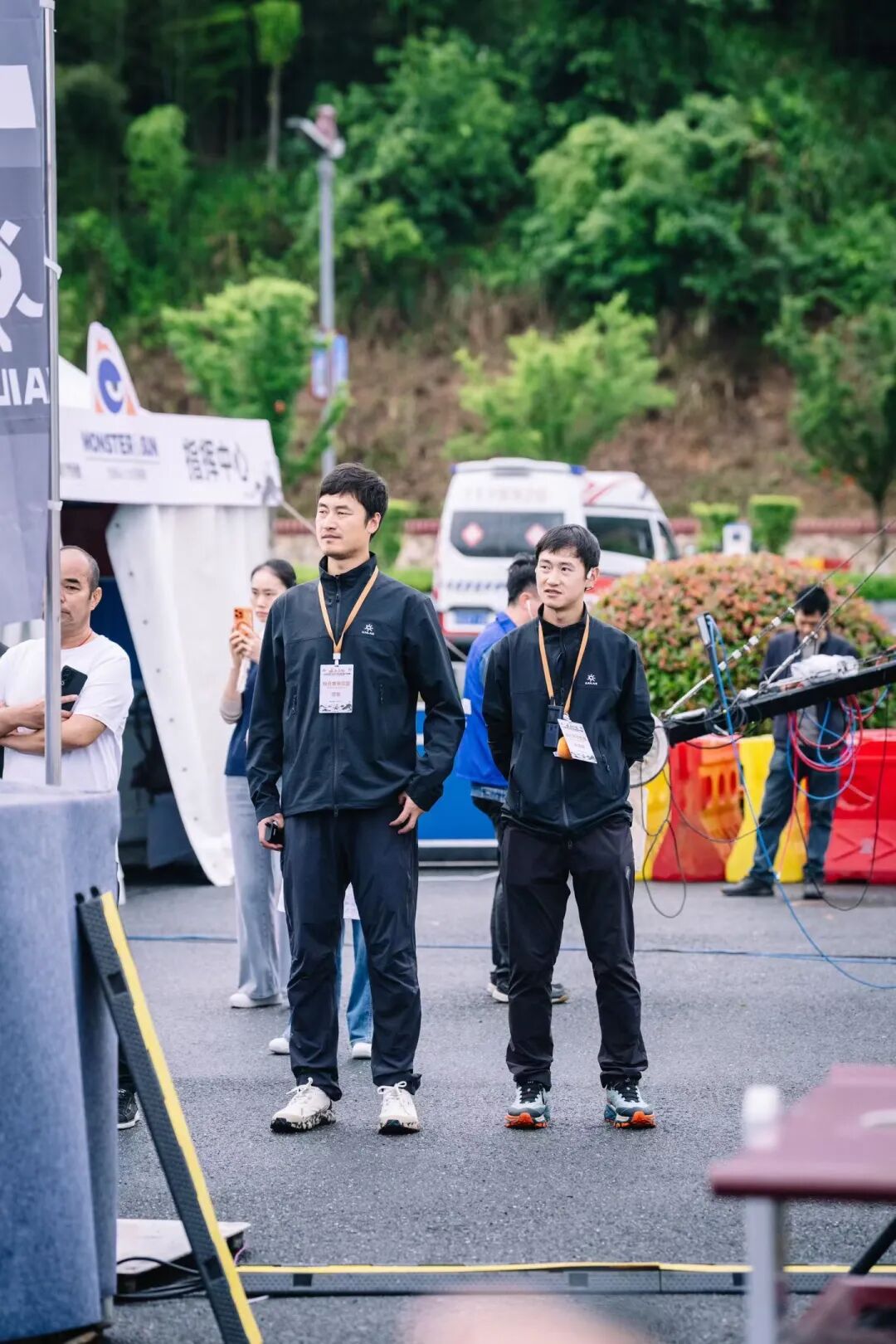
Yao Jia (right) at the event site
In addition, the involution in event services such as supplies, replenishments, and set - ups has also prompted event companies to invest more money.
According to Lara, Yelaicai is positioned as a mass event with short distances, low thresholds, and a full range of entertainment. Usually, other races only have two supply points in a 20 - kilometer race, but Yelaicai may set up four. So, the costs of materials and supplies have become a major part of the expenses.
Compared with the diverse costs, the income sources of cross - country running event companies are rather single.
In China, the main income source of event companies is still the entry fees. For example, the entry fees of Monster Little Sun events account for as high as 80% - 90%. Rao Jin, the founder of Shenxing Outdoor, once told the media that 'in real international competitions, it is normal for sponsorship fees and other incomes to exceed the entry fees, but we can't achieve that yet.'
As brands are competing to enter the cross - country running field, their intention to sponsor events has significantly increased. However, many event companies said that brand sponsorship often only involves material exchanges, and the probability of cash sponsorship is very low. Even if the materials exceed the brand's specified quantity, the event company has to negotiate and purchase the excess part.
"The brand sponsorship ultimately goes to the athletes rather than the operating company, so it doesn't count as our actual income." Wu Wenlong, the founder of City Stroll Events, explained. "So for us, more brand sponsorship doesn't really help. It won't attract event companies to enter the market, nor will it increase opportunities."
Finally, there is the government subsidy. This part of the income accounts for a small proportion, and because the government has certain expectations for the event level and scale, or hopes to introduce live - streaming, video and other communication methods, it may bring higher requirements.
In order to make a profit, event companies need to find suitable strategies for themselves.
For example, Rao Jin once told NBD that Shenxing has achieved positive profits in the past two years, but not every project is profitable. Its model is to 'use one event to support another'. - Subsidize the cultivation period of new events with the profits from existing profitable events. "The average profit cycle of each new event is three years. We will take the initiative to organize some new events, considering whether the product matrix can unlock new terrains and cover all four seasons."
Monster Little Sun has maintained profitability since its establishment. Its strategy is to save money or even spend no money on publicity and promotion. In Yao Jia's words, it is to go against the involution, refuse the competition in materials and supplies, not appear on CCTV without government requirements, and not do live - streaming.
This is not a path that any company can replicate. It also benefits from Yao Jia's media background, the highly recognizable event style of the team, and the industry reputation gained from seven years of event organization. In addition, they are also planning to launch co - branded peripheral products this year.
As for new start - up companies like Yelaicai, they are still struggling in the initial stage of losing money to gain popularity. They convert side jobs such as being event hosts and undertaking execution work into capital for event organization and continue to wait for a turning point.
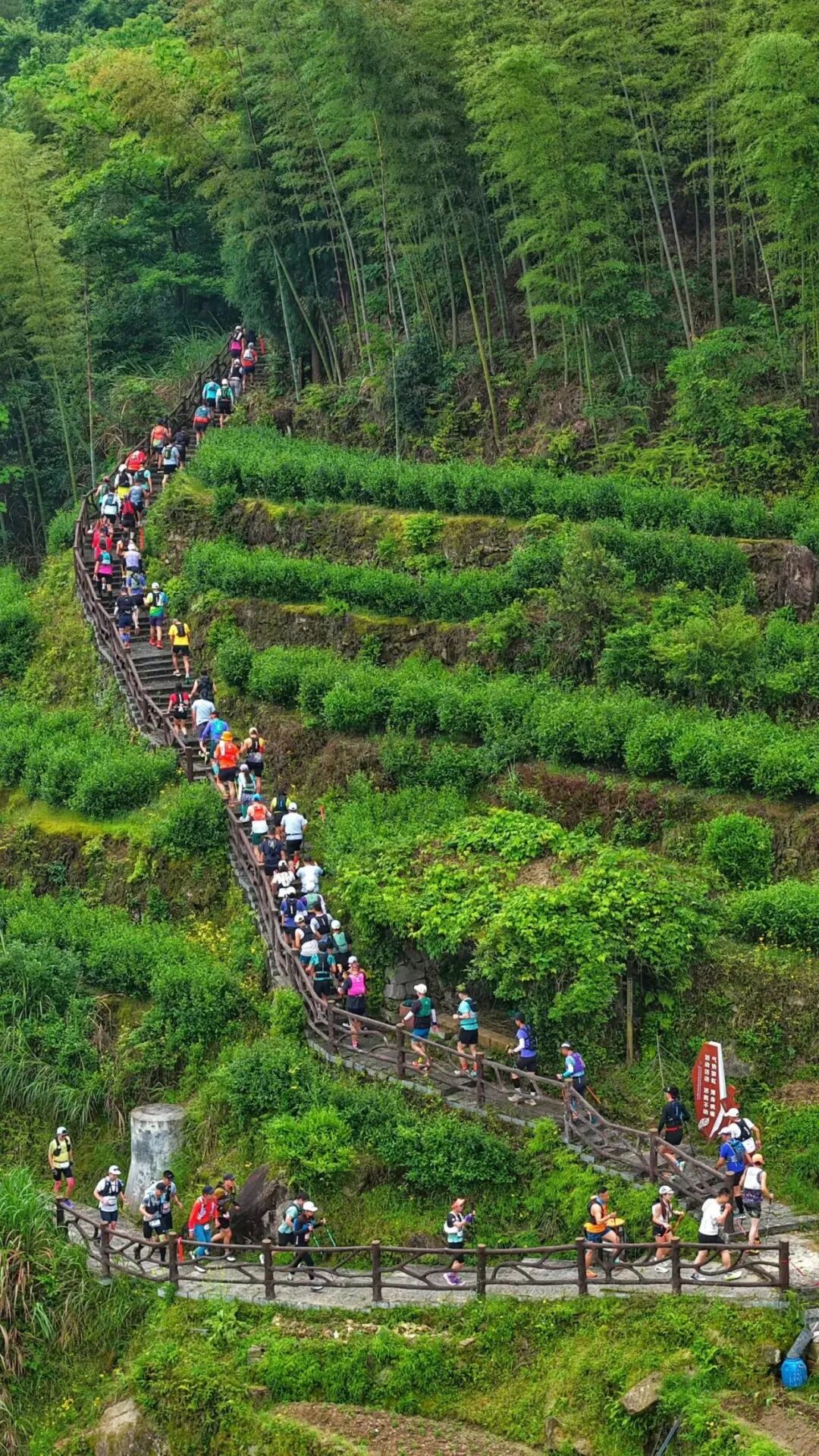
Image source: The 3rd Huifengchunyu Circular Chimu Mountain Cross - country Race
Cross - country running has indeed become popular, and capital has also followed. However, companies at the front - line are not living as comfortably as people imagine.
The cake is bigger, but there are more people sharing it
Although organizing cross - country races is hard - earned money, in recent years, the number of people eyeing this cake has only increased.
"Local state - owned enterprises, traditional media companies, marathon event companies, smart cultural and tourism companies, and even the brands themselves are all getting involved in organizing races. These companies may have much better resources and connections with local areas than our pure cross - country running commercial companies." Speaking of this, Yao Jia was a bit helpless.
Among many competitors, the entry of marathon event companies has a greater impact on cross - country races. The most obvious thing is that the situation of competing for luxurious race packs and abundant supplies in marathons has frequently appeared in cross - country races.
Actually, this kind of penetration has been traceable for a long time.
In the past few years, due to the shift in public sports preferences and policy influences, marathon event companies have often faced situations such as a narrowing customer base, reduced business, and increased local financial pressure. Therefore, transformation has become inevitable, and cross - country running is just one of the exploration directions.
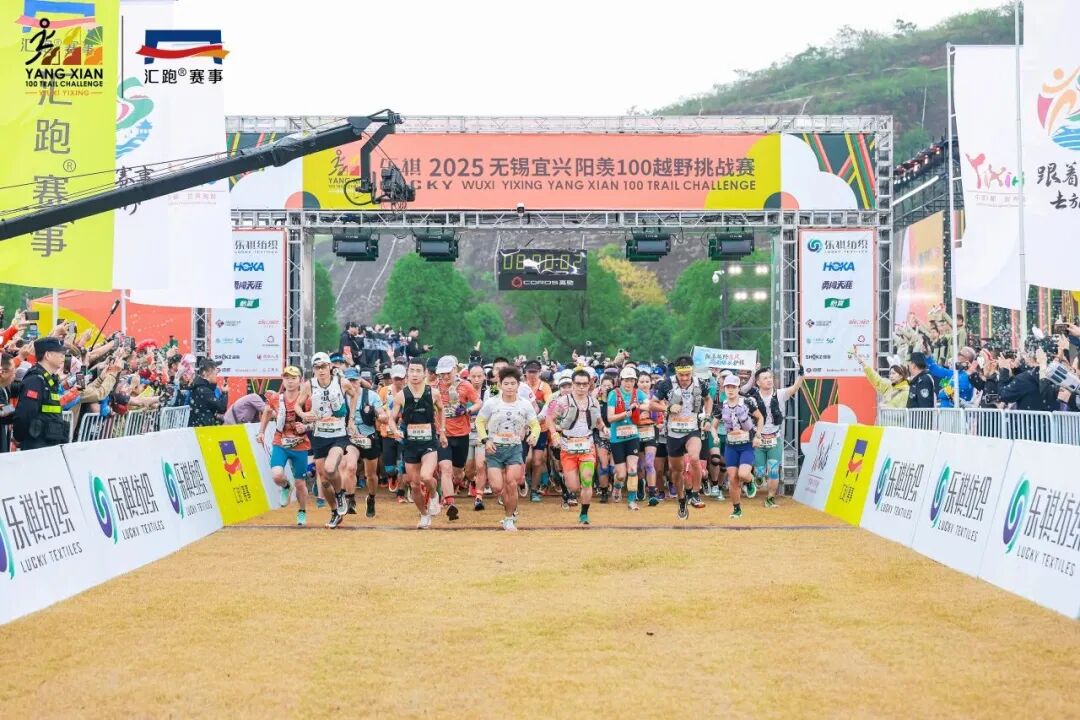
In addition to marathons, Huipao also operates multiple cross - country running events
Conversely, there are also cases where cross - country running event companies penetrate into businesses such as marathons, triathlons, and cycling. However, the entry of marathon event companies not only raises the industry standards but also hides potential risks.
Wu Wenlong introduced that City Stroll started organizing cross - country races around 2017 and was one of the early organizations involved in drafting relevant regulations. Up to now, although many brands or regions have put forward race - organizing demands and inquired about cooperation in cross - country races, the company only organizes three or four cross - country races each year. Its main business is still marathons. Besides the long cultivation path and low returns of cross - country races, more consideration is given to risks.
"The planning ideas, athlete services, competition systems, and safety guarantees of cross - country races are completely different from those of marathons. Many road - running companies directly apply their marathon experience to cross - country races, which poses certain risks. Only with sufficient respect for the mountains and a deep understanding of cross - country races can cross - country races be well - organized, and many event companies still lack this."
In addition to road - running companies, in recent years, brands organizing their own races have also attracted much attention.
For a long time, brands often choose to cooperate with an established event through naming rights, but the initiative of the event is not in the hands of the brand. However, in recent years, brand - owned IP events such as HOKA Flying Run Carnival, KAILAS FUGA Big Slope Race, and SALOMON GO Wild Mountain Trail Race are all led by the brands in terms of event planning, theme setting, and brand promotion. Only parts such as track planning and safety guarantees are handed over to professional teams for implementation.
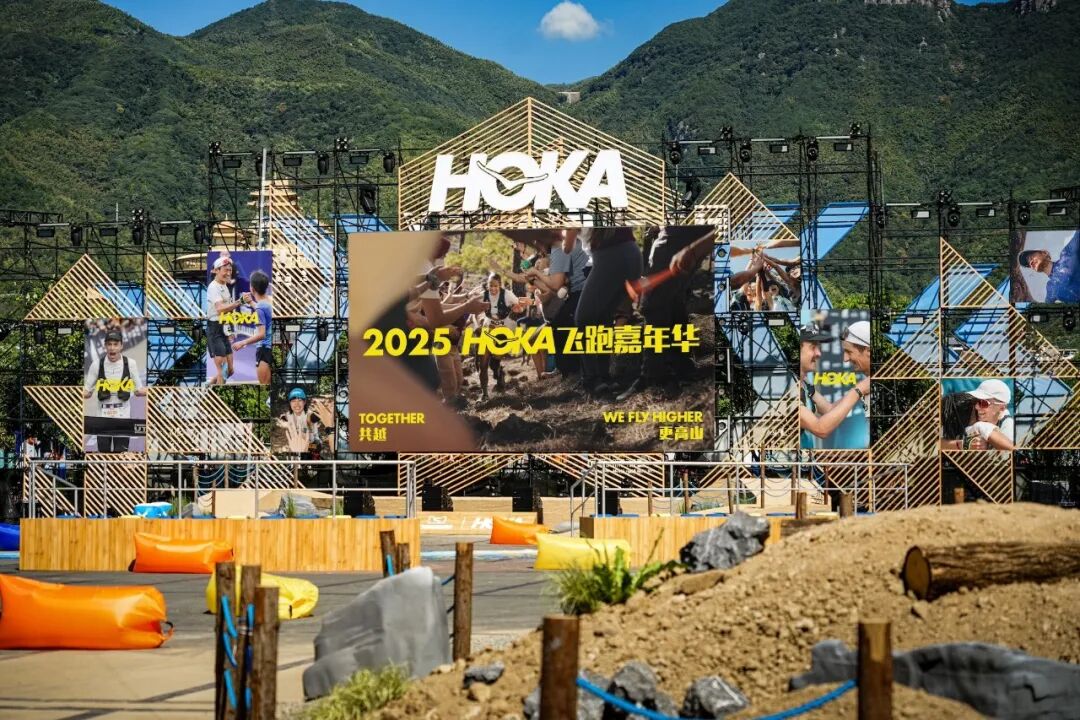
HOKA Flying Run Carnival
For small event companies like Yelaicai, a sense of crisis is approaching.
Lara said that although the core of the brand is not very stable, it has strong financial strength and is willing to invest regardless of cost in aspects such as vision, set - up, and content. The beautiful scenes can attract a large number of KOLs to help with promotion. After raising the industry standards, the races organized by small companies seem extremely shabby.
"The most difficult thing is that our small event companies have changed from event organizers to executors, and the quotes may be greatly reduced. Even brands would rather invest in their own events than in our small races."
Yao Jia saw the positive side: On the one hand, the user - centered thinking of brands is worth learning from for event companies; on the other hand, because cross - country races are too complex, except for some small - scale activities, it is very unlikely for brands to organize cross - country races independently. "Many event companies are outsourcing at multiple levels, let alone brands?"
Overall, with the entry and increased involvement of various players, the industry competition has quietly intensified. The reality is that except for a few large - scale event companies, other competitors have reached the time to think about how to make differences.
How can events shape their personalities while being commercialized?
At the end of last year, Yao Jia published an article titled "Don't get involved in involution, do subtraction" on his official account. When communicating with the Sports Industry Ecosystem, he still remembered his state of mind when writing it. "I'm worried that when everyone is competing in set - ups and supplies and the races are becoming more and more homogeneous, it will eventually turn into a capital game."
His worry is not unfounded. As the number of races increases, races always need a reason for users to choose them. The competition in supplies is the simplest and most direct way, and users seem to have gotten used to this "treatment". There was even an online public opinion event this year where the organizer of a cross - country race apologized for the race supplies.
In order to get rid of this homogeneous competition, event companies have different differentiation paths.
Leading event companies have sufficient funds and strength. By hosting national - level events or joining international event systems such as UTMB, the scarcity and IP influence of the events will add luster to the event companies.
However, contradictions in this path have gradually emerged. After the Ninghai Cross - country Race ended last year, the event organizer quickly announced that it would launch the by UTMB system and operate independently, and officially announced the cooperation with Kolon this year. Xue Qianyao, the founder of the Ninghai Cross - country Challenge, once explained to the media that the financial burden of by UTMB on private event companies is too heavy, and the UTMB standards dilute the personality of the event brand, which are the reasons for its withdrawal.
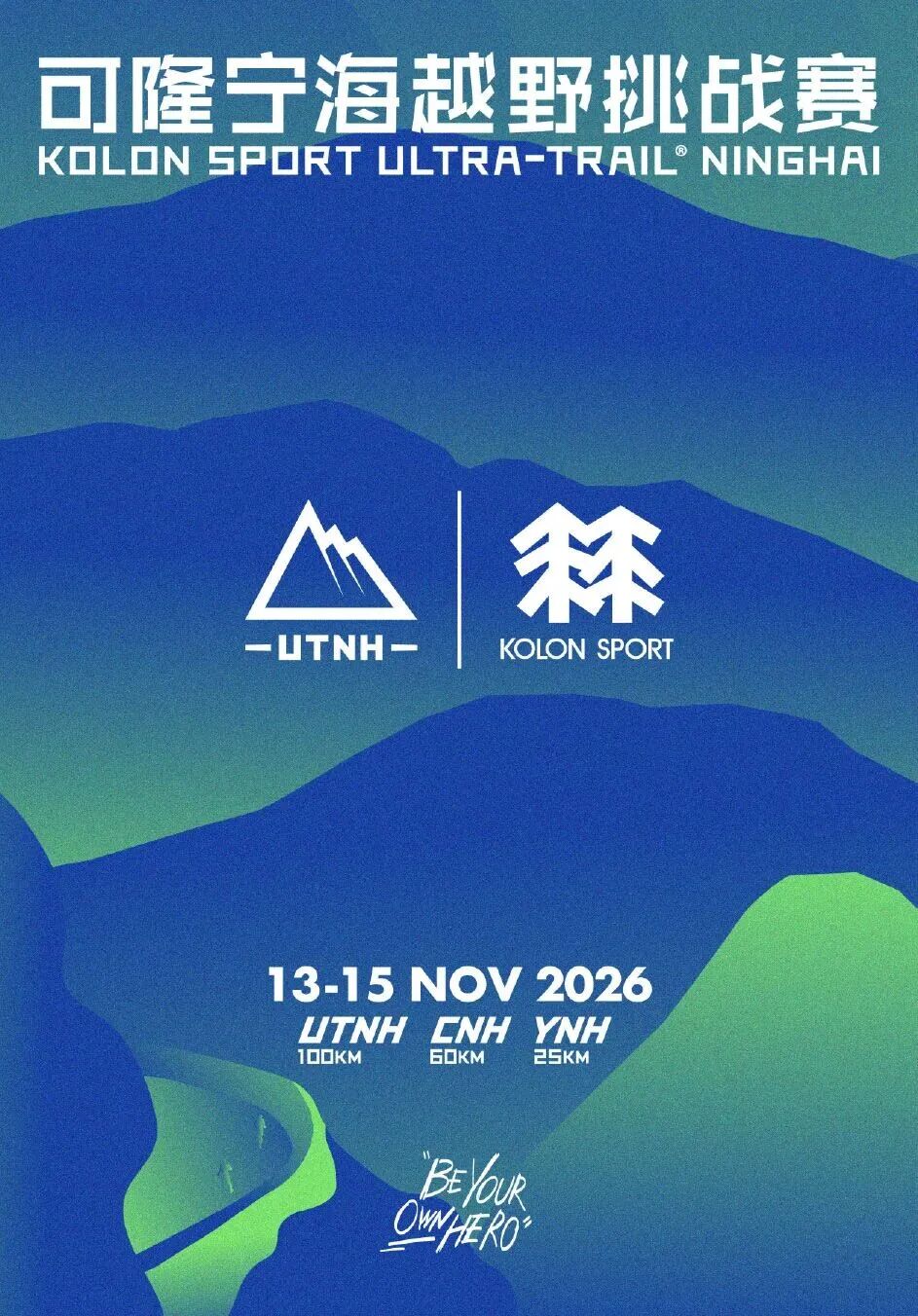
Image source: Ninghai Cross - country Challenge
How to balance commercialization and personalization is not only a problem for Ninghai. As the original central discourse begins to disperse, event companies have more choices regarding brands and event systems. Moreover, it is neither realistic nor achievable for all event companies to rely on a few top - level event IPs.
Therefore, creating an event company IP has become another option.
For example, Shenxing is strongly associated with high - altitude and extreme environments in the minds of many runners, while Monster Little Sun is good at combining with local culture and telling cultural stories in the mountains.
Even if the event is held in a different city or on a different mountain, the temperament and event - organizing style of the event company are stable and recognizable. Some event registration platforms even use "Operated by Shenxing" or "Produced by Little Sun" as titles. Because even for newly - created events, users can imagine the general appearance from the name of the event company.
However, forming an IP that is different from others requires a large amount of investment.
Shenxing's high - altitude events require strict event guarantee work, and the event inspection team often "disappears" on the mountains for a long time. The route guide of Monster Little Sun is produced slowly because the track needs to be studied repeatedly. In terms of photography, Yao Jia plans the photographers' positions and transitions instead of leaving it to a third - party team.
