Cut off supplies to OpenAI, Anthropic acquires a tool provider used by 1/4 of developers worldwide
You may not have heard of Stainless, but if you've used some official SDKs from Claude, OpenAI, or Cloudflare, you've likely indirectly used code generated by it.
In addition to OpenAI and Anthropic, Stainless's clients also include Meta, Groq, Runway, Cerebras, etc. The client list almost covers all the leading players in the AI infrastructure field.
It's like an "interpreter" between large models and developers: it transforms obscure API specifications into code libraries that developers can directly use.
Now, Anthropic has acquired Stainless. Both companies have issued announcements confirming the completion of the acquisition.
The founding team of Stainless will join Anthropic, and Stainless will start shutting down its hosted products, including the SDK generator.
This is not a simple acquisition of a tool company.
In the official blog post about the acquisition of Stainless, Anthropic mentioned that the upper limit of an agent's capabilities depends on how many external systems it can connect to. Acquiring Stainless is to strengthen the interfaces for agents.
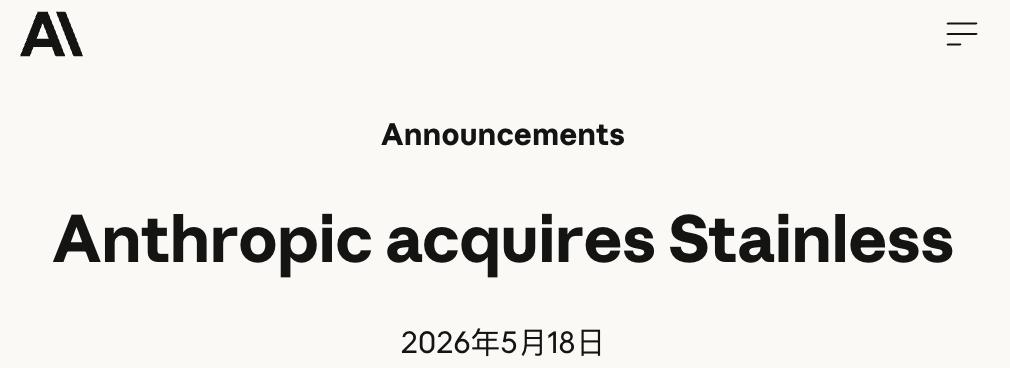
The frontier of AI is shifting from models that can only answer questions to agents that can actively perform tasks. And an agent's capabilities depend on the systems it can reach. Acquiring Stainless is to further expand this reach.
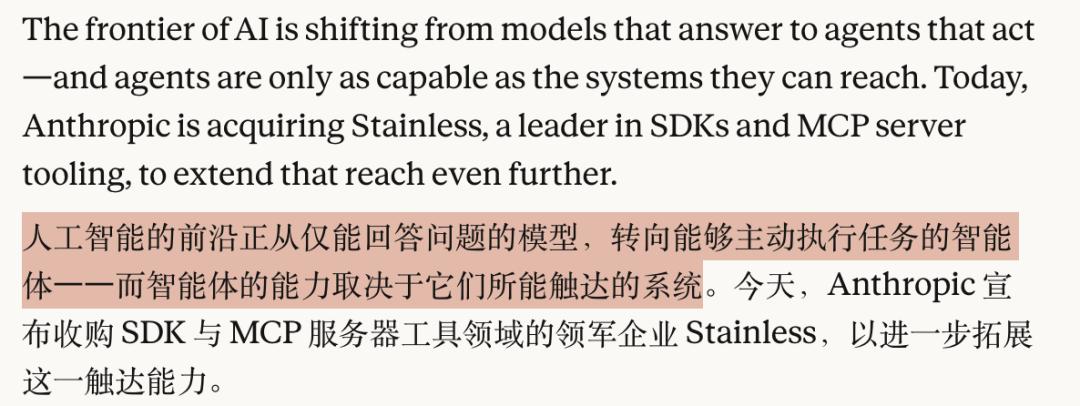
If we put this acquisition together with Anthropic's actions in the past 18 months, the three - piece set for agents is complete: Claude is the model, Stainless is the interface, and MCP is the connection.
Anthropic Bought the Company That Writes SDKs for Multiple AI Giants
In 2022, Stainless was founded in New York. Its founder, Alex Rattray, came from Stripe, where he led the reconstruction of API documentation and built Stripe's SDK code generation system.
During user research, he found that developers never directly call API endpoints. For them, the SDK is the API itself.
This insight directly drove him to later found Stainless and turn this set of capabilities into a product.
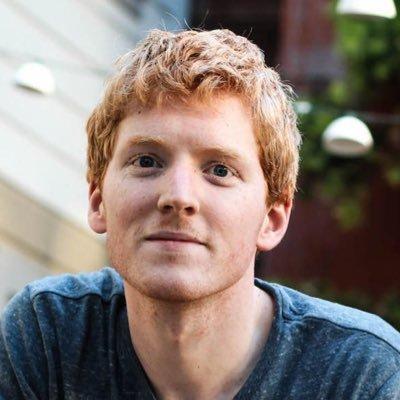
Alex Rattray, Founder of Stainless
Developers feed OpenAPI specifications into it, and it outputs official SDKs in multiple languages such as Python, TypeScript, Go, Java, and Ruby.
Model companies only need to maintain one API description. Stainless takes care of all language versions, error handling, retry logic, and documentation generation.
OpenAI, Anthropic, Meta, Cloudflare, DocuSign, and Square, these AI giants or software vendors are all clients of Stainless.
Open the GitHub repository of OpenAI's official Python SDK, and the README states: "Generated by Stainless based on the OpenAPI specification."
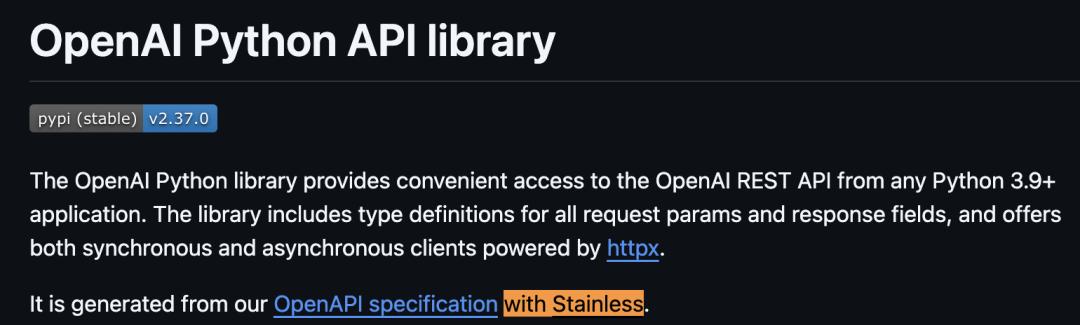
Similarly, the header of any source code file of the Anthropic SDK also states: "Automatically generated by Stainless according to the OpenAPI specification."
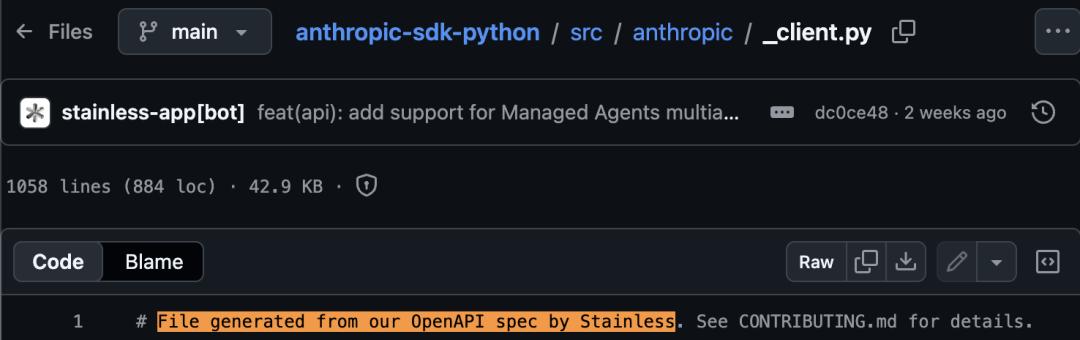
That is to say, in the past few years, OpenAI and Anthropic, long - time rivals, have long used the same developer tool platform for official SDK generation.
After the acquisition, Alex Rattray, the founder of Stainless, told existing clients that they have full ownership of all previously generated SDKs and can modify and expand them on their own, but Stainless will no longer provide subsequent support.
The Stainless team will continue to work as an internal organization of Anthropic, focusing on the construction of the Claude Platform's capabilities and the connection between agents and APIs.
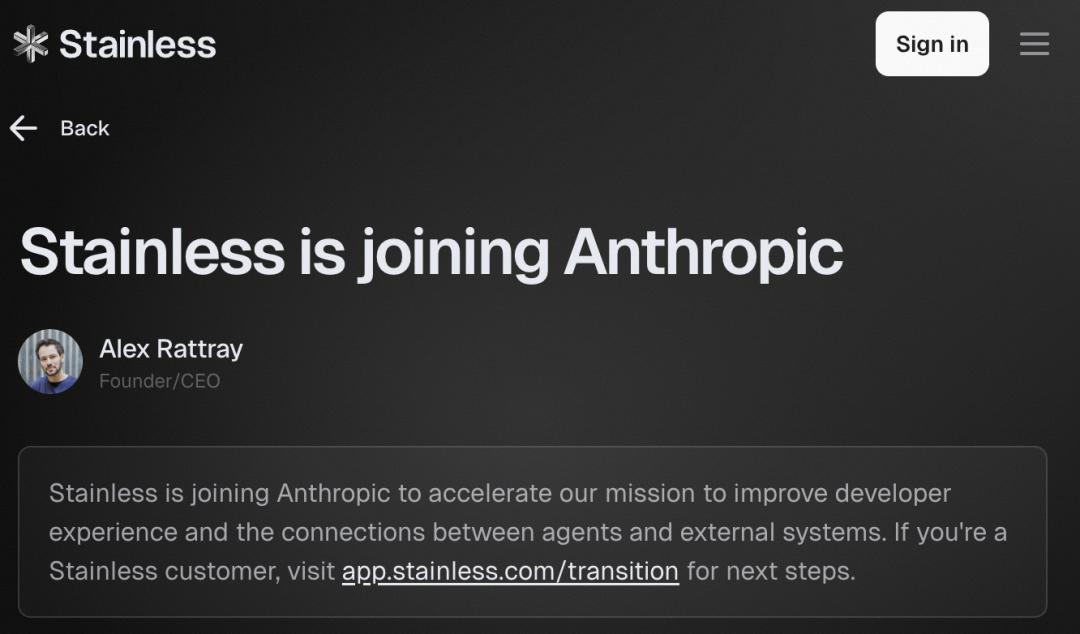
https://www.stainless.com/blog/stainless-is-joining-anthropic/
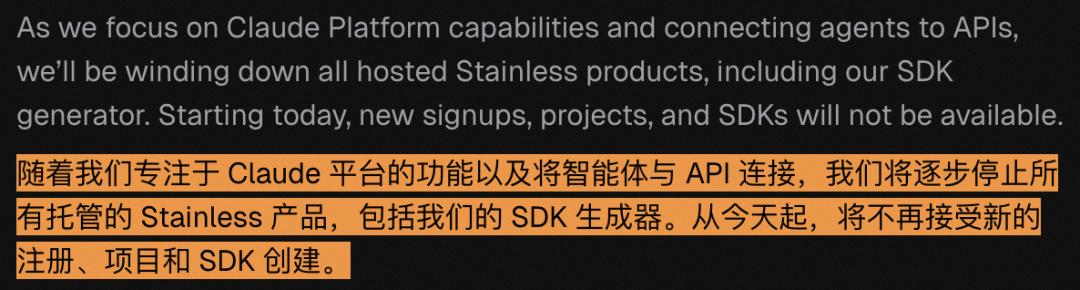
The products of this tool company have indirectly reached about a quarter of professional software developers globally. On the first day of joining Anthropic, it closed the door to the entire industry: from a shared infrastructure, it became an internal department of Anthropic.
The Three - Piece Set for Agents is Complete: Model, Interface, and Connection
This acquisition is not an isolated event.
Putting the acquisition of Stainless back into Anthropic's strategic line in the past 18 months, the three - piece set has taken shape.
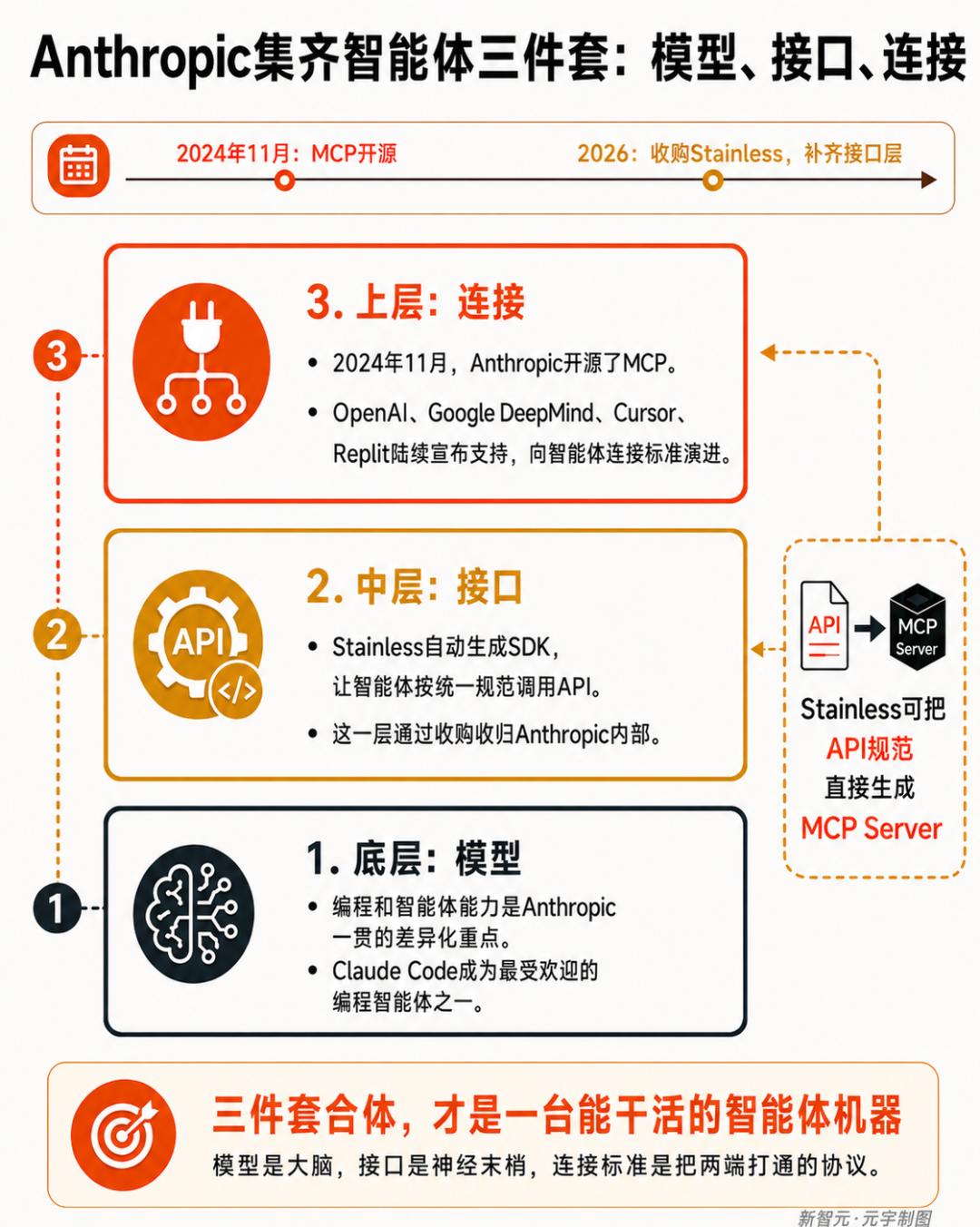
The bottom layer is the model.
From Claude 3.5 Sonnet to Claude 4.7, programming and agent capabilities have always been Anthropic's key differentiators. Claude Code has also become one of the most popular programming agents in the developer community this year.
The middle layer is the interface.
The SDK auto - generation capability provided by Stainless makes it possible for agents to call various APIs with a unified specification. This layer used to be outsourced and is now brought in - house by Anthropic.
The top layer is the connection.
In November 2024, Anthropic open - sourced MCP (Model Context Protocol), standardizing the connection method between models and external data sources, tools, and file systems, so that agents don't need to write separate adaptations for each external service.
After the open - sourcing of MCP, OpenAI, Google DeepMind, Cursor, and Replit have successively announced support. MCP is evolving into a standard for agent connection.
And Stainless can directly generate an MCP server from API specifications. The model is the brain, the interface is the nerve ending, and the connection standard is the protocol that connects the two ends. Only when the three - piece set is combined can we have a functional agent machine.
Katelyn Lesse, the person in charge of platform engineering at Anthropic, said bluntly: "How useful an agent is depends on what it can connect to."
Alex Rattray, the founder and CEO of Stainless, said that Anthropic was one of the first teams to bet on Stainless. "Putting the two teams together was an easy decision."
This acquisition is the last move in a chess game that has been going on for 18 months.
Why is a 'SDK Translation Company' Worth $300 Million?
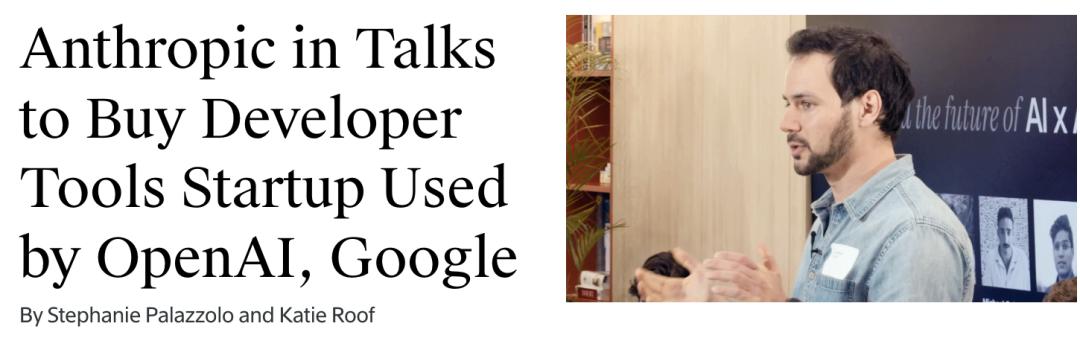
According to a previous report by The Information, the negotiation amount for this acquisition was at least $300 million. Anthropic has not officially disclosed the specific figure, but this magnitude alone is enough to make people re - evaluate the value of the SDK layer.
In the past, SDK was an unremarkable engineering issue.
API was the concern of model companies, and the SDK was just a "wrapper layer" that translated APIs into various programming languages. Model companies could write it themselves or outsource it to Stainless, and no one cared.
But in the era of agents, things are different. When Claude or GPT, as an agent, calls third - party services, the SDK is no longer a "tool for humans" but an "interface for agents."
Whether an agent task can succeed largely depends on whether the SDK of each API it calls is robust: whether the error handling is complete, whether the retry logic is reasonable, whether the parameter definitions are strict, and whether the types are inferable.
Any non - standard SDK will cause the agent to get stuck halfway.
If the negotiation amount in the hundreds of millions of dollars is true, what Anthropic values is obviously not just an SDK generator, but the developer interface infrastructure between APIs and agents.
What's more subtle is that the official SDKs of companies like OpenAI, Meta, and Cloudflare were all previously generated by Stainless.
On the first day after the acquisition and when Stainless closed its doors to the outside world, these companies have to face a real - world problem: should they take over the SDK maintenance themselves or find another supplier?
So far, no party has responded to this question.
OpenAI Focuses on Models, Anthropic Grabs the Foundation
Looking at the situation of the two leading companies in the ASI finals, OpenAI and Anthropic have different strategic lines.
OpenAI's focus is on model generations and computing power investment.
From GPT - 5, GPT - 5.4 to GPT - 5.5, the procurement of hundreds of billions of computing power for the Stargate project has been implemented. The weekly active users of ChatGPT have increased from 400 million a year ago to 900 million, focusing resources on the C - end entrance and the model itself.
Anthropic takes a different path: enterprise - level agent infrastructure. Claude Code strengthens developer tools, MCP standardizes the connection protocol, and Stainless brings in the SDK layer.
The underlying logics of these two paths are completely different.
The model layer follows the logic of generational subversion: when the next generation comes out, the advantages of the previous generation may disappear instantly. The gap between each generation is getting smaller and the window is getting shorter, and it can only be achieved by piling up computing power and data.
The logic of the infrastructure layer is the opposite. Once it becomes a de facto standard, the compound interest is long - term. Now that MCP is adopted by the entire industry, each additional adopter increases the switching cost. Once the SDK layer is internalized into Anthropic, the entire agent ecosystem may form a path - dependence on Anthropic's interface specifications.
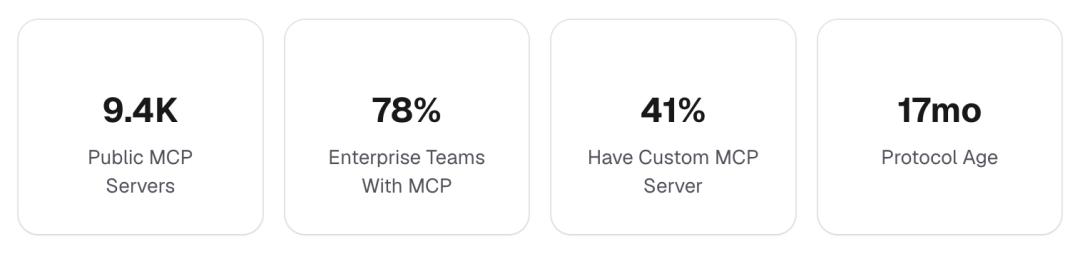
According to Digital Applied statistics, the number of public MCP servers has increased from 1,200 in the first quarter of 2025 to over 9,400 in April 2026. 78% of enterprise AI teams have deployed at least one MCP agent in the production environment.
The gap in model capabilities is getting easier to catch up.
Once the connection layer entrance is locked, it's very difficult to bypass.
References:
https://www.anthropic.com/news/anthropic - acquires - stainless%20
https://www.stainless.com/blog/stainless - is - joining - anthropic/%20
https://www.digitalapplied.com/blog/mcp - adoption - statistics - 2026 - model - context - protocol
This article is from the WeChat official account "New Intelligence Yuan", author: Revelation of ASI. Republished by 36Kr with permission.