In 2026, leading automakers make a major shift: from price wars and the race for blockbuster models to competing in technology and operating in a matrix.
Compared with 2025, the new energy vehicle industry was a bit calmer in 2026.
In 2025, terms such as "low - price competition", "iteration race", and "competition for blockbuster products" once became the main themes of the industry. Launching blockbuster products became the core logic of car companies. Coupled with the trend of equalizing intelligent driving and the rise of the technology ecosystem, the overall product release cycle of the industry was shortened.
In order to boost sales, the price war among enterprises intensified. Car companies strived to offer lower prices in the same class, higher performance in the same positioning, and more widespread intelligent driving at low price segments... Almost every player was desperately vying for a ticket to enter the next era.
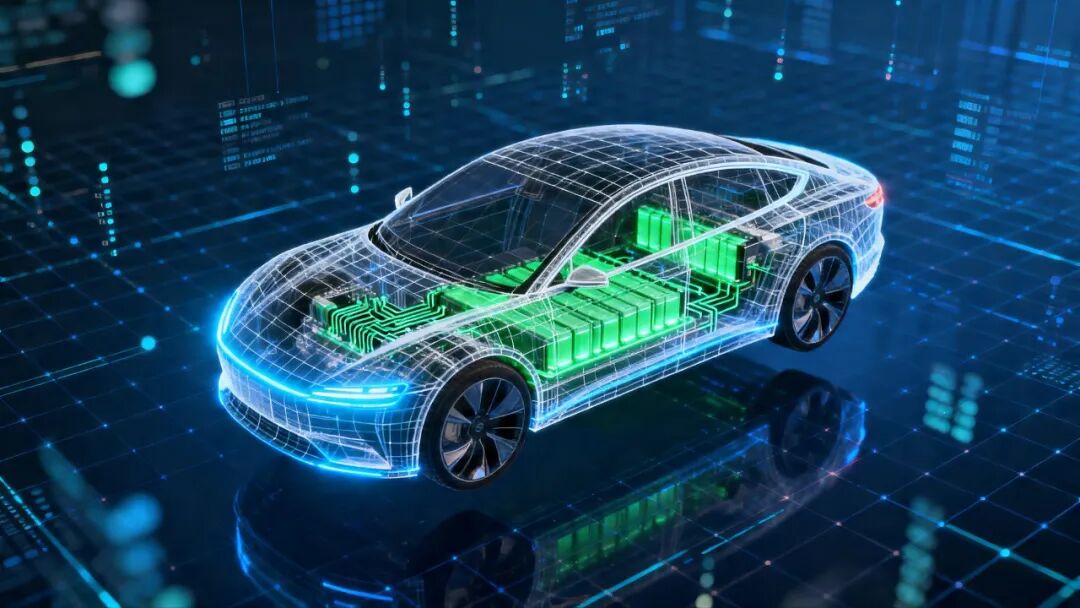
However, in 2026, these somewhat intense scenarios did not seem to appear.
The price war in the industry did not worsen further. According to statistics from China Economic News, since the beginning of this year, nearly 20 car companies have announced price increases for their product terminals, covering the mainstream automobile market from 100,000 to 300,000 yuan. Some models have raised their prices by 20,000 yuan. The market price system has gradually become stable, and the irrational involution situation has significantly cooled down.
The industry gradually returned to rationality. Some enterprises began to update the technology of their old - style products; some car companies carried out systematic upgrades of their entire product lines through self - developed technologies; most enterprises no longer passively followed the industry trend, but chose to return to their advantages or make up for their shortcomings according to their own needs.
Perhaps, the logic of market competition has been rewritten. The focus of competition among car companies has shifted from competing in speed, low prices, and popularity of single products in the past to competing in core self - developed technologies, product matrix layout, intelligent implementation capabilities, and long - term profit systems.
These changes are clearly reflected in the recent product layouts and strategic choices of major leading brands.
Li Auto: New breakthroughs in products and technologies
In 2026, Li Auto first launched a flagship new product - the new generation Li L9. This product is positioned as an embodied intelligent flagship SUV, with two configuration models, the Ultra version and the Livis version, priced in the range of 450,000 - 500,000 yuan.
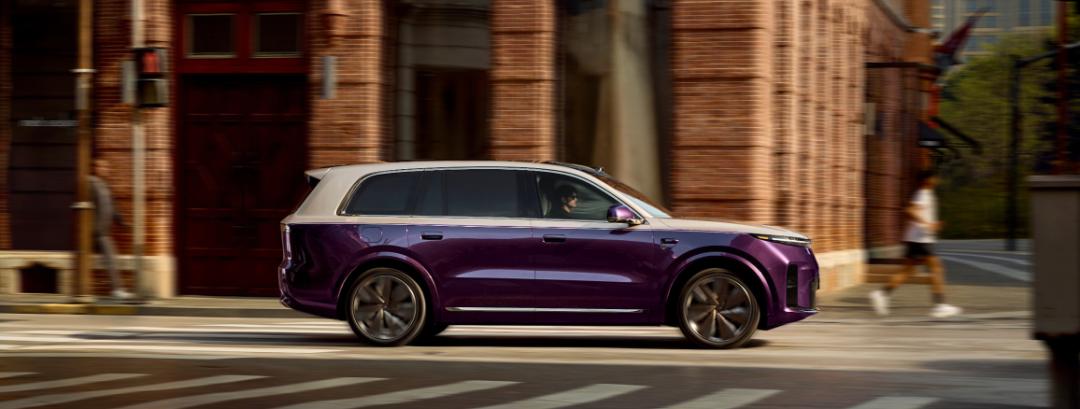
The new Li L9, image source: Li Auto Group official website
Different from the traditional "minor facelift" logic, the new generation Li L9 is not a simple iteration. Instead, Li Auto demonstrates the brand's understanding and accumulation of the needs of family users, as well as comprehensive breakthroughs in the chassis and intelligent driving on this single product.
The family flagship SUV is Li Auto's strength. Overall, the new generation Li L9 is very proficient in design, interior, and range - extender technology.
The new generation Li L9 continues the family's classic design language and retains some practical configurations such as the intelligent interactive halo lights; the interior of the product still continues the classic six - seat layout of the old model, equipped with four zero - gravity comfortable seats and an in - car refrigerator.
In addition, the new generation Li L9 has undergone all - around product experience upgrades, including fully hidden electric pedals, screens, and an immersive sound system.
One of the notable upgrades is the comprehensive upgrade of the multi - screen intelligent interactive system.
The front row is equipped with a new 29 - inch integrated ultra - wide panoramic screen, with a resolution of 6K and a high - refresh rate of 90Hz. The driver and front - passenger seats can use the screen independently in split - screen mode or share it in the center; the second row is equipped with a 21 - inch mobile screen, and some exclusive functions are added. For example, the mobile screen supports a maximum electric translation of 120mm. Just raise your hand in the second row, and the screen will come to your hand; tap it, and the screen can be opened or retracted.
Li Auto also installed its latest self - developed range - extender technology - the third - generation range - extender on the new generation Li L9, improving in aspects such as energy consumption, noise reduction, and long maintenance intervals.
For example, its fuel consumption per 100 kilometers is 6.3 liters, and the comprehensive cruising range is 1,650 kilometers. The start - stop of the range - extender is almost imperceptible, solving the pain point that the in - car experience is obvious when the range - extender starts and stops in range - extended vehicles; it can achieve a maintenance interval of 3 years for the whole vehicle or 30,000 kilometers for the range - extender, saving the subsequent maintenance costs for car owners.
In terms of cruising range, the new generation Li L9 is equipped with an 800V high - voltage platform and a 72.7 - degree battery. This configuration is relatively rare among range - extended family SUVs in the same class; range - extended vehicles are often criticized for slow charging compared with pure - electric vehicles. However, under the 800V high - voltage architecture, the new generation Li L9 has a peak charging power of 430kW and can charge from 10% to 80% in 10 minutes.
In addition to the product experience upgrade, Li Auto is also looking for new breakthroughs.
In order to break through the physical limits in the three dimensions of handling, steering, and braking for large SUVs, the new Li L9 Livis has reconstructed the fundamental chassis architecture.
Traditional SUVs have long faced an irreconcilable contradiction: in order to achieve comfort, handling has to be sacrificed. The vehicle body rolls significantly when cornering, and the suspension response lags on bumpy roads.
The 800V active suspension installed on the new generation Li L9 Livis cancels the traditional anti - roll bar, allowing the four wheels to be completely decoupled independently. The suspension has evolved from passively bearing road undulations to actively suppressing bumps.
The traditional mechanical steering column not only transmits fine vibrations from the road surface to the steering wheel but also has a fixed steering ratio. Drivers need to frequently reverse their hands when making a U - turn or turning on a narrow road. The new Li L9 uses steer - by - wire technology, canceling the traditional mechanical steering column, achieving physical decoupling between the steering wheel and the front wheels. Road vibrations are no longer directly transmitted to the hands; at the same time, the steering ratio can be dynamically adjusted according to the vehicle speed, being more flexible at low speeds and more stable at high speeds.
In addition, the new Li L9 is also equipped with a rear - wheel steering system. At low speeds, the rear wheels turn in the opposite direction to the front wheels, effectively shortening the turning radius. U - turns and driving on narrow roads are more relaxed, without the need to reverse hands back and forth.
In terms of mechanical braking, the EMB steer - by - wire mechanical braking technology, which is globally launched and mass - produced for the first time on the new Li L9, cancels the complex hydraulic pipelines. The braking response is faster, and the braking distance is shorter.
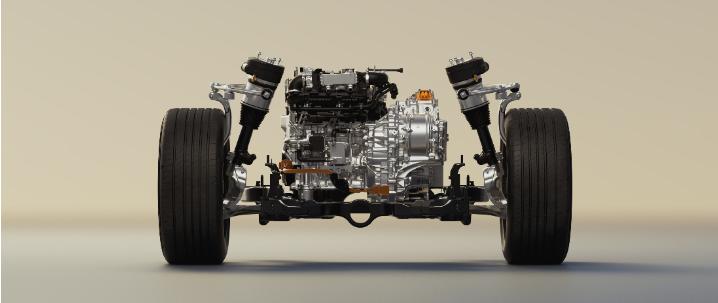
The self - developed range - extender 3.0 of the new Li L9, image source: Li Auto Group official website
At the same time, compared with the previous generation Li L9, Li Auto has made new innovations in intelligence. It also proposed a seemingly cross - border positioning of "embodied intelligence".
However, in fact, what Li Auto means this time is not the traditional sense of embodied intelligence - it is not about turning the car into a robot but about enabling the car to have the abilities of a robot: perceiving the environment, understanding intentions, making active predictions, and continuously growing and evolving.
Therefore, the positioning of the new generation Li L9 of Li Auto is essentially based on serving car owners and "families" well. It can be understood that Li Auto hopes to give the "mobile home" a soul.
The core of realizing this idea is the Maher M100 chip installed on the new generation Li L9. This chip is specially designed for large - model inference. The computing power of a single chip is 1,280 TOPS, and the total computing power of two chips is 2,560 TOPS, which is three times that of the current mainstream solution, NVIDIA Thor - U.
In addition, with the same silicon area, the Maher M100 can provide much higher effective computing power than the externally purchased solution. Due to its compact architecture and deep customization for the model, while ensuring huge computing power, the energy consumption control is better, and the BOM (bill of materials) cost is significantly reduced.
Based on the Maher M100 chip, the new generation Li L9 of Li Auto has more human - like functions in perceiving the environment, understanding intentions, and making active predictions.
For example, at the perception level, its self - developed Maher VLA intelligent driving large model and 3D ViT perception model can have reasoning ability like humans, increasing the forward perception distance to 300 meters, and the visible distance is 50% higher than that of the previous generation; when it sees the car owner about to get in the car, it will actively help open the door and lower the pedal; it also adds a function that when the car is parking out and the owner waves, the car can move forward or backward a little.
Overall, Li Auto's layout in 2026 emphasizes product strength more.
It is not in a hurry to take the cost - performance route to boost sales. Instead, it tries to showcase the brand's latest breakthroughs in self - developed technologies in the chassis, range - extender, and intelligence through a flagship SUV, making the product perfect.
NIO, having laid a solid foundation, starts to launch new products intensively
NIO's pace has accelerated in 2026.
In the past 2025, NIO finally proved the significance of its investment for the "future", and its products began to achieve scale. For example, in December last year, the delivery volume of the new NIO ES8 reached 22,000 units, refreshing the monthly sales record of pure - electric vehicles priced above 400,000 yuan; the LeDao L90 became the sales champion of pure - electric large SUVs in 2025; the Firefly also obtained a relatively high share in the high - end small - car market.
The battery - swapping station layout, which was once considered a "burden", has now taken initial shape. As of May 18, 2026, NIO has deployed a total of 3,850 battery - swapping stations globally, with a total investment of over 18 billion yuan, and built more than 28,000 super - charging piles and destination charging piles.
With the foundation of sales and infrastructure laid, NIO also achieved quarterly profit for the first time. The operating profit in the fourth quarter of 2025 was 1.25 billion yuan.
In 2026, what NIO needs to do is to stabilize the profit trend. Among them, the sales growth trend needs to be maintained.
Therefore, NIO in 2026 has been busy holding press conferences. Especially after April, the NIO series began to launch new products frequently.
Among them, many are facelifted versions of old models with "more features but no price increase". For example, the NIO main brand launched the 2026 versions of ET5, ET5T, ES6, and EC6; the 2026 version of LeDao L90 was also renewed and launched.
The added configurations of these facelifted products include zero - gravity seats, seat heating, etc., as well as upgrades to the intelligent assisted driving experience. For example, the 2026 versions of ET5, ET5T, ES6, and EC6 added standard - equipped assisted driving indicator lights; the LeDao L90 is equipped with NIO's self - developed chip, Shenji NX9031, and the NIO World Model.
In fact, in the current situation where new energy car companies are iterating rapidly, old - style models are likely to lose their luster under new technologies and trends. NIO's method of renewing old cars without changing the price can, in a sense, refresh the presence and competitiveness of old - style models and often boost sales.
In addition to renewing old models, NIO and LeDao also respectively launched new products: the NIO ES9 and the LeDao L80.
The former follows the route of an intelligent electric executive flagship SUV and is the key to boosting NIO's annual profit; the latter targets the large five - seat pure - electric SUV market, focusing on the mainstream market around 250,000 yuan, and is the key to boosting sales.
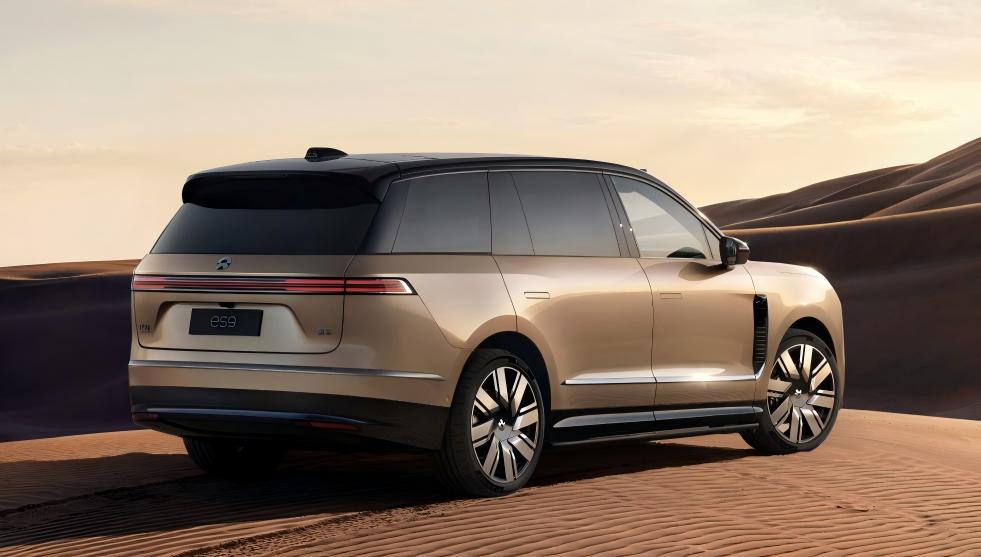
The NIO ES9, image source: NIO official website
However, both models have added attributes beyond the needs of the target population, aiming to attract a wider range of users and drive sales.
For example, the design of the NIO ES9 in terms of space and storage space is not only limited to executive needs but also meets the needs of some family users.
It is understood that the NIO ES9 is the largest pure - electric SUV in the Chinese market; the capacity of the front trunk is as high as 216L, the basic volume of the rear trunk is 600L, and it can be expanded to 1,586L when the third row is folded down. This size and storage space have good advantages compared with fuel or range - extended SUVs in the same class.
The LeDao L80 continues the brand's space advantage and is priced lower than the once - popular product, the L90.
More importantly, NIO and LeDao also showed an obvious trend of technology sharing this year, which means that NIO, which has laid a solid foundation on the technology base, is achieving full - system collaborative operations through technology transfer.
Among them, NIO's self - developed Shenji chip and the NIO World Model are one of the core highlights of the two products in intelligent driving.
The Shenji NX9031 has powerful computing power. Its actual computing power is about four times that of the NVIDIA Orin - X chip, which can easily meet the requirements of multi - sensor data processing for L3 and above - level intelligent driving; the NIO World Model has super - strong prediction and deduction capabilities, which can deduce 216 possible trajectories within 100 milliseconds and generate a 120 - second future scenario prediction video based on a 3 - second video input.
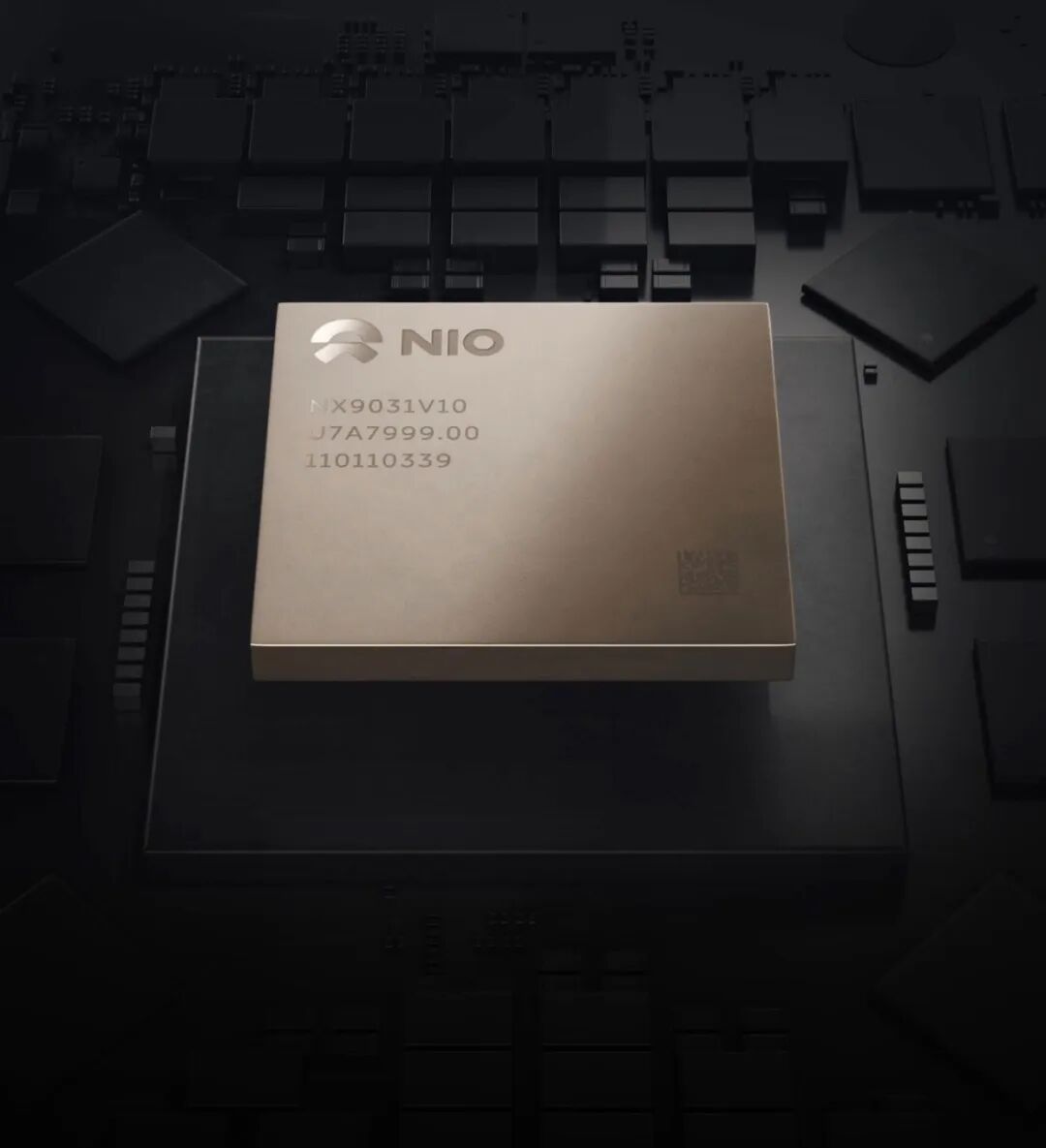
The Shenji